
Effect of Diesel Pollutant Exposure on THC, Tissues and Protein Content of Mud Crab (Scylla serrata)
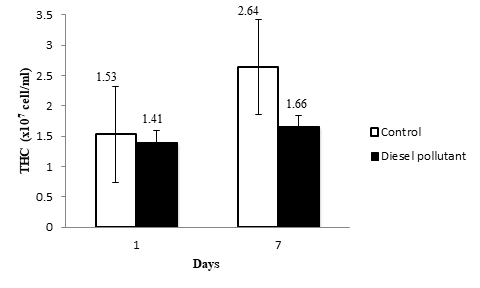
This research has aim to determine the toxicity of diesel fuel pollutant in reared media on haemolymph performs, tissue damage, and changes in the protein content of mud crab (S. serrata). In this research, two treatments, namely control and media contaminated with diesel (1.3852 ppm) with three individual repetitions were applied. The parameters which observed were haemolymph performance, the Total of Haemocyte Count (THC), tissue damage in gill organ and hepatopancreas, and changes in protein content. The THC observations were conducted twice, namely on the first day and the seventh day of exposure. The results of this research showed that the average value of THC of mud crab on the first day of observation for control was 1.53×10⁷ cells/ml, while the diesel-polluted treatment was 1.41×10⁷ cell/ml. Furthermore, on the seventh day of observation, the THC of control was 2.64×10⁷ cell/ml, while in the treatment which polluted by diesel was lower than control (1.66×10⁷ cell/ml). However, the THC on day 1st and day 7th for each treatment was not significant. The results of histological examination showed that necrosis of the gills while the hepatopancreas experienced vacuolization and necrosis. Then, the analysis results of protein content showed that the meat protein content initially was 54.79% on day 1st, while in the treatment group decreased significantly into 48.93% after 7 days. The survival rate of mud crab in the diesel-polluted treatment was 25% or it was lower than the control treatment which reached 75%. Water quality, especially dissolved oxygen (DO) and pH level showed significant change in the diesel-contaminated media. This study concluded that the longer it was exposured to diesel pollution, it caused changes in the metabolism of the mud crab, and it was marked by a lower in the amount of THC, tissue damage, and a decrease in protein content, especially on the seventh day after exposure. Therefore, these three parameters in the mud crabs can be used as a reference for biomonitoring the quality of the aquatic environment which caused by diesel pollution.
Introduction
Diesel pollutant is one type of heavy metals which exists in nature and whose source is from the result of diesel refining, so that the main composition is hydrocarbon. Oil spill in the water cause the surface of water is covered by a layer of oil so that it has an impact on the penetration of sunlight into the water and causes the process of photosynthesis is inhibited in the euphotic zone [1, 2]. The metal content which accumulates in the water can be absorbed into the body of organism through respiration, absorption in the skin, food chain, then most of it will be released back through the excretory system, while some will be accumulated in fat and protein compounds. When it is absorbed into body, it will cause allergies, hypertension, damage to the nervous system, the decrease of liver and kidney function, gene mutation, and cancer [3, 4, 5].
One of the target areas for the distribution of diesel spill is the estuary area [6]. Crabs are one of the organisms which live in estuarine areas, so that they have a great chance of being exposed by diesel pollutants. Several organisms and parameters have been used as biomonitoring of environmental damage due to pollutants, however, especially for the mud crabs, they are still rarely used, especially pollution due to diesel pollutants. Therefore, to analyze the impact of diesel pollutants in aquatic organisms by focusing on their relationship to the physiology of mud crabs. The haemolymph profile can be used as an indicator of toxic substance contamination [7, 8, 9] and as stress indicator of physiology of body which can be seen from changes in the number of haemocytes (THC) which is related to the immune response in crustacean organisms including crabs [10, 11, 12].
Histological description can be used to see the level of tissue damage because of the accumulation of diesel pollutants. Histological appearance on the gills of milkfish (Chanos chanos) and catfish (Clarias gariepinus) exposed to diesel pollutants shows the aneurism, fusion of gills lamellae, loss of secondary lamellae, edema, degeneration of mucous cells and gill cells necrosis [13, 14]. Besides those two parameters, the observation of protein content can also be used as a biomarker toward the response of chemical or various environmental stressors in the water [15, 16]. Therefore, this research is very important to be done to see the response of mud crabs which were given diesel exposure. The purpose of this study was to determine the toxicity of diesel pollutants that were artificially exposed to the media of experiment of mud crab with a certain concentration on haemolymph performance, tissue damage, and protein content of mud crab, S. serrata. It is hoped that the results of this research can be a source of reference and information regarding the impact of diesel pollutant pollution in aquatic organisms as well as an early warning system toward the damage of aquatic environment.
Materials and Methods
The Stages of Preparation and Acclimatization
Two fiber tubs with their size 2 m x 1 m x 30 cm were used as containers to maintain, itu used as container to control and diesel polluted water treatment. In each fiber tub, 3 crab box (plastic basket) was prepared as a container for each 4 crabs. The basket had a cover to prevent the crabs from coming out of the container during the research.
The mud crabs which used were 5.42-6.01 mm length, 7.14-8.0 mm wide, and weighed 110-119 g. Those mud crabs were from the catch in nature by fishermen and those which traded in the market. During in the laboratory, adaptation process was first carried out for 3 days until the crabs showed a normal response before entering the rearing time.
The diesel which used was taken from a gas station in Kendari. The determination of diesel concentration in this study referred to the results of research King MA, et al. [1] which showed that the LC50-96 hours of diesel oil in crabs was as much as 13.852 ppm. Furthermore, for the use of the dose which tested in this study was 10% of the LC50-96 hours of diesel oil which were exposed to the maintenance medium.
Observed Variables
The sampling technique was carried out twice during the study, namely on the first day of exposure and the seventh day. The observed variables are as follows:
- Total Haemocyte Count (THC): Haemolymph was taken as much as 0.1 ml using a syringe containing 0.1 ml of 3.8% sodium citrate anticoagulant then it was observed under a microscope to calculate the THC used haemocytometer (Neubauer, Germany) [17].
- Tissue Examination (Histopathology): The tissue examination of the gills and hepatopancreas begins with maked sample preparation. The collected tissues were fixed in 10% formaline for 10h, dehydrated in graded ethanol series, cleared in xylene, embedded in paraffin wax, sectioned with a microtome (5 µm of thickness), mounted on glass sides. The tissuees were deparaffinized in xylene and stained with hematoxylin and eosin (H&E) solution for tissues structural analysis [18]. The tissues were examined with microscope (Olympus cx-21 LED), magnification 400×. The histology process is carried out in Laboratory of Pathology and Toxicology, Maros Disease Investigation Center, Directorate General of Livestock and Animal Health.
Protein Content
Kjeldhal method was used as protein content analysis in this study [19]. Mud crab meat were destructed used concentrated H2SO4 at a gradually increased temperature of 37-45°C, then cooled and diluted with distilled water, added with 30% sodium hydroxide solution. The solution was heated and the vapors was trapped. In the special trap tube, given 0.1 N hydrochloric acid solution which has been given a methyl red indicator. The result was then checked for pH, if it was not alkaline then the distillation process was stopped. The distillation product was titrated with 0.1 N sodium hydroxide solution. The titration was stopped when the color changes from pink to yellow. This value obtained was referred to as the sample titration volume (V1). The next stage was carried out the titration procedure as before but the distillation product was replaced with distilled water. The value obtained was referred to as the blank titration volume (V2).
The protein content based was calculated by the equation:
% Protein = ( ) 1 2 V V N NaOH 14.008 DF 100% W 10
− × × × × ×
Note: V1 = sample titration volume (ml) V2 = blank titration volume (ml) N = standard NaOH normality DF = diluent factor W = Sample weight
Survival Rate
The survival rate was calculated use the equation [20]:
Nt 100% N ×
SR =
0 Note: SR = Survival rate (%) Nt = Number of living mud crabs at the end of rearing N0 = Number of crabs at the beginning of rearing.
Water Quality Parameters
Water quality parameters which were measured in this study were temperature, salinity, pH, and dissolved oxygen (DO). The rearing of crabs, analysis of protein and water quality were carried out in Laboratory of Fisheries and Marine Science, Halu Oleo University, Indonesia.
Results
The Performance of Total Hemocyte Count (THC) of Mud Crab
Figure 1 showed that the average value of THC in mud crabs, both the observation on the first and seventh day, in the diesel pollutant treatment were lower than the control treatment. On the seventh day, the value of THC the control treatment was getting different from the diesel pollutant treatment but statistical analysis showed no significant difference between them.
Histological Changes in Mud Crabs Due to Diesel Pollutant Exposure
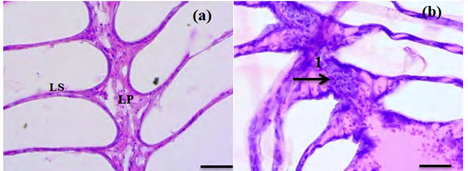
Based on the histological description of the mud crab gills in Figure 2, it can be seen in the control treatment (a) normal tissue structure in the primary (LP) and secondary (LS) lamellae, while in the diesel pollutant exposure treatment (b) necrotic cells appeared in all parts of the gills both LP as well as LS.
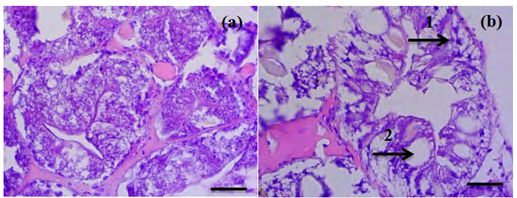
The hepatopancreas of mud crab (Figure 3) in the control treatment (a) there was no any changes in the tissue structure of the hepatopancreas tubules. The structure looked normal with a neat star-shaped lumen, whereas there were significant changes in the vacuole (v) which
Changes in Protein Content Caused of Diesel Pollutants
experienced hard hyperplasia which was characterized by an increase in the size of the vacuole in the diesel-polluted treatment. In addition, there was also necrosis (n) and the lumen, which was normally star-shaped, it was not clearly visible, so that the vacuole was more clearly visible.
| No | Treatment | Protein Content (%) | |
|---|---|---|---|
| Days | |||
| 1 | 7 | ||
| 1 | Control | 54.79 | 58.66a |
| 2 | Diesel Pollutant | same | 48.93b |
Table 1: Results analysis of protein content of mud crab meat.
Different superscripts in the column 7 day indicate statistically significant differences (p < 0.05). The protein level on the first day was (54.79%) for all of group, while on the seventh day, it was decreased (48.93%). It showed that the longer the diesel exposure time, the lower the protein content of mud crabs. The value of protein content in this study was significant both in the control and contaminated treatment with diesel fuel.
Survival Rate
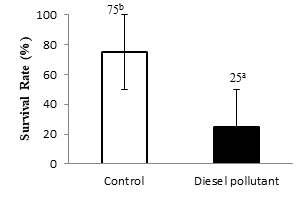
Figure 4: Survival rate of mud crabs at seventh day of treatment. Different superscripts next to number indicate statistically significant differences (p < 0.05) Observations on the seventh day showed that mud crabs exposed to solar pollutants had a low survival rate (25%), there was a mortality of mud crabs reaching 75% of the test animals. The results of statistical tests using the T test showed that there was a significant difference between the two treatments.
Water Quality Parameters
| No. | Group | Parameter | Result | Optimum range |
|---|---|---|---|---|
| (FAO, 2011) | ||||
| 1 | Control | Temperature (oC) | 27 | 25-35 |
| Salinity (ppt) | 18 | 30-Oct | ||
| pH | 7.3 | 7.0-9.0 | ||
| DO (mg/l) | 6.3 | ≤ 5 mg/l | ||
| 2 | Diesel polluted | Temperature (oC) | 26 | 25-35 |
| Salinity (ppt) | 16 | 30-Oct | ||
| pH | 6.8 | 7.0-9.0 | ||
| DO (mg/l) | 2.8 | ≤ 5 mg/l |
Table 2: The average value of the results of water quality analysis during research.
The results of the water quality analysis show that the temperature and salinity parameters in the treatment of water exposed to diesel pollution are lower than the control treatment but are still in the optimum standard range. While the DO and pH values in the water treatment exposed of diesel pollution were not only lower than the control treatment but also it lower than the standard optimum range.
Discussion
The hemolymph in crustacean organisms has a cellular component of haemocytes and a liquid component in the form of plasma and consists of various humoral factors (macro molecules in the circulatory system) which has function to integrally produce the immune system [21]. According to Parisi MG, et al. [22] hemocytic cells play a role in the generation of cytotoxic molecules toward the exposure to toxic compound and have function in the maintenance of homeostasis and are fully responsible for various protective mechanisms in the body. According to Kulkarni A, et al. [23] crustacean organisms do not have memory cells in their immune system so that they cannot recognize the same unknown cells which enter the body, it was also happened to the mud crabs.
The increase of THC in the diesel-contaminated treatment on the seventh day was caused by the response of immune from the body of crabs which was formed after being triggered by the presence of unknown compound originating from diesel oil. This is in line with the research of Suharni, et al. [24], in which the presence of compound contained in diesel oil had caused an increase in the amount of THC in freshwater lobsters (Cherax quadricarinatus). According to Melillo D, et al. [25, 26], the increase in the number of haemocytes is in line with the increase of body resistance of crustacean organisms in overcoming pathogenic attacks in the body, it related to the function of haemocyte cells as a non-specific cellular defense system. It is in line with research of Qin Q, et al. [11] where the amount of THC in mud crabs increased significantly on the 2nd day after exposure of phenol compound which indicated a response to the immune system to fight unknown compound which entered the body of crabs.
Histological observation which done toward the gills of mud crabs in the control treatment did not identify any changes in the structure of tissue, while in the diesel contaminated treatment, it was identified that there was necrosis in almost all parts of the gill lamella, it was marked by changes in the shape of the nucleus which become smaller and enlarged [27]. According to Yadaf S, et al. [28], necrosis is damage in body cells and it is because of the degeneration process caused by lack of blood supply, characterized by swollen cell and tissue dysfunction due to damage in the organs of body. Necrosis is also associated with the condition of oxidative stress and its complication.
Necrosis occurred in the gill lamellae which contaminated with diesel fuel. It was estimated due to the presence of hydrocarbon originating from diesel pollutants, it also caused disruption of gill respiration and ischemia or lack of blood supply in body tissues, so that when condition of ischemia happened in a long time, it will cause necrosis in the cells of gill. This is in line with the statement of Bains JS, et al. [29, 30] that necrosis was caused by the presence of xenobiotics into the body of organism which inhibited the metabolic processes so that the process of energy formation did not occur for the life of body cells. It caused disturbances in the respiratory process so that if it happened a long time, then the binding power of oxygen in the gills for metabolic processes would decrease and the availability of oxygen in the body would decrease too.
According to Davilarashati K, et al. [31, 32], hydrocarbon compound which found in crude oil could cause an increase in methemoglobin in the blood and it caused the obstruction of oxygen transportation so that the blood lacked of oxygen and sooner it would cause the rupture of blood vessel in the gills. Ubong G, et al. [32] added that the condition of cell degeneration in the gills caused by hydrocarbon content could cause asphyxia which was a condition of lack of oxygen so that when it happened in a long time it would cause necrosis and death because the cells did not receive oxygen properly. Physical observation in the gills of mud crabs showed that there was diesel oil entering the filaments of gills of mud crabs.
Hepatopancreas is an organ in crustaceans which seems like a lump of fat in the body with has function like liver and pancreas in mammals and plays a role in biotransformation and can detoxify and neutralize toxic compound which enter to body so that it can be excreted through the excretory system in the metabolic processes of body [27, 33, 34].
Based on the observation of hepatopancreas in the control treatment, it did not find any changes in the structure of tissue and the tubules were still in normal condition (Figure 3a). Meanwhile, in the observation of polluted diesel, it showed that the vacuoles which had hard hyperplasia and it was marked by the enlargement of the vacuoles and necrosis in the hepatopancreas tissue of mud crab. Vacuolization is a condition where the nucleus cell and cytoplasm are not visible at the time of identification because of the damage to the liver [35]. The occurrence of vacuolization in the hepatopancreas was caused by the accumulation of fat in the space in the cells so that it caused it could not work optimally, especially during metabolism to detoxify xenobiotics that enter the body.
This is in line with the statement of Melo MSD, et al. [36] that vacuolization happened because of fat degeneration which was characterized by histological appearance in the form of vacuoles, where the vacuole is a space in the form of a fluid-filled cavity covered by a membrane inside the cell. The liquid can be in the form of mineral salt, lipid, enzymes, alkaloid, acid and bases. Beside big cells which filled with fat piles, vacuolization can also be in the form of cells in the tubular epithelium that are empty because they have lost their contents, namely empty [37, 38].
The statement above is also in line with what was said by Nur I, et al. [39] that the occurrence of vacuolization in the hepatopancreas of lobsters is characterized by the increase vacuoles and phagocytic content in the cytoplasm, damaged tubules and enlarged lumen. Besides having vacuolization, hepatopancreas tissue also has necrosis (n) as shown in Figure 3b which characterized by the presence of damaged cells because of exposure of diesel containing hydrocarbon compound [40, 41, 42].
Protein is complex organic compound with high molecular weight and consist of a polymer consisting of amino acid monomers which linked to each other through peptide bonds. In the protein amino acid, it contained some molecules including oxygen, carbon, nitrogen, hydrogen, sometimes it also contained phosphorus and sulfur. Protein function is very important for living cells and plays an important role in the process of forming antibodies, enzymes and hormones. In addition, protein also acts as a source of nutrition, as a source of amino acid for some organisms whose bodies are unable to form amino acid [43, 44].
Some changes in the value of protein content in mud crabs were closely related to environmental factors as explained by FAO [45] that the protein content in mud crab body is influenced by several factors, namely age, sex, reproductive phase, and environmental condition, such as temperature, water pH, salinity, nitrite, and dissolved oxygen (DO). One of the environmental factors which could influence some changes in the protein value of mud crabs was the presence of heavy metals, such as diesel pollutants containing hydrocarbons in the aquatic environment as stated by Davilarashati K, et al. [31] that hydrocarbon has toxic components and has bad influence on growth and development, reproduction, and behavior of marine biota, especially plankton and the worst effect was death so that it could reduce production. According to King MA, et al. [1] hydrocarbon compound which are from diesel oil has high toxicity and it is carcinogenic because of the biological activity of hydrocarbons which has low weight molecule, such as benzene and toluene.
The protein level of mud crabs which contaminated by diesel decreased on the seventh day of exposure, it was estimated that it was closely related to the function of protein as body defense. Kupper TS, et al. [40, 41, 42] suggests that proteins in the body plays an important role in the formation of enzymes, hormones, and body defense substances, such as lymphocytes, leukocytes, immunoglobulins and others. The decrease in protein content in the diesel- contaminated treatment was estimated that it was related to the physiological condition of crabs, it occurred when synthesizing protein in the body to produce energy that will be used to maintain homeostatic condition and regenerate cells and tissues which had been damaged by exposure to diesel pollutant materials which contained toxic compound. This is in line with Burke LM, et al. [43, 44] statement that protein in the body is used as a source of fuel in the body when the need of energy body was not met by carbohydrates and fat. Landvik NE, et al. [46, 47, 48] explained that the role of protein in the body is to regulate the metabolic processes and growth, provide energy for the body, as a building substance nd maintain tissue cells in the body.
The survival rate of mud crab in the diesel-polluted treatment was 25% or it was lower than the control treatment which reached 75%. It is thought to correlate with an increased impact of tissue damage on the gills and hepatopancreas. Necrotizing gill tissue will have an impact on the rate of respiration, lack of blood and oxygen supply in body tissues [13, 14] and inhibit the metabolism of energy in cells [29, 30]. Necrosis of the hepatopancreas as a result of the induction of toxic substances into the body will encourage toxic substances to spread throughout the tissues. The accumulated impact of these two conditions is thought to be responsible for the mortality of the test organisms so that the mortality of mud crabs in the diesel polluted treatment increased to 75%.
Water quality analysis showed that the DO and pH values of the waters media which diesel pollutant exposure were lower than the optimum standard range. The low DO due to oil contamination is responsible for respiratory difficulties and increased organism mortality [32]. Histological observations show that low DO values have an impact on necrosis of gill tissue, ruptured blood vessels, ischemia, inhibited the metabolic processes and energy formation for the life of body cells, as previously described [29, 30]. The decrease of DO value due to oil content in water causes oxygen exchange in water and air to be hampered and this makes respiration more difficult. Observation of the pH showed that the diesel polluted treatment with a value of 6.8 was actually lower than the normal standard range. However, this value only has a slight difference between the two, so it is suspected that it does not have a large physiological impact on mud crab. Previous studies conducted on zebrafish [49] have shown that low pH can induce biochemical and hematological alterations but this study was conducted in pH exposure at value 5.0, or at sub lethal concentration. Other studies also explain that low pH (5.7) affects osmoregulation, stress and growth performance but when it was accompanied by high total ammonia nitrogen (TAN) values [50].
Conclusion
The diesel pollutant caused an decrease in the THC value on the seventh day of exposure, and it indicated a physiological failure toward the mud crab (S. serrata). Diesel pollutants had caused tissue damage which marked by necrosis and vacuolization in the gills and hepatopancreas of mud crab. Diesel pollutants also caused a decrease in protein content and survival rate of mud crabs. In addition, it decreased water quality, especially DO and pH. Stress due to being exposed to pollutant diesel has an impact on the performance of THC, tissues and metabolism in the mud crabs.
Acknowledgments
Thanks to the staffs of Laboratory of Fisheries and Marine Science, Halu Oleo University and Laboratory of Pathology and Toxicology, Maros, Indonesia for their technical assistance. We also want to thank the reviewers and journal editors for comments and suggestions to improve the manuscript for publication.
References
-
King MA, Temitope OS, Adesola OO, Doherty F, Adebayo O (2012) Toxicological Evaluation and Usefulness of Lipid Peroxidation as Biomarker of Exposure to Crude Oil and Diesel Products Tested Against African Catfish, Clarias gariepinus and Hemit Crab, Clibanarius africanus. Nature Environment and Pollution Technology an International Quarterly Scientific Journal 11(1): 1-6.
-
Otitoloju AA (2003) Tolerance: A useful Biological Parameter for Identifying Contaminated Sites. Bull. Environ. Toxicol 71(6): 1139-1144.
-
Khan RA (1990) Parasitism in Marine Fish after Chronic Exposure to Parasitism in Marine Fish After Chronic Exposure to Diesel Hydrocarbons in the Laboratory and to the Exxon Valdez Oil Spill. Environmental Contamination and Toxicology 44(5): 759-763.
-
Jaishankar M, Tseten T, Anbalagan N, Mathew BB, Beeregowda K (2014) Toxicity Mechanism and Health Effects of Some Heavy metals. Interdisciplinary Toxicol 7(2): 60-72.
-
World Health Organization (2000) Hazardous Chemicals in Human and Enviromental Health. International Programme on Chemical Safety.
-
Hoff R, Michel J, Hensel P, Proffitt EC, Delgado P, et al. (2014) Oil Spills in Mangroves; Planning and Response Considerations. NOAA. Seattle, Washington, pp: 1-96.
-
Wen J, Pan L (2016) Short-term Exposure to Benzo[a] pyrene Causes Oxidative Damage and Affects Haemolymph Steroid Levels in Female Crab Portunus trituberculatus. Enviromental Pollution 208(Pt B): 486- 494.
-
Stara A, Zuskova E, Vesely L, Kouba A, Velisek J (2020) Single and Combined Effects of Thiacloprid Concentration, Exposur Durtion, and Water Temperature on Marbled Crayfish Procambarus virginalis. Chemosphere 273: 128436.
-
Malev O, Srut M, Maguire I, Štambuk A, Ferrero EA, et al. (2010) Genotoxic, Physiologycal and Immunological Effects Caused by Temperature Increase, Air Exposure or Food Deprivation in Freshwater Crayfish Astacus leptodactylus. Comparative Biochemistry and Physiology, Part C 152(4): 433-443.
-
Lorenzon S, Giulianini PG, Libralato S, Martinis M, Ferrero EA (2008) Stress Effect of Two Different Transport Systems on the Physiological Profiles of the Crab Cancer pagurus. Aquaculture 278: 156-163.
-
Qin Q, Qin SJ, Wang L, Lei W (2012) Immune Responses and Ultrastructural Changes of Haemocytes in Freshwater Crab Sinopotamon henanense Exposed to Elevated Cadmium. Aquatic Toxicology 106-107: 140- 146.
-
Battison A, Cawthorn R, Horney B (2003) Classification of Homarus americanus Hemocytes and use of Differentian Hemocyte Count in Lobsters Infected with Aerococcus viridans Var. Homari (Gaffkemia). Journal of Invertebrate Pathology 84(3): 177-197.
-
Hesni MA, Savari A, Dadolahi A, Mortazavi MS (2013) Gill Histopathological Alternations of Milkfish (Chanos chanos) in Acute Toxicity of Diesel Oil. Middle-East Journal of Scientific Research 13(7): 870-875.
-
Ekanem AP, Ekanem EA, Efiom EE, Nte SJ (2018) Effect of Diesel on the Behavior and Histopathology of the Gills of Fresh Water Fish (Clarias gariepinus). International Journal of Engineering and Applied Science (IJEAS) 5(6): 41-43.
-
Lushchak VI, Matviishyn TM, Husak VV, Storey JM, Storey KB (2018) Pesticide Toxicity: a Mechanistic Approach. EXCLI Journal 17: 1101-1136.
-
Beliaeff B, Burgeot T (2002) Integrated Biomarker Response: a Useful Tool For Ecological Risk Assessment. Enviromental Toxicology and Chemistry 21(6): 1316- 1322.
-
Blaxhall and Daisley KW (1973) Routine Haematological Methods for Use With Fish Blood. Journal of Fish Biology 5(6): 577-581.
-
Austin B, Austin DA (1989) Methods for the Microbiological Examination of Fish and Shellfish. Departement of Brewing and Biological Sciences Heriot- Watt University. Edinburgh.
-
Octavianus R, Kartika R, Hindryawati (2018) Analysis of Conventration on Metal Concentration of PB, MN and Protein Content in Windu Shrimp’s Meat (Penaeus sp.) Analysis in Dondang River, Muara Jawa [Indonesian]. Jurnal Atomik 3(1): 47-53.
-
Effendi I, Bugri HJ, Widanarni (2006) Effect of Different Reatring Density on Survival Rate and Growth of Giant Gouramy Osphronemus gouramy Lac. Fry at Size of 2 cm in Length. Jurnal Akuakultur Indonesia 5(2): 127-135.
-
Nur I, Iyen H, Yusnaini (2021) The Effect of Eyestalk Ablation on Several Immunologic Variables in Litopenaeus vannamei. Journal of Aquaculture and Fish Health 10(1): 34-45.
-
Parisi MG, Pirrera J, Corte CL, Dara M, Parrinello D, et al. (2020) Effects of Organic Mercury on Mytilus galloprovincialis Hemocyte Dunction and Morphology. Journal of Comparative Physiology 191: 143-158.
-
Kulkarni A, Krishnan S, Anand D, Uthaman SK, Otta SK, et al. (2020) Immune Responses and Immunonprotection in Crustaceans with Special Reference to Shripm. Reviews in Aquaculture 13: 431-459.
-
Suharni (2020) Impact of Diesel (Diesel hydrocarbon) Pollutants on Haemolymph Profile as an Indicator of Stress in Freshwater Crayfish (Cherax quadricarinatus) [Indonesian]. Thesis of postgraduate of Fisheries Science Study Program. Halu Oleo University. Kendari.
-
Melillo D, Marino R, Italiani P, Boraschi (2018) Innate Immune Memory in Invertebrate Metazoans: a Critical Appraisal. Frontiers in Immunology pp: 9.
-
Cheng CH, Ma HL, Deng YQ, Feng J, Jie YK, et al. (2021) Oxidative Stress, Cell Cyrcle Arrest, DNA Damage and Apoptosis in the Mud Crab (Scylla paramamosain) Induced by Cadmium Exposure. Chemosphere 263: 1-11.
-
Emiyarti, Nur I, Yusnaini, Astuti O, Patadjai RS (2020) Sublethal Toxicity Test of Mercury (Hg) in the Flesh and Tissue of Tilapia (Oreochromis niloticus). Jurnal Omni- Akuatika 16 (2): 99-107.
-
Yadaf S, Haldar S, Deepshikha, Mohapatra AK (2019) Monocrotophos Induced Histopathological and Biochemical Changes in Gill, Stomach and Intestine of Anabas testudineus (Cuvier). Journal of Applied and Natural Science 11(12): 534-544.
-
Bains JS, Shaw CA (1997) Neurodegenerative Disorders in Humans: The Role of Glutathione in Oxidative Stress- mediated Neuronal Death. Brain Research Reviews 25: 335-338.
-
Bonfoco E, Krainc D, Ankarcrona M, Nicotera P, Lipton S (1995) Apoptosis and Necrosis: Two Distict Events Induced, Respectively, by Mild and Intense Insults with N-Methyl-D-Asparare or Nitric Oxide/ Superoxide in Cortical Cell Cultures. Proc Nad Acad Sci USA 92(16): 7162-7166.
-
Davilarashati K, Haris RBK, Anwar S, Pramesty TD, Yulianti Y, et al. (2018) The Eddition of Cride Oil with Different Concentration to Fisiologi of Clownfish (Amphiprion percula). Jurnal Ilmu-Ilmu Perikanan dan Budidaya Perairan 13(1): 1-8.
-
Ubong G, Etim IIN, Ekanim MP, Monica KA (2015) Toxic Effect of Crude Oil on Hatchery Reared Oreochromis niloticus Fingerlings. Journal of Academia and Industrial Research (JAIR) 3(11): 573-576.
-
Cervellione F, McGurk C, Broeck WVD (2017) Perigastric Organ: a Replacement Name for the “Hepatophancreas” of Decapoda. Journal of Crustacean Biology 37(3): 353- 355.
-
Sánchez Paz A, García Carreño F, Hernández López J, Muhlia Almazán A, Yepiz Plascencia G (2017) Effect of Short-term Starvation on Hepatopancreas and Plasma Energy Reserves of the Pacific with Shrimp (Litopenaeus vannamei). Journal Experimental Marine Biology and Ecology 340: 184-193.
-
Henic T, Whetley DN (1999) Cytoplasmic Vacuolation, Adaptation and Cell Death: A View on New Prespectives and Futurre. Biology if the Cell 91(7): 485-489.
-
Melo MSD, Santos TPDD, Jaramillo M, Nezzi L, Muller YMR (2019) Histopathological and Ultrastructural Indices for the Assessment of Glyphosate-Based Herbicide Cytotoxicity in Decapod Crustacean Hepatopancreas. Aquatic Toxicology 210: 207-214.
-
Miller YMR, Melo MSD, Weiss VMC, Uadros TD, Ammar D, et al. (2020) Ultraviolet B Radiation Affects Epithelial Cell Morphology and Ultrastructure in the Hepatopancreas of the Freshwater Decapod Macrobrachium olfersii. Ecotoxicology and Enviromental Safety 204: 111096.
-
Revathi P, Arockia Vasanthi L, Munuswamy N (2011) Effect of Cadmium on the Ovarian Development in the Freshwater Prawn Macrobrachium rosenbergii (De Man). Ecotoxicol Environ Safety 74: 623-629.
-
Nur I, Yusnaini (2018) Parasites and Histopathology of Infrected Spiny Lobster Panulirus spp. Cultured in Outer of Kendari Bay, Indonesia. Journal AACL Bioflux 11(1): 108-117.
-
Kupper TS, Fuhlbrigge RC (2004) Immune Surveillance in the Skin: Mechanisms and Clinical Consequences. Nature Reviews Immunology 4(3): 211-222.
-
Berczi I, Chow DA, Sabbadini ER (1998) Neuroimmunoregulation and Natural Immunity. Domestic Animal Endocrinology 15(5): 273-281.
-
Shalaby MN, Sakuory MM, Kholif MA, Albadaly NIA (2020) The Role of Amino Acids in Improving Immunity and Growth Factors of Volleyball Players. Journal of Advanceed Pharmacy Education & Research 10(4): 140- 144.
-
Burke LM, Kiens B, Ivy JL (2004) Carbohydrates and Fat for Training and Recovery. Journal of Sports Sciences 22(1): 15-30.
-
Melzer K (2011) Carbohydrate and Fat Ultilization During Rest and Physical Activity. e-SPEN, the European e-Journal of Clinical Nutrition and Metabolism 6: 45-52.
-
Food and Agriculture Organization (2011) The State of Word Fisheries and Aquaculture. Rome (IT), pp: 1-243.
-
Landvik NE, Gorria M, Arlt VM, Asare N, Solhaug A, et al. (2007) Effects of Nitrated-Polycyclic Aromatic Hydrocarbons and Diesel Exhaust Particle Extracts oc Cell Signalling Related to Apoptosis: Possible Implications for Their Mutagenic and Carcinogenic Effects. Toxicology 231: 159-174.
-
Somero GN (1986) Protons, Osmolytes, and Fitness of Internal Milieu for Protein Function. American Journal of Physiology-Regulatory, Integrative and Comparative Physiology 251(2): 197-213.
-
Peranandam R, Palanisamy I, Natesan M, Lourduraj AV, Muthukalingan K (2013) Bioaccumulation of Tributyltin and its Impact on Spermatogenesis in Mud Crab Scylla serrata (Forskal). Turk J Biol 37: 296-304.
-
Zahangir MM, Haque F, Mostakim GM, Islam MS (2015) Secondary stress responses of zebrafish to different pH: Evaluation in a seasonal manner. Aquaculture Reports 2: 91-96.
-
Mota VC, Hop J, Sampaio LA, Heinsbroek LTN, Verdegem MCJ, (2018) The effect of low pH on physiology, stress status and growth performance of turbot (Psetta maxima L.) cultured in recirculating aquaculture systems. Aquaculture research 49(10): 1-12.
- California Red-Legged Frog and Non-Listed Amphibians Response to Non-Native Fish Removal
- Industrial Standardization of the Bio-OS: Algorithmic Codification of Resilience Engineering Guidelines and Version V8 Architecture
- Climate Variability and the Sustainability of Snail Farming in Nigeria: Past Trends, Present Challenges and Potential Outlook
- The Evaluation of the Surveillance System of Anthrax in Gilgit-Baltistan, Pakistan, 2018
- Natural Decline to Extinction of A New Zealand Rabbit Population
- Mitochondrial Bio-Logistics: Steering Co-Enzyme Q10 and Lycopene Synergies within the Science 4.0 Bio-OS Framework