
The Distribution and Bioecological Aspects of Sandflies (Diptera, Psychodidae) in the Municipality of Araguaína, State of Tocantins, Brazil
Sandflies are nematocerous dipterans that present significant diversity and geographic distribution and are responsible for the transmission of protozoa of the genus Leishmania. In Brazil, leishmaniases is emerging and is undergoing a clear geographic expansion, marked in all geographic regions. In recent decades, the state of Tocantins has reported human cases of visceral and tegumentary leishmaniasis and, in this context, knowledge about the composition of the sandfly fauna and distribution of these dipterans can contribute to surveillance and control actions. Monthly captures with CDC light traps (model HP) were carried out during 42 months in four monitoring stations (EM), two in the urban area and two in the rural area of the municipality of Araguaína, located in the northern region of Tocantins. A total of 8,518 sandflies, belonging to 37 species, were captured and the presence of five potential vectors of Leishmania spp., Lutzomyia longipalpis, Bichromomyia flaviscutellata, Psychodopygus ayrozai, Nyssomyia whitmani and Nyssomyia antunesi were detected. The analysis of ISA and SISA revealed that Evandromyia bourrouli, Evandromyia carmelinoi, Nyssomyia antunesi, Nyssomyia whitmani and Evandromyia walkeri were the most abundant species and the six species showed significant correlation between the sandflies captured with meteorological variables of up to four months.
Introduction
Sand flies are insects belonging to the Psychodidae and 1000 species worldwide with relevant geographic distribution in the American Continent [1]. They inhabit forest environments, however, as a result of anthropogenic changes, they have adapted to the environments of the peridomicile and domicile, resulting in risk situations in the transmission capacity of different pathogens [2].
The leishmaniases are neglected diseases related to social and environmental conditions, they are transmitted through the bite of infected female sand flies and caused by obligate protozoa of the genus Leishmania [3]. Globally, leishmaniasis is among the top ten neglected tropical diseases with more than 12 million infected people, 0.9 to 1.6 million new cases each year, between 20,000 and 30,000 deaths, and 350 million people at risk of infection. The benign form, which produces limited lesions, ulcerative or not, is called cutaneous leishmaniasis. However, when lesions occur that compromise the mucous membranes of the nose, mouth and pharynx, the form is called cutaneous-mucosal leishmaniasis. If there are still individuals who present disseminated forms, this is called diffuse leishmaniasis. On the other hand, the clinical form that affects the liver, spleen, bone marrow, and lymphoid tissues is known as visceral leishmaniasis. In Brazil, are emerging diseases and in recent decades they have been expanding geographically [4]. The state of Tocantins, located in the northern region of Brazil, is the most recent Brazilian territorial unit where the two clinical forms of leishmaniasis have epidemiological relevance. In the period 2004-2019, Tocantins reported 4,632 cases of visceral leishmaniasis (VL) and 7,357 cases of cutaneous leishmaniasis (CL) and the municipality of Araguaína 1,528 cases of VL and 421 cases of CL [5]. The situation is due to changes in the landscape and land use, resulting from environmental changes caused by the construction of roads, railways, hydroelectric plants, agro- industrial expansion and migration [6]. The environmental interventions in Araguaína the greatest extent [7].
Migration played an important role in the demographic expansion and population densification of Araguaína, resulting in a significant spatial mobility, evidenced in the urban landscape with reflections on the peripheries. These are environments with rural characteristics where, initially, allotments are installed in proximity to remaining areas of the cerrado biome, resulting in vulnerable buildings and housing with poor infrastructure, poor basic sanitation and unsatisfactory essential public services [8]. The set of these events has an impact on the territory and contributes to the occurrence of emerging and re-emerging diseases, with extreme challenges for surveillance actions [9].
Studies on sand flies in Tocantins have been carried out in recent years [6, 7, 10, 11, 12]. First investigations were about the description of new species [13, 14, 15, 16]. The assessment of the fauna composition of these dipterans in some municipalities reported the presence of 14 species [17]. Sand fly captures in four municipalities in the central region of Tocantins recorded the finding of 32 species [18]. In Porto Nacional, a new species captured in peridomiciliary areas was described, Micropygomyia (Silvamyia) echinatopharynx [19]. The vector monitoring carried out during the construction of the Peixe Angical Hydroelectric Power Plant in Palmeirópolis, south of Tocantins, revealed the presence of a new species of sand fly captured in a sandstone cave, Lutzomyia (Lutzomyia) elizabethrangelae [20].
In Porto Nacional, a bioecological study carried out in an area of VL transmission and impacted by the construction of the Lajeado Hydroelectric Power Plant identified the presence of 48 sand fly species, 22 of which were first recorded in the state of Tocantins, as well as the presence of seven potential vectors of leishmaniasis, with a predominance of Lu. longipalpis in urban areas and Nyssomyia whitmani in rural areas [10].
Research carried out to assess the diversity of sandflies in Taquaruçú, near the capital of Tocantins, Palmas, identified 32 species, where Mi. goiana was the most abundant, with the detection of the vectors Lu. longipalpis and Ny. whitmani. [11]. In Guaraí, central area of Tocantins, captures made in the periurban area and in a rural settlement recorded 43 species, where Ny. whitmani was the most abundant chicken coop in the peri-urban environment. In the area of the rural settlement inserted in a sylvatic environment, Evandromyia bourrouli showed higher frequency in captures with CDC (Center Disease Control) trap and Psychodopygus complexus in Shannon trap. Also in this locality, the species Ps. ayrozai and Ps. complexus were found naturally infected with Leishmania (Viannia) braziliensis by multiplex PCR (Polymerase Chain Reaction) [6].
Knowing the quantity of species in a given area with records of vector-borne diseases can significantly contribute to the planning of control actions and implementation. The evaluation of the bioecological aspects of vector species and the interrelationships with pathogens, natural hosts and the human population, mediated by the interference of environmental factors, can contribute to the detection of potential changes in the transmission profile of vector- borne diseases [9]. The present study aims to contribute to the knowledge of the composition of the sand fly fauna, register the presence of potential vectors of Leishmania spp. and generate data on the bioecology of these dipterans in the municipality of Araguaína with the occurrence of cases of leishmaniasis, in the perspective that contributes to control actions.
Material and Methods
Study Area
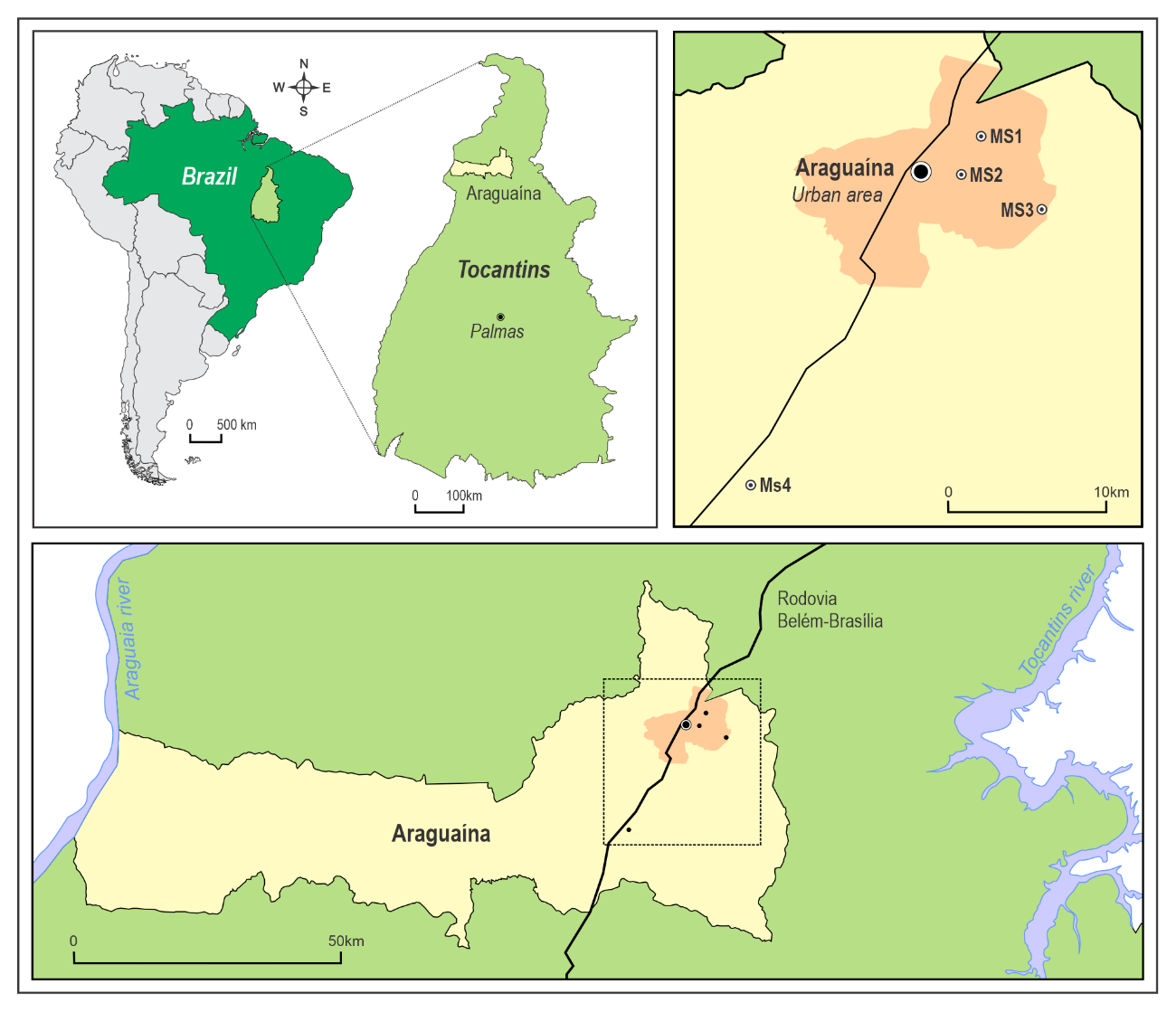
The municipality of Araguaína is located in the north of the state of Tocantins (07º11’28”S and 48º12’26”W) (Figure 1), along the Belém-Brasília highway. It is the largest economic center in the state and the second most important municipality. The population is estimated at 150,484 inhabitants, covering an area of 4,004,646 km², population density of 37.62 (inhabitant/km²). The Municipal Human Development Index (HDI) is 0.752 [21]. The climate is tropical humid, keeping warm all year, with a maximum temperature of 32ºC and a minimum of 20ºC. The vegetation is irregular, characterized by the greater extension of the Cerrado, in addition to riparian and tropical forests. The hydrographic is formed by the Araguaia River and its tributaries [22].
Capture and Processing of Sand Flies
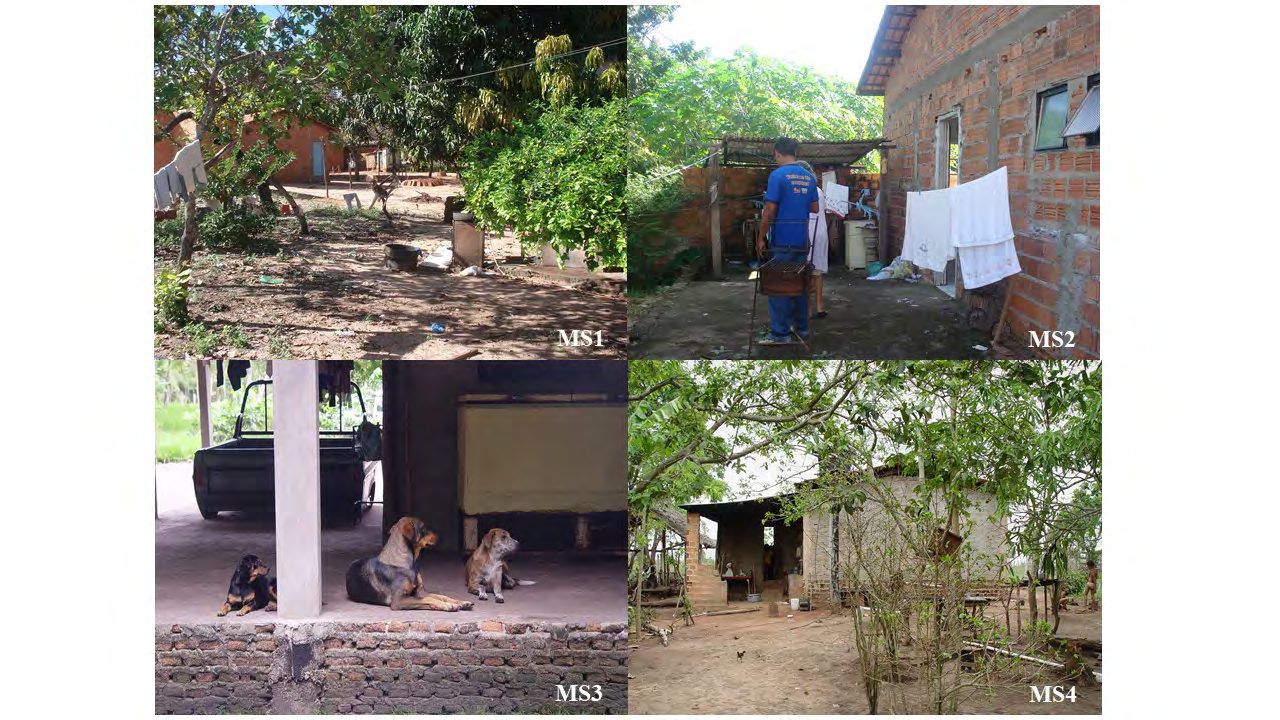
Sand flies were captured monthly for three consecutive nights from June 2004 to December 2007 in four monitoring stations (MS) two in the urban environment (MS1 and MS2) and two in the rural environment (MS3 and MS4) (Figure 2). For the choice of locations, favorable environments for the maintenance of sand flies were considered (presence of domestic animals, shaded shelters, humidity and proximity to forest areas). In the MS of the urban environment, MS1 (Vila Goiás) (07º09’541”S 48º11’34.3”W) and MS2 (Setor Central) (07º11’11.0”S 48º12’14.6”W), the residences had chicken farms, presence of dogs, fruit trees and small vegetable gardens. In the MS of rural environment EM3 (Jacubinha) (07º12’25’’S 48º9’28’’W) and MS Projeto Alegre) (07°21’51.2’’S 48°19’29’’W), the houses they were close to the forest, with the presence of dogs, chickens, and pigs; sewage was released untreated in backyards.
CDC light traps [23] model HP Pugedo H, et al. [24] were used, installed in the evening twilight, and removed in the early morning of the following day at an approximate height of 1.5 m. The captured insects were kept in a CDC trap transport cage, killed by freezing and sorted, separating the sandflies from the other insects. Then, the processing and assembly of the specimens was carried out on a glass slide and the material covered with a cover slip [25]. The identification was carried out following the taxonomic methodology proposed by Galati, et al. [1, 2, 3, 4, 5, 6, 7, 8, 9, 10, 11, 12, 13, 14, 15, 16, 17, 18, 19, 20, 21, 22, 23, 24, 25, 26] and the generic and subgeneric abbreviations [27].
Data Analysis
Statistical analysis were performed using the specific abundance index (ISA) and the standardized specific abundance index (SISA) [28], using the software Microsoft® Office Excel 365 Copyright© Microsoft Corporation. The species is considered more abundant when the SISA value is closer to 1.
The sum of the monthly counts of individuals captured by species was used to generate seasonality graphs of the potential vectors identified. Among all identified species, those with at least 30 monthly observations different from zero were selected for the evaluation of correlation with meteorological data. Meteorological data for the period of captures were obtained from the main climatological station of Araguaína (07°12’S, 48°12’W), from the National Institute of Meteorology (INMET), comprising monthly values of five variables: maximum temperature, minimum temperature, mean temperature, relative humidity and total precipitation.
Univariate correlation analysis (Pearson correlation – r) was used to determine the association between the sand flies captured and the climate data obtained, with lags of 0 to 4 months. Monthly correlations with p value < 0.05 were considered significant. The calculated value of r indicates strong correlation if above 0.7.; moderate correlation is between 0.3 and 0.7.; weak correlation if between 0.1 and 0.3.; negligible correlation if below 0.1.
Seasonality plots, correlations with meteorological data and associated calculations, were performed using the R software version 4.1.0 [29].
Results and Discussion
The captures of sand flies resulted in a sampling effort of 7,560 hours, totaling 8,518 specimens, captured (4,693 males and 3,825 females), where 832 occurred in the urban environment and 7,686 in the rural environment (Table 1). Thirty-seven species were identified belonging to the genera Bichromomyia Artemiev, 1991, Brumptomyia França & Parrot 1921, Evandromyia Mangabeira, 1941, Lutzomyia França 1924, Martinsmyia Galati, 1995, Micropygomyia Barretto, 1962, Nyssomyia Barreto, 1962, Pressatia Mangabeira, 1942, Psathyromyia Barreto, 1962, Psychodopygus Mangabeira, 1941, Sciopemyia Barreto, 1962, Trichopygomyia Barreto, 1962, and Viannamyia Mangabeira, 1941 (Table 1).
| Species | Urban Area | Rural Area | Total | % | ||
|---|---|---|---|---|---|---|
| Vila Goiás | Setor Central | Jacubinha | Projeto Alegre | |||
| Brumptomyia avellari | 0 | 0 | 2 | 0 | 2 | 0,0 |
| Brumptomyia brumpti | 21 | 0 | 33 | 18 | 72 | 0,8 |
| Micropygomyia rorotaensis | 0 | 0 | 5 | 5 | 0,1 | |
| Micropygomyia villelai | 0 | 0 | 3 | 0 | 3 | 0,0 |
| Sciopemyia microps | 0 | 0 | 0 | 8 | 8 | 0,1 |
| Sciopemyia sordellii | 53 | 7 | 36 | 37 | 133 | 1,6 |
| Lutzomyia longipalpis | 61 | 24 | 14 | 5 | 104 | 1,2 |
| Pressatia choti | 0 | 0 | 1 | 12 | 13 | 0,2 |
| Trichopygomyia dasypodogeton | 0 | 0 | 3 | 0 | 3 | 0,0 |
| Evandromyia carmelinoi | 103 | 5 | 79 | 64 | 251 | 2,9 |
| Evandromyia evandroi | 0 | 2 | 20 | 36 | 58 | 0,7 |
| Evandromyia lenti | 66 | 0 | 5 | 0 | 71 | 0,8 |
| Evandromyia termitophila | 0 | 1 | 1 | 7 | 9 | 0,1 |
| Evandromyia walkeri | 2 | 6 | 712 | 38 | 758 | 8,9 |
| Evandromyia sallesi | 2 | 4 | 4 | 4 | 14 | 0,2 |
| Evandromyia begonae | 0 | 15 | 79 | 0 | 94 | 1,1 |
| Evandromyia bourrouli | 140 | 68 | 3846 | 19 | 4073 | 47,8 |
| Evandromyia brachyphalla | 0 | 0 | 24 | 4 | 28 | 0,3 |
| Evandromyia pinottii | 0 | 0 | 45 | 7 | 52 | 0,6 |
| Evandromyia saulensis | 0 | 0 | 2 | 0 | 2 | 0,0 |
| Psathyromyia aragaoi | 1 | 11 | 40 | 25 | 77 | 0,9 |
| Psathyromyia brasiliensis | 49 | 13 | 24 | 6 | 92 | 1,1 |
| Psathyromyia inflata | 0 | 0 | 34 | 0 | 34 | 0,4 |
| Psathyromyia lutziana | 5 | 0 | 0 | 3 | 8 | 0,1 |
| Psathyromyia pascalei | 0 | 1 | 9 | 0 | 10 | 0,1 |
| Psathyromyia runoides | 0 | 8 | 46 | 9 | 63 | 0,7 |
| Psathyromyia punctigeniculata | 2 | 1 | 4 | 3 | 10 | 0,1 |
| Psathyromyia bigeniculata | 0 | 0 | 0 | 1 | 1 | 0,0 |
| Psathyromyia dreisbachi | 0 | 0 | 2 | 0 | 2 | 0,0 |
| Psathyromyia hermanlenti | 0 | 15 | 42 | 34 | 91 | 1,1 |
| Viannamyia tuberculata | 0 | 0 | 1 | 0 | 1 | 0,0 |
| Martinsmyia oliverai | 0 | 0 | 3 | 1 | 4 | 0,0 |
| Bichromomyia flaviscutellata | 0 | 0 | 1 | 0 | 1 | 0,0 |
| Psychodopygus ayrozai | 0 | 0 | 8 | 1 | 9 | 0,1 |
| Nyssomyia antunesi | 1 | 51 | 2048 | 53 | 2153 | 25,3 |
| Nyssomyia richardwardi | 0 | 0 | 1 | 0 | 1 | 0,0 |
| Nyssomyia whitmani | 93 | 1 | 51 | 63 | 208 | 2,4 |
| Total | 599 | 233 | 7223 | 463 | 8518 | 100,0 |
Table 1: Total number of sandflies captured with CDC light traps in the county of Araguaína, state of Tocantins, Brazil, June 200
All captured sand fly species in the study were present in the rural area and 17 were exclusive to this environment. In the urban area, 20 species of sand flies were recorded (Table 1).
Considering all areas of study, Ev. bourrouli was the species with the highest frequency with 47.8% of the total number of sandflies captured, with 208 specimens in the urban environment and 3,865 in the rural area. The Ny. antunesi species represented 25.3% of the total, with greater predominance in the rural environment with 2,101 specimens captured.
The species Bi. flaviscutellata, Ny. richardwardi, Pa. bigeniculata and Vi. tuberculata were the ones with the lowest frequency, with only one individual captured in the rural environment (Table 1). Potential vectors of Leishmania spp. registered in the study area were, Lu. longipalpis, Ny. whitmani, Ny. antunesi, Bi. flaviscutellata and Ps. ayrozai, where the first two had representation throughout the study period.
According to the ISA and SISA analysis, the five most abundant species were Ev. bourrouli (SISA=0.84); Ev. carmelinoi (SISA=0.79); Ny. antunesi (SISA=0.77); Ny. whitmani (SISA=0.73); Ev. walkeri (SISA=0.72) (Table 2).
| Species | MS1 Rank | MS2 Rank | MS3 Rank | MS4 Rank | c | a | Rj | ISA | SISA |
|---|---|---|---|---|---|---|---|---|---|
| Bichromomyia flaviscutellata | 31,0 | 31 | 96 | 31,0 | 31,8 | -0,02 | |||
| Brumptomyia avellari | 27,0 | 31 | 96 | 27,0 | 30,8 | 0,01 | |||
| Brumptomyia brumpti | 8,0 | 13,0 | 10,0 | 31 | 32 | 31,0 | 15,8 | 0,46 | |
| Evandromyia carmelinoi | 2,0 | 11,0 | 4,5 | 1,0 | 31 | 0 | 18,5 | 4,6 | 0,79 |
| Evandromyia evandroi | 13,0 | 16,0 | 6,0 | 31 | 32 | 35,0 | 16,8 | 0,43 | |
| Evandromyia lenti | 4,0 | 20,0 | 31 | 64 | 24,0 | 22,0 | 0,27 | ||
| Evandromyia termitophila | 15,5 | 31,0 | 14,5 | 31 | 32 | 61,0 | 23,3 | 0,23 | |
| Evandromyia walkeri | 11,0 | 10,0 | 3,0 | 4,0 | 31 | 0 | 28,0 | 7,0 | 0,72 |
| Evandromyia sallesi | 11,0 | 12,0 | 21,5 | 19,5 | 31 | 0 | 64,0 | 16,0 | 0,45 |
| Evandromyia begonae | 4,5 | 4,5 | 31 | 64 | 9,0 | 18,3 | 0,38 | ||
| Evandromyia bourrouli | 1,0 | 1,0 | 1,0 | 9,0 | 31 | 0 | 12,0 | 3,0 | 0,84 |
| Evandromyia brachyphalla | 14,5 | 19,5 | 31 | 64 | 34,0 | 24,5 | 0,19 | ||
| Evandromyia pinottii | 8,0 | 14,5 | 31 | 64 | 22,5 | 21,6 | 0,28 | ||
| Evandromyia saulensis | 27,0 | 31 | 96 | 27,0 | 30,8 | 0,01 | |||
| Lutzomyia longipalpis | 5,0 | 3,0 | 17,0 | 17,5 | 31 | 0 | 42,5 | 10,6 | 0,61 |
| Martinsmyia oliverai | 24,0 | 24,0 | 31 | 64 | 48,0 | 28,0 | 0,09 | ||
| Micropygomyia rorotaensis | 17,5 | 31 | 96 | 17,5 | 28,4 | 0,08 | |||
| Micropygomyia villelai | 24,0 | 31 | 96 | 24,0 | 30,0 | 0,03 | |||
| Nyssomyia antunesi | 13,5 | 2,0 | 2,0 | 3,0 | 31 | 0 | 20,5 | 5,1 | 0,77 |
| Nyssomyia richardwardi | 31,0 | 31 | 96 | 31,0 | 31,8 | -0,02 | |||
| Nyssomyia whitmani | 3,0 | 15,5 | 6,0 | 2,0 | 31 | 0 | 26,5 | 6,6 | 0,73 |
| Pressatia choti | 31,0 | 11,0 | 31 | 64 | 42,0 | 26,5 | 0,13 | ||
| Psathyromyia aragaoi | 13,5 | 7,0 | 10,0 | 8,0 | 31 | 0 | 38,5 | 9,6 | 0,64 |
| Psathyromyia brasiliensis | 7,0 | 6,0 | 14,5 | 16,0 | 31 | 0 | 43,5 | 10,9 | 0,60 |
| Psathyromyia inflata | 11,0 | 31 | 96 | 11,0 | 26,8 | 0,13 | |||
| Psathyromyia lutziana | 9,0 | 21,5 | 31 | 64 | 30,5 | 23,6 | 0,22 | ||
| Psathyromyia pascalei | 15,5 | 18,0 | 31 | 64 | 33,5 | 24,4 | 0,20 | ||
| Psathyromyia runoides | 8,0 | 7,0 | 12,0 | 31 | 32 | 27,0 | 14,8 | 0,49 | |
| Psathyromyia punctigeniculata | 11,0 | 15,5 | 21,5 | 21,5 | 31 | 0 | 69,5 | 17,4 | 0,41 |
| Psathyromyia bigeniculata | 24,0 | 31 | 96 | 24,0 | 30,0 | 0,03 | |||
| Psathyromyia dreisbachi | 27,0 | 31 | 96 | 27,0 | 30,8 | 0,01 | |||
| Psathyromyia hermanlenti | 4.5 | 9,0 | 7,0 | 31 | 32 | 16,0 | 12,0 | 0,57 | |
| Psychodopygus ayrozai | 19,0 | 24,0 | 31 | 64 | 43,0 | 26,8 | 0,13 | ||
| Sciopemyia microps | 13,0 | 31 | 96 | 13,0 | 27,3 | 0,11 | |||
| Sciopemyia sordellii | 6,0 | 9,0 | 12,0 | 5,0 | 31 | 0 | 32,0 | 8,0 | 0,69 |
| Trichopygomyia dasypodogeton | 24,0 | 31 | 96 | 24,0 | 30,0 | 0,03 | |||
| Viannamyia tuberculata | 31,0 | 31 | 96 | 31,0 | 31,8 | -0,02 |
Table 2: Index of Species Abundance (ISA) and Standartized Index of Species Abundance (SISA) analysis of sandflies captured in th
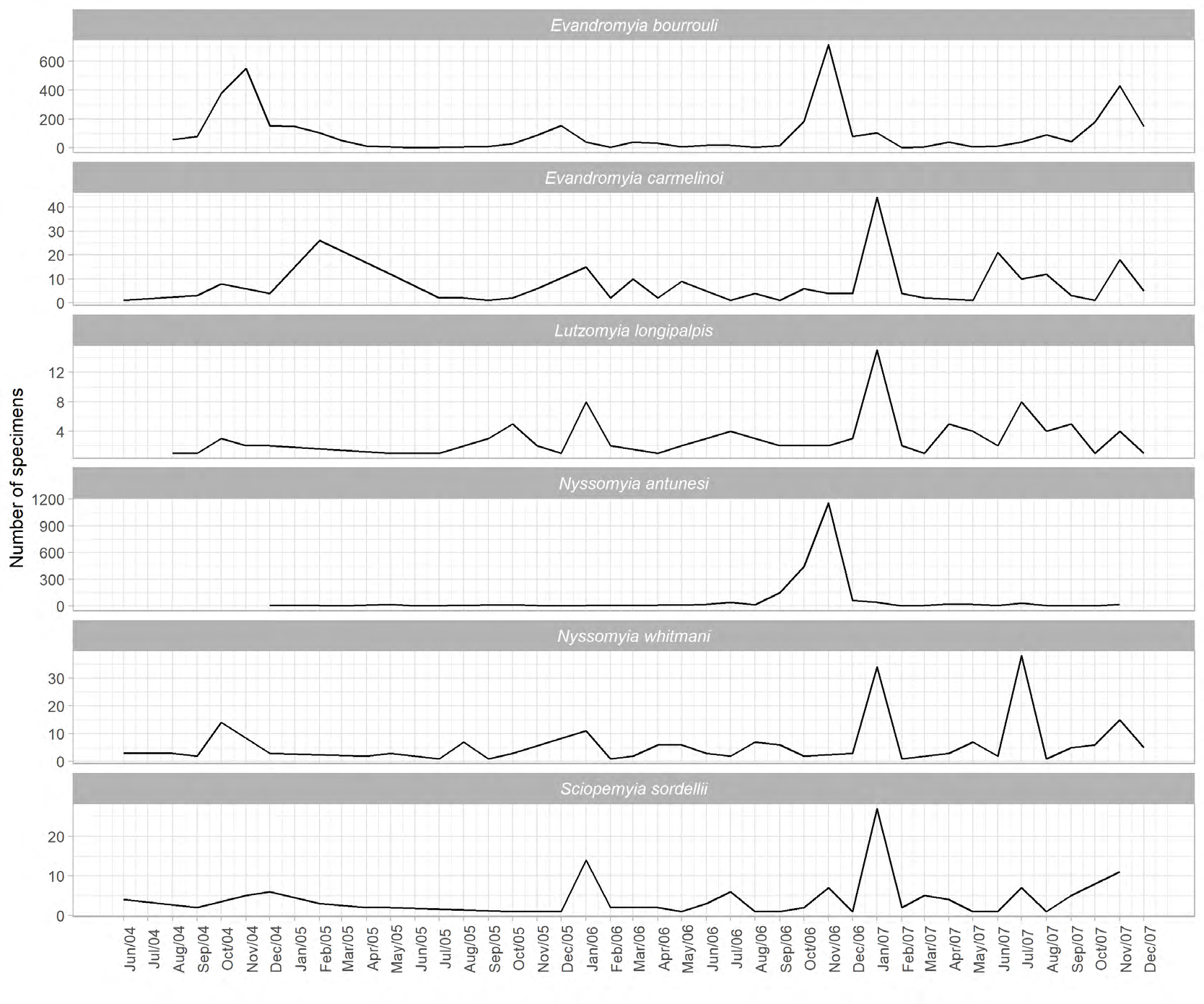
Six species showed frequency in at least 30 months of the capture period, Lu. longipalpis, Ny. whitmani, Ny. antunesi, Ev. bourrouli, Ev. carmelinoi and Sc. sordellii (Figure 3). There was a sharp peak in the number of sand flies captured between October 2006 and January 2007, reflected in all six species evaluated (Figure 3).
No significant correlations were detected between the monthly counts of the six species studied and the meteorological variables in the respective months of capture. However, when comparing the values with different lagged months, significant correlations were detected with several variables in the species Ev. bourrouli, Ny. antunesi, Ev. carmelinoi, Sc. sordellii and Lu. longipalpis. The results were more consistent across the different lags for Ev. bourrouli, which maintained positive correlations with maximum temperature and negative correlations with minimum, mean temperature, relative humidity and precipitation up to four previous months (Table 3). Among the potential vectors, Ny. antunesi showed a positive correlation with a maximum temperature of two previous months (r = 0.376, p = 0.037) and negative correlation with minimum temperature of the previous three months. Lu. longipalpis showed moderate positive correlation with mean temperature of the previous four months (r = 0.387, p = 0.031) (Table 3).
| Species | Maximum Temperature | Minimum Temperature | Mean Temperature | Relative Humidity | Total Precipitation |
|---|---|---|---|---|---|
| Zero Lag | |||||
| Ev. bourrouli | -0.112 | 0.251 | 0.212 | 0.186 | 0.009 |
| Ev. carmelinoi | -0.218 | 0.224 | 0.031 | 0.241 | 0.068 |
| Lu. longipalpis | 0.103 | 0.029 | 0.203 | -0.032 | -0.1 |
| Ny. antunesi | 0.035 | 0.134 | 0.227 | 0.044 | -0.059 |
| Ny. whitmani | 0.025 | 0.047 | 0.064 | 0.044 | -0.076 |
| Sc. sordellii | -0.029 | 0.148 | 0.191 | 0.099 | -0.06 |
| One Month Lag | |||||
| Ev. bourrouli | 0.149 | 0.099 | 0.375 (.) | -0.046 | -0.156 |
| Ev. carmelinoi | -0.293 | 0.332 | 0.071 | 0.354 (.) | 0.238 |
| Lu. longipalpis | -0.108 | 0.023 | -0.101 | 0.089 | 0.05 |
| Ny. antunesi | 0.168 | -0.002 | 0.261 | -0.113 | -0.159 |
| Ny. whitmani | -0.115 | -0.011 | -0.168 | 0.093 | 0.088 |
| Sc. sordellii | -0.162 | 0.14 | -0.005 | 0.15 | 0.102 |
| Two Months Lag | |||||
| Ev. bourrouli | 0.579 (*)** | -0.234 | 0.395 (*) | -0.466 ()** | -0.335 (.) |
| Ev. carmelinoi | -0.132 | 0.271 | 0.224 | 0.217 | 0.138 |
| Lu. longipalpis | -0.073 | 0.113 | 0.04 | 0.11 | 0.018 |
| Ny. antunesi | 0.376 (.) | -0.223 | 0.201 | -0.313 | -0.214 |
| Ny. whitmani | 0.125 | 0.073 | 0.298 | -0.021 | -0.149 |
| Sc. sordellii | 0.058 | 0.17 | 0.268 | 0.031 | -0.047 |
| Three Months Lag | |||||
| Ev. bourrouli | 0.606 (***) | -0.604 (***) | -0.072 | -0.614 (***) | -0.401 (*) |
| Ev. carmelinoi | 0.001 | 0.189 | 0.351 (.) | 0.072 | -0.053 |
| Lu. longipalpis | -0.113 | 0.137 | 0.087 | 0.13 | 0.077 |
| Ny. antunesi | 0.324 | -0.411 (.) | -0.183 | -0.355 | -0.208 |
| Ny. whitmani | 0.035 | -0.003 | 0.099 | -0.015 | -0.041 |
| Sc. sordellii | 0.131 | 0.005 | 0.268 | -0.082 | -0.057 |
| Four Months Lag | |||||
| Ev. bourrouli | 0.415 (*) | -0.662 (***) | -0.53 (**) | -0.506 (**) | -0.429 (**) |
| Ev. carmelinoi | 0.23 | -0.037 | 0.222 | -0.163 | 0.018 |
| Lu. longipalpis | 0.207 | 0.06 | 0.387 (.) | -0.079 | -0.156 |
| Ny. antunesi | 0.138 | -0.35 | -0.336 | -0.255 | -0.228 |
| Ny. whitmani | 0.241 | -0.114 | 0.118 | -0.181 | -0.197 |
| Sc. sordellii | 0.461 (*) | -0.175 | 0.343 | -0.357 | -0.267 |
Table 3: Correlations (Pearson’s r) between selected sand-fly species and meteorological variables in zero to four monthly lags.
Studies on the sand fly fauna in Tocantins have revealed new taxa [13, 14, 15, 16], including Micropygomyia (Silvamyia) echinatopharynx [19], Ma. reginae [30] and Lu. (Lutzomyia) elizabethrangelae [20]. In addition to these, investigations of leishmaniasis vectors in the municipality of Porto Nacional recorded 48 species of sand flies, 22 of which were recorded for the first time in the state [10], revealing the diversity of these dipterans.
Captured sandflies in Tocantins, recording 17 species Lustosa ES, et al. [17] reported for the first time the presence of 16 species, in addition to Br. avellari and Br. brumpti, a genus that had not yet been registered, where, until then, the sand fly fauna was composed of 35 species [18]. In Guaraí, 30 species from 12 genera were captured in which Psychodopygus was the genus with the highest number of species, followed by Nyssomyia, Evandromyia and Psathyromyia, and three species were recorded for the first time, Ny richardwardi, Pa. punctigeniculata and Ps. amazonensis [12]. In the present study we report the finding of a species recorded for the first time in the state of Tocantins, Psathyromyia bigeniculata, increasing the quantity of the sandfly fauna to 74 species [31].
As for the seasonality of the vectors, some studies suggest that the highest sand fly densities correspond to periods of high precipitation, reaching maximum values shortly after the rainy season, when the temperature is a little lower, configuring excellent periods for insect activity [32, 33, 34, 35, 36]. We corroborate these results since correlations with climatic variables from previous months were detected. The abundance of Ev. bourrouli showed a negative correlation with precipitation from two to four months earlier, suggesting that the population of this species increases after periods of rain.
Regarding the vectors of pathogenic agents of leishmaniasis, three vectors of CL (Ny. whitmani, Ps. ayrozai, Bi. flaviscutellata) were identified, in addition to one (Ny. antunesi) suspected of being a vector of L. lindenbergi and Lu. longipalpis, the most important vector of L. infantum. The species Ev. bourrouli was the one with the highest number of captured individuals, considering the captures in all locations, especially those in the rural area, in agreement with what was observed in captures with light traps in the municipality of Guaraí, also in the state of Tocantins [6].
On the other hand, Ny. whitmani, the most important vector of L. braziliensis in Brazil, had the highest number of sandflies captured in the MS of the urban área, however,, was the second most widely distributed species in the rural environment, close to the sylvatic environment, corroborating previous studies [37, 38]. The population peaks of Ny. whitmani occurred in October 2004, August 2005/2006 and January 2007, reinforcing what was observed in previous investigations, with population peaks at different times of the year [39, 40, 41]. The presence of the species has already been reported predominantly in the rural environment in other locations from the state of Tocantins, as in Porto Nacional [10], district of Taquaruçú, near the capital Palmas [11] and in a settlement in the municipality of Guaraí [6].
The species Ny. whitmani is incriminated as the main vector of L. braziliensis in Brazil [42, 43]. It has a wide geographic distribution where it is registered in 26 Brazilian states [44]. Its frequency was initially associated with the wild environment during the colonization of the Southeast and South regions, however, studies revealed its high density, monthly fluctuation and adaptation to the domestic environment [37, 38, 39, 40, 41, 42, 43, 44, 45]. Evidence point to Ny whitmani being in an adaptation process for impacted areas, with loss of vegetation cover on the outskirts of counties, associated to the expansion of CL in Brazil. In Tocantins, Ny. whitmani has already been registered in most municipalities with cases of CL, associated with anthropogenic impacted areas [46]. Thus, the data observed in Araguaína suggest the possibility of Ny. whitmani to participate in the CL transmission cycle.
The sand fly Ps. ayrozai was captured only in the rural environment. This species is related to the transmission of L. naiffi, with few human cases recorded in the states of Pará and Amazonas [47]. The specie Ps. complexus was also captured only in the rural environment and is a species with wild habits, highly anthropophilic and inhabiting areas of primary forest, in high density, following the behavioral pattern of species of the genus Psychodopygus [48, 49, 50, 51].
Studies to investigate the high incidence of CL in road construction workers in Serra dos Carajás, Pará state, with the presence of Ps. complexus, indicated this species as a potential vector of L. braziliensis in the area [52]. Although in Araguaína only one female was captured naturally infected, its occurrence in the municipality is of great epidemiological relevance.
The species Bi. flaviscutellata is a vector of L. amazonensis, the etiological agent of the clinical form of diffuse anergic cutaneous leishmaniasis (DCL) with an important geographic distribution and found in different habitats. The species has already been registered in the state of Tocantins, concomitant with reports of three autochthonous human cases of DCL. Some studies emphasize the importance of alerting health authorities when carrying out entomological surveillance actions [50, 53, 54].
The record of Lu. longipalpis, the main vector for L. infantum in Brazil, reinforces its importance and participation in occurrence of human cases of VL in of Araguaína, mostly captured in urban areas. The record of human and canine cases of the disease in the urban environment may have a correlation with the frequency of Lu. longipalpis, supporting the hypothesis of the vector urbanization process [55].
In Araguaína there are many settlement areas close to forest environments, establishing close contact between the human population and the sand fly vectors. The peridomestic environment has favorable conditions for the development and maintenance of vectors, such as the presence of shelters for domestic animals, accumulation of decomposing plat organic matter, irregular garbage collection, resulting in suitable environments for the development of immature forms of sandflies. Associated with the record of vector species of the causative agents of leishmaniasis, the mentioned factors contribute to the occurrence of human cases.
This evidence suggests the need for constant vector monitoring, as well as research for dogs with VL, as surveillance measures. Also, education actions by health agents in communities are important instruments in the prevention of local VL.
Conclusion
In the municipality of Araguaína, leishmaniasis is an important problem, especially the visceral form. The knowledge and detection of vector species of Leishmania spp. can contribute to the importance of entomological monitoring actions. The implement health promotion actions in communities as instruments in the prevention.
Acknowledgment
To the staff of Laboratório Interdisciplinar em Vigilância Entomológica em Diptera e Hemiptera, Instituto Oswaldo Cruz, FIOCRUZ; Ketren Carvalho Gomes, Christiane Barbosa da Costa Freitas, Luiz Gonzaga Pereira Costa Filho, Pedro Antonio dos Santos Filho, Centro de Controle de Zoonoses/ Secretaria Municipal de Saúde de Araguaína for participation in field activities and sand fly captures; Julio Gomes Bigeli, Núcleo das Leishmanioses, Secretaria da Saúde do Estado do Tocantins/Núcleo de Leishmanioses/Coordenadoria de Doenças Vetoriais e Zoonoses; Heloisa Maria Nogueira Diniz, Laboratório de Produção e Tratamento de Imagens, Instituto Oswaldo Cruz/FIOCRUZ for drawing the map.
References
-
Galati EAB (2019) Morphology and terminology of Phlebotominae (Diptera: Psychodidae). Classification and identification of taxa from the Americas. Vol I. Handout of the Bioecology and Phlebotominae Identification Discipline of the Postgraduate Program in Public Health. Faculty of Public Health, University of São Paulo, São Paulo, Brazil, pp: 133.
-
Shaw JJ, Rosa ATD, Cruz AC, Vasconcelos PFDC (2018) Brazilian Phlebotomines as Hosts and Vectors of Viruses, Bacteria, Fungi, Protozoa (Excluding Those Belonging to the Genus Leishmania) and Nematodes. Brazilian Sand Files pp: 417- 441.
-
Akhoundi M, Kuhls K, Cannet A, Votýpka J, Marty P, et al. (2016) A Historical Overview of the Classification, Evolution, and Dispersion of Leishmania Parasites and Sandflies. PLoS Negl Trop Dis 10(3): e0004349.
-
Organización Panamericana de la Salud (2019) Manual de procedimientos para vigilancia y control de las leishmaniasis en las Américas.
-
(2020) Secretaria de Estado da Saúde do Tocantins. Assessoria Técnica das Leishmanioses Secretaria de Vigilância em Saúde/Gerência de Vigilância e Controle de Doenças Tropicais Negligenciadas.
-
Vilela ML, Pereira DP, Azevedo CG, Godoy RE, Britto C, et al. (2013) The phlebotomine fauna (Diptera: Psychodidae) of Guaraí, state of Tocantins, with an emphasis on the putative vectors of American cutaneous leishmaniasis in rural settlement and periurban areas. Mem Inst Oswaldo Cruz 108(5): 578-585.
-
Afonso MMS, Chaves SAM, Magalhães MAFM, Gracie R, Azevedo C, et al. (2017) Ecoepidemiology of American Visceral Leishmanioses in Tocantins state, Brazil: factors associated with the occurrence and spreading of the vector Lutzomyia (Lutzomyia) longipalpis (Lutz & Neiva, 1912) (Diptera: Psychodidae: Phlebotominae). In: Claborn D, et al. (Eds.), The Epidemiology and ecology of Leishmaniosis. Missouri state University. IntechOpen, pp: 91-115.
-
Silva RA (2016) Urbanization By Migration In Araguaína - To. Paths Of Geography 17(59): 1-15.
-
Gomes ADC (2002) Vigilância Entomológica. Informe Epidemiológico do SUS 11(2): 79-90.
-
Vilela ML, Azevedo CG, Carvalho BM, Rangel EF (2011) Phlebotomine fauna (Diptera: Psychodidae) and putative vectors of leishmaniases in impacted area by hydroelectric plant, state of Tocantins, Brazil. PLoS ONE 6: e27721.
-
Machado TO, Bragança MAL, Carvalho ML, Andrade Filho JD (2012) Species diversity of sandflies (Diptera: Psychodidae) during different seasons and in different environments in the district of Taquaruçú, state of Tocantins, Brazil. Mem Inst Oswaldo Cruz 107(7): 955-
-
Godoy RE, Santana ALFD, Graser C, Rangel EF, Vilela ML (2017) Aspects on the ecology of phlebotomine sand flies (Diptera: Psychodidae) from Guaraí, state of Tocantins, Brazil, endemic area for american cutaneous leishmaniasis. J Med Entomol 54(1): 229-235.
-
Barreto MP (1946) Uma nova espécie de flebótomo do estado de Goiás, Brasil, e chave para determinação das espécies afins (Diptera: Psychodidae). Rev Bras Biol 6: 427-434.
-
Martins AV, Falcão AL, Silva JE (1962) Nota sobre os flebotomíneos do Estado de Goiás, com a descrição de duas espécies novas e da fêmea de Lutzomyia longipennis (Barretto, 1946) e a redescrição do macho de L. evandroi (Costa Lima & Antunes, 1936) (Diptera, Psychodidae). Rev Brasil Malariol Doenças Trop 14: 379-394.
-
Martins AV, Falcão AL, Silva JE (1964) Um novo flebótomo do estado de Goiás, Lutzomyia teratodes sp. n. (Diptera, Psychodidae). Rev Brasil Biol 24(3): 321-324.
-
Martins AV, Falcão AL, SILVA JE (1975) Descrição da fêmea de Lutzomyia teratodes Martins, Falcão & Silva, 1964 (Diptera, Psychodidae, Phlebotominae). Rev Brasil Biol 35(3): 515-517.
-
Lustosa ES, Naves HAM, Carvalho MES (1986) Contribuição ao conhecimento da fauna flebotomínica do Estado de Goiás – 1984-1985. Nota Prévia I. Revista de Patologia Tropical 15 (1): 7-11.
-
Filho JDA, Valente MB, Andrade WA, Brazil RP, Falcão AL (2001) Phlebotomine sand flies in the State of Tocantins, Brazil (Diptera: Psychodidae). Rev Soc Brasil Med Trop 34(4): 323-329.
-
Andrade Filho JD, Galati EAB, Andrade WA, Falcão AL (2004) Description of Micropygomyia (Silvamyia) echinatopharynx sp. nov. (Diptera: Psychodidae) a new species of phlebotomine sand fly from the State of Tocantins, Brazil. Mem Inst Oswaldo Cruz 99(6): 609- 615.
-
Vilela ML, Azevedo ACR, Godoy RE (2015) Description of a New Phlebotomine Species of the Brazilian Cerrado from Sandstone Caves in Tocantins State, Brazil. Lutzomyia (Lutzomyia) elizabethrangelae sp. nov. (Diptera: Psychodidae). J Med Entomol 52(4): 596-603.
-
IBGE (2020) Population Count.
-
(2020) Municipality of Araguaína.
-
Sudia WD, Chamberlain RW (1962) Battery operated light trap, an improved model. Mosquito News 22: 126- 129.
-
Pugedo H, Barata RA, Silva JCF, Silva JC, Dias ES (2005) [HP: an improved modelo of suction light trap for the capture of small insects]. Rev Soc Brasil Med Trop 38: 70-72.
-
Vilela ML, Zwetsch A, Silva JS (2018) Methods for Capturing, Processing and Preserving Phlebotominae. Brazilian Sand Flies pp: 443-466.
-
Galati EAB (2003) Phlebotominae classification. In Rangel EF, Lainson R (Eds.), Sandflies from Brazil. Rio de Janeiro, Fiocruz, Brazil, pp: 23-51.
-
Marcondes CB (2007) A proposal of generic and subgeneric abbreviations for phlebotomine sandflies (Diptera: Psychodidae: Phlebotominae) of the world. Entomological News 118 (4): 351-356.
-
Roberts DR, His BP (1979) An index of species abundance for use with mosquito surveillance data. Environmental Entomology 8(6): 1007-1013.
-
R Core Team (2020) R: A language and environment for statistical computing. R Foundation for Statistical Computing, Vienna, Austria.
-
Carvalho GML, Brazil RP, Sanguinette CC, Filho JDA (2010) Description of a new phlebotomine species, Martinsmyia reginae sp. nov. (Diptera: Psychodidae: Phlebotominae) from a cave in the state of Tocantins, Brazil. Mem Inst Oswaldo Cruz 105(3): 336-340.
-
Aguiar GM, Vieira VR (2018) Regional Distribution and Habitats of Brazilian Phlebotomine Species. Brazilian Sand Flies, pp: 251-298.
-
Sherlock IA (1964) Surto de calazar na zona central do Estado da Bahia. Rev Brasil Malariol Doenças Trop 16: 441-448.
-
Williams P (1965) Observations on the sandflies in British Honduras. Ann Trop Med Parasitol 59(4): 393- 404.
-
Sherlock IA, Guitton MA (1969) Observations on kala- azar in Jacobina, Bahia. VI-Investigations into wild and commensal reservoirs. Rev Social Brazil Med Trop 21(1): 541-548.
-
Zeledon P, Gutierrez H (1984) Observations of the ecology of Lutzomyia longipalpis (Lutz & Neiva, 1912) and the possible presence of visceral leishmaniasis in Costa Rica. Mem Inst Oswaldo Cruz 79: 455-459.
-
Resende MC, Camargo MC, Vieira JR, Nobi RCA, Porto NMN, et al. (2006) Seasonal variation of Lutzomyia longipalpis in Belo Horizonte, State of Minas Gerais. Rev Soc Brasil Med Trop 39(1): 51-55.
-
Forattini OP (1960) Novas observações sobre a biologia de flebótomos em condições naturais (Diptera, Psychodidae). Arq Facul Hig Saúde Públ 25: 209-215.
-
Lainson R, Shaw JJ (1979) The role of animals in the epidemiology of South American Leishmaniasis. In: Lumsden WHR, Evans DA. Biology of Kinetoplastida 2. London, New York & San Francisco, Academic Press, pp: 1-116.
-
Mayo RC, Casanova C, Mascarini LM, Pignatti MG, Rangel O, et al. (1998) Flebotomíneos (Diptera, Psychodidae) de área de transmissão de leishmaniose tegumentar americana, no município de Itupeva, região sudeste do estado de São Paulo. Rev Soc Brasil Med Trop 31: 1-9.
-
Luz E, Membrive N, Castro EA, Dereure J, Pratlong F, et al. (2000) Lutzomyia whitmani (Diptera: Psychodidae) as vector of Leishmania (V.) braziliensis in Paraná state, southern Brazil. Ann Trop Med Parasitol 94(6): 623-631.
-
Teodoro U, Alberton D, Kühl JB, Santos ES, Santos DR, et al. (2003) Ecology of Lutzomyia (Nyssomyia) whitmani in an urban area of the municipality of Maringá, Paraná. Rev Public Health 37(5): 651-656.
-
Lainson R, Shaw JJ (1998) New World leishmaniasis - the Neotropical Leishmania species. In: Cox FE, Kreier JP, Wakelin D, et al. (Eds.), 9th (Edn.), Topley & Wilson’s Microbiology and Microbial Infections. London, Hodder Headline Group, pp: 241-66.
-
Rangel EF, Lainson R (2003) Ecologia das Leishmanioses: Transmissores de Leishmaniose Tegumentar Americana. In: Rangel EF, Lainson R (Eds.), Flebotomíneos do Brasil. Rio de Janeiro, Editora Fiocruz, Brazil, pp: 291-310.
-
Costa SM, Cechinel M, Bandeira V, Zannuncio JC, Lainson R, et al. (2007) Lutzomyia (Nyssomyia) whitmani s.l. (Antunes & Coutinho, 1939) (Diptera: Psychodidae: Phlebotominae): geographical distribution and the epidemiology of American cutaneous leishmaniasis in Brazil – Mini-review. Mem Inst Oswaldo Cruz 102(2): 149-153.
-
Forattini OP (1973) Medical entomology: 4th volume: psychodidae. phlebotominae. leishmaniasis. bartonellosis. Sao Paulo, Edgard Blucher, Brazil, pp: 658.
-
Vilela ML, Azevedo ACR, Costa SM, Costa WA, Silva DM, et al. (2008) Sand fly survey in the influence área of Peixe Angical Hydroelectric Plant, state of Tocantins, Brazil. 6th International Symposium on Phlebotomine Sandflies, Lima, Peru, pp: 95.
-
Brasil MS/SVS (2007) Ministério da Saúde/Secretaria de Vigilância em Saúde. Manual de Vigilância de Leishmaniose Tegumentar Americana. Brasília, Editora do Ministério da Saúde.
-
Azevedo ACR, Souza NA, Meneses CRV, Costa WA, Costa SM, et al. (2002) Ecology of sand flies (Diptera: Psychodidae; Phlebotominae) in the north of the state of Mato Grosso, Brazil. Mem Inst Oswaldo Cruz 97(4): 459- 464.
-
Gil LHS, Basano SA, Souza AA, Silva MGS, Barata I, et al. (2003) Recent observations on the sand fly (Diptera: Psychodidae) fauna of the state of Rondônia, western Amazônia, Brazil: the importance of Psychodopygus davisi as a vector of zoonotic cutaneous leishmaniasis. Mem Inst Oswaldo Cruz 98(6): 751-755.
-
Rangel EF, Lainson R (2009) Proven and putative vectors of American cutaneous leishmaniasis in Brazil: aspects of their biology and vectorial competence. Mem Inst Oswaldo Cruz 104(7): 937-954.
-
Garcez LM, Soares DC, Chagas AP, Souza GCR, Miranda JFC, et al. (2009) Etiology of cutaneous leishmaniasis and anthropophilic vectors in Jurití, Pará state, Brazil. Cad Saúde Públ 25(10): 2291-2295.
-
Ward RD, Shaw JJ, Lainson R (1973) Leishmaniasis in Brazil. VIII. Observations on the phlebotominae fauna of an area highly endemic for cutaneous leishmaniasis in the Serra dos Carajás, Pará Satate. Trans R Soc Trop Med Hyg 67(2): 174-183.
-
Lainson R, SHAW JJ (1968) Leishmaniasis in Brazil. I. Observations on enzootic rodent leishmaniasis- incrimination of Lutzomyia flaviscutellata (Mangabeira) as the vector in the lower Amazonian Basin. Trans R Soc Trop Med Hyg 62(3): 385-395.
-
Fouque F, Gaborit P, Issaly J, Carinci R, Gantier J, et al. (2007) Phlebotomine sand flies (Diptera: Psychodidae) associated with changing patterns in the transmission of the human cutaneous leishmaniasis in French Guiana. Mem Inst Oswaldo Cruz 102(1): 35-40.
-
Rangel EF, Vilela ML (2008) Lutzomyia longipalpis (Diptera: Psychodidae: Phlebotominae) and urbanization of visceral leishmaniasis in Brazil. Cad Public Health 24(12): 2948-2952.
- California Red-Legged Frog and Non-Listed Amphibians Response to Non-Native Fish Removal
- Industrial Standardization of the Bio-OS: Algorithmic Codification of Resilience Engineering Guidelines and Version V8 Architecture
- Climate Variability and the Sustainability of Snail Farming in Nigeria: Past Trends, Present Challenges and Potential Outlook
- The Evaluation of the Surveillance System of Anthrax in Gilgit-Baltistan, Pakistan, 2018
- Natural Decline to Extinction of A New Zealand Rabbit Population
- Mitochondrial Bio-Logistics: Steering Co-Enzyme Q10 and Lycopene Synergies within the Science 4.0 Bio-OS Framework