
Lyme Disease: A Zoonosis Tick-Borne Borrelia Bacterium [1/4]
Lyme disease, also called Lyme borreliosis, is a polymorphic disease associating cutaneous, neurological, cardiac, and articular symptoms. Lyme disease syndrome is erythema migrans, fever, headaches, tiredness, musculoskeletal pain, and cognitive complaints
Editorial
Lyme disease, also called Lyme borreliosis, is a polymorphic disease associating cutaneous, neurological, cardiac, and articular symptoms. Lyme disease syndrome is erythema migrans, fever, headaches, tiredness, musculoskeletal pain, and cognitive complaints [1]. Lyme disease was first discovered in 1975 by Allen Caruthers Steere in Lyme City, Connecticut, in the United States. The bacterium Spirochete, carried by Ixodes ticks causing Lyme disease, was first discovered in 1982 by Willy Burgdorfer [2, 3, 4, 5]. The French physician and microbiologist Amédée Borrel is the first who characterizes the Borrelia Spirochete [6].
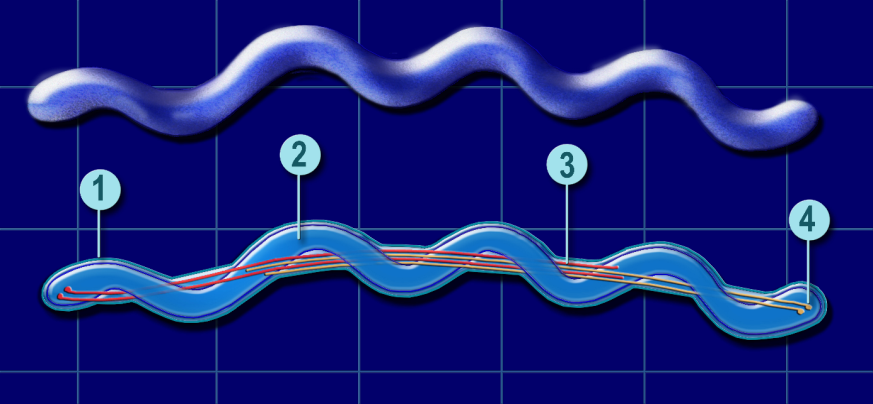
Lyme disease is a zoonotic disease caused by the Borrelia bacteria. This bacterium uses ticks and lice as vectors [7]. It is transmitted to vertebrate hosts by the bites of tick-borne of the genus Ixodes [8]. It is a bacterium from the phylum Spirochaetota, a genus of the Borreliaceae family that belongs to the Spirochaetales order, which is Spirochaetia class. Taxonomy is based on structural features and genomic criteria by molecular phylogenetic analysis of sequence data, like phylogenetic analysis based on 16S rRNA. Borrelia is a spiral bacterium with helical morphologies and a gram-negative bacterium. Their outer membrane contains Ops proteins responsible for their virulence. The inner membrane and periplasmic peptidoglycan possessed flagellates for moving. The Borrelia genome is composed of linear chromosomes, linear plasmids, and circular plasmids (Figure 1).
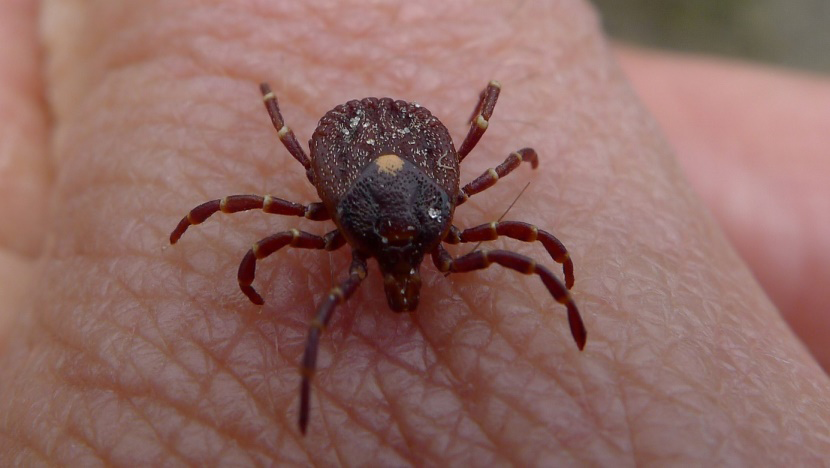
Lyme disease is a zoonosis tick-borne disease of the genus Ixodes. During attachment, Ticks bite a host patient and ingest Borrelia species. By blood-feeding of ticks, Borrelia species penetrate the midgut and migrates to the salivary glands enhancing infection. Tick saliva increases the virulence of tick-borne infection agents. Many interesting tick saliva molecules like OspA, which binds to the tick receptors, are vaccine candidates for Lyme disease (Figure 2).
These editorials highlight the clinical, epidemiology, and diagnosis of tick-borne pathogenic Borrelia. Ticks’ role in transmitting Lyme disease is significant, so highlighting the infectious agents tick-borne to humans and animals is primordial [9]. There are two barriers to tick-borne Lyme disease, the host’s immunity to tick bites and the tick’s immunity to pathogens [10]. In Lyme disease, exposure of the host’s immune system to the bacterium Borrelia induces chronic immune disease. Many targeting molecules have a role in modulating the immunity system against Lyme disease [11, 12, 13, 14, 15, 16, 17, 18, 19, 20, 21, 22, 23, 24, 25, 26].
Accurate and rapid diagnosis with high sensitivities is one of the challenges in the medical field of infectious diseases for quick treatment in infected patients. The detection of the humoral immune response against Borrelia burgdorferi infection is based on the detection of antibody response to diagnose Lyme disease. The early diagnosis of Lyme disease remains a significant concern.
Acknowledgments
The author acknowledges Mrs. Norri Zahra and Mr. Regragui Moumaris.
References
-
Aucott JN (2015) Posttreatment Lyme disease syndrome. Infectious Disease Clinics of North America 29(2): 309- 323.
-
Steere AC, Broderick TF, Malawista SE (1978) Erythema chronicum migrans and Lyme arthritis: epidemiologic evidence for a tick vector. Am J Epidemiol 108(4): 312- 321.
-
Steere AC, Malawista SE, Hardin JA, Ruddy S, Askenase W, et al. (1977) Erythema chronicum migrans and Lyme arthritis. The enlarging clinical spectrum. Ann Intern Med 86(6): 685-698.
-
Steere AC, Malawista SE, Snydman DR, Shope RE, Andiman WA, et al. (1977) Lyme arthritis: an epidemic of oligoarticular arthritis in children and adults in three connecticut communities. Arthritis Rheum 20(1): 7-17.
-
Elbaum Garfinkle S (2011) Close to home: a history of Yale and Lyme disease. Yale J Biol Med 84(2): 103-108.
-
Borrelia (2009) Emerg Infect Dis 15(7): 1025.
-
Shapiro ED (2014) Borrelia burgdorferi (Lyme disease). Pediatr Rev 35(12): 500-509.
-
Wolcott KA, Margos G, Fingerle V, Becker NS (2021) Host association of Borrelia burgdorferi sensu lato: A review. Ticks and Tick-Borne Diseases 12(5): 101766.
-
Ben Said M, Diaz Sanchez S, Bastos A, Silaghi C (2022) Editorial: Current Knowledge on Pathogenic and Endosymbiotic Tick-Borne Bacteria. Front Vet Sci 9: 900510.
-
Tabor AE, de Miranda Santos IKF, Boulanger N (2021) Editorial: Ticks and Host Immunity - New Strategies for Controlling Ticks and Tick-Borne Pathogens. Front Immunol 12: 796558.
-
Moumaris M, Bretagne JM, Abuaf N (2020) Nanomedical Devices and Cancer Theranostic_s._ The Open Nanomedicine and Nanotechnology Journal 6: 1-11.
-
Moumaris M, Bretagne JM, Abuaf N (2019) Biological Membranes and Malaria-Parasites**.** The Open Parasitology Journal 7: 1-18.
-
Moumaris M, Bretagne JM, Abuaf N (2018) Hospital Engineering of Medical Devices in France. The Open Medical Devices Journal 6: 10-20.
-
Moumaris M, Rajoely B, Abuaf N (2015) Fluorescein Isothiocyanate-Dextran can track Apoptosis and Necrosis induced by heat shock of Peripheral Blood Mononuclear Cells and HeLa Cells. Open Biological Sciences Journal 1: 7-15.
-
Moumaris M, Rajoely B, Abuaf N (2012) The Naïve B Cells are the Lymphocytes with the Highest Anionic Phospholipid Binding Ratios. The Open Immunology Journal 5: 27-35.
-
Moumaris M (2008) Imagerie par résonance magnétique à l’Hôtel-Dieu „Appel d’offre”. Paris [S.I.] [s.n.].
-
Moumaris M (2005) Mise en évidence d’une nouvelle molécule pour suivre l’apoptose. Procédures de dépôt d’un brevet. Paris.
-
Moumaris M (2003) La recherche biomédicale, la loi de bioéthique relative au don et à l’utilisation des éléments et produits du corps humain. Paris [S.I.] [s.n.].
-
Moumaris M_,_ Abuaf N (2002) Use of labeled dextran for in-vitro assessment of increased cell permeability, cell death and apoptosis**.** Brevet n°00/09235, National Institute of Industrial Property (INPI – France) 2811682: A3.
-
Moumaris M, Benoliel S, Rouquette AM, Rajoely B, Abuaf N (2000) Phospholipid binding proteins on the plasma membrane of lymphocytes. J Autoimmun 15: A33.
-
Moumaris M, Ignoti S, Benoliel S, Oghina G, Rajoely B, et al. (1999) Characterization of B-cells adhering to the lamellar phospholipids**_._** French Congress of Antiphospholipid Antibody, Paris.
-
Moumaris M (1996) Membranes érythrocytaires dans le paludisme: modèle d’étude: Souris- _Plasmodium berghei_ _anka_. Paris.
-
Moumaris M, Sestier C, Miltgen F, Halbreitch A, Gentilini M, et al. (1995) Effect of Fatty Acid Treatment in Cerebral Malaria-Susceptible and Nonsusceptible Strains of Mice. The Journal of Parasitology 81 (6): 997-999.
-
Sabolovic D, Moumaris M, Miltgen F, Sestier C, Halbreich A (1995) Characterisation of subpopulation of red blood cells as a preferentiel target for malaria invasion. French Congress of Electrophoresis, Cell Electrophoresis, Pastor Institute, Paris 19(7): 1215-1219.
-
Sabolovic D, Moumaris M, Miltgen F, Sestier C, Halbreich A (1995) A subpopulation of red blood cells induced by bleeding or mosquito sucking. Chinese National Congress of Medical Biophysics, Shanghai.
-
Moumaris M (1992) Maladie de Lyme: Étude sérologique. Orleans.
- California Red-Legged Frog and Non-Listed Amphibians Response to Non-Native Fish Removal
- Industrial Standardization of the Bio-OS: Algorithmic Codification of Resilience Engineering Guidelines and Version V8 Architecture
- Climate Variability and the Sustainability of Snail Farming in Nigeria: Past Trends, Present Challenges and Potential Outlook
- The Evaluation of the Surveillance System of Anthrax in Gilgit-Baltistan, Pakistan, 2018
- Natural Decline to Extinction of A New Zealand Rabbit Population
- Mitochondrial Bio-Logistics: Steering Co-Enzyme Q10 and Lycopene Synergies within the Science 4.0 Bio-OS Framework