
Biological Characteristics of the Wedge Sea Hare (Dolabella auricularia)
Dolabella auricularia, also known as the wedge sea hare, is a marine species which belongs to the gastropods. Dolabella is called the sea hare because it has rhinophores, the two rabbit-ears-like tentacles on the top of their head. These animals have secondary metabolites which are important in biomedical research. In addition, this animal is also known as an algae cropper, so that it is utilized in aquaculture to clean seawater systems. This short article describes the biological properties of it so that it becomes a marine biota that can be utilized in biomedicine and aquaculture.
The Classification of Wedge Sea Hare
The classification of Sea Hare is as follows: Kingdom: Animalia Phylum: Mollusca Class: Gastropoda Ordo: Anaspidea Family: Aplysiidae Genus: Dolabella Species: Dolabella auricularia
The Habitat and Biological Characteristics of Wedge Sea Hare
D. auricularia, which also known as the wedge sea hare, is a group of marine species in group of gastropods. D. auricularia is called the sea hare because of its appearance, which has a long rhinoporus which is like the ears of a rabbit and that is used for smell. Sea hare has body characteristics from light brown to dark brown, with irregular black spots. There are irregular nodules all over its body, the shape of the back of its body is like a cut and has ink like squid. Sea hare is usually found in shallow places, including at low tide, while the length of its body can reach 40 cm. The habitat of wedge sea hare rabbits in small currents usually takes shelter in seagrass bed, sand and mud [1] (Figure 1).
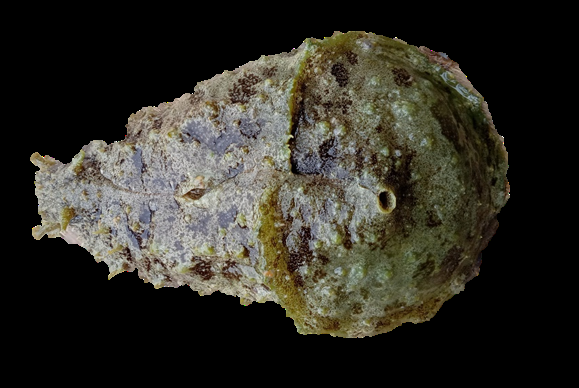
Wedge sea hare is one of animals which lives in sea waters. These animals are usually in shallow areas where there are a lot of algaaes. Lozada, et al. [2] stated that in their research, sea hare likes green algae Cladophora, Cymodocea rotundata and brown algae Sargassum cristaefolium. The characteristics of this animal is that it has a pair of tentacles located on the dorsal side. On the ventral side of this sea hare, there is a shell which covers the ink gland. The ink gland in sea rabbits is used in dangerous situation [1].
Wagele, et al. [3] stated that sea hare is still in the same family as Aplysiidae. Gosliner, et al. [4] stated that D. auricularia is one of species found in the Indo-Pacific area. Burghardt, et al. [5] stated that one of the distribution areas of the sea hare is in the waters of North Sulawesi. Iijima, et al. [6] in their research stated that the isolation from the body and skin of sea hare found the dolabelanin compound B2 which has antibacterial activity with a Minimum Inhibitory Concentration (MIC) of 2.5 µg/mL on Bacillus subtilis bacteria. Manullang, et al. [1] also stated that the ink of sea hare can inhibit the activity of Pseudomonas aeruginosa and Staphylococcus aureus bacteria.
Antibacterial activity can be tested both in vivo and in vitro. In Manullang’s research [1], stated that antibacterial testing was done in vitro using the agar diffusion method, the main principle was that compounds would be absorbed by the disc paper. The results of antibacterial test on the extract of sea hare indicated that the extract of sea hare had a different ability to inhibit bacterial activity at a concentration of 0.1 mg. The methanol extract of sea hare had a higher bacterial inhibition zone than the ethyl acetate extract of sea hare. The highest inhibition zone was chloramphenicol with a diameter of 14.16 mm for Staphylococcus aureus and 18.52 mm for Escherichia coli. These animals can be used in aquaculture, because their active ingredients are able to inhibit the growth of bacteria and can increase immunity in fish [7]. In preclinical studies, both in vitro and in vivo, dolastatins demonstrated potent activity against a variety of lymphomas, leukemias, and solid tumors. These drugs have up to 200 times the potency of vinblastine, another antimitotic drug used to treat Hodgkin lymphoma and other types of cancer.
In addition, the extracts of sea hare prepared in microcapsules had a positive effect on blood profile, absolute growth, feed consumption rates, feed efficiency and survival in comet fish against bacterial pathogen [7, 8, 9].
The results of chemical analysis of sea hare (D. auricularia) meat were 62.11% water content, 12.49% protein, 23.02% ash content, 0.87% fat, 1.52% carbohydrates. The results of the analysis of amino acid content of sea hare meat obtained 9 types of essential amino acid and 6 types of non-essential amino acid. The essential amino acid contained in sea hare (D. auricularia) meat are arginine 1.61%, leucine 0.90%, valine 0.54%, threonine 0.50%, I-leucine 0.46%, phenylalanine 0.44%, lysine 0.34%, methionine 0.20%, histidine 0.07%. While the non-essential amino acid contained in sea hare meat (D. auricularia) are namely glycine 3.02%, glutamic acid 2.78%, aspartic acid 1.59%, alanine 1.11%, serine 0.95%, tyrosine 0.41% [1]. Derby, et al. [10] stated that one of the most abundant amino acid types found in marine molluscs is glycine. Glycine and arginine have important functions in the body. According to Gosain, et al. [11] stated that arginine can influence the function of T cells in accelerating wound healing and secretion of prolactin hormone. Wang, et al. [12] stated that glycine has an important role in metabolism of body.
The fatty acid content in wedge sea hare (D. auricularia) meat is divided into 3 groups, namely saturated fatty acid (SAFA), monounsaturated fatty acid (MUFA), and polyunsaturated fatty acid (PUFA). The mineral content which is in sea hare (D. auricularia) meat namely calcium (Ca) 68100 mg/kg, potassium (K) 1000 mg/kg, magnesium (mg) 7600 mg/kg, sodium (Na) 8200 mg/kg, phosphorus (P) 1200 mg/kg [1]. Calcium levels in sea hares are higher compared to other gastropods.
To summarize, D. auricularia has biomedical, economic, and other potentials as a marine biota for the pharmaceutical industry and fish health in aquaculture. As a result, additional research is required for their development.
References
-
Manulang B, Purwaningsih S, Azrifitria A (2016) Characteristics of amino acid, fatty acid and mineral of sea hare. Jurnal Pengolahan Hasil Perikanan Indonesia 19 (2): 168-176.
-
Lozada PWM, Flores LAJ, Tan RM, Dy DT (2005) Abundance and ingestion rate of the Sea Hare. D. auricularia (Lightfoot 1786) in a Shallow Embayment (Eastern Mactan is Cebu. Central Philippines). Journal Philippine Scient 42: 67-78.
-
Wegele H, Klussmann-Kolb A (2005) Opisthobranchia (Mollusca. Gastropoda) – More than Just Slimy Slugs; Shell Reduction and its Implications on Defence and Foraging. Journal Frontiers in Zoology 2(3): 1-18.
-
Gosliner TM, Behrens DW, Williams GC (1996) Coral reef animals of the Indo-Pacific. Sea Challengers. Monterey. California.
-
Burghardt I, Bochum Carvalho R, Eheberg D, Gerung , Kaligis F, et al. (2006) Molluscan diversity at Bunaken National Park. Sulawesi. Journal Zoological Society Wallacea 2: 29-43.
-
Iijima R, Kisugi J, Yamazaki M (2003) A novel antimicrobial peptide from the sea hare D. auricularia. Journal Developmental and Comparative Immunology 27: 305-311.
-
Nurhalisa N, Wulandari Nur I, Suryani Sabilu K (2021) Identification of Bioactive Compounds in Wedge Sea Hare Extract (Dolabella auricularia) Extract and Its Inhibition Against Aeromonas hydrophila. Media Akuatika: Jurnal Ilmiah Jurusan Budidaya Perairan 6(4): 166-173.
-
Nurhalisa N, Nur I, Suryani S (2022) Potential extracts of wedge sea hare (Dolabella auricularia) as immunostimulators in comet fish (Carassius auratus auratus) infected by Aeromonas hydrophila. Biodiversitas 23: 1884-1893.
-
Syamsuriadi, Nur I, Suryani (2022) Levels Consumption of Sea Rabbit (Dolabella auricularia) Extract. International Journal of Zoology and Animal Biology 5(4): 000393.
-
Derby CD, Kicklighter CE, Jhonson PM, Zang X (2007) Chemical composition of inks of diverse marine molluscs suggests convergent chemical defenses. Journal Chemical Ecology 33(2): 1105-1113.
-
Gosain S, DiPietro LA (2010) Factors Affecting Wound Healing. J Dent Res 89(3): 219-229.
-
Wang W, Wu Z, Dai Z, Yang Y, Wang J, et al. (2013) Glycine metabolism in animals and humans: implications for nutrition and health. Journal Amino Acids 45(3): 463- 477.
- California Red-Legged Frog and Non-Listed Amphibians Response to Non-Native Fish Removal
- Industrial Standardization of the Bio-OS: Algorithmic Codification of Resilience Engineering Guidelines and Version V8 Architecture
- Climate Variability and the Sustainability of Snail Farming in Nigeria: Past Trends, Present Challenges and Potential Outlook
- The Evaluation of the Surveillance System of Anthrax in Gilgit-Baltistan, Pakistan, 2018
- Natural Decline to Extinction of A New Zealand Rabbit Population
- Mitochondrial Bio-Logistics: Steering Co-Enzyme Q10 and Lycopene Synergies within the Science 4.0 Bio-OS Framework