
Citizen Science for the Study of Birds in Distinct Biomes: Diet of the Rufous-Tailed Jacamar (Galbula ruficauda) (Aves, Galbulidae) in Brazil
Data obtained by citizen scientists have been used by researchers to study the natural history of tropical birds in several countries. For example, this approach has been increasing the knowledge about their feeding ecology, as many photographs show birds holding prey with their foot and/or bill. Due to this, the diet of numerous bird species can be examined with citizen science data. The Rufous-tailed Jacamar (Galbula ruficauda) is a forest bird species widely distributed throughout the Neotropics, and its diet was scarcely quantified in a few localities. This study aimed to investigate the diet of the Rufous-tailed Jacamar in three Brazilian biomes: the Caatinga, the Cerrado and the Atlantic Forest. Searches for photographs with evidence of feeding activities were done in February 2021 in the WikiAves and eBird databases, the major citizen science projects regarding birds found in Brazil. For each selected record, the captured prey was tentatively identified to the taxonomic Order level, and the date of obtention was classified as part of dry or rainy periods. The chi-square test was used to compare the numbers of prey of distinct insect orders in different periods and biomes. A total of 283 feeding records were obtained by citizen scientists in the Caatinga (12%) and surrounding portions of the Cerrado (45%) and the Atlantic Forest (43%). Captured prey comprised seven insect orders, and 15% of them could not be identified. In the Cerrado, the most numerous prey in its diet were those of the orders Lepidoptera and Odonata, followed by Hymenoptera and Hemiptera, in both the dry and rainy periods. On the other hand, substantial seasonal variation was observed in the Atlantic Forest. Records with Lepidoptera were more numerous than those with other insects in the dry period, while Hymenoptera had more records than other orders in the rainy period. In the Caatinga, prey with more records were those of the orders Odonata, Lepidoptera and Hymenoptera. This study suggests that photographic records available in citizen science databases, such as WikiAves and eBird, can be used to improve our knowledge about the diet of birds found in the Neotropics.
Introduction
Citizen science data have been used by researchers to study aspects of the biodiversity around the world [1, 2, 3]. This is also true for birds, that can have their distribution and populations monitored over large spatial and temporal scales [4, 5, 6]. In Brazil, ornithological studies based on citizen science data are less abundant than in Europe and North America, but have been increasing in numbers during recent decades [7]. These studies comprise several aspects of the biology of birds, such as their feeding ecology [8, 9, 10, 11, 12]. With this, it has becoming widely recognized that the knowledge about the biology of birds can be improved with the collaboration of citizen scientists in the Neotropics [7].
Among the Neotropical avifauna is the Family Galbulidae, that belongs to the Order Galbuliformes, and comprises five genera and 18 species [13]. Birds of this family are called “jacamars” due to their needle-like bill [14]. These species occur widely in most of the Neotropical region, from Southern Mexico to Bolivia and southeastern Brazil [13]. They are small birds, with a thin and long bill, long tail and a predominantly metallic green or blue plumage [13, 14, 15]. Jacamars are sensitive to forest fragmentation, and two species are considered vulnerable to extinction due to their very small geographic distributions and reduced population sizes [13].
Jacamars are arboreal birds, usually found in forests bordered by streams, rivers and open native or modified vegetation [13, 14, 15]. Most species are monogamic, with bi- parental care, and their nests are excavated into banks of sand or clay, and termite nests [13, 14]. Typically, they forage at forest edges, by adopting the “sit-and-wait” strategy; most species are exclusively insectivores, while others also feed on lizards and spiders [13]. When more resistant prey are captured, jacamars use the bill to strike them against branches to remove wings and hard parts [14].
A total of 15 jacamar species occur in Brazil [16]. Among them, the Rufous-tailed Jacamar Galbula ruficauda Cuvier, 1816 is widely distributed in South and Central Americas, and in southern Mexico [17]. It is found in dense forests adjacent to water bodies, savannas, grasslands, and second growth vegetation [14, 17, 18]. This species feeds only on flying insects, such as butterflies and dragonflies. A set of studies quantified its diet in particular localities.
In a central Brazilian savanna, insects of the orders Hymenoptera, Lepidoptera and Orthoptera were considered as major food items, and no differences between the diet of males and females were observed [19]. In the Pantanal wetland, four collected specimens revealed the prevalence of insects of the orders Coleoptera, Hymenoptera and Formicidae in their stomachs [20]. In a study based on stomachs of 23 birds captured in Venezuela, only Coleoptera insects were found in feces during dry periods, while a more diversified range of food items was observed in the rainy season, including Coleoptera, Diptera, Lepidoptera, Apidae and insect eggs [21]. Further, an observational study conducted at Distrito Federal, central Brazil, showed that the most frequent prey of the Rufous-tailed Jacamar were insects of the orders Diptera and Hymenoptera [22]. Also in central Cerrado, nestlings were feed exclusively with insects, mainly insects of the orders Diptera, Lepidoptera and Odonata [23].
With this, studies on the diet of the Rufous-tailed Jacamar were based on samples obtained in a single locality of a particular ecosystem. We supposed that photographic records from citizen science databases could allow the obtention of information on its diet over large spatial scales, as occurred recently for some Brazilian bird species [10, 12]. The objective of this study was to examine the diet of the Rufous-tailed Jacamar in portions of the Caatinga, the Atlantic Forest and the Cerrado in Brazil. Our first hypothesis was that the proportion of different food items in its diet would vary seasonally. This would occur due to seasonal variation in the environmental conditions and resource availability in ecosystems. Our second hypothesis was that diet components would vary according to the ecosystems inhabited by jacamars. This would occur because resources and conditions vary among the Caatinga, the Atlantic Forest and the Cerrado [24, 25, 26].
Material and Methods
Study Area
Brazil has six major ecosystems: the Amazon, the Caatinga, the Cerrado, the Atlantic Forest, the Pantanal and the Pampa [27]. The north-eastern geopolitical region of Brazil is dominated by the Caatinga, that is bordered the Cerrado on its western and south portions, and by the Atlantic Forest on its eastern portion (Figure 1).
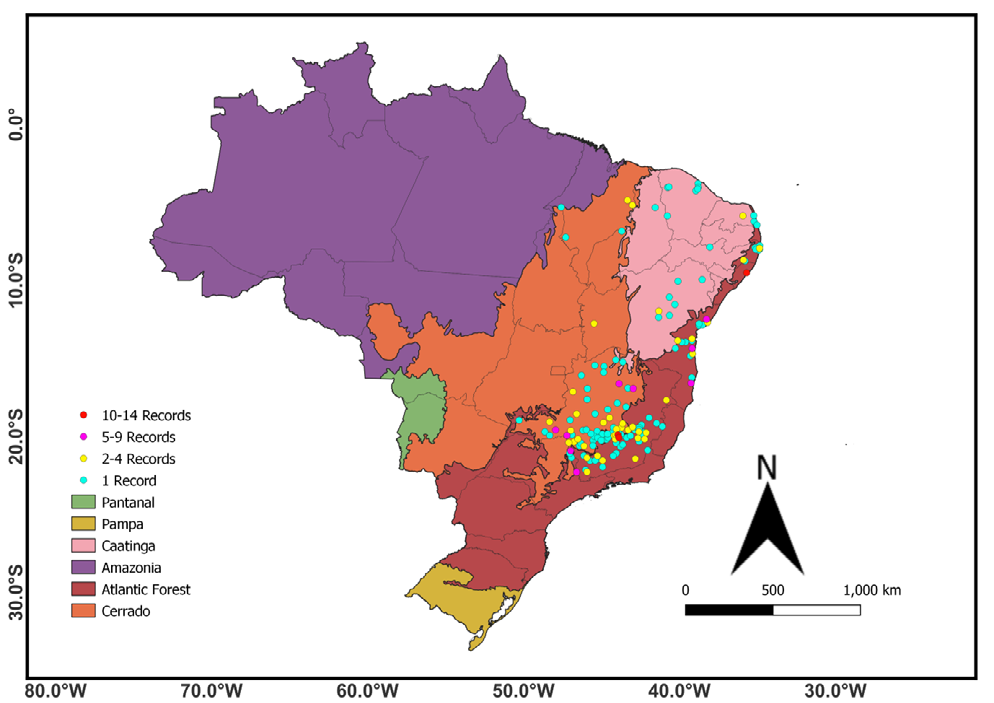
The Caatinga is the tropical dry forest region that lies in northeastern South America; it covers about 800,000 km2 exclusively in Brazil, corresponding to 11% of its territory [26, 28]. The Caatinga is distributed throughout portions of nine geopolitical states, mostly in northeastern Brazil [28]. The name “caatinga” refers to the aspect of its vegetation during dry periods – trees become whitish as they lose their leaves to avoid excessive water loss due transpiration [29]. The Caatinga’s climate is tropical semiarid, marked by irregular rainfall and high temperatures; mean daily temperatures range between 26°C and 28°C, and might reach 42°C; the mean annual rainfall is 750 mm [29]. Typically, landscapes are covered by xeric vegetation that includes a range of forests and shorter vegetation [29]. About 63% of the Caatinga is composed of anthropogenic ecosystems, mostly land modified by deforestation, fire and roads [30]. The Caatinga is marked by high diversity of animals and plants, with remarkable numbers of endemic species [26].
The Cerrado is a highly diverse tropical savanna province that dominates central South America; it covers about 1.8 million km2, corresponding to 22% of the Brazilian territorial extension, and minor portions of Bolivia and Paraguay [31, 32, 33]. Typically, matrix types of landscapes are open woodland savannas, grasslands, and semideciduous forests, while narrower gallery forests occur along rivers [34, 35, 36]. Major landscape modifications are due to mechanized agriculture, exotic forest plantations and pastures, and urbanization [35, 37, 38]. Climate is tropical and marked by a dry winter, and a rainy summer; two well-defined seasons occur annually: the dry season occurs between May and September, and the rainy season occurs between October and April [39]. The annual rainfall ranges between 1,200 and 2,200 mm; temperatures usually vary between 10°C in the winter (June-August) and 40°C in the summer (December-February) [39].
The Atlantic Forest is a highly diverse region dominated by semideciduous and coastal forests, while mangroves, restingas and altitudinal fields occur to a lesser extent [27]. It originally covered about 1.3 million km2, mainly along the Brazilian coast, but also in Mato Grosso do Sul state, Argentina and Paraguay [40]. As it occurs in regions with high human population density and urbanization, the Atlantic Forest has been intensively modified, and currently only 29% of the original cover remains [27]. The tropical climates Aw (with dry winter) and As (with dry summer) are found in northeastern Brazil and Minas Gerais state. In this region, annual rainfall is about 1,300-1,900 mm, and the annual mean temperature ranges between 22°C and 26°C, usually having maximum values between 10 ℃ and 40 ℃ [41].
Record Obtention
Photographic records included in this study were obtained through searches in the two major citizen science databases regarding Brazilian birds. Searches in WikiAves (https://www.wikiaves.com.br/) occurred between 10 and 18 February 2021, and those in eBird (https:// ebird.org) were done between 16 and 20 February 2021. The WikiAves search was done by the “Busca avançada” (Advance Search) option; the name “Galbula ruficauda” was written in the “Espécie/Táxon” (Species/Taxa) field. Then, the term related to the diet of birds was selected: “Alimentando-se/Caçando” (Feeding/Foraging). The eBird search was done through the option “Explorar” (Explore). The name “Galbula ruficauda” was typed in the “Explorar Espécies” (Explore Species), and the number below “with photos” was clicked on. Then, “Brazil” was typed in the “Location” option, and “Foraging or eating” was selected in the “More filters” option. For both WikiAves and eBird searches, all resulting photographs were examined to select only those with evidence of feeding activities (here called “feeding records”). This means Rufous-tailed Jacamars holding invertebrates with the bill.
Among the feeding records, only those obtained in the Atlantic Forest, the Cerrado and the Caatinga of the north- eastern (Nordeste) Geopolitical Region of Brazil were selected and included in this study. The only exception occurred for Minas Gerais, a state part of south-eastern Brazil. This is because this state contains portions of these three ecosystems, and is a region marked by numerous records obtained by citizen scientists. This restriction to this Brazilian region (not considering data from the whole country) was adopted to consider the whole Caatinga and adjacent regions of the Cerrado and the Atlantic Forest, thus avoiding records obtained in very distant regions.
When two or more photographs with feeding jacamars were obtained in the same municipality in a given day, only one of them was selected, randomly. This procedure was done to avoid repetition of a given feeding event, in a certain period in a given ecosystem. Photographs shown in this paper (Figure 2) were gathered in the WikiAves database, and included in this study with permission by their authors.
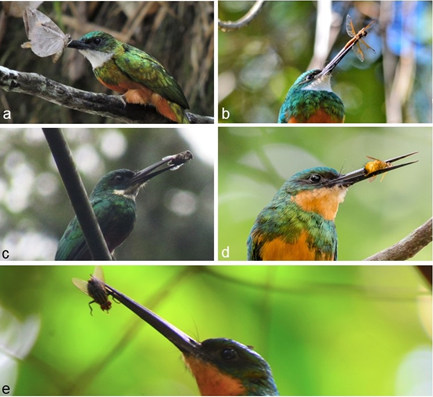
Figure 2: Feeding records of the Rufous-tailed Jacamar (Galbula ruficauda) obtained by citizen scientists in Brazil: (a) a prey of the Order Lepidoptera in Maceió-AL; (b) a prey of the Order Odonata at Montes Claros-MG; (c) a prey of the Order Hemiptera at Itacaré-BA; (d) a prey of the Order Hymenoptera at Varginha-MG; (e) a prey of the Order Diptera in Maceió-AL. Photo authors: Dêner V. Souza (a), Fausto Araújo (b), Giovanni Tanajura Silva (c), Tiago Mattos (d), Miquéias de Morais (e).
Data Analysis
Prey shown in the feeding records were identified, tentatively, to the Order taxonomic level of invertebrates. When food items were too small to allow identification, they were classified as “unidentified prey”. Information on the biome(s) found in each municipality was obtained in IBGE (https://cidades.ibge.gov.br/brasil/panorama). When a feeding record occurred in an ecotonal municipality (e.g., Cerrado-Caatinga), it was considered as having occurred in the biome with less records to increase the chances of having enough data for the three ecosystems.
Feeding records were classified into two periods, based on their data of obtention: (1) dry period and (2) rainy period. The procedure for this distinction was different for each ecosystem, as precipitation patterns are characteristic of each one. For the Cerrado, the May-September months were considered as part of the dry period, while the October-April months were considered as part of the rainy period, following Assad (1994). For the Caatinga and the Atlantic Forest, the classification into dry or rainy periods was based on information available in INPE - the National Institute for Space Research (http://clima1.cptec.inpe.br/ monitoramentobrasil/pt). This information was obtained through the “Dados Diários” (Daily Data) option. For each feeding record, the “precipitação” (precipitation) option was selected, and the date, month and year of its obtention was added. Then, the precipitation that occurred in and around the municipality in the last 4-5 weeks was evaluated, and the record was classified as part of a rainy or dry period.
We considered that the numbers of feeding records with different prey orders would represent their proportions in the diet of the Rufous-tailed Jacamar in different periods and ecosystems. Therefore, for a given ecosystem, we summed the number of feeding records of each invertebrate order obtained in the dry and rainy periods. Then, for each period, we compared the number of records with distinct invertebrate prey orders by using the Chi-square test with the BioEstat 5.0 program [42]. A level of significance of 5% was considered in this study.
Results
A total of 283 feeding records of the Rufous-tailed Jacamar were obtained by citizen scientists in the Caatinga and close portions of the Cerrado and the Atlantic Forest (Appendix). These records were gathered in 154 municipalities of eight states, and were widely distributed throughout the study area (Table 1, Figure 1). They were widespread through most of the Caatinga, while those obtained in the Cerrado and the Atlantic Forest were gathered mainly in the southern portion of the study area (Minas Gerais state) (Figure 1). Feeding records were more numerous in the Cerrado (45%) and the Atlantic Forest (43%) than in the Caatinga (12%) (Table 1). Prey of the Rufous-tailed Jacamars were only insects, according to the photographic records gathered by citizen scientists. They comprised seven orders, including Lepidoptera, Odonata, Hemiptera, Hymenoptera and Diptera (Figure 2).
| States | Number of municipalities | Number of records | |||
|---|---|---|---|---|---|
| Caatinga | Cerrado | Atlantic Forest | Total | ||
| Alagoas | 1 | - | - | 12 | 12 |
| Bahia | 24 | 12 | 3 | 32 | 47 |
| Ceará | 8 | 8 | - | - | 8 |
| Maranhão | 4 | - | 6 | - | 6 |
| Minas Gerais | 101 | 9 | 117 | 66 | 192 |
| Pernambuco | 10 | 3 | - | 9 | 12 |
| Piauí | 2 | 1 | 1 | - | 2 |
| Rio Grande do Norte | 4 | 2 | - | 2 | 4 |
| Sergipe | - | - | - | - | - |
| Total | 154 | 35 | 127 | 121 | 283 |
Table 1: Number of feeding records of the Rufous-tailed Jacamar (Galbula ruficauda) obtained by citizen scientists in the Caating
In relation to the Cerrado, 82 (65%) feeding records were obtained in the rainy period, while 45 (35%) occurred in the dry period. During the dry period, the most numerous prey in the diet of the Rufous-tailed Jacamar were those of the orders Lepidoptera and Odonata, followed by Hymenoptera and Hemiptera (Figure 3). No significant differences in the prey numbers of these orders were observed. However, the number of Lepidoptera prey was significantly higher than that of Diptera (χ² = 5.333, d.f. = 1, p = 0.0209). Differences between the number of prey of other insect orders were not significant. During the rainy period, a similar pattern was observed. The most numerous prey were those of the orders Lepidoptera and Odonata, followed by Hymenoptera and Hemiptera. No significant differences in the numbers of prey of these orders were observed, except for Lepidoptera- Hemiptera (χ² = 4.5, d.f. = 1, p = 0.0339). During the dry season, feeding records also showed jacamars feeding on insects of the orders Orthoptera and Coleoptera. Significant differences between prey numbers were observed for the following pairs of orders (that with more records on the left): Odonata- Diptera (χ² = 6.76, d.f. = 1, p = 0.0093), Odonata-Orthoptera (χ² = 13.762, d.f. = 1, p = 0.0002), Hymenoptera-Orthoptera (χ² = 7.143, d.f. = 1, p = 0.0075), Hymenoptera-Diptera (χ² = 9.308, d.f. = 1, p = 0.0023), Hemiptera-Orthoptera (χ² = 5.333, d.f. = 1, p = 0.0209) and Hemiptera-Coleoptera (χ² = 7.364, d.f. = 1, p = 0.0067).
In relation to the Atlantic Forest, 67 feeding records (55%) occurred in the rainy season, and 54 (45%) were gathered in the dry season. During the dry period, the most numerous prey in the diet of the Rufous-tailed Jacamar were those of the order Lepidoptera (Figure 3). Significant differences were observed between the number of these Lepidoptera prey and those of intermediate values (that of higher numbers on the left): Lepidoptera-Odonata (χ² = 5.143, d.f. = 1, p = 0.0233), Lepidoptera-Hymenoptera (χ² = 5.143, d.f. = 1, p = 0.0233), Lepidoptera-Hemiptera (χ² = 6.259, d.f. = 1, p = 0.0124) and Lepidoptera-Diptera (χ² = 9.00, d.f. = 1, p = 0.0027). Differences between the number of prey of these four less frequent orders were not significant. During the rainy period, the most frequent orders in the diet were Hymenoptera, followed by Lepidoptera and Odonata (Figure 3). No significant differences were observed between the prey numbers of Hymenoptera-Lepidoptera, but differences between Hymenoptera-Odonata prey numbers were significant (χ² = 4.172, d.f. = 1, p = 0.0411). Other significant differences between prey numbers of different insect orders were observed (that of higher numbers on the left): Hymenoptera-Hemiptera (χ² = 6.259, d.f = 1, p = 0.0124), Hymenoptera-Diptera (χ² = 9, d.f. = 1, p = 0.0027). Differences among less frequent orders were not significant.
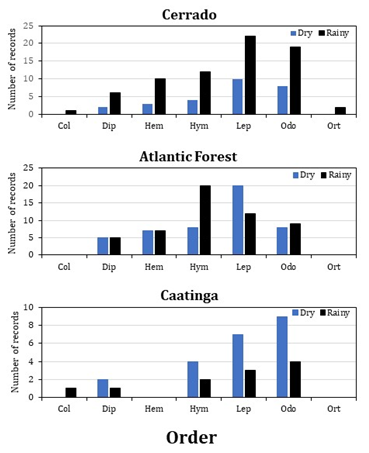
Figure 3: Number of feeding records of the Rufous-tailed Jacamar (Galbula ruficauda) with insect prey, and obtained by citizen scientists during dry and rainy periods in the Cerrado, the Atlantic Forest and the Caatinga, Brazil, between 2010 and 2021. Data were gathered in the WikiAves and eBird databases in February 2021. Insect orders: (Col) Coleoptera, (Dip) Diptera, (Hem) Hemiptera, (Hym) Hymenoptera, (Lep) Lepidoptera, (Odo) Odonata, (Ort) Orthoptera.
Regarding the Caatinga, 11 feeding records (35%) occurred in the rainy period, and 24 (69%) were obtained in the dry period. During the dry period, the orders with more feeding records were Odonata, Lepidoptera and Hymenoptera (Figure 3). No significant differences between the numbers of prey of different orders were observed, except for Odonata-Diptera (χ² = 4.455, d.f. = 1, p = 0.0348). During the rainy period, a similar pattern was observed, but the predation on Coleoptera insects was recorded. No chi- square tests could be done for this period, due to the low number of feeding records obtained by citizens.
Discussion
During 14 years, citizen scientists obtained near 300 feeding records of the Rufous-tailed Jacamar in more than 180 municipalities found in the three selected biomes. This long spatiotemporal scale substantially differs from those of previous studies on its diet [19, 20, 21, 22, 23], as their sampling occurred in a single municipality, and lasted for a few weeks or months. Thus, the temporal and spatial representativeness is higher in our study than in others. Our study also is the first to examine its diet in the Caatinga and the Atlantic
Forest. This is because previous studies quantified its diet only in central Cerrado, the Pantanal, and Venezuelan forests [19, 20, 21, 22, 23].
Insects of the Orders Lepidoptera, Odonata and Hymenoptera were more numerous than others in the diet of the Rufous-tailed Jacamar, in the three studied ecosystems. Thus, they can be considered as major food items of the Rufous-tailed Jacamar in these regions. Their numbers in the diet were substantially higher than those of Hemiptera and Diptera, that can be considered as common prey. Orthoptera and Coleoptera insects were uncommon among the captured prey or absent in the samples. This might represent their unsuitability as food items of the Rufous-tailed Jacamar. However, as numerous Coleoptera specimens are small [20, 21], it is likely that this order was underestimated in our sample based on photographs. Due to difficulties regarding identification, it is likely that records of this order are common among the non-identified prey in our study, that corresponded to 15% of the feeding records.
A range of studies have examined aspects of the diet of the Rufous-tailed Jacamar. In central Cerrado, a two-months study based on observations revealed the predominance of non-identified small insects, Hymenoptera and Lepidoptera in its diet [19]. In this same region, a similar study showed the dominance of non-identified small insects and Hymenoptera, followed by Diptera and Lepidoptera [22]. Also in central Cerrado, a study based on several nests showed that adults offered to nestlings mainly non-identified small insects, Diptera, Lepidoptera and Odonata [23]. In the Pantanal wetland, a study based on the stomachal content of four birds showed Coleoptera and Hymenoptera as the most abundant food items [20]. In Venezuela, the examination of 16 fecal samples revealed the presence of Coleoptera, Diptera, Lepidoptera, Orthoptera and the seldomly reported insect eggs [21]. The abundance of non-identified small insects was relatively lower in our study than in these previous investigations.
As a result of these studies, there is a substantial similarity among the insect orders reported as part of the diet of the Rufous-tailed Jacamar. However, there is considerable variation in the dominance of distinct orders in its diet. These differences might reflect, in part, jacamars preferences for specific prey, and spatial variation in insect availability according to the ecosystem where jacamars were studied. Also, the phase of the studied birds (adult or nestlings) and the period of the year (breeding or non-breeding seasons; dry or rainy periods) when samples were obtained might contribute to the observed differences among studies. Certain variation due to the adopted method should not be discarded, as this set of studies involved sampling through observations in the field, analysis of stomachal contents and fecal samples, and photographic records (this study only).
Insect Orders present in the diet of the Rufous-tailed Jacamar in our study are comparable to those considered as food items of the Yellow-billed Jacamar (Galbula albirostris) [43], the Blue-cheeked Jacamar (Galbula cyanicollis) [44], and the Green-tailed Jacamar (Galbula galbula) [45]. More substantially differences were observed for the Green-tailed Jacamar that feeds predominantly on Hymenoptera [45]. Also, this is the only insect order reported as part of the diet of the White-chinned Jacamar (Galbula tombacea) [46]. Other substantial differences in relation to the Rufous-tailed Jacamar was the consumption of Neuroptera insects by the Bronzy Jacamar (Galbula leucogastra) [47] and spiders by Paradise Jacamar (Galbula dea) [48]. Further, the diets of the Bluish-fronted Jacamar (Galbula cyanescens), the Coppered- chested Jacamar (Galbula pastazae) and the Purplish Jacamar (Galbula chalcothorax) are poorly known, with no information or with records based on the examination of only 1-2 stomachal contents [49, 50, 51]. Apparently, the Rufous- tailed Jacamar is the most studied Galbula species. Further (quantitative) studies are necessary to better compare the diet of different species of this genus.
Our results showed that, in the Cerrado, no substantial differences were observed between the proportion of different insect orders during the dry and rainy periods. This result is similar to those obtained in central Cerrado by Campos [22]. On the other hand, substantial seasonal variation in the feeding records was observed in the Atlantic Forest. Records with Lepidoptera were more numerous than those with other insects in the dry period, while Hymenoptera had more records than other orders in the rainy season. Thus, seasonal variation in the importance of major prey can vary with the ecosystem inhabited by jacamars. The availability of different prey in distinct ecosystems might contribute to their numbers in the diet of the Rufous-tailed Jacamar. Further records are necessary to examine seasonal variation in the diet of the Rufous-tailed Jacamar in the Caatinga.
Conclusion
The study of the diet of birds through the use of photographic records available in citizen science databases is non-invasive and does not require the collection of specimens. Thus, this approach does not harm the welfare of birds, and provides data that are easily and freely obtained by researchers. Also, databases such as WikiAves provide substantial amounts of photographic records of a high diversity of birds [52]. Some studies on the diet of particular species conducted in Brazil also were based on citizen science data, such as those of the White-eared Puffbird (Nystalus chacuru) [53], the Maguari Stork (Ciconia maguari) [54] and the Roadside Hawk (Rupornis magnirostris) [55].
Further, a compilation made for the whole country examined the predation of snakes by birds [56]. These studies and ours indicate that photographic records available in citizen science databases, such as WikiAves and eBird, can be used to improve our knowledge about the diet of birds in Brazil. We consider that the same is valid for other South American countries.
Authors Contributions
Filipe M. O. Costa [idealization, conceptualization, data collection and analysis, interpretation and writing]; Dárius P. Tubelis [idealization, conceptualization, data analysis, interpretation and writing].
Conflicts of Interest
The authors declare that there are no conflicts of interest involving this publication.
Acknowledgements
We thank Universidade Federal Rural do Semi-Árido [UFERSA] for logistic support. We are grateful to all citizen scientists that deposited their photographs of the Rufous- tailed Jacamar in the WikiAves and eBird databases. We especially thank Dêner V. Souza, Fausto Araújo, Giovanni Tanajura Silva, Miquéias de Morais and Tiago Mattos for giving permission to include their photographs in this paper. Two anonymous reviewers and the Editorial Committee improved this manuscript with numerous suggestions.
References
-
Bonney R, Cooper CB, Dickinson J (2009) Citizen science: a developing tool for expanding science knowledge and scientific literacy. BioScience 59(11): 977-984.
-
Bela G, Peltola T, Young JC (2016) Learning and the transformative potential of citizen science. Conservation Biology 30(5): 990-999.
-
Turnhout E, Lawrence A, Turnhout S (2016) Citizen science networks in natural history and the collective validation of biodiversity data. Conservation Biology 30(3): 532-539.
-
Sullivan BL, Wood CL, Iliff MJ (2009) eBird: a citizen- based bird observation network in the biological sciences. Biological Conservation 142(10): 2282-2292.
-
Callaghan CT, Martin JM, Major RE (2018) Avian monitoring-comparing structured and unstructured citizen science. Wildlife Research 45: 176-184.
-
Neate-Clegga MHC, Hornsa JJ, Adlera FR 2020) Monitoring the world’s bird populations with community science data. Biological Conservation 248: 108653.
-
de Camargo Barbosa KV, Develey PF, Ribeiro MC (2021) The contribution of citizen science to research on migratory and urban birds in Brazil. Ornithology Research 29: 1-11.
-
Tubelis DP, Sazima I (2021) Hopeful robber: piracy attempts by the Black-collared Hawk on a Cocoi Heron in the Brazilian Pantanal wetland. Ornithology Research 29: 38-41.
-
Tubelis DP, Sazima I (2021) Nuptial gifts among Brazilian cuckoos: an outline based on citizen science. Ornithology Research 29: 188-192.
-
Tubelis DP, Wachlevski M (2021) Citizen science for the knowledge of tropical birds: the diet of the Maguari Stork [Ciconia maguari] in the Pampa ecoregion of southern Brazil. North-west Journal of Zoology 17: 106-110.
-
de Souza E, Lima-Santos J, Entiauspe-Neto OM (2022) Ophiophagy in Brazilian birds: a contribution from a collaborative platform of citizen science. Ornithology Research 30: 15-24.
-
Gomes TVG, Tubelis DP (2022) Knowledge of tropical birds through citizen science data: trophic habit of the Roadside Hawk (Rupornis magnirostris) (Aves, Accipitridae) in the Caatinga and Atlantic Forest, Brazil. International Journal of Zoology and Animal Biology 5(5): 000409.
-
Winkler DW, Billerman SM, Lovette IJ (2020) Jacamars (Galbulidae). In: Billerman SM, Keeney BK, et al. (Eds.), Birds of the World. Cornell Lab of Ornithology, Ithaca, USA.
-
Sick H (1997) Ornitologia brasileira, uma introdução. Editora Nova Fronteira, Rio de Janeiro, Brazil.
-
Mata JRR, Erize F, Rumboll M (2006) Birds. South America. Non-Passerines: from rheas to woodpeckers. Harper Collins Publishers, London, UK.
-
Pacheco JF, Silveira LF, Aleixo A (2021) Annotated checklist of the birds of Brazil by the Brazilian Ornithological Records Committee – second edition. Ornithology Research 29: 94-105.
-
Chaine NM (2020) Rufous-tailed Jacamar (Galbula ruficauda). In: Schulenberg TS (Ed.), Birds of the World. Cornell Lab of Ornithology, Ithaca, USA.
-
Antas PTZ (2004) Pantanal - Guia de aves: espécies da reserva particular do Patrimônio Natural do SESC Pantanal. Editora SESC, Rio de Janeiro, Brazil.
-
Pinheiro CEG, Bagno MA, Brandao RA (2003) Diet and foraging behavior of the rufous-tailed jacamar (Galbula ruficauda, Galbulidae) in central Brazil. Ararajuba 11: 241-243.
-
Gurka CAQ (2105) Padrão de uso de recursos alimentares por aves insetívoras de sub-bosque em florestas monodominantes na planície do Pantanal. MSc Dissertation. Universidade Federal de Mato Grosso, Cuiabá, Brazil.
-
Sainz-Borgo C (2016) Diet composition of birds associated to an urban forest patch in northern Venezuela. Interciencia 41: 119-126.
-
Campos VC (2016) Estudo comparativo sobre a dieta do Galbula ruficauda (Aves, Galbulidae) no Brasil central. MSc Dissertation. Departamento de Zoologia, Universidade de Brasília, Brasília, Brazil.
-
Nápoli RJS, Pesquero MA, Mendonça CAF, da Silva YM (2018) Male and female contributions to parental care in the Rufous-tailed Jacamar (Galbula ruficauda, Galbulidae) in southern Goiás, Brazil. Ornitología Neotropical 29: 21-25.
-
Oliveira PS, Marquis RJ (2022) The Cerrados of Brazil. Ecology and natural history of a neotropical savanna. Columbia University Press, New York, USA.
-
Campanili M, Schaffer WB (2010) Mata Atlântica. Patrimônio nacional dos Brasileiros. Ministério do Meio Ambiente, Brasília, Brazil.
-
Silva JMC, Leal IR, Tabarelli M (2017) Caatinga: the largest tropical dry forest region in South America. Springer International Publishing, New York, USA.
-
MMA (2023) Meio Ambiente.
-
Leal IR, Tabarelli M, Silva JMC (2003) Ecologia e conservação da Caatinga. Universidade Federal de Pernambuco, Recife, Brazil.
-
Prado DE (2003) As caatingas da América do Sul. In: Leal IR, Tabarelli M, Silva JMC (Eds.), Ecologia e conservação da Caatinga. Universidade Federal de Pernambuco, Recife, Brazil, pp: 3-73.
-
Silva JMC, Barbosa LCF (2017) Impact of human activities on the Caatinga, in: Silva JMC, Leal IR, Tabarelli M (Eds.), Caatinga: the largest tropical dry forest region in South America. Springer International Publishing, New York, USA, pp. 359-368.
-
Ab’saber AN (1977) Os domínios morfoclimáticos na América do Sul. Primeira aproximação. Geomorfologia 52: 1-21.
-
Rizzini CT (1997) Tratado de fitogeografia do Brasil. Editora Âmbito Cultural Ltda, Rio de Janeiro, Brazil.
-
Silva JMC, Bates JM (2002) Biogeographic patterns and conservation in the South American Cerrado: a tropical savanna hotspot. BioScience 52: 225-233.
-
Eiten G (1972) The cerrado vegetation of Brazil. Botanical Review 38: 205-341.
-
Ratter JA, Riberio JF, Bridgwater S (1997) The Brazilian cerrado vegetation and threats to its biodiversity. Annals of Botany 80: 223-270.
-
Oliveira Filho AT, Ratter JA (2002) Vegetation physiognomies and woody flora of the Cerrado biome. In: Oliveira PS, Marquis RJ (Eds.), The Cerrados of Brazil. Ecology and natural history of a neotropical savanna. Columbia University Press, New York, USA, pp: 91-120.
-
Klink CA, Moreira AG (2002) Past and current human occupation, and land use. In: Oliveira PS, Marquis RJ (Eds.), The Cerrados of Brazil. Ecology and natural history of a neotropical savanna. Columbia University Press, New York, USA, pp: 69-88.
-
Klink CA, Machado RB (2005) Conservation of the Brazilian Cerrado. Conservation Biology 19: 707-713.
-
Assad ED (1994) Chuva nos cerrados. Análise e espacialização. Embrapa/SPI, Brasília, Brazil.
-
Morellato LCP, Haddad C (2000) Introduction: The Brazilian Atlantic Forest. Biotropica 32: 786-792.
-
Alvares CA, Stape JL, Sentelhas PC, Gonçalves JLM, Sparovek G (2013) Köppen’s climate classification map for Brazil. Meteorologische Zeitschrift 22: 711-728.
-
Ayres M, Ayres MM, Ayres DL, Santos AS (2007) BioEstat 5.0 – Aplicações estatísticas nas áreas das ciências biomédicas. Sociedade Civil Mamirauá/MCT-CNPq/ Conservation International, Belém, Brazil.
-
del Hoyo J, Tobias JA, Collar N, Züchner T, Kirwan GM, et al. (2020) Yellow-billed Jacamar (Galbula albirostris). In: Billerman SM, Keeney BK, et al. (Eds.), Birds of the World. Cornell Lab of Ornithology, Ithaca, USA.
-
Tobias JA, Züchner T, de Melo Júnior TA, Kirwan GM (2020) Blue-cheeked Jacamar (Galbula cyanicollis). In: del Hoyo J, Elliott A, Sargatal J, et al. (Eds.), Birds of the World. Cornell Lab of Ornithology, Ithaca, USA.
-
Tobias JA, Züchner T, de Melo Júnior TA (2020) Green- tailed Jacamar (Galbula galbula). In: del Hoyo J, Elliott A, Sargatal J, Christie DA, de Juana E (Eds.), Cornell Lab of Ornithology, Ithaca, USA.
-
Tobias JA, Züchner T, de Melo Júnior TA, Kirwan GM, Bonan A (2020) White-chinned Jacamar (Galbula tombacea). In: del Hoyo J, Elliott A, et al. (Eds.), Cornell Lab of Ornithology, Ithaca, USA.
-
Tobias JA, Züchner T, de Melo Júnior TA, Kirwan GM (2020) Bronzy Jacamar (Galbula leucogastra). In: del Hoyo J, Elliott A, et al. (Eds.), Birds of the World. Cornell Lab of Ornithology, Ithaca, USA.
-
Tobias JA, Züchner T, de Melo Júnior TA, Kirwan GM, Bonan A (2020) Paradise Jacamar (Galbula dea) In: del Hoyo J, Elliott A, et al. (Eds.), Birds of the World. Cornell Lab of Ornithology, Ithaca, USA.
-
Tobias JA, Züchner T, de Melo Júnior TA, Bonan A (2020) Bluish-fronted Jacamar (Galbula cyanescens) In: del Hoyo J, Elliott A, et al. (Eds.), Cornell Lab of Ornithology, Ithaca, USA.
-
Schulenberg TS, Kirwan GM (2020) Coppery-chested Jacamar (Galbula pastazae). In: Schulenberg TA (Ed.), Cornell Lab of Ornithology, Ithaca, USA.
-
Tobias JA, Züchner T, de Melo Júnior TA, Bonan A (2020) Purplish Jacamar (Galbula chalcothorax). In: del Hoyo J, Elliott A, Sargatal J, Christie DA, de Juana E (Eds.). Cornell Lab of Ornithology, Ithaca, USA.
-
Tubelis DP (2023) Spatiotemporal distribution of photographic records of Brazilian birds available in the WikiAves citizen science database. Birds 4: 28-45.
-
Crozariol MA, Gomes FBR (2010) Insetívoro ou oportunista? A dieta do joão-bobo, Nystalus chacuru. Atualidades Ornitológicas 154: 4-5.
-
Tubelis DP, Wachlevski M (2020) Citizen science for the knowledge of tropical birds: the diet of the Maguari Stork (Ciconia maguari) in the Pampa ecoregion of southern Brazil. North-western Journal of Zoology 17: 106-110.
-
Gomes TV, Tubelis DP (2022) Knowledge of tropical birds through citizen science data: trophic habit of the Roadside Hawk (Rupornis magnirostris) (Aves, Accipitridae) in the Caatinga and Atlantic Forest, Brazil. International Journal of Zoology and Animal Biology 5: 000409.
-
Souza E, Lima-Santos J, Entiauspe-Neto OM, Santos MM, Moura PR, et al. (2022) Ophiophagy in Brazilian birds: a contribution from a collaborative platform of citizen science. Ornithology Research 30: 15-24.
- California Red-Legged Frog and Non-Listed Amphibians Response to Non-Native Fish Removal
- Industrial Standardization of the Bio-OS: Algorithmic Codification of Resilience Engineering Guidelines and Version V8 Architecture
- Climate Variability and the Sustainability of Snail Farming in Nigeria: Past Trends, Present Challenges and Potential Outlook
- The Evaluation of the Surveillance System of Anthrax in Gilgit-Baltistan, Pakistan, 2018
- Natural Decline to Extinction of A New Zealand Rabbit Population
- Mitochondrial Bio-Logistics: Steering Co-Enzyme Q10 and Lycopene Synergies within the Science 4.0 Bio-OS Framework