
Study of Fauna and Public Perception of Captive Animals at Peshawar Zoo, Khyber Pakhtunkhwa Pakistan
Zoos are commonly regarded as the best place for amusement and enjoyment. A large number of people vigor to zoos to see different animals with family and friends. The current study investigated "fauna and public opinion of caged animals at Peshawar Zoo" using a well-designed Questionnaire. Questionnaires include questions regarding the zoo environment, public behavior toward animals, and the zoo's involvement in the conservation of endangered species, animal health and enclosure upkeep, and visitor services such as drinking water, a café, and washrooms. People were also polled to choose which species they preferred and which animals they would want to see at the Peshawar Zoo. The responders were then asked whether they had any thoughts or recommendations for zoo upgrades. 198 visitors were questioned both inside and outside the zoo. As a result, it is apparent that the Peshawar Zoo is an excellent location for leisure and recreation. Visitors were excited to view the various animals and were pleased with the zoo's administration. It is specious that the majority of visitors were unaware of the zoo's role in the conservation of endangered animals. A variety of valuable suggestions can aid in the development of the Peshawar Zoo. The concerned authorities should take notes on the methods of education and modes of information used by the zoo management.
Introduction
Zoos play a vital role in animal welfare by serving as conservation, entertainment, and research and public awareness centers for wildlife management and related issues. Zoos’ role in animal management has evolved significantly, from being a source of entertainment to conservation sites to institutes for research and public education. Zoos have historically been characterized as places for general public pleasure, and they continue to rely on tourist revenue. Zoos are now recognized as active sites for wildlife conservation. They are presently used for conservation, teaching, research, and recreation. Zoos are critical to wildlife management and conservation.
Peshawar Zoo is Pakistan’s largest zoo and the first zoo in Peshawar, Khyber Pakhtunkhwa. It debuted on February 12, 2018. It is managed by Khyber Pakhtunkhwa wildlife department, forest management, and environment department. Peshawar Zoo has a total area of 29 acres (12 ha). The Peshawar Zoo has 68 species, including 22 species of mammals, 37 species of birds, and 9 species of reptiles. Peshawar Zoo plays an important role in the conservation, education, and research of Khyber Pakhtunkhwa and Pakistan’s wild fauna.
They are ex-situ conservation sites. Although zoos are emphasizing later ones, a large proportion of visitors still visit the zoo for recreational purposes. Zoos are either considered conservation centers or animal refuge centers that protect animals from anthropogenic threats [1, 2, 3]. Ex- situ conservation of threatened animal species is better served by a zoo. The artificial habitat in a zoo should be similar to that of a natural habitat so that animals do not struggle to adapt. Overall, habitat refers to the location where an organism lives, however that habitat must meet all of the basic requirements such as proper food, cleanliness, enclosure size, breeding sites, and so on [4].
The role and objectives of local zoos in Pakistan are not clearly defined. As a developing country, its ecosystem is under severe strain, resulting in the fragmentation and destruction of animal’s natural habitats, threatening the survival of wildlife [5].
Visitors are essential components of zoological parks, and their significance has resulted in a research area dedicated to understanding the people-zoo relationship. This paper reviews and provides an entry point into the literature on zoo visitor research. The field is diverse and interdisciplinary; having emerged relatively recently (it shares common ground with sociology, education, psychology, zoology, and subjects). Several areas (audience analysis, circulation and orientation, exhibit evaluation, and interactions with animals) have been identified in the literature, and these areas have revealed visitors’ demographic and behavioral characteristics, people’s behavioral responses to endogenous and exogenous factors, the impact of exhibit design, and visitors’ movements around zoos [2].
Captive wildlife settings account for a sizable and important portion of the wildlife tourism industry. They are also the subject of heated debate, much of which focuses on whether zoos and sanctuaries provide benefits that outweigh the necessity of keeping animals in captivity [6].
Materials and Method
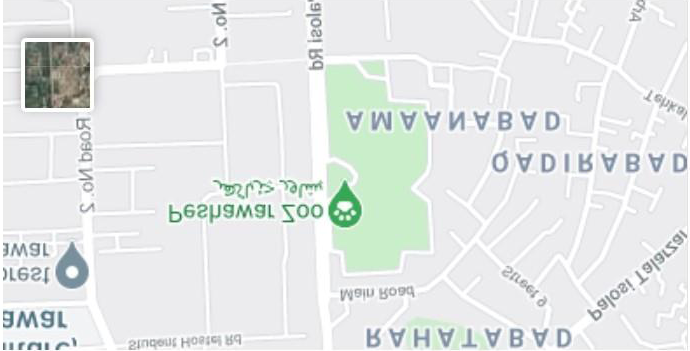
Peshawar Zoo is one of the largest in Pakistan and the city’s first zoo. The construction of the Peshawar Zoo formally began on February 3, 2016, with Prime Minister Imran Khan and KPK Chief Minister Pervez Khattak in attendance. It debuted on February 12, 2018. It is managed by the Government of Khyber Pakhtunkhwa Forests, Environment, and Wildlife Department. Peshawar Zoo is near Palosi Road, near Markaz-Ul-Uloom Islamia Rahatabad. Peshawar, Khyber Pakhtunkhwa. Peshawar Zoo has a total area of 29 acres (12 ha). The Peshawar Zoo has 68 species, including 22 species of mammals, 37 species of birds, and 9 species of reptiles. According to Google Maps, the approximate location is 34°01′02.3′′N latitude 71°29′23.0′′E longitude.
Khyber Pakhtunkhwa is Pakistan’s North West Frontier Province, bordering Afghanistan via the newly merged federally administered tribal area (FATA), northeast, Gilgit Baltistan, and Azad Kashmir. The population was 30,523,371 as of the 2017 census, and the area was 74,521 km. The Pakistani province of Khyber Pakhtunkhwa is home to a wide variety of wild mammals and birds. The province is rich in diversity, which is found throughout the province [7].
Frontier Region was formerly known as Peshawar Subdivision. Peshawar is a city in Pakistan’s Khyber Pakhtunkhwa province. Peshawar is also known as the “City of Flowers.” Khyber Pakhtunkhwa capital city is Peshawar. It is about 160 kilometers west of Pakistan’s capital, Islamabad. Peshawar is the district headquarters. According to the 2017 census, the population of the Peshawar district is 4,269,079, and the area covered is 70, 741. Peshawar’s ethnicity is Pashtun.
The work has already been performed so, the survey is conducted from September to December 2020 at various locations within the Peshawar Zoo as well as outside the zoo, including the Birds Aviary, Mammals Place, and Reptilian Place. Visitors’ information is gathered through a questionnaire. In the afternoon, a questionnaire was distributed to visitors with simple questions that can be answered by answering Yes/No or selecting an answer from a list of options. The questions was that which animal would you like the most, name the animal which is missing in the zoo, is zoo have any role in conservation of endangered species? The Binoculars, a mobile camera, a Ci5 laptop, and old research papers were used in the study. During the survey, we have a DSLR camera and a mobile phone to photograph mammals, birds, and reptiles, as well as their young. Forest department, Wildlife department, Zoo staff, Local residents, Environment Professor, and mostly public visitors were interviewed about the current and past status of zoo animals for indirect data collection. We obtained additional information from Google and YouTube to confirm the area, location, number of species, and animal behavior.
The Peshawar zoo is located at the main Jamrood road near to university of Peshawar Pakistan. The total area covered by Peshawar zoo is about 29 acres.
Results
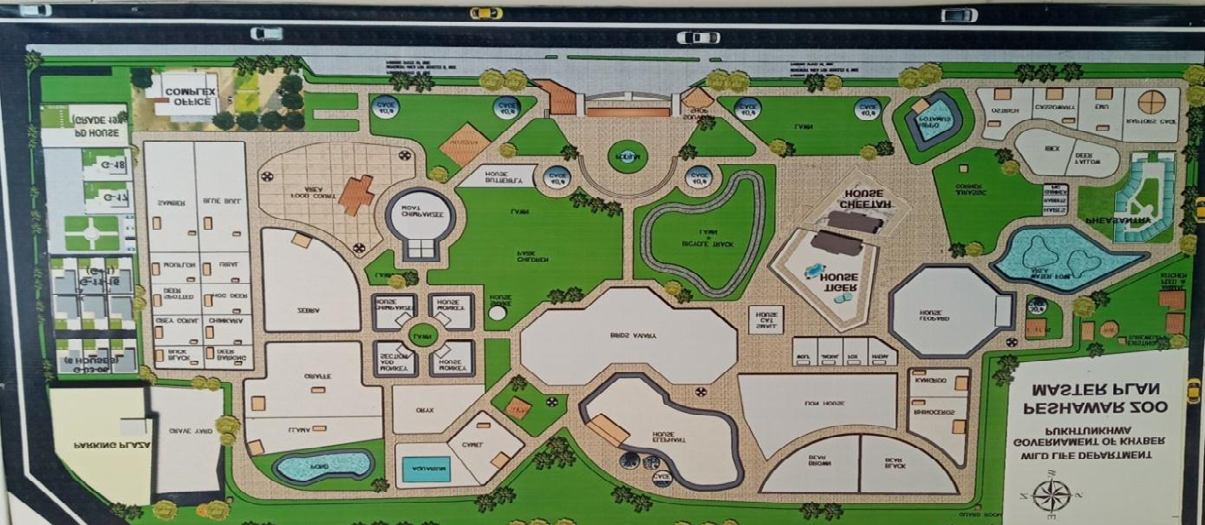
Our research site was the Peshawar Zoo in the district of Peshawar, Khyber Pakhtunkhwa, Pakistan. There were four large lawns and eight small lawns with a large number of trees. A pond, a safari track, and an aquarium are all available. During the observation, 68 different species were recorded using a DCLR camera and a mobile camera, including 22 mammals, 37 birds, and 9 reptiles.
Mammals
Mammals from 12 families were as follows: Bovidae 22.72 % (5 species), Cervidae 18.18 % (4 species), Felidae 13.63 % (3 species), Camelidae 9.09 % (2 species), Canidae 9.09 % (2 species), Carprinae 4.54 % (1 specie), Equidae 4.54 % (1 specie), Macropodidae 4.54 % (1 specie), Ursidae 4.54 % (1 specie), Giraffe (1 specie).
Birds
Birds were classified into 12 orders, which were as follows: Passeriformes 7.89 % (3 species), Galliformes 26.31 % (10 species), Psittaciformes 23.68 % (9 species), Gruiformes 10.52 % (4 species), Anseriformes 13.15 % (5 species), Columbiformes 5.26 % (2 species), Casuariiformes 5.26 % (2 species), Otidiformes 2.36 % (1 specie), and Accipitriformes 2.36 % (1 specie).
Reptiles
There were 2 orders and 7 families of reptiles which were as, Colubridae 33.33% (3 species), Agamidae 11.11% (1 specie), Boidae 11.11% (1 specie), Viperidae 11.11% (1 specie), Pythonidae 11.11% (1 specie), Elapidae 11.11% (1 specie), and Trionychidae 11.11% (1 specie).
Ratios and Public Reviews
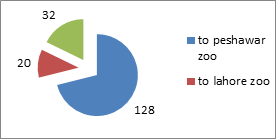
Among the 198 applied questionnaire, about 140 men represented the majority when compared to 58 women. Approximately 128 subjects said they had previously visited Peshawar Zoo, 20 subjects had previously visited to Lahore Zoo, while 32 subjects had visited to Peshawar Zoo for the first time (Figure 1). This indicated that the zoo was well known as a recreational and entertaining destination.
In response to the question “the purpose of the visit,” The majority of visitors, 58 %, were there for fun and entertainment, 30 % came to see animals, and only 12 % came to learn about animals (Figures 2 & 3). This demonstrates that the Peshawar Zoo is the best place for recreation and entertainment. Visitors consider the Peshawar Zoo to be one of the best places to visit.

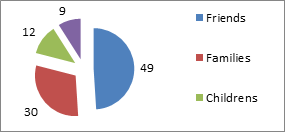
The majority of visitors (49%) went to the zoo with their friends, 30% went with their families, 12% said they wanted to bring their children to the zoo, and only 9% went on a school or college tour (Figure 4). This demonstrates Peshawar Zoo’s potential for delivering and instilling positive messages about nature conservation through live animals. Students’ levels of knowledge and interests reflect the need to emphasize conservation and extinction issues in formal education
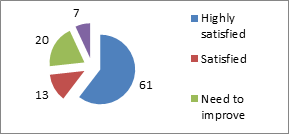
A question about the basic facilities available at the Peshawar Zoo, The majority (61%) of visitors stated that they are extremely satisfied with the facilities provided, 13 % are satisfied, and 20 % stated that there is room for improvement in canteens, food quality and quantity, washroom availability, improvement in water availability, such as increasing the number of Greasers and Coolers and making water available in the zoo 24 hours a day (Figure 5).
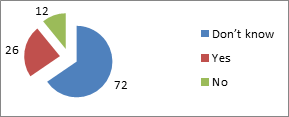
“Do you see any endangered species at the Peshawar Zoo?” Majority at Peshawar Zoo, 72 % of visitors were unaware of the term “Endangered.” 26 % have seen endangered species in zoos, such as Markhor, while 12 % have not seen any endangered species in zoos (Figure 6). This indicated that they were completely unaware of the destruction of wildlife habitat and that in-situ conservation programs were difficult to implement. People are unaware of the value of wildlife.
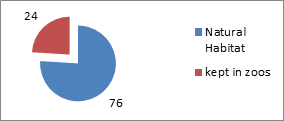
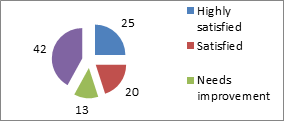
The majority of visitors (76%) believe that animals should be kept in their natural habitat, while 24% believe that some animals should be kept in zoos for recreation and that visitors should see and study them (Figure 7). For questions about the health and general care of zoo animals 25 % of visitors were extremely satisfied that the animals were in good health, 20 % were satisfied, and 13 % stated that there was room for improvement in terms of animal maintenance and health. 42 % are dissatisfied (Figure 8). This means that they require proper care, food, and medications. This demonstrates that zookeepers are not professionals and are not well trained.
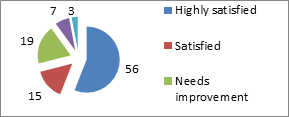
When asked about the cleanliness of the zoo, 52 % of visitors were extremely satisfied and stated that the zoo was clean and well maintained. 31 % are pleased, 3 % are unsatisfied, and 14 % believe there is room for improvement. This demonstrates that the Peshawar Zoo environment is sanitary (Figure 9).
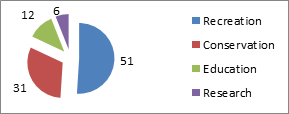
When asked about enclosure cleanliness and maintenance, 56 % said that enclosures were clean and well maintained. 15 % are satisfied, 19 % believe there is room for improvement, 7 % are dissatisfied, and 3 % are silent (Figure 10). 46 % of visitors said they strongly agreed that the Peshawar Zoo had a good selection of animals (a correlation with their personal likes and dislikes). 20 % agreed, 29 % stated that there are a number of animals missing, and 5 % remained silent (Figure 11).
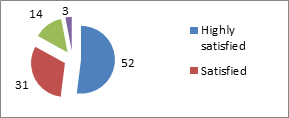
“What should the zoo’s priority be?” 51 % of visitors said the zoo should be used for recreation, 31 % said it should be used for conservation, 12 % said it should be used for education, and only 6 % said it should be used for research. According to the above ratios, recreation should be the primary goal, and visitors prefer to see and enjoy more animals (Figure 12).
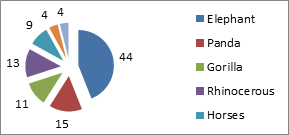
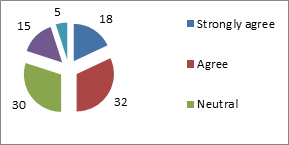
A query about “Missing animals from Peshawar Zoo” Majority in Peshawar Zoo, 44 % of visitors are missing Elephants, 15 % are missing Pandas, 11 % are missing Gorillas, 13 % are missing Rhinos, 9 % are missing Horses, 4 % are missing Crocodiles, and 4 % are missing Porcupines. According to the data presented above, a number of animals are missing from the Peshawar Zoo. The Khyber Pakhtunkhwa government and zoo management should investigate missing animals and bring more animals to the zoo (Figure 13). A question was posed, “What is the role of Peshawar Zoo in conservation?” Eighteen % of visitors strongly agree that Peshawar Zoo plays a role in animal conservation, 32 % agree, and 30 % are silent or less interested. 15 % of visitors disagree with the zoo’s role in conservation, while 5 % strongly disagree (Figure 14).
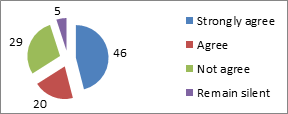
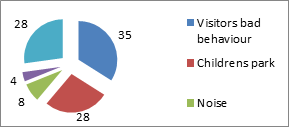
Figure 13: Missing animals in Peshawar zoo “Elements responsible for disturbance in Peshawar Zoo,” a question 35 % stated that visitors’ bad behavior, such as throwing stones on animals, giving food to animals, and making various kinds of voices to animals, 28 % stated that the presence of children parks disturb animals due to high sounds, 8 % stated that noise pollution of visitors and also high sounded instruments, 4 % stated that garbage also disturbs zoo environment, and 28 % stated that they are unaware (Figure 15).
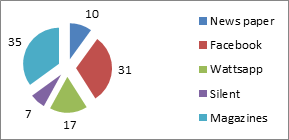
Majority 31 % of visitors agree that the Peshawar Zoo website or Facebook page is helpful in providing zoo and animal updates. Ten % of visitors agreed by newspaper, seventeen % on wattsapp, seven % remains, and three-fifths stated that zoo importance should be included in weekly and monthly magazines (Figure 16).
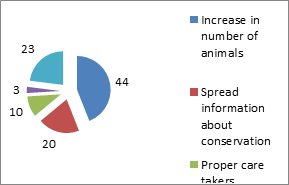
Majority of improvements to the Peshawar Zoo 44 % of visitors stated that there is a need to increase the number of animals in Peshawar Zoo, which will lead to advancement in Peshawar Zoo and more visitors. 20% believe that social media should be used to spread information about the role of conservation in Peshawar Zoo, endangered species kept at the zoo, and breeding programs. 10% stated that proper zoo caretakers, veterinary doctors, and other personnel are required and cleanliness of the zoo, as well as animal enclosures, 3 % said that zoo animal security should be improved, while 23 % remained silent (Figure 17).
Discussion
Nowadays, zoos are the best places for public entertainment and for displaying various animals to the public. Because of technological advancements in the last few decades, the role of zoos has changed significantly. Zoos now play an important role in conservation of endangered species, breeding centers, education, and research. The current study aimed to assess visitors understanding of the animals kept in Peshawar Zoo, specifically why these animals are kept in a zoo rather than in their natural habitat, what the status of animals in conservation is according to the IUCN, and what measures are taken to preserve animals. Furthermore, visitor responses play an important role in achieving the zoo’s objectives and meeting all of the important needs and facilities. Visitors are the zoo’s primary source of funding, so all basic facilities should be available. As a result, a study was conducted to combine a review of the literature and public reviews about zoos and their animals. Zoos are the best places for recreation and enjoyment in a developing country like Pakistan. Visitors are only interested in seeing different animals and enjoying their behaviors. The main point to note is that no such work has previously been done in Peshawar Zoo, so the purpose of this study was to analyze the tools for future policy and management should take steps towards the advancement of the zoo.
There are approximately 68 species of animals in the Peshawar Zoo, including 22 species of mammals, 37 species of birds, and 9 species of reptiles, which is significantly less than the 140 species in the Lahore Zoo.
Less research has been conducted on public perception of zoos in Pakistan because most researchers are not interested in such work, but its significance cannot be overstated. There are only a few documents relating to public opinion about zoos around the world, particularly in Pakistan. The current study also sought to comprehend the significance of public opinion to authorities and management in improving the condition of the zoo and the animals housed there. People’s perceptions of animal welfare are influenced by their own experiences, values, norms, convictions, and interests [8].
A similar study was conducted at the Lahore Zoo, where public perceptions were gathered via questionnaires. According to the findings of the current study and survey, the Lahore Zoo is a good place for people to hang out and have fun. The zoo’s animal collection is interesting and well-liked by visitors. This decision, however, has nothing to do with their conservation status. People are generally unaware of the importance of endangered species, in-situ and ex-situ conservation, environmental education, and natural ecosystem damage control. Lahore Zoo is involved in research, educational programs, and internships, but such programs require targeted marketing and proper advertisement to draw the attention of visitors, which will increase the funds available to carry out such plans in the future [9]. In comparison to the Lahore Zoo, the Peshawar Zoo is poorly managed and organized. Peshawar Zoo is also a great place to have fun and relax. Visitors enjoy the animal collection at the Peshawar Zoo.
A similar study was conducted in Malaysian zoos, where three zoos were compared for their roles in recreation, research, education, and conservation. The study revealed a lack of proper education and awareness about the role of zoos in conservation. People believe that zoos are places of recreation and entertainment, and that they keep animals to attract visitors; some respondents were knowledgeable about conservation, extinction, captive breeding, reintroduction, and environmental enrichment, and said they were motivated to visit the zoo in order to achieve the goals stated in the zoo mission statement [10]. In comparison to Malaysian zoos, Peshawar Zoo is poorly managed and organized. People voted Peshawar Zoo as the best place to go for recreation and entertainment.
Christoffersen, et al. [11] investigated the role of regional zoos in environmental education in Brazil, surveying four zoos with 400 questionnaires each. The majority of zoo respondents stated that the primary role of the zoo was recreation and entertainment. However, one zoo visitor stated that they came to learn about the zoo’s environmental education programed. According to the findings of the current study and survey, Peshawar Zoo is the best place for entertainment, with most visitors coming with their friends and families to have a good time. . Because the zoo is not yet fully developed, a number of steps are being taken to achieve their objectives. The basic facilities at the Peshawar Zoo are excellent, but drinking water availability could be improved. There are approximately 68 different animal species. The collection of animals in Peshawar Zoo is interesting and well- liked by visitors, but there are a number of animals that are missing in the zoo, including a large number of elephants, as well as Pandas, Gorillas, Rhinos, Horses, Porcupines, and Crocodiles. The majority of visitors are unaware of the term “endangered species” and its significance, as well as the importance of conservation, environmental education, and natural ecosystems that can be protected from damage.
Conclusion
Visitors consider Peshawar Zoo to be the best place to visit and recognize the zoo as a recreational and entertaining area. The majority of visitors stated that they were unaware of the term Endangered Species, which means that they were completely unaware of the destruction of natural habitat and the importance of wildlife. The animal selection is satisfactory, but several animals were missing, including elephants, gorillas, pandas, rhinoceroses, and horses. Basic amenities were accessible, and the atmosphere is sanitary. The majority of respondents agreed that visitors’ inappropriate behavior toward animals is the main source of disruption in the zoo, and the presence of playing equipment in the zoo also has a negative impact on the animals. The Peshawar Zoo plays a little part in the protection of endangered species and public awareness. Some animals do not have a partner; hence such species require a mate.
Recommendation
Given the issues raised above, a number of useful suggestions for visiting Peshawar Zoo can be made. The concerned authorities should take note of the following issues. Some animals are unable to reproduce and thus require mates. The zoo should work for the welfare and importance of endangered species, as well as raise public awareness. Peshawar Zoo could work on formal and informal education to provide information about upcoming programs like breeding strategy, conservation strategy, natural environment conservation, and entertainment programs. The Peshawar Zoo, according to its management, is a self- sustaining organization. The education and public relations departments should raise awareness, assist visitors, and educate the public about the degraded natural environments of endangered species. So, if Peshawar Zoo overcomes the upcoming challenges and works hard on the needs, it will undoubtedly increase the motivation and interest of visitors, resulting in more visitors visiting Peshawar Zoo and increasing the zoo’s income.
• Author Contributions: All the authors have accepted responsibility for the entire content of this submitted manuscript and have approved its submission.
- Conflict of Interest: This study has no conflict of interest to be declared by any author.
- Funding: The author(s) received no financial support for the research, authorship, and/or publication of this article.
References
-
Reade LS, Waran NK (1996) The modern zoo: How do people perceive zoo animals? Applied Animal Behaviour Science 47(1-2): 109-118.
-
Margulis SW, Hoyos C, Anderson M (2003) Effect of felid activity on zoo visitor interest. Zoo Biology: Published in affiliation with the American Zoo and Aquarium Association 22(6): 587-599.
-
AZA (2008) Association of Zoos and Aquariums: AZA Mission Statement.
-
Sharma U (2016) Study of Habitat Patterns of Captive Animals in the Assam State Zoo. Int J Life Sci Scienti Res 2(4): 407-511.
-
Tribe A, Booth RJ (2003) Assessing the role of zoos in wildlife conservation. Human dimensions of wildlife 8(1): 65-74.
-
Woods B (2002) Good zoo/bad zoo: Visitor experiences in captive settings. Anthrozoös 15(4): 343-360.
-
Khan ZI (2003) Protected Areas in Pakistan: Management and Issues. J Natn Sci Foundation Sri Lanka 31(1&2): 239-248.
-
Boogaard BK, Oosting SJ, Bock BB (2006) Elements of societal perception of farm animal welfare: a quantitative study in The Netherlands. Livestock Science 104(1-2): 13-22.
-
Ahmad S, Ali Z, Nemat A, Sikander SK, Hussain Z, et al. (2015) The study of public perception for captive animals at Lahore zoo, Pakistan. The Journal of Animal and Plant Sciences 25(3S2): 509-513.
-
Puan CL, Zakaria M (2007) Perception of visitors towards the role of zoos: a Malaysian perspective. International Zoo Yearbook 41(1): 226-232.
-
Christoffersen ML, Branco JO, Furtado MHBC (2013) Regional zoos in Brazil and their specific role for environmental education. Herald J Edu & General Studies 2 (3): 97-106.
-
Anderson DM, Grove RH (1988) The scramble for Eden: past, present and future in African conservation. In- Conservation in Africa: People, Policies and Practice DM Anderson, RH Grove(Eds) Cambridge University Press, Cambridge, UK.
- California Red-Legged Frog and Non-Listed Amphibians Response to Non-Native Fish Removal
- Industrial Standardization of the Bio-OS: Algorithmic Codification of Resilience Engineering Guidelines and Version V8 Architecture
- Climate Variability and the Sustainability of Snail Farming in Nigeria: Past Trends, Present Challenges and Potential Outlook
- The Evaluation of the Surveillance System of Anthrax in Gilgit-Baltistan, Pakistan, 2018
- Natural Decline to Extinction of A New Zealand Rabbit Population
- Mitochondrial Bio-Logistics: Steering Co-Enzyme Q10 and Lycopene Synergies within the Science 4.0 Bio-OS Framework