
Updated Data on Wild Mammals of Algeria: Distribution and Conservation Biology
Algeria boasts diverse ecological, cultural, topographical and taxonomic diversity. The rich national natural and agricultural biodiversity comprises about 16,000 known species. There have been no updated scientific work regarding of the wild mammals of Algeria since the writings of Kowalski and Kowalska in 1991. Moreover many significant taxonomic and nomenclatorial always changes have appeared. For instance the Artiodactyla and Cetaceans were once grouped in the same order of the Cetartiodactyla, while the order Insectivora was divided on two separate orders Soricomorpha and Erinaceomorpha. The mammals of Algeria are represented actually by 111 species belonging to 11 orders and 37 families.
Introduction
According to the IUCN (International Union for the Conservation of Nature) 20% of the 5487 species of mammals on the planet are now threatened with extinction. The Maghreb is home to a large number of endemic species unique to the Mediterranean region, found nowhere else. Although the Sahara has a relatively low species richness, a large proportion of its species are threatened [1, 2, 3]. Algeria, a Mediterranean country and the largest country in Africa in terms of area, is considered by its geographical location a crossroads between continents. It is a country whose history is relatively poorly known, both from the human and the animal side.
This work aims to provide an overview of its mammalian heritage, the results available to the public and serve as model to researchers in the field of mammalogy to take stock of the state of a rich fauna numbering 111 species, many of which are particularly sensitive, their population being either Threatened or Endangered.
Materials and Methods
Presentation of Algeria
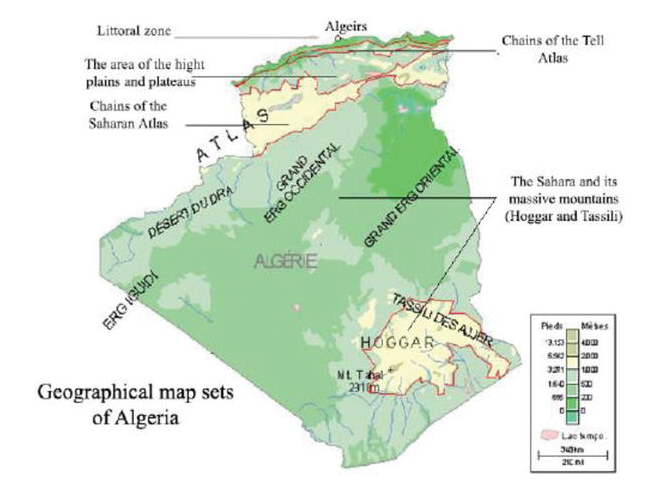
Algeria covers an area of 2,381,741 km2, running east and west across the Mediterranean for 1620 km and stretching from North to South over nearly 2,000 km. It is characterized by a great physiognomic diversity consisting of geographical units represented by a littoral zone rich in plains called Tell, mountainous zones (Atlas Tellien and Saharan Atlas), steppe areas called Hauts plateaux, and the Sahara and the big plateaux. Saharans sheltering the mountain ranges of Ahaggar and Tassili N’Ajjer. These natural geographical units correspond to well-defined biogeographical divisions, varied bioclimates (from humid to desert) and abundant Mediterranean and Saharan vegetation that is distributed from north to south according to the bioclimatic stages [1].
Origin of the Data
The data in this work comes from the bibliography, including standard scientific journals, fieldwork, and data collected from colleagues and friends. This work has been compiled and verified by the valuable input of data from social networks such as Facebook. This state of affairs leads us to recognize that these types of sources have become essential in a modern information exchange, hence the importance of ICT (Information and Communication Technologies) in the various fields of natural sciences and of life. One of our main bibliographic references is the work of Kowalski, et al. [4], teachers at Oran University from 1984 to 1990, who gave impetus to the knowledge of the Algerian mammalian fauna. The authors based the conclusions in their book “Mammals of Algeria” on bibliographic data, unpublished observations and collections of skeletons, regurgitation balls of some raptors, and of museums collections. Other works used include Haltenorth, et al. [5, 6]. Aulagnier, et al. [2] which was utilized as references in the presentation of general characteristics of species studied (Figure 1). Specialized websites for different facets of the conservation and study of mammals were also consulted, including: The IUCN redList of threatened species; http://www. iucnredlist.org/ - Site of the Conservation and sustainable development in particular for the Saharan species http:// www.cons-dev.org/ - Site of observation data for the recognition and identification of underwater fauna and flora DORIS: http://www.doris.ffessm.fr/
Results and Discussions
There are actually 111 species in Algeria belonging to 11 orders and 37 families. The order with the greatest number of species is the order of the Rodentia with 30 species. It is followed by Chiroptera, Carnivora and Cetartiodactyla with respectively 26, 21 and 20 species. The other orders are weakly represented: Soricomorpha with 5 species, lagomorphs with 3 species, Erinaceomorpha with 2 species, Primate, Perissodactyla, Hyracoida and Macroscelida orders are only represented by one species each. In terms of representativeness, the mammals of Algeria are poorly represented compared to many other countries of the Mediterranean basin, 4 of the 11 families are represented by only one species (Tables 1 & 2) (Figures 2-7).
| Order | Family | Species | Common english name |
|---|---|---|---|
| CHIROPTERA | Rhinopomatidae | Rhinopoma cystops | Lesser Mouse-tailed Bat |
| Rhinopoma microphyllum | Greater Mouse-tailed Bat | ||
| Emballonuridae | Taphozous nudiventris | Naked rumped Tomb Bat | |
| Rhinolophidae | Rhinolophus clivosus | Geoffroy’s horseshoe Bat | |
| Rhinolophus ferrumequinum | Greater horseshoe Bat | ||
| Rhinolophus hipposideros | Lesser horseshoe Bat | ||
| Rhinolophus blasii | Blasius horseshoe Bat | ||
| Rhinolophus euryale | Mediterranean Horseshoe Bat | ||
| Rhinolophus mehelyi | Mehely’s horseshoe Bat | ||
| Hipposideridae | Asellia tridens | Geoffroy’s Trident Leaf-nosed Bat | |
| Vespertilionidae | Myotis punicus | Maghrebian Mouse eared Bat | |
| Myotis capaccinii | Long fingered Bat | ||
| Myotis emarginatus | Geoffroy’s Bat | ||
| Myotis nattereri | Natterer’s Bat | ||
| Pipistrellus kuhlii | Kuhl’s Pipistrelle | ||
| Pipistrellus rueppelli | Ruppel’s Pipistrelle | ||
| Pipistrellus pipistrellus | Common Pipistrelle | ||
| Hypsugo savii | Savi’s Pipistrelle | ||
| Eptesicus isabellinus | Isabelline serotine Bat | ||
| Otonycteris hemprichi | Desert long-eared Bat | ||
| Nyctalus leisleri | Lesser Noctule | ||
| Nyctalus noctula | Noctule | ||
| Plecotus kolombatovici | Kolombatovic’s long-eared Bat | ||
| Molossidae | Tadarida teniotis | European free-tailed Bat | |
| Nectynomus aegyptiacus | Egyptian free-tailed Bat | ||
| Miniopteridae | Miniopterus schreibersii | Schreiber’s Bent-winged Bat | |
| PRIMATE | Cercopithecidae | Macaca sylvanus | Barbary Macaque |
| CARNIVORA | Canidae | Canis anthus | African golden wolf |
| Fennecus zerda | Fennec fox | ||
| Vulpes rueppelli | Ruppel’s fox | ||
| Vulpes vulpes | Red fox | ||
| Lycaon pictus | African wild Dog | ||
| Mustelidae | Ictonyx libycus | Libyan striped Weasel | |
| Mustela nivalis | Least Weasel | ||
| Lutra lutra | Eurasian Otter | ||
| Mellivora capensis | Honey Badger | ||
| Mustela putorius furo | Domestic Ferret | ||
| Viverridae | Genetta genetta | Common Genet | |
| Herpestidae | Herpestes ichneumon | Egyptian Mangoose | |
| Hyaenidae | Hyaena hyaena | Striped Hyaena | |
| Crocuta crocuta | Spotted Hyaena | ||
| Felidae | Caracal caracal | Caracal | |
| Acinonyx jubatus heckii | Cheetah | ||
| Felis margarita | Sand Cat | ||
| Felis libyca | Wild Cat | ||
| Leptailurus serval | Serval | ||
| Panthera pardus | Leopard | ||
| Phocidae | Monachus monachus | Méditerranean Monk Seal | |
| PERISSODACTYLA | Equidae | Equus africanus | African Ass |
| HYRACOIDA | Procaviidae | Procavia capensis | Rock Dassie |
| Sciuridae | Atlantoxerus getulus | Barbary ground Squirrel | |
| Gerbillidae | Gerbillus simoni | Simon’s Dipodil | |
| Pachyuromys duprasi | Fat Tailed Gerbil | ||
| Gerbillus henleyi | Henly’s Gerbil | ||
| Gerbillus campestris | Large North African Gerbil | ||
| Gerbillus amoenus | Mackilling’s Dipodil | ||
| Gerbillus pyramidum | Greater Gerbil | ||
| Gerbillus gerbillus | Lesser Gerbil | ||
| Gerbillus tarabuli | Tarabul’s Gerbil | ||
| Gerbillus latastei | Hairy footed Gerbil | ||
| Meriones crassus | Sundevall’s Jird | ||
| Meriones libycus | Libyan Jird | ||
| Meriones shawi | Shaw’s Jird | ||
| Psammomys obesus | Fat Sand Rat | ||
| Muridae | Arvicanthis niloticus | Grass Rat | |
| Apodemus sylvaticus | Long Taild Field Mouse | ||
| Mus musculus | House Mouse | ||
| Mus spretus | Algerian Mouse | ||
| Lemniscomys barbarus | Striped Mouse | ||
| Rattus rattus | Black Rat | ||
| Rattus norvegicus | Norway Rat | ||
| Acomys seurati | Cairo Spiny Mouse | ||
| RODENTIA | Gliridae | Eliomys munbyanus | Garden Dormouse |
| Dipodidae | Jaculus orientalis | Greater Egyptian Jerboa | |
| Jaculus jaculus | Lesser Egyptian Jerboa | ||
| Jaculus hirtipes | Lesser Egyptian Jerboa | ||
| Hystricidae | Hystrix cristata | North African Crested Porcupine | |
| Ctenodactylidae | Ctenodactylus gundi | North African Gundi | |
| Ctenodactylus vali | Thomas Gundi | ||
| Massoutiera mzabi | M’zab gundi | ||
| LAGOMORPHA | Leporida | Lepus capensis | Cap Hare |
| Lepus saxatillis | Crawshay’s Hare | ||
| Oryctolagus cuniculus | Rabbit | ||
| MACROSCELIDAE | Macroscelidae | Petrosaltator rozeti | North African Sengi |
| Erinaceidae | Atelerix algirus | North African Hedgehog | |
| ERINACEOMORPHA | Paraechinus aethiopicus | Desert Hedgehog | |
| SORICOMORPHA | Soricidae | Crocidura russula | Greater white-toothed shrew |
| Crocidura whitakeri | Whitaker’s shrew | ||
| Crocidura pachyura | North African white-toothed shrew | ||
| Crocidura cossyrensis | North African lesser white-toothed shrew | ||
| Suncus etruscus | Savi’s pygmy shrew | ||
| Suidae | Sus scrofa | Wild Boar | |
| Cervidae | Cervus elaphus barbarus | Barbary Red Deer | |
| Bovidae | Addax nasomaculatus | Addax | |
| Ammotragus lervia | Barbary Sheep | ||
| Gazella dorcas | Dorcas Gazelle | ||
| Gazella cuvieri | Mountain Gazelle | ||
| Gazella leptoceros | Slender-Horned Gazelle | ||
| Nanger dama | Red Necked Gazelle | ||
| Oryx dammah | Scimitar-Horned Oryx | ||
| Delphinidae | Delphinus delphis | Short-Breaked Common Dolphin | |
| CETARTIODACTYLA | Stenella attenuata | Pantropical Spotted Dolphin | |
| Grampus griseus | Risso’s Dolphin | ||
| Stenella coeruleoalba | Striped Dolphin | ||
| Tursiops truncates | Common Bottlenose Dolphin | ||
| Globicephala melas | Long-Finned Pilot Whales | ||
| Phocoenidae | Phocoena phocoena | Harbour Porpoise | |
| Physeteridae | Physeter macrocephalus | Sperm Whale | |
| Ziphiidae | Ziphius cavirostris | Cuvier’s Beaked Whale | |
| Balaenopteridae | Balaenoptera physalus | Fin Whale | |
| Balaenidae | Eubalaena glacialis | North Atlantic Right Whale |
- Order
- Family
- Number of Species
- Erinaceomorpha
- 1
- 2
- Soricomorpha
- 1
- 5
- Chiroptera
- 7
- 26
- Primate
- 1
- 1
- Carnivora
- 7
- 21
- Cétartiodactyla
- 9
- 20
- Perissodactyla
- 1
- 1
- Hyracoida
- 1
- 1
- Rodentia
- 7
- 30
- Lagomorpha
- 1
- 3
- Macroscélidae
- 1
- 1
- TOTAL
- 37
- 111
Table 2: Number of species by family.
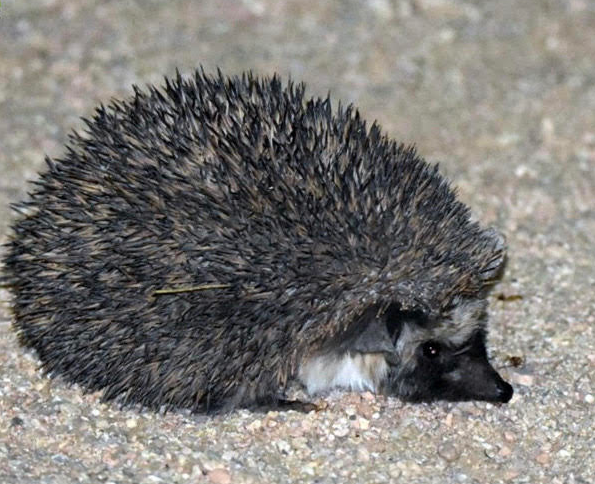
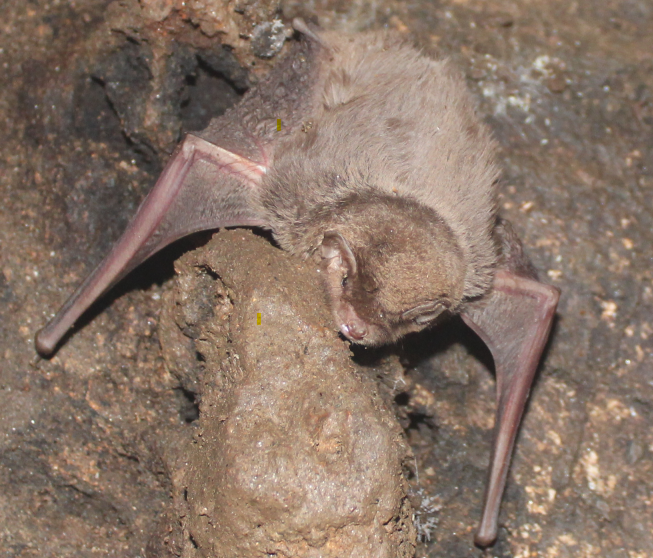
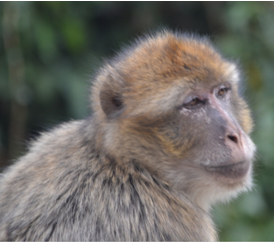
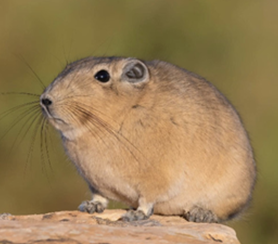
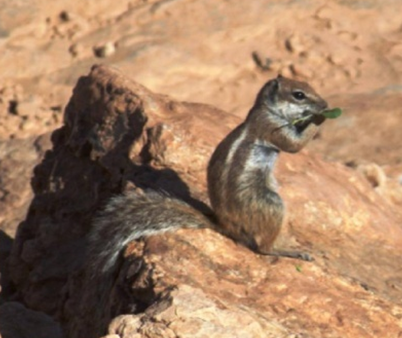
In Algeria there are 21 species of carnivores belonging to 7 families. The family with the most species is the family Felidae with 7 species, followed by that of Canidae and Mustelida_e which are represented by 5 species each, _Hyenidae by 2 species and other families, Viverridae, Herpesidae and Phocidae, present only one species. There are 26 species of bats belonging to 7 families. The family with the most species is the family Vespertilionidae with 13 species, followed by Rhinolphidae with 6 species. Two families are represented by 2 species are the Molossidae and the Rhnopomatidae, and the other 3 remaining families have only one species, they are Emballoneridaes, Hipposideridae and Miniopteridae. The order of the primates which is very important is represented by only one species.
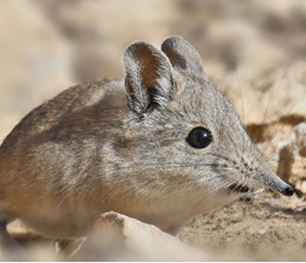
There is only one Erinaceomorpha family in Algeria, this is the family Erinaceidae which is represented by 2 species as there is one family of Soricomorpha in Algeria, this is the family Soricidae which is represented by 5 species. Rodents are represented by 7 families. The largest family is Gerbillidae, which has 13 species, followed by Muridae with 8 species. Ctenodactylidae and Dipodidae are represented respectively by 3 species. The 3 other families are represented by a single species they are Sciuridae, Gliridae and Hystricidae. In Algeria there are 3 Lagomorphs belonging to a single family and there is only one species of Macroscelidae and only one species of Perissodactyla and Hyracoida. There are 20 species of Cetartiodactyls in Algeria belonging to 9 families, there are 2 well-represented families, those of Bovidae and Delphinidae with respectively 7 and 6 species. All other families are represented by a single species. According to the work of Cuttelod, et al. [3] there are 379 mammal species in the Mediterranean region belonging to 11 orders and 45 families. In Algeria there are 111 mammal species belonging to 37 families. In terms of species, the Algerian mammalian wealth represents 29,28% of the richness of the Mediterranean region, and in terms of families there exists in Algeria 82,2% of the families of mammals. 8 families belonging to 5 Orders of mammals of the Mediterranean region are absent in Algeria.
Distribution
According to Dray [7] the geographical area of distribution of a taxonomic unit such as a species, a genus, a family is the part of the surface studied where it is represented. This area consists in fact of more or less numerous elementary surfaces and close together where the considered unit is actually present. Many ecology studies are interested in range size patterns in relation to variables such as local abundance [6, 7, 8], latitude [8] and corporal [9, 10, 11, 12, 13, 14, 15]. For conservation programs, range sizes and their distribution according to species are paramount criteria in order to define the priority sites and species to be protected [4]. According to the same author, biogeography, ecology and statistics are related disciplines when analyzing data on the spatial distribution of species [4] (Table 3).
| Number of Species | |
|---|---|
| Mammals of the desert zone | 33 |
| Mammals of the forest zone | 21 |
| Mammals of the mixed forest steppe zone | 19 |
| Mammals of the marine area | 11 |
| Mammals of the desert steppe forest zone | 10 |
| Mammals of the steppe zone | 10 |
| Mammals of the mixed steppe-desert zone | 3 |
| Mammals with wide territorial distribution | 4 |
| TOTAL | 111 |
Table 3: Distribution of mammals according to large biogeographic sets.
Biology of Conservation
Wild mammals of Algeria are protected by IUCN and Executive Decree No. 12-235 of 3 Rajab 1433 corresponding to May 24, 2012 establishing the list of protected non- domestic animal species. All Erinaceomorpha are considered LC (Least Concern) and are protected by Algerian law All Algerian Soricomorpha are considered (LC) globally and regionally, except the species Paraechinus aethiopicus that is Data defiscient (DD). At the national level 2 species are protected: Atelerix algirus and Paraechinus aethiopicus. In Bats, conservation status differs between global and regional (Mediterranean) levels. At the global level, there is a Data Deficient (DD) species that is Rhinolophus clivosus. There are 20 LC species globally and 16 at the regional level, the NT (Near Threatened) are 3 species globally and 5 at the regional level. The vulnerable species are more numerous at the regional level: Rhinolophus euryale, R. mehelyi and Myotis capaccinii. There is only one species in Danger it is Plecotus kolombatovici. All species of bats are protected in Algeria.
The barbary Macaque is the only species of Primate of North Africa, it is a species classified in Endangered at the world level and at the regional level, and it is protected. For Carnivora most species are considered LC with 13 species at the global level and 09 at the regional level. The number of NT (Near Threatened) species come in second with 5 globally and 4 at the regional level. Only one species is believed extinct it is Crocuta crocuta. At the local level 12 species are protected by law. The Cetartiodactyla are mainly LC, with only Balaenoptera physalus. Being considered VU (Vulnerable) at the regional level. 3 species are EN (Endangered) at the regional level, Eubalaena glacialis, Physeter macrocephalus and Delphinus delphis. No species is protected by Algerian
law. The only Algerian Perissodactyla species is endangered at regional level and is not protected by Algerian law. Hyracoida are represented by a single species LC but it is protected by Algerian law, also this is the case of Macroscelidae. The vast majority of Rodentia are class LC (Least Concern), only one species is DD at regional level it is Ctenodactylus vali. Only 6 species are protected by Algerian law. Lagomorpha are LC at the regional level except Oryctolagus cuniculus which is NT at the global level. No species is protected by Algerian law (Tables 4 & Table 5).
- Order
- Number of
- Species
- EX
- EW
- CR
- EN
- VU
- NT
- LC
- DD
- Number of threatenedspecies
- Erinaceomorpha
- 2
- 1
- 1
- 0
- Soricomorpha
- 5
- 5
- 0
- Chiroptera
- 26
- 3
- 5
- 17
- 1
- 3
- Primate
- 1
- 1
- 1
- Carnivora
- 21
- 1
- 4
- 1
- 1
- 4
- 10
- 6
- Cetartiodactyla
- 20
- 2
- 8
- 4
- 4
- 2
- 12
- Perissodactyla
- 1
- 1
- 1
- Hyracoida
- 1
- 1
- 0
- Rodentia
- 30
- 29
- 1
- 0
- Lagomorphea
- 3
- 3
- 0
- Macroscelida
- 1
- 1
- 0
- TOTAL
- 111
- 1
- 2
- 4
- 11
- 8
- 9
- 71
- 5
- 23
Table 4: The IUCN RedList critera at the regional level.
| Order | Number of species | EX | EW | CR | EN | VU | NT | LC | DD | Number of threatened Species |
|---|---|---|---|---|---|---|---|---|---|---|
| Erinaceomorpha | 2 | 2 | 0 | |||||||
| Soricomorpha | 5 | 5 | 0 | |||||||
| Chiroptera | 26 | 2 | 3 | 21 | 2 | |||||
| Primate | 1 | 1 | 1 | |||||||
| Carnivora | 21 | 3 | 5 | 13 | 3 | |||||
| Cetartiodactyla | 20 | 1 | 1 | 5 | 3 | 10 | 9 | |||
| Perissodactyla | 1 | 1 | 1 | |||||||
| Hyracoida | 1 | 1 | 0 | |||||||
| Rodentia | 30 | 30 | 0 | |||||||
| Lagomorpha | 3 | 1 | 2 | 0 | ||||||
| Macroscelida | 1 | 1 | 0 | |||||||
| TOTAL | 111 | 1 | 5 | 6 | 5 | 9 | 85 | 16 |
Table 5: The IUCN RedList critera at the International level.
According to the IUCN criteria, all species classes CR (Critically Endangered), EN (Endangered) and VU (Vulnerable) are considered endangered species. In Algeria there are 16 globally threatened species and 23 species at the regional level. At the global level of the 111 species, 16 are threatened at a rate of 14.41%, the orders with endangered species are Cetartiodactyla (8 species), Carnivora (3 species), Chiroptera (2 species) and Primates and Perissodactyla with respectively one specie. Endangered species (EN) are the most numerous with 11 species, followed by Vulnerables (VU) and Critically Endangered (CR) with 5 species respectively. At the regional level of the 111 species, 23 are threatened with a rate of 20.72%, the orders with endangered species are Cetartiodactyla (12 species), Carnivora (6 species), Chiroptera (3 species) and Primates and Perissodactyla with respectively one specie. Endangered species (EN) are the most numerous with 6 species, followed by Vulnerables (VU) 8 species and Critically Endangered (CR) with 4 species.
Conclusion
For Schipper, et al. [15] a global strategy for mammals is urgently needed,” they warn, because a quarter of the listed species currently living in the wild are threatened with extinction, according to their estimates published in the journal Philosophical Transactions. “Until now, there is still no comprehensive, widely accepted global conservation strategy to deal with the decline of mammals. The Mediterranean region is considered one of the world’s “hotspots” (an area of great importance) due to its exceptional concentrations of biodiversity. However, the unique wealth of the region is in danger because biodiversity continues to decline very quickly due to human pressure which leads to the fragmentation, degradation and loss of habitat and the extinction of species. Algeria, a Mediterranean country and the largest country in Africa in terms of area, considered by its geographical location a crossroads between continents has a mammalian heritage represented by 111 species belonging to 11 orders and 37 families and there are 16 globally threatened species and 23 species at the mediterranean level. The mammals of Algeria needs to be more known for their conservation.
Acknowledgements
My warmest thanks to Mr. Robin Huff, who went to great lengths to proofread this manuscript. I also thank the reviewers who will only give importance to this modest work
References
-
Abdelguerfi A, Chehat F, Ferrah A and Yahiaoui S ( 2009) Quatrieme rapport national sur la mise en œuvre de la convention sur la diversité biologique au niveau national.
-
Aulagnier S, Thevenot M (1986) Catalogue des mammifères sauvages du Maroc. Trav Inst Sci S Zool 41: 1-164.
-
Cuttelod A, García N, Malak DA, Temple H J and Katariya V (2009) The Mediterranean: a biodiversity hotspot under threat. Wildlife in a Changing World–an analysis of the 2008 IUCN Red List of Threatened Species, pp: 89.
-
Kowalski K and Rzebik-Kowalska B (1991) Mammals of Algeria, Polish Acad. Sci Ossolineum, pp: 370.
-
Haltenorth TH and Diller H (1980) A field guide to the Mammals of Africa including Madagascar. Collins, London, UK.
-
Haltenorth TH, Diller H (1985) Mammifères d’Afrique et de Madagascar. Ed Delachaux et Niestlé - Paris.
-
Dray S (1999) Utilisation des listes d’occurrence specifiques spatialisées en ecologie et en biogéographie. Rapport bibliographique. DEA Analyses et Modelisation des Systemes Biologiques. ESA CNRS 5023, pp: 31.
-
Gaston KJ (1994) What is rarity?. In Rarity. Springer, Dordrecht, pp: 1-21.
-
Gaston KJ, Blackburn TM (1996) Range size-body size relationships: evidence of scale dependence. Oikos 75: 479-485.
-
Gaston KJ, Quinn RM, Wood S and Arnold HR (1996) Measures of geographic range size: effects of sample size. Ecography 19: 259-268.
-
Jones JK, Carter DC, Genoways HH, Hoffmann RS, Rice DW, et al. (1986) Revised checklist of North American mammals north of Mexico.
-
Pagel M (1997) Inferring evolutionary processes from phylogenies. Zoologica Scripta 26(4): 331-348.
-
Reaka ML (1980) Geographic range, life history patterns, and body size in a guild of coral-dwelling mantis shrimps. Evolution, pp: 1019-1030.
-
Vlachogianni T, Vogrin M, Scoullos M (2012) Biodiversité dans la région méditerranéenne. Document de synthèse du MIO‐ECSDE sur la Biodiversité dans la Méditerranée. pp: 11.
-
SchipperJ, Chanson JS, Chiozza F, Cox NA, Hoffmann M, et al. (2008) The status of the world’s land and marine mammals: diversity, threat, and knowledge. Science 322(5899): 225-230.
- California Red-Legged Frog and Non-Listed Amphibians Response to Non-Native Fish Removal
- Industrial Standardization of the Bio-OS: Algorithmic Codification of Resilience Engineering Guidelines and Version V8 Architecture
- Climate Variability and the Sustainability of Snail Farming in Nigeria: Past Trends, Present Challenges and Potential Outlook
- The Evaluation of the Surveillance System of Anthrax in Gilgit-Baltistan, Pakistan, 2018
- Natural Decline to Extinction of A New Zealand Rabbit Population
- Mitochondrial Bio-Logistics: Steering Co-Enzyme Q10 and Lycopene Synergies within the Science 4.0 Bio-OS Framework