
Diversity and Abundance of Bird’s Species at Um Dum Island, Khartoum Province, Sudan
This study focuses on bird diversity and abundance as well as their conservation status in Um Dum Island, Khartoum area, Sudan. Um Dum Island hosts distinctive biodiversity, there are a number of bird species that make the island exclusive and valuable for the local ecosystems therefore indicating the importance of Island not only for biodiversity but also for human survival, development and local health environment. The data collection used direct bird count method over six months of the study period, from June to December 2020 except October bird counts and identification surveys were conducted once each month from 6:00 AM to 6:00 PM. Equipment used for data collection are a pair of binoculars (50X50 magnifications), telescope – Swaroviski (660 – 940), digital still camera for documenting, data recording sheets, notebook, and an identification guide to the birds. Birds species that identified compare with field guide of birds of Africa south of the Sahara. In total, about 4343 individuals that belonged to 12 orders, with different abundances were observed in Um Dum Island belonging to 34 families of 53 species, the four most common birds identified were the House Sparrow with 926 individuals counted, followed by African Mourning Dove with 923 individuals followed by Greater blue-eared starling with 424 individuals counted, the Laughing Dove with 275 individuals counted and the Red-billed Fire finch with 210 individuals counted. This result reflects the richness of the avifauna of the Um Dum Island, this richness is probably due to the use of the area for the availability of food, as well as the flora around the island and availability of water. The highest number of birds observed was in June and July, the families observed with the maximum numbers of different species were Sturnidae, Passeridae, Columbidae and Estrildidae. The Um Dum Island eligible to be considered as an important bird’s area, however the Island is still depauperate of the necessary data collection for this purpose, hence the importance of this study. Like any site of birds habitat in Sudan there is areal need for protection from human activities.
Introduction
Birds are important component of ecosystems and considered as an indicator species [1]. Population of birds is a sensitive indicator of pollution in both terrestrial and aquatic ecosystem [2, 3]. Monitoring bird’s populations and it’s diversity enable better understanding for methods of conservation measures to insure long term survival.
Sudan, geographically, is located on the main routes used by migratory birds from three continents (Europe, Asia and Africa ). Sudan is important migration route for bird providing them food, water and aresting sites during long journey [4].
Khartoum is described as suitable site for birds study. Which are lies between the extreme desert to the north and dry wood savannah to the south considered as ransitional zone. Therefore representive of bird of both desert and savannah species are found [5]. Khartoum is located on the great migration route of most of the summer visitors to Europe and the rest of Palaearctic region. It is also an important centre for many African migrants where spending their summer and more especially the rainy season in the north part of their range, and returning south to central and southern Africa during October after their breeding has finished. Moreover, during the winter months of the north temperate region, the Sudan is invaded by large number of species which spend their non-breeding season in Africa. Many remain in the Sudan while other pass through to the south and stop over, rest, feed and drink [6].
The avifauna of Sudan includes 938 species before separation of South Sudan [7]. Over all 87 bird species were recorded in Al-Sunut Forest in Khartoum State. Among the recorded species, 50 were Palearctic migrants, 8were local migrants and 29 species were resident [8]. Prevouis studies recorded that; Al – Sunut forest contains at least 70 species (among which 26 are migrants) [9, 10].
Margani, N,N. recorded about 86 species in six sites of khartoum state [11]. Khartoum state characterized by islands on both white and blue Nile, Tutti, Um dum, Moran, and Sunt and Om shigiera that inhabited diverse vegetation cover which gives significant richness of birds. Also of this importance but these islands are not studied to fulfill specific information.
Osman Salah, et al. [12] studied Tuti Island at Khartoum state and stated that there are considerable significant temporal variations in bird diversity and abundance during season. Mutasim EA, et.al. [13] recorded 88 species for the same site, and there is seasonal significant variation of abundance between species.
The aim of this study focuses on bird diversity and abundance as well as their conservation status in Um Dum Island, Khartoum, Sudan.
Objectives
- To determine the avifauna of the island and its conservation status.
- To determine the migratory populations and groups of the birds in the island.
- To determine major threats of feeding, breeding, and nesting sites within the island.
Material and Methods
Study Area
The climate of Khartoum is tropical desert. There are three seasons per year, cool winter, dry summer and a rainy season. Highest temperatures (45°C or more) are recorded in summer months (May-June) while lowest temperatures (22°C or less) are recorded during winter months (December-January). The average rainfall is about 150 mm per annum. Nile flooding takes place during the rainy season (July-October) and affects both sites.
The study was conducted in Um Dum Island, Khartoum, Sudan (°N: 15 32 288.6 °E. 32 37 35. 8).The Um Dum Island is considered a spot area to birds as it is surrounded with vegetation and wetlands that make suitable habitats for birds. The weather is rainy in the summer, and cold and dry in the winter; temperature ranges from 25 to 40 °C between April and June, and from 20 to 35 °C in the months of July to October.
Human activities: Fishing, grazing hunting, farming.
Methodology
Direct observation technique (Direct count) was used for estimating the number of birds which is used by Elhussien 2011 to assess the abundant and distribution of birds in Dindir National Paak [14], Elahassan 2011 to assess water birds in meadows of Dindir National Park [15] . Du Rou and Mondain used the same method for International Water Bird Census in Sudan from 2011 to 2013 [16]. Hussien 2018 used it to assess the diversity of water birds in some wetland of sinnar state, Sudan [17].
The study was carried out in the period from June to December 2020, covering late rainy and summer seasons. The survey records standards such as bird species, number of individuals, weather conditions and time. The survey was carried out by personal observations and by photo documentation. Data collection used direct bird count method from 7:00-10:00 a.m. over the six months of the study period; the surveys were undertaken always at the same time of day during six months. Bird counts and identification surveys were conducted once each month. Equipment used for data collection are a pair of binoculars (50X50 magnifications), telescope – Swarovski (660 – 940), digital still camera, data recording sheets, notebook, and an identification guide to the birds (Birds of Africa South of the Sahara by Peter Ryan and Ian Sinclair, second edition 2010). Line transects undertaken by continually walking along a 400m straight line transect in a moderate pace while noting all bird species observed or heard, its height above ground (below or above 3m), its distance from the transect (below or above 25m or 50m), number or birds observed and if it was only seen, heard or both.
Results and Discussion
Bird Orders and Families
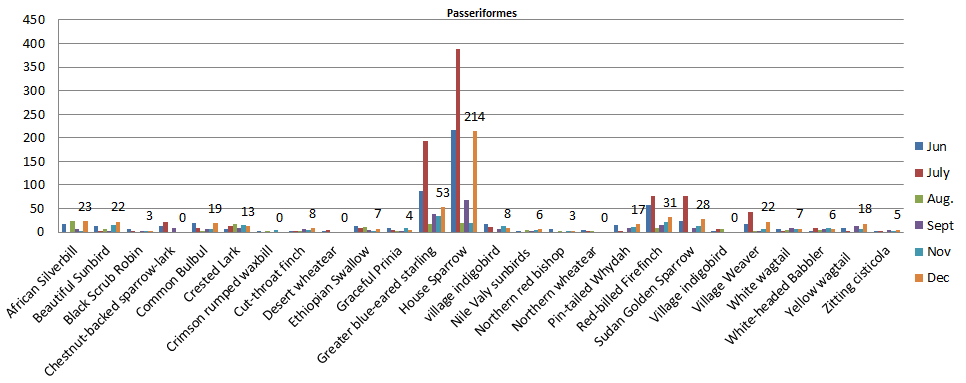
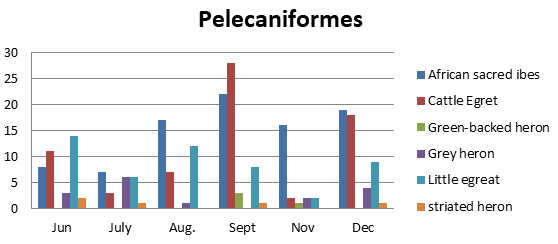
In total, about 4343 individuals that comprised to 12 orders with different abundances were observed in Um Dum Island belonging to 34 families, including 53 species, of these, 1 species was in the order Accipitriformes (family Accipitridae), 1 species in the order Anseriformes (family Anatidae), 1 species in the order Apodiformes (Apodidae), 2 species in the order Bucerotiformes (family Bucerotidae and Upupidae), 1 species in the order Caprimulgiformes (Caprimulgidae), 5 species in order Charadriiformes (family Recurvirostridae, Scolopacidae, Pluvianidae, Scolopacidae and Charadriidae), 1 species in order Ciconiiformes (family Ciconiidae), 1 species in order Coliiformes (family Coliidae), 3 species in order Columbiformes (family Columbidae), 4 species in order Coraciiformes (family Coraciidae, Meropidae and Alcedinidae), 2 species in order Cuculiformes (family Cuculidae), 26 species in order Passeriformes (family Alaudidae, Charadriidae, Cisticolidae, Estrildidae, Hirundinidae, Leiothrichidae, Motacillidae, Muscicapidae, Nectariniidae, Passeridae, Ploceidae, Pycnonotidae, Sturnidae and Viduidae) and 6 species in order Pelecaniformes (family Threskiornithidae, Ardeidae and Charadriidae) see Tables 1& 2; Figures 1-14.
Habitat Use and Preference
The habitat around the island is dominated by water, agricultural land, small shrubs and trees, the features around the island with agricultural schemes considered as habitat preferences for birds and abundance of food and water Generally bird survey results can be strongly influenced by season, time of day and local habitat variation, including elevation [18]. Other variables such as weather conditions, human presence, observer’s experience, number of observers and observers’ own limitations and the fact that the avifauna of Sudan includes a total of 1013 species, some of which 3 are endemic, 1 has been introduced by humans, and 4 are rare or accidental. 10 species are globally threatened. [19, 20]. The rest were classified as migratory bird species that relocate during the year can also influence the presence of birds. Therefore, and for a better understanding or even monitoring of habitat biodiversity, surveys should ideally be done in different seasons and conditions. The four most common birds identified were the House Sparrow with 926 individuals counted, followed by African Mourning Dove with 923 individuals followed by Greater blue-eared starling with 424 individuals counted, the Laughing Dove with 275 individuals counted and the Red-billed Firefinch with 210 individuals counted (Table 1).
Um Dum Island Birds Diversity and Richness
This result reflects the richness of the avifauna of the Um Dum Island. This richness is probably due to the use of the area for the availability of food, as well as the flora around the island and availability of water, which is diverse and contains a wide range of agricultural schemes providing a wide range of microhabitats for different species of birds. It is well known that vegetation cover has a strong influence on the avifauna [21]. The agricultural schemes provide a considerable amount of suitable habitats for feeding, or resting sites for birds. Variations in the bird species noted during the study period could be attributed to bird migration, with some migrating birds arriving in the area for feeding or using it as a stopover site for food supply. The relatively high diversity of birds observed in the island suggests that the habitat of the area is suitable for birds. However, increasing anthropogenic activities are a matter of great concern when considering the future existence of these species, the bird density of the island reached during the period of the study, this indicates that ecological succession the density vary in the island may be due to the rainy seasons with flooding around the island and birds roosting in the trees however.
The highest number of birds observed was in June and July respectively (Table 1). The families observed with the maximum numbers of different species were Sturnidae, Passeridae, Columbidae and Estrildidae and the monthly number of birds observed during the study period is shown in (Tables 1 & 2).
The higher number of these species may be due to the availability of food in this time of the year which conforms with the beginning of rainy season.
The main threat that facing the bird’s habitats in Khartoum province and of Sudan as a whole is the absence of wetland policy and lack of legislation to protect the important birds area. The historical studies mentioned some birds species in Khartoum province but unfortunately are now disappeared for unknown reasons. The strong suggestion for these reasons is urbanization, agriculture, hunting and habitat degradation or loss.
| No | Order No | Order | Family | Species scientific name | Species English name | Jun | July | Aug | Sept | Nov | Dec | Total |
|---|---|---|---|---|---|---|---|---|---|---|---|---|
| 1 | 1 | Accipitriformes | Accipitridae | Milvus migrans | Blak kite | 27 | 13 | 10 | 9 | 19 | 33 | 111 |
| 2 | 2 | Anseriformes | Anatidae | Dendrocygna viduata | White-faced whistling duck | 5 | 2 | 3 | 0 | 0 | 0 | 10 |
| 3 | 3 | Apodiformes | Apodidae | Apus apus | Common swift | 32 | 15 | 6 | 17 | 15 | 37 | 122 |
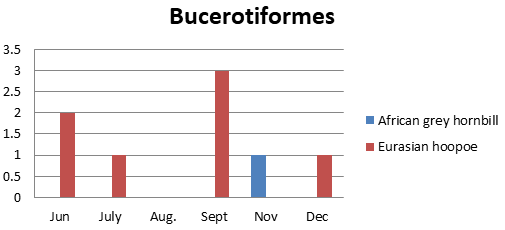
| 4 | 4 | Bucerotiformes | Bucerotidae | Tockus nasutus | African grey hornbill | 0 | 0 | 0 | 0 | 1 | 0 | 1 |
| 5 | Bucerotiformes | Upupidae | Upupa epops | Eurasian hoopoe | 2 | 1 | 0 | 3 | 0 | 1 | 7 | |
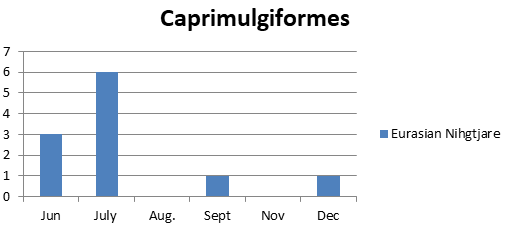
| 6 | 5 | Caprimulgiformes | Caprimulgidae | Caprimulgus europaeus | Eurasian Nihgtjar | 3 | 6 | 0 | 1 | 0 | 1 | 11 |
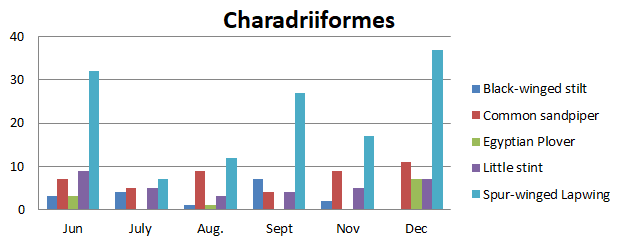
| 7 | 6 | Charadriiformes | Recurvirostridae | Himantopus himantopus | Black-winged stilt | 3 | 4 | 1 | 7 | 2 | 0 | 17 |
| 8 | Charadriiformes | Scolopacidae | Actitis hypoleucos | Common sandpiper | 7 | 5 | 9 | 4 | 9 | 11 | 45 | |
| 9 | Charadriiformes | Pluvianidae | Pluvianus aegyptius | Egyptian Plover | 3 | 0 | 1 | 0 | 0 | 7 | 11 | |
| 10 | Charadriiformes | Scolopacidae | Calidris minuta | Little stint | 9 | 5 | 3 | 4 | 5 | 7 | 33 | |
| 11 | Charadriiformes | Charadriidae | Vanellus spinosus | Spur-winged Lapwing | 32 | 7 | 12 | 27 | 17 | 37 | 132 | |
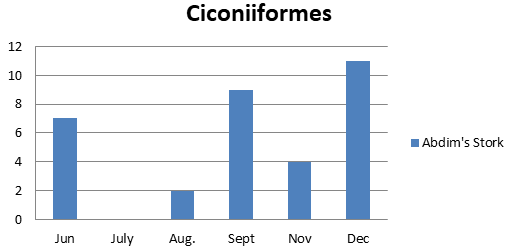
| 12 | 7 | Ciconiiformes | Ciconiidae | Ciconia abdimii | Abdim’s Stork | 7 | 0 | 2 | 9 | 4 | 11 | 33 |
| 13 | Ciconiiformes | Threskiornithidae | Threskiornis aethiopicus | African sacred ibes | 8 | 7 | 17 | 22 | 16 | 19 | 89 | |
| 14 | Ciconiiformes | Ardeidae | Bubulcus ibis | Cattle Egret | 11 | 3 | 7 | 28 | 2 | 18 | 69 | |
| 15 | Ciconiiformes | Ardeidae | Butorides striata | Green-backed heron | 0 | 0 | 0 | 3 | 1 | 0 | 4 | |
| 16 | Ciconiiformes | Ardeidae | Ardea cinerea | Grey heron | 3 | 6 | 1 | 0 | 2 | 4 | 16 | |
| 17 | Ciconiiformes | Ardeidae | Egretta garzetta | Little egreat | 14 | 6 | 12 | 8 | 2 | 9 | 51 | |
| 18 | Ciconiiformes | Ardiedae | Butorides striata | striated heron | 2 | 1 | 0 | 1 | 0 | 1 | 5 | |
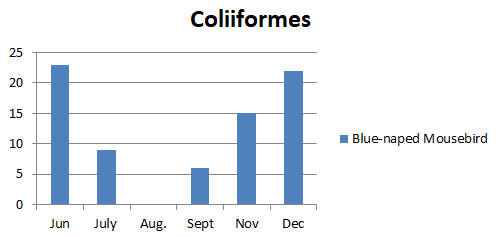
| 19 | 8 | Coliiformes | Coliidae | Urocolius macrourus | Blue-naped Mousebird | 23 | 9 | 0 | 6 | 15 | 22 | 75 |
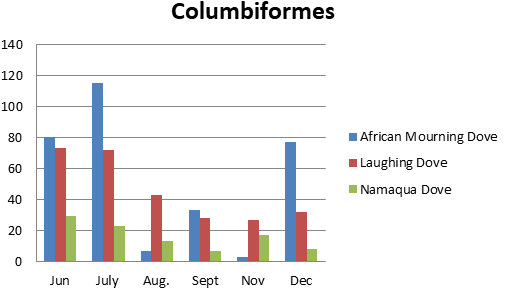
| 20 | 9 | Columbiformes | Columbidae | Streptopelia decipiens | African Mourning Dove | 80 | 115 | 7 | 33 | 3 | 77 | 923 |
| 21 | Columbiformes | Columbidae | Spilopelia senegalensis | Laughing Dove | 73 | 72 | 43 | 28 | 27 | 32 | 275 | |
| 22 | Columbiformes | Columbidae | Oena capensis | Namaqua Dove | 29 | 23 | 13 | 7 | 17 | 8 | 97 | |
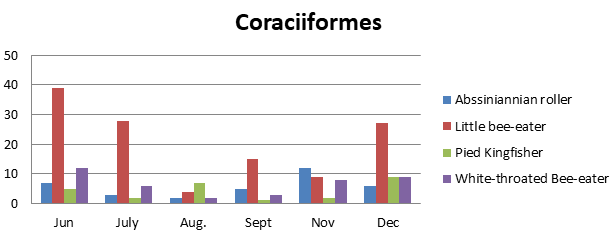
| 23 | 10 | Coraciiformes | Coraciidae | Coracias abyssinicus | Abssiniannian roller | 7 | 3 | 2 | 5 | 12 | 6 | 35 |
| 24 | Coraciiformes | Meropidae | Merops orientalis | Little bee-eater | 39 | 28 | 4 | 15 | 9 | 27 | 122 | |
| 25 | Coraciiformes | Alcedinidae | Ceryle rudis | Pied Kingfisher | 5 | 2 | 7 | 1 | 2 | 9 | 26 | |
| 26 | Coraciiformes | Meropidae | Merops albicollis | White-throated Bee-eater | 12 | 6 | 2 | 3 | 8 | 9 | 40 | |
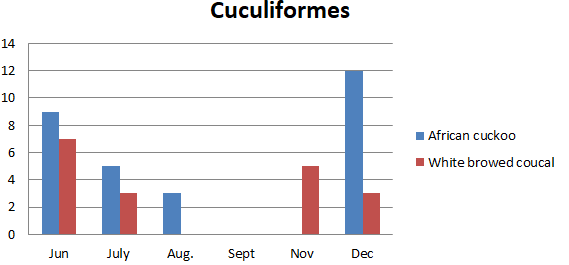
| 27 | 11 | Cuculiformes | Cuculidae | Cuculus gularis | African cuckoo | 9 | 5 | 3 | 0 | 12 | 29 | |
| 28 | Cuculiformes | Cuculidae | Centropus superciliosus | White browned coucal | 7 | 3 | 0 | 0 | 5 | 3 | 18 | |
| 29 | 12 | Passeriformes | Estrildidae | Euodice cantans | African Silverbill | 17 | 0 | 24 | 7 | 2 | 23 | 73 |
| 30 | Passeriformes | Nectariniidae | Cinnyris pulchella | Beautiful Sunbird | 12 | 3 | 6 | 2 | 14 | 22 | 59 | |
| 31 | Passeriformes | Muscicapidae | Cercotrichas podobe | Black Scrub Robin | 6 | 2 | 0 | 1 | 2 | 3 | 14 | |
| 32 | Passeriformes | Alaudidae | Eremopterix leucotis | Chestnut-backed sparrow-lark | 13 | 22 | 0 | 9 | 0 | 0 | 44 | |
| 33 | Passeriformes | Pycnonotidae | Pycnonotus barbatus | Common Bulbul | 19 | 9 | 1 | 6 | 6 | 19 | 60 | |
| 34 | Passeriformes | Alaudidae | Galerida cristata | Crested Lark | 6 | 13 | 18 | 9 | 16 | 13 | 75 | |
| 35 | Passeriformes | Estrildidae | Estrilda rhodopyga | Crimson rumped waxbill | 3 | 0 | 1 | 0 | 5 | 0 | 9 | |
| 36 | Passeriformes | Estrildidae | Amadina fasciata | Cut-throat finch | 3 | 2 | 1 | 7 | 4 | 8 | 25 | |
| 37 | Passeriformes | Muscicapidae | Oenanthe deserti | Desert wheatear | 3 | 5 | 0 | 0 | 0 | 0 | 8 | |
| 38 | Passeriformes | Hirundinidae | Hirundo aethiopica | Ethiopian Swallow | 13 | 8 | 10 | 4 | 2 | 7 | 44 | |
| 39 | Passeriformes | Cisticolidae | Prinia gracilis | Graceful Prinia | 9 | 5 | 1 | 3 | 9 | 4 | 31 | |
| 40 | Passeriformes | Sturnidae | Lamprotornis chalybaeus | Greater blue- eared starling | 88 | 193 | 17 | 38 | 35 | 53 | 424 | |
| 41 | Passeriformes | Passeridae | Passer domesticus | House Sparrow | 217 | 388 | 20 | 67 | 20 | 214 | 926 | |
| 42 | Passeriformes | Viduidae | Vidua chalybeata | Village indigobird | 20 | 17 | 6 | 7 | 12 | 8 | 70 | |
| 43 | Passeriformes | Nectariniidae | Hedydipna metallica | Nile Valy sunbirds | 3 | 0 | 4 | 1 | 4 | 6 | 18 | |
| 44 | Passeriformes | Ploceidae | Euplectes franciscanus | Northern red bishop | 7 | 0 | 2 | 0 | 1 | 3 | 13 | |
| 45 | Passeriformes | Muscicapidae | Oenanthe oenanthe | Northern wheatear | 5 | 3 | 1 | 0 | 0 | 0 | 9 | |
| 46 | Passeriformes | Viduidae | Vidua macroura | Pin-tailed Whydah | 14 | 3 | 0 | 9 | 11 | 17 | 54 | |
| 47 | Passeriformes | Estrildidae | Lagonosticta senegala | Red-billed Firefinch | 57 | 76 | 8 | 16 | 22 | 31 | 210 | |
| 48 | Passeriformes | Passeridae | Passer luteus | Sudan Golden Sparrow | 24 | 76 | 0 | 8 | 13 | 28 | 149 | |
| 49 | Passeriformes | Ploceidae | Ploceus cucullatus | Village Weaver | 17 | 43 | 2 | 1 | 7 | 22 | 92 | |
| 50 | Passeriformes | Motacillidae | Motacilla alba | White wagtail | 7 | 2 | 5 | 9 | 6 | 7 | 36 | |
| 51 | Passeriformes | Leiothrichidae | Turdoides leucocephala | White-headed Babbler | 3 | 8 | 4 | 7 | 9 | 6 | 37 | |
| 52 | Passeriformes | Motacillidae | Motacilla flava | Yellow wagtail | 9 | 2 | 0 | 13 | 7 | 18 | 49 | |
| 53 | Passeriformes | Cisticolidae | Cisticola juncidis | Zitting cisticola | 2 | 1 | 0 | 4 | 3 | 5 | 15 | |
| Total | 1029 | 1228 | 296 | 469 | 238 | 918 | 4951 |
Table 1: List of Birds’ Species and Numbers Observed in Um Dum Island, Khartoum, Sudan during June – December 2020.
| No | Order Name | Family | Total number of Species | Species scientific name | Species English name | Status | IUCN Red list | Total number observed |
|---|---|---|---|---|---|---|---|---|
| 1 | Accipitriformes | Accipitridae | 1 | Milvus migrans | Blak kite | PM | LC | 111 |
| 2 | Anseriformes | Anatidae | 1 | Dendrocygna viduata | White-faced whistling duck | LM/BR | LC | 10 |
| 3 | Apodiformes | Apodidae | 1 | Apus apus | Common swift | LM/BR | LC | 122 |
| 4 | Bucerotiformes | Bucerotidae | 1 | Tockus nasutus | African grey hornbill | AM | LC | 1 |
| 5 | Bucerotiformes | Upupidae | 1 | Upupa epops | Eurasian hoopoe | PM | LC | 7 |
| 6 | Caprimulgiformes | Caprimulgidae | 1 | Caprimulgus europaeus | Eurasian Nihgtjar | PM | LC | 11 |
| 7 | Ciconiformes | Threskiornithidae | 6 | Threskiornis aethiopicus | African sacred ibes | AM/LM/BR | LC | 89 |
| 8 | Ciconiformes | Ardeidae | Bubulcus ibis | Cattle Egret | LM/AM/BR | LC | 69 | |
| 9 | Ciconiformes | Ardeidae | Butorides striata | Green-backed heron | LM/BR | LC | 4 | |
| 10 | Ciconiformes | Ardeidae | Ardea cinerea | Grey heron | LM/PM/BR | LC | 16 | |
| 11 | Ciconiformes | Ardeidae | Egretta garzetta | Little egret | LM/PM | LC | 51 | |
| 12 | Ciconiformes | Ardeidae | Butorides striata | striated heron | RB/BR | 5 | ||
| 13 | Ciconiiformes | Ciconiidae | 1 | Ciconia abdimii | Abdim’s Stork | AM/ BR | LC | 33 |
| 14 | Coliiformes | Coliidae | 1 | Urocolius macrourus | Blue-naped Mousebird | LM/AM/BR | LC | 75 |
| 15 | Columbiformes | Columbidae | 3 | Streptopelia decipiens | African Mourning Dove | R LM/AM | LC | 315 |
| 16 | Columbiformes | Columbidae | Spilopelia senegalensis | Laughing Dove | LM/ AM /BR | LC | 275 | |
| 17 | Columbiformes | Columbidae | Oena capensis | Namaqua Dove | LM/AM/PM | LC | 97 | |
| 18 | Coraciiformes | Coraciidae | 4 | Coracias abyssinicus | Abssiniannian roller | AM/LM/BR | LC | 35 |
| 19 | Coraciiformes | Meropidae | Merops orientalis | Little bee-eater | AM/LM/BR | LC | 122 | |
| 20 | Coraciiformes | Alcedinidae | Ceryle rudis | Pied Kingfisher | R/LM/AM | LC | 26 | |
| 21 | Coraciiformes | Meropidae | Merops albicollis | White-throated Bee-eater | AM/LM | LC | 40 | |
| 22 | Cuculiformes | Cuculidae | 2 | Cuculus gularis | African cuckoo | AM | LC | 29 |
| 23 | Cuculiformes | Cuculidae | Centropus superciliosus | White browed coucal | AM | LC | 18 | |
| 24 | Charadriiformes | Recurvirostridae | 5 | Himantopus himantopus | Black-winged stilt | PM | LC | 17 |
| 25 | Charadriiformes | Scolopacidae | Actitis hypoleucos | Common sandpiper | PM | LC | 45 | |
| 26 | Charadriiformes | Pluvianidae | Pluvianus aegyptius | Egyptian Plover | LM/BR | LC | 11 | |
| 27 | Charadriiformes | Scolopacidae | Calidris minuta | Little stint | PM | LC | 33 | |
| 28 | Charadriiformes | Charadriidae | Vanellus spinosus | Spur-winged Lapwing | LM/PM/BR | LC | 132 | |
| 29 | Passeriformes | Estrildidae | 27 | Euodice cantans | African Silverbill | R/LM | LC | 73 |
| 30 | Passeriformes | Nectariniidae | Cinnyris pulchella | Beautiful Sunbird | AM/PM/BR | LC | 59 | |
| 31 | Passeriformes | Muscicapidae | Cercotrichas podobe | Black Scrub Robin | AM/LM | LC | 14 | |
| 32 | Passeriformes | Alaudidae | Eremopterix leucotis | Chestnut- backed sparrow-lark | LM/AM | LC | 44 | |
| 33 | Passeriformes | Pycnonotidae | Pycnonotus barbatus | Common Bulbul | R/BR | LC | 60 | |
| 34 | Passeriformes | Alaudidae | Galerida cristata | Crested Lark | LM | LC | 75 | |
| 35 | Passeriformes | Estrildidae | Estrilda rhodopyga | Crimson rumped waxbill | LM | LC | 9 | |
| 36 | Passeriformes | Estrildidae | Amadina fasciata | Cut-throat finch | LM/BR | LC | 25 | |
| 37 | Passeriformes | Muscicapidae | Oenanthe deserti | Desert wheatear | PM | LC | 8 | |
| 38 | Passeriformes | Muscicapidae | Oenanthe oenanthe | Northern wheatear | PM | LC | 9 | |
| 39 | Passeriformes | Hirundinidae | Hirundo aethiopica | Ethiopian Swallow | AM/BR | LC | 44 | |
| 40 | Passeriformes | Cisticolidae | Prinia gracilis | Graceful Prinia | LM | LC | 31 | |
| 41 | Passeriformes | Sturnidae | Lamprotornis chalybaeus | Greater blue- eared starling | LM | LC | 424 | |
| 42 | Passeriformes | Passeridae | Passer domesticus | House Sparrow | R | LC | 926 | |
| 43 | Passeriformes | Viduidae | Vidua chalybeata | Village indigobird | AM/PM | LC | 55 | |
| 44 | Passeriformes | Nectariniidae | Hedydipna metallica | Nile Valy sunbirds | LM/R | LC | 18 | |
| *45 | Passeriformes | Ploceidae | Euplectes franciscanus | Northern red bishop | LM/R | LC | 13 | |
| 46 | Passeriformes | Viduidae | Vidua macroura | Pin-tailed Whydah | AM | LC | 54 | |
| 47 | Passeriformes | Estrildidae | Lagonosticta senegala | Red-billed Firefinch | R/LM | LC | 210 | |
| 48 | Passeriformes | Passeridae | Passer luteus | Sudan Golden Sparrow | RB | LC | 149 | |
| 49 | Passeriformes | Ploceidae | Ploceus cucullatus | Village Weaver | AM/LM | LC | 92 | |
| 50 | Passeriformes | Motacillidae | Motacilla alba | White wagtail | PM | LC | 36 | |
| 51 | Passeriformes | Leiothrichidae | Turdoides leucocephala | White-headed Babbler | LM | LC | 37 | |
| 52 | Passeriformes | Motacillidae | Motacilla flava | Yellow wagtail | PM | LC | 49 | |
| 53 | Passeriformes | Cisticolidae | Cisticola juncidis | Zitting cisticola | LM/BRR | LC | 15 | |
| Total species | 53 | Total numberof individuals | 4343 |
Table 2: Birds’ Species and their General Status Observed in Um Dum Island, Khartoum, Sudan during June – December 2020.
Conservation Status
The taxonomy and nomenclature of the birds observed were performed and their status information was tabulated according to the IUCN Red List of Threatened Species [22], all birds’ species in this study are classified as Least Concern-LC category.
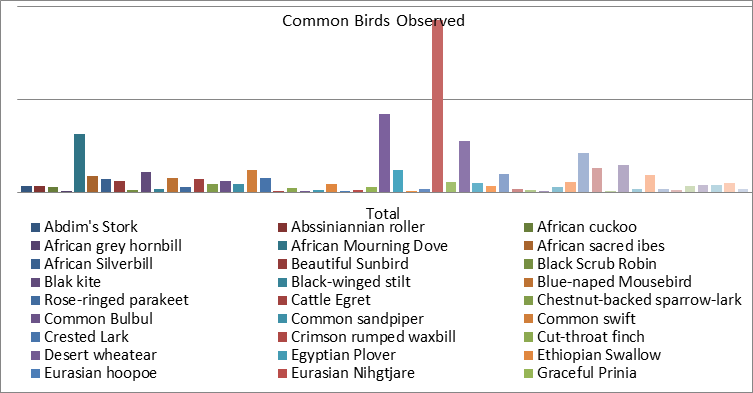
Figure 1: Common Birds Observed in Um Dum Island, Khartoum, Sudan during June – December 2020. Key to status information: BR – Breeding record confirmed; M – Migrant including on passage through Sudan; P – Breeds in Palearctic; R – Resident (Present throughout the year; W – Winter visitor in Sudan (non-breeding season); RB – Resident in Sudan as confirmed by breeding record; PM – Breeds in the Palearctic and winters in Sudan; AM – Intra African Migrant; RB/ PW – There is both a resident breeding population and a wintering population; AM - Intra African Migrant; LC – Least Concern.
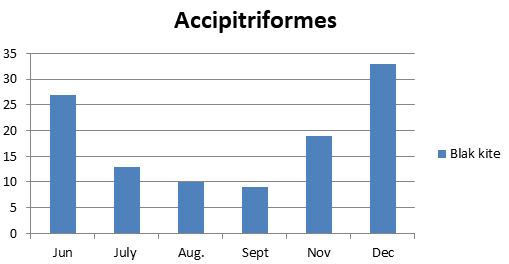
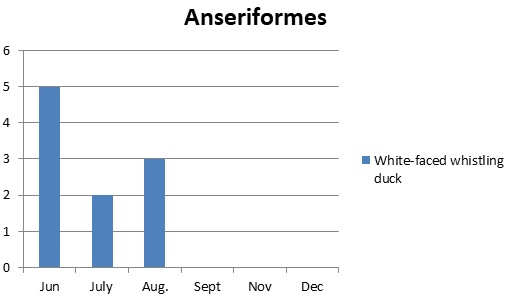
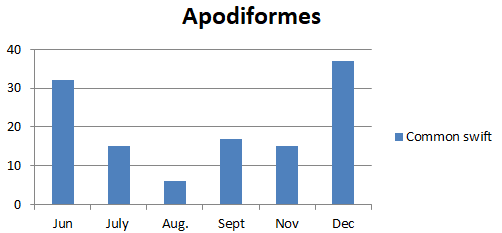
Um Dum Island hosts distinctive biodiversity of a number of bird species that make the island exclusive and valuable for the local ecosystems therefore indicating the importance of Island not only for biodiversity but also for human survival, development and local health environment, therefore currently eligible to be considered as important bird area, Um Dum Island is still depauperate of the necessary data collection for this purpose, hence the importance of this study as a tool to contribute not only to Um Dum Island general birds species list but also for its important as wetland of national scale.
Conclusion and Recommendations
Conclusion
In conclusion, this study provided a baseline of abundant and availability of bird species at Um Dum Island attracted numerous numbers of birds. The foraging bird community at Um Dum Island site is characterized species diversity and richness, but high abundance and dominance of few species. In total, about 4343 individuals that classified to 13 orders, with different family reach to 34 families with species richness of 53 species. The four most common birds identified were the House Sparrow with 926 individuals counted, followed by African Mourning Dove with 923 individuals followed by Greater blue-eared starling with 424 individuals counted, the Laughing Dove with 275 individuals counted and the Red-billed Firefinch with 210 individuals counted.
The highest number of birds observed were in June and July, Generally the birds abundance results influenced by season, time of day and local habitat variation, including elevation, Other variables such as weather conditions, human presence, observer’s experience, number of observers and.
Recommendations
The major study findings are:
- Conservation of the island habitat is necessary through the awareness and control of human activities.
- Annual and seasonal survey for monitoring the avifauna of the island is needed to determine bird’s diversity and abundance as well as their conservation status.
- Um Dum Island has potential to become a tourist resource through the spectacle of birds that can attract both birdwatchers and a broader spectrum of tourists and ornithologists researchers.
Acknowledgements
First and foremost we would like to extremely grateful to various parties for making this study possible; our supervisor, Mohamed Elmekki Ali Elbadawi Hussien for his invaluable advice, continuous support, and patience during this study, our grateful thanks for technical field equipments support for this study was contributed from Winji Tour Company.
References
-
The habitat around the island is dominated by water, agricultural land, small shrubs and trees, the features around the island with agricultural schemes considered as habitat preferences for birds and abundance of food and water Generally bird survey results can be strongly influenced by season, time of day and local habitat variation, including elevation [18]. Other variables such as weather conditions, human presence, observer’s experience, number of observers and observers’ own limitations and the fact that the avifauna of Sudan includes a total of 1013 species, some of which 3 are endemic, 1 has been introduced by humans, and 4 are rare or accidental. 10 species are globally threatened. [19,20]. The rest were classified as migratory bird species that relocate during the year can also influence the presence of birds. Therefore, and for a better understanding or even monitoring of habitat biodiversity, surveys should ideally be done in different seasons and conditions. The four most common birds identified were the House Sparrow with 926 individuals counted, followed by African Mourning Dove with 923 individuals followed by Greater blue-eared starling with 424 individuals counted, the Laughing Dove with 275 individuals counted and the Red-billed Firefinch with 210 individuals counted (Table 1).
- California Red-Legged Frog and Non-Listed Amphibians Response to Non-Native Fish Removal
- Industrial Standardization of the Bio-OS: Algorithmic Codification of Resilience Engineering Guidelines and Version V8 Architecture
- Climate Variability and the Sustainability of Snail Farming in Nigeria: Past Trends, Present Challenges and Potential Outlook
- The Evaluation of the Surveillance System of Anthrax in Gilgit-Baltistan, Pakistan, 2018
- Natural Decline to Extinction of A New Zealand Rabbit Population
- Mitochondrial Bio-Logistics: Steering Co-Enzyme Q10 and Lycopene Synergies within the Science 4.0 Bio-OS Framework