
A Case Report of Feline Hyperesthesia
The hyperesthesia syndrome is an idiopathic disease that affects feline animals that present different clinical signs. Cats may experience rippling of the skin in the lower back, spontaneously or induced by a low touch, unsuccessful attempts at compulsive body licking and tail chase. Many of these signs are accompanied by excessive and unusual vocalization, episodes of uncontrolled jumping and running and hallucinations. In the most serious cases, mutilation of the tail is described. Its diagnosis is based on the exclusion of dermatological, behavioral, orthopedic, and neurological disorders. This case report describes feline specie, with 6-year-old, male, who was initially served with a dry, unproductive cough. During clinical examination, the presence of rippling movements of the skin in the dorsolumbar region was verified, involuntary muscle spasms, decreased flexion in the lower back and compulsive attempt to lick. Blood count, serum biochemistry, urinalysis and chest x-ray were requested, and serology for Toxoplasma gondii, feline immunodeficiency virus (FIV) and feline leukemia virus (FeLV). Based on clinical behavioral manifestations and the absence of relevant laboratory or imaging changes, the cat was diagnosed as having feline hyperesthesia syndrome.
Introduction
The hyperesthesia syndrome is an idiopathic disease that affects feline animals, which present numerous and different clinical signs. When initially described in the 1980s, it received different names, such as “restless cat disease”, “atypical neurodermatitis”, “skin rolling syndrome” and “apparent neuritis” [1]. Although it has different names, the clinical findings usually described included the presence of ripples in the skin in the lumbar region, spontaneously or induced by a low touch, compulsive body licking attempts, and tail chasing. Many of these signs are accompanied by excessive and unusual vocalization, episodes of uncontrolled jumping and running and hallucinations [2]. In the most serious cases of the disease, mutilation of the tail is described [3]. Many of these clinical manifestations can be induced by the owner during his attempts to curb the signs, which causes excitement of the animal with exacerbation of the clinical behavioral picture [4]. Its diagnosis is based on the exclusion of other illnesses, which include dermatological, behavioral, orthopedic, and neurological disorders [3, 4].
In February 2024, an animal of the feline species, no defined breed, male, 6-year-old, was served with signals of dry unproductive cough. The owner also reported that the animal showed rippling movements of the skin in the lumbar region induced by low-intensity tactile stimulation, and after this behavior, ran away scared. According to the owner, these clinical signs were more frequent after changes in the animal’s routine, and he also presented compulsive behavior of unproductive flank licking. During the clinical examination, the animal presented good general condition, calm behavior, and no aggression. He was fed commercial dry food, with up-to-date immunization and deworming. Absence of ectoparasites or skin lesions. During the clinical examination, the presence of ripples in the skin of the lumbar region induced by low-intensity tactile stimulation was observed (Figure 1).
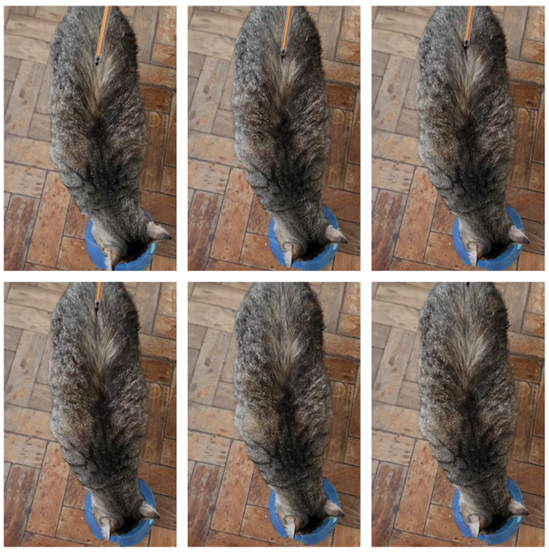
A failed attempt to compulsively lick the flank was described by the owner and observed during the clinical consultation (Figure 2).
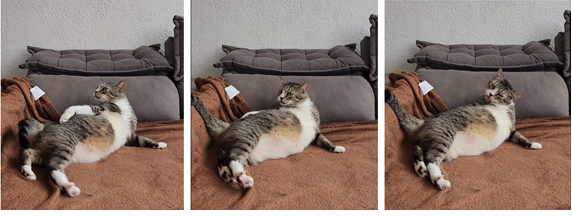
A complete blood count, serum biochemistry, glucose, cholesterol, thyroxine (free T4), thyroid stimulation hormone (TSH), type I urinalysis, chest X-ray were performed.
In the blood count, a normal number of erythrocytes (6.16 million/mm3; normal values=5.0-10.0 million/mm3), leukocytes (9.0 thousand/mm3; normal values=5.5-19,5 0 mil/mm3), platelets (375 mil/µL; normal values=200-900 mil/µL), and hematocrit (28,3%; normal=24.0-45.0%) was observed.
The dosage of aminotransferase (ALT) (50 U/L; normal values=16,0-115,0 U/L), aspartate aminotransferase (AST) (40 U/L; normal values=10,0-80,0 U/L), alkaline phosphatase (ALP) (21,0; normal values=5,0-107 U/L), glucose (121,0 mg/dL; normal=81,0-155,0 mg/ dL), cholesterol (112 mg/ dL; normal=70,0-209,0 mg/dL), creatinine (1,30 mg/dL; normal values=0,70-1,68 mg/dL), urea (20,4 mg/dL; normal values=15,0-56,0 mg/dL), calcium (9,80 mg/dL; normal values= 8,0-12,0 mg/dL), phosphor (5,12 mg/dL; normal values=3,29-8,28 mg/dL), and TSH by chemiluminescence (0.33 ng/mL; normal=0.05-0.40 ng/mL) were considered normal to specie. Although, creatine kinase (742 UI/L, normal values=50,0-450,0 UI/L) was increased.
Type I urinalysis was performed by collecting urine through a cystocentesis, and the biochemical examination showed the absence of glucose, ketone bodies, occult blood. In sedimentoscopy, erythrocytes, leukocytes, cylinders, crystals or bacteria were not observed.
Chest X-ray revealed the presence of discrete diffuse opacification of lung fields with an interstitial pattern, mineralization of costal cartilages, and ventral spondylosis in the thoracic segment of the spine (Figure 3).
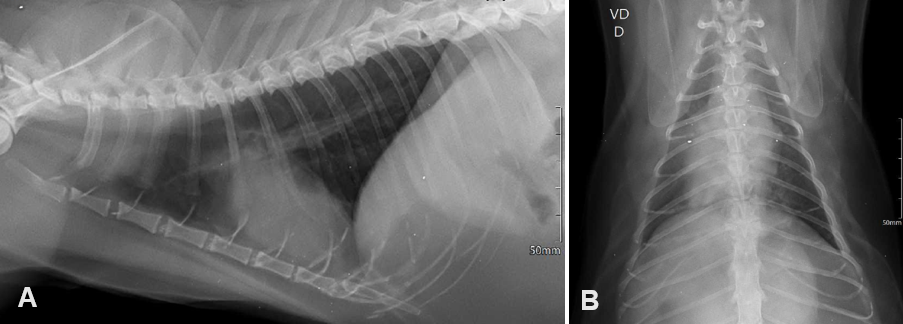
A. Left laterolateral projection. Discrete diffuse opacification of lung fields with an interstitial pattern with evidence of some bronchial walls. Ventral spondylosis in the thoracic segment of the spine. B. Ventrodorsal projection with opacification of lung fields.
The cat was analysed to exclusion of Toxoplasma gondii, feline immunodeficiency virus (FIV) and feline leukaemia virus (FeLV) exclusion, with negative results. After excluding different illnesses that could justify the clinical picture, the animal was diagnosed with a condition compatible with feline hyperesthesia, since the clinical signs presented and absence of changes in complementary exams were consistent with the syndrome.
Discussion
The feline hyperesthesia syndrome is an idiopathic disease with clinical signs of abrupt onset and intermittently that affects young animals, between one and seven years of age, being more prevalent in castrated or non-neutered male cats [4].
Described in 1980, feline hyperesthesia syndrome involves the emergence of clinical signs of increased skin sensitivity that suggest pain or irritation, which manifests itself in the form of muscle spasms and rolling movements of the skin in lumbar region, muscle spasms in the flanks and tail, excessive vocalization and in some cases convulsive episodes [1].
Clinical conditions that can trigger the onset of symptoms are described, such as skin, behavioral, endocrine, orthopedic and neurological disorders [2].
Therefore, it is essential to research skin diseases that can trigger clinical conditions such as flea bite allergy dermatitis, pyoderma, dermatophytosis, scabies, atopy, food hypersensitivity and autoimmune diseases [3, 5]. This research into probable dermatological causes is based on the concept of allokinesis, a hypersensitive response in patients with chronic skin diseases who experience a sensation of persistent pain or itching [6]. This justifies the use of some medications such as gabapentin, used to treat itching or neuropathic pain and anxiety attacks [7], and topiramate in the treatment of obsessive-compulsive disorder [3] and idiopathic ulcerative dermatitis in cats [8]. In the cat in this case report, no signs associated with dermatological disorders were observed.
It is suggested that feline hyperesthesia syndrome may be a consequence of obsessive behavior where environmental factors can stimulate the hypothalamus and limbic system, with motor activity mediated by the basal ganglia and increased frequency of compulsive behavior mediated by serotonin. This would lead to muscle spasms and hair rolling in the thoracolumbar region, agitation and excessive vocalization, exaggerated tail movements, self- mutilation and the emergence of convulsive episodes [9].
Factors that may contribute to anxiety include fear, excessive attachment to the owner, arrival of new pets, and domestic tension among felines [10, 11, 12]. Treatment involves minimizing signs through environmental enrichment, alternative treatments based on acupuncture and herbal medicines, anticonvulsants and anxiolytics [7]. The cat in this case report, although it was rescued from the street when it was approximately one year old, showed no signs of fear, excessive attachment or personality alteration by the presence of new animals according to the owner. Furthermore, his environment was enriched with scratching posts and climbing posts, hiding places and an elevated bed, and olfactory sensory stimulation (Feliway Classic Ceva electric diffuser).
Another hypothesis in the etiopathogenesis of feline hyperesthesia involves the concept that the disease is a disorder of social displacement, which leads to the emergence of compulsive behavior [3]. Based on this premise, clinical signs should decrease or disappear after behavior modification or the use of psychoactive medications, such as selective serotonin reuptake inhibitors (fluoxetine) [13], tricyclic antidepressants (clomipramine, amitriptyline) [3] and glutamate modulators (topiramate, gabapentin) [14, 15]. The cat’s owner denied using any of these medications.
Another factor that can lead to the appearance of signs of hyperesthesia involves the presence of degenerative processes in the spinal column and myositis [3]. In the cat in this case report, the chest x-ray revealed the presence of diffuse opacification of the lung fields with an interstitial pattern, and ventral spondylosis in the thoracic segment of the spine. Although he presented signs of an unproductive dry cough compatible with the radiographic findings of the lung, at no time was any behavioral disturbance reported or observed during auscultation and percussion of lung fields.
Creatine kinase is an enzyme present in high concentrations in skeletal, cardiac and smooth muscle, brain and lower concentrations in cells of the liver, spleen and intestine. Increased serum levels are associated with traceable muscle injuries, associated with thromboembolic accidents or seizures [16], and increased cellular catabolism in cases of anorexia involving muscle damage [17]. In this case report, an increase in serum creatine kinase levels was observed, but the cat did not present muscular disorders or anorexia, and ALT, AST and ALP values were within normal limits for the species.
The manifestation of muscular hyperesthesia in animals naturally infected by Toxoplasma gondii has also been described, considering it necessary to perform serology for this protozoan and diseases caused by viruses, such as feline leukemia virus and feline immunodeficiency virus [3]. Cats with feline leukemia virus may have degenerative myelopathy with axonal and myelin sheath loss [18]. In our case study, serological results for T. gondii, feline leukemia virus, and feline immunodeficiency virus were negative.
Since cats with epileptic seizures can manifest involuntary muscle movements, hallucinations, vocalizations and lateralization of the head and limbs [19], It has been suggested that episodes of uncontrolled jumping, running, tail chasing, and vocalization in feline hyperesthesia are a focal manifestation of epileptic activity [1, 3]. The cat in this case study did not present any clinical or laboratory changes that could be compatible with idiopathic or acquired epilepsy.
Conclusion
Feline hyperesthesia syndrome presents a series of triggering factors, which include dermatological, behavioral, orthopedic and neurological factors. Its diagnosis is often clinical and subjective, since different causes of a behavioral nature may be involved, requiring the participation of different professionals, examinations, and treatment modalities.
References
-
Tuttle J (1980) Feline hyperesthesia syndrome. J Am Vet Med Assoc 176(1): 47.
-
Ciribassi J (2009) Understanding behavior: feline hyperesthesia syndrome. Compend Contin Educ Vet 31(3): E10.
-
Amengual BP, Henry KM, Rusbridge C, Nuttall T, Heath S (2019) Feline hyperesthesia syndrome with self- trauma to the tail: retrospective study of seven cases and proposal for an integrated multidisciplinary diagnostic approach. J Feline Med Surg 21(2): 178-185.
-
Schimanski L, Viomar M, Moraes FAG, Moya CF (2023) Feline hyperesthesia syndrome-Case report. Vet e Zootec 30: 1-6.
-
Lorimier DLP (2009) Feline hyperesthesia syndrome. Compend Contin Educ Vet 31(6): E4.
-
Virga V (2003) Behavioral dermatology. Vet Clin North Am Small Anim Pract 33(2): 231-251.
-
Erickson A, Harbin K, MacPherson J, Rundle K, Overall KL (2021) A review of pre-appointment medications to reduce fear and anxiety in dogs and cats at veterinary visits. Can Vet J 62(9): 952-960.
-
Grant D, Rusbridge C (2014) Topiramate in the management of feline idiopathic ulcerative dermatitis in a two-year-old cat. Vet Dermatol 25(3): 226-e60.
-
Rusbridge C (2020) Neurobehavioral disorders: The corticolimbic system in health and disease. Vet Clin North Am Small Anim Pract 50(5): 1157-1181.
-
Stelow E (2018) Diagnosing behavior problems: a guide for practitioners. Vet Clin North Am Small Anim Pract 48(3): 339-350.
-
Souza MD, Oliveira PMB, Machado JC, Ceballos MV, Cristina ASA (2020) Identification of separation-related problems in domestic cats: a questionnaire survey. PLoS One 15(4): e0230999.
-
Griffin FC, Mandese WW, Reynolds PS, Deriberprey AS, Blew AC (2021) Evaluation of clinical examination location on stress in cats: a randomized crossover trial. J Feline Med 23(4): 364-369.
-
Kaur G, Voith VL, Schmidt PL (2016) The use of fluoxetine by veterinarians in dogs and cats: a preliminary survey. Vet Rec Open 3(1): e000146.
-
Graham LT, Foss KD, Reinhart JM, Smith KM, Hague DW, et al. (2023) The pharmacokinetics of single oral dose extended release topiramate and adverse effects after multi-dose administration in healthy cats. J Vet Pharmacol Ther 46(4): 218-228.
-
Eagan BH, Haaften VK, Protopopova A (2023) Daily gabapentin improved behavior modification progress and decreased stress in shelter cats from hoarding environments in a double-blind randomized placebo- controlled clinical trial. J Am Vet Med Assoc 262(9): 1305-1315.
-
Rusterholz S, Riond B, Stirn M, Ivasovic F, Glaus T (2020) Diagnostic utility of creatine kinase elevation in the routine biochemical profile in cats. Schweiz Arch Tierheilhd 162(7): 451-462.
-
Chow JL, Lam A, Shelton GD (2021) Progressive increases in creatine kinase activity in an anorexic cat with necrotising myopathy. JFMS Open Rep 7(2): 20552269211031790.
-
Hartmann K, Hofmann LR (2020) What´s new in feline leukemia virus infection. Vet Clin North Am Small Anim Pract 50(5): 1013-1036.
-
Blades GS, Rossmeisj JH (2017) Status epilepticus in dogs and cats, part1: etiopathogenesis, epidemiology, and diagnosis. J Vet Emerg Crit Care (San Antonio) 27(3): 278-287.
- California Red-Legged Frog and Non-Listed Amphibians Response to Non-Native Fish Removal
- Industrial Standardization of the Bio-OS: Algorithmic Codification of Resilience Engineering Guidelines and Version V8 Architecture
- Climate Variability and the Sustainability of Snail Farming in Nigeria: Past Trends, Present Challenges and Potential Outlook
- The Evaluation of the Surveillance System of Anthrax in Gilgit-Baltistan, Pakistan, 2018
- Natural Decline to Extinction of A New Zealand Rabbit Population
- Mitochondrial Bio-Logistics: Steering Co-Enzyme Q10 and Lycopene Synergies within the Science 4.0 Bio-OS Framework