
Species Diversity and Habitat Preference of Amphibian Fauna of Sheohar District (Bihar)
Present study for documentation of Amphibian diversity and their habitat preference was conducted for 1 year. Survay was conducted during the period January 2023 to December 2023 at 3 different study sites of Sheohar district Bihar. Nine amphibian species belonging to 4 families and 7 genera were found at different study sites viz. Rani Talab, Giriza Bag and Zero Mile area in Sheohar district of Bihar. Out of the 9 recorded amphibian species all the 9 amphibian species were found and identified in and around the Rani Talab (Site-I) area, 7 amphibian species recorded in and around the area of Giriza Bag (Site-II) area and 5 amphibian species were recorded in and around the Zero Mile (Site-III) area of Sheohar district Bihar. 4 amphibian species (D. melanostictus, D. stomaticus, H. tigerinus & P. maculatus) was found at all study sites, Whereas 2 amphibian species (S. braviceps & F. limnocharis) was found only at site-I. Statistical analysis of the collected data on amphibian diversity of this district revealed Shannon-Wiener species diversity index was minimum (1.557) at site-III and maximum (2.105) at site-I. Margalef richness index value was minimum (0.8846) and maximum (1.565) at site-I. In contrast to these values evenness was maximum (0.9484) at site-III and minimum (0.9115) at site-I.
Abbreviations
LL& BG: Leaf Litter and Bamboo Grooves; TH: Tree Hole; HRA: Human Residential Area; CF: Cultivated Fields; PG: Patchy Grasslands; FHA: Forest and Hillly Areas; TL: Terrestrial Land; WB: Water Bodies; VES: Visual Encounter Survey; AES: Acoustic Encounter Survey; RTS: Road Transect Survey.
Introduction
Amphibians are group of animals having dual mode of life i.e. aquatic as well as terrestrial. The organisms of this group include frogs, toads, salamanders and newts. Class amphibia includes total 8737 species out of which 222 species of caecilians 816 salamanders and 7699 anurans worldwide. In India class amphibia represented by 455 described species (caecilians-40, salamanders-3 and frogs-412) [1, 2]. Out of these the Bihar province (including Jharkhand) harbors only 14 described amphibian species [3, 4].
Study about habitat requirement and habitat preference of different amphibian species is the major goal and challenges in conservation biology [5]. The habitat pattern, distribution, abundance and ecology of amphibian species is less studied as compared to larger wild animals [6]. In case of amphibians we hardly know about the role of quality and quantity of habitat in determining distribution and abundance of anurans [7].
For implementation and adoption of specific conservation strategy, it is very important to understand various factors associated with diversity and distribution of amphibians of that particular region [8]. Amphibians because of dual mode of life they face sometimes adverse situation when change in either or both the ecosystems and lead to adverse effect on amphibian diversity [6, 9].
Present work was done in and around the different habitats of Sheohar district of Bihar province for assessing amphibian diversity and their habitat preference of this area. As amphibian species are very pretty creature and easily affected due to adverse environmental change as well as habitat degradation. Amphibians are more vulnerable to any adverse change in habitat nature due to anthropogenic or by any means. Industrialization and urbanization greatly affected and amphibian habitat and thus amphibian diversity.
Amphibians are considered very important due to their ecological and economic importance. They acts as good environmental indicator and they work efficiently as natural agent to control different pests i.e. they are good biological controllers. Amphibians play vital role in food web and considered as good ecological indicator.
Boulenger G A described amphibian fauna of British India [10]. Venkateshwarlu T, et al. [11] 1972 first of all described the amphibian species of Bihar state, with very few description and short notes on their character and habitat also [11]. Later on Sarkar AK described the amphibian species of Chhotanagpur (Jharkhand) it only provides taxonomical description of amphibians. Several authors also work on amphibian diversity in other parts of India [12, 13, 14, 15].
These works have amply documented the diversity and microhabitats of amphibian species. Sarkar AK, et al. [16] provide list of amphibians in the state fauna series of ZSI and provide taxonomical description of 14 species of amphibians from Bihar, But till date no any workers provide the comprehensive account of amphibian diversity of Sheohar district (Bihar). Present work was done in and around different habitat areas of Sheohar city Bihar (Site1- 3) to access the amphibian diversity and their habitant preference.
As amphibians are sensible and easily victimized to environmental deterioration and habitat degradation. We had surveyed and sampled the amphibian diversity in pollution free areas as well as highly polluted area of this district. Anthropogenic activities adversely affect the amphibian diversity because of habitat degradation & pollution. Amphibian species of Sheohar district (Bihar) was represented by only order Anura. 9 species of Anuran amphibians belonging to 4 families and 7 genera was recorded from this district and they show discontinuous and patchy distribution in this area.
The main objective of the present study was to estimate the species diversity and habitat preference of amphibians of Sheohar district (Bihar), a work first of its kind, in the district of North Bihar.
Study Area
The Sheohar district (Bihar) is located between 26.51460 N &85.29420 E and is the main northern district of Tirhut division. This district covers total area of 443 km2 and the average elevation is 64 m. Vegetation of the study area is mainly of dry deciduous type dominated by Mangifera indica, Shorea robusta, Litchi chinensis and Moringa chinensis.
The main river of this district is Bagmati flowing throughout the district. The whole sites falls under the catchment area of this river. Along with this river a large number of temporary and permanent lentic water bodies and wetlands are present in the study area, that are the main habitat for large number of amphibian species. Forest, Grasslands and Cultivated land are situated around the study sites.
We carried out the present study in the 3 study sites named Rani Talab, Giriza Bag & Zero Mile (Figures 1-3) between Jan 2023 to Dec 2023 March 17 February that included a consecutive post-monsoon, monsoon and pre- monsoon periods. Different microhabitats viz. Leaf litter and Bamboo grooves (LL& BG), Tree hole (TH), Human residential area (HRA), Cultivated fields (CF), Patchy grasslands (PG), Forest and Hillly areas (FHA), Terrestrial Land (TL), and water bodies (WB) were surveyed and sampled. On the basis of extensive survey data gathered and prepared in the form of checklist of Amphibians of the Sheohar district (Bihar).
During the study some direct and indirect threats to the Amphibian diversity was also enlisted at the study area. We selected three study sites from the perspective of contrasting habitat characteristics that differ in amphibian species and their habitat preference also.
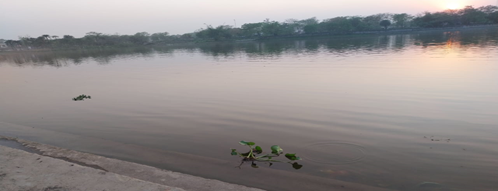
Site-1: Rani Talab
This was the large permanent artificial water body occupying the area of about 935 m2 with a mean depth of 2 m. Both floating and submerged aquatic weeds were noted in this pond, that provide larger microhabitat area for amphibian species. Due to less anthropogenic intervention and few small temporary water bodies, agricultural field around this pond makes it more important for floral and faunal diversity. Besides Rani Talab surrounding areas were also included for tha sampling and identification of amphibian species of this area.
Site-2: Giriza Bag
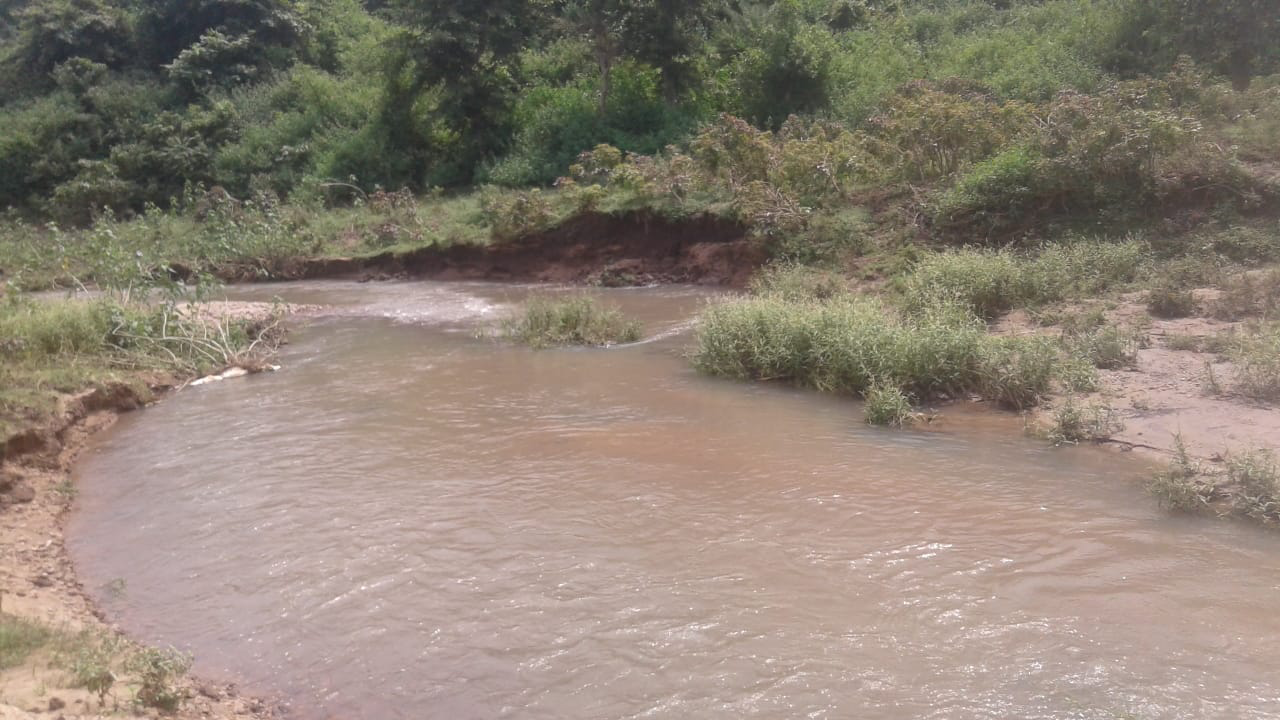
Girija Bag occupying an area of about 7 acre of garden selected as site 2. This site includes the different microhabitat area that holds great diversity of amphibians. This area is covered with dense plants and trees of mango, litchi, lemon as well as Bel and different temporary and permanent water bodies occupies inside this garden. Whole the area of this garden provides great microhabitat area that holds great diversity of amphibians. Whole the area covers about 5-7 acre with catchment area about 40 acre.
Site-3: Zero Mile
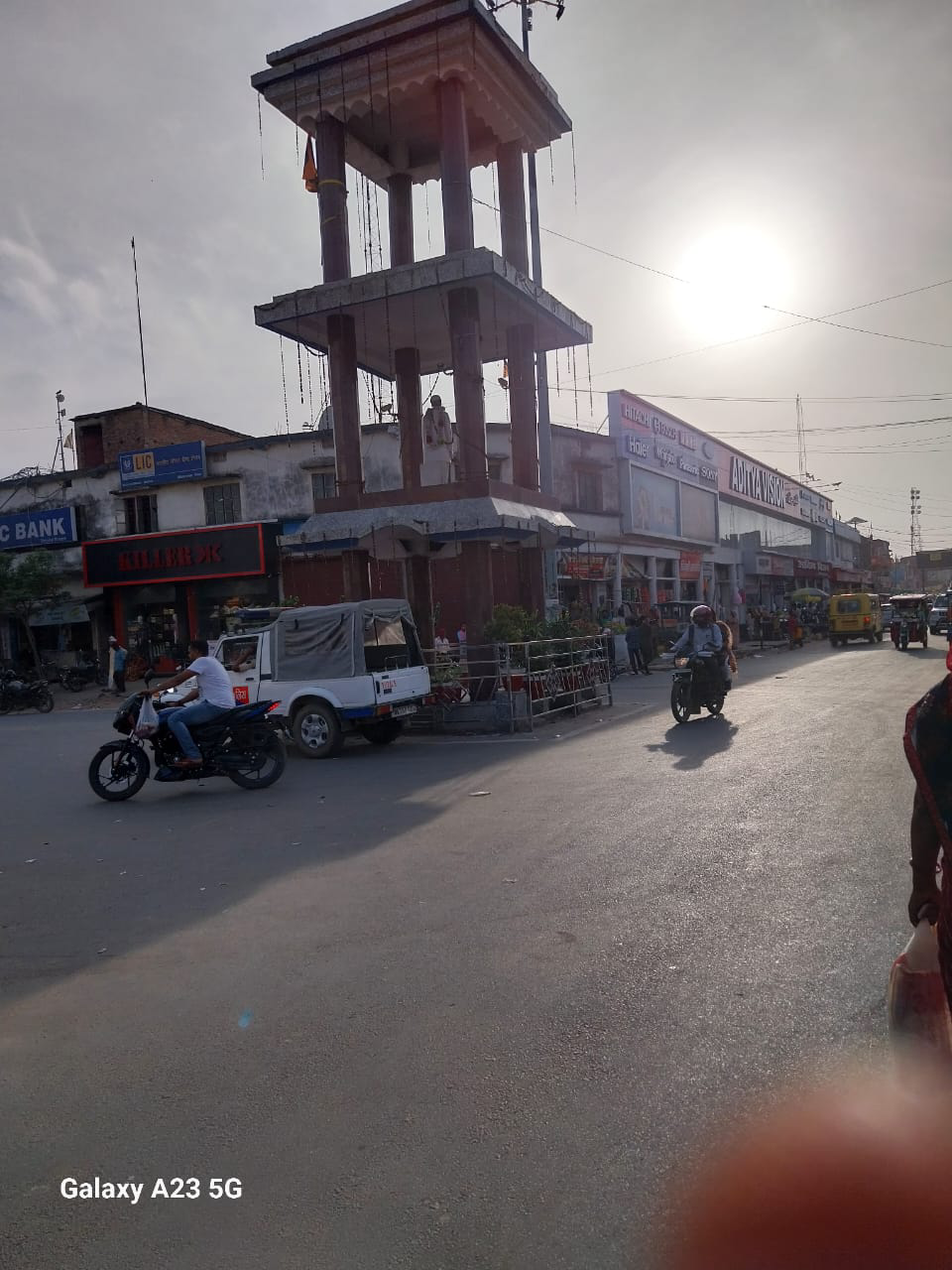
Zero mile area of this town selected as site-3. A total area of about 5 km2 was selected for amphibian diversity sampling. The main characteristics of this study site is high pollution, great human intervention and located in the vicinity of human residential area.
Material and Methods
During the whole survey and sampling we have used visual encounter survey (VES) and acoustic encounter survey (AES) for the rapid assessments and evaluation of larger areas [17]. The visual encounter survey (VES) and Road transect survey (RTS) was the most frequently used technique throughout the study and was used in all the terrestrial sites studied and sampled. We laid stress primarily to estimate the varied types of suitable habitats, where the anuran amphibian species mainly thrives.
We also implemented different active searches like turning rocks and logs, peeling bark, digging through leaf litter, and excavating burrows and termite mounds in order to got a good and reliable result. We also occasionally performed acoustic searching along the wooded trail, degraded forest edges and along water bodies where visual encounter was not possible. We conducted the study between 07:00 am to 11:00 am and 05:00 pm to midnight.
Flashlights were also used to locate the anuran species in night. The anuran diversity was also studied by noting the deposited eggs during breeding period. Nesting site, type of nest and egg cluster was helpful in identifying anuran species. The field data for each individual encountered like locality, date, time, weather condition, habitat, microhabitat and reproductive condition of each individual (if it could be determined), co-existing species (if any) and other behavioral notes were recorded.
Taxonomic notes of individuals captured during field work and morphometric data were also noted. We calculated Shannon–Wiener diversity index, Pielou’s evenness index, Margalef’s richness index and Simpson’s dominance index using Past software version 4.08. Photographs of the representative species and their habitats were taken with a digital camera. Geographic position of study sites were recorded by using GPS mobile software. Coordinates were recorded as latitude and longitude in degrees. Identification of the amphibian species was done using the identification keys available as Inger RF, et al. [18] and Dutta SK, et al. [19], Dutta SK, et al. [20], Dutta, et al. [21], Daniels RJR, et al. [22] and Frost DR, et al. [23].
Results and Discussion
A total of nine anuran belonging to 4 families and 7 genera species were recorded from different study sites of Sheohar district (Bihar) (Figure 4). Many species of anurans are found to spend a good part of their life hiding, either in water under detritus, or on land under leaf litter, rocks or logs and even underground holes and termite mounds [24]. Therefore with the increasing in microhabitats and breeding sites of amphibians the diversity of anuran species increases. However, the amphibian diversity of this region of Bihar is not so high.
| A | B | C |
| D | E | F |
| G | H | I |
| (A) Duttaphrynus melanostictus, (B) Duttaphrynus stomaticus, (C) Hoplobatrachus tigerinus, (D) Hoplobatrachus crassus, (E) Sphaerotheca braviceps, (F) Fejervarya limnocharis, (G) Euphlyctis cyanophlyctis, (H) Microhyla ornate (I) Polypedates maculates. Figure 4: Amphibian species recorded from Sheohar district (Bihar). |
Table 1: Amphibian species recorded from Sheohar district (Bihar) with their habitat preference, occurance, abundance and IUCN st
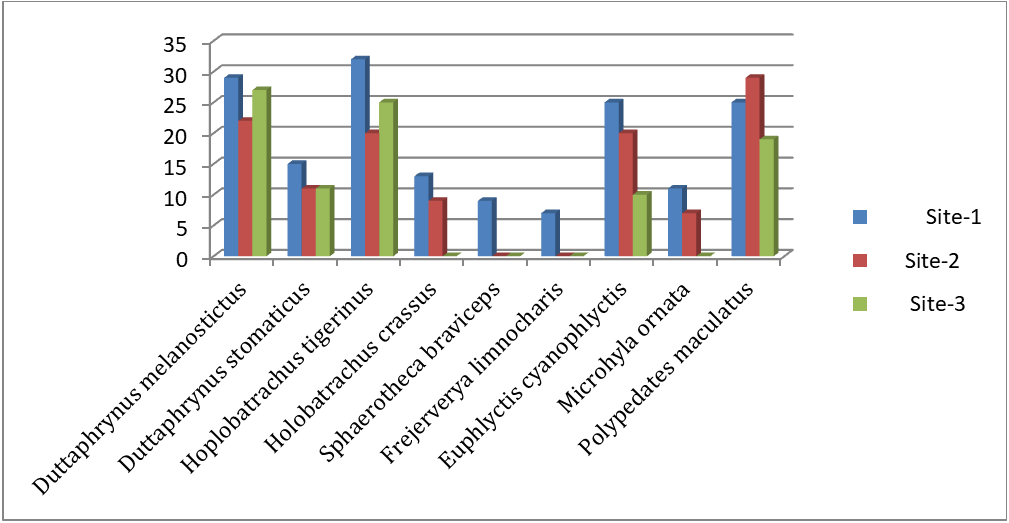
During the survey we found only nine species of amphibians under four families named, Bufonidae, Dicroglossidae, Microhylidae and Rhacophoridae. The amphibian species were represented by Duttaphrynus melanostictus, Duttaphrynus stomaticus, Hoplobatrachus tigerinus, Hoplobatrachus crassus, Sphaerotheca braviceps, Fejervarya limnocharis, Euphlyctis cyanophlyctis, Microhyla ornate and Polypedates maculatus (Table 1 & Figure 5).
| Species | Common Name | Family | Habitat Preference | Occurance in Study Sites | Abundance at Study Sites | IUCN Status |
|---|---|---|---|---|---|---|
| Duttaphrynus melnostictus (Schneider,1799) | Common Asian toad | Bufonidae | Dry and wet terrestrial areas,Human habitation, Forest, Road side | I, II & III | VC | LC |
| Duttaphrynus stomaticus (Lutken,1864) | Marbled toad | Bufonidae | Terrestrial areas, human habitation, leaf litter, wooden log | I, II & III | VC | LC |
| Hoplobatrachus tigerinus (Daudin,1803) | Indian bullfrog | Dicroglossidae | Water bodies, ditch, drain, pool | I, II & III | VC | LC |
| Hoplobatrachus crassus (Hoffman,1932) | Jerdon’s bullfrog | Dicroglossidae | Water bodies,pool,mud | I & II | C | LC |
| Sphaerotheca braviceps(Schneider,1799) | Indian burrowing frog | Dicroglossidae | Leaf litter, Under rocks, In cerevices, holes in arid areas | Only I | O | LC |
| Frejerverya limnocharis (Gravenhorst,1829) | Asias grass frog | Dicroglossidae | Water bodies, Forest, Agricultural field | Only I | O | LC |
| Euphlyctis cyanophlyctis (Schneider, 1799) | Skittering frog | Dicroglossidae | Water bodies | I, II & III | VC | LC |
| Microhyla ornata (Dumeril&Bibron, 1849) | Ornate narrow mouthed frog | Microhylidae | Under stone, near water bodies, temporal water | I & II | C | LC |
| Polypedates maculatus (J.EGray,1830) | Common tree frog | Rhacophoridae | Human habitation, tree hole, forest, termite nest | I, II & III | VC | LC |
Table 2: Amphibian species recorded from Sheohar district (Bihar) with their habitat preference, occurance, abundance and IUCN st
The most common species is Duttaphrynus melanostictus that was observed and recorded from all the study sites. The life-cycle of D. melanostictus show biphasic life as they were observed to breed in monsoons (early July to early October) and also in spring season (end of January to end of March). (Marbled toad) Duttaphrynus stomaticus that was mainly observed to be ground living, occupying both dry and damp moist terrestrial habitats including dump-yards, under the leaf litter, wood log and near about human habitations. This species observed in large number during the dawn and night period. This was observed to be the most common ‘road killed’ anurans in study locations throughout the year.
Indian Bullfrog (H. tigerinus) was frequently found in rainy season in and around lentic water bodies, paddy fields areas, and sometimes at residential areas also. These species were also observed throughout the year near the human habitation in the pool, Ditch and drains. We observed that in the rainy season when this species was commonly available, people collected live species of this variety is sold in the market (NE states) for the delicacy of its legs.
Jerdon’s Bull frog (H. crassus) was morphologically much similar to the Indian Bullfrog. The legs of Jerdon’s Bull frog were also used as food items in NE states. Both these bull frogs were observed to be good long distance jumpers. Sphaerotheca braviceps (Indian burrowing frog) observed frequently in Sheohar district. They found mainly around the temporary water bodies burrowed inside the holes in soil, leaf litter and logs.
The skipper frog (E. cyanophlyctis) was very much common in both lotic and lentic water bodies of this district. The life-cycle of E. cyanophlyctis was also biphasic and followed the similar pattern as adopted by D. melanostictus. We found millions of tadpoles of the skipper frog in the month of January–March in nearby water bodies. Grass Frog (F. limnocharis) was also a common species in Sheohar district (Bihar). It was located mainly in the temporal lentic water bodies, agricultural land, degraded forest and beside the wet banks of water bodies.
Common Indian Tree Frog (P. maculatus) was also a very common species found in tree hole, stem of banana tree, damp or moist area of domestic places including bathrooms and inside the well and hand pumps. However, in the breeding time they were frequently found in and around lentic water bodies, preferably in the temporary rain water pools and puddles. This species of Common indian tree frog can easily observed in the home of Sheohar. They were observed to prepare a foam nest which remained suspended in the vegetation above the water level. Like most of the rhacophorids, they deposit their eggs in the foam nest attached to vegetation either above or near water [25].
Ornate Narrow- Mouth Frog (M. ornate) was encountered only in the breeding period (Monsoon season) in temporary lentic waters. This is the smallest frog (30–33 mm) found in Sheohar. The call of this species was very loud and the frequency of its call was also very high. Das et al. reported that the chorus of this species was commonly heard in and around human habitation, as well as along forest edges and in plantations [26].
Throughout the study F limnocharis and S braviceps was not found in the site-II and site-III but in site-I (Table 1). This may be due to the absence of proper hilly areas and preferred forest in sites II and III. Likewise, H crassus and M ornate was not found in site-III but frequently observed in site I & site II. This may be due to proper habitat area and microhabitat occupancy.
Presence of Duttaphrynus melanostictus, D stomaticus, H tigerinus and Polypedates maculates found at all the study sites (Table 1) are due to proper microhabitat and suitable ecological conditions. Sphaerotheca braviceps, Frejerverya limnocharis and Microhyla ornate indicating the lack of habitat for these species in these areas site-III and may be accounted from the fact of absence of any suitable water body in the site concerned. Between February to April a good number of tadpoles of E. cyanophlyctis and D. stomaticus were seen to occupy the site-I and II.
This moist site with a large lentic water-body having several small streams was observed to be least disturbed and hence was a good habitat of anuran species. Study site-I had no additional water bodies attached to main pond, so the anuran species were found to migrate towards the nearby agricultural field during their mating season. Species diversity (E Mayr) is one of the fundamental concepts of ecology that has been used to characterize communities and ecosystems structure and functioning [27].
Diversity is the basic concept that is used to denote the community structure. It has been defined by the indices used to measure it. According to Whittaker and Woodwell’s alpha diversity is the within-habitat or intra community diversity that is the subject of the present consideration [28]. He has advocated using the Simpson index to express relative concentration of dominance that is, measures of slope of the importance value sequence, but differentiating between Simpson’s index for concentration of dominance and Shannon’s formula as an index of equitability.
Site wise diversity indices for amphibians recorded are shown in (Table 2).
| Diversity Index | SITE- I | SITE- II | SITE -III |
|---|---|---|---|
| Shannon-Wiener Diversity Index (H’) | 2.105 | 1.87 | 1.557 |
| Simpson’s Dominance Index (D ) SIMP | 0.868 | 0.836 | 0.779 |
| Margalef Richness Index (D ) MARG | 1.565 | 1.258 | 0.884 |
| Pielou’s Evenness Index (J’) | 0.911 | 0.927 | 0.948 |
Table 3: Calculated diversity indices of various study sites of Sheohar district (Bihar).
Conclusion
Sheohar district (Bihar) is the northern district of Tirhut division is part of Indo-Gangetic plain. Many water bodies and greater water lodged area are the characteristics of this district that support great variety of floral and faunal diversity. It also having large number of water bodies supported 9 species of amphibians identified and recorded from various study sites of the district. This will the first account about the amphibian diversity and habitat preference of this area.
Acknowledgement
I thanks to almighty god for giving me the inspiration to do the research work. My Mentor Dr Bhrigu Nath Director, Department of Biotechnology, Magadh University BodhGaya is also very thankful for providing me such opportunity to do my research work. My colleagues of Upgraded Higher Secondary School Pirwan & Headmaster Sri Sanjay Kumar Mishra are very thankful for providing me selfless support during my work.
Conflict of Interest
The authors declare that there is no conflict of interest.
References
-
Dinesh KP, Radhakrishnan C, Gururaja KV, Bhatta GK (2009) An annotated checklist of amphibians of India with some insight into the pattern of species discoveries, distribution and endemism. Rec zool Surv India Occ Pap 302: 1-153.
-
Dinesh KP, Radhakrishnan C, Channakeshavamurthy BH, Deepak P, Kulkarni NU (2020) A Checklist of Amphibians of India with IUCN Conservation Status.
-
Sarkar AK, Ray S (2002) Amphibia. In: Fauna of Kabar Lake. Wetland Ecosystem Series. Zoological Survey of India Publication 4: 107-112.
-
Sarkar AK, Das S, Ray S (2004) Amphibia. In: Fauna of Bihar (including Jharkhand), Part I, State Fauna Series, Zoological Survey of India Publication, pp: 181-193.
-
Hartel T, Demeter L, Coga˘lniceanu D, Tulbure M (2006) The influence of habitat characteristics on amphibian species richness in two river basins of Romania. In: Proceedings of the 13thcongress of the Societas Europaea Herpetologica, pp: 47-50.
-
Pankaj N, Nath B (2023) Role of Amphibians to Ecosystem Services: A Review. Electronic J Biol 19(13): 1-9.
-
Krishnamurthy SV (2003) Amphibian assemblages in undisturbed and disturbed areas of Kudremukh National Park, central Western Ghats, India. Environmental Conservation 30(3): 274-282.
-
Vasudevan K, Kumar A, Chellam R (2001) Structure and composition of rainforest floor amphibian communities in Kalakad-Mundanthurai Tiger Reserve. Current Science 80(3): 406-412.
-
Dahanukar N, Padhye A (2005) Amphibian diversity and distribution in Tamhini, northern Western Ghats, India. Current Science 88(9): 1496-1501.
-
Boulenger GA (1890) The fauna of British India including Ceylon and Burma. Reptilia and Batrachia. Taylor and Francis, London.
-
Venkateswarlu T, Murthy TSN (1972) Fauna of Bihar State (India), 2 Amphibia Indian Journal of Zoology 13(3): 129-130.
-
Hegde VD, Roy S (2011) Amphibian fauna of Katerniaghat Wildlife Sanctuary, Uttar Pradesh, India. Frog Leg 15.
-
Padhye AD, Ghate HV (2002) An overview of amphibian fauna of Maharashtra state. Zoo’s Print Journal 17(3): 735-740.
-
Padhye AD, Mahabaleshwarkar M, Ghate HV (2002) An overview of amphibian fauna of Pune district with special reference to their status in and around Pune city. Zoo’s Print Journal 17(4): 757-763.
-
Srinivasulu C, Siliwal M, Rajesh A, Srinivasulu B, Venkateshwarulu P, et al. (2007) Diversity and distribution of amphibian fauna in Nagarjunasagar- Srisailam Tiger Reserve, Andhra Pradesh. Frog Leg 13: 3-6.
-
Sarkar AK, Das S, Ray S (2014) State fauna series 11: Fauna of Bihar (including Jharkhand), pp: 181-193.
-
Rodel MO, Ernst R (2004) Measuring and monitoring amphibian diversity in tropical forests. I. An evaluation of methods with recommendations for standardization. Ecotropica 10: 1-14.
-
Inger RF, Dutta SK (1986) An overview of the amphibian fauna of India. J Bombay nat Hist Soc 83: 135-146.
-
Dutta SK (1997) Amphibians of India and Sri Lanka (checklist and bibliography). Odyssey Publishing House. Bhubaneswar, India.
-
Sengupta S, Das A, Das S, Hussain B, Choudhury NK, et al. (2009) Taxonomy and biogeography of Kaloula species of Eastern India. The Natural History Journal of Chulalongkorn University 9(2): 209-222.
-
Daniels RJR (2005) Amphibians of Peninsular India. Universities Press, Hyderabad, India, pp: 268.
-
Frost DR (2018) Electronic Database. American Museum of Natural History, New York, USA.
-
Frost DR (2020) Amphibian Species of the World: an online reference.
-
Ray P (1999) Systematic studies on the amphibian fauna of the district Dehradun, Uttar-Pradesh, India. Memoirs of the Zoological Survey of India, Kolkata 18(3): 90.
-
Mohanty-Hejmadi P, Dutta SK (1988) Life history of the common Indian tree frog, Polypedates maculatus (Gray, 1834) (Anura: Rhacophoridae). Journal of Bombay Natural History Society 85(3): 512-517.
-
Das A, Saikia U, Murthy BHCK, Dey S, Dutta SK (2009) A herpetofaunal inventory of Barail Wildlife Sanctuary and adjacent regions, Assam, north-eastern India. Hamadryad 34(1): 117-134.
-
DeJong TM (1975). A comparison of three diversity indices based on their components of richness and evenness. Oikos 26(2): 222-227.
-
Whittaker RH, Woodwell GM, (1969) Structure, production and diversity of the oak-pine forest at Brook haven, New York. Journal of Ecology 57(1): 155-174.
- California Red-Legged Frog and Non-Listed Amphibians Response to Non-Native Fish Removal
- Industrial Standardization of the Bio-OS: Algorithmic Codification of Resilience Engineering Guidelines and Version V8 Architecture
- Climate Variability and the Sustainability of Snail Farming in Nigeria: Past Trends, Present Challenges and Potential Outlook
- The Evaluation of the Surveillance System of Anthrax in Gilgit-Baltistan, Pakistan, 2018
- Natural Decline to Extinction of A New Zealand Rabbit Population
- Mitochondrial Bio-Logistics: Steering Co-Enzyme Q10 and Lycopene Synergies within the Science 4.0 Bio-OS Framework