
Confronting Plasmodium knowlesi: Challenges and Strategies in Malaria Healthcare
Malaria remains a global health concern, causing 300- 500 million infections and 1.5-2.7 million deaths each year, primarily among young children in sub-Saharan Africa, Southeast Asia, and Latin America
Abbreviations
ACT: Artemisinin Combination Therapy; NGS: Next- Generation Sequencing; RDTs: Rapid Diagnostic Tests PCR: Polymerase Chaine Reaction
Editorial
Malaria remains a global health concern, causing 300- 500 million infections and 1.5-2.7 million deaths each year, primarily among young children in sub-Saharan Africa, Southeast Asia, and Latin America. The disease is not easy to prevent due to its complexity and drug resistance. Plasmodium knowlesi, which infects both humans and macaques, complicates diagnosis and treatment with its unique 24-hour fever cycle and potential for severe symptoms. Plasmodium knowlesi is especially problematic in areas where humans and macaques interact, often misdiagnosed as Plasmodium malariae, although PCR methods have improved accuracy. Early detection and artemisinin-based combination therapies (ACTs) are crucial, with severe cases requiring urgent medical care. In Malaysia, Plasmodium knowlesi is the leading cause of malaria, impacting forest workers and underscoring the need for education and mosquito control. Despite advances in molecular tools and genome sequencing, malaria still leads to around half a million deaths annually.
Malaria has a profound impact on global health and economies. The disease is prevalent in sub-Saharan Africa, Southeast Asia, and Latin America, affecting 2.4 billion individuals. Vaccine development has seen progress. Plasmodium knowlesi, which can infect humans and macaque monkeys, is characterized by a unique 24-hour fever cycle and may cause severe conditions such as acute respiratory distress and kidney failure. Addressing malaria, including Plasmodium knowlesi, necessitates improved diagnostics, effective treatments, ongoing vaccine research, mosquito control, and public health education. Continuous research, robust health initiatives, and global collaboration are crucial for eradication efforts (Figure 1) [1].
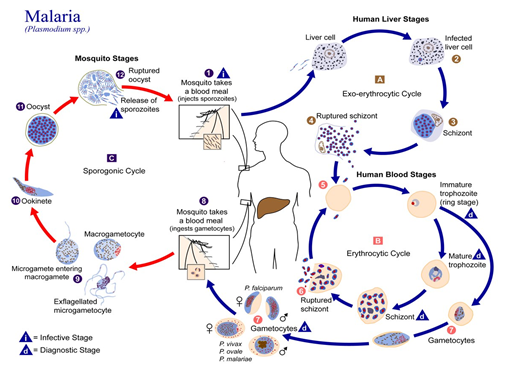
Plasmodium knowlesi, a malaria parasite found in long-tailed and pig-tailed macaques, can be transmitted to humans, particularly in regions where people live near these primates. The similarity between Plasmodium knowlesi and Plasmodium malaria has made accurate diagnosis difficult.
However, advanced molecular detection methods such as PCR have significantly improved diagnostic precision. Early detection and treatment with antimalarial medications, especially artemisinin-based combination therapies (ACTs), are crucial for effective disease healthcare [2].
Plasmodium knowlesi, the fifth recognized human malaria parasite, poses a significant health threat in Southeast Asia. Advancements in PCR technology have enabled accurate diagnosis, correcting previous misidentifications as Plasmodium malariae. The high number of cases and occasional fatalities have led to increased research efforts. The parasite is transmitted from macaques to humans through Anopheles mosquitoes, complicating control efforts. A challenge is the need for rapid diagnostic tests (RDTs), especially in rural areas. Developing RDTs and studying potential human-to-human transmission is crucial for improving prevention strategies. A comprehensive approach that includes diagnostics, transmission research, and effective prevention measures is essential to control and mitigate the impact of knowlesi malaria in Southeast Asia [3, 4].
Plasmodium knowlesi, a zoonotic parasite found in Southeast Asia, is hard to diagnose due to its similarity to Plasmodium malariae, leading to potential misdiagnosis and treatment delays. Accurate and early diagnosis is critical. Artemisinin combination therapy (ACT) effectively treats uncomplicated cases, whereas severe cases need intravenous artesunate to reduce parasite load and decrease mortality rates. Timely treatment and supportive care, such as paracetamol, are essential to prevent complications and enhance patient outcomes [5, 6].
In at least 10% of cases, Plasmodium knowlesi malaria can escalate to a severe condition, initially showing symptoms including difficulty breathing, abdominal pain, and vomiting. The rapid replication of the parasite can lead to acute kidney injury, jaundice, shock, and respiratory distress, necessitating immediate medical attention. Although coma or severe anemia is rare, vigilance remains essential. The parasite’s 24-hour replication cycle causes daily fever spikes and symptoms that range from mild flu-like illness to severe conditions. Uncomplicated cases are generally treated with chloroquine, while severe cases require artemisinin-based combination therapy (ACT). Ongoing research is vital for improving diagnostics, treatment, and preventive measures, including mosquito control and vaccine development. Plasmodium knowlesi is a disease demanding prompt intervention and continuous research efforts [7, 8].
In Malaysia, Plasmodium knowlesi is the primary cause of malaria, affecting both travelers and residents in Southeast Asia. Those at risk include individuals working in dense forests, such as farmers, hunters, and loggers, resulting in a higher prevalence among adult males in these professions. Prevention strategies focus on education, protective practices, and mosquito control in forested regions. Globally, malaria is responsible for around half a million deaths annually, predominantly in tropical and subtropical areas. Six Plasmodium species cause malaria, each presenting distinct challenges for control. Advances in molecular tools, next-generation sequencing (NGS), and bioinformatics have greatly improved our understanding and its healthcare. The sequencing of the Plasmodium falciparum genome was a significant milestone, providing valuable insights into the parasite’s biology and drug resistance. Continued investment in these technologies is crucial for effective malaria control and eradication, enabling targeted interventions and the development of new treatments and vaccines (Figure 2) [9, 10].
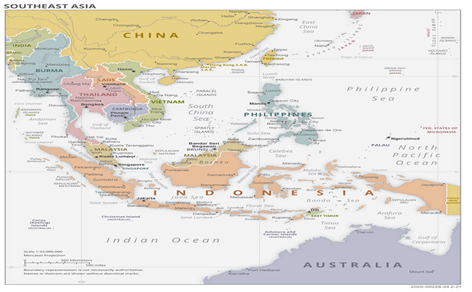
Malaria remains a major global health threat, particularly in tropical and subtropical regions, severely impacting economies and communities. Despite progress in vaccines and diagnostics, the disease’s complexity and drug resistance hinder prevention and treatment. Plasmodium knowlesi poses additional challenges due to its zoonotic nature and diagnostic difficulties. Effective combat strategies should enhance diagnostic accuracy, develop treatments, and implement comprehensive prevention measures, including mosquito control and public health education. Continuous research and global collaboration are essential to address drug resistance and advance eradication efforts. A multifaceted approach combining these strategies is crucial to reduce malaria’s global burden and achieve health goals [11, 12, 13, 14, 15, 16, 17, 18, 19, 20, 21, 22, 23, 24, 25, 26, 27, 28, 29, 30, 31, 32, 33, 34].
Acknowledgments
The author acknowledges Mrs. Norri Zahra and Mr. Regragui Moumaris. The author thinks Nisen Abuaf and Said Youssouf Chanfi (Sorbonne University). The author thinks Jean-Michel Bretagne (AP-HP). The author thinks Marie- Hélène Maës and Monique Abuaf (16th arrondissement of Paris).
References
-
Garcia LS (2010) Malaria. Clin Lab Med 30(1): 93-129.
-
Singh B, Daneshvar C (2013) Human infections and detection of Plasmodium knowlesi. Clin Microbiol Rev 26(2): 165-184.
-
Zaw MT, Lin Z (2019) Human Plasmodium knowlesi infections in South-East Asian countries. J Microbiol Immunol Infect 52(5): 679-684.
-
Jeyaprakasam NK, Low VL, Pramasivan S, Liew JWK, Wan-Sulaiman WY, et al. (2023) High transmission efficiency of the simian malaria vectors and population expansion of their parasites Plasmodium cynomolgi and Plasmodium inui. PLoS Negl Trop Dis 17(6): e0011438.
-
Barber BE, Grigg MJ, Cooper DJ, Van Schalkwyk DA, William T, et al. (2021) Clinical management of Plasmodium knowlesi malaria. Adv Parasitol 113: 45-76.
-
Barber BE, Grigg MJ, William T, Yeo TW, Anstey NM (2017) The Treatment of Plasmodium knowlesi Malaria. Trends Parasitol 33(3): 242-253.
-
Vadivelan M, Dutta T (2014) Recent advances in the management of Plasmodium knowlesi infection. Trop Parasitol 4(1): 31-34.
-
Singh B, Kim Sung L, Matusop A, Radhakrishnan A, Shamsul SS, et al. (2004) A large focus of naturally acquired Plasmodium knowlesi infections in human beings. Lancet 363(9414): 1017-1024.
-
Garrido-Cardenas JA, González-Cerón L, Manzano- Agugliaro F, Mesa-Valle C (2019) Plasmodium genomics: an approach for learning about and ending human malaria. Parasitol Res 118(1): 1-27.
-
Galinski MR (2022) Systems biology of malaria explored with nonhuman primates. Malar J 21(1): 177.
-
Moumaris M (2024) Unraveling the Enigma: Tackling Knowlesi Malaria in Southeast Asia. Int J Zoo Animal Biol 7(2): 000585.
-
Moumaris M (2024) Unveiling the Enigmatic Plasmodium knowlesi: Insights, Challenges, and Promises in Malaria Research. Int J Zoo Animal Biol 7(1): 000566.
-
Moumaris M (2024) Unlocking the Potential: Overcoming Challenges in CAR-T Cell Therapy for Cancer Treatment. J Biotechnology and Bioprocessing 5(2): 2766-2314.
-
Moumaris M (2023) Revolutionizing Malaria Research: CRISPR unveils New Frontiers. J Biotechnology and Bioprocessing 4(5): 2766-2314.
-
Moumaris M (2024) Lyme Disease: A Zoonosis Tick- Borne Borrelia Bacterium [4/4]. Int J Zoo Animal Biol 7(1): 000549.
-
Moumaris M (2023) Lyme Disease: A Zoonosis Tick- Borne Borrelia Bacterium [3/4]. Int J Zoo Animal Biol 6(4): 000500.
-
Moumaris M (2023) Lyme Disease: A Zoonosis Tick- Borne Borrelia Bacterium [2/4]. Int J Zoo Animal Biol 6(2): 000465.
-
Moumaris M (2022) Lyme Disease: A Zoonosis Tick- Borne Borrelia Bacterium [1/4]. Int J Zoo Animal Biol 5(6): 000425.
-
Moumaris M, Bretagne JM, Abuaf N (2020) Nanomedical Devices and Cancer Theranostics. The Open Nanomedicine and Nanotechnology Journal 6: 1-11.
-
Moumaris M, Bretagne JM, Abuaf N (2019) Biological Membranes and Malaria-Parasites. The Open Parasitology Journal 7: 1-18.
-
Moumaris M, Bretagne JM, Abuaf N (2018) Hospital Engineering of Medical Devices in France. The Open Medical Devices Journal 6: 10-20.
-
Moumaris M, Rajoely B, Abuaf N (2015) Fluorescein Isothiocyanate-Dextran can track Apoptosis and Necrosis induced by heat shock of Peripheral Blood Mononuclear Cells and HeLa Cells. Open Biological Sciences Journal 1: 7-15.
-
Moumaris M, Rajoely B, Abuaf N (2012) The Naïve B Cells are the Lymphocytes with the Highest Anionic Phospholipid Binding Ratios. The Open Immunology Journal 5: 27-35.
-
Moumaris M (2007) Magnetic resonance imaging at the Hôtel-Dieu of Paris. Paris-Descartes University, France.
-
Moumaris M (2005) Identification of a new molecule to monitor apoptosis. Sorbonne-Paris-Nord University, France.
-
Moumaris M (2003) Biomedical research, the law of bioethics relating to the donation and use of elements and products of the human body. Paris-Descartes University, France.
-
Moumaris M, Abuaf N (2002) Use of labeled dextran for in-vitro assessment of increased cell permeability, cell death and apoptosis. Bulletin officiel de la propriété industrielle (Brevet n°00/09235) 2811682: A3.
-
Moumaris M, Benoliel S, Rouquette AM, Rajoely B, Abuaf N (2000) Phospholipid binding proteins on the plasma membrane of lymphocytes. J Autoimmun 15(2): 81-271.
-
Moumaris M, Ignoti S, Benoliel S, Oghina G, Rajoely B, et al. (1999) Characterization of B-cell adhering to the lamellar phospholipids. French Congress of Antiphospholipid Antibody, Paris, France.
-
Moumaris M (1996) Membranes érythrocytaires dans le paludisme: modèle d’étude: Souris- Plasmodium berghei anka. Université Pierre et Marie Curie, Paris, France.
-
Moumaris M, Sestier C, Miltgen F, Halbreitch A, Gentilini M, et al. (1995) Effect of Fatty Acid Treatment in Cerebral Malaria-Susceptible and Nonsusceptible Strains of Mice. The Journal of Parasitology 81(6): 997-999.
-
Sabolovic D, Moumaris M, Miltgen F, Sestier C, Halbreich A (1995) A subpopulation of red blood cells induced by bleeding or mosquito sucking. Chinese National Congress of Medical Biophysics, Shanghai, China.
-
Sabolovic D, Moumaris M, Miltgen F, Sestier C, Halbreich A (1995) Characterisation of subpopulation of red blood cells as a preferential target for malaria invasion. French Congress of Electrophoresis, Cell Electrophoresis, Pastor Institute, Paris 19(7): 1215-1219.
-
Moumaris M (1992) Lyme disease: Serological study. University of Orleans, France.
- California Red-Legged Frog and Non-Listed Amphibians Response to Non-Native Fish Removal
- Industrial Standardization of the Bio-OS: Algorithmic Codification of Resilience Engineering Guidelines and Version V8 Architecture
- Climate Variability and the Sustainability of Snail Farming in Nigeria: Past Trends, Present Challenges and Potential Outlook
- The Evaluation of the Surveillance System of Anthrax in Gilgit-Baltistan, Pakistan, 2018
- Natural Decline to Extinction of A New Zealand Rabbit Population
- Mitochondrial Bio-Logistics: Steering Co-Enzyme Q10 and Lycopene Synergies within the Science 4.0 Bio-OS Framework