
Phlebotomine Fauna (Diptera: Psychodidae) of Species of Medical Importance from Caves in the States of Minas Gerais, Rio De Janeiro and Sao Paulo, Brazil
This study aimed to update the phlebotomine fauna in caves and compare the species of medical importance with those documented in previous studies conducted in the southeastern region, specifically in Minas Gerais, Rio de Janeiro, and São Paulo. Notably, there is no recorded research on cave fauna in the state of Espírito Santo. This research was conducted based on the review of the Brazilian cave-dwelling phlebotomine fauna published in 2022.
Abbreviations
ATL: American Tegumentary Leishmaniasis; CEIOC: Coleção Entomológica do Instituto Oswaldo Cruz.
Introduction
Phlebotomines (Diptera: Psychodidae) serve as invertebrate hosts for protozoan species of the genus Leishmania Ross, 1903 (Kinetoplastida, Trypanosomatidae), which cause leishmaniasis in humans and other mammals, such as pets: dogs, cats, horses, and wild animals such as: possum, armadillo, rodents, felines, sloths. These protozoa are transmitted through bites of infected female phlebotomine sandflies [1]. This information is relevant, considering that Leishmaniases predominantly occur in rural areas and near forests. The anthropogenic environment facilitates the existence and perpetuation of the vector species of American cutaneous leishmaniasis, adapted to this system, such as Lutzomyia intermedia, L. whitmani, and L. migonei [2]. In the Atlantic Forest, the population of L. intermedia is significantly smaller than that of other species. Hence, the importance of studying the cave-dwelling fauna. In Brazil, 279 species have been recorded to date, constituting 31% of all known species worldwide. Currently, the phlebotomine fauna of Brazilian caves comprises 110 species, representing approximately 36% of the species known in Brazil to date.
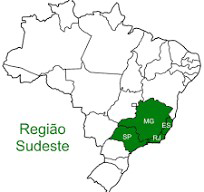
Those occurring in the southeastern region of Brazil and considered vectors of Leishmania are Lutzomyia longipalpis, L. intermedia, L. migonei, and L. whitmani. In 2022, a review of the phlebotomine fauna of Brazilian caves was published [3]. The objective of this research was to analyze the species of medical importance among the studies of the phlebotomine fauna in caves in the southeastern region of Brazil (Figure 1).
Materials and Methods
These data were obtained from a review article on the phlebotomine fauna of Brazilian caves [3]. The phlebotomine fauna of caves in the state of Rio de Janeiro was not recorded in this study, prompting us to conduct this update and analysis [4, 5, 6].
Results and Discussion
In the states of Minas Gerais and Rio de Janeiro, the species L. migonei and L. whitmani were recorded, whereas L. longipalpis and L. intermedia occurred in Sao Paulo and Minas Gerais.
Considering that the states of Minas Gerais, Rio de Janeiro, and São Paulo engage in ecotourism activities such as hunting, fishing, hiking, and camping in forested areas and that Minas Gerais and São Paulo are considered endemic regions for leishmaniasis, it is noteworthy that in 2022, 1,141 cases of cutaneous leishmaniasis were reported in the Southeast region, with 932 cases in Minas Gerais [7]. Between 2007 and 2017, 31 cases of cutaneous leishmaniasis were recorded in the municipality of Sumidouro and its neighboring areas. In the study area, two cases of ATL were documented, one of which was autochthonous, occurring near the studied cave region, where Lutzomyia intermedia was found in the vicinity. Additionally, L. migonei and L. whitmani were collected in the cave [4, 6]. These findings underscore the significance of detecting these species in caves and adjacent areas in the states of Minas Gerais and Rio de Janeiro.
Lutzomyia longipalpis, considered the primary vector of visceral leishmaniasis in the New World [8], was found exclusively in a cave in the state of São Paulo and Minas Gerais. The State Health Department of São Paulo confirmed the occurrence of 88 cases and nine deaths in 2022 [9]. These records highlight the importance of studying the phlebotomine fauna in caves.
Conclusion
The presence of these species within caves, inconclusive natural infection research, and ecotourism activities suggest the potential transmission of Leishmania sp. to humans and other mammals, with cases of leishmaniasis occurring near cave areas and settlements. Further research is needed to fully understand this reality.
Financing Agency: Coordenacao de Processamento de Pessoal de Nivel Superior-Codigo (001)
Acknowledgment
We thank Dr. Felipe Ferraz Figueiredo Moreira, Head of the Entomology Laboratory-Instituto Oswaldo Cruz- Fundacao Oswaldo Cruz, for this support and Dr. Marcio Felix, Curator of the Entomological Collection at the Instituto Oswaldo Cruz-Fundacao Oswaldo Cruz-CEIOC-for this support.
References
-
Rangel EF, Lainson R (2003) Ecologia das Leishmanioses. In: Rangel EF, Lainson, R (Eds.), Flebotomineos do Brasil, FIOCRUZ, pp: 489.
-
Alves JRC, Vilela ML, Mallet JRDS (2022) Sandfly Fauna (Diptera: Psychodidae, Phlebotominae) of Sao Jose Farm, Carmo District, State of Rio de Janeiro, Brazil. An Acad Bras Cienc 94: e20200376.
-
Dutra-Rêgo F, Freire ML, Carvalho GML, Filho JDA (2022) Revisiting the cave dwelling sand flies (Diptera, Psychodidae, Phlebotominae) from Brazil: Diversity and potential role in the transmission of Leishmania Ross, 1903 (Kinetoplastida:Trypanosomatidae). Med Vet Entomol 36(4): 408-423.
-
Alves JRC (2019) Phlebotominae Fauna (Diptera: Psychodidae; Phlebotominae) and identification of Leishmania sp vectors in a cave region, in the municipality of Sumidouro, State of Rio de Janeiro, Brazil. Doctoral thesis, Federal Rural University Rio de Janeiro, Seropédica, Brazil.
-
Alves JRC, Menezes RC, Vilela ML, Mallet JRS (2022) First Report of Lutzomyia edwardsi and Lutzomyia gasparviannai Infected by Nematodes in a Rio de Janeiro Cave. Int J Zoo Animal Biol 5(2): 000361.
-
Alves JRC, Carmo CN, Menezes RC (2024) Ecological aspects of sand fly fauna (Diptera: Psychodidae, Phlebotominae) of Sumidouro District, State of Rio de Janeiro, Brazil. An Acad Bras Cienc 96(2): e20230872.
-
Superintendência Regional de Saúde (SRS) de Montes Claros, estado de Minas Gerais (2024). https://www. saude.mg.gov.br/cib/story/19705-regional-de-montes- claros-atualiza-profissionais-dos-municipios-sobre- diagnostico-e-tratamentoda leishmaniosetegument ar?layout=print#:~:text=Na%20regi%C3%A3o%20 Sudeste%2C%20foram%20notificados,%2C%20 neste%20ano%2C%2034%20casos.(Acessado em 13 de agosto de 2024)
-
Young DG, Duncan MA (1994) Guide to the identification and geographic distribution of Lutzomyia sand flies in Mexico, the west Indies, Central and Douth American (Diptera: Psychodidae). In: 10th (Edn.), Memories of the American Entomological Institute.
-
Secretaria de Estado da Saude de Sao Paulo, estado de Sao Paulo (2023). https://saude.sp.gov.br/coordenadoria- de-controle-de-doencas/noticias/12082023-secretaria- da-saude-registra-queda-de-23-nas-internacoes- por-leishmaniose#:~:text=De%20janeiro%20a%20 junho%20de,88%20casos%20e%20nove%20 %C3%B3bitos. (Acessado em 13 de agosto de 2024)
- California Red-Legged Frog and Non-Listed Amphibians Response to Non-Native Fish Removal
- Industrial Standardization of the Bio-OS: Algorithmic Codification of Resilience Engineering Guidelines and Version V8 Architecture
- Climate Variability and the Sustainability of Snail Farming in Nigeria: Past Trends, Present Challenges and Potential Outlook
- The Evaluation of the Surveillance System of Anthrax in Gilgit-Baltistan, Pakistan, 2018
- Natural Decline to Extinction of A New Zealand Rabbit Population
- Mitochondrial Bio-Logistics: Steering Co-Enzyme Q10 and Lycopene Synergies within the Science 4.0 Bio-OS Framework