
Effect of Massage Before or After Exercise on Delayed-Onset Muscle Soreness in a Rat Model
Background: Delayed-onset muscle soreness (DOMS), also known as tenderness of touch, refers to the pain caused by muscle mechanical stimulation, such as contraction and stretching. Chinese massage has been widely used in the treatment of sports fatigue and sports injury, but there is controversy in the efficacy. In this experiment, we established DOMS model in rats to observe the prevention and treatment effect of massage, to find the best time for intervention, and to provide scientific basis for the prevention and treatment of exercise fatigue. Methods: 130 male SD(sprague-dawley, SD) healthy rats were randomly divided into blank group, control group and massage group. Except for blank group, the other rats received DOMS model. Professionals applied kneading and twisting methods on both lower limbs of rats. The expression of IL-2, IL-6 and IL-8 in skeletal muscle of rats were determined by western blot, PCR and ELISA, and the content of serum creatine kinase was determined by ELISA. In addition, we measured the concentration of Ca2+, Ca2+-ATPase in mitochondria of skeletal muscle. The changes of skeletal muscle structure were observed by scanning electron microscopy. Results: After massage, the expression of IL-2, IL-6, IL-8 and CK decreased compared with control group (P < 0.01), the expression of IL-2, IL-6 and IL-8 in post massage group was lower than that in front massage group (P < 0.01), and the content of CK in front massage group was lower than that in post massage group(P < 0.01). The content of Ca2+ in front massage 24, 48 and 72h group was lower than that in post massage (P < 0.01), the concentration of Ca2+-ATPase in front massage 24h and 72h group was lower than that in post massage group (P < 0.05). Conclusion: Massage can prevent the injury of muscle and reduce the inflammatory reaction of muscle after exercise. It can also improve the activity of Ca2+-ATPase, enhance the transport of Ca2+ by mitochondria and protect the skeletal muscle.
Introduction
Delayed onset muscle soreness (DOMS) refers to the phenomenon of muscle soreness which often occurs after the body’s unadaptable exercise, especially centrifugal exercise, or sudden increase of exercise intensity [1]. It mainly manifests as local tenderness and muscle pain, and often accompany with muscle stiffness, acid swelling, limited joint movement, etc. In severe cases, it may occur acute soft tissue injury related symptoms such as muscle fiber rupture and muscle strength decrease [2]. The symptoms of DOMS are also related to the inflammatory response of sarcomere rupture [3]. At present, the physiological mechanism of DOMS is not clear. In 1902, Hough put forward the hypothesis of “mechanical injury”, and thought that DOMS was related to the tear of muscle or connective tissue, as well as the obvious changes of the ultrastructure and contraction structure of skeletal muscle [4]. This is also the first time DOMS has been proposed. The hypothesis of “ischemia spasm” thought that, the pain caused by muscle ischemia after exercise will lead to muscle fiber spasm, aggravate local ischemia and form a vicious circle [5]. Theory of acute inflammatory response hold opinion that Ca2+ trigger a series of inflammatory reactions after mechanical injury [6], and the inflammatory mediators such as neutrophils, eosinophils and basophils are increased [7]. Inflammatory reaction and production of ROS may be the core causes of DOMS, and the interruption of excitation / contraction coupling process of muscle fibers and the disorder of muscle fibers may also be the possible causes [8]. Bradykinin and nerve growth factor also play a key role in the production of DOMS [9].
Clinically, the treatment of DOMS mainly includes hydrotherapy, ultrasound, vibration, electrical stimulation, laser therapy, anti-inflammatory drugs, acupuncture, etc. But there are different opinions on the evaluation of curative effect [10, 11, 12, 13, 14, 15]. Massage is one of the important methods in treatment of DOMS in traditional Chinese medicine. It has a good effect in reducing pain and improving muscle fatigue [16]. Modern neurophysiology has found that pain is related to the disorder of neurotransmitters such as 5-hydroxytryptamine (5-HT), acetylcholine (Ach), dopamine (DA), β-endorphin (β-EP) and γ-aminobutyric acid (GABA). Research found that massage can reduce the release of 5-HT and DA in peripheral blood, and increase the release in central system [17, 18], β-EP [19] and GABA [20] also increase. This plays an important role in the process of analgesia.
The dorsal horn of the spinal cord in the nervous system is a very important integration center in the pain afferent system, and also a key part in the mechanism of massage analgesia. In 1965, Melzack and well proposed the “gate control theory”, which is the most ideal explanation for dorsal horn neurons. Type A afferent fibers excite SG cells, while type C afferent fibers inhibit. Injury cause Type C afferent tension activity, at this time, the gate is opened. Massage stimulates SG cells by stimulating Type A fibers so as to close the gate, inhibit the activity of dorsal projection neurons (T cells), reduce the transmission of harmful information to the center, and relieve the pain. This explains how massage plays an analgesic role by inhibiting pain signal transmission at the spinal cord level. In addition, massage may promote venous and lymphatic return, decompose inflammatory mediators, improve nutritional metabolism of muscle, repair muscle tissue [21]. Although massage is widely used in treatment of muscle fatigue and injury, there is controversy on efficacy of improving local circulation and assisting muscle function recovery [22, 23, 24]. At present, most of studies are about the intervention effect of massage on DOMS, while the preventive effect of massage on DOMS is less.Therefore, we established DOMS model in rats, and carried out front and post massage intervention on rats. We measured content of serum creatine kinase (CK), concentrations of mitochondrial Ca2+, Ca2+-ATPase and the expression of IL-2, IL-6, IL-8. We also use scanning electron microscope to observe the changes of rat skeletal muscle. Through the above study to observe the prevention and effect of massage, find the best time for intervention, and provide scientific basis for the prevention and control of sports fatigue.
Methods
Animals and groups
130 SPF (specific pathogen free, SPF) male SD healthy rats with an average body weight of 180-200g (6 weeks old). The animal is provided by Shanghai sipur bikai experimental animal Co., Ltd., license No.: SCXK (Shanghai) 2018-0006. The animals were raised in separate cages with 10 rats in each cage, free diet, natural light, room temperature (20±3) ℃, relative humidity of 40-60%. The rats were used in the animal laboratory for 7 days. According to the random principle, the animals were divided into blank control group, exercise control group and massage group. The massage group was divided into two groups: the experimental group before exercise and the experimental group after exercise. The massage group and the exercise control group were randomly divided into 0h, 24h, 48h and 72h groups, with 10 rats in each group. The operation process of the experiment strictly complies with the relevant provisions of the regulations of the people’s Republic of China on the administration of experimental animals and the guiding opinions on treating experimental animals well.
Observation index
Content of serum CK, concentrations of mitochondrial Ca2+, Ca2+-ATPase and the expression of IL-2, IL-6, IL-8. We also use transmission electron microscope to observe the ultrastructural changes of rat skeletal muscle.
Main experimental instruments
The antibody was provided by Bio-World technology, Co. Ltd. The gel imaging system comes from Shanghai TianNeng Technology Co., Ltd. (model: 5300). ELISA kit is from bio swamp (China). Use -SYBR®premier ex Taq Gamma (Takara, rr420a) (Dalian Baosheng biotechnology Co., Ltd. China) carried out quantitative RT-PCR. Primers were synthesized by Shanghai Biotechnology Co., Ltd. (SANGON biotechnology, Shanghai, China). Trizol and cDNA synthesis kits were obtained. Manual strength tester comes from. The skeletal muscle structure was observed with hitachi-650 scanning electron microscope. Ca2+, Ca2+-ATPase test kits are provided by JianCheng company (Nanjing China. product No.: A106-1, A070-4).
Experimental protocol
DOMS protocol: Except for the blank control group, the other rats were all exercised to in exhaustion. The rats are free to drink and feed the same food. After randomization, the experiment was conducted from 7 to 10 a.m. every day. The experimental animals first swim in a glass cylinder of 100 cm * 60 cm * 70 cm with a weight-bearing capacity of 3% of the weight of the rats. Start a swimming exercise at 9 a.m. In the process of swimming, when the rat’s motor coordination decreased significantly, it sank three times in a row for more than 10s, then takes animals out of swimming tank and dry it into the cage with an electric blower at room temperature. The animals in the control group are fed regularly under the same conditions and do not participate in swimming. All the rats were sacrificed by cervical dislocation to obtain the distal colon for future experiments, such as western blot, PCR, enzyme-linked immunosorbent assays (ELISA),and et al.
Massage interventions: The rats in the massage group are fixed on the fixed frame, and the kneading and twisting methods are applied to the lower limbs of the rats for 5 minutes each, and each rat is massaged for 10 minutes. Professional training for massage staff, control force is 4N.The manual strength is 0.4KG and the frequency is 120- 160 times / min.
Western blotting: Fresh rat skeletal muscle tissue was added with RIPA lysate and mixture of protease inhibitor, and the specimen tissue was fully ground. The supernatant was centrifuged and quantified by BCA kit. 10μg protein samples were separated by SDS-PAGE and transferred to PVDF membrane. After the membrane was sealed by 5% skim milk at room temperature for 2 hours, the first antibody IL-2 (BS60299, Bioworld Technology), IL-6 (MB9296, Bioworld Technology), and IL-8 (BS3479, Bioworld Technology ) and GAPDH (MB001, Bioworld Technology ) were incubated overnight at 4℃, and the membrane was washed with TBST for 3 times, each time for 10 minutes. Add goat anti- rabbit or mouse IgG-HRP second antibody (1:10000) and incubate at room temperature for 2h. The gel imaging system (Shanghai Tian Neng Technology Co., Ltd., model 5300) was photographed and preserved. Quantitative real-time polymerase chain reaction(PCR): Trizol reagent was used to extract 2μg of total RNA from skeletal muscle tissue, and reverse transcription cDNA was used with revertaid first cDNA synthesis Kit (thermo), -SYBR ® premier ex Taq Gamma (Takara, rr420a) (Dalian Baosheng biotechnology Co., Ltd., China, batch No.: a650t-1) was used for quantitative RT-PCR. Reaction conditions: after 30 seconds pre denaturation at 95℃, 5 seconds at 95℃, and 30 seconds at 60℃, 40 cycles were performed. After the cycle, melting curve analysis was performed to confirm the specificity of amplification. The expression level of GAPDH was used as internal control. Primers were designed by the software primer 5. The primers were synthesized by Shanghai Biotechnology Co., Ltd. and the primer sequence is shown in Table 1.
| Primer | Sequence (5’ to 3’) | Base number of alkalis |
|---|---|---|
| IL-2-F | TTGCACTGACGCTTGTCCTCC TTGTCAACA | 30 |
| IL-2-R | CCATCTCCTCAGAAATTCCACCA CAGTTGC | 31 |
| β-actin-F | CTTTTGTGCCTTGATAGTTC | 20 |
| β-actin-R | GAGTCCTTCTGACCCATAC | 19 |
| IL-6-F | ATT-GTATGAACAGCGATGATGCAC | 25 |
| IL-6-R | CCAGGTAGAAACGGAACTCCAGA | 23 |
| IL-8-F | CATGGATCTGTCGTAGGGCT | 20 |
| IL-8-R | CTGACCAACAGACCAGGGTT | 20 |
Table 1: PCR primer sequence
ELISA: The levels of CK, IL-2, IL-6 and IL-8 were measured by double antibody sandwich method. The purified rat antibody was coated on the microporous plate to make solid-phase antibody. The blood samples of rats and the standards of each factor were added into the microporous of the coated MCAB in turn, and then combined with the antibodies of CK, IL-2, IL-6 and IL-8 labeled by HRP to form the antibody antigen enzyme antibody complex. After thorough washing, the substrate TMB was added to develop the color. The
kit is provided by bio swamp (product No.: RA20686, RA20132, RA20607, RA20553). The absorbance (OD value) of the sample was determined by enzyme standard instrument (model: elx800) at the wavelength of 450nm. The concentrations of CK, IL-2, IL-6 and IL-8 in the sample were calculated by standard curve.
Mitochondrial sampling: Take 1g of the left gastrocnemius muscle of rat, cut them into pieces on the ice bath, add 5ml of extraction medium (normal saline), 4°C Chomogenate for 30s, and centrifuge for 10min at 2000r/min. The supernatant was centrifuged at 10000r/min for 15 min. The precipitate obtained by removing the supernatant is mitochondria, which are then suspended in the preservation medium (normal saline) for storage at -20°C.
Determination of mitochondrial Ca²⁺ concentration: The extracted mitochondria were suspended in 1ml normal saline, grinded by hand in ice bath for 3 minutes with glass homogenizer, and centrifuged at the speed of 2500R/min for 10min. After centrifugation, the supernatant was mixed with Mtb reagent, alkaline solution, deionized water, 2.5mmol/L calcium standard solution and protein clarifier. The supernatant was allowed to stand for 5 minutes. The OD value of absorbance at 610nm was recorded.
Calculation formula of calcium content in tissue (mmol/gprot) =
$$\frac{\text{Measuring tube absorbance} - \text{Blank tube absorbance}}{\text{Standard tube absorbance} - \text{Blank tube absorbance}} \times \frac{\text{Standard tube concentration (2.5mmol/L)} + \text{Sample protein content(gprot/L)}}{\text{Standard tube concentration (2.5mmol/L)} + \text{Sample protein content(gprot/L)}}$$
Determination of mitochondrial Ca²⁺-ATPase: The extracted mitochondria were suspended in 1ml normal saline, grinded by hand in ice bath for 3 minutes in a glass homogenizer, and centrifuged at a speed of 3500R/min for 10min. Take 100 μL supernatant to determine phosphorus, and then cool it to room temperature after 20 min water bath at 45°C. The OD value of absorbance at 610nm was recorded. The amount of 1μmol inorganic phosphorus produced by protein decomposition of ATP per milligram per hour is regarded as an ATPase activity unit, namely μmolPi/mgprot/hour, Ca²⁺-ATPase calculation formula =
*The reaction time is 10min, multiplying by 6 is 1h
$$\frac{\text{OD of measuring tube} - \text{Control tube OD}}{\text{Standard tube OD}} \times \frac{\text{Standard tube concentration (1μmol/ml)} \times \text{Sample dilution ratio (2.8)} \times 6^2 + \text{protein content}}{\text{Standard tube concentration (1μmol/ml)} \times \text{Sample dilution ratio (2.8)} \times 6^2 + \text{protein content}}$$
Scanning electron microscope of gastrocnemius: Two rats in each group were randomly selected. Within one minute after the rats sacrificed, the left gastrocnemius muscle tissue granules were taken immediately, the size of which was 1*1*1mm. Fixed solution (1.5-2m1): 4% glutaraldehyde, prepared with PBS (phosphoric acid buffer, pH = 7.2-7.4), stored at 4°C. Muscle tissue granules were fixed, washed with phosphoric acid buffer for 3 times, 10 minutes each time, fixed for 2 hours after 1% osmium acid, washed with phosphoric acid buffer for 3 times, 10 minutes each time, dehydrated with 50%, 70% and 90% ethanol gradients for 15 minutes respectively, dehydrated with 100% ethanol for 3 times, 30 minutes each time. Three times of acetone replacement, three minutes each time, soaking for more than 10 hours, embedding with epoxy resin, polymerizing the embedding plate at 40-60°C for 48 hours, repairing the ultra-thin section for 50-90mm, double staining with uranyl acetate and lead citrate for 5-10min, and observing the changes of myofibrils, myofilaments etc. under scanning electron microscope of Hitachi-650 SEM.
**Statistical analysis**
SPSS 22.0 software (IBM SPSS Inc., USA) was used for statistical analysis of the data. Results were expressed as means±standard error of the mean (SEM). One-way analysis of variance (ANOVA) and Dunnett’s T3 test were performed for statistical analysis. P<0.05 was considered the level of statistically significant.
**Result**
**Changes of IL-2、IL-6 and IL-8 expression level**
Changes of IL-2 expression level: IL-2 plays an important role in inflammatory response and is a key factor in cytokine network. Western blot showed difference in the expression of IL-2 protein between post massage 48h and 72h group (P < 0.05); 0h, 24h and 48h, the expression of massage group was lower than that of control group (P < 0.01), and the expression of front massage 72h group was higher than that of control group. The expression of post massage 48h group and 72h group were significantly lower than front massage (P < 0.01) (Figure 1a, 1b). PCR showed that there was no significant difference in the expression of IL-2 mRNA between post massage 24h group and 48h group, and there was significant difference in other experimental groups (P < 0.01); Compared with control group, the expression of front massage 0h and 48h, 72h group were lower than control group (P < 0.01), and the expression of post massage 0h and 24h group was significantly lower than front massage group (P < 0.01) (Figure 1c). ELISA showed that the level of IL-2 in front massage 0h, 24h and 48h group were lower than control group (P < 0.01); compared with control group, the content of each period in post massage group was lower than control group, the most significant difference was found in the 48h group (P < 0.01); the content of each period in post massage group was decreased significantly compared with front massage group in the same period (P < 0.01);the content of post massage group was significantly lower than front massage group (P < 0.01) (Figure 1d).
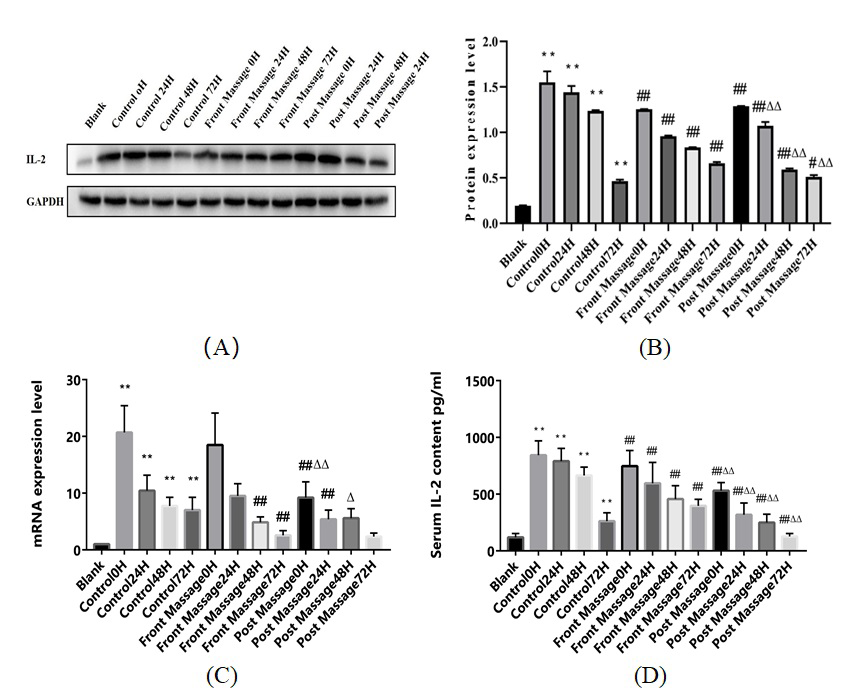
Figure 1: Changes of IL-2 expression in DOMS rats. Data were mean±SEM. A. Western blot analysis IL-2 protein expression in rats. P< 0.01 compared with blank group; ## P< 0.01 compared with the control groups in the same period; # P< 0.05 compared with the control group in the same period; ΔΔ P< 0.01 compared with the front massage groups in the same period; B. PCR detection for IL-2 mRNA. P< 0.01 compared with blank group; ## P< 0.01 compared with the control group in the same period; Δ P< 0.05 compared with the front massage groups in the same period; ΔΔ P< 0.01 compared with the front massage groups in the same period; C. ELISA showed the IL-2 content in rats. ** P< 0.01 compared Blank group; # P< 0.05 compared with the control group in the same period; ## P< 0.01 compared with the control group in the same period; ΔΔ P< 0.01 compared with the front massage groups in the same period.
Changes of IL-6 expression level: Early studies suggested that IL-6 was only expressed in monocyte macrophages, vascular endothelial cells and fibroblasts. In recent years, it has been found that IL-6 can be expressed in most cells, including skeletal muscle cells. Western blot showed that the expression in front massage 0h、24h group was significantly different (P < 0.01);there was significant difference between post massage 0h and 72h group (P < 0.01);0h, 24h and 48h, the expression of front massage group was decreased compared with control group (P < 0.01), the expression of front massage 72h group was increased compared with control group;the expression of post massage group was decreased compared with control group, and the difference was significant in 72h group (P < 0.01);the expression of post massage 0h, 48h and 72h groups was significantly lower than front massage group, the most significant difference was found in 72h group (P < 0.01) (Figure 2a, 2b). PCR showed that there was a significant difference between control 0h and 24h group; there was no significant difference between post massage 24h and 48h group, but there was significant difference in rest period (P < 0.01); the expression in front massage 48h and 72h group was significantly decreased compared with control group (P < 0.01); the expression of post massage group was decreased significantly compared with control group (P < 0.01), 0h group was the most; the expression of post massage 0h and 24h groups was significantly lower than front massage group, 0h group is the most.(P < 0.01) (Figure 2c). ELISA showed that there was no significant difference in post massage 24h and 48h group, other periods have significant difference (P < 0.01); 0h, 24h and 48h, the content of front massage group was decreased compared with control group (P < 0.01); the content of post massage group was decreased compared with control group, the most significant difference was found in 48h group (P < 0.01); the content of post massage group in each period was significantly reduced compared with front massage group, the most significant difference was found in 48h group (P < 0.01) (Figure 2d).
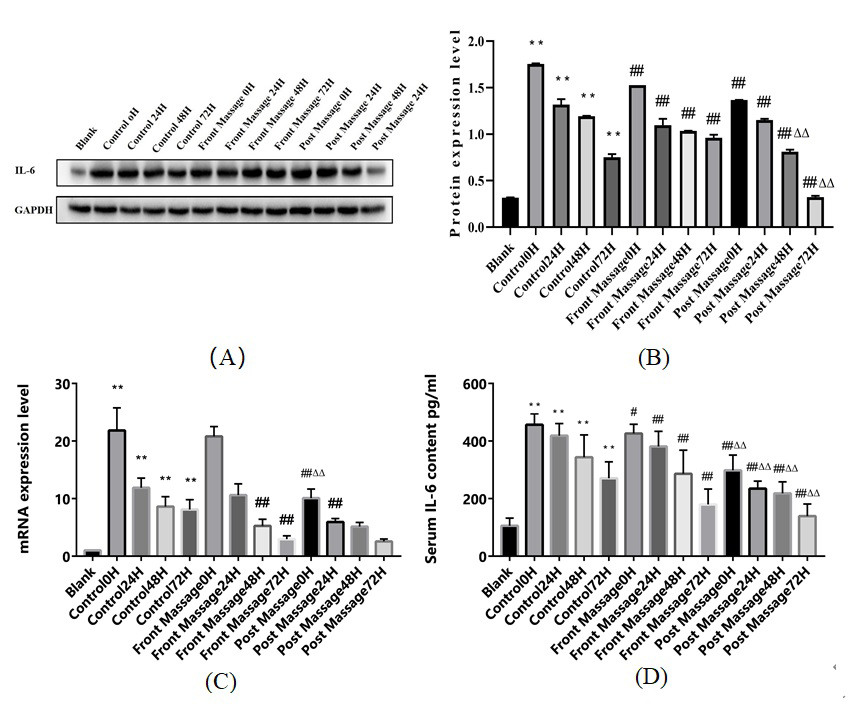
Figure 2: Changes of IL-6 expression in DOMS rats. Data were mean±SEM. A. Western blot analysis IL-6 protein expression in rats. P< 0.01 compared with blank group; ## P< 0.01 compared with the control group in the same period; ΔΔ P< 0.01 compared with the front massage groups in the same period; B. PCR detection for IL-6 mRNA. P< 0.01 compared with blank group; ## P< 0.01 compared with the control group in the same period; ΔΔ P< 0.01 compared with the front massage groups in the same period; C. ELISA showed the IL-6 content in rats. ** P< 0.01 compared with blank group; ## P< 0.01 compared with the control group in the same period; ΔΔ P< 0.01 compared with the front massage groups in the same period.
Changes of IL-8 expression level: IL-8 can promote the release of neutrophils, activate neutrophils, and promote the release of cytotoxic particles, resulting in the inflammatory response of self-tissue damage. Western blot showed that the most significant difference was found in the post massage 0h and 72h group (P < 0.01); the expression of front massage group was decreased compared with control group, the most significant difference in the 24h group (P < 0.01); the expression of post massage group was significantly decreased compared with control group (P < 0.01); the expression of post massage group was significantly decreased compared with front massage group(P < 0.01) (Figure 3a, 3b); PCR showed that there was no significant difference in post massage 48h and 72h group, and significant difference in other periods (P < 0.01); 0h, 48h and 72h, the expression of front massage group was less than control group (P < 0.01), but was not significant in 48h group (P < 0.05); the expression of post massage group was less than control group, the most significant difference in 0h group (P < 0.01); the expression of post massage 0h, 24h and 48h groups was significantly lower than front massage group (P < 0.01) (Figure 3c); ELISA showed that there was no significant difference in post massage 48h and 72h group, but significant difference in other periods (P < 0.01); the content of front massage group was less than control group (P < 0.01); the content of post massage group was lower than control group (P < 0.01), the most significant difference was found in 48h group; the content of post massage group was significantly lower than front massage group (P < 0.01), with the most significant difference in 24h group (Figure 3d).
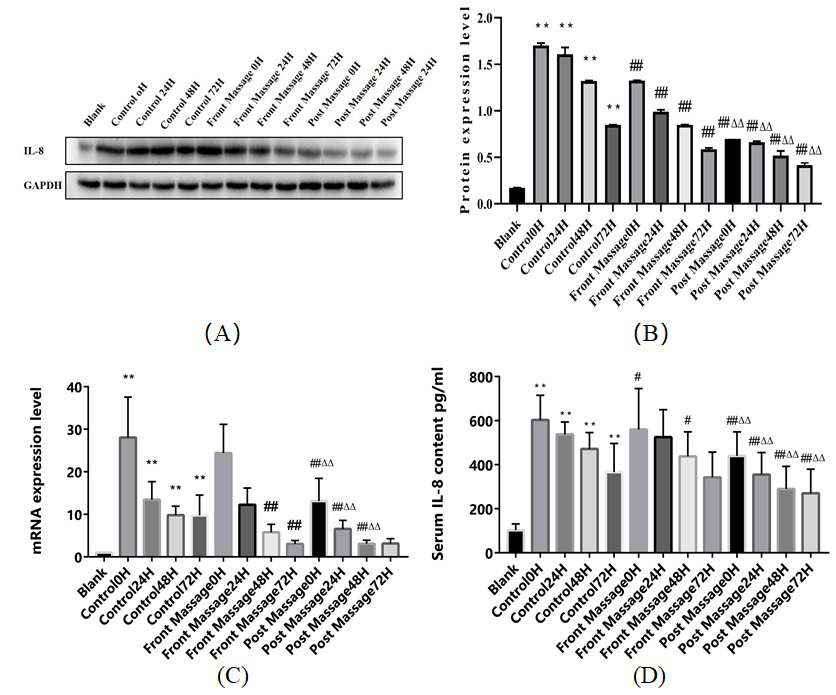
Figure 3: Changes of IL-8 expression in DOMS rats. Data were mean±SEM. A. Western blot analysis IL-8 protein expression in rats. P< 0.01 compared Blank group; ## P< 0.01 compared with the control group in the same period; ΔΔ P< 0.01 compared with the front massage groups in the same period; B. PCR detection for IL-8 mRNA. P< 0.01 compared Blank group; ## P< 0.01 compared with the control group in the same period; ΔΔ P< 0.01 compared with the front massage groups in the same period; C. ELISA showed the IL-8 content in rats. ** P< 0.01 compared Blank group; # P< 0.05 compared with the control group in the same period; ΔΔ P< 0.01 compared with the front massage groups in the same period.
Changes of serum CK content
CK activity in muscle tissues is higher than other tissues, so serum CK activity has become a common indicator for the diagnosis of some skeletal muscle diseases. ELISA shows that, compared with blank group, the CK content of massage group and control group was increased (P<0.01); the content of massage group varied significantly at each period,and on declining curve (P<0.01); the content of front massage
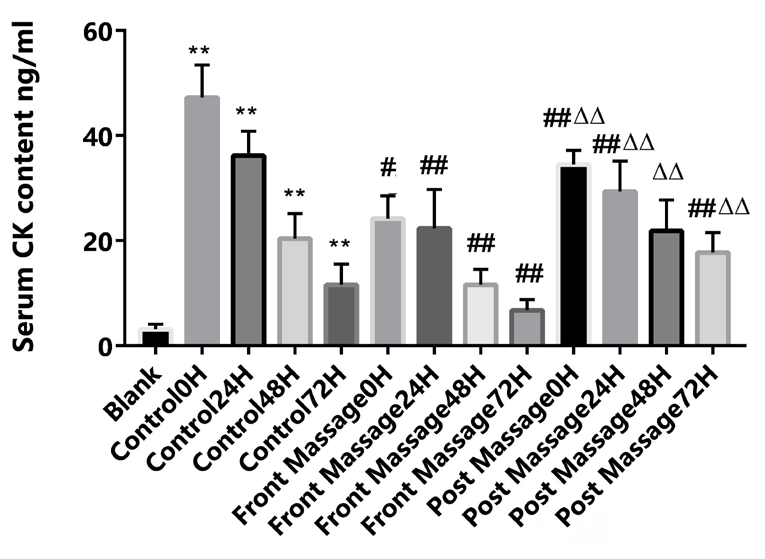
group was decreased significantly compared with control group, the difference is significant between 0h and 24h groups (P<0.01); the content of post massage group was less than control group, most significant in0h group (P<0.01), but the content of 72h group was more than control group; the content of post massage group was significantly higher than front massage group (P<0.01),0h and 48h group were significantly different (Figure 4).
Changes of mitochondrial Ca2+、Ca2+ -ATP concentration
We measured the changes of Ca2+ and Ca2+-ATPase concentration in the mitochondria of the left gastrocnemius muscle of rats. The results showed that compared with the blank group, Ca2+ and Ca2+-ATPase concentration in control group and massage group increased significantly (P < 0.01).
There was a significant difference in the concentration of massage group in each period (P < 0.01), the lowest value was in 0h group, the highest value was in 24h group, and the decreasing trend was in 24h, 48h and 72h group.
The concentration of Ca2+ and Ca2+-ATPase in massage 0h group was lower than that in control group (P < 0.01), and the content of 24h and 48h group were higher than that in control group (P < 0.01).The concentration of Ca2+-ATPase in massage 72h group was higher than that in control group (P < 0.05);the concentration of Ca2+ in front massage 0h group was higher than that in post massage group (P < 0.05), 24h, 48h and 72h group was significantly lower than that of post massage group (P < 0.01);the concentration of Ca2+-ATPase in front massage 24h and 72h group was lower than that in post massage group(P < 0.05) (Figure 5a 5b)
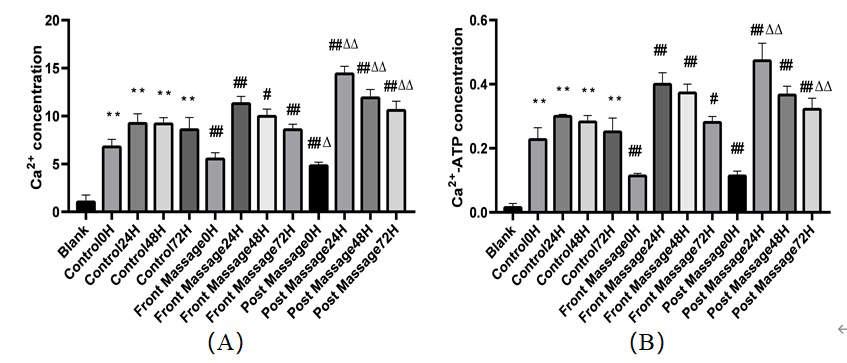
Figure 5: Changes of Ca2+, Ca2+-ATPase concentration in DOMS rats. A. Changes of Ca2+ concentration. P< 0.01 compared with blank group; # P< 0.05 compared with the control group in the same period; # P< 0.05 compared with the control group in the same period; Δ P< 0.05 compared with the front massage groups in the same period; ΔΔ P< 0.01 compared with the front massage groups in the same period. B. Changes of Ca2+ -ATPase concentration. P< 0.01 compared with blank group; ## P< 0.01 compared with the control group in the same period; ΔΔ P< 0.01 compared with the front massage groups in the same period.
Ultrastructural observation of skeletal muscle
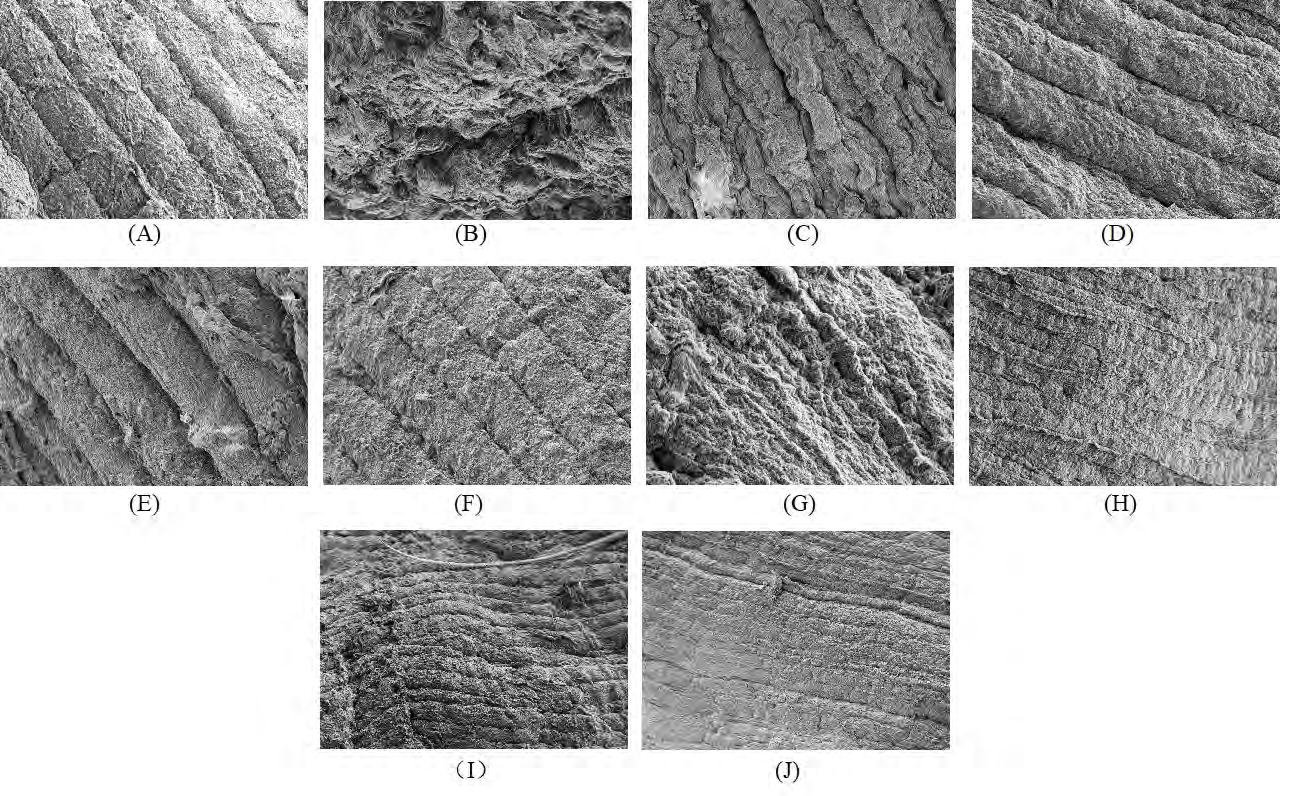
We observed the changes of myofibrils and filaments of gastrocnemius in rats by scanning electron microscope. In blank group, the structure of sarcomere was intact and the morphology was normal (Figure 6a). The sarcoplasmic reticulum swelling occurred in different degrees in control group, and contraction, compression, distortion and disintegration were observed in sarcomere and myofibril structure, and edema of myofibrils was found between fibers (Figure 6b). The swelling of sarcoplasmic reticulum, slight contraction of sarcomere, compression and distortion of some myofibrils were observed in the 0h and 24h massage group. 0h group was damaged more significantly (Figure 6c, 6d, 6g, 6h). 48h, 72h group, sarcomere structure was more complete, the morphology was basically normal; the myofibrils were closely arranged, the effect of 72h group was more significant (Figure 6e, 6f, 6i, 6j).
Discussion
Analysis of DOMS experimental model
Most of researchers take rats as the objects, and adopt the method of animal experiment to study DOMS. The main exercise methods include downhill running and swimming exhaustion. Swimming is the instinctive exercise of rats, which has a significant effect on the heart and posterior muscle groups [25]. Compared with downhill running, swimming is closer to large amount of exercise in daily life, so we build DOMS model by swimming exhausted exercise. In order to avoid the extra energy consumption caused by cold environment stimulation, we keep the water temperature of the swimming pool between 31-35℃, and static water depth of swimming pool is more than twice the length of rats, so as to prevent rats from using tail to support and rest at the bottom of pool and affect exercise load. For the judgment of swimming fatigue of rats, there are different conclusions, researchers commonly used methods is: rats can’t surface again after sinking in water for a certain period (10-60s, etc.);breathe deeply, rapidly and greatly after leaving the water; eyes are not bright; lie prone; limbs are drooping when held, etc., which can be regarded as fatigue of rats. In practice, the above standards are dangerous. In order to avoid model falling off due to the death of rats, and considering the difference of swimming ability of rats, we think that when the coordination of rats’ movement is significantly reduced, repeated sinking occurs, sinking for more than 10s, and sinking for three times in a row is the fatigue state of rats. We believe that: 1) the judgment of fatigue method of rats is mainly based on the external characteristics, which has certain limitations, and may have the phenomenon of “pseudo exhaustion”; 2) there are differences in swimming ability between rats, different exercise intensity that can be borne, and weight-bearing can affect the results. The above two points need to be paid attention to in the future molding process. We need to pay attention to whether there is a more suitable weight-bearing, and judgment of fatigue state of rats.
Effect of massage on IL-2、IL-6、IL-8 in DOMS model rats
DOMS can cause muscle tissue damage, and make muscle fibers produce inflammatory reaction, thus increasing the content of inflammatory markers such as neutrophils and eosinophils [26, 27]. Cytokines are mainly involved in immune response, immune cell differentiation, inflammatory response and tissue repair. Short term or long-term training can affect cytokines.
Effect of massage on IL-2 in DOMS model rats: The effect of muscle injury on IL-2 is complex, and the conclusions are different. The experimental results support that IL-2 increases, decreases and has no obvious change after exercise [28, 29, 30]. Compared with other inflammatory factors, there are few studies on IL-2. We found that the expression of IL-2 protein and mRNA increased, and the content of serum increased in control group. Massage can significantly reduce the above content. Post massage has a greater impact on IL-2 than front massage. In general, we think 48h group has the most significant difference. The increase of β-EP after massage is an important mechanism of massage analgesia [31]. Therefore, we believe that massage can improve the level of β-EP, inhibit the release of IL-2, and inhibit mediating effect on inflammation. The pain of DOMS usually reaches the peak at 48-72 hours after exercise [32]. The results of this experiment show that changes of IL-2 in post massage 48h group are the most significant. Therefore, we speculate that post massage 48h group has most obvious inhibitory effect on release of IL-2, but more research is needed to prove this hypothesis.
Effect of massage on IL-6 in DOMS model rats: Centrifugal exercise leads to mechanical injury of muscle cells, and tissue fragments act as antigens to activate macrophages. After the injury of skeletal muscle, the permeability of cell membrane changes and the release of IL-6 into the blood can cause the increase of IL-6 expression. Researchers observed the changes of IL-6 after DOMS in traditional Chinese medicine and water bath etc., but the results were different [33, 34]. We found that expression of IL-6 protein and mRNA increased, and the content of serum increased in control group. The peak time of IL-6 expression was 0h in control group, and gradually decreased with time. The expression level remained high in 24h and 48h group, which was basically consistent with the muscle morphological damage observed by our electron microscope. According to a previous review [35], massage can significantly reduce the content of IL- 6, which is one of the most effective treatments for DOMS. We think that IL-6 plays an important role in sports injury and can be used as an important index of DOMS detection. The overall expression of IL-6 in model rats with massage intervention was significantly reduced, and the peak value was decreased, so we analysis that, massage can reduce the injury of skeletal muscle fiber and inflammatory response caused by exercise, inhibit the expression of IL-6, and reduce the symptoms of DOMS: front massage can reduce expression of IL-6, prevent the occurrence of DOMS; post massage can reduce the production of IL-6, thus reduce the symptoms of DOMS, and the prevention and intervention effect of 72h group is the best. The findings are also in good agreement with the results of electron microscopy.
Effect of massage on IL-8 in DOMS model rats: IL-8 has a two-way regulatory effect on inflammation. Curcumin, Rhodiola, ibuprofen and so on have some influence on IL-8, but there are few studies on this index [36, 37, 38]. We found that the changes of IL-8 protein level, mRNA expression and serum content in DOMS rats were similar to those of IL-6.Exercise can make body produce stress reaction, activate neutrophils, make skeletal muscle chemotaxis to inflammation, and increase the expression of IL-8.The expression of IL-8 in control group increased significantly, and reached the peak at 0h. Intense stress leads to immunosuppression, so the expression of IL-8 in the whole group decreased significantly after 72h of exercise. From the point of the influence of massage before and after exercise on IL-8, we believe that massage can inhibit the activation of neutrophils, reduce muscle injury and inflammatory reaction by inhibiting the expression of IL-8, so as to have a good prevention and intervention on the production of DOMS. The intervention of massage after exercise is better than that before exercise, and the effect of 72h group is the most obvious. Based on the above analysis, massage can intervene the occurrence of DOMS through the action of cytokines.
Effect of massage on CK of DOMS model rats
After muscle injury, the leakage of CK enters the lymphatic system through the intercellular fluid, and finally into the circulatory system. Therefore, the muscle tissue injury leads to the increase of serum and muscle enzyme activity. Exercise intensity, muscle injury degree and serum CK activity are in direct proportion [39]. Short-term high- intensity exercise causes mechanical injury of muscle fiber and increases serum CK activity; long-term endurance exercise causes less mechanical injury, and the metabolic change of cell membrane causes normal function loss of muscle cells, increases cell membrane permeability and CK leakage, increase the of serum CK activity. The influence of physical therapy such as electromagnetic field and vibration on CK is controversial [39, 40]. We found that through massage intervention, serum CK value of model rats in front massage group decreased significantly, which indicated that massage can prevent the muscle damage caused by exercise, reduce the leakage of CK, and increase the clearance of CK in the process of lymph blood circulation, so as to reduce the serum CK activity level [39]. The rule of change is consistent with that of gastrocnemius under electron microscope. We also found that compared with control group, the serum CK in post massage group was lower, but higher than that in front massage group. Therefore, we believe that massage therapy after intensive exercise cannot prevent the damaged cells from leaking CK in time, or even increase the activity of serum CK by accelerating the process of CK entering the blood circulation from lymph. Massage can reduce the activity level of CK, which is a marker of muscle injury, but it needs further study to determine whether massage can recover muscle injury by CK value.
Effect of massage on Ca2+、Ca2+-ATP in DOMS model rats
Ca2+ is the coupling factor of excitation and contraction of skeletal muscle. Its main function is to promote ATP hydrolysis and provide energy for muscle silk sliding.
Mitochondria regulate Ca2+ by internal and external transport, and transport Ca2+ in cytoplasm into mitochondria by the energy produced by Ca2+-ATPase hydrolysis. The uptake of Ca2+ by skeletal muscle mitochondria is affected by the content of Ca2+ in cytoplasm. After exercise, the increase of Ca2+ content in cytoplasm stimulated Ca2+-ATPase hydrolysis to release energy, which enabled mitochondria to take Ca2+ actively and reduced the increase of Ca2+ in cytoplasm to cause muscle damage.
However, when exercise fatigue occurs, the activity of mitochondrial Ca2+-ATPase decreases, which makes the ability of Ca2+ transport into mitochondria decrease, and a large amount of Ca2+ accumulates in cytoplasm, which results in decrease of exercise ability. It is believed that permeability of plasma membrane increases and release of Ca2+ decreases after DOMS injury [40]. Ca2+ exchange through Na+ -Ca2+ and Ca2+-ATPase binding to cytoplasm to support the absorption of Ca2+ by cells [41]. We found that Ca2+ and Ca2+-ATP of mitochondria in control group increased, peaked in 24h, and then decreased, which was in step with exercise fatigue; The activities of Ca2+ and Ca2+-ATP in massage group were higher than those in control group. We think that massage can interfere with Ca2+ and Ca2+-ATPase: except for 0h period, the Ca2+-ATPase content of massage group is higher than that of control group. We can think that massage can enhance Ca2+-ATPase activity, then enhance the transport ability of mitochondria to Ca2+, so that protect skeletal muscle tissue. The effect of front massage 24h group was the most significant. In addition, DOMS leads to the increase of Ca2+ level and Ca2+ accumulation in vacuoles, which may be an effective mechanism for body to reduce Ca2+ content in fibro cytoplasma, so as to maintain the activity of muscle fibers [40].Whether massage can promote the emergence of this mechanism is worthy of further study.
Effect of massage on the ultrastructure of skeletal muscle in DOMS model rats
The ultrastructural changes of gastrocnemius muscle in DOMS rats were basically consistent with those of other observation indexes. The results of electron microscopy showed that massage group was improved compared with control group, and results of front massage 72h group were similar to blank group, therefore, we analysed that the preventive effect of front massage on the structural change of skeletal muscle in DOMS rats was better than post massage.
Conclusion
From the results of each index, we find that DOMS is the result of multiple factors and multiple time periods. IL-6 can be used as an important index of DOMS detection. The effect of front massage on CK was better than post massage, and the effect of post massage on IL-2, IL-6 and IL-8 was better than front massage. Combined with the results of Ca2+, Ca2+-ATPase and electron microscopy, we believe that massage can prevent muscle injury caused by large amount of exercise and long- term exercise, reduce the inflammatory reaction of muscle after exercise, and protect skeletal muscle by increasing the activity of Ca2+-ATPase and increasing the transport capacity of mitochondria to Ca2+. Based on comprehensive analysis of experimental results, we believe that post massage 72h has the best effect on DOMS. However, whether there is a relationship between the inflammatory indexes and whether massage has more influence on transport mechanism of Ca2+ needs further study.
- Ethics approval and consent to participate All experiments were approved by the Laboratory Animal Ethics Committee at Nanjing University of Chinese Medicine (Number: 201908A015) and conducted under the Animal Experiments Guidelines and Animal Care of Chinese Academy of Sciences.
- Consent for publication Not applicable.
- Availability of data and materials The data used to support the findings of this study are available from the corresponding author upon request.
- Competing interests The authors declare that they have no competing interests.
- Funding This study was supported by the Science and technology project of Jiangsu traditional Chinese Medicine Bureau (Nos. YB201849). These funding sources had no role in the design of the study; data collection, analysis, and interpretation of data; or in writing the manuscript.
- Authors’ contributions FL L and QB W designed the experiment. Y Z and ZQ S treated the animals. Q Z, JL G, and J L collected animal blood and tissues and performed laboratory measurements. Q Z and JL G analyzed and interpreted the data. Q Z and QB W were major contributors to the writing of the manuscript. All authors drafted, improved, and revised the manuscript. All authors read and approved the final manuscript.
- Acknowledgements This article has been submitted as a preprint at the following link: https://www.researchsquare.com/ article/rs-64773/v1, but not employed.
References
-
Nielsen TG, Nielsen LA (2003) Induction and assessment of muscle pain, referred pain, and muscular hyperalgesia. Curr Pain Headache Rep 7(6): 443-451.
-
Rynders CA, Weltman JY, Rynders SD, Patrie J, McKnight J, et al. (2014) Effect of an herbal/botanical supplement on recovery from delayed onset muscle soreness: A randomized placebo-controlled trial. J Int Soc Sports Nutr 11: 27.
-
Manimmanakorn N, Manimmanakorn A, Boobphachart D, Thuwakum W, Laupattarakasem W, et al. (2016) Effects of Zingiber cassumunar (Plai cream) in the treatment of delayed onset muscle soreness. J Integr Med 14(2): 114-120.
-
Hough T (1900) Ergographic studies in muscular fatigue and soreness. J Boston Soc Med Sci 5(3): 81-92.
-
De Vries HA (1966) Quantitative electromyographic investigation of the spasm theory of muscle pain. Am J Phys Med 45(6): 119-134.
-
Mactintyre DL, Reid WD, Lyster DM, Szasz IJ, McKenzie DC (1996) Presence of WBC, decreased strength, and delayed soreness muscle after eccentric exercise. J Appl Physiol 80(3): 1006-1013.
-
Smith LL, Bond JA, Holbert D, Houmard JA, Israel RG, et al. (1998) Differential White Cell Count after two bouts of downhill running. Int J Sports Med 19(6): 432-437.
-
Jenkins ND, Housh TJ, Johnson GO, Traylor DA, Bergstrom HC, et al. (2013) The effects of anatabine on non-invasive indicators of muscle damage: A randomized, double- blind, placebo-controlled, crossover study. J Int Soc Sports Nutr 10: 33.
-
Murase S, Terazawa E, Queme F, Ota H, Matsuda T, et al. (2010) Bradykinin and nerve growth factor play pivotal roles in muscular mechanical hyperalgesia after exercise (delayed-onset muscle soreness). J Neurosci 30(10): 3752-3761.
-
Koeda S, Yoshikawa T, Sato C, Sumigawa K, Yamada J (2019) Ultrasound irradiation before high-load exercise reduces muscle rigidity associated with delayed-onset muscle soreness. J Phys Ther Sci 31(11): 922-924.
-
Ko GWY, Clarkson C (2020) The effectiveness of acupuncture for pain reduction in delayed-onset muscle soreness: a systematic review. Acupunct Med 38(2): 63- 74.
-
Lu X, Wang Y, Lu J, You Y, Zhang L, et al. (2019) Does vibration benefit delayed-onset muscle soreness?: a meta-analysis and systematic review. J Int Med Res 47(1): 3-18.
-
Heiss R, Hotfiel T, Kellermann M, May MS, Wuest W, et al. (2018) Effect of Compression Garments on the Development of Edema and Soreness in Delayed-Onset Muscle Soreness (DOMS). J Sports Sci Med 17(3): 392- 401.
-
Kawamura T, Suzuki K, Takahashi M, Tomari M, Hara R, et al. (2018) Involvement of Neutrophil Dynamics and Function in Exercise-Induced Muscle Damage and Delayed-Onset Muscle Soreness: Effect of Hydrogen Bath. Antioxidants (Basel) 7(10): 127.
-
Sellwood KL, Brukner P, Williams D, Nicol A, Hinman R, et al. (2007) Ice-water immersion and delayed-onset muscle soreness: a randomized controlled trial. Br J Sports Med 41(6): 392-397.
-
Bervoets DC, Luijsterburg PAJ, Alessie JJN, Buijs MJ, Verhagen AP (2015) Massage therapy has short-term benefits for people with common musculoskeletal disorders compared to no treatment: A systematic review. J Physiother 61(3): 106-116.
-
Field T, Reif MH, Diego M, Schanberg S, Kuhn C (2005) Cortisol decreases and serotonin and dopamine increase following massage therapy. Int J Neurosci 115(10): 1397-1413.
-
Rapaport MH, Schettler P, Breese C (2010) A preliminary study of the effects of a single session of Swedish massage on hypothalamic-pituitary-adrenal and immune function in normal individuals. J Altern Complement Med 16(10): 1079-1088.
-
Verow HT, Dhami MS, Howley TP, Annett R (1986) Spinal manipulative and eta-endorphin: a controlled study of the effect of spinal manipulation and plasma beta- endorphin levels in normal males. J Manipulative Physiol Ther 9(2): 115-123.
-
Janssen SP, Truin M, Van Kleef M, Joosten EA (2011) Differential GABAergic disinhibition during the development of painful peripheral neuropathy. Neurosci 184: 183-194.
-
Smith LL, Keating MN, Holbert D, Spratt DJ, McCammon MR, et al. (1994) The effects of athletic massage on delayed onset muscle soreness, creatine kinase, and neutrophil count: a preliminary report. J Orthop Sports Phys Ther 19(2): 93-99.
-
Mancinelli CA, Davis DS, Aboulhosn L, Brady M, Eisenhofer J, et al. (2006) The effects of massage on delayed onset muscle soreness and physical performance in female collegiate athletes. Physical Therapy in Sport 7(1): 5-13.
-
Nguyen D, Brown LE, Coburn JW, Judelson DA, Eurich AD, et al. (2009) Effect of delayed-onset muscle soreness on elbow flexion strength and rate of velocity development. J Strength Cond Res 23(4): 1282-1286.
-
Lawrence MM, Van Pelt DW, Confides AL, Hunt ER, Hettinger ZR, et al. (2020) Massage as a mechanotherapy promotes skeletal muscle protein and ribosomal turnover but does not mitigate muscle atrophy during disuse in adult rats. Acta Physiol (Oxf) 229(3): e13460.
-
Pierce GN, Kutryk MJ, Dhalla KS, Beamish RE, Dhalla NS (1984) Biochemical alterations in heart after exhaustive swimming in rats. J Appl Physiol Respir Environ Exerc Physiol 57(2): 326-331.
-
Lieber RL, Fridén J (2002) Morphologic and mechanical basis of delayed-onset muscle soreness. J Am Acad Orthop Surg 10(1): 67-73.
-
Lin YS, Jan MS, Tsai TJ, Hi C (1995) Immunomodulatory effects of acute exercise bout in sedentary and trainer rats. Medicine and Science in Sport and Exercise 27(1): 73-78.
-
Weinstock C, Konig D, Harnischmacher R, Keul J, Berg A, et al. (1997) Effect of exhaustive exercise stress on the Cytokine response. Med Sci Sport Exerc 29(3): 345-354.
-
Kanda K, Sugama K, Hayashida H, Sakuma J, Kawakami Y, et al. (2013) Eccentric exercise-induced delayed-onset muscle soreness and changes in markers of muscle damage and inflammation. Exerc Immunol Rev 19: 72- 85.
-
Wilson RD (1987) Spinal manipulation and beta- endorphin: a controlled study of the effect of a spinal manipulation on plasma beta-endorphin levels in normal males. Journal of Manipulative and Physiological Therapeutics 10(4): 31-32.
-
Han K, Kwon O, Jung SY, Park IH, Hwang MS, et al. (2020) Jakyakgamcho-tang in the relief of delayed-onset muscle soreness in healthy adults: study protocol for a randomized, double-blind, placebo-controlled, crossover design clinical trial. Trials 21(1): 211.
-
Shanely RA, Nieman DC, Zwetsloot KA, Knab AM, Imagita H, et al. (2014) Evaluation of Rhodiola rosea supplementation on skeletal muscle damage and inflammation in runners following a competitive marathon. Brain Behav Immun 39: 204-210.
-
Dupuy O, Douzi W, Theurot D, Bosquet L, Dugué B, et al. (2018) An Evidence-Based Approach for Choosing Post-exercise Recovery Techniques to Reduce Markers of Muscle Damage, Soreness, Fatigue, and Inflammation: A Systematic Review With Meta-Analysis. Front Physiol 9: 403.
-
Drobnic F, Riera J, Appendino G, Togni S, Franceschi F, et al. (2014) Reduction of delayed onset muscle soreness by a novel curcumin delivery system (Meriva®): a randomised, placebo-controlled trial. J Int Soc Sports Nutr 11: 31.
-
Nieman DC, Henson DA, Dumke CL, Oley K, McAnulty SR, et al. (2006) Ibuprofen use, endotoxemia, inflammation, and plasma cytokines during ultramarathon competition. Brain Behav Immuni 20(6): 578-584.
-
Armstrong RB, Ogilvie RW, Schwane JA (1983) Eccentric exercise induced injury to rat skeletal muscle. J Appl Physiol Respir Environ Exerc Physiol 54(1): 80-93.
-
Lau WY, Nosaka K (2011) Effect of Vibration Treatment on Symptoms Associated with Eccentric Exercise- Induced Muscle Damage. Am J Phys Med Rehabil 90(8): 648-657.
-
Zhang J, Clement D, Taunton J (2000) The Efficacy of Farabloc, An Electromagnetic Shield, in Attenuating Delayed-Onset Muscle Soreness. Clin J Sport Med 10(1): 15-21.
-
Wiltshire EV, Poitras V, Pak M, Hong T, Rayner J, et al. (2010) Massage impairs post exercise muscle blood flow and “lactic acid” removal. Med Sci Sports Exerc 42(6): 1062-1071.
-
Cully TR, Murphy RM, Roberts L, Raastad T, Fassett RG, et al. (2017) Human skeletal muscle plasmalemma alters its structure to change its Ca2+-handling following heavy- load resistance exercise. Nat Commun 8: 14266.
-
Cully TR, Edwards JN, Murphy RM, Launikonis BS (2016) A quantitative description of tubular system Ca2+-handling in fast- and slow-twitch muscle fibres. J Physiol 594(11): 2795-2810.
- Return to Work Among Manual Workers After the Latarjet Procedure: A Cohort Study of 43 Patients
- Refractory Pelvic Collection Following Modified Stoppa Approach for Both-Column Acetabular Fracture Fixation: A Case Report
- Comparative Study of Dynamic Knee Phenotypes Under Loaded and Unloaded Conditions: Clinical Impact
- Locked Intramedullary Nailing of the Tibia Using a Humeral Nail: A Care Case Report
- Subtalar Dislocation: About a Case Report
- Surgical Site Infection in Orthopedics in a Country with LimitedResources: Indications, Treatment and Results