
Muskin the Amazing Potential of Mushroom in Human Life
Introduction
Mushrooms are heterotrophic organisms and sources of nutrients and beneficial components widely used for food and medicinal purposes [1, 2, 3, 4, 5]. Valuable secondary metabolites such as fatty acids, polysaccharides, phenolic compounds, and terpenoids make mushrooms interesting applications as natural cosmetic and cosmeceutical ingredients [6, 7, 8, 9, 10]. Bioactive substances include anti-oxidant, anti-viral, anti-inflammatory, anti-coagulate, anti-cholesterol, anti- cancer, antimicrobial activities and other different activities [11, 12, 13, 14, 15]. Mushroom-associated compounds, applied as therapeutic agents such as anti-aging and skin whitening agents. Many commercially available cosmetic products containing mushrooms have replaced synthetic compounds that have long-term adverse effects [16, 17, 18, 19, 20]. Mushrooms are a potential source of natural cosmeceutical ingredients. Several mushroom species have long been used as skincare supplements, particularly in Asian countries such as China, Japan and Korea [21, 22, 23, 24, 25, 26, 27, 28]. Mushrooms contain numerous biochemical substances, and some compounds have not yet been characterized due to either unsuitable solvent for extraction. Development in technology and knowledge will uncover new active substances. Besides, the functions and attractive benefits of new bioactive compounds from mushrooms will enhance mushrooms benefits in different ways [29, 30].
Leather is a durable natural product that is produced by physical and chemical treatment (Tanning) of animal hides to change its protein structure. Due to the increase in the demand for natural leather (cow hide), the market value is increasing due to its characteristics such as its durability, softness and beauty [31]. The most common leathers come from cattle, sheep, goats, equine animals, buffalo, pigs and hogs, and aquatic animals such as seals and alligators. Leather is used as a hard-wearing and flexible material in many aspects of everyday life including furniture and clothing. The most common leathers come from cattle, sheep, goats, equine animals, buffalo, pigs and hogs, and aquatic animals such as seals and alligators. Animal skin is not the main source, but there are many other sources like synthetic leather. Synthetic leather substitutes produced from polyvinyl chloride (PVC) and polyurethane (PU) have found a wide market and largely mitigate the social and environmental concerns typically associated with leather production. These synthetic leather alternatives also require the use of hazardous chemicals in their production and are derived from fossil fuels, resulting in a lack of biodegradability and have the same limited end- of-life options as most plastics [31]. Animal skin has causes harmful to the environment due to the shepherds stripping the agricultural lands to increase the area of land for the care of the animals to produce the skin. It also has damages to humans in its manufacture, as there are dangerous chemicals that are used in tanning leather. These problems have prompted the development of leather-like materials that are not derived from animals [31]. This review, represent an overview on leather substitutes derived from fungi. One of the greatest challenges in the production of fungi-derived leather-like materials is still to achieve homogeneous and consistent mycelium mats.
Leather Substitute’s Formation
Fungi are a natural and renewable source of valuable structural polymers, such as chitin, which is also the main component of most insect and other arthropod exoskeletons. Fungal chitin is located within the cell walls of hyphae, which are elongated tubular structures that grow to form a mycelium of hyphal filaments [32, 33]. Leather substitutes derived from fungi are considered to be an ethical and environmentally eco-friendly alternative to traditional bovine leather. Leather substitutes can be produced from fungi by up cycling low-cost agricultural and forestry by-products. These serve as a feedstock for the growth of fungal mycelium, which constitutes a mass of elongated tubular structures and represents the vegetative growth of filamentous fungi. Mycelium is the vegetative part of a fungus, consisting of a network of fine white filaments. Mycelium can be grown in almost any kind of agriculture waste, including sawdust and pistachio shells. Within a couple of weeks, the fungal biomass can be harvested and physically and chemically treated “As a result, these sheets of fungal biomass look like leather and exhibit comparable material and tactile properties. Leather substitute materials derived from fungi typically contain completely biodegradable chitin (which acts as a stabiliser in the material) and other polysaccharides such as glucans. Mushroom leather is an environmentally friendly material because it can be treated without using polluting substances. At the end of its life, the material is completely biodegradable and compostable. It is extremely light-weight and flexible too, which makes it effective for a wide range of products [33].
Mushroom mycelium spores are fed a mixture of sawdust and other organic material that helps mycelium grow into a thick sheet. Environmental conditions such as temperature and humidity in the mycelium’s environment all contribute to the mycelium’s growth. Controlling these factors can speed up the mycelium’s growth. Spores of mycelia and the nutrient-rich sawdust mixture are placed on a large mat, where it grows into a thick, foam-like substance (Figure 1). Once the mycelium is harvested, the leftover by- products are composted. The resulting sheet of mycelium is then processed and dyed to become Mylo™ material for use as an alternative to animal leather or synthetic lather in the fashion industry [32].
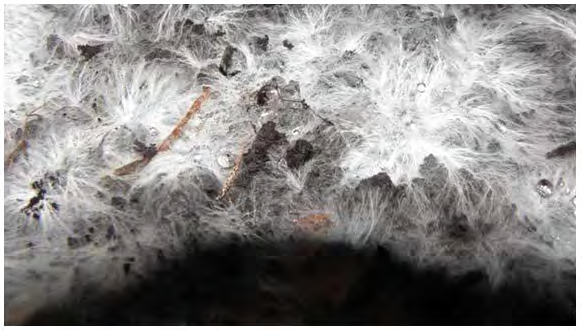
Mushroom Mycelium Fibres
Mushrooms mycelium, (The root structure of the growth), binds together substrate materials as it grows, offering opportunities for composite development. Mycelium composites were developed using edible mushroom species alongside other natural materials. Four mushroom species (Reishi, oyster, king oyster, and yellow oyster) were tested on two fabric levels (with or without a natural fabric mat). Scanning electron microscopy images confirmed mycelium growth within the composite and around the substrates. Two-way analysis of variance tests found that both species and fabric significantly affected the density, and the species significantly affected the compressive strength. A positive and significant linear relationship was found between density and compressive strength, with higher density leading to higher compressive strength. The compressive strength of mushroom mycelium composites, especially those made from king oyster mycelium, provides opportunities for renewable and biodegradable non-hazardous materials [32].
Mushroom Mycelial-Based Leather
The growing need of the industry for alternative materials and products that are biodegradable and derived from renewable resources has recently led researchers from varied fields to search for more sustainable alternatives, and develop natural biocomposites (Such as packaging, building and insulation materials, leather-like, textile and transparent edible films), to replace varied petroleum-based products in order to reduce the intolerable stress on the planet environment [29]. Sustainable leather substitutes are made from mushroom-based material, an environmentally friendly (Fully biodegradable) alternative to bovine leather. Mycelium-based leather was derived from the fruiting body of Fomitella spp. and Phellinus ellipsoideus (Figures 2 & 3). Mushroom mycelial-based leather can replace bovine leather, such as expanded synthetic leather materials. This new future strategy reduces the health and environmental risks associated with the production of bovine leather and, alternative to petroleum-based polymeric foam. It has become the current highlight in biomaterial engineering for zero pollution and renewability during the formation and treatment process. Mycelium-based leather offers a promising solution as a ‘green material’ for the environmental problem caused by the rapid population. Recently, mushroom mycelial have shown favourable characteristics for the development of sustainable biomaterials [29, 34]. These types include mycelial bio-composites, mushroom leather, foams, mycoboard, and mycoflex. Mushroom mycelium is whitish brown, leathery, resistant to puncture, and shows different physical and mechanical characteristics. However, Mycelia-based leather can be produced utilizing agro-waste substrates, lignocellulosic materials. That may be low-cost, eco-friendly, and free from hazardous reagents and chemicals [35, 36, 37].
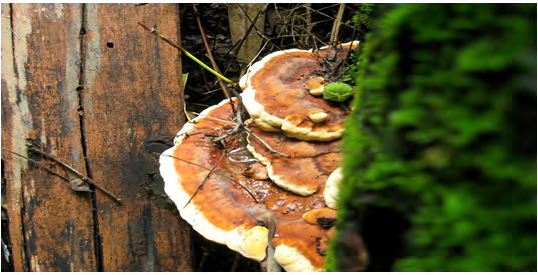
![Figure 3: Phellinus Sp. mushroom. Cited in: http://www. stridvall.se/fungi/gallery/Phellinus/F30A7054 & https:// www.inaturalist.nz/photos/58840332 Mushroom leather does not require harmful chemicals, and does not depend on but may reuse post-consumer waste (Figure 4). It takes three years to raise cattle to a decent size to get one piece of leather while mushrooms grow at an exponential rate, so, it takes only a couple of weeks for the fungi to consume its substrate completely [31]. Also, mushroom leather is very flexible, and it is possible to make its surface look like any animal skin and create different patterns, colours, and textures that regular leather would not allow you to do. Companies now are working to produce higher volumes from mushroom leather with low cost than other artificial leather [31].](/fulltextimages/8201/fig_3.png)
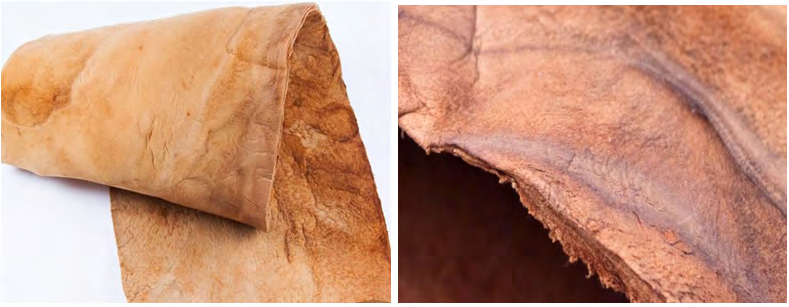
Figure 3: Phellinus Sp. mushroom. Cited in: http://www. stridvall.se/fungi/gallery/Phellinus/F30A7054 & https:// www.inaturalist.nz/photos/58840332 Mushroom leather does not require harmful chemicals, and does not depend on but may reuse post-consumer waste (Figure 4). It takes three years to raise cattle to a decent size to get one piece of leather while mushrooms grow at an exponential rate, so, it takes only a couple of weeks for the fungi to consume its substrate completely [31]. Also, mushroom leather is very flexible, and it is possible to make its surface look like any animal skin and create different patterns, colours, and textures that regular leather would not allow you to do. Companies now are working to produce higher volumes from mushroom leather with low cost than other artificial leather [31].
Conclusion
Leather substitutes can be derived from mycelium (Mushroom mycelium), the vegetative growth of filamentous fungi. These chitinous polymer mats can then be physically and chemically treated to produce fabrics that visually and to the touch look like both bovine and synthetic leather and exhibit comparable mechanical and tactile material properties. In addition to being more environmentally sustainable to produce than leather and its synthetic alternatives pure. Mushroom mycelium-biomass-based leather substitutes are also biodegradable at the end of their service life and cheap to manufacturers. The vegan community is also likely to find fungi-derived leather alternatives to be more acceptable than other leather products. And this new bio-material will play a considerable role in the future of environmentally responsible fabrics.
References
-
Elkhateeb WA, Daba GM, Thomas PW, Wen TC (2019) Medicinal mushrooms as a new source of natural therapeutic bioactive compounds. Egypt Pharmaceu J 18(2): 88-101.
-
Elkhateeb WA, Daba GM, Elnahas M, Thomas P, Emam M (2020) Metabolic profile and skin-related bioactivities of Cerioporus squamosus hydromethanolic extract. Biodiversitas J Biological Div 21(10).
-
Elkhateeb WA, Daba G (2020) The endless nutritional and pharmaceutical benefits of the Himalayan gold, Cordyceps; Current knowledge and prospective potentials. Biofarmasi J Nat Prod Biochem 18(2): 70-77.
-
Elkhateeb WA, Daba GM (2020) Termitomyces Marvel Medicinal Mushroom Having a Unique Life Cycle. Open Access Journal of Pharmaceutical Research 4(1): 1-4.
-
Daba GM, Elkhateeb W, ELDien AN, Fadl E, Elhagrasi A, et al. (2020) Therapeutic potentials of n-hexane extracts of the three medicinal mushrooms regarding their anti- colon cancer, antioxidant, and hypocholesterolemic capabilities. Biodiversitas Journal of Biological Diversity 21(6): 2437-2445.
-
Elkhateeb WA (2020) What medicinal mushroom can do?. Chem Res J 5(1): 106-118.
-
Elkhateeb WA, Daba GM, Elmahdy EM, Thomas PW, Wen TC, et al. (2019) Antiviral potential of mushrooms in the light of their biological active compounds. ARC J Pharmac Sci 5(2): 45-49.
-
El-Hagrassi A, Daba G, Elkhateeb W, Ahmed E, El-Dein AN, et al. (2020) In vitro bioactive potential and chemical analysis of the n-hexane extract of the medicinal mushroom, Cordyceps militaris. Malays J Microbiol 16(1): 40-48.
-
Elkhateeb WA, Daba GM, El-Dein AN, Sheir DH, Fayad W, et al. (2020) Insights into the in-vitro hypocholesterolemic, antioxidant, antirotavirus, and anticolon cancer activities of the methanolic extracts of a Japanese lichen, Candelariella vitellina, and a Japanese mushroom, Ganoderma applanatum. Egyptian Pharmaceutical Journal 19(1): 67-73.
-
Elkhateeb WA, Elnahas MO, Thomas PW, Daba GM (2019) To Heal or Not to Heal? Medicinal Mushrooms Wound Healing Capacities. ARC Journal of Pharmaceutical Sciences 5(4): 28-35.
-
Elkhateeb WA, Daba GM, Elnahas, MO, Thomas PW (2019) Anticoagulant capacities of some medicinal mushrooms. ARC J Pharma Sci 5(4): 1-9.
-
Elkhateeb W, Elnahas MO, Paul W, Daba GM (2020) Fomes fomentarius and Polyporus squamosus models of marvel medicinal mushrooms. Biomed Res Rev 3: 119.
-
Elkhateeb WA, Daba GM (2021) Mycotherapy of the good and the tasty medicinal mushrooms Lentinus, Pleurotus, and Tremella. Journal of Pharmaceutics and Pharmacology Research 4(3): 1-6.
-
Elkhateeb WA, Daba GM (2021) The Fascinating Bird’s Nest Mushroom, Secondary Metabolites and Biological Activities. International Journal of Pharma Research and Health Sciences 9(1): 3265-3269.
-
Elkhateeb WA, Daba GM, Gaziea SM (2021) The Anti- Nemic Potential of Mushroom against Plant-Parasitic Nematodes. Open Access Journal of Microbiology & Biotechnology 6(1): 1-6.
-
Elkhateeb WA, Elnahas MO, Thomas PW, Daba GM (2020) Trametes Versicolor and Dictyophora Indusiata Champions of Medicinal Mushrooms. Open Access Journal of Pharmaceutical Research 4(1): 1-7.
-
Elkhateeb WA, Daba G (2020) The endless nutritional and pharmaceutical benefits of the Himalayan gold, Cordyceps; Current knowledge and prospective potentials. Biofarmasi J Nat Prod Biochem 18(2): 70-77.
-
Thomas PW, Elkhateeb WA, Daba GM (2020) Chaga (Inonotus obliquus): a medical marvel but a conservation dilemma?. Sydowia 72: 123-130.
-
Thomas P, Elkhateeb WA, Daba GM (2021) Industrial Applications of Truffles and Truffle-like Fungi. Advances in Macrofungi, CRC Press, pp: 82-88.
-
Elkhateeb W, Thomas P, Elnahas M, Daba G (2021) Hypogeous and Epigeous Mushrooms in Human Health. Advances in Macrofungi, CRC Press, pp: 7-19.
-
Elkhateeb W, Elnahas M, Daba G (2021) Infrequent Current and Potential Applications of Mushrooms. Advances in Macrofungi, CRC Press, pp: 70-81.
-
Elkhateeb WA, El Ghwas DE, Gundoju NR, Somasekhar T, Akram M, et al. (2021) Chicken of the Woods Laetiporus Sulphureus and Schizophyllum Commune Treasure of Medicinal Mushrooms. Open Access Journal of Microbiology & Biotechnology 6(3): 1-7.
-
Elkhateeb WA, Daba GM (2021) Highlights on Unique Orange Pore Cap Mushroom Favolaschia Sp. and Beech Orange Mushroom Cyttaria sp. and Their Biological Activities. Open Access Journal of Pharmaceutical Research 5(3): 1-6.
-
Elkhateeb WA, Daba GM (2021) Highlights on the Wood Blue-Leg Mushroom Clitocybe Nuda and Blue-Milk Mushroom Lactarius Indigo Ecology and Biological Activities. Open Access Journal of Pharmaceutical Research 5(3): 1-6.
-
Elkhateeb WA, Daba GM (2021) Highlights on the Golden Mushroom Cantharellus cibarius and unique Shaggy ink cap Mushroom Coprinus comatus and Smoky Bracket Mushroom Bjerkandera adusta Ecology and Biological Activities. Open Access Journal of Mycology & Mycological Sciences 4(2): 1-8.
-
Thomas PW, Elkhateeb WA, Daba G (2019) Truffle and truffle-like fungi from continental Africa. Acta mycological 54(2): 1-15.
-
ALKolaibe AG, Elkhateeb WA, Elnahas MO, El-Manawaty M, Deng CY, et al. (2021) Wound Healing, Anti-pancreatic Cancer, and α-amylase Inhibitory Potentials of the Edible Mushroom, Metacordyceps neogunnii. Research Journal of Pharmacy and Technology 14(10): 5249-5253.
-
Elkhateeb WA, Daba GM (2019) The amazing potential of fungi in human life. ARC J Pharma Sci AJPS 5(3): 12-16.
-
Sujarit K, Suwannarach N, Kumla J, Lomthong T (2021) Mushrooms: Splendid Gifts for the Cosmetic Industry. Chiang Mai J Sci 48(3): 699-725.
-
Jones M, Gandia A, John S, Bismarck A (2020) Leather- like material bio-fabrication using fungi. Nature Sustainability 4: 9-16.
-
Kavanagh K (2005) Fungi: Biology and Applications, 3rd (Edn.), John Wiley & Sons.
-
Webster J, Weber R (2007) Introduction to Fungi, 3rd (Edn.), Cambridge University Press, pp: 875.
-
Jillian S, Huantian C, Kelly C (2020) Development of Mushroom Mycelium Composites for Footwear Products 38(2): 119-133.
-
Elsacker E, Vandelook S, Brancart J, Peeters E, De Laet L (2019) Mechanical, physical and chemical characterisation of mycelium-based composites with different types of lignocellulosic substrates. PLoS ONE 14(7): e0213954.
-
Bustillos J, Loganathan A, Agrawal R, Gonzalez B, Perez M, et al. (2020) Uncovering the mechanical, thermal, and chemical characteristics of biodegradable mushroom leather with intrinsic antifungal and antibacterial properties. ACS Appl Bio Mater 3(5): 3145-3156.
-
Attias N, Danai O, Ezov N, Tarazi E, Grobman YJ (2017) Developing novel applications of mycelium based bio-composite materials for design and architecture. Building with Bio-based Materials: Best practice and Performance Specification, pp: 1-10.
-
Raman J, Kim DS, Shin HJ (2021) Microfabrication and mycelial-based leather production from mushrooms. Mushroom 25(2): 20-20.
- Diversity of Candida sp and Antifungal Susceptibility Patterns in Digestive Candidiasis among People Living with HIV in CHU of Libreville, Gabon
- Vulvovaginal candidiasis: Retrospective study (2019- 2021) at the Centre Hospitalier National de Pikine, Suburban Dakar, Senegal
- Identification of Environmental Fungal Species in Clinical Services of University Hospital of Angre, Abidjan (Cote d’Ivoire)
- New Location of some Gasteroid Basidiomycetes in Western Kazakhstan
- Evaluation of Various Extracellular Enzymes of Ectomycorrhizal Mushrooms
- Morphology and Phylogeny of Lactarius Wallichianae sp. nov and Xerula magnispora sp. nov. from India