
Bioactive Potential of some Fascinating Edible Mushrooms Macrolepiota, Russula, Amanita, Vovariella and Grifola as a Treasure of Multipurpose Therapeutic Natural Product
Introduction
In the ancient books of traditional medicines, medicinal mushrooms were occupying the headlines, and the main topics were confirming to their miraculous therapeutic powers. Hence, mushrooms have gained a lot of attention as a functional food and for the development of drugs and nutraceuticals [1, 2, 3, 4, 5]. Mushrooms are small pharmaceutical factories, manufacturing various promising biologically active chemical compounds. These compounds exist in the mushroom fruit bodies, cultured mycelium, and culture broth. The presence of various phenolic compounds, polysaccharides, terpenoids, β-glucans, schizophyllan, ganoderic acid, and other compounds, is the reason for their potent biological activities, much more biological activities are discovered every day [6, 7, 8, 9, 10, 11, 12, 13, 14, 15]. The bioactive compound like polysaccharide, protein, lipids, fiber, and some low molecular weight compounds like alkaloids, terpenoids, lactones, lectins, and phenolic substances are involved in many diseases as therapeutic mediators and also have been shown a major landmark for the cure of diabetes [16, 17, 18, 19, 20, 21, 22, 23, 24, 25, 26, 27, 28, 29].
Mushrooms may not come to mind as a gut-friendly food, but they are ranked among the best foods for promoting a healthy microbiome. Mushrooms are a rich source of various prebiotic fibers including chitin, hemicellulose, β and α-glucans, mannans, xylans, and galactans. The prebiotics not only help to mitigate pathogenic organisms in the gut, but also stimulates the growth of beneficial microbiota [30]. Prebiotic fiber found in mushrooms, β glucans, also build immunity to help modulate inflammation and optimize the gut environment. For instance, reishi, an edible medicinal mushroom, is known for its ability to promote immunity. Its rich supply of polysaccharides including β-d-glucan, terpenoids, and total phenols have given it the ability to increase the quantity of Bifidobacteria, Lactobacillus, Roseburia, and Lachnospiraceae [30]. Mushrooms have been consumed since earliest history (Ancient Greeks and Romans). For centuries, the Chinese culture has treasured mushrooms as a health food, for elongate of life. They have been part of the human culture for thousands of years and have considerable interest in the most important civilizations in history [31]. Today, mushrooms are popular valuable foods because they are low in calories, carbohydrates, fat, and sodium: also, they are cholesterol-free. Also, mushrooms provide important nutrients, including selenium, potassium, riboflavin, niacin, vitamin D, proteins, and fiber. All together with a long history as food source, mushrooms are important for their healing capacities and properties in traditional medicine [31].
It has reported beneficial effects for health and treatment of some diseases. Many nutraceutical properties are described in mushrooms, such as prevention or treatment of Parkinson, Alzheimer, hypertension, and high risk of stroke. They are also utilized to reduce the probability of cancer attack [32]. Mushrooms act as antibacterial, immune system enhancer and cholesterol lowering agents; additionally, they are important sources of bioactive compounds. As a result of these properties, some mushroom extracts are used to promote human health and are found as dietary supplements [33].
Parasol Mushroom Macrolepiota Procera Discrption and Ecology
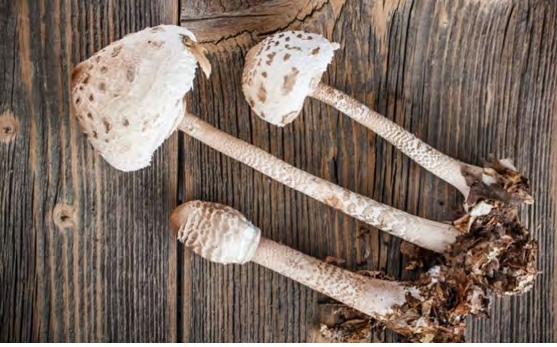
Macrolepiota procera belonging to, Phylum: Basidiomycota; Class: Agaricomycetes; Order: Agaricales; Family: Agaricaceae. Cap: Initially spherical and pale brown with a darker brown area near the crown that breaks into scales, the cap of Macrolepiota procera expends until it is flat with a small central bump, known as an umbo. The cap flesh is white and does not change significantly when cut. The cap diameter at maturity ranges between 10 and 25cm. Gills: The broad, crowded gills of the Parasol Mushroom are white or pale cream and free, terminating some distance from the stipe. Stem a large double-edged ring persists around the stem of Macrolepiota procera but often becomes movable and falls to the base. The stem is smooth and white or cream but decorated with small brown scales that often give it a banded, snakeskin appearance. Inside the stem the tough white fibrous flesh is loosely packed, and sometimes the stem is hollow. Bulbous at the base, the stems of Macrolepiota procera tapers inwards slightly towards the apex; the diameter ranges from 1 to 1.5cm (to 2.5cm across the bulbous base), and the stem height can be up to 30 cm. Spores: Ellipsoidal, smooth, thick-walled; 12- 18 x 8-12µm; with a small germ pore. Spore print White or very pale cream. Odour not distinctive; taste sweet. Parasol mushrooms are saprobic (Figure, 1). They are most common in woodland clearings and in grassy areas next to woodland, growing alone or in small scattered groups; also occasionally in permanent pasture and in stable sand dunes as well as (although rarely) on disturbed ground such as in gardens and allotments [34, 35].
Macrolepiota Procera Biological Activities
Ćirić A, et al. [36], investigate the biological properties of three wild growing and edible Macrolepiota sp. (Macrolepiota mastoidea, Macrolepiota rhacodes and Macrolepiota procera) from Serbia. The results revealed that the Macrolepiota mushroom have a low caloric value; free sugars such as mannitol and trehalose were identified; oxalic and malic acids were predominant organic acids, while p-hydroxybenzoic and p-coumaric acids were identified as the main phenolic compounds. Macrolepiota species were a rich source of polyunsaturated fatty acids, which dominated over monounsaturated and saturated fatty acids. Regarding biological properties, all Macrolepiota three species exhibited antioxidant potential, antimicrobial potential and cytotoxic activity within the different tumour cell lines tested. Ćirić A, et al. [36], reported that Macrolepiota species are indeed functional foods, due to the fact that they are edible, consumable and hold different pharmacological activities. Erbiai EH, et al. [37], investigated the chemical composition, bioactive compounds, and antioxidant activity of two wild edible mushrooms, the honey fungus (Armillaria mellea) and the parasol mushroom (Macrolepiota procera), collected from Northern Morocco and Portugal, and resulted that Macrolepiota procera and Armillaria mellea were chosen due to their edibility, nutraceutical, and medicinal properties. Bioactive compounds (ascorbic acid, tannin, total phenolic, total flavonoid, β-carotene, and lycopene were isolated from Macrolepiota procera and Armillaria mellea fruiting buddies by methanol. Methanolic extracts shown a strong antioxidant capacity [37].
Crab Brittle Gill Mushroom Russula Xerampelina Discrption and Ecology
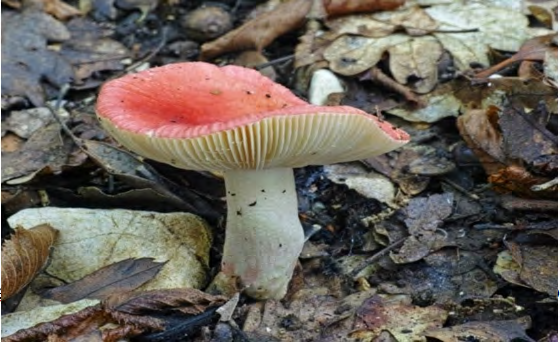
Russula xerampelina belonging to, Phylum: Basidiomycota; Class: Agaricomycetes; Order: Russulales; Family: Russulaceae. This mushroom smell like cooked crab, the smell like cooked crab. Cap: Various shades of reddish purple, wine, cinnamon, brown or ochre, often in blotches, usually darker towards the centre; peels only 1/4 to centre; irregularly convex, developing a shallow central depression; margin eventually striate; 7 to 15cm across. Gills: Cream, turning ochre; adnexed; moderately distant. Stem: White flushed with red, slowly discolouring brown when bruised; cylindrical, occasionally with a slightly clavate base; 4 to 10cm long and 1 to 3cm in diameter. Spores: Ellipsoidal, 8-11 x 6.5- 8μm (excluding warts); ornamented with mainly isolated warts up to 0.8μm tall with just a few connecting lines but not forming a closed mesh-like network (reticulum). Spore print: Ochre Odour of boiled shellfish (Figure 2).
The Crab Brittle gill occurs in pine and mixed coniferous forests, but this species (or perhaps more likely other brittle gills in the Russula xerampelina complex) is also reported occasionally from broadleaf woodland. In common with other members of the Russulaceae, Russula xerampelina is an ectomycorrhizal mushroom [34, 35].
Russula Xerampelina Biological Activities
Different species from the genus Russula from Serbia have antioxidant, antibacterial, anti-biofilm, and cytotoxic activities. Russula species were identified as being rich sources of carbohydrates and of low caloric value. Mannitol was the most abundant free sugar and quinic and malic acids the major organic acids detected [38]. The wild mushroom Russula species showed antioxidant potential, using assays of reducing power, chelating effect on ferrous ions, scavenging effect on hydroxyl free radicals, and 2,2-diphenyl- 1-picrylhydrazyl (DPPH) radical scavenging activity. Russula mushroom contained very useful phytochemicals such as phenolics, flavonoids, ergosterol, and β-carotene [39]. Russula xerampelina extract was shown to be inhibitory to the growth of Plasmodium falciparum, a pyrimethamine- resistant malarial parasite [40]. Russula species, in particular, are still largely unexplored, considering their great number and worldwide distribution.
Charcoal Burner Mushroom Russula Cyanoxantha Discrption and Ecology
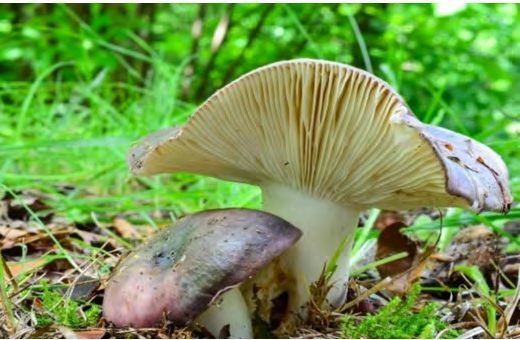
Russula cyanoxantha belonging to, Phylum: Basidiomycota; Class: Agaricomycetes; Order: Russulales; Family: Russulaceae. Cap: 5 to 15cm in diameter, the caps are almost spherical at first, becoming convex and later flattening with a slight central depression; peeling to 1/2 way to centre. Beneath the cuticle, which varies in colour from purple and brown to grey and (in Russula cyanoxantha var. peltereaui) green and is darker towards the centre, the flesh of this mushroom is white and firm. Gills: The greasy white, crowded, adnexed to very slightly decurrent gills are sometimes forked; they are unusually pliable for a Russula species. The gills of Russula cyanoxantha are unusually pliable for a Russula species. Stem: 15 to 30mm in diameter, cylindrical and 5 to 10cm tall, the stems are white, occasionally tinged with purple. The stem flesh is also white, and there is no stem ring. Spores Ellipsoidal, 7-9 x 5-6μm (excluding spines); ornamented with blunt isolated warts up to 0.5μm tall. The spores shown on the left were stained using Melzer’s Reagent, which makes the warts more clearly visible. Spore print: White. No distinctive odour and with mild taste (Figure 3). Particularly common in broadleaf woodland containing oaks and Beech but also found with conifers. In common with other members of the Russulaceae, Russula cyanoxantha is an ectomycorrhizal mushroom [35].
Russula Cyanoxantha Biological Activities
Antioxidant and antimicrobial activity of the acetone and methanol extracts of the mushrooms Amanita rubescens and Russula cyanoxantha were evaluated by Kosanic M, et al. [41]. Antioxidant activity was evaluated by free radical scavenging, reducing power activity and determination of phenolic content. As a result of the study acetone extracts from Russula cyanoxantha was more powerful antioxidant activities. Moreover, the tested extracts had effective reducing power. The antimicrobial activity was estimated by determination of the minimal inhibitory concentration by using microdilution plate method. Generally, Russula cyanoxantha mushroom extract had relatively strong antimicrobial activity against the tested microorganisms [41]. Russula cyanoxantha mushroom appear to be good natural sources of antioxidants and could be of significance in human therapy, animal and plant diseases. From different previous studies indicated that Russula cyanoxantha wild edible mushrooms can be used as nutraceuticals/functional foods to promote health benefits. Further studies should be done on the isolation and characterization of new compounds from Russula mushroom, which are responsible for antioxidant and antimicrobial activity [42].
Caesars Mushroom Amanita Caesarea Discrption and Ecology
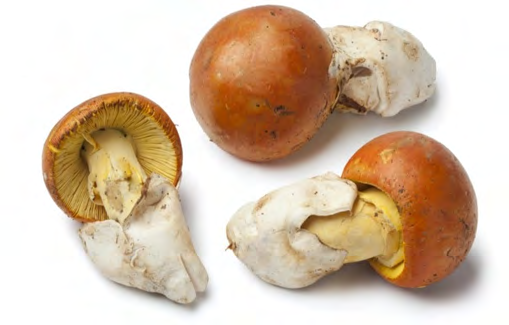
Amanita caesarea belonging to, Phylum: Basidiomycota; Class: Agaricomycetes; Order: Agaricales; Family: Amanitaceae. Grow in Southern Europe and Northern Africa. Cap: The caps of Amanita caesarea are orange, occasionally with irregular veil fragments but more often without; initially convex, flattening; 6 to 18cm across are with a striate margin. Finding a fully-expanded cap without at least one marginal split is unusual, as these warm-climate mushrooms tend to lose moisture content quite rapidly unless in deep shade. It is at the ‘egg’ stage that Caesar’s Mushroom is most prized as an edible mushroom. The beautiful young cap shown on the left is closed by the stem ring, making an almost perfectly spherical sealed delicacy. Generally if we intend eating wild mushrooms we must be aware that nearly all species must be well cooked before they are safe to eat. Some researchers report that Amanita caesarea is edible even in its uncooked state, but others counsel against eating them until they have been cooked thoroughly. Gills: The gills of Caesar’s Mushroom are yellow-orange, free and crowded. tem The stems of Amanita caesarea are pale to mid orange; often rough with attached veil fragments; large, pale orange ring; 5 to 12cm long, 1.5 to 2.5cm diameter; stem base is covered with a white bag-like volva. Spores: Ellipsoidal, 10-14 x 6-11µm; inamyloid. Spore print: White (Figure 4). Amanita caesarea is an ectomycorrhizal fungus; it fruits under oaks in mixed woodland [43, 44].
Amanita Caesarea Biological Activities
As a result of many literature researches, Amanita species have been reported to have antioxidant, anti- bacterial, antifungal, antiviral, anticancer, antitumor, anti- inflammatory, pesticidal activity, anti-acetylcholinesterase, larvicidal, esterolytic activity and cytotoxic properties [45, 46]. Many researches resulted that the Amanita Caesarea extracted polysaccharide exhibits strong antioxidant activity, thus, it may be a useful natural product antioxidant [47]. Amanita Caesarea, an edible mushroom found mainly in Asia and southern Europe, has been reported to show good antioxidative activities and other activities [46].
Straw Mushroom Vovariella Volvacea
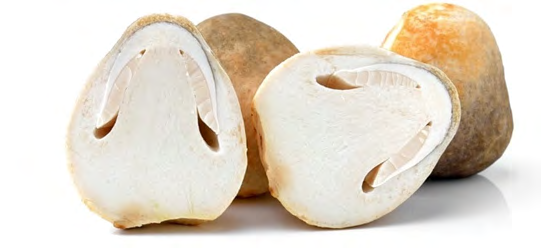
Vovariella volvacea belonging to, Phylum: Basidiomycota; Class: Agaricomycetes; Order: Agaricales; Family: Pluteaceae. Vovariella volvacea is cultivated in straw which is where it gets its name. These mushrooms are quite popular in Asia. This distinctive species of Volvariella is apparently not native to North America, but it has been introduced to our continent by human activity and can be found in woodchips, compost, greenhouses, and gardens when conditions are right. Volvariella volvacea is a robust species for the genus, featuring a grayish brown cap that is streaked with silky fibrils. The prominent volva at the base of the stem is brown to nearly black. Like other species of Volvariella, it features a brownish pink spore print and, consequently, gills that become brownish pink as they mature. Ecology: Saprobic; growing gregariously or in clusters; found in woodchips, greenhouses, gardens, compost piles, and similar locations; capable of appearing year-round, depending on climate but usually found in summer when outdoors; apparently widely distributed (in introduced settings) in North America, but more common east of the Great Plains. The illustrated and described collection is from Illinois (Figure 5). Cap: 5-12 cm; conic when young, expanding to broadly conic, becoming broadly convex or bell-shaped; dry; radially streaked with silky hairs; gray to brownish gray or grayish brown or nearly black when young, with a paler marginal area; soft; the margin not lined, but often splitting with age. Gills: Free from the stem; close or nearly crowded; short-gills frequent; white becoming pink and eventually brownish pink. Stem: 6-12 cm long; 1-1.5 cm thick; equal, or tapering gradually to apex; dry; whitish or brownish; silky; the base encased in a thick, finely velvety, sack-like volva that is brownish gray to nearly black above and whitish below; volva extending 2-6 cm high. Odor and Taste: Not distinctive. Chemical Reactions: KOH negative on cap surface. Spore Print: Brownish pink [48].
Vovariella volvacea Biological Activities
The antioxidant and antitumor properties of cultured mycelium of the medicinal mushroom Volvariella volvacea (Straw mushroom) were investigated by Mathew J, et al. [49]. Ethanolic extract of the Volvariella volvacea mycelium showed marked hydroxyl radical scavenging and lipid peroxidation-inhibiting activities and the extract also showed significant DPPH radical scavenging activity and ferric reducing antioxidant power. The extract showed strong antitumor activity against both ascites and solid tumors. The results indicate that paddy straw mushroom mycelium possess significant antioxidant and antitumor properties [49]. Common available edible mushrooms of the genus Volvariella, namely Volvariella diplasia, Volvariella bombycina and Volvariella volvacea are known as straw mushroom. This edible mushroom possesses excellent nutritional value with more protein than any other vegetables. A diversity of structures has been proposed for several polysaccharides isolated from different Volvariella straw mushrooms in different extraction medium and exhibit different medicinal properties (Antibacterial, anticancer, antioxidant, antitumor, cytotoxic, anti-HIV and hypocholesterolemic activities) [50].
Maitake Mushroom Grifola Frondosa
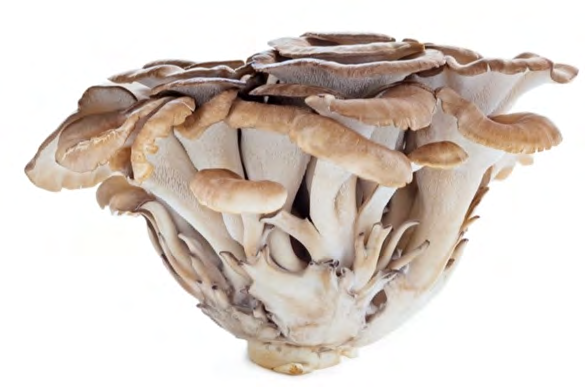
Maitake mushroom or Grifola frondosa has a weird ribbon-like appearance. Belonging to Phylum:
Basidiomycota; Class: Agaricomycetes; Order: Polyporales; Family: Meripilaceae. In circular tiers from a common branching stem, the tongue-like fronds of this soft polypore form a cauliflower-like rosette 20 to 50cm across. Individual fronds are 4 to 10cm across and 5 to 10mm thick, and they vary from tan to olive, grey or cream in undulating concentric zones. Very occasionally Grifola frondosa occurs in an almost pure white form. Tubes and Pores: The white tubes are 2 to 3mm deep and usually rounded; they terminate in pale cream pores that are decurrent to the stem. Spores Broadly ellipsoidal, smooth, 5-7 x 3.5-5μm; in amyloid. Spore print: White (Figure 6). Pleasant sweet odour when young. At the bases of oak trees and occasionally other hardwoods. Summer and autumn [34].
Grifola Frondosa Biological Activities
Grifola frondosa, a polypore fungus that grows at the base of trees, is an edible and medicinal mushroom with a large fruiting body characterized by overlapping caps. Japanese scholars found that Grifola frondosa polysaccharide or D-fraction is the major biologically active ingredient, which is a protein-bound glucan, consisting of β-glucan (either β-1,6-linked glucan with β-1,3 branches or β-1,3- linked glucan branched with β-1,6 glucosides [51]. Grifola frondosa polysaccharides with different molecular weight and monosaccharide compositions can be obtained by using different extraction methods, such as hot water extraction, acid or alkaline extraction, or microwave extraction methods from the fruiting bodies, mycelia or the fermentation broth [51]. Numerous studies have confirmed that the biological functions of Grifola frondosa extract include immune regulation, antitumor, anti-aging, antivirus and reducing blood lipid activities. With better purification methodologies and with a better understanding of mechanisms of action Grifola frondosa has the potential to become an important biological modifier and an immune modulator [51]. Grifola frondosa (Dicks.) is a widely consumed edible and medicinal fungus; Ancient books record that it can boost qi and fortify the spleen, moisten the lung and protect the liver. Modern people mainly use it to assist in the treatment of diabetes mellitus and various cancers. Over the past three decades, Grifola frondosa polysaccharides were shown to possess various promising bioactivities, mainly including antitumor and immunomodulation, anti-oxidation and hepatoprotection, anti-hyperglycemia, and meanwhile can effectively act on the skin and hematopoietic stem cells [52].
Conclusion
Many studies conducted on Macrolepiota; Russula; Amanita; Vovariella and Grifola, genera are represented in the current review and showed that these edible mushrooms exhibit the potential as a vital therapeutic food. However, more studies for deep exploration are still required. Macrolepiota; Russula; Amanita; Vovariella and Grifola species exerted some vital biological activities such as Antibacterial, anticancer, antioxidant, antitumor, cytotoxic, anti-HIV, hypocholesterolemic activities and others. Further investigation is needed to explain the different mechanisms of action of these wild edible mushrooms and their nutritional values. The current review recommends further exploration to get a full profile of the active components obtained from these genera.
References
-
Elkhateeb WA, Daba GM, Thomas PW, Wen TC (2019) Medicinal mushrooms as a new source of natural therapeutic bioactive compounds. Egyptian Pharmaceutical Journal 18(2): 88-101.
-
Elkhateeb WA, Daba GM, Elnahas M, Thomas P, Emam M, et al. (2020) Metabolic profile and skin-related bioactivities of Cerioporus squamosus hydromethanolic extract. Biodiversitas Journal of Biological Diversity 21(10).
-
Elkhateeb WA, Daba G (2020) The endless nutritional and pharmaceutical benefits of the Himalayan gold, Cordyceps; Current knowledge and prospective potentials. Smujo Career Register Login Asian Journal of Natural Product Biochemistry 18(2): 70-77.
-
Elkhateeb WA, Daba GM (2020) Termitomyces Marvel Medicinal Mushroom Having a Unique Life Cycle. Open Access Journal of Pharmaceutical Research 4(1): 1-4.
-
Daba GM, Elkhateeb W, Negm El-Dien A, Fadl E, Elhagrasi A, et al. (2020) Therapeutic potentials of n-hexane extracts of the three medicinal mushrooms regarding their anti-colon cancer, antioxidant, and hypocholesterolemic capabilities. Biodiversitas Journal of Biological Diversity 21(6): 2437-2445.
-
Elkhateeb WA (2020) What medicinal mushroom can do?. Journal of Chemical Research 5(1): 106-118.
-
Elkhateeb WA, Daba GM, Elmahdy EM, Thomas PW, Wen TC, et al. (2019) Antiviral potential of mushrooms in the light of their biological active compounds. ARC J Pharmac Sci 5(2): 45-49.
-
Daba G, Elkhateeb W, Ahmed E, Fayad W, Wen T, et al. (2020) In vitro bioactive potential and chemical analysis of the n-hexane extract of the medicinal mushroom. Malaysian Journal of Microbiology 16(1): 40-48.
-
Elkhateeb WA, Daba GM, El-Dein AN, Sheir DH, Fayad W, et al. (2020) Insights into the in-vitro hypocholesterolemic, antioxidant, antirotavirus, and anticolon cancer activities of the methanolic extracts of a Japanese lichen, Candelariella vitellina, and a Japanese mushroom, Ganoderma applanatum. Egyptian Pharmaceutical Journal 19(1): 67-73.
-
Elkhateeb WA, Elnahas MO, Thomas PW, Daba GM (2019) To Heal or Not to Heal? Medicinal Mushrooms Wound Healing Capacities. Journal of Pharmaceutical Sciences 5(4): 28-35.
-
Elkhateeb WA, Daba GM, Elnahas MO, Thomas PW, et al. (2019) Anticoagulant capacities of some medicinal mushrooms. ARC J Pharma Sci 5 (4):1-9.
-
Elkhateeb W, Elnahas MO, Paul W, Daba GM (2020) Fomes Fomentarius And Polyporus Squamosus Models Of Marvel Medicinal Mushrooms. Biomedical Research And Reviews 3: 119.
-
Elkhateeb WA, Daba GM (2021) Mycotherapy of the good and the tasty medicinal mushrooms Lentinus, Pleurotus, and Tremella. Open Access Journal of Mycology & Mycological Sciences 4(2): 1-8.
-
Elkhateeb WA, Daba GM (2021) The Fascinating Bird’s Nest Mushroom, Secondary Metabolites and Biological Activities. International Journal of Pharma Research and Health Sciences 9 (1): 3265-3269.
-
Elkhateeb WA, Daba GM, Gaziea SM (2021) The Anti- Nemic Potential of Mushroom against Plant-Parasitic Nematodes, Open Access Journal of Microbiology & Biotechnology 6(1): 1-6.
-
Elkhateeb WA, Elnahas MO, Thomas PW, Daba GM (2020) Trametes Versicolor and Dictyophora Indusiata Champions of Medicinal Mushrooms. Pharm Res 4(1): 1-7.
-
Elkhateeb WA, Daba G (2020) The Endless Nutritional and Pharmaceutical Benefits of the Himalayan Gold, Cordyceps; Current Knowledge and Prospective Potentials. Biofarmasi J Nat Prod Biochem 18(2): 70-77.
-
Daba GM, Elkhateeb W, ELDien AN, Fadl E, Elhagrasi A, et al. (2020) Therapeutic Potentials of N-Hexane Extracts of the Three Medicinal Mushrooms Regarding their Anti- Colon Cancer, Antioxidant, and Hypocholesterolemic Capabilities. Biodiversitas 21(6): 2437-2445.
-
Thomas PW, Elkhateeb WA, Daba GM (2020) Chaga (Inonotus Obliquus): A Medical Marvel But A Conservation Dilemma?. Sydowia 72: 123-130.
-
Thomas P, Elkhateeb WA, Daba GM (2021) Industrial Applications of Truffles and Truffle-like Fungi. Advances in Macrofungi. CRC Press, pp: 82-88.
-
Elkhateeb W, Thomas P, Elnahas M, Daba G (2021) Hypogeous and Epigeous Mushrooms in Human Health. Advances in Macrofungi, pp: 7-19.
-
Elkhateeb W, Elnahas M, Daba G (2021) Infrequent Current and Potential Applications of Mushrooms. Advances in Macrofungi, pp: 70-81.
-
Elkhateeb WA, El Ghwas DE, Gundoju NR, Somasekhar T, Akram M, et al. (2021) Chicken of the Woods Laetiporus Sulphureus and Schizophyllum Commune Treasure of Medicinal Mushrooms. J Microbiol Biotechnol 6(3): 1-7.
-
Elkhateeb WA, Daba GM (2021) Highlights on Unique Orange Pore Cap Mushroom Favolaschia Sp. and Beech Orange Mushroom Cyttaria sp and Their Biological Activities. Pharm Res 5(3): 1-6.
-
Elkhateeb WA, Daba GM (2021) Highlights on the Wood Blue-Leg Mushroom Clitocybe Nuda and Blue-Milk Mushroom Lactarius Indigo Ecology and Biological Activities. Pharm Res 5(3): 1-6.
-
Elkhateeb WA, Daba GM (2021) Highlights on the Golden Mushroom Cantharellus cibarius and unique Shaggy ink cap Mushroom Coprinus comatus and Smoky Bracket Mushroom Bjerkandera adusta Ecology and Biological Activities. J Mycol Mycological Sci 4(2): 1-8.
-
Thomas PW, Elkhateeb WA, Daba G (2019) Truffle and truffle-like fungi from continental Africa. Acta Mycol 54(2): 1132.
-
ALKolaibe AG, Elkhateeb WA, Elnahas MO, El-Manawaty M, Deng CY, et. al (2021) Wound Healing, Anti-pancreatic Cancer, and α-amylase Inhibitory Potentials of the Edible Mushroom, Metacordyceps neogunnii. Research Journal of Pharmacy and Technology 14(10): 5249-5253.
-
Elkhateeb WA, Daba GM (2021) The coral mushrooms Ramaria and Clavaria. Studies in Fungi 6(1): 495-506.
-
Jayachandran M, Xiao J, Xu B (2017) A Critical Review on Health Promoting Benefits of Edible Mushrooms through Gut Microbiota. Int j Mol Sci 18(9): 1934.
-
Valverde ME, Hernández-Pérez T, Paredes-López O (2015) Edible mushrooms: improving human health and promoting quality life. Int J Microbiol.
-
Abebaw G (2020) Review on: Nutritional Value and Health Benefits of Edible Mushroom. J Eng App Sci Technol 2(4): 1-2.
-
Chatterjee BA, Patel T (2016) Edible mushroom–a nutritious food improving human health. Int J Clin and Biomed Res 2(1): 34-37.
-
Kirk PM (2008) The dictionary of the Fungi. 10th (Eds.), UK: CABI.
-
Kirk PM, Cannon PF, David JC, Stalpers JA (2001) Ainsworth and Bisby’s Dictionary of the Fungi.
-
Ciric A, Kruljevic I, Stojkovic D, Fernandes A, Barros L, et al. (2019) Comparative investigation on edible mushrooms Macrolepiota mastoidea, M. rhacodes and M. procera: Functional foods with diverse biological activities. Food & function 10(12): 7678-7686.
-
Erbiai EH, Da Silva LP, Saidi R, Lamrani Z, Esteves da Silva JC, et al. (2021) Chemical Composition, Bioactive Compounds, and Antioxidant Activity of Two Wild Edible Mushrooms Armillaria mellea and Macrolepiota procera from Two Countries (Morocco and Portugal). Biomolecules 11(4): 575.
-
Kostić M, Ivanov M, Fernandes Â, Pinela J, Calhelha RC, et al. (2020) Antioxidant Extracts of Three Russula Genus Species Express Diverse Biological Activity. Molecules 25(18): 4336.
-
Chen XH, Xia LX, Zhou HB, Qiu GZ (2010) Chemical Composition and Antioxidant Activities of Russula griseocarnosa sp. nov. Journal of agricultural and food chemistry 58(11): 6966-6971.
-
Lovy A, Knowles B, Labbe R, Nolan L (2000) Activity of edible mushrooms against the growth of human T4 leukemic cancer cells, HeLa cervical cancer cells, and Plasmodium falciparum. Journal of Herbs, Spices & Medicinal Plants 6(4): 49-58.
-
Kosanic M Rankovic B, Dasic M (2013) Antioxidant and antimicrobial properties of mushrooms. Bulgarian Journal of Agricultural Science 19(5): 1040-1046.
-
Panda MK, Das SK, Mohapatra S, Debata PR, Tayung K, et al. (2021) Mycochemicals composition, bioactivities, and phylogenetic placement of three wild edible Russula species from Northern Odisha, India. Plant Biosystems- An International Journal Dealing with all Aspects of Plant Biology 155(5): 1041-1055.
-
Carluccio A (2003) The Complete Mushroom Book. Quadrille.
-
Kibby G (2012) The Genus Amanita in Great Britain. Geoffrey Kibby publisher, pp: 50.
-
Zhu Y, Ding X, Wang M, Hou Y, Hou W, et al. (2016) Structure and antioxidant activity of a novel polysaccharide derived from Amanita Caesarea. Molecular medicine reports 14(4): 3947-3954.
-
Li Z, Chen X, Lu W, Zhang S, Guan X, et al. (2017) Anti- oxidative stress activity is essential for Amanita caesarea mediated neuroprotection on glutamate-induced apoptotic HT22 cells and an Alzheimer’s disease mouse model. Int J Mol Sci 18(8): 1623.
-
Sevindik M, Bal C, Baba H, Akgül H, Selamoğlu Z (2019) Biological activity potentials of Amanita species. In 2nd International Eurasian mycology congress, pp: 80.
-
Kuo M, Methven AS (2014) Mushrooms of the Midwest. University of Illinois Press.
-
Mathew J, Sudheesh N, Rony K, Smina T, Janardhanan K (2008) Antioxidant and antitumor activities of cultured mycelium of culinary-medicinal paddy straw mushroom Volvariella volvacea (Bull.: Fr.) singer (Agaricomycetideae). International Journal of Medicinal Mushrooms 10(2): 139-147.
-
Ghosh K (2020) A review on edible straw mushrooms: A source of high nutritional supplement, biologically active diverse structural polysaccharides. J Sci Res 64(2): 295-304.
-
He Y, Zhang L, Wang H (2019) The biological activities of the antitumor drug Grifola frondosa polysaccharide. Prog Mol Biol Transl Sci 163: 221-261.
-
He X, Wang X, Fang J, Chang Y, Ning N, et al. (2017) Polysaccharides in Grifola frondosa mushroom and their health promoting properties: A review. Int J Biol Macromol 101: 910-921.
- Diversity of Candida sp and Antifungal Susceptibility Patterns in Digestive Candidiasis among People Living with HIV in CHU of Libreville, Gabon
- Vulvovaginal candidiasis: Retrospective study (2019- 2021) at the Centre Hospitalier National de Pikine, Suburban Dakar, Senegal
- Identification of Environmental Fungal Species in Clinical Services of University Hospital of Angre, Abidjan (Cote d’Ivoire)
- New Location of some Gasteroid Basidiomycetes in Western Kazakhstan
- Evaluation of Various Extracellular Enzymes of Ectomycorrhizal Mushrooms
- Morphology and Phylogeny of Lactarius Wallichianae sp. nov and Xerula magnispora sp. nov. from India