
Microbial Manufacturer for Carbohydrate and Their Applications
Carbohydrates (saccharides) are the building units for the synthesis of polymers or complex carbohydrates. Nutrition polysaccharides are sources of energy and they also provide dietary fibers. Exopolysaccharides can be used to form strong, flexible films for the packaging industry. Also, in the manufacturing of detergents, adhesives, paper, paint, food, and textiles. Applications of carbohydrates have expanded in different other fields which have encouraged researchers to study this interesting group of compounds. Hence, this review highlights the nomenclature, classification, structure, biological activities, and different sources of polysaccharides focusing on those from microbial origin.
Introduction
Carbohydrate, a group of naturally occurring substances and the derivatives that are created from them. It was discovered in the early 19th century that materials like wood, starch, and linen are primarily made of molecules with the general formula C6H12O6, which contains atoms of carbon (C), hydrogen (H), and oxygen (O). Other organic molecules with similar formulas were also discovered to have a similar ratio of hydrogen to oxygen. For various carbohydrates, the generic formula Cx(H2O)y, which stands for “watered carbon,” is frequently used. All living creatures need carbohydrates to function, making them one of the most prevalent and abundant organic compounds in nature. Green plants use the process of photosynthesis to convert carbon dioxide and water into carbohydrates. Moreover, a portion of the structure of nucleic acids, which house genetic material, is made up of carbohydrates, making them crucial structural elements and energy sources for living things. In biochemistry, carbohydrates are often called saccharides8, from the Greek sakcharon, meaning sugar, although not all the saccharides are sweet. The simplest carbohydrates are called monosaccharides, or simple sugars. They are the building blocks (monomers) for the synthesis of polymers or complex carbohydrates. Monosaccharides are classified based on the number of carbons in the molecule. The hexose D-glucose is the most abundant monosaccharide in nature. Other very common and abundant hexose monosaccharides are galactose, used to make the disaccharide milk sugar lactose, and the fruit sugar fructose. Two monosaccharide molecules may chemically bond to form a disaccharide. Glycosidic bonds form between hydroxyl groups of the two saccharide molecules. Polysaccharides, also called glycans, are large polymers composed of hundreds of monosaccharide monomers. Unlike mono- and disaccharides, polysaccharides are not sweet and, in general, they are not soluble in water. Like disaccharides, the monomeric units of polysaccharides are linked together by glycosidic bonds. The most biologically important polysaccharides—starch, glycogen, and cellulose—are all composed of repetitive glucose units, although they differ in their structure
General Features
Classification
Although there have been several classification systems for carbohydrates, the four major groups—monosaccharides, disaccharides, oligosaccharides, and polysaccharides—used here are among the most popular.
The location of the carbonyl group, the quantity of carbon atoms presents, and the chiral handedness of a monosaccharide are the three features used to categorize them. In the case of an aldehyde carbonyl group, the monosaccharide is an aldose; in the case of a ketone carbonyl group, it is a ketose. Trioses, tetroses, pentoses, hexoses, and so on are the names given to monosaccharides that contain three carbon atoms, four carbon atoms, five carbon atoms, and so forth [1]. Combining these two classification schemes is common. Aldohexoses include, for instance, glucose, ribose, and fructose, which is an aldopentose. Grapes, other fruits, and honey are the main sources of monosaccharides, often known as simple sugars. The most typical examples have five or six carbon atoms connected together to form a molecule that resembles a chain, though they can have up to nine. The three most significant simple sugars, glucose, fructose, and galactose, share the same molecular formula (C6H12O6) but exhibit distinct properties because of the varied configurations of their atoms, or are isomers, as shown in Figure (1).
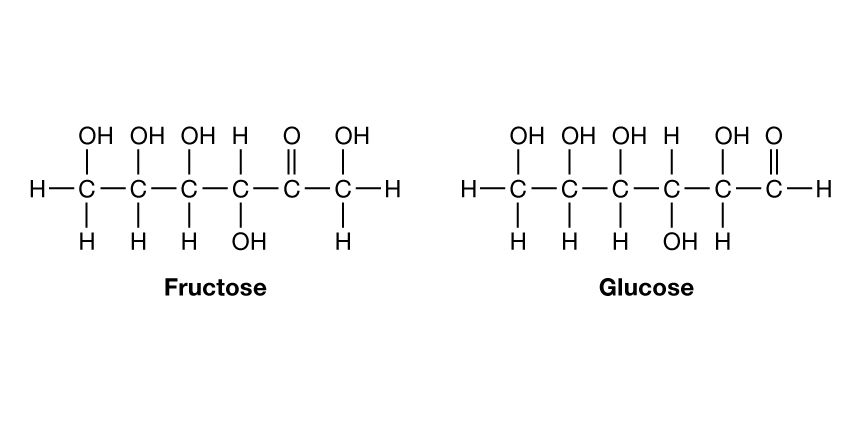
Living creatures are capable of detecting minute changes in structural arrangements, which have an impact on the biological significance of isomeric molecules. For instance, it is well known that different sugars’ levels of sweetness vary depending on how the hydroxyl groups (OH), which make up a portion of the molecular structure, are arranged. The direct relationship between taste and any particular structural arrangement, however, has not yet been proven; hence, it is not yet possible to predict a sugar’s flavour from knowing its precise structural configuration. The majority of living organisms receive a significant portion of the energy required for them to carry out their activities indirectly from the energy found in the chemical bonds of glucose.
The uncommon simple sugar galactose, on the other hand, is frequently combined with other simple sugars to create larger molecules. Two simple sugar molecules can be linked together to form a disaccharide, also referred to as a double sugar. Sugar beets and cane sugar are the most well- known sources of sucrose. One molecule of fructose and one molecule of glucose make form the disaccharide sucrose, also referred to as table sugar. Disaccharides include maltose and lactose, sometimes known as milk sugar. For living creatures to use the energy they contain, disaccharides must first be converted into the corresponding monosaccharides. Despite the discovery of oligosaccharides, which are composed of three to six monosaccharide units, in various plant derivatives, oligosaccharides are extremely rare in natural sources.
The majority of the structural and energy-reserve carbohydrates found in nature are polysaccharides, which is a phrase that signifies numerous sugars. The size, complexity, and sugar content of polysaccharides, which are large polymers that can have up to 10,000 monosaccharide units linked together, vary greatly; several hundred different varieties have been so far found. The most prevalent polysaccharide and the main structural element of plants is cellulose, a complex polymer made up of many connected glucose units. Complex glucose polysaccharides are also present in the starch and glycogen found in plants and animals, respectively. The majority of starch is found in seeds, roots, and stems, where it is stored as a readily available energy source for plants. Starch is derived from the Old English word stercan, which means “to stiffen.” Plant starch can be taken directly, as in potatoes, or it can be processed into foods like bread. Higher animals’ muscles and livers produce glycogen, which is a form of energy storage made up of branching chains of glucose molecules.
Nomenclature
The monosaccharides have the generic nomenclature ending “-ose,” and pentose (pent = five) and hexose (hex = six) are used to describe those with five and six carbon atoms, respectively. They are also frequently referred to as aldopentose, ketopentoses, aldohexoses, or ketohexoses because they contain a chemically reactive group that is either an aldehyde group or a keto group. Position 1 of an aldopentose can include an aldehyde group, and position 2 of a ketohexose can have a keto group. Because glucose is an aldohexose, with six carbon atoms, an aldehyde group is the chemically reactive group.
Polysaccharide
Often quite diverse, recurring unit variations can be seen in polysaccharides. These macromolecules’ characteristics can differ from those of their monosaccharide building units depending on the structure. They might even be insoluble in water or amorphous [2]. Homopolysaccharides or homoglycans are polysaccharides in which all of the monosaccharides are of the same type; heteropolysaccharides or heteroglycans are polysaccharides in which more than one type of monosaccharide is present [3, 4]. Natural saccharides typically consist of monosaccharides, which are simple carbohydrates with the general formula (CH2O) n, where n is three or more. Glucose, fructose, and glyceraldehyde are three examples of monosaccharides [5]. Polysaccharides typically have the formula Cx (H2O) y, where x is typically a large number between 200 and 2500. When the repeating units in the polymer backbone are six-carbon monosaccharides, the standard formula changes to (C6H10O5) n, with 40 n typically 3000.
Polysaccharides have more than ten monosaccharide units, but oligosaccharides only have three to ten. Polysaccharides are a prominent class of biological polymers. As a type of storage polysaccharide, plants utilise starch, which is present in the forms of amylose and branched amylopectin. The physically equivalent glucose polymer found in mammals is more highly branched glycogen, also referred to as “animal starch.” Glycogen may be absorbed more quickly as a result of its properties, which is perfect for the active lifestyles of moving animals. They play a key role in bacterial multicellularity [6]. Cellulose and chitin are two examples of structured polysaccharides. Cellulose, the most common organic molecule on Earth, is a component of plant and other organism cell walls [7]. Cellulose has many uses, including being crucial to the paper and textile industries and being used as a raw material to make celluloid, rayon, cellulose acetate, and nitrocellulose. Chitin has a structure that is similar to collagens, but it also has side branches that contain nitrogen to increase strength. It is found in some fungi’s cell walls as well as exoskeletons of arachnids. As an example, it can be used to make surgical threads, among other things. Other polysaccharides include callose or laminarin, chrysolaminarin, xylan, arabinoxylan, mannan, fucoidan, and galactomannan.
Function of polysaccharides
Nutrition Polysaccharides are frequently sources of energy. Several species can easily convert starches into glucose; however, the majority cannot degrade chitin, arabinoxylans, or other polysaccharides like cellulose. These complex polysaccharides are hard for humans to digest, yet they nevertheless provide dietary fiber, which is an important nutrient. These carbohydrates aid with digestion. The main impacts of dietary fiber are changes in the composition of the gastrointestinal tract and in the absorption of other nutrients and chemicals [8, 9]. Soluble fiber binds to bile acids in the small intestine, reducing the possibility of absorption and bringing down blood cholesterol levels [10]. Moreover, soluble fiber lowers blood sugar spikes after meals, normalizes blood lipid levels, and, following fermentation in the colon, produces short-chain fatty acids as a by-product with a range of physiological uses (discussion below). Although insoluble fiber is associated with a decreased risk of developing diabetes, it is not known how this occurs [11].
Microbial polysaccharide
Several researchers have researched various microbial exopolysaccharide types during the past ten years, yet there is little relevant knowledge on their widespread production. Both eukaryotic and prokaryotic microbial cells create a wide variety of structural, useful, and valuable polysaccharides that can be homopolymeric or heteropolymeric in makeup. Exopolysaccharides are the name given to these polymeric molecules. While heteropolysaccharides are typically branched and composed of repeating units of more than one monosaccharide, primarily galactose, glucose, fructose, etc., with other non-carbohydrate groups, homopolymeric EPS molecules are made up of repeating units of a single monosaccharide, typically glucose or fructose. Heteropolysaccharides are mostly linked to immunological regulation and are formed from intracellular intermediates in smaller amounts. Extracellular polymeric compounds and extracellular polysaccharides are also referred to as “EPS.” While extracellular polymeric compounds are made up of repeating units of monosaccharides, proteins, and nucleic acid molecules, extracellular polysaccharide molecules are only made up of sugar (carbohydrate) molecules [12].
Sutherland first used the word exopolysaccharides (EPS) in 1972 to refer to a variety of microbial polysaccharides that are present outside of their cell walls [13]. EPS can be either loosely or tightly linked, depending on their structural and functional interactions with the cell. A layer that covers the surface of a living microbial cell is what is known as EPS [14]. Because of their poly-anionic makeup, EPS molecules can be seen under a light microscope using negative staining or specially designed stains. Exopolysaccharides are regularly found using scanning electron microscopy (SEM) methods. The surface structures, on the other hand, can be learned a lot via transmission electron microscopy (TEM) [15].
A-Bacteria
Although bacterial cultures consistently produce more EPS than yeast or algae do, yeast or algae cultures are considerably easier to maintain in terms of the culture and fermentation conditions. The majority of studies focused on Alcaligenes, Leuconostoc, Xanthomonas, Sphingomonas spp., and Pseudomonas species, which produce EPS such curdlan, gellan, xanthan, and dextran from different agricultural waste, etc [16]. Lactic acid bacteria that produce EPS are crucial for the production of a variety of fermented foods, including cheese, dahi, yoghurt, and cereal-based products, as well as other beneficial food items. To assess adhesion behaviour, the exopolysaccharide from Lactobacillus brevis was examined on the surfaces of various food powders. When EPS was applied, the findings showed improved food powder and better adhesion [17]. Another promising EPS made by the species Lactobacillus reuteri, reuteran, is typically linked to the thickening of fermented milk products [18]. On the other hand, the ability of the exopolysaccharide-producing Bacillus licheniformis to adsorb mercury was also examined, and it was found that 25 mg of dried Bacillus licheniformis biomass at pH 7.0 under ideal reaction conditions removed more than 70% of the mercury [19].
B-Fungi
Many higher basidiomycetes, yeasts from various ecological niches, and filamentous fungi have been discovered based on their capacity to create EPS in a lab setting. Using Paecilomyces japonica, Bae, et al. [20] reported the effects of various carbon resources on EPS production and asserted that disaccharide maltose was the most advantageous source of carbon, yielding EPS production of about 30 gm/L, whereas the same microorganism at the same fermentation conditions produced only 25 gm/L EPS when using sucrose [20]. Yang, et al. observed the effects of additional fatty acids on Ganoderma lucidum growth and EPS production using the submerged and immobilized fermentation procedure. However linoleic acid reduced the number of EPS that was produced. After supplementing with just palmitic acid, EPS generation in immobilized cultures was reported to have been significantly affected [21].
C-Cyanobacteria
Several studies investigated the isolation and optimization of fermentation conditions for the generation of exopolysaccharides from different cyanobacteria. According to their research, cyanobacteria are capable of producing an adequate number of EPS, which contains a significant amount of organic carbon [22]. Aqueous solutions of the EPS generated by Cyanospira capsulata and Aphanothece halophytica were shown to have xanthan-like physical characteristics, according to Morris, et al. [23]. On the other hand, Scytonema ocellatum and Fischerella maior, two heterocystous cyanobacteria, were isolated and studied by Bellezza, et al. [24]. This study identified neutral sugars as the main source of carbon, including glucose, arabinose, and the charged galacturonic acid. In order to produce EPS, Tiwari et al. evaluated 40 distinct types of cyanobacteria strains that possessed a bio-flocculent feature, and they hypothesized that EPS originated from both Anabaena sp. and Nostoc sp. can be used commercially as a substitute for synthetic and abiotic flocculants available in the market [25].
Application of polysaccharide
Exopolysaccharides’ excellent purity and regular structure are responsible for their exceptional capacity to retain water and their distinctive rheological characteristics [26]. These biochemical characteristics have revolutionized its industrial applications and led to widespread use as stabilizers, adhesives, thickeners, and agents for gelling, suspending, and suspension in the food industry [27]. Because they are less dangerous than chemically synthesized polymers and are produced using ecologically safe methods, EPS molecules can act as a catalyst. LAB has been a significant example in this context as bio-thickeners and texturizers [28]. These LABs have the GRAS (Generally Recognized As Safe) designation, allowing them to be used in the preparation of food [29]. To increase the shelf life of fruits and other food items, EPS molecules may also form strong, flexible films. This ability can be used to create films or coatings for the packaging industry. The manufacturing of detergents, adhesives, paper, paint, food, textiles, and other products may benefit from the use of EPS. It is possible to explore using neutral polymer dextran in confectionery items that has glucopyranosyl links at positions 1-(1-4) and 1-(1-6) [30, 31]. Fucopol, a fucose-containing exopolysaccharide, was reported by Palma, et al. [31] as a coating material for iron oxide magnetic nanoparticles. A repeating unit of rhamnose is also present in gellan, an anionic linear heteropolysaccharide [31]. Similar traits, such as the capacity to build networks and water retention, are shared by exopolysaccharides made by lactic acid bacteria. The final milk-based dairy products benefit from the texture, taste perception, and stability of EPS [32]. Contrarily, Curdlan is a crucial EPS generated from bacteria that is used in industry. As it boosts antigen-specific immunity in mice given an injection of a human recombinant hepatitis B protein, the sulphate salt of curdlan is a promising adjuvant for vaccines [33]. Moreover, lactic acid bacteria’s exopolysaccharides were noted to be non-Newtonian and non-toxic by nature, which aided the majority of the procedures employed in fermentation and the food business. According to one study, the addition of EPS to fermented food products affected viscosity, hardness, and sensory qualities [34]. Moreover, Meng et al. [35] revealed that Hirsutella sp. formed neutral EPS that had high antioxidant properties and contained mannose, glucose, and galactose [35, 36]. The role of mannose in EPS structure was also investigated. Moreover, EPS and EPS-producing bacteria are both used in the process of wastewater treatment or environmental effluent remediation. Since microorganisms living within a biofilm have a greater chance of adapting to various environmental circumstances and therefore surviving, the biofilm-mediated remediation process is characterized as beneficial and safe. The ability of EPS to bind with metal ions in solution and their flocculating function make them potentially useful for eliminating heavy metals from wastewater.
Conclusion
Due to their different applications and abundance in nature, polysaccharides in general and exopolysaccharides in particular are attracting researcher attention. Being safe and from natural origin have expanded their applications in medical, industrial, and food fields. Developments of instruments that facilitate chemical analysis of these molecules have helped in their classification, nomenclature and prediction of their structure. More studies are required for further understanding of the potentials of this promising group of compounds.
References
-
Campbell NA, Williamson B, Heyden RJ (2006) Biology: Exploring Life. Boston, Massachusetts: Pearson Prentice Hall. ISBN 978-0-13-250882-7.
-
Avenas P (2012) “Etymology of main polysaccharide names” (PDF). In Navard P (Edn.). The European Polysaccharide Network of Excellence (EPNOE). Wien: Springer-Verlag.
-
Flitsch SL, Ulijn RV (January 2003) “Sugars tied to the spot”. Nature 421 (6920): 219-220.
-
Maton A, Hopkins J, McLaughlin CW, Johnson S, Warner MQ, et al. (1993) Human Biology and Health. Englewood Cliffs, New Jersey: Prentice Hall 52-59.
-
USDA (2015) National Nutrient Database p. 14.
-
Cummings, John H. (2001) The Effect of Dietary Fiber on Fecal Weight and Composition (3rd edn.), Boca Raton, Florida: CRC Press. p. 184.
-
Byrne CS, Chambers ES, Morrison DJ, Frost G (2015). “The role of short chain fatty acids in appetite regulation and energy homeostasis”. International Journal of Obesity. 39 (9): 1331-1338.
-
USDA National Nutrient Database 2015, p. 13.
-
Coulter JM, Barnes CR, Cowles HC (1930). A Textbook of Botany for Colleges and Universities. ISBN 9781113909954.
-
Burtis CA, Ashwood ER, Tietz NW (2000) Tietz fundamentals of clinical chemistry. ISBN 9780721686349.
-
Matthews CE, Van Holde KE, Ahern KG (1999) Biochemistry (3rd edn.), Benjamin Cummings. ISBN 978-0-8053-3066-3.
-
Costa OYA, Raaijmakers JM, Kuramae EE (2018b) Microbial extracellular polymeric substances: ecological function and impact on soil aggregation. Front Microbiol 9: 1636.
-
Cerning J (1995) Production of exopolysaccharides by lactic acid bacteria and dairy propionicbacteria. Le Lalit 75(4-5): 463-472.
-
Dittrich M, Sibler S (2010) Calcium carbonate precipitation by cyanobacterial polysaccharides. Geol Soc Lond Spec Publ 336(1): 51-63.
-
Hibbing ME, Fuqua C, Parsek MR, Peterson SB (2010) Bacterial competition: surviving and thriving in the microbial jungle. Nat Rev Microbiol 8(1): 15-25.
-
Padmanaban S, Balaji N, Muthukumaran C, Tamilarasan K (2015) Statistical optimization of process parameters for exopolysaccharide production by Aureobasidium pullulans using sweet potato-based medium. 3 Biotech 5(6): 1067-1073.
-
Karasu EN, Ermis E (2019) Determination of the effect of exopolysaccharides (EPS) from Lactobacillus brevis E25 on adhesion of food powders on the surfaces, using the centrifuge technique. J Food Eng 242: 106-114.
-
Meng X, Dobruchowska JM, Gerwig GJ, Kamerling JP, Dijkhuizen L (2015b) Synthesis of oligo- and polysaccharides by Lactobacillus reuteri 121 reuteransucrase at high concentrations of sucrose. Carbohyd Res 414: 85-92.
-
Upadhyay KH, Vaishnav AM, Tipre DR, Patel BC, Dave SR (2017) Kinetics and mechanisms of mercury biosorption by an exopolysaccharide producing marine isolate Bacillus licheniformis. 3 Biotech 7(5): 313.
-
Bae JT, Park JP, Song CH, Yu CB, Park MK, et al. (2001) Effect of carbon source on the mycelial growth and exo-biopolymer production by submerged culture of Paecilomyces japonica. J Biosci Bioeng 91(5): 522-524.
-
Yang FC, Ke YF, Kuo SS (2000) Effect of fatty acids on the mycelial growth and polysaccharide formation by Ganoderma lucidum in shake-flask cultures. Enzym Microb Technol 27(3): 295-301.
-
Chen L, Rossi F, Deng S, Liu Y, Wang G, et al. (2014) Macromolecular and chemical features of the excreted extracellular polysaccharides in induced biological soil crusts of different ages. Soil Biol Biochem 78: 1-9.
-
Morris GA, Li P, Puaud M, Liu Z, Mitchell JR, et al. (2001) Hydrodynamic characterisation of the exopolysaccharide from the halophilic cyanobacterium Aphanothece halophytica GR02: a comparison with xanthan. Carbohydr Polym 44(3): 261-268.
-
Bellezza S, Albertano P, de Philippis R, Paradossi G (2006) Exopolysaccharides of two cyanobacterial strains from Roman hypogea. Geomicrobiol J 23(5): 301-310.
-
Tiwari ON, Khangembam R, Shamjetshabam M, Sharma AS, Oinam G, et al. (2015) Characterization and optimization of bioflocculant exopolysaccharide production by cyanobacteria Nostoc sp. BTA97 and Anabaena sp. BTA990 in culture conditions. Appl Biochem Biotechnol 176(7): 1950-1963.
-
Costa OYA, Raaijmakers JM, Kuramae EE (2018a) Microbial Extracellular Polymeric Substances: Ecological Function and Impact on Soil Aggregation. Front Microbiol 9: 1636.
-
Moscovici M (2015) Present and future medical applications of microbial exopolysaccharides. Front Microbiol 6:1012-1012.
-
Silva LA, Lopes Neto JHP, Cardarelli HR (2019) Exopolysaccharides produced by Lactobacillus plantarum: technological properties, biological activity, and potential application in the food industry. Ann Microbiol 69(4): 321-328.
-
Ami Patel JP (2013) Food and Health Applications of Exopolysaccharides produced by Lactic acid Bacteria. Adv Dairy Res 1(2): 1-2.
-
Wang J, Zhao X, Tian Z, Yang Y, Yang Z (2015) Characterization of an exopolysaccharide produced by Lactobacillus plantarum YW11 isolated from Tibet Kefir. Carbohydr Polym 125: 16-25.
-
Palma SICJ, Rodrigues CAV, Carvalho A, Morales MdP, Freitas F, et al. (2015) A value-added exopolysaccharide as a coating agent for MRI nanoprobes. Nanoscale 7(34): 14272-14283.
-
Jung SW, Kim WJ, Lee KG, Kim CW, Noh WS (2008) Fermentation characteristics of exopolysaccharide- producing lactic acid bacteria from sourdough and assessment of the isolates for industrial potential. J Microbiol Biotechnol 18(7): 1266-1273.
-
Li P, Tan H, Xu D, Yin F, Cheng Y, et al. (2014) Effect and mechanisms of curdlan sulfate on inhibiting HBV infection and acting as an HB vaccine adjuvant. Carbohydr Polym 110: 446-455.
-
Mende S, Rohm H, Jaros D (2016) Influence of exopolysaccharides on the structure, texture, stability and sensory properties of yoghurt and related products. Int Dairy J 52: 57-71.
-
Meng L, Sun S, Li R, Shen Z, Wang P, et al. (2015a) Antioxidant activity of polysaccharides produced by Hirsutella sp. And relation with their chemical characteristics. Carbohydr Polym 117: 452-457.
-
Meng X, Dobruchowska JM, Gerwig GJ, Kamerling JP, Dijkhuizen L (2015b) Synthesis of oligo- and polysaccharides by Lactobacillus reuteri 121 reuteransucrase at high concentrations of sucrose. Carbohyd Res 414: 85-92.
- Diversity of Candida sp and Antifungal Susceptibility Patterns in Digestive Candidiasis among People Living with HIV in CHU of Libreville, Gabon
- Vulvovaginal candidiasis: Retrospective study (2019- 2021) at the Centre Hospitalier National de Pikine, Suburban Dakar, Senegal
- Identification of Environmental Fungal Species in Clinical Services of University Hospital of Angre, Abidjan (Cote d’Ivoire)
- New Location of some Gasteroid Basidiomycetes in Western Kazakhstan
- Evaluation of Various Extracellular Enzymes of Ectomycorrhizal Mushrooms
- Morphology and Phylogeny of Lactarius Wallichianae sp. nov and Xerula magnispora sp. nov. from India