
A Research on Biological Activities of Turkey Tail (Trametes versicolor)
Mushrooms are cosmopolitan living groups. They stand out with their nutritional and aromatic properties. Apart from these features, they are also medically important natural materials. In this study, the biological activities of Trametes versicolor reported in the literature were compiled. As a result of the research, it has been determined that the mushroom attracts attention with its antioxidant, antimicrobial and anticancer properties. In this context, it is thought to be an important natural material to be used in pharmacological designs.
Introduction
Mushrooms are natural creatures with different characteristics in the ecosystem [1]. They, which are distributed all over the world, have become natural products used for many purposes by humans [2]. Mushrooms, which have existed in nature for many years, contain various proteins, minerals and vitamins that are important for human health [3, 4]. They, which attract attention with their nutritional properties, are at the top of many diet lists [5]. It is recommended by many physicians as a calorie restricting food due to the low fat and carbohydrate content it contains [6]. In addition to its nutritional properties, its aromatic properties are used for many purposes such as making tools and equipment or fighting diseases [7]. The worldwide trend towards rich and low-cost natural antioxidant resources is increasing day by day, and this has accelerated especially with studies on obtaining phenolic compounds accurately and effectively through extract extraction studies [8, 9, 10]. With the increase in studies on edible mushrooms, which are natural antioxidant sources, they have become an important and remarkable issue for patients with dietary restrictions [11, 12]. Studies on different mushroom species have reported that mushrooms have many biological activities such as antioxidant, anticancer, antimicrobial, anti- inflammatory, antiproliferative, antiaging, hepatoprotective, and DNA protective [13, 14, 15, 16, 17, 18, 19, 20]. In this context, determining the biological activities of fungi is very important in terms of their potential use. In this study, the biological activities of Trametes versicolor reported in the literature were compiled.
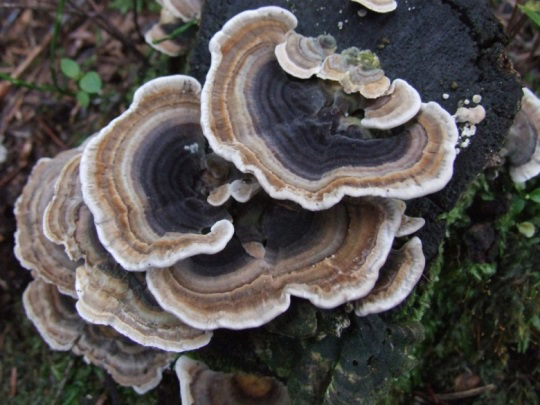
Trametes versicolor is a cosmopolitan mushroom (Figure 1). It is called “Turkey tail” because its appearance resembles a turkey tail. Trametes versicolor grows in tiled layers in groups or rows, often on logs and deciduous tree stumps. It is sessile and rust-brown or darker brown in color [21]. The head is flat to 8 × 5 × 0.5–1 cm. The pore surface is whitish to light brown. The pores are round and become twisted and labyrinthine over time. T. versicolor is a white rot fungus that degrades lignin from lignocellulosic materials in woody
- structures. It is considered inedible to humans. T. versicolor contains protein-bound PSP and polysaccharides such as β-1,3 and β-1,4 glucans [22,23]. In this context, biological
- Biological Activities
- Mushrooms exhibit different biological activities thanks to the many bioactive compounds they produce. These bioactive compounds vary in different fungal species [25]. In
- Biological Activity
- Locality
- Extraction
- Japan, Turkey, Taiwan,
- Kazakhstan, Serbia, Bangladesh,
- India, Poland, Italy, Egypt,
- Slovakia, Spain
- Antioxidant, anti-inflammatory, antimicrobial, cytotoxic, antiproliferative, anticancer, DNA-protective activity
Table 1: Biological Activities of Trametes versicolor.
- structures. It is considered inedible to humans. T. versicolor contains protein-bound PSP and polysaccharides such as β-1,3 and β-1,4 glucans [22,23]. In this context, biological
- Biological Activities
- Mushrooms exhibit different biological activities thanks to the many bioactive compounds they produce. These bioactive compounds vary in different fungal species [25]. In
- Biological Activity
- Locality
- Extraction
- Japan, Turkey, Taiwan,
- Kazakhstan, Serbia, Bangladesh,
- India, Poland, Italy, Egypt,
- Slovakia, Spain
- Antioxidant, anti-inflammatory, antimicrobial, cytotoxic, antiproliferative, anticancer, DNA-protective activity
Table 1: Biological Activities of Trametes versicolor.
Antioxidant Activity
Free radicals are oxidant compounds produced as a result of metabolic activities. High levels of these compounds cause cellular damage [26]. The antioxidant defense system plays a role in suppressing these oxidant compounds [27]. However, in some cases, the antioxidant defense system is inadequate against oxidant compounds [28]. In such cases, oxidative stress occurs. As a result of oxidative stress, serious diseases such as cancer, cardiological disorders, Alzheimer’s disease and Parkinson’s disease may occur in humans [29, 30, 31]. Supplementary antioxidants play an important role in reducing the effects of oxidative stress. Mushrooms are important natural antioxidant sources [32, 33]. In this context, the antioxidant activities of T. versicolor reported in the literature were compiled. DPPH free radical scavenging activities of n-hexane, chloroform, acetone, and methanol this context, different fungi are expected to exhibit different biological activities. In this study, the biological activities of T. versicolor reported in the literature were compiled. The findings obtained are shown in (Table 1).
Methanol, n-hexane, chloroform, crude extract, polysaccharopeptides, ethanol, water, aqueous, ethyl acetate extracts of T. versicolor collected from Japan have been reported. As a result of the findings, acetone extract (50.9%) exhibited the highest activity at a concentration of 500 µg/mL. It was later reported to exhibit methanol (33.9%), n-hexane (29.5%), and chloroform (15.2%) extracts, respectively [34]. It has been reported that the ethanol extract of T. versicolor collected from Turkey has DPPH activity between 5.26- 26.77% at concentrations of 0.25-1 mg/mL. It was also reported that the total antioxidant status value (TAS) was 0.820 mmol/L, the total oxidant status value (TOS) was 17.760 µmol/L and the oxidative stress index (OSI) was 2.166 [35]. It was reported that the TAS values of methanol and ethanol extracts of T. versicolor collected from Turkey were 0.72 and 0.88 mmol/L and TOS values were 18.39 and 16.71 µmol/L, respectively. It has also been reported that methanol extract has DPPH activity between 10.97-62.80% and ethanol extract has 22.42-64.84% at concentrations between 125-
1000 µg/mL [36]. (İnci et al., 2022). It has been reported that T. versicolor collected from Poland has antioxidant potential using 2,2-diphenyl-1-picrylhydrazyl (DPPH•) and 2,2′-azino- bis(3-ethylbenzothiazoline-6-sulfonic acid (ABTS•+) radical scavenging assays [37]. It has been reported that the DPPH test result of T. versicolor collected from India showed an inhibition percentage varying between 32.62-72.32% and the N2O2 value varying between 34.31-62.30% [38]. In a study conducted in Bangladesh, it was reported that methanol and aqueous extracts of T. versicolor had high DPPH free radical scavenging activity [39]. In a study conducted in Serbia, water and ethanol extracts of T. versicolor were reported to have antioxidant potential using the DPPH test [40]. It has been reported that T. versicolor collected from Ukraine has antioxidant potential [41]. In a study conducted in Taiwan, it was reported that polysaccharides obtained from T. versicolor have antioxidant potential using metal chelating assay, ABTS and DPPH radical scavenging tests [42]. In a study conducted in Turkey, it was reported that T. versicolor has antioxidant potential [43].
Antimicrobial Activity
In recent years, there has been an increase in the number of diseases caused by microorganisms [44]. The increase in the number of resistant microorganisms due to unconscious use of antibiotics has reduced the effectiveness of the antimicrobial drugs used [45, 46]. Possible side effects of synthetic drugs have now led researchers to the discovery of natural antimicrobial drugs [47]. In this context, mushrooms are natural antimicrobial sources. In our study, the antimicrobial activities of T. versicolor reported in the literature were compiled. In this context, it was reported that the ethanol extract of T. versicolor collected from Turkey had no effect against Bacillus subtilis, Candida albicans, Enterobacter aerogenes, Enterococcus mavis, Enterococcus faecalis, Enterococcus faecium, Escherichia coli, Klebsiella pneumoniae, Listeria innocua, Listeria monocytogenes, Pseudomonas aeruginosa, Pseudomonas fluorescence P1, Salmonella enteritidis, Salmonella infantis, Salmonella kentucky, Salmonella typhimurium, Staphy lococcus aureus, Staphylococcus epidermidis DSMZ 20044, Staphylococcus aureus (MDR), Escherichia coli (MDR), Klebsiella pneumoniae (MDR), Acinetobacter baumannii (MDR), Proteus vulgaris (MDR), Serratia odorifera (MDR) and Streptococcus pneumoniae (MDR) at a concentration of 40 µL, but was effective between 80-150 µL [48]. The methanol extract of T. versicolor collected from Slovakia has been reported to be effective against Escherichia coli, Pseudomonas aeruginosa, Staphylococcus epidermis, Enterococcus raffinosus, Saccharomyces cerevisiae, Candida albicans [49]. The inhibition zone values of methanol and ethanol extracts of T. versicolor collected from Turkey against Escherichia coli, Klebsiella pneumoniae, Pseudomonas aeruginosa, Bacillus megaterium, Staphylococcus aureus, Candida albicans, Trichophyton sp. were reported to be 10.23-26.76 [36]. T. versicolor collected from Poland has been reported to be effective against Aeromonas veronii, Bacillus cereus, Enterococcus faecalis, Enterococcus faecium, Escherichia coli, Klebsiella pneumoniae, Pseudomonas aeruginosa, Salmonella Typhimurium, Staphylococcus aureus, Staphylococcus epidermidis, Streptococcus agalactiae, Streptococcus dysgalactiae, and Streptococcus uberis [37]. It has been reported that chloroform, water, ethyl acetate and ethyl alcohol extracts of T. versicolor collected from Turkey were effective against Bacillus subtilis, Staphylococcus aureus, Enterococcus faecalis, Escherichia coli, Pseudomonas aeruginosa, Candida albicans at different concentrations [50]. The activity of T. versicolor collected from India was determined against Staphylococcus aureus, Pseudomonas aeruginosa, Klebsiella pneumoniae and Escherichia coli. As a result of the study, it was reported that it significantly inhibited the growth of S. aureus [38]. T. versicolor collected from Ukraine has been reported to be effective against Bacillus subtilis, Bacillus mycoides, Bacillus licheniformis, Rhodococcus rhodochrous, Leuconostoc mesenteroides, Micrococcus luteus, Staphylococcus aureus, Escherichia coli, Comamonas terrigena, Pseudomonas aeruginosa, Aspergillus niger, Saccharomyces cerevisiae and Candida albicans [41].
Other Activities
It has been reported that the acetone extract of T. versicolor collected from Japan has a dose-dependent anti-inflammatory activity of 76.4% at 500 µg/mL concentration, 55.6% at 200 µg/mL concentration and 37.0% at 100 µg/mL concentration [34]. In a study conducted in Spain, it was reported that T. versicolor has a reducing effect on the effects of anticancer drugs [51]. T. versicolor collected from India has been reported to show effective anti-inflammatory activity using membrane stabilization (33.71-73.24%) and protein denaturation (23.11- 74.56) assays [38]. In a study conducted in Bangladesh, the central nervous system (CNS) depressant activity of methanol and aqueous extracts of T. versicolor was evaluated. Within the scope of the study, CNS activity was evaluated with open field, hole cross, forced swimming, thiopental sodium-induced sleep duration, hole board and rotarod tests in Swiss albino mice. It was reported that the result of the study was that a significant decrease in movement was observed in open field and hole- cross tests for both extracts [39]. In a study conducted in Serbia, it was reported that the genotoxicity potential of water and ethanol extracts of T. versicolor increased with increasing concentration [40].
Conclusion
In addition to their nutritional properties, mushrooms are also known to exhibit many biological activities. T. versicolor is one of the important natural fungi with a cosmopolitan distribution. In this study, the biological activities of T. versicolor reported in the literature were compiled. According to the data obtained, it has been observed that T. versicolor has antioxidant, anti-inflammatory, antimicrobial, cytotoxic, antiproliferative, anticancer and DNA-protective activities. In this context, it has been observed that T. versicolor has a significant potential due to its high biological activities and in this context, it can be an important natural source in pharmacological designs.
References
-
Sevindik M, Akgul H, Selamoglu Z, Braidy N (2020) Antioxidant and antigenotoxic potential of Infundibulicybe geotropa mushroom collected from Northwestern Turkey. Oxidative medicine and cellular longevity 2020: 5620484.
-
Korkmaz AI, Akgul H, Sevindik M, Selamoglu Z (2018) Study on determination of bioactive potentials of certain lichens. Acta Alimentaria 47(1): 80-87.
-
Sevindik M (2018) Investigation of antioxidant/oxidant status and antimicrobial activities of Lentinus tigrinus. Advances in Pharmacological and Pharmaceutical Sciences 2018: 1718025.
-
Sevindik M, Akgul H, Dogan M, Akata I, Selamoglu Z (2018) Determination of antioxidant, antimicrobial, DNA protective activity and heavy metals content of Laetiporus sulphureus. Fresenius Environmental Bulletin 27(3): 1946-1952.
-
Baba H, Sevindik M, Dogan M, Akgül H (2020) Antioxidant, antimicrobial activities and heavy metal contents of some Myxomycetes. Fresenius Environmental Bulletin 29(9): 7840-7846.
-
Sevindik M (2019) Wild edible mushroom Cantharellus cibarius as a natural antioxidant food. Turkish Journal of Agriculture-Food Science and Technology 7(9): 1377- 1381.
-
Mushtaq W, Baba H, Akata I, Sevindik M (2020) Antioxidant potential and element contents of wild edible mushroom Suillus granulatus. Kahramanmaraş Sütçü İmam Üniversitesi Tarım ve Doğa Dergisi 23(3): 592-595.
-
Sevindik M (2018) Investigation of oxidant and antioxidant status of edible mushroom Clavariadelphus truncatus. Mantar Dergisi 9(2): 165-168.
-
Eraslan EC, Altuntas D, Baba H, Bal C, Akgül H, et al. (2021) Some biological activities and element contents of ethanol extract of wild edible mushroom Morchella esculenta. Sigma Journal of Engineering and Natural Sciences 39(1): 24-28.
-
Saridogan BGO, Islek C, Baba H, Akata I, Sevindik M (2021) Antioxidant antimicrobial oxidant and elements contents of Xylaria polymorpha and X. hypoxylon (Xylariaceae). Fresenius Environmental Bulletin 30(5): 5400-5404.
-
Akgül H, Sevindik M, Akata I, Altuntaş D, Bal C, et al. (2016) Macrolepiota procera (Scop.) Singer. mantarının ağır metal içeriklerinin ve oksidatif stres durumunun belirlenmesi. Süleyman Demirel Üniversitesi Fen Bilimleri Enstitüsü Dergisi 20(3): 504-508.
-
Sevindik M, Akgül H, Bal C (2017) Determination of oxidative stress status of Ompholatus olearius gathered from Adana and Antalya provinces in Turkey. Sakarya University Journal of Science 21(3): 324-327.
-
Sevindik M, Akata I (2020) Antioxidant, oxidant potentials and element content of edible wild mushroom Helvella leucopus. Indian Journal of Natural Products and Resources (IJNPR) 10(4): 266-271.
-
Sevindik M (2021) Anticancer, antimicrobial, antioxidant and DNA protective potential of mushroom Leucopaxillus gentianeus (Quél.) Kotl. Indian Journal of Experimental Biology 59(5): 310-315.
-
Sevindik M, Akgul H, Korkmaz AI, Sen I (2018) Antioxidant potantials of Helvella leucomelaena and Sarcosphaera coronaria. J Bacteriol Mycol Open Access 6(1): 36-38.
-
Gürgen A, Sevindik M, Yildiz S, Akgul H (2020) Determination of Antioxidant and Oxidant Potentials of Pleurotus citrinopileatus Mushroom Cultivated on Various Substrates. Kahramanmaraş Sütçü İmam Üniversitesi Tarım ve Doga Dergisi 23(3): 586-591.
-
Akgül H, Nur AD, Sevindik M, Doğan M (2016) Tricholoma terreum ve Coprinus micaceus’ un bazı biyolojik aktivitelerinin belirlenmesi. Artvin Çoruh Üniversitesi Orman Fakültesi Dergisi 17(2): 158-162.
-
Sevindik M, Akgül H, Günal S, Doğan M (2016) Pleurotus ostreatus’ un doğal ve kültür formlarının antimikrobiyal aktiviteleri ve mineral madde içeriklerinin belirlenmesi. Kastamonu Üniversitesi Orman Fakültesi Dergisi 16(1): 153-156
-
Islek C, Saridogan BGO, Sevindik M, Akata I (2021) Biological activities and heavy metal contents of some Pholiota species. Fresenius Environmental Bulletin 30(6): 6109-6114.
-
Akata I, Kabaktepe Ş, Sevindik M, Akgül H (2018) Macrofungi determined in Yuvacık Basin (Kocaeli) and its close environs. Kastamonu University Journal of Forestry Faculty 18(2): 152-163.
-
Pointing S (2001) Feasibility of bioremediation by white- rot fungi. Applied microbiology and biotechnology 57: 20-33.
-
Puia IC, Aida PUIA, Chedea VS, Leopold N, Bocsan IC, et al. (2018) Characterization of _Trametes versicolor_: Medicinal mushroom with important health benefits. Notulae Botanicae Horti Agrobotanici Cluj-Napoca 46(2): 343-349.
-
Tišma M, Žnidaršič-Plazl P, Šelo G, Tolj I, Šperanda M, et al. (2021) _Trametes versicolor_ in lignocellulose- based bioeconomy: State of the art, challenges and opportunities. Bioresource technology 330: 124997.
-
https://en.wikipedia.org/wiki/Trametes_versicolor#/ media/File:Trametes_versicolor_G4_(1).JPG
-
Özaltun B, Sevindik M (2020) Evaluation of the effects on atherosclerosis and antioxidant and antimicrobial activities of Agaricus xanthodermus poisonous mushroom. The European Research Journal 6(6): 539- 544.
-
Sevindik M, Pehlıvan M, Dogan M, Selamoglu Z (2018) Phenolic content and antioxidant potential of Terfezia boudieri. Gazi University Journal of Science 31(3): 707- 711.
-
Sevindik M, Bal C, Eraslan EC, Uysal I, Mohammed FS (2023) Medicinal mushrooms: a comprehensive study on their antiviral potential. Prospects in Pharmaceutical Sciences 21(2): 42-56.
-
Bal C, Baba H, Akata I, Sevindik M, Selamoglu Z, (2022) Biological Activities of Wild Poisonous Mushroom Entoloma sinuatum (Bull.) P. Kumm (Boletales). KSU J Agric Nat 25(1): 83-87.
-
Karaltı İ, Eraslan EC, Sarıdoğan BGÖ, Akata I, Sevindik M (2022) Total Antioxidant, Antimicrobial, Antiproliferative Potentials and Element Contents of Wild Mushroom Candolleomyces candolleanus (Agaricomycetes) from Turkey. International Journal of Medicinal Mushrooms 24(12): 69-76.
-
Sevindi M (2021) Antioxidant and oxidant potantials and element contents of Chroogomphus rutilus (Agaricomycetes). Mantar Dergisi 12(1): 29-32.
-
Sevindik M (2024) Total phenolic, total flavonoid contents and antioxidant potential of the wild edible mushroom Clitocybe odora. Kahramanmaraş Sütçü İmam Üniversitesi Tarım ve Doğa Dergisi 27(1): 75-81.
-
Korkmaz AI, Bal C, Eraslan EC, Sevindik M, Akgul H (2023) Biological activities of Agrocybe praecox (spring fieldcap mushroom). Prospects in Pharmaceutical Sciences 21(4): 33-39.
-
Sevindik M, Akata I, Sarıdoğan BGO, Eraslan EC, Bal C (2023) Antioxidant, Antimicrobial, and Antiproliferative Activities of Some Edible Wild Mushrooms. Biology Bulletin 50(Suppl 4): S630-S636.
-
Kamiyama M, Horiuchi M, Umano K, Kondo K, Otsuka Y, et al. (2013) Antioxidant/anti-inflammatory activities and chemical composition of extracts from the mushroom _Trametes versicolor_. International Journal of Nutrition and Food Sciences 2(2): 85-91.
-
Akgul H, Sevindik M, Coban C, Alli H, Selamoglu Z (2017) New approaches in traditional and complementary alternative medicine practices: _Auricularia auricula and_ _Trametes versicolor_. J Tradit Med Clin Natur 6(2): 239.
-
İnci Ş, Akyüz M, Kırbağ S (2022) Antioxidant and Antimicrobial Effects of _Trametes versicolor_ (L.) Lloyd Extracts in Different Solvents. Turkish Journal of Science and Technology 17(2): 261-265.
-
Michalak K, Winiarczyk S, Adaszek Ł, Kosikowska U, Andrzejczuk S, et al. (2023). Antioxidant and antimicrobial properties of an extract rich in proteins obtained from. Journal of Veterinary Research 67(2): 209-218.
-
Bains A, Chawla P (2020) In vitro bioactivity, antimicrobial and anti-inflammatory efficacy of modified solvent evaporation assisted _Trametes versicolor_ extract. 3 Biotech 10(9): 404.
-
Hossen SMM, Tanim MAH, Hossain MS, Sami SA, Emon NU (2021) Deciphering the CNS anti-depressant, antioxidant and cytotoxic profiling of methanol and aqueous extracts of _Trametes versicolor_ and molecular interactions of its phenolic compounds. Saudi Journal of Biological Sciences 28(11): 6375-6383.
-
Rašeta M, Popović M, Knežević P, Šibul F, Kaišarević S, et al. (2020) Bioactive phenolic compounds of two medicinal mushroom species _Trametes versicolor_ and Stereum subtomentosum as antioxidant and antiproliferative agents. Chemistry Biodiversity 17(12): e2000683.
-
Mustafin K, Bisko N, Blieva R, Al-Maali G, Krupodorova T, et al. (2022) Antioxidant and antimicrobial potential of Ganoderma lucidum and _Trametes versicolor_. Turkish Journal of Biochemistry 47(4): 483-489.
-
Jhan MH, Yeh CH, Tsai CC, Kao CT, Chang CK, et al. (2016) Enhancing the antioxidant ability of _Trametes versicolor_ polysaccharopeptides by an enzymatic hydrolysis process. Molecules 21(9): 1215.
-
Kıvrak I, Kivrak S, Karababa E (2020) Assessment of bioactive compounds and antioxidant activity of Turkey tail medicinal mushroom _Trametes versicolor_ (Agaricomycetes). International journal of medicinal mushrooms 22(6): 559-571.
-
Mohammed FS, Sevindik M, Uysal İ, Çesko C, Koraqi H (2024) Chemical Composition, Biological Activities, Uses, Nutritional and Mineral Contents of Cumin (Cuminum cyminum). Measurement Food 14: 100157.
-
El-Chaghaby GA, Mohammed FS, Rashad S, Uysal I, Koçer O, et al. (2024) Genus Hypericum: General Properties, Chemical Contents and Biological Activities. Egyptian Journal of Botany 64(1): 1-26.
-
Yaz H, Uysal İ, Polat AO, Mohammed FS, Sevindik M (2023) Usage areas, biological activities and volatile oil compounds of Matricaria aurea and Matricaria chamomilla. Lek Sirovine 43(1): e156.
-
Uysal I, Mohammed, FS, Sevindik M, Şabik AE, Sevindik E, et al. (2023) Genus Thymbra: a review on their usage areas, phytochemical contents and biological activities. Egyptian Journal of Nutrition 38(3): 1-12.
-
Canli K, Benek A, Şenturan M, Akata İ, Altuner EM (2019) In vitro Antimicrobial Activity of Morchella esculenta and _Trametes versicolor_. Mantar Dergisi 10(3): 28-33.
-
Hleba L, Vuković N, Petrová J, Kačániová M (2014) Antimicrobial activity of crude methanolic extracts from Ganoderma lucidum and _Trametes versicolor_. Anim Sci Biotechnol 47(2): 89-93.
-
Özgör E, Ulusoy M, Çelebier İ, Yildiz S, Keskin N (2016) Investigation of antimicrobial activity of different _Trametes versicolor_ extracts on some clinical isolates. Hacettepe Journal of Biology and Chemistry 44(3): 267- 272.
-
Ferrando-Climent L, Cruz-Morató C, Marco-Urrea E, Vicent T, Sarrà M, et al. (2015) Non conventional biological treatment based on _Trametes versicolor_ for the elimination of recalcitrant anticancer drugs in hospital wastewater. Chemosphere 136: 9-19.
- Diversity of Candida sp and Antifungal Susceptibility Patterns in Digestive Candidiasis among People Living with HIV in CHU of Libreville, Gabon
- Vulvovaginal candidiasis: Retrospective study (2019- 2021) at the Centre Hospitalier National de Pikine, Suburban Dakar, Senegal
- Identification of Environmental Fungal Species in Clinical Services of University Hospital of Angre, Abidjan (Cote d’Ivoire)
- New Location of some Gasteroid Basidiomycetes in Western Kazakhstan
- Evaluation of Various Extracellular Enzymes of Ectomycorrhizal Mushrooms
- Morphology and Phylogeny of Lactarius Wallichianae sp. nov and Xerula magnispora sp. nov. from India