
Analysis of Cameroonian Veterinary Health Legislation for the Control of Priority Zoonoses in Relation to the Oie Guidelines with Regard to the One Health Approach
According to the World Organisation for Animal Health (OIE), 60% of human pathogens are of animal origin and 75% of these agents are responsible for emerging diseases that can contaminate humans. The objective of this study in Cameroon was to analyse the compliance of Cameroonian veterinary health legislation for the control of priority zoonosis (PNPLZER) with OIE guidelines and to assess the level of knowledge of zoonosis by animal health professionals. The methodology adopted consisted on the one hand in comparing the regulatory texts concerning the control of zoonosis in Cameroon with the OIE guidelines. In addition, a cross-sectional descriptive survey was conducted among 65 animal health stakeholders in the cities of Yaoundé, Douala and Bafoussam. The results of the study show that some recommendations of the OIE guidelines, particularly in the detection, response and prevention of zoonotic diseases, are not taken into account in Cameroonian legislation. The cross-sectional survey found that among the priority zoonotic diseases, 35% of animal health professionals are affected by rabies, 27% by bovine tuberculosis, 18% by avian influenza and 7% by anthrax and 6% by Ebola haemorrhagic fever disease. Also, 63% of these animal health actors do not report registered cases of zoonosis, which can be a brake in the fight against zoonosis. In view of these results, the revision of Cameroonian laws and regulations by the authorities on the control of zoonosis is necessary as well as the awareness/training of the general public on this subject, as zoonosis remain a major public health problem in our country.
Introduction
Zoonoses are diseases or infections that are naturally transmissible from vertebrate animals to humans and vice versa, posing a real public health problem and reducing economic productivity [1]. According to the World Organisation for Animal Health (OIE), 60% of human pathogens are of animal origin and 75% of these agents are responsible for emerging diseases that can contaminate humans [2]. Indeed, Central Africa is part of a “hot spot” for zoonotic disease outbreaks and Cameroon is an essential crossroads in this sub-region because of its biodiversity in protected areas, the diversity of its livestock and the favourable conditions for animal production from which it benefits. In addition, each region of the country is characterized by its epidemiological specificity in relation to the type of farming practiced [3]. Thus, Cameroon offers a particularly favourable environment for the spread of zoonotic diseases because more than 70% of the population is involved in small-scale agriculture, and thus offers a favourable climate for the proliferation of zoonotic agents [4]. In addition, the National Programme for the Prevention and Control of Emerging and Re-emerging Zoonotic Diseases (PNPLZER) has confirmed the presence of certain zoonosis evolving in an enzootic mode on Cameroonian territory [5]. This is highlighted in the document prioritizing zoonotic diseases in Cameroon, which classifies rabies, anthrax, avian influenza, Ebola haemorrhagic fever and bovine tuberculosis as priorities out of forty-one (41) selected zoonosis [6]. Thus, the Direction des Services Vétérinaires (DSV) of Cameroon, through its regulatory missions, plays a decisive role in the detection, prevention, control and fight against infectious transmissible diseases in animals. However, it can only fulfil this mission through appropriate legislation and appropriate means to apply them with the assurance that it complies with international directives in this field [7]. To this end, the Ministry of Livestock, Fisheries and Animal Industries (MINEPIA) has texts on the control of zoonosis, but the question is whether they meet the standards of the OIE Terrestrial Animal Health Code. It is in this context that this study was initiated with the general objective of analysing Cameroonian veterinary health legislation relating to the control of priority zoonosis in accordance with OIE guidelines. The general objective of this work is to analyse Cameroonian veterinary health legislation for the control of priority zoonosis in relation to the OIE guidelines; and specifically to identify the OIE guidelines and veterinary regulatory texts in force in Cameroon for priority zoonosis and to determine deviations from the texts in force in Cameroon in relation to international health legislation (OIE) in prevention, response and detection.
Methodology
Type, Location and Duration of the Study
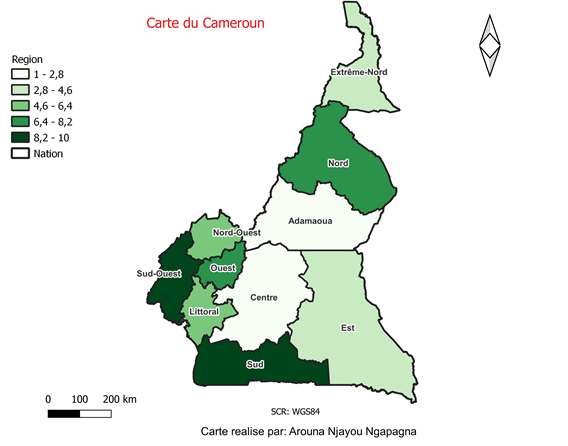
This analytical study was carried out in the cities of Yaoundé, Douala and Bafoussam. For this reason, three cities were randomly selected: Yaoundé (capital of the Centre region), Douala (capital of the Littoral region) and Bafoussam (capital of the West region). It took place from January 2017 to July 2017 (Figure 1).
Data Collection
Data collection was carried out in two stages: The first phase of collection consisted of identifying and collecting all regulatory and legislative texts related to zoonotic diseases as well as OIE guidelines. For this phase, the collection was conducted within:
- Central and regional services of MINEPIA with the support of the Cameroon Animal Disease Epidemiological Surveillance Network (RESCAM);
- Of the PNPLZER
- From the OIE platform The second phase consisted in collecting data via the survey sheets (Annex 1) from public veterinarians, slaughterhouses and those working with private customers in order to assess their level of knowledge about zoonosis.
Material
The following tools were used for this work:
- OIE Terrestrial Animal Health Code, Version 2016;
- Compilation of texts governing livestock, fisheries and animal industries version 2013;
- Various regulatory texts at the heart of the management of certain priority zoonosis (avian influenza and Ebola virus disease);
- Report of the discrepancies made by the OIE Experts as part of the evaluation of Cameroon’s veterinary services by the PVS tool,
- A survey questionnaire (Annex 1) among public veterinarians and private practitioners on the level of knowledge of zoonotic diseases.
Methods
This work was carried out in two phases: an exploratory survey and a cross-sectional questionnaire survey.
Exploratory Investigation
This step consisted of direct interviews with the heads of MINEPIA’s veterinary services in order to collect information on: the laws and regulations in force to control zoonotic diseases. It also consisted in collecting the guidelines of the international recommendations in Articles 1, 3, 4, 4, 5, 6, 7, 8, 10 and 11 corresponding to the means of controlling zoonosis. After reviewing Cameroon’s veterinary legislation and regulations relating to the control of priority zoonosis and those of the OIE, a classification into three subcategories was carried out in accordance with the national animal health and welfare systems according to the OIE PVS tool. These include detection, response and prevention (including compensation and vaccination). The elements present in each sub-category may differ from one disease to another due to the different recommendations taken into account. For each critical recommendation of the texts, scores (0 = non-compliance and 1 = compliance) were assigned based on the stages of progress of the OIE PVS process. Therefore, if the OIE guidelines on a disease are not taken into account in Cameroonian veterinary health legislation, we assign a score of 0 and if it is present with some modifications we assign a score of 1. These scores have been totaled in order to determine whether or not there is compliance (Table 1).
| Category | Non-compliant | Compliant |
|---|---|---|
| Score | 0 | 1 |
Table 1: OIE PVS process progress score.
Cross-Sectional Descriptive Survey Through the Questionnaire
Sampling and Sampling
The recruitment of the main animal health actors involved in the fight against zoonosis was carried out consecutively on the premises of the DSV, DREPIA, laboratories, slaughterhouses and private and public veterinary practices. The initial sample was 74 veterinarians who received the survey form to fill it in; 43 from the private sector (17 in Yaoundé, 16 in Douala and 10 in Bafoussam) and 31 public veterinarians (14 from the DSV, 03 regional delegates, 03 veterinary laboratory managers, 06 slaughterhouse managers and 05 clinic managers). Of the 74 veterinarians selected from the outset, only 65 (Table 2) complied with the following selection criteria.
| Public veterinarians | ||||||
|---|---|---|---|---|---|---|
| Study area | Veterinarians Private | Responsible of Slaughterhouses | DVS | Responsible persons laboratories | Others (IV) | Total |
| Yaoundé | 16 | 5 | 9 | 2 | 3 | 35 |
| Douala | 12 | 2 | 2 | 0 | 2 | 18 |
| Bafoussam | 8 | 1 | 3 | 0 | 0 | 12 |
| Total | 36 | 8 | 14 | 2 | 5 | 65 |
Table 2: Distribution of veterinarians by region.
Data collection was carried out through a questionnaire, written in French and given to the stakeholders (Appendix 1). The questionnaire consisted of 04 sections, namely:(i) Identification of actors; (ii) Knowledge of zoonoses; (iii) Epidemiosurveillance of the most frequent zoonotic diseases and (iv) Degree of application of the texts of Cameroonian veterinary health legislation.
Selection Criteria
Inclusion criterion: All animal health actors working in the selected structures in our study area, present on the day of the survey and having agreed to participate in the study, were included in this work.
Criterion of non-inclusion: All animal health actors present on the day of the survey and all animal health actors who partially answered the questionnaire were excluded from the study.
Data Analysis
With regard to the analysis of legislative texts, the approach used is a combination of two tools: the OIE guidelines and Cameroon’s veterinary health laws and regulations. The first phase is to see whether each of the selected guidelines is taken into account in Cameroon’s veterinary health legislation and to assign scores ranging from 0 to 1.
With regard to the analysis of the level of knowledge of animal health stakeholders, the data collected from each participant were analysed using the “sphinx plus² version 4.0” software. These responses were saved in the Microsoft Excel 2010 spreadsheet to express all results in the form of calculated frequencies and figures. Indeed, the variables analyzed were: identification of actors, knowledge of zoonoses and epidemiosurveillance. The scores by health stakeholder group were analyzed individually and by zoonotic disease type.
Ethical Consideration
For the realization of this study, we requested and obtained:
- A research authorization from the University of the Mountains;
- The authorizations of the DREPIAs of Yaoundé, Douala and Bafoussam (reference number) The survey sheets were kept anonymous by the investigator for the respect and confidentiality of the data collected throughout the study.
Results
Veterinary Texts in Force in Cameroon and Oie Guidelines on Priority Zoonosis
- Identification of Cameroon’s legislative and regulatory texts relating to the control of zoonotic diseases
- In Cameroon, 04 liaws, 08 decrees, 21 decrees, 07 decisions and 06 circulars have been identified for the control of zoonosis. Among these texts we have a decree on the “One Health” approach, which highlights multisectoral collaboration, and a decree creating the national programme for the prevention and control of emerging and re-emerging zoonosis (Table 3).
- Analysis of the legislative and regulatory texts in force for zoonotic diseases legislated in Cameroon An analysis of veterinary health legislation and regulations on the management of zoonosis has shown that the OIE has identified 116 infectious diseases with 64 zoonotic diseases, but only 24 diseases are listed in Law 2000/017 of 17 December 2000 regulating veterinary health inspection (Article 11); and Law 006/16 April 2001 on the nomenclature and zoo-health regulations for livestock diseases deemed legally contagious and subject to mandatory reporting: Rabies, Tuberculosis and pseudotuberculosis, Anthrax, Brucellosis, Paratuberculosis, Erisipelothrix (red mullet), Listerellosis (Listeriosis), Vibriosis, Salmonellosis, Taeniasis, Trichinosis, Toxoplasmosis, Distomatosis, Sarcosporidiosis, Intestinal myases, Shigellosis, Chlamydia, Fever Q, Avian Ornithosis, Psittacosis, Leptospirosis, Clostridiosis, Echinococcosis, BSE (mad cow disease already eliminated). It should be noted that Ebola virus disease is not included in the list of diseases deemed legally contagious and notifiable by MINEPIA but is listed as a priority zoonotic disease in Cameroon. In addition, a zoonotic disease not listed in the legislation and regulations has been notified to the OIE by the Cameroonian veterinary authorities, in particular Monkey-pox. However, the diseases deemed legally contagious and notifiable not listed in Cameroonian texts but notified to the OIE are: infectious coryza, nodule disease, Rift Valler Fever Virus, Cowdriosis, haemorrhagic septicaemia, smallpox, avian encephalomyelitis, epizootic ulcerative fish syndrome, parvovirus, trypanosomiasis, piroplasmosis, dermatosis, infectious bronchitis and Monkey pox (zoonosis).
Determination of the Deviations of the Texts in Force in Cameroon From International Legislation
The analysis of the different priority zoonosis in Cameroon was limited only to legislative and regulatory texts. The various Cameroonian texts and OIE guidelines have been classified into categories according to the principles of the OIE PVS tool. To this end, the gaps for the five (05) priority diseases defined by the PNPLZER have been presented as follows:
Law Decree Arrete Decision Circular
- No 92/006 of 14 August 1992 on cooperative societies and joint initia- tive groups, -No 86/711 of 14 June 1986 laying down the proce- dures for veterinary health inspection (repealed), -N° 0016/MINEPIA of 15 June 2001 lift- ing the Mbé sanitary barrier, -No 2001/955/PM of 01 November 2001 laying down the conditions for granting and exer- cising the health mandate applicable to the control of epizootic diseases and the inspection of foodstuffs of animal and fish origin, -No. 2000/017 of 19 December 2000 regulat- ing veteri- nary health inspection, No. 010 CAB/PM of 16 February 2006 establishing an ad hoc inter-ministerial committee for the prevention and con- trol of avian influenza, Rabies: The analysis of the texts concerning rabies allowed us to assign a score of 1/4 for detection, 3/4 for response and 2/4 for prevention, i.e. a general score of 6/12 for rabies management (Table 5). Anthrax: Analysis of the texts concerning anthrax allowed us to assign a score of 1/3 for detection, 4/4 for response and 2/5 for prevention, giving an overall score of 7/12 for anthrax management (Table 6). Highly pathogenic avian influenza (HPAI): The analysis of HPAI texts allowed us to assign a score of 2/5 for detection, 3/4 for response and 2/4 for prevention, giving an overall score of 7/13 for HPAI management (Table 7). Bovine tuberculosis: In the management of bovine tuberculosis, Cameroonian legislation allows a score of 2/3 for detection, 3/4 for response, 1/4 for prevention and this for an overall score of 6/11 (Table 8). Ebola virus disease: This disease is not yet legislated in Cameroon and therefore cannot be compared in any way with the OIE guidelines. However, we should have already legislated on this disease because Cameroon is at risk and when it comes to emerging diseases, it is urgent to always anticipate through rigorous legislation. However, there is a regulatory text suspending the import of certain animal species, their products and by-products from countries infected with Ebola haemorrhagic fever.
- N°0028 MINEPIA suspending the import of certain animal species susceptible to Highly Pathogenic Avian Influenza (Avian In- fluenza) and certain types of breeding material, -Decree n°00092 of 4 June 2016 on the application of con- trol measures for Highly Pathogenic Avian Influenza (Avian Influenza), -No. 000002/LC/ J06/SAAJP of 13 June 2016 on the prohibition of the transport by car of poultry and farm products intended -N° 0029 MINEPIA creating health control barriers in certain provinces, -No 006/ of 16 April 2001 on the nomencla- ture and zoo-health regulations for livestock diseases deemed legally con- tagious and notifiable, -No. 92/455/PM of 23 November 1992 laying down the pro- cedures for imple- menting Law No. 92/006 of 14 August 1992 on cooperative societies and Joint Initiative Groups, -Spouse N° 0006 MINEPIA/MINSANTE of 15 March 2006 adding Avian Influen- za to the list of livestock diseases consid- ered legally contagious and notifiable, -No 2000/018 of 19 December 2000 on the veterinary pharmacy regula- tion on the marketing authorisation of veterinary medicinal products.
-From 1 October 1937, laying down the general rules of hygiene and public health to be applied in the territory of Cameroon under French mandate in 1937, -Joint No. 0007 MINEPIA of 16 March 2006 declaring the infection with Highly Pathogenic Avian Influenza (Avian Influ- enza) in the Far North Province, -No. 2010 on the specifications speci- fying the conditions and procedures for exercising the powers transferred by the State to the municipalities in terms of promoting pastoral and pisci- cultural activities, -No. 0013 MINEPIA of 20 July 2006 delimiting the areas infected by Highly Pathogenic Avian Influenza (Avian Influenza) and determining the health measures applicable there, -No. 75/527 of 16 July 1975, regulat- ing livestock farming establishments and animal industries, -N° 0013 MINEPIA of 20 July 2010 suspending the import of certain animal species susceptible to Highly Pathogenic Avian Influenza (Avian Influenza) and certain types of breeding material, -No. 76/420 of 14 September 1976 regulating livestock breeding, circulation and operation, -N° 0008 MINEPIA of 13 December 2012 lifting the measures banning the move- ment of birds and their products follow- ing the 2006 highly pathogenic avian influenza (avian influenza) outbreak -N° 00163 MINE- PIA of 25 July 2006 amending and supplementing certain provisions of Decision --N° 0029/MINEPIA of 17 March 2006 creat- ing health control barriers in certain provinces, to marketing throughout the Mfoundi Depart- ment, -No. 00169 MINE- PIA of 25 July 2006 amending Decision No. 0028/MINEPIA of 17 March 2006 suspending the im- port of certain spe- cies susceptible to used Avian Influenza from countries and regions infected with avian influenza (bird flu) A (H7N9), -Letter N°001006/L/MINE- PIA/CAB dated 24 May 2016 from MINEPIA to the General Manager of the Mvog-Betsi poultry complex, -Note N°004/L/R- LT/DREPIA-LT/ SRSV of 01 June 2016 from the Head of the Regional Service for the Health Protection of Coastal Livestock on the measures to be taken to prevent the entry of bird flu into the region, - No. 0052/MINDIC/ DC of 24 June 1992 laying down the con- ditions for the im- port of edible meat into the Republic of Cameroon, -N°00463 MINEPIA suspending the import of certain animal species, their products and by-products from countries infected with Ebola haemor- rhagic fever.
-Memorandum N°03/16 June 2016 on the distribu- tion of staff at the Nkongsoung/ Melong veterinary health checkpoint, -Service note N°28/ NS/-MINEPIA/DRE- PIA-LT/.
-No 2001 / 955/ PM of 01 November 2001 laying down the conditions for granting and exer- cising the health mandate applicable to the control of epizootic diseases and the inspection of foodstuffs of animal and fish origin.
-Ministry No. 0008/MINEPIA/DSV of 26 May 2016, Reporting of Highly Patho- genic Avian Influenza (Avian Influenza) infection in the Department of Mfoundi, -Regional n°00000213/AR/J/SG 30 May 2016 Creating Veterinary Health Control Posts in certain localities of the Central Region, -Regional n°00000214/AR/J/SG/DAE- SC/CE1 of 30 May 2016 Establishing, Organizing and Operating the Regional Committee to Support the Management of Highly Pathogenic Avian Influenza Infection (Avian Influenza) declared in the Department of Mfoundi, -Prefect n°000548/AP/J06/SAAJP of 08 June 2016 Suspending the Transport of Poultry and Farm Products intended for marketing throughout the Mfoundi Department Regional by the Governor of the Region creating veterinary health checkpoints along the main roads of the Far North region, -N°199/AR/F/SG of 04 June 2016, on preventive measures to combat bird flu, -No. 141/AR/F/SG/DAAJ of 4 June 2016 establishing measures for the prevention and control of avian influenza, -Establishing veterinary health check- points along roads and along the border with Nigeria, -Regional No. 007/A/L/SG/DAAJ of 31 May 2016 declaring highly pathogenic avian influenza (bird flu) infection in the Department of Mvila, -N°013/MINEL of 13 October 1978 laying down the procedures for open- ing establishments for the manufacture or marketing of products intended for domestic animal nutrition, -N°03/MINEPIA of 20 July 1989 amend- ing and supplementing Order No. 02/ MINEPIA of 20 July 1988 updating the layout of livestock tracks, - Joint No. 0180/MINEPIA/MINFI of 27 August 1991 laying down detailed rules for the application of Ordinance No. 91/005 of 12 April 1991 supplementing the provisions of Finance Act No. 89/001 of 1 July 1989 on the tax on veterinary health inspection and the exploitation of animal and fish production, -Joint n°00104/A/MINEPIA/MINFI of 30 July 2010 fixing the tariffs for the remuneration of health veterinarians’ interventions and the contributions paid by livestock farmers, -N°028/CAB/PM of 04 April 2014 on the creation, organisation and function- ing of the National Programme for the Prevention and Control of Emerging and Re-emerging Zoonoses.
| Titre | Detection | Answer | Prevention |
|---|---|---|---|
| 1 : Diagnosis, surveillance and notification of animal diseases | -chapter.1: Notification of diseases and epidemiological information | -chapter. 1.1 : notification of diseases and epidemiological information | -chapter. 1.4: animal health surveillance |
| -chapter. 1.2: criteria for inclusion of diseases | -chapter. 1.5 : surveillance of arthropod vectors of animal diseases | ||
| 2 : Quality of veterinary services | -chapter. 3. 3 : communication | -chapter. 3. 3 : communication | -chapter. 3. 3 : communication |
| -chapter. 3.4: veterinary legislation | -chapter. 3.4: veterinary legislation | -chapter. 3.4: veterinary legislation | |
| 3 : General recommendations: prevention and control | -chapter. 4.1: general principles for the identification and traceability of live animals | -chapter. 4.12: disposal of dead animals | -chapter. 4.13 general recommendation on disinfection and disinsectisation |
| -chapter. 4.3: zoning and compartmentalization | -chapter. 4.3: zoning and compartmentalization | -chapter. 4. 14: hygiene, identification, blood sampling and vaccination measures | |
| -chapter. 4.4: application of compartmentalization | -chapter. 4.4: application of compartmentalization | ||
| chapter. 4.13 general recommendation on disinfection and disinsectisation |
Table 3: Oie Guidelines on Zoonotic Diseases Found in Cameroon’s Health and Regulatory Texts.
- 4 : Trade measures, import and export procedures and veterinary certification
- -chapter. 6.2: control of biological hazards significant to animal and public health through ante- and post-mortem meat inspection
- -chapter. 6.11: transmissible zoonoses by non-human primates
- 5 : Veterinary public health
- -chapter. 6.11 : transmissible zoonosis by non-human primates
- -chapter. 7.5: slaughter of animals
- -chapter. 7.7: control of stray dog populations
- -chapter. 7.6 : killing of animals for health control purposes
- 6 : Welfare
- 8 : Diseases common to several species
- -chapter. 8.1: anthrax
- -chapter. 8.1: anthrax
- -chapter. 8.1: anthrax
- -chapter. 8.13: rabies virus infection
- -chapter. 8.13: rabies virus infection
- -chapter. 8.13: rabies virus infection
- 10 : Aves
- -chapter. 10.4: infection with avian influenza viruses
- -chapter. 10.4: infection with avian influenza viruses
- -chapter. 10.4: infection with avian influenza viruses
- -chapter. 11.5: bovine tuberculosis
- -chapter. 11.5: bovine tuberculosis
- -chapter. 11.5: bovine tuberculosis
- 11. Bovidae
- -chapter. 11.6: tuberculosis in farmed cervids
- -chapter. 11.6: tuberculosis in farmed cervids
- -chapter. 11.6: tuberculosis in farmed cervids
Table 4: Oie Guidelines on Zoonotic Diseases Found in Cameroon’s Health and Regulatory Texts.
| Modality | OIE legislation | Cameroonian legislation | Score |
|---|---|---|---|
| Detection | a-Definition of rabies and description of the causative agent b-List of sensitive species c-The incubation period is variable and considered to be six months. Observation of the biter d- The period of infection is considered to begin 10 days before the first apparent clinical signs appear | No definition of disease List of sensitive species No incubation period described. Observation of the bite Observation of animals bitten or rolled by another animal for 15 days | 0 1 0 0 1/4 1 1 1 0 |
| Total Reporting is mandatory across the a-Reporting is mandatory across the country country b- The effective disease surveillance system must be put in Setting up a monitoring system place, which will help in early detection Response Slaughter and ban on the movement c-Raunting of rabid dogs and control of the stray population of stray dogs d- The area considered free when no cases of rabies have been No delay reported during the last six months |
Table 5: Determination of gaps of the veterinary health and regulatory texts in force in Cameroon from international legislation
- Total
- 3/4 a- Vaccination
- Mandatory vaccination
- 1 b- In case of import or export of animals, present an international veterinary certificate
- Presence of health certificate
- 1
- Prevention c- Before any dog trip do an antibody titration
- No details on it
- 0
- Quarantine for less than 6 months (6 weeks for domestic carnivores and 3 months for ruminants)
- 0 d-Before export, the animal must be quarantined for 6 - 12 months
- Total
- 2/4
- Overall total
- 6/12
Table 6: Determination of gaps of the veterinary health and regulatory texts in force in Cameroon from international legislation
| Modality | OIE legislation | Cameroonian legislation | Score |
|---|---|---|---|
| Detection | a-Definition of the disease description of the causative agent and mode of transmission | No definition of disease | 0 |
| b-List of sensitive species | List of sensitive species | 1 | |
| c-The incubation period is set at 20 days | No incubation period described | 0 | |
| Total | 1/3 | ||
| Response | a-Reporting is mandatory across the country | Mandatory reporting across the country | 1 |
| b- The effective disease surveillance system must be put in place that will assist in early detection | Setting up a monitoring system | 1 | |
| c- Slaughtering and destruction of suspect or sick animals | Slaughtering and destruction | 1 | |
| d- Zoning of infected areas or routes | Prohibition of circulation | 1 | |
| Total | 4/4 | ||
| Prevention | a-Vaccination | Mandatory vaccination per year | 1 |
| b- In the case of import or export of animals presented with an international veterinary certificate | Presence of health certificate | 1 | |
| c-For risk-free goods, the veterinary authorities should not impose any conditions on importation with regard to seed and compensation for farmers | No details on this and compensation in the event of a serious disaster | 0 | |
| d Sanitary measures in slaughterhouses and milk plants | No details on it | 0 | |
| e-Means of inactivation of causative agent spores | No details on it | 0 | |
| Total | 2/5 | ||
| Overall total | 7/12 |
Table 7: Determination of gaps of the veterinary health and regulatory texts in force in Cameroon from international legislation
| Modality | OIE legislation | Cameroonian legislation | Score |
|---|---|---|---|
| Detection | a-Definition of the disease, clinical signs and descrip- tion of the causative agent b- List of sensitive species c-The incubation period is set at 21 days d-Definition of avian influenza-free holdings and epi- demiological factors e- Laboratory diagnosis for confirmation of the pres- ence of the virus | Definition of the disease, clinical signs and description of the causative agent List of sensitive species No incubation period described no clear specification Laboratory diagnosis |
Table 8: Determination of gaps from international legislation in the management of highly pathogenic avian influenza (HPAI) in Ca
- Total
- 3/5 a-Reporting is mandatory across the country
- Mandatory reporting across the country
- 1 b- The effective disease surveillance system must be put in place, which will help in early detection
- Setting up a monitoring system
- 1
- Response c- Stamping out, destruction and disinfection c- Stamping out, destruction and disinfection
- 1 d- Treatment ensuring the destruction of the virus
- No details on it
- 0
- Total
- 3/4 a-Vaccination
- No details on it
- 0 b- In case of import or export of animals, present an international veterinary certificate
- Presence of health certificate
- 1
- Prevention c- The laboratory diagnostic test
- The laboratory diagnostic test
- 1 d-Surveillance at all borders
- Surveillance at all borders
- 1
- Total
- 4-Mar
- Overall total
- 3/4l
Table 9: Determination of gaps from international legislation in the management of highly pathogenic avian influenza (HPAI) in
| Modality | OIE legislation | Cameroonian legislation | Score |
|---|---|---|---|
| Detection | a- Definition of the disease, clinical signs and description of the causative agent | No definition of disease | 0 |
| b- List of sensitive species | List of sensitive species | 1 | |
| c-Tuberculin test | Tuberculin test | 1 | |
| Total | 2/3 | ||
| Response | a-Reporting is mandatory across the country | Mandatory reporting across the country | 1 |
| b-Effective disease surveillance system must be put in place, which will help in early detection | Not very precise | 0 | |
| c- Stamping out, destruction and disinfection | Stamping out, destruction and disinfection | 1 | |
| d- Testing | Tuberculin test | 1 | |
| Total | 3/4 |
Table 10: Determination of gaps of the veterinary health and regulatory texts in force in Cameroon from international legislation
- a- Protection of susceptible animals from contact with wild animals
- No precision
- 0 b- Regular tuberculinization test about twice a year
- No precision
- 0
- Prevention c- Development of a monitoring and awareness program for individuals
- No precision
- 0 d- Surveillance at all borders with a veterinary certificate
- Surveillance at all borders with the help of a health certificate
- 1
- Total
- 1/4
- Overall total
- 6/11
Table 11: Determination of gaps of the veterinary health and regulatory texts in force in Cameroon from international legislation
| Detection | Response | Prevention | |
|---|---|---|---|
| Rabies | 1/4 | 3/4 | 2/4 |
| Anthrax | 1/3 | 4/4 | 2/5 |
| Avian influenza | 3/5 | 3/4 | 3/4 |
| Tuberculosis | 2/3 | 3/4 | 1/4 |
| Ebola | - | - | - |
Table 12: Summary of gaps in the management of priority zoonosis by subcategories
Discussion
Method
Choice of Zoonoses: In Cameroon we find several zoonotic diseases but in this study we worked on rabies, anthrax, avian influenza, Ebola hemorrhagic fever and bovine tuberculosis. These diseases have been considered a priority since 2016 according to the semi-quantitative tool developed by the US CDC. This tool is taken into account by the “One Health” approach, which sets up a multisectoral collaboration bringing together human, animal, environmental and other health personnel related to human protection, who according to five (05) criteria are responsible for selecting certain diseases as priorities [8].
The semi-quantitative tool was preferred over the qualitative and quantitative tools because it is used when priority data are insufficient or absent. It has been used in several countries including Ethiopia [9] and Kenya [10], which have identified other zoonoses as priorities including brucellosis, leptospirosis, echinococcosis, trypanosomiasis, and Rift Valley fever. The priority zoonoses common to these three countries are rabies and anthrax, while brucellosis is a priority only for Ethiopia and Kenya.
Choice of Data Collection Sites: In order to ensure method and efficiency, the work was divided among three main cities (Yaoundé, Douala, Bafoussam) in the regions of Cameroon. The choice of these three cities is based on their high human density, which makes them major centres for the production and consumption of food of animal origin, in addition to the fact that they are home to the majority of public and private veterinarians in Cameroon involved in the management of zoonoses. In particular, the city of Yaoundé is home to almost all the international services and organizations in charge of zoonotic disease management at the national level. Zoonotic Diseases Legislated in Cameroon: Article 11 of Law 2000/017 of 17 December 2000 regulating veterinary health inspection establishes a list of 24 diseases considered as zoonosis, which is not in line with the reality on the ground because the competent authorities are also combating other zoonotic diseases that are not yet legislated, such as Ebola virus disease and “monkey pox” (smallpox). Article 12 of the Act provides that the ministers responsible for veterinary services and public health may complete (by joint order) the list of zoonosis.
It is pursuant to this provision that, by Joint Order No. 006 MINEPIA/MINSANTE of 15 March 2006, avian influenza was added to the list of zoonosis. Thus, the total number of zoonotic diseases encountered in the field would be 25 diseases (with the exception of BSE, which is no longer in the country). This is confirmed by the document for prioritizing zoonosis used by MINEPIA, which has listed certain zoonosis as priorities, in particular rabies, anthrax, tuberculosis and avian influenza, which are legislated, with the exception of the Ebola virus disease, which is not yet included in Cameroon’s veterinary health legislation [11]. However, the aibove law should be revised by introducing new emerging zoonotic diseases and their means of control. Although zoonotic diseases such as Ebola are current on the African continent, only 6% of those surveyed said they knew this disease as a priority. These actors are more aware of legislated zoonotic diseases (35% for rabies, 27% for tuberculosis, 18% for avian influenza). This low percentage on Ebola could be explained by the fact that this disease is not yet prevalent in Cameroon and that awareness in the veterinary field is not increased, hence the importance of including it in veterinary health legislation. We also note that among the actors involved in the control of zoonosis, veterinary auxiliaries are those who have the least control over the zoonosis that are classified as priorities. Therefore, emphasis must be placed on them to ensure that they are increasingly informed/trained/ sensitized in the control of these zoonotic diseases.
Gaps in veterinary texts in cameroon with regard to the oie guidelines for priority zoonosis: One of the first problems with veterinary legislation in Cameroon is the inadequacy of legislation and its implementation. Although Law 2000/017 of 19 December 2000 on veterinary health inspection lists zoonotic diseases present in Cameroon, Law 006/ of 16 April 2001 on diseases deemed legally contagious and notifiable describes these diseases in detail and from this law differences have been noted in comparison with the OIE guidelines. This comparison was made on the basis of a number of criteria, including detection, response and prevention. As regards the detection of the disease (with the exception of avian influenza since implementing legislation is available following the 2006 outbreaks, Cameroonian veterinary legislation does not comply with OIE guidelines but is close to compliance with regard to the response and prevention of these diseases. Under these conditions, disease detection will not be early and therefore the response will be late. This lack of detection noted in the texts should be addressed by following OIE guidelines and increasing surveillance in the area of case detection. The DVS should make case definitions of the different priority zoonosis available to veterinary auxiliaries.
Compensation could allow for early detection of diseases as it would promote early reporting of cases and therefore a rapid response. In addition, this non-compliance regarding detection could also be explained by the lack of implementing legislation. A significant effort must therefore be made to fill this gap by adopting texts in which it will be necessary, in particular in the revision of veterinary legislation, by ensuring the effective presence of all stakeholders (lawyers, technicians, civil society, etc.).
Among the people surveyed, 63% do not report recorded cases of zoonosis. This high percentage could be explained by the fact that these actors (private veterinarians) do not control the notification process. We can also explain it by the lack of information/training/awareness of animal health professionals on the notification of zoonotic diseases and the structures involved in zoonotic disease management must carry out extension activities to fill this gap. Also, there is no real collaboration between public and private veterinary services; moreover, the texts on the health mandate have not been operationalized to allow private veterinarians to operate as a full-fledged veterinary service. The private sector is also not very well invited to technical capacity building workshops, which hinders their ongoing training.
Conclusion
At the end of the study on the analysis of Cameroon’s veterinary health legislation on the control of priority zoonosis with regard to the OIE guidelines, the following were identified:
- There are four (04) laws, eight (08) decrees, twenty- one (21) decrees, seven (07) decisions and six (06) circulars in Cameroon’s veterinary health legislation and regulations in force;
- The veterinary health legislation in force in Cameroon for the control of priority zoonosis does not comply with the goose guidelines
- Animal health professionals are more aware of legislated zoonosis than non-legislated zoonosis
- Animal health professionals do not report the cases of zoonosis they record.
In view of these results, it is urgent for the authorities to revise the legal texts on zoonosis by bringing them into line with the recommendations of the OIE, in order to enable effective control of zoonosis in the national territory. In addition, public awareness must remain a priority for livestock authorities as zoonosis remain a major public health problem.
References
-
Goose (2016) Terrestrial animal health code. 25th (Edn.), Flight II Rue de Prony, 75017 Paris, France, pp: 352.
-
Goose (2016) OIE Global Conference on Biological Threat Reduction, Strategy for Biological Threat Reduction. Strengthening Global Biosecurity, pp: 8.
-
Nathan D, Claire P, Jared D (2007) Origins of major human infectious diseases. Nature 447(7142): 279-283.
-
The World Fact Book (2016) Central Intelligence Agency. Cameroon.
-
Minepia, Minfof, Minsante, Minepded, Minresi, et al. (2012) National Program for the Fight against Emerging and Re-emerging Zoonoses in Cameroon, Promoting the One Health, pp: 2.
-
Minepia, Minfof, Minsante, Minepded, Minresi, et al. (2016) Zoonotic Disease Prioritization for Engagement in Cameroon, pp: 32.
-
Benet JJ, Dufour B, Bellemain V (2006) The organisation and functioning of Veterinary Services: results of a 2005 survey of Member Countries of the World Organisation for Animal Health. Rev Sci Tech 25(2): 713-737.
-
CDC (2022) One Health Zoonotic Disease Prioritization Workshop.
-
Disease D, East FS, Group AA, Dermatophytosis R (1994) Animals and Zoonoses, pp: 1-15.
-
Munyua P, Bitek A, Osoro E, Pieracci EG, Muema J, et al. (2016) Prioritization of Zoonotic Diseases in Kenya, 2015. PLoS One Health 11(8): e0161576.
-
Pieracci EG, Hall AJ, Gharpure R, Haile A, Walelign E, et al. (2016) Prioritizing zoonotic diseases in Ethiopia using a one health approach. One Health 2: 131-135.
- The Digital Stethoscope: Harnessing AI in Veterinary Medicine Without Losing Our Healing Touch
- Meningoencephalomyelitis of Unknown Etiology: Short-Term Effect of Two Treatment Protocols on Cerebrospinal Fluid
- Safety and Efficacy of the HomeoPet Cough in Domestic Pets –A Clinical and Correction Analysis Based Upon User Response Survey
- Non Human Animals Responses to Social Loss
- Owner Reported Clinical Outcomes of a Homeopathic Proprietary Preparation for the Treatment of Upper Respiratory and Nasal Disorders in Companion Animals
- Effects and Diagnostic Approach of Ultrasound in Veterinary Practice: A Systematic Review