
Optimization and Application of in Vitro Embryo Production Technologies to Enhance Genetic Improvement in Dairy Cattle in Ethiopia
The reproductive potential of newborn male and female calves is enormous. However, by natural breeding, only a fraction of the reproductive potential of the outstanding animals could be utilized. Assisted reproductive technologies enabled dairy and beef breeders to utilize the naturally endowed potential of the male and female animals. Nevertheless, the use of these technologies entails prior optimization of techniques and protocols for optimal use of breed improvement. Therefore, the underpinning concepts of the current research project were the optimization of in vivo oocyte collection, and media for Invitro embryo Production from the Boran and Boran*Holstein breed through ultrasound-guided ovum pickup. Through transvaginal follicular aspiration procedure, both breeds exhibited cultivable performance in owing substantial follicular population and relative tameness for aspiration procedures that can be tapped by these reproductive techniques. With the transvaginal follicular aspirations, the current study has revealed that a total of 1645 follicles ≥ 3mm were visualized, counted, and aspirated. From punctured and aspirated follicles, 889 oocytes were retrieved from both Boran and their Holstein crossbred cows with an overall recovery rate of 54.0%. Breed-wise, Boran and Crossbred cows were 51.9% (436/840) and 56.3% (453/805) respectively and no significant differences were observed between the Breeds in oocyte recovery rate. Furthermore, similar patterns of maturation process and embryo development were observed for an oocyte collected from both the Boran and Crossbred cattle. Whereas for the type of media used for in vitro oocyte maturation, fertilization, and culture oocytes were well matured, fertilized, and cultured giving promising results compared to TCM -199 media. Relative to the number of incubated oocytes, the lower maturation rate of both Boran and Crossbred cattle oocytes observed could be attributed mainly to media optimization and mainly maintenance of the culture environment in a new laboratory setup. The decrease in the number of mature oocytes that developed into zygotes uttered that the events around the time of maturation are crucial in determining the developmental competence of the oocyte. Uncontrolled factors such as power blackouts, laboratory equipment optimization, frequent opening and closing of CO2 incubators due to the availability of only one incubator, and fewer exposed lab technicians might have contributed to the low outcome of in vitro embryo culture. The cumulative effect of the extrinsic factors surrounding the oocyte and the intrinsic factor (quality of each oocyte) affected the outcome of maturation, fertilization, and development of the cultured zygote to the embryo. Though all procedures were started from scratch with minimal experience of technicians particularly transvaginal oocyte retrieval techniques and the IVF procedures showed the great potential of indigenous genetics. Thus, the sustainable improvement of the procedures by enhancing local and national capacity to run a full-fledged bovine IVF laboratory needs due attention.
Introduction
To meet the increasing demand for animal-origin food, having improved dairy cattle genotypes is unquestionable. The scientific and technological advances achieved during the past decades in animal reproduction have resulted in the development of a variety of tools commonly known as assisted reproductive technologies (ART) including artificial insemination (AI), semen sexing, superovulation, and embryo transfer (MOET), in-vitro embryo production (IVEP) offer prudent possible options [1, 2].
The primary focus of these reproductive tools is to exploit and utilize the genetic potential of male and female animals by maximizing the number of offspring from genetically superior animals and disseminating germplasm worldwide [3]. Furthermore, ART allows for the exploitation of donors with compensable anatomical disabilities and sub-fertile conditions, for safeguarding germplasm from threatened species and domestic breeds and for reducing disease exposure and transmission.
However, through the application of ART, while AI is an effective way to disseminate the genetics of valuable sires, with the implementation of MOET, technologies, female genetics can also be distributed worldwide. Conventional embryo production technologies, MOET are based on the superovulation of a high-quality donor animal and the subsequent recovery of embryos by flushing the uterus a week after breeding to the bull of choice [4, 5, 6]. This technology is well-established for cattle.
Compared with conventional embryo production, an alternative technique, IVEP technologies come into the picture to overcome the drawback of the earliest generation ART technologies and aid in exploiting and utilizing the genetic potential of the male and the female simultaneously. IVEP in the laboratory has several advantages: This technology allows for cheaper production of a predictable supply of embryos from the ovaries of live or slaughtered cows. From live selected animals, repeated recovery of primary oocytes using ovum pick-up procedures (OPU) is possible [4, 5]. It can be used on females that fail to respond to superovulation treatment, to salvage the genetic potential of young calves that don’t reach puberty as well as terminally ill females that would not be expected to respond to conventional superovulation and to fertilize oocytes harvested from a cow with semen from different bulls to produce embryos with different sires at the same time.
The in vitro production of embryos from oocytes of genetically highly valuable donors eliminated from breeding because of reproductive disorders or other problems can accelerate genetic progress. However, this technique requires an increase in the efficiency of the technique and procedure of the tools, quality oocyte collection from live animals using OPU, optimization of media and environment for maturation of oocytes under the laboratory condition, sperm preparation, and in vitro fertilization to produce quality and transferable embryo. The prominent advantage of IVEP, however, is oocytes can be obtained from the ovaries of the live donor using ‘trans-vaginal’ oocyte recovery (TVOR) called OPU repeatedly up to two times per week with outside effects to the donor, or from ovaries collected from the slaughterhouse [7]. Therefore, the underpinning concept of the current research project was to adopt and optimize in vivo oocyte collection, In vitro oocyte maturation, In vitro fertilization, and In vitro embryo culture for optimal the IVEP from Boran*Holstein and Boran breed.
Materials and Methods
Study Location
Experiments were conducted at the national animal biotechnology research program laboratory Debre Zeit Agricultural Research (DZARC), Bishoftu, Ethiopia. DZARC is located about 45 km east of Addis Ababa, the capital city of Ethiopia (8°46′13.57”N, 38°59′50.45”E) at an altitude of 1920 meters above sea level. The average annual temperature is 18.7°C with an average annual rainfall of 757.05 mm [8].
Description of Experimental Animals and their Management
A total of 32 animals (16 Boran and 16 Boran*Holstein crosses) were randomly selected and subjected to once and twice-per-week sessions of OPU procedure. The study was carried out on Boran and Boran*Holstein heifers and cows in their first and second parity from the National Animal Biotechnology Research Program experimental animal farm in (DZARC), Bishoftu. The age of the experimental animals was estimated based on dentition as described earlier by Lawrence et al. [9]. Accordingly, the study animals were 3 - 5 years of age. The body condition score of the animal ranged from 2.5 - 3.5 on a 1-5 scale (1 poor, 5 fat) and was determined as described by Natumyana et al. [10]. Experimental animals were housed and provided with a feed of different mixes: tef (Eragrostis tef) straw and grass (Andropogon abyssinicus) hay and supplemented with commercially prepared concentrate, mineral salts, and alfalfa green fodder. Water was provided ad libitum. Animals were regularly dewormed against a common parasitic disease and vaccinated for lumpy skin disease (LSD), foot and mouth disease (FMD), and other common infections. All experimental animals were in good condition throughout the experimental period.
OPU Procedure and Equipment
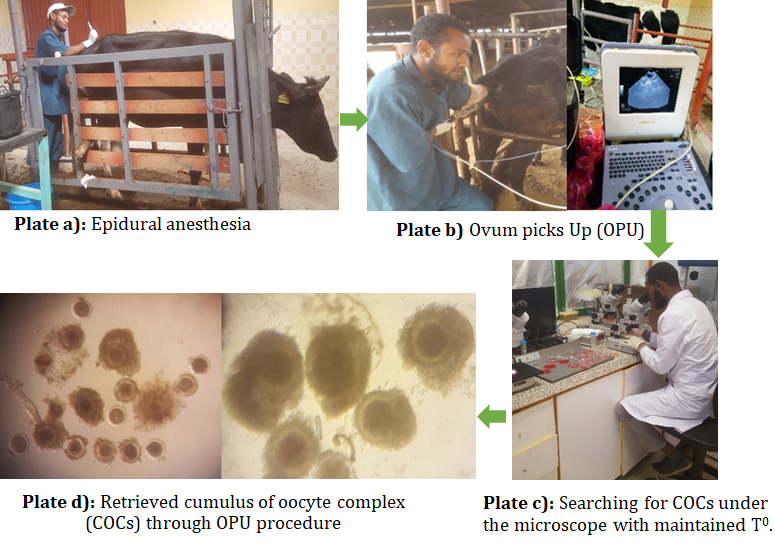
Before any activities, the animals were restrained in a well suitably designed chute (crush) which allowed minimal movement. OPU was performed in a once and twice-per- week scheme of collection for each breed [11]. Twenty-four hours before the OPU procedure, the ovary of all donor animals was scanned and the dominant follicles were ablated. Before the follicle aspiration procedure, each cow was given a 3-4 ml epidural injection of 2% local anesthesia, Lidocaine.
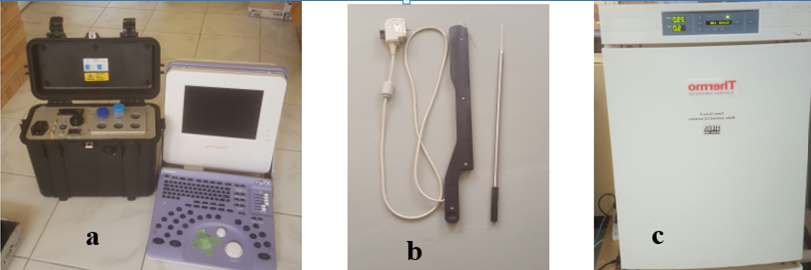
OPU was performed using a 6.5 MHz frequency transvaginal transducer (Aloka SSD500, GmbH, and Minitube Germany). The collection apparatus consists of 1.2 × 75 mm (for cows) and 0.9 × 70 mm (for heifers) disposable long single-lumen needles along stainless steel dorsal needle guidance attached to a sterile aspiration line of a 2-m long silicon tube fitted to an aspiration pump that has a warming block (mini-tube, GmbH, Germany) adjusted to 38.7 0C. A vacuum aspiration pressure of 72 mmHg to 85 mmHg equivalent to a flow rate of 12-18 ml/min was connected to a 50 ml falcon tube containing 5 ml Dulbecco’s phosphate buffered saline (DPBS) as an oocyte recovery medium. Oocyte recovery media were prepared from DPBS supplemented with an anticoagulant, heparin 20 µg/ml, 2% FCS, 50 µg/ml antibiotic, gentamicin, and 25 mM HEPES and readymade OPU media from ivf bioscience were also used. After a thorough mixing of the ingredients, the medium was sterilized by filtration using a 0.2 μm sterile low protein binding acrodisc syringe filter and then kept in a CO2 incubator maintaining 5% CO2 at 38.5°C with 90% - 95% relative humidity. At each OPU session, the internal genitalia and the ovaries were palpated rectally and ultrasonically identified. The number of follicles on both ovaries was counted, size of the follicle was measured and categorized as small < 6 mm in diameter, medium, 6–10 mm in diameter, and large >10 mm in diameter. After aspiration, an extra 1-2 ml of oocyte recovery medium was aspirated to wash and recover oocytes left in the needle and silicone tubing. The aspirated fluid was protected from sunlight and transported to the laboratory. The sample aspirated content was poured on a searching Petri dish placed on a warming plate (HT 50; Minitube, Germany) regulated to 37.3°C in the morning before going for oocyte aspiration to maintain the temperature, and waiting for 5-10 minutes to settle and searched under the stereo microscope.
Classification of Cumulus-Oocyte Complex (COC)
The searching and washing Petri dishes were placed on a warming plate (HT 50; Minitube, Germany) regulated to 37.3°C in the morning before going for oocyte aspiration to maintain the temperature. The COC collection falcon tube containing oocytes was also kept in a warm water bath at 39°C (plate 3) until searched one by one. The aspirated fluid was transferred to the searching dish, waiting for 5-10 minutes to settle, and searched under the stereo microscope.
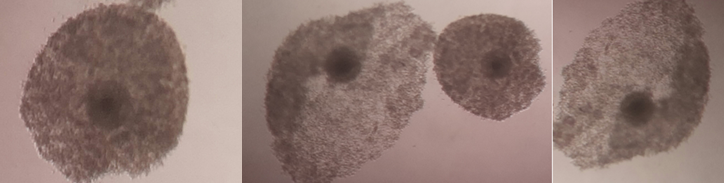
All oocytes were picked up by using a gamma gamma- radiated IVF catheter and transferred to culture dishes containing washing medium for grading. The recovered COCs were morphologically graded into four categories according to oocyte cytoplasm aspect, number, and morphology of cumulus cell layers surrounding the oocyte (Table 1). The numbers of retrieved oocytes per aspirated follicles were recorded to determine the oocyte recovery rate (ORR) according to Gabr and Gad, (2014) formulas. Oocyte quality index (OQI) was calculated to reflect overall oocyte quality according to Baki et al. [12].
| Characteristics of COCs | Representative COCs image | |
|---|---|---|
| Grade I | Oocyte with more than three layers of CC homogeneous cytoplasm, homogenous color, Ooplasm. | |
| Grade II | Oocyte with slightly with three or fewer layers of CCs, heterogeneous cytoplasm, Homogenous color, Ooplasm. | |
| Grade III | Partially denuded: oocytes showing complete removal of CCs from less than 1/3 of zona pellucida (ZP) surface. Granulated in homogeneous Ooplasm | |
| Grade IV | Partially or completely denuded CC with strongly non-homogeneous cytoplasm expanded CC with strongly non-homogeneous cytoplasm. |
Table 1: parameter for morphological categorizing of retrieved cumulus-oocyte complex (COC). CC: Cumulus Cell; COC: cumulus oocyt
Results
Overall COC Recovery Rate and Quality
During this study irrespective of collection scheme and breed, a total of 1645 follicles ≥ 3mm were visualized, counted, and aspirated. From punctured and aspirated follicles, 889 oocytes were retrieved from both Boran and their Holstein crossbred cows with an overall recovery rate of 54.0% as indicated in Table 2. Regarding OPU session and oocyte recovery rates concerning the breed, for Boran and Crossbred cows were 51.9% (436/840) and 56.3% (453/805) respectively and there were no significant differences were observed between the Breeds in oocyte recovery rate.
| Breed | Animal number | Puncture session (N) | Counted & punctured follicle (N) | Oocyte retrieved (N) | Recovery rate (%) |
|---|---|---|---|---|---|
| Boran | 1 | 12 | 86 | 43 | 50 |
| 2 | 12 | 69 | 29 | 42 | |
| 3 | 12 | 54 | 25 | 46.3 | |
| 4 | 12 | 60 | 16 | 26.7 | |
| 5 | 12 | 64 | 18 | 28.1 | |
| 6 | 16 | 91 | 45 | 49.5 | |
| 7 | 16 | 99 | 56 | 56.6 | |
| 8 | 16 | 102 | 59 | 57.8 | |
| 9 | 16 | 103 | 67 | 65 | |
| 10 | 16 | 112 | 78 | 69.6 | |
| Total | 10 | 140 | 840 | 436 | 51.9 |
| Boran*HF Crossbred | 1 | 12 | 75 | 30 | 40 |
| 2 | 12 | 72 | 40 | 55.6 | |
| 3 | 12 | 60 | 14 | 23.3 | |
| 4 | 12 | 56 | 27 | 48.2 | |
| 5 | 12 | 67 | 46 | 68.7 | |
| 6 | 16 | 80 | 41 | 51.3 | |
| 7 | 16 | 94 | 55 | 58.5 | |
| 8 | 16 | 113 | 61 | 54 | |
| 9 | 16 | 101 | 68 | 67.3 | |
| 10 | 16 | 87 | 71 | 83.6 | |
| Sub-total | 10 | 140 | 805 | 453 | 56.3 |
| Total | 20 | 280 | 1645 | 889 | 54 |
Table 2: Oocyte recovery rate of Boran and Crossbred cows.
In Vitro Maturation of COCs
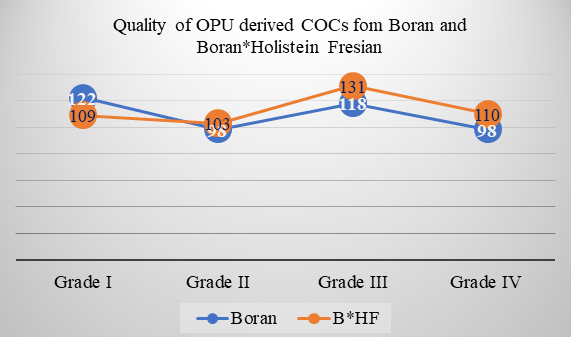
Irrespective of breed, 76.6% of collected COCs (GI, GII &GIII) were incubated for maturation and the remaining 23.4% of collected COCs were discarded due to poor quality. Breed-wise, 77.5 % (338/436) were from Boran and 75.7% (343/453) were from Bora *Holstein Friesian cross. While 81.6% (107/131) and 78.9% (124/157) of the recovered COCs from Boran and Crossbred, respectively, were incubated. The classification of retrieved quality of COCs for both breeds was indicated in the chart below.
Irrespective of breed, the overall maturation rate of incubated COCs was 61.8% (421/681). In Boran and Boran*Holistein Friesian crossbred, 64.8% (219/338) and 58.9 % (202/343) maturation rates of COCs were recorded respectively and statistically no difference was observed in either breed. There was a significant difference (p<0.05) in the maturation rate of COCs matured in BO-IVM and TCM-199, which is 80% (296/370) and 40.3 (289/519) respectively.
In Vitro Fertilization and Cleavage Of Matured Cocs
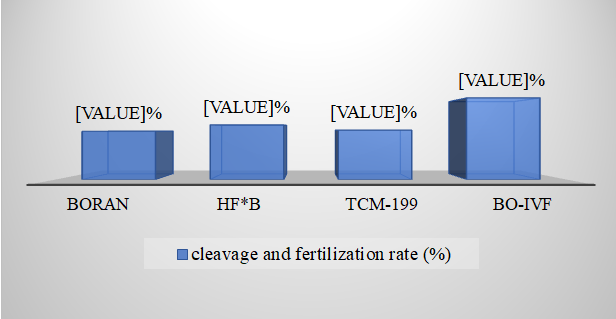
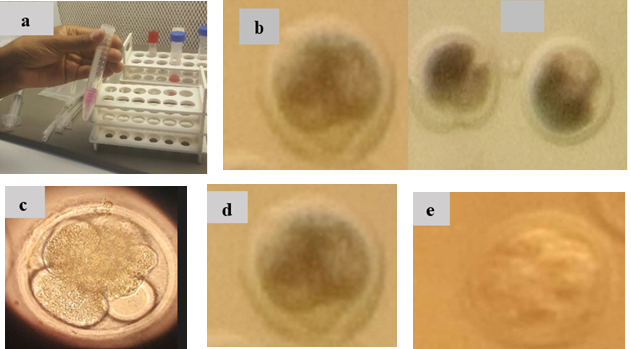
Figure 6: Fertilized COCs at different developmental stages (cell). a) sperm preparation technique, b) two-cell embryo c) four-cell embryo d) eight-cell embryo e) early morula embryo. Regardless of the type of breed and media used, the overall fertilization/cleavage rates for the inseminated COCs were 36.6% (154/421). The fertilization and cleavage rate of COCs for both Boran and Boran*Holistein Friesian crossbred were indicated in Figure 4. The current findings indicated that, compared to TCM-199 IVF media, BO-IVF media, which is complete and readymade, were cleaved and fertilized significantly (p<0.05).
Discussion and Conclusion
It is well noticeable and known that the type and composition of the medium used is highly influencing the in vitro embryo production procedure in general. Hence, the proportion of in vitro maturation and fertilization rate in BO-IVM and BO-IVF media was greater compared to TCM- 199 maturation and TCM-199 fertilization media. There was no effect of breed on the maturation and fertilization rate of COCs mature and fertilized on both types of media. This finding indicates that, both breeds as a comparable potential to be used as oocyte donors for IVEP technology. In this study, compared to Rahman et al., [14]; Mohammed [15], and, Sonjaya and Hasbi, [16], the maturation and fertilization rate of the COCs were less in this study. This is mainly due to frequent fluctuation of the electrical power. The higher maturation rate of oocytes matured in BO-IVM media may be due to it being complete, readymade, and containing the optimum amount of glucose as it is an essential energy source substrate which is important for oocyte metabolism (Wrenzycki and Stinshoff, 2013) [17] In general; even though a greater number of follicles were counted and aspirated from the ovary of both Boran and crossbred donors, relatively, there is a slightly greater number of COCs recovered from Crossbred than the Boran breed. This may be due to ovary size, and the ovary of Boran is smaller in size than that of a crossbred. Because all the chain in the in vitro embryo production procedure, in vitro oocyte maturation, in vitro oocyte fertilization, and in vitro oocyte culture is conducted under an artificial environment, its success rate is limited mainly due to the type of media used including other intrinsic and extrinsic factors. Hence, the type of media used is vital and a determining factor in producing a high-quality and greater number of embryos. Conflicts of Interest: The authors declare no conflict of interest.
Acknowledgment
The authors diligently acknowledge the Ethiopian Institute of Agriculture, Debre Zeit Agricultural Research Center Ministry of Innovation and Technology- Ethiopian. Furthermore, the authors also gratefully thank Professor Curt. R. Youngs for his technical support and media donation.
References
-
McClintock SE, Ouma R, Baltenweck I, Okeyo AM, McClintock AE, et al. (2007) Proceedings of Association for the Advancement of Animal Breeding and Genetics, Australia.
-
Watanabe YF, Souza AH, Mingoti RD, Ferreira RM, Batista EOS, et al. (2017) Number of oocytes retrieved per donor during OPU and its Relationship with In vitro embryo production and field fertility following embryo transfer. Anim Repro 14(3): 635-644.
-
Berglund B (2008) Genetic improvement of dairy cow reproductive performance. Reprod in Domest Anim 43: 89–95.
-
Wildt DT (1990) Potential applications of IVF technology for species conservation. In: Fertilization in Mammals BD, et al. (Eds.), Serono Symposium, USA, pp: 344-364.
-
Mutembei HM, Muasa BS, Origa R, Jimbo S, Ojango JK, et al. (2008) In-vitro Fertilization in cattle and its potential practical application in Kenya. Precede 6th FVM Biennial Scientific Conference.
-
Mutembei HM, Muasa BS, Origa R, Jimbo S, Ojango JK, et al. (2009) Delivery of appropriate cattle genotypes to Eastern African smallholder farmers through in-vitro embryo production technology technical procedures, prospects, and challenges. Aspects of African Biodiversity. Proceedings of the Pan Africa Chemistry Network Biodiversity Conference, RSC Publishing 321: 84-90.
-
Suthar VS (2008) In vitro embryo production (IVEP) through transvaginal ultrasound-guided aspiration of follicles in crossbred cattle. M. V. Sc. Thesis submitted to Anand Agricultural University, pp: 90.
-
DZARC (2020) Debre Zeit Agricultural Research Center Annual Rainfall Agro metrology record.
-
Lawrence TE, Whatley JD, Montgomery TH, Perino LJ (2001) a comparison of the USDA ossification-based maturity system to a system based on dentition. J Anim Sci 79(7): 1683-1690.
-
Natumanya R, Owiny D, Kugonza R (2008) the potential of Ankole cattle abattoir ovaries for in vitro embryo production. Afr J Anim Biomed Sci 3(1): 1819- 4214.
-
Laticia B, Adona PR, Guemra S, Monzani PS, Moyses Miranda (2019) Ovum picks up: cow treated with a single dose of follicle-stimulating hormone. Journal of Agricultural Science 11: 231-239.
-
Baki Acar D, Birdane MK, Dogan N, Gurler H (2013) Effect of stage of estrous cycle on follicular population, oocyte yield and quality, and biochemical composition of serum and follicular fluid in Anatolian water buffalo. Anim reprod sci 137(1-2): 8-14.
-
Petyim S, Bage R, Hallap T, Bergqvist AS, Larsson B et al. (2003) two different schemes of twice-weekly ovum pick-up in dairy heifers: effect on oocyte recovery and ovarian function. Theriogenology 60(1): 175-188.
-
Rahman MM, Morshed S, Juyeana NS, Bhuiyan MU (2018) Determination of effective media and its hormone and protein Supplementation for in Vitro Maturation of Oocytes of Indigenous Zebu Cows. Bangladesh Journal of Veterinary Medicine 16(1): 45-51.
-
Mohammed T (2018) Maturation, Fertilization, and Implantation of Cattle Ova Cultured in Different Media. the Eurasia Proceedings of Science, Technology, and Engineering & Mathematics 3: 181-188.
-
Sonjaya H, Hasbi H (2019) Potential of embryo production techniques in vitro for improving Bali cattle seed stock. Earth and Environmental Science, pp: 1-8.
-
Wrenzycki C, Stinshoff H (2013) Maturation Environment and Impact on Subsequent Developmental Competence of Bovine Oocytes. Reprod Dom Anim 48: 38-43.
- The Digital Stethoscope: Harnessing AI in Veterinary Medicine Without Losing Our Healing Touch
- Meningoencephalomyelitis of Unknown Etiology: Short-Term Effect of Two Treatment Protocols on Cerebrospinal Fluid
- Safety and Efficacy of the HomeoPet Cough in Domestic Pets –A Clinical and Correction Analysis Based Upon User Response Survey
- Non Human Animals Responses to Social Loss
- Owner Reported Clinical Outcomes of a Homeopathic Proprietary Preparation for the Treatment of Upper Respiratory and Nasal Disorders in Companion Animals
- Effects and Diagnostic Approach of Ultrasound in Veterinary Practice: A Systematic Review