
CO₂-WAG Injection and Hysteresis Effects: Insights for Improved Oil Recovery and Carbon Sequestration Applications
This study examines the impact of hysteresis effects on oil recovery during CO₂-Water Alternating Gas (WAG) injection, a widely applied enhanced oil recovery (EOR) technique with significant implications for carbon capture, utilization, and storage (CCUS). Hysteresis, which describes the cyclic variations in relative permeability during alternating imbibition and drainage cycles, plays a critical role in accurately modeling multiphase flow in porous media. However, its effects on CO₂-WAG efficiency remain underexplored in many reservoir simulations. To address this gap, a sector model was developed to simulate CO₂- WAG injection, incorporating hysteresis effects to assess their influence on oil recovery and CO₂ trapping. The results reveal that considering hysteresis leads to a 0.9% increase in the oil recovery factor, demonstrating its role in enhancing residual oil mobilization. Moreover, hysteresis significantly contributes to greater CO₂ retention within the reservoir, improving long-term sequestration potential and reducing gas production rates. The findings underscore the necessity of incorporating hysteresis in CO₂-WAG simulations to improve the accuracy of EOR performance predictions and optimize CCUS strategies. Neglecting hysteresis can lead to an underestimation of both oil recovery and CO₂ trapping potential, impacting reservoir management decisions. This study highlights the importance of precise relative permeability modeling in CO₂-WAG injection to ensure reliable performance forecasts and efficient field implementation.
Abbreviations
CCUS : Carbon Capture, Utilization, and Storage; CO₂-WAG: Carbon Dioxide-Water Alternating Gas; EOR: Enhanced Oil Recovery; GOR: Gas-Oil Ratio; WAG: Water Alternating Gas; Sw – Water Saturation; Krw – Relative Permeability of Water; Kro – Relative Permeability of Oil; Sg – Gas Saturation; So – Oil Saturation; Sor – Residual Oil Saturation; Sgc – Critical Gas Saturation.
Introduction
A significant portion of oil remains unrecovered after conventional waterflooding methods in oil reservoirs. Enhanced oil recovery (EOR) techniques, particularly Water- Alternating-Gas (WAG) injection, have emerged as promising solutions to improve hydrocarbon recovery. Among WAG processes, CO₂-WAG injection has gained increasing attention due to its dual role in enhancing oil production and facilitating carbon capture, utilization, and storage (CCUS) [1, 2, 3]. The efficiency of CO$_2$-WAG injection, however, is strongly influenced by various reservoir characteristics, including rock wettability, relative permeability, and hysteresis effects in multiphase flow.
The CO$_2$-WAG process involves alternating injection of CO$_2$ and water to enhance oil displacement efficiency. This technique leverages the advantages of both CO$_2$ flooding and waterflooding, improving microscopic displacement efficiency by reducing oil viscosity while also enhancing macroscopic sweep efficiency through controlled mobility. Extensive research has demonstrated that CO$_2$-WAG injection provides superior recovery performance in comparison to continuous CO$_2$ injection [4, 5]. However, various operational challenges, such as early gas breakthrough, viscous fingering, and inefficient CO$_2$ utilization, necessitate further optimization of injection strategies.
Several field applications of CO$_2$-WAG have demonstrated significant improvements in oil recovery, particularly in mature reservoirs [6, 7]. Experimental studies have confirmed that alternating gas and water injection results in better sweep efficiency and reduced gas override in heterogeneous reservoirs [8, 9]. However, the effectiveness of CO$_2$-WAG is significantly affected by relative permeability hysteresis, which dictates the phase flow behaviour during cyclic injection sequences.
Hysteresis in relative permeability refers to the cyclic variation observed during successive imbibition and drainage processes. In CO$_2$-WAG injection, these effects influence phase mobility and fluid displacement efficiency, ultimately impacting oil recovery and CO$_2$ sequestration [10]. The primary cause of hysteresis is the presence of capillary trapping, which results in different relative permeability curves during drainage and imbibition cycles. Hysteresis is particularly significant in three-phase flow, where the transition between gas, oil, and water saturations introduces complex interactions that conventional models often fail to capture accurately. Neglecting hysteresis in numerical simulations can lead to an underestimation of both oil recovery and CO$_2$ trapping efficiency [11, 12].
The impact of hysteresis on relative permeability can be described mathematically using the Larsen-Skauge model, which accounts for cyclic saturation variations:
$$K_{ro} = K_{ro}^0 \left( \frac{S_o - S_{or}}{1 - S_{or} - S_{wc}} \right)^n$$
$$K_{rg} = K_{rg}^0 \left( \frac{S_g - S_{gc}}{1 - S_{or} - S_{wc}} \right)^m$$
where $K_{ro}$ and $K_{rg}$ are the relative permeabilities of oil and gas, respectively and $n$ and $m$ are empirical parameters derived from experimental data.
Recent studies highlight the importance of incorporating hysteresis in CO$_2$-WAG simulations. Wang et al. synthesized advancements in CO$_2$-WAG techniques and found that accounting for hysteresis significantly enhances the prediction of oil recovery and gas retention. Moreover, Kumar et al. demonstrated that CO$_2$ trapping is more pronounced when hysteresis is included, reducing gas breakthrough and stabilizing the gas-oil ratio (GOR). Their work aligns with the findings of Abdullah & Hasan, who reported a 12% incremental oil recovery in reservoirs where WAG injection was preceded by waterflooding, emphasizing the role of phase trapping mechanisms.
Despite significant advancements, further research is needed to develop more accurate models that fully integrate hysteresis effects in CO$_2$-WAG processes. Most existing reservoir simulators still rely on simplified empirical correlations, which may not capture the complex multiphase interactions occurring in heterogeneous reservoirs [13, 14]. Recent efforts have explored the use of machine learning and artificial intelligence to improve hysteresis modelling in CO$_2$-WAG simulations [15, 16, 17, 18, 19, 20]. Future work should focus on refining these models to enhance predictive capabilities and optimize WAG injection parameters for various reservoir conditions.
This study presents a novel approach by integrating a comprehensive hysteresis-dependent relative permeability model into CO$_2$-WAG simulations to enhance the accuracy of oil recovery predictions. Unlike previous research that often oversimplifies hysteresis effects, this work explicitly accounts for cyclic variations in multiphase flow to provide more reliable assessments of oil displacement and CO$_2$ sequestration efficiency. By refining the representation of hysteresis within numerical models, this study addresses key uncertainties in CO$_2$-WAG injection performance and offers practical insights for optimizing field-scale implementation. Furthermore, this research contributes to the ongoing advancement of EOR and CCUS technologies by demonstrating how improved modelling techniques can maximize both oil recovery and long-term carbon storage.
Materials and Methods
Properties of the Sector Model
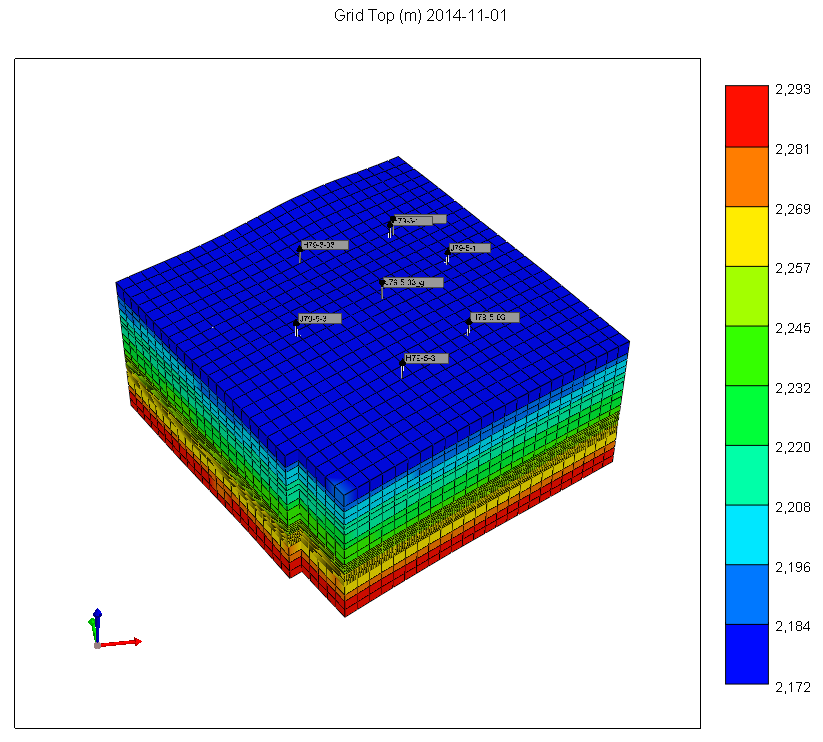
A compositional simulation software was used for the numerical simulation of this study. Figure 1 demonstrates a 3-D view of a seven-point CO$_2$-WAG sector model.
There are 32 layers in the model, each layer has its own characteristics. The porosity and permeability distribution in some of the layers are shown in the figures below.
Reservoir Porosity
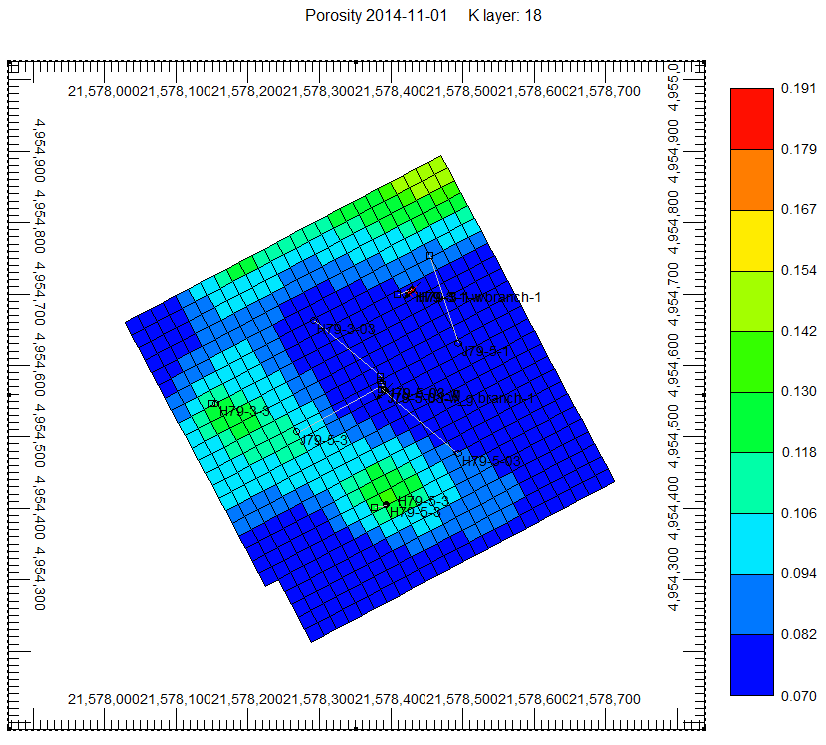
In this reservoir, the porosity ranges from 0.070 to
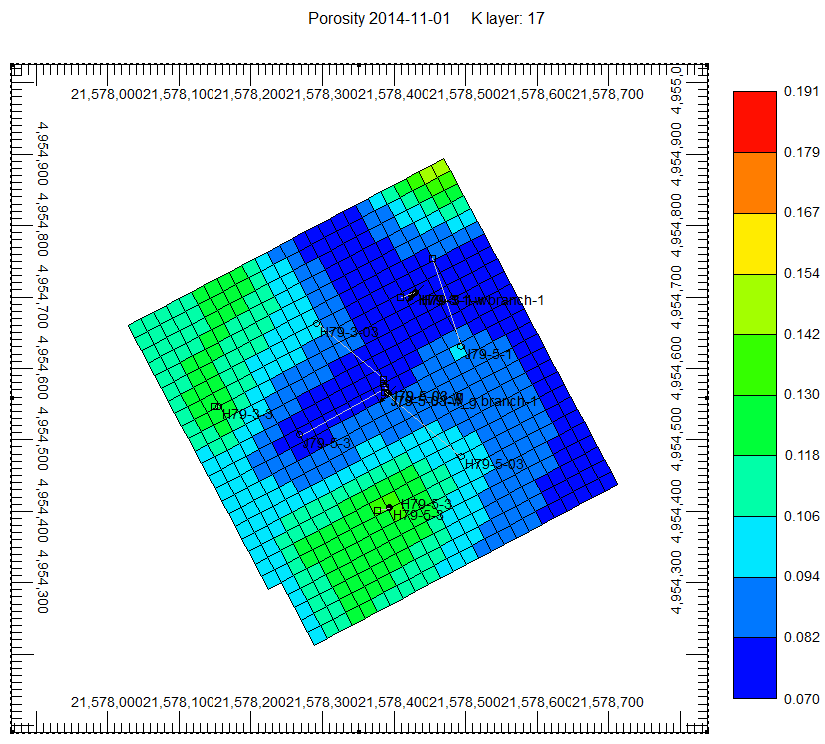
0.091. Most of the layers have the same porosity, however, the highest porosity value of 0.091 was found in layer 20. Figure 2 portrays porosity distributions in Layers 17 and 18.
Reservoir Permeability
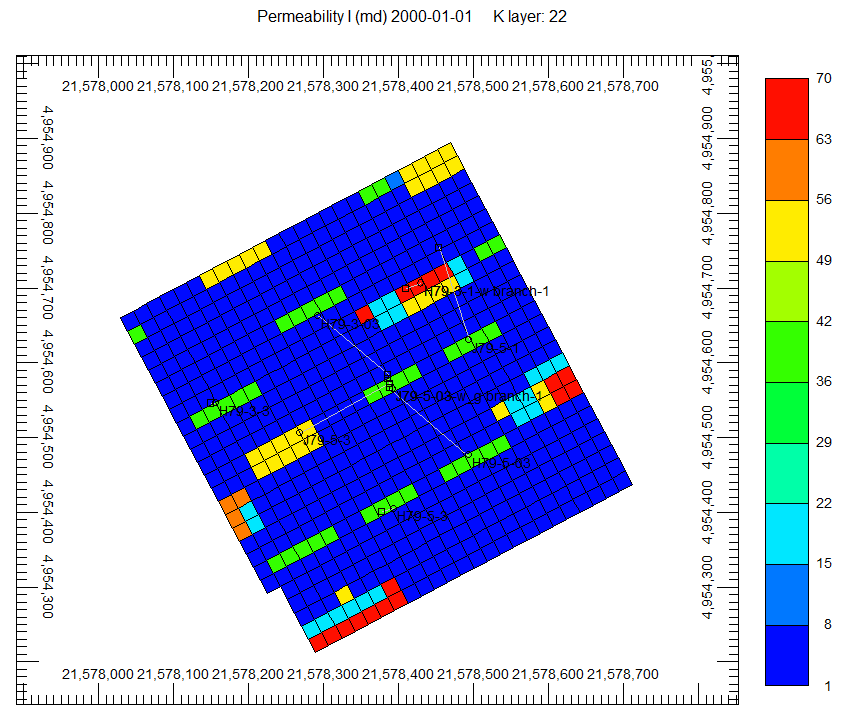
The study reservoir is heterogeneous. Permeability variation is high, with permeability ranging from 1 to 70 md. Most of the layers have the same permeability. The highest permeability was found in layers 20 and 22 (Figure 3). In reservoirs with high permeability contrast, CO2 migration,
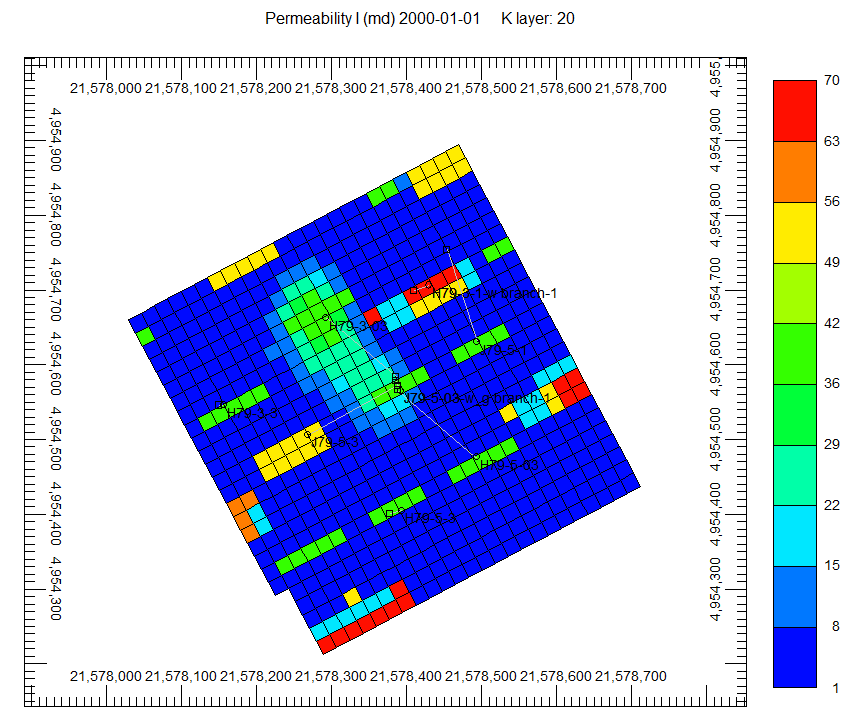
and trapping efficiency are affected by the variability in flow paths. High-permeability layers, such as layers 20 and 22, act as conduits, enabling faster CO2 migration. Low-permeability layers may impede vertical migration and provide additional trapping mechanisms.
Relative Permeability Curves
Figures 4 and 5 depict the relative permeability data for two rock types (Type 1 and Type 2). Both formations are water-wet (Swx values when krw/kro vs. Sw intersect are larger than 0.5).
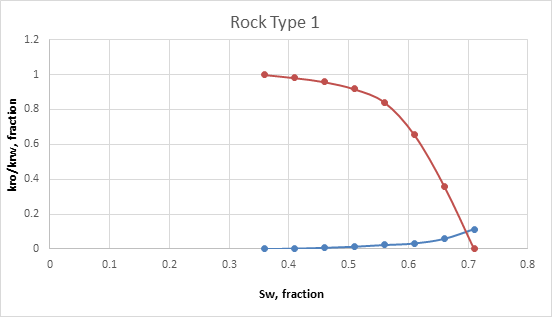
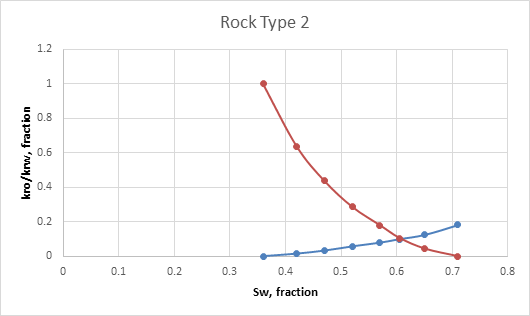
In water-wet rocks, despite the enhanced trapping, an early gas breakthrough may occur in high-permeability zones, requiring careful control of injection rates and cycle timing. In addition, high water retention in smaller pores can lead to water blockage in low-permeability zones, reducing oil recovery efficiency. However, the addition of CO2 will potentially alter rock wettability over time (e.g., shifting to intermediate-wet conditions), affecting long-term WAG performance.
Results and Discussions
Capillary Pressure Curve
This capillary pressure curve in Figure 6 demonstrates the hysteresis effect in a water-wet system during CO₂- WAG (Water Alternating Gas) injection, illustrating the relationship between capillary pressure and water saturation for both drainage (gas injection) and imbibition (water injection) cycles. In water-wet reservoirs, capillary pressure is generally higher at low water saturations due to strong water-wetting tendencies, which retain water in smaller pores and make it more challenging for gas to enter those pores. This behaviour is evident in the drainage curve, where capillary pressure decreases sharply as water saturation increases. The hysteresis loop, represented by the separation between the drainage and imbibition curves, reflects the cyclic changes in relative permeability due to the alternating injection of water and gas. When water saturation increases during the imbibition phase, capillary pressure does not return along the same path as in drainage.
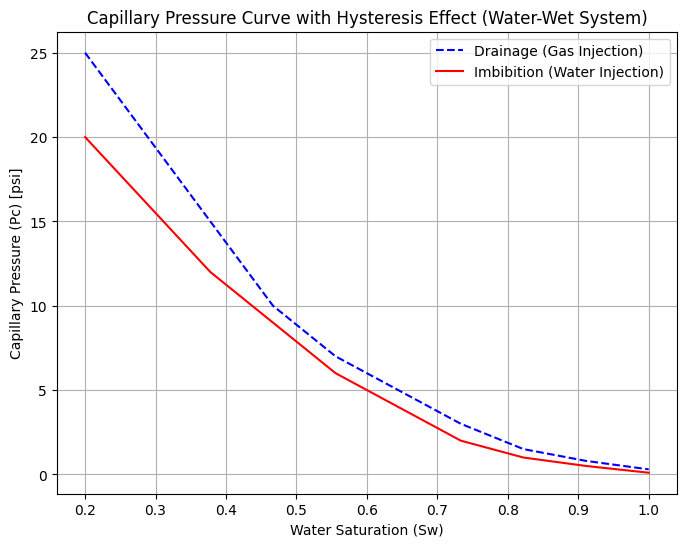
Instead, it follows a lower-pressure path due to the residual trapping of CO₂ within the pore spaces. This trapped CO₂ leads to a lower relative permeability for gas and a higher relative permeability for oil, aligning with the findings from our simulation results.
Alignment with Research Findings
The observed hysteresis effect supports several key findings in this research work: Increased Oil Recovery: By enhancing oil mobility through trapped CO₂, hysteresis increases the oil recovery factor. As seen in our results, oil production was 0.9% higher when hysteresis was included in the model, showing that this effect contributes positively to oil displacement efficiency.
Reduced Gas Production and Lower GOR: With more CO₂ retained within the reservoir due to hysteresis, the gas-oil ratio (GOR) was lower compared to scenarios without hysteresis. This aligns with the curve, where increased CO₂ trapping is indicated by the lower capillary pressure along the imbibition path, implying that less gas is produced back to the surface.
Enhanced CO₂ Trapping and CCUS Potential: The hysteresis loop in this water-wet model highlights how CO₂ is effectively sequestered within the reservoir. This trapping effect not only boosts oil recovery but also strengthens the potential for carbon capture and storage (CCUS), supporting the dual objectives of CO₂-WAG injection in both EOR and environmental sustainability.
Impact of Hysteresis on CO2-WAG Sector Model
Typically, hysteresis refers to the reversal of saturation changes, whether they are from growing to decreasing or vice versa. When two consecutive injections are made in the same direction, as in CO2-WAG flooding, there may be a hysteresis effect between them in terms of relative permeability. Hence, it is crucial to have a solid grasp of three-phase relative permeability that considers cyclic hysteresis effects to simulate a WAG process numerically and accurately. Using the well-known Larsen-Skauge model, the influence of relative permeability hysteresis effects on WAG simulation was investigated. The study findings demonstrated that taking hysteresis into account increased oil output.
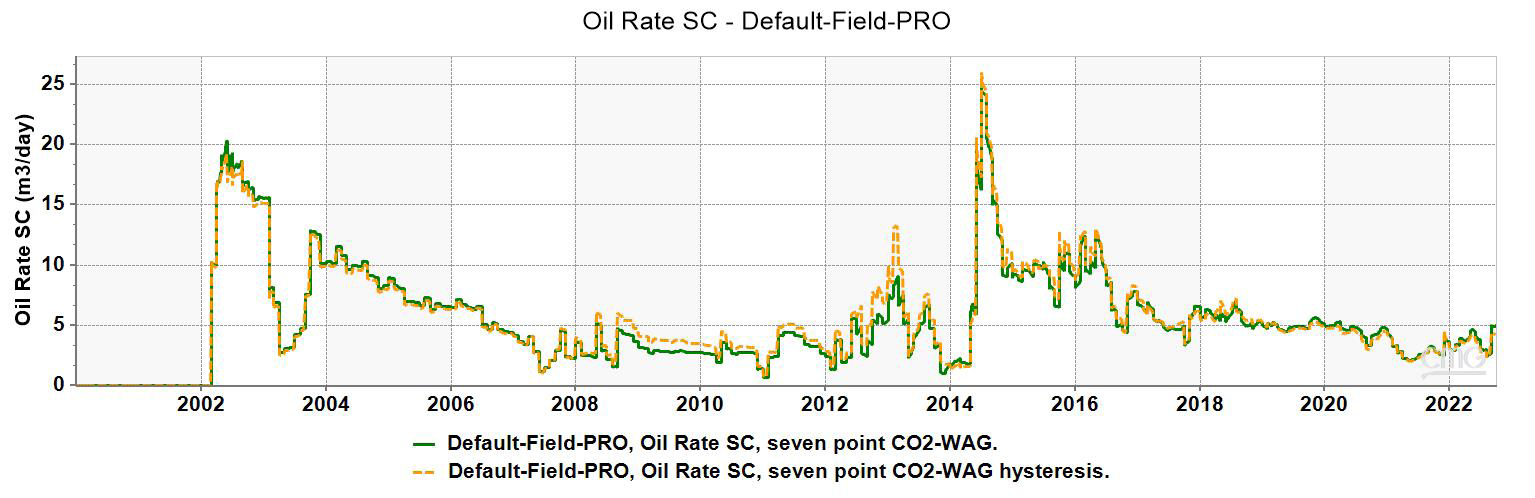
The oil production rate increased with the effect of hysteresis, as seen in Figure 7. There was a frequent fluctuation in both cases throughout the period.
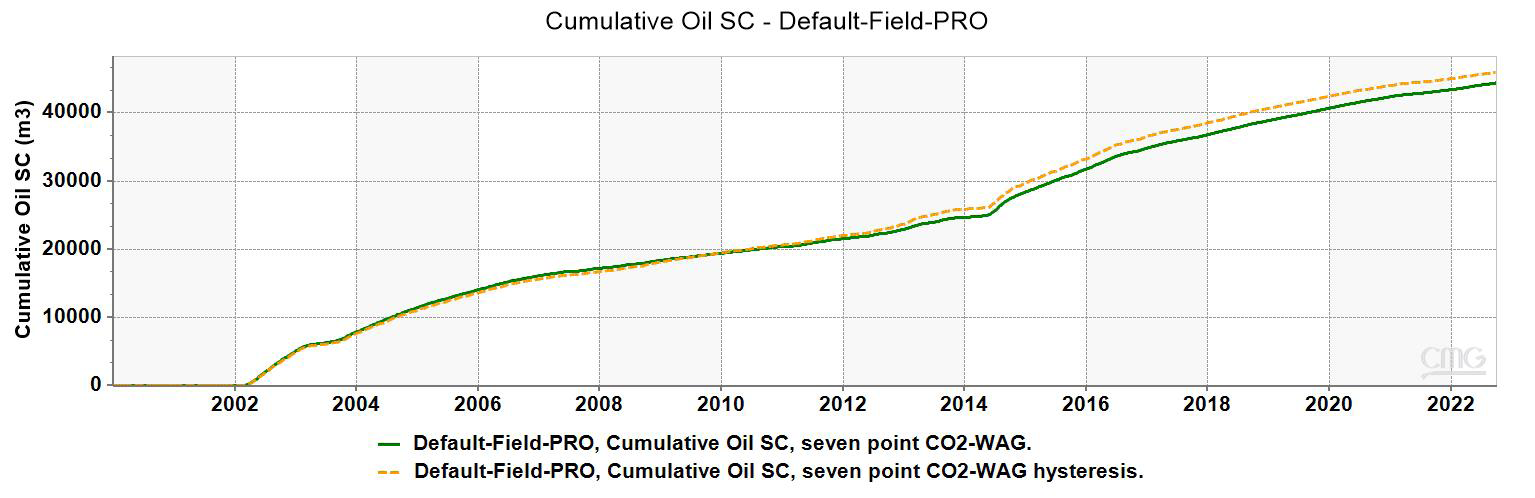
In terms of oil production, considerable improvement was observed with the effect of hysteresis (Figure 8). The cumulative oil production for CO2-WAG w/ and w/o hysteresis at the end of the period was recorded at about 48,000 m3 and 45,000 m3, respectively. With the effect of hysteresis, the cumulative oil production of the CO2-WAG model was around 3,000 m3 higher compared to the one without the hysteresis effect.
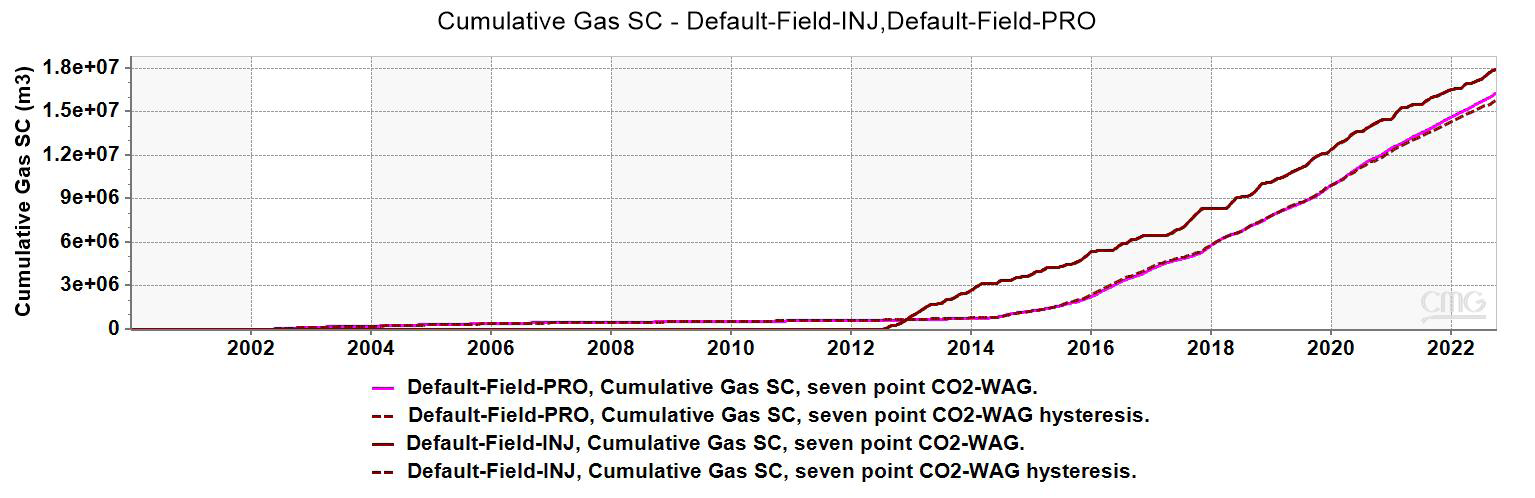
The same amount of gas was injected in both scenarios. However, the simulation results showed that less gas was produced by CO2-WAG when hysteresis effects were included. This implies that the hysteresis effect can not only help in improving oil production but is also effective in lowering gas production. The gas injection and production during CO2- WAG w/ and w/o hysteresis effect is presented in Figure 9.
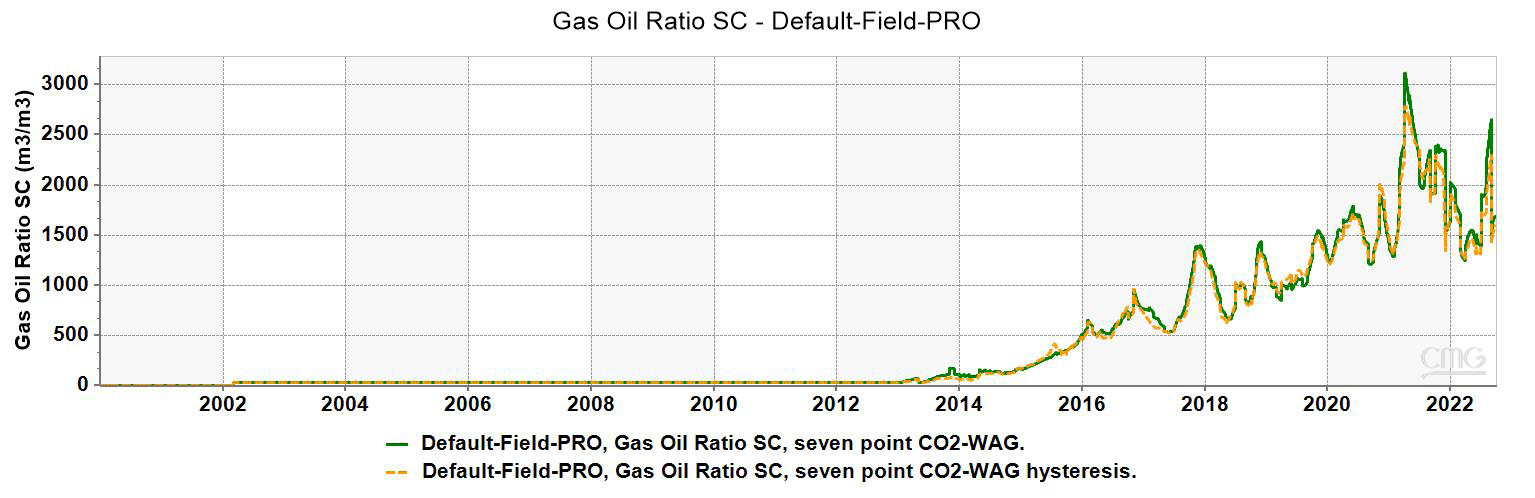
Effects of hysteresis on Gas-oil ratio (GOR) were also studied (Figure 10). The simulation results indicated that GOR values went down when hysteresis was considered. The reason is attributed to more CO2 trapping in the reservoir.
As depicted in Figure 11, water cut values in production also dropped when considering the effect of hysteresis, leading to lower operational costs.
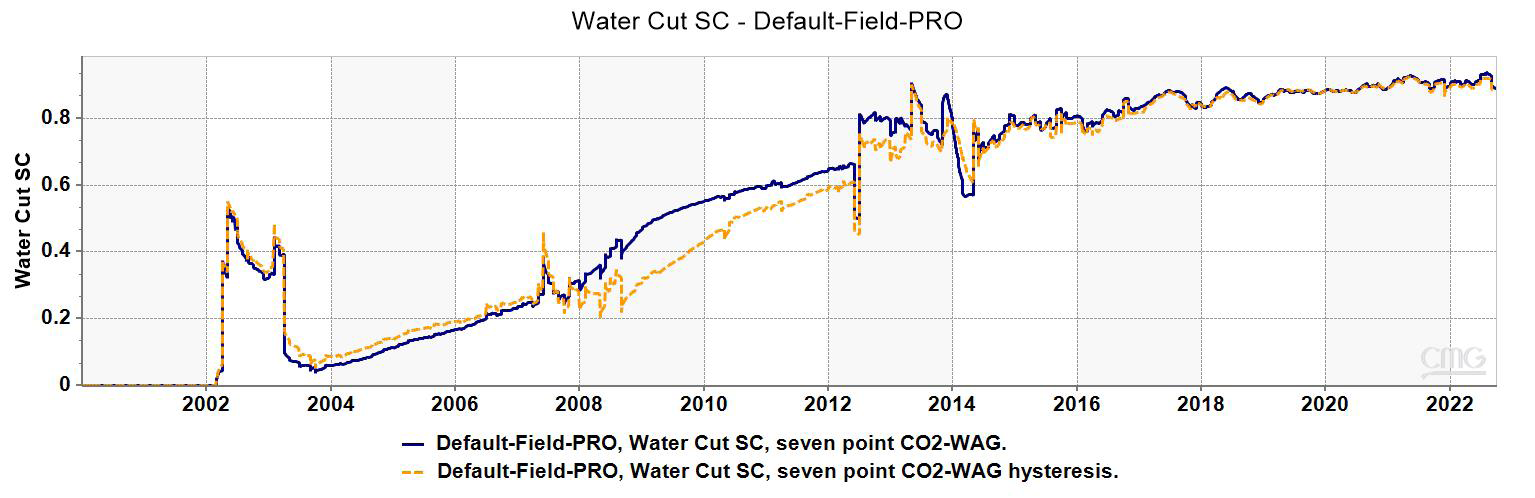
The three-phase relative permeabilities, which have a considerable effect on the recovery of oil, are decided in large part by the phase mobility. To obtain accurate three-phase relative permeability estimates, the effects of hysteresis must be taken into consideration in the WAG flooding simulations. By considering the effects of hysteresis, we essentially consider the impact of the trapped CO2 in the reservoir. Substantial quantities of trapped CO2 (sequestered) in the reservoir cause lower relative permeability for gas and higher relative permeability for oil, which increases oil mobility and in turn enhances oil recovery efficiency.
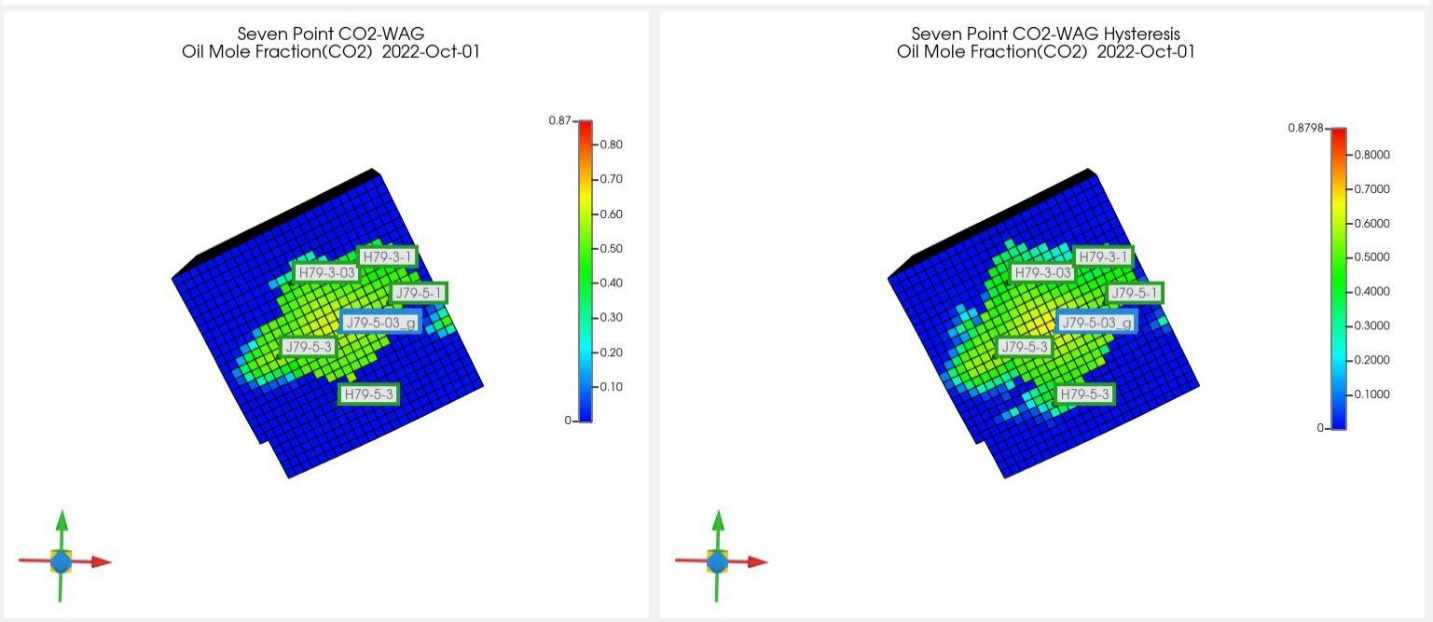
Accordingly, by excluding hysteresis effects, both sequestered CO2 volumes and oil recovery are underestimated.
Figure 12 compares the CO2 content in the water-wet reservoir model for the CO2-WAG injection w/ and w/o hysteresis effects. The figure on the left represents a CO2- WAG simulation that does not include hysteresis effects, whereas the figure on the right characterizes a model that does. As depicted in the Figure, CO2 trapping is considerably higher when hysteresis effects are considered.
Finally, the oil recovery factor also increased by considering hysteresis effects. Without added hysteresis effects, the recovery factor of CO2-WAG was 26% however, it jumped to 26.9% by including hysteresis effects (Table 1). This implies that the recovery factor increased by 0.9% when considering hysteresis effects.
| Injection Methods | Oil Recovery Factor |
| CO2-WAG | 26.0% |
| CO2-WAG with hysteresis | 26.9% |
Table 1: Oil recovery factors with and without hysteresis effect.
Conclusions
This study underscores the significant role of hysteresis effects in enhancing the efficiency of CO₂-WAG injection for oil recovery and carbon sequestration applications. By incorporating hysteresis in the sector model, we observed a 0.9% increase in the oil recovery factor, a reduced gas production rate, and a lower gas-oil ratio (GOR), all of which highlight the importance of accurately modelling three-phase relative permeability under cyclic saturation changes. The presence of hysteresis led to greater CO₂ trapping within the reservoir, not only boosting oil recovery but also contributing positively to CCUS efforts by effectively sequestering CO₂ in- situ. This research findings indicate that without hysteresis, models may underestimate both oil recovery and CO₂ trapping potential, leading to unrealistic projections. Therefore, incorporating hysteresis is essential for reliable simulation outcomes in CO₂-WAG processes, which ultimately enhances decision-making in EOR and CCUS projects. Future research could expand on these findings by exploring hysteresis effects under varying injection parameters and reservoir conditions, further optimizing CO₂-WAG applications for sustainable oil recovery and carbon storage.
References
-
Ali SM, Pal N, Mondal S, Sharma S, Srivastava A (2022) Experimental investigation of CO₂-water alternating gas injection in a sandstone reservoir. J Petrol Sci Eng 208: 109766.
-
Zhang Y, Liu Y, Zhang X (2023) Optimization of CO₂-WAG injection for enhanced oil recovery and carbon storage in heterogeneous reservoirs. Fuel 331:125853.
-
Farajzadeh R, Krastev R, Rossen WR (2020) Modeling and simulation of CO₂ foam for enhanced oil recovery. Adv Colloid Interface Sci 277: 102110.
-
Alvarado V, Manrique E (2019) Enhanced oil recovery: An update review. Energies 12(19): 1529-1575.
-
Ayirala S, Rao D (2006) Comparative evaluation of WAG and hybrid gas–water injection schemes for heterogeneous reservoirs. J Can Petrol Technol 45(4): 37-46.
-
Bai B, Li L (2022) A comprehensive review on CO₂-WAG injection: Mechanisms, challenges, and field applications. Fuel 314: 123091.
-
Kulkarni M M, Rao D (2005) Experimental investigation of miscible and immiscible WAG processes. Petrol Sci Technol 23(2): 161-178.
-
Lake LW, Johns RT, Rossen WR, Pope GA (2022) Fundamentals of enhanced oil recovery. Soc Petrol Eng.
-
Bennion DB, Bachu S (2006) Dependence on permeability hysteresis in gas reservoirs. SPE Reserv Eval Eng 9(4): 336-345.
-
Zhou D (2011) Modeling three-phase hysteresis effects for CO₂-WAG processes. Fuel 90(6): 2030-2038.
-
Nasrabadi H, Hughes R G (2021) Advances in three- phase relative permeability modeling. J Petrol Sci Eng 200: 107750.
-
Skauge A, et al. (2010) Experimental evidence of hysteresis effects in WAG injection. J Petrol Sci Eng 74(1- 2): 69-81.
-
Ahmed K, Zhao H, Yu M (2022) Advances in modeling three-phase flow hysteresis in heterogeneous reservoirs. Petrol Sci Technol 40(6): 456-473.
-
Sun Z, Zhang X, Wang J (2023) Machine learning applications in enhanced oil recovery: A comprehensive review. J Petrol Sci Eng 220: 111223.
-
Gao X, Sun Y, Li J (2023) Machine learning-based predictive modeling for hysteresis effects in CO₂-WAG flooding. J Petrol Explor Prod Technol 13(3): 987-1003.
-
Li Y, Huang S, Tang X (2023) AI-driven optimization of CO₂-WAG injection in heterogeneous reservoirs. Energy Rep 9: 102345.
-
Zhang J, Wu H (2022) Comparative evaluation of WAG injection strategies in tight reservoirs. J Petrol Explor Prod Technol 12: 981-996.
-
Lee S (2021) Multiscale modeling of CO₂ trapping in WAG processes. Fuel 307: 121837.
-
Brown K (2020) The impact of heterogeneity on WAG flooding efficiency. J Petrol Sci Eng 187: 106760.
-
Wang P, Chen M (2019) Advances in CO₂-WAG flooding: Insights from laboratory experiments and field applications. Petrol Sci 16: 987-1002.
- Nigeria’s Vulnerability in the Face of Global Energy Policy
- A Simulation Study of Investigation of Optimum Oil Production Performance by Applying Various Gas Injection Methods in Oil Reservoir
- Characterization of Permo-Triassic Reservoirs through Thermal Maturity Assessment of Westphalian Source Rocks in the Cheshire Basin
- Influence of Microwax on the Rheological and Thermal Behaviour of a Wax Crude Oil
- Real-Time Monitoring and Performance Optimization of Steam Injection in Heavy Oil Reservoirs Using Fiber Optic Sensing and Integrated Predictive Simulation Models
- Rapid On-Site Determination of the Total Petroleum Hydrocarbon Content of Soils by Handheld Fourier Transform Near-Infrared Spectroscopy: Development of a Global, Site- and Scanner- Independent Calibration Model