
Effect of Hybridization on the Nutrient Compositions of Two Cultivars of Solanum aethiopicum L. (Solanaceae) Found in Anambra State
The desire for modification of valuable crop species for human nutritional fulfilment and economic growth is essential. Two cultivars of Solanum aethiopicum L. found in Anambra State were hybridized to raise an F1 that might combine the attributes of the parental lines for enhancement in yield and biochemical contents for health nutritional requirements. The emasculation method was adopted, using Solanum aethiopicum var “Anara Adazi as the female parent and transference of functional pollen from Solanum aethiopicum var “Anara” to the stigmas of the emasculated plant at the correct time. Nutrient analysis of the fruits of F1 and the parental plants was carried out using the standard method. Analysis of variance was used for data analysis. Results revealed that parental plants and F1 contained investigated nutrients in varied amounts. Ash content, crude fiber and protein were higher in the fruit of F1 hybrid (10.90±0.11, 21.50±1.51, and 5.01±0.24) respectively when compared to the fruits of the parental plants. Data obtained indicated that when two Solanum aethiopicum plants of different but closely related cultivars are crossbred, a new hybrid that possesses enhanced characteristics of the two parent plants are produced. Results of the nutrients analysis demonstrated that hybridization could significantly increase food nutrients in eggplant (S. aethiopicum).
Introduction
Solanum aethiopicum is a cultivated eggplant native to Africa [1]. It is one of the dominant vegetables in tropical Africa [2]. The fruit, leaves, shoots, and roots of Solanum aethiopicum are used for both food and medicinal purposes, and the specific use depends on the geographic area and/ or plant type whereas fruits, leaves, and roots of bitter cultivars are used as medicine in many African countries to treat ailments ranging from colic and high blood pressure to uterine complaints [3, 4, 5].
Various cultivars of Solanum aethiopicum exist due to differences in morphological and biochemical characteristics. Some cultivars are cultivated for their edible fruits and leaves while others are cultivated for their edible fruits only [2].
However, there are two cultivars of Solanum aethiopicum (Solanum aethiopicum var “Anara Adazi” and Solanum aethiopicum var “Anara”) commonly grown and found in Anambra State. One is grown and found mainly in Adazi town in Anambra State. It is called “Anara Adazi” in Igbo because they are the major people that produce it in Anambra State, and the variety grows and performs well in Adazi town more than in any other place. It is normally grown for its edible fruit. It is about 2 m in height. The stem, branches, and leaves are hairy and usually armed with prickles thus not edible. The cultivar is particularly grown for its edible fruit which is sweet and sometimes a little bitter. The fruit shape is like a hen’s egg or oval with stripes. It is consumed mostly unripe which is pale green in color [6].
The other cultivar is grown for its edible fruits and leaves. It is cultivated by every farmer in Anambra State unlike “Anara Adazi”. It is about 1.5 m in height, thus var “Anara Adazi” produces more branches and probably more fruits. The stem, branches and leaves are without hair or prickles and thus edible unlike “Anara Adazi”. The fruit shape is round with ribs. The fruit size is smaller than that of Solanum aethiopicum 3-6 cm in diameter. The leaves and fruits are relatively bitter and more medicinal hence; old people prefer it to “Anara Adazi”. “Anara Adazi” is preferably used for the cola to this cultivar. This cultivar is more resistant to pests than the other cultivar [6].
The desire for modification of valuable crop species for human nutritional fulfillment and economic growth is on the increase and highly essential. Plant breeders manipulate the plant attributes, structure, and composition, to make them more useful to humans. They replace the unsuitable qualities in crops with suitable ones so that it would result in an increased yield of crops of improved qualities through the process of crossbreeding or hybridization. The objective of this study was to assess the effect of hybridization on nutrient compositions of two cultivars (Solanum aethiopicum var “Anara Adazi” and Solanum aethiopicum var “Anara”) of Solanum aethiopicum L. found in Anambra State.
Materials and Methods
Area of Study
The experiment was conducted at the research farm of the Department of Botany, Nnamdi Azikiwe University Awka, Anambra State (60 12N/, 70 04E/) during the 2019 cropping season from the month of March 2019 to August 2020 to determine the effect of hybridization on yield and biochemical compositions of two cultivars of Solanum aethiopicum L. (Solanaceae) found in Anambra state. Awka is located in the tropical rainforest zone of Nigeria with average temperatures, annual rainfall, and relative humidity of 29 0C, 2700mm, and 87% respectively.
Design of the Study
The experiment was laid out in a Randomized Complete Block Design replicated three times.
Procurement and Identification of Plant Materials
The two cultivars of Solanum aethiopicum var “anara Adazi” and var “anara” were procured between of March – April 2019 from Adazi town in Anambra State. The cultivars were authenticated at the Department of Botany Nnamdi Azikiwe University, Awka.
Testing the PH of the Soil Sample
Some of the soil samples for the nursery were put in a clean, dry plastic jar. Stones were removed and clumps were crushed for better results. Three representative samples were gathered for proper confirmation of the soil. About ¾ of the jar was filled with sample sand and distilled water was added to cover the soil. The jar was capped and shaken vigorously a few times. The mixture was left to stand for 10 minutes to dissolve the salts in the soil. The pH tester was calibrated with a pH 7 and a pH 10 buffer solution. The jar cap was removed and the pH tester was placed into the wet soil slurry. The pH was then measured and recorded.
Seed Viability Test
After 20 g seeds of each cultivar were obtained, a viability test was carried out on them. This was done by soaking a handful of each cultivar in a beaker containing distilled water for approximately 3 minutes; the water was then stirred and allowed to settle. The seeds that floated on the surface of the water were discarded, while those that settled to the bottom of the beaker were selected. The seeds that floated on the surface of the soil were discarded while those that sank to the bottom of the beaker were selected.
Land Preparation and Sowing
The site for raising seedlings was cleared using a matchet and trashes were packed off and burned, a nursery bed of 2.4m x 3.0m and 0.5m apart were measured using a measuring tape, measuring rope, and pegs, and prepared to a fine tilt. Farm yard manure at the rate of 30t/ha was integrated during this exercise. 3 seeds per stand were sown at a spacing of 40cm x 60cm and later thinned to one seedling per stand when they are about 8-10 cm high. Plots were kept weed free throughout the experiment. Hoeing and hand-pulling methods were used.
Flowering started at about three –four weeks after transplanting and it was at this stage that hybridization was carried out. The artificial crossing was adopted because Solanum aethiopicum is a self-pollinating crop. This involved the removal of anthers with a pair of forceps from the Solanum aethiopicum var “anara Adazi” cultivar thus using it as a female parent before it dehisces and covering it with a study bag (foil) to avoid natural crossing by insects. This was followed by the collection and transference of ripe pollen grains from the Solanum aethiopicum var “anara” (male parent) to the stigma of the emasculated plant var (“anara Adazi”). Although several crosses were made but only few were successful. This pollination process was followed by fertilization and subsequent production of fruits (the F1 hybrid). This procedure was as outlined by Ilodibia et al. [7]. The mature fruits of both the parental plants and the F1 hybrid were harvested and dried before being taken for biochemical analysis.
Preparation of Samples for Proximate Analysis
Dried fruits of two cultivars of Solanum aethiopicum and the F1 hybrid were ground into fine (100-mesh screen) powder with a dry mill and then examined for proximate analysis.
Proximate Analysis
Six nutrients were examined. They include ash content, crude protein, crude fat, crude fiber, moisture content and carbohydrate according to the method of Egan H et al. [8] and James [9].
Proximate Result
Materials and Chemicals Used
The following materials were used; Desiccator (Narang Medical Limited, USA), muffle furnace (Bionics Scientific Technologies (P) LTD, Delhi India), spectrometer (Analytik Jena Germany), silica dish, kjeldahl flask, funnel, soxhlet apparatus, Whatman filter paper No. 42 (SIGMA- ALDRICH Laboratories, USA), thimble, electric oven(Bionics Scientific Technologies (P) LTD, Delhi India), grinder, retort stand, test tube and test tube rack, the crucible, weighing balance, petri dish (Bionics Scientific Technologies (P) LTD, Delhi India).
Chemicals and reagents used for the studies include: Tetrahydrosulphate (vi) acid, Boric acid indicator solution, Sodium hydroxide, Hydrochloric acid, Petroleum ether, Potassium hydroxide, Acetone, Phenolphthaline indicator, Ammonia, Dithezone solution, Carbon tetrachloride, Hydroquinoline, Phenonthroline, VanadoMolybidic acid, Selenium oxide.
Statistical Analysis
Data collected were analyzed using analysis of variance (ANOVA) and treatment means were separated using DMRT at 5% level of probability. Results were presented in Mean ± Standard Deviation
Results
Results of the study were presented in Table 1 and Figures 1-6.
Results were in mean ± standard deviation. Proximate result (Table 1) revealed varying quantities of the six nutrients in the fruits of Solanum aethiopicum cultivars and F1 hybrid. Ash content, crude fiber and protein were highest in the fruit of F1 hybrid. Moisture content, fat content and carbohydrate were highest in the fruit of Solanum aethiopicum var “anara” (Table 1).
| Moisture content (%) | Ash content (%) | Crude fiber (%) | Fat content (%) | Protein (%) | Carbohydrate (%) | |
|---|---|---|---|---|---|---|
| Var anara Adazi” | 8.45±5.52 | 10.80±0.05 | 21.24±1.12 | 30.15±0.03 | 4.90±0.08 | 15.20±0.04 |
| Var “anara” | 8.67±5.60 | 10.84±0.02 | 20.09±1.04 | 30.25±0.03 | 4.50±0.86 | 15.35±1.09 |
| F1 hybrid | 7.22±6.24 | 10.90±0.11 | 21.50±1.51 | 29.19±0.05 | 5.01±0.24 | 14.05±1.20 |
Table 1: Percent Proximate content of the fruits of Solanum aethiopicum Cultivars and F1 hybrid.
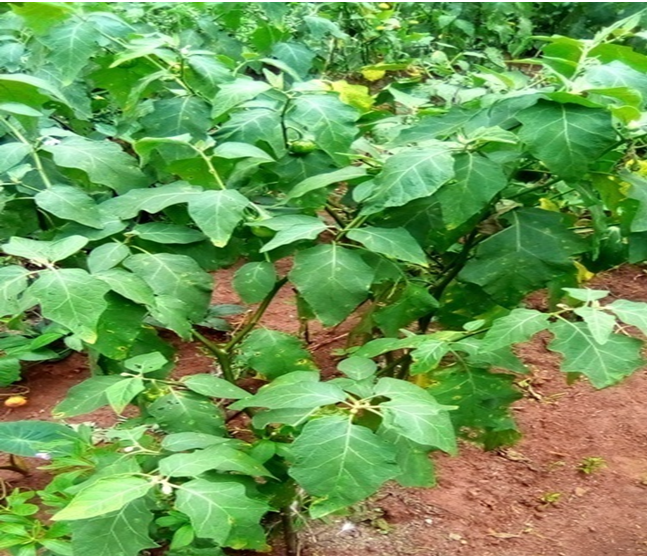
Figure 1 showed the plant in its natural habitat, it is mostly cultivated in farm as vegetable.
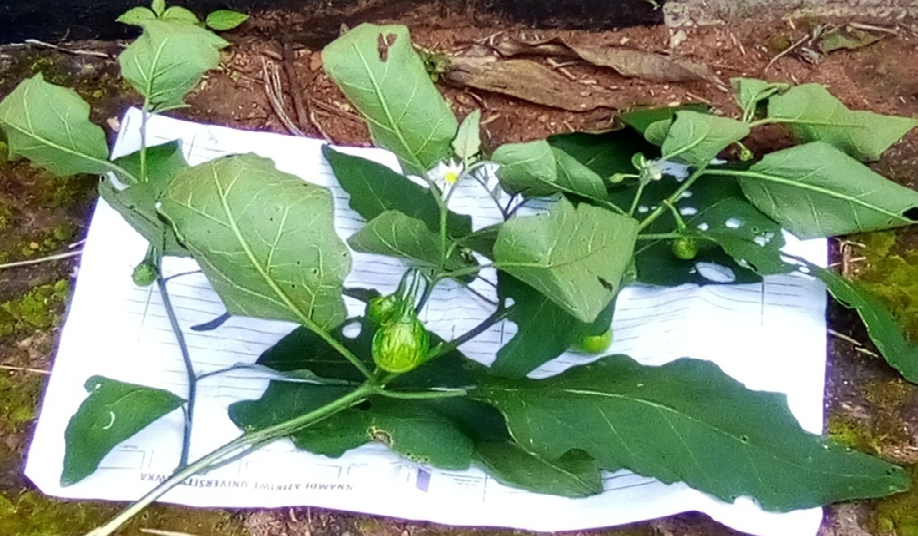
Figure 2 showed the stem, leaf, fruit and flower morphology. The stem, branches and leaves are hairy and usually armed with prickles thus not edible. The cultivar is particularly grown for its edible fruit which is sweet and sometimes little bitter. The fruit shape is like hen’s egg or oval with stripes. Flower colour is white.
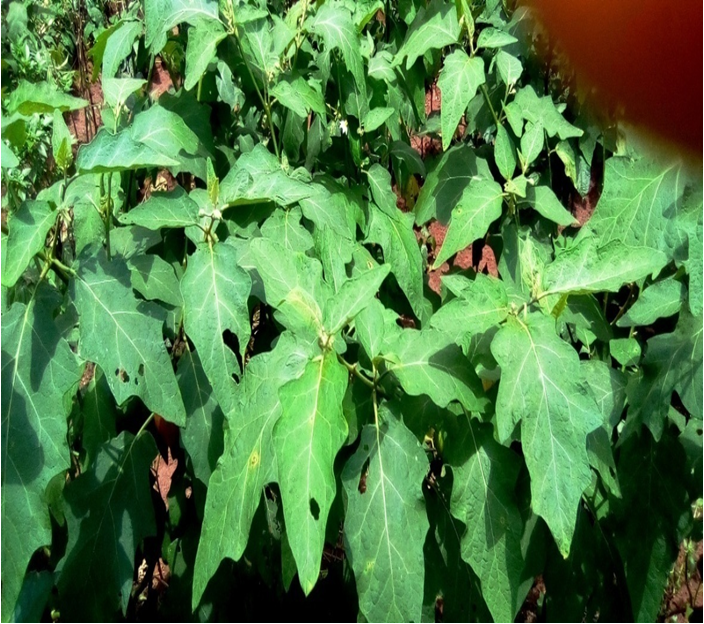
Figure 3 showed the plant in its natural habitat, it is mostly cultivated in farm as vegetable.
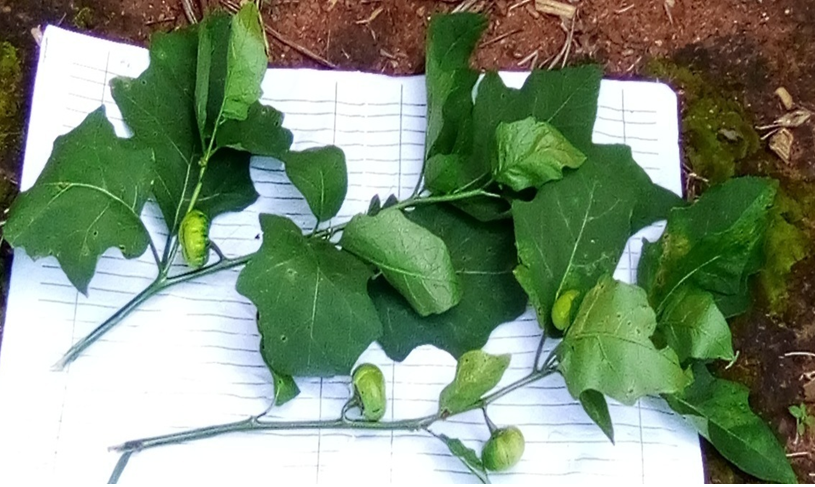
Figure 4 showed the stem, leaf and fruit morphology. The stem, branches and leaves are without hair or prickles thus edible. The fruit shape is round with ribs.
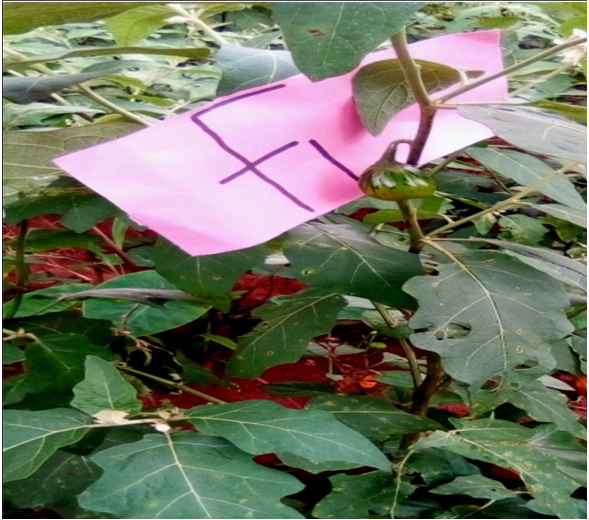
Figure 5 showed the F1 hybrid. The progeny of a cross between Solanum aethiopicum var “Anara Adazi” and Solanum aethiopicum var “Anara”.
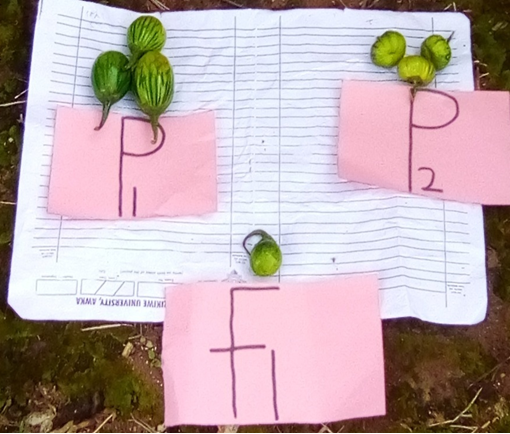
Figure 6: Fruits of parents compared with fruit of F1. Footnote: (P1) Solanum aethiopicum var “Anara Adazi” (P2) Solanum aethiopicum var “Anara” (F1) the hybrid Figure 6 showed the fruits of parental plants (Solanum aethiopicum var “Anara Adazi” and Solanum aethiopicum var “Anara”) compared with the fruit of fruit of F1. The F1 hybrid had more features of Solanum aethiopicum var “Anara Adazi” than Solanum aethiopicum var “Anara.
Discussion
Results of the study revealed varying quantities of the six nutrients in the fruits of Solanum aethiopicum cultivars and F1 hybrid. Ash content, crude fibre and protein were highest in the fruit of F1 hybrid (10.90±0.11, 21.50±1.51, and 5.01±0.24) respectively. Moisture content, fat content and carbohydrate were highest in the fruit of Solanum aethiopicum var “anara” (8.67±5.60, 30.25±0.03, and15.35±1.09) respectively (Table 1). Results implied that when two Solanum aethiopicum plants of different but closely related cultivars are crossbred, a new hybrid which possesses enhanced characteristics of the two parent plants is produced. This is an expression of heterosis. Secondly, when two plants with any pair of contrasting characteristics are crossbreed, one of the characters would often appear in the hybrid while the other remained hidden.
The results acquiesced with what Ilodibia et al. [7] reported that when two crops with a pair of allelic genes are crossbred, one of the allelic genes would often manifest in the hybrid while the other belaved masked. The manifested allele was called dominant allele while the masked one was called the recessive allele. Hence, Mendenlian law of segregation stated that the characteristics of a diploid organism are controlled by alleles occurring in pairs, of a pair of such alleles, only one can be carried in a single gamete. Correspondingly, the result of the study (Figure 6) Fruits of parents compared with the fruit of F1 indicated that Solanum aethiopicum var “Anara Adazi” has a number of dominant characters. This was also in line with the view of Ilodibia et al. [10] that the result of hybridization is a new hybrid which have the attributes of the two parents, though the attributes shown in the hybrid relates more to one parent than the other. In addition, the F1 hybrid however manifested an expression of heterosis, and possess fruits that are shorter than that of Solanum aethiopicum var “Anara Adazi” but larger than that Solanum aethiopicum var “Anara. This was in agreement with the findings of Ilodibia et al. [11] where he crossed C. annuum and C. frutescens. The result indicated that the F1 hybrid had the highest quantities of Ash content, crude fibre and protein when compared with the parents. This showed that hybridization of two cultivars of Solanum aethiopicum could richly improve nutrients in Solanum aethiopicum thus complementing heterosis. This conformed to the findings of Ilodibia et al. [12] who reported greater proportions of nutrients in F1 hybrid than the parent plants of two Capsicum species crossbred, also, with that of Velu et al. [13]
that competitive Zn and Fe nutritionally enhanced varieties can be created. The result agreed with the findings of Ilodibia et al. [7] that crossbreeding can result to enhancement in genetic variation in the population. F1 hybrid is thus a better option for Ash content, crude fibre and protein than the parental plants. These nutrients are substances that provide nourishment essential for maintenance of life and for growth by Ilodibia et al. [14]. The authors recommend and encourage other researchers to carry out hybridization especially on important vegetables for nutritional and health satisfaction.
Authors experienced some limitations during the procurement of the right varieties for cultivation and planting because the varieties do not grow and perform well in any place. The implication was that, it made the whole work last more than expected and cost more than planned.
Conclusion
Results revealed that when two Solanum aethiopicum plants of different but closely related cultivars are crossbred, a new hybrid that possesses enhanced characteristics of the two parent plants is produced. Results of the nutrient analysis demonstrated that hybridization could greatly enhance food nutrients in Solanum aethiopicum plant. This is a powerful expression of hybrid vigour. Secondly, when two crops with a pair of allelic genes are crossbred, one of the allelic genes would often manifest in the hybrid while the other belaved masked The result revealed that the F1 hybrid resembled Solanum aethiopicum var “Anara Adazi” more than Solanum aethiopicum var “Anara”.
Limitations
Authors encountered some limitations which prolonged the research more than expected like inability of the plant to yield good results after hybridization and financial problems.
Authors’ Contributions
This work was carried out in collaboration between all authors. Author CVI designed the study and all authors wrote the first draft of the manuscript and Author CVI managed the literature searches. All authors managed the analyses of the study and Author CVI supervised the work.
Competing Interests
Authors have declared that no competing interests exist
References
-
Afful NT, Nyadanu D, Akromah R, Amoatey HM, Annor C, et al. (2018) Evaluation of crossability studies between selected eggplant accessions with wild relatives S. torvum, S. anguivi and S. aethopicum (Shum group). Journal of Plant breeding and Crop Science 10(1): 1-12.
-
Schippers RR (2000) African Indigenous Vegetables: An Overview of the Cultivated Species. Natural Resources Institute, Chatham, UK, pp: 1-215.
-
Prohens J, Plazas M, Raigon MD, Segui-Simarro JM, Stommel JR, et al. (2014) Characterization of interspecific hybrids and first backcross generations from crosses between two cultivated eggplants (S. melongena and S. aethiopicum) kumba group and implications for eggplant breeding. Euphytica 186(2): 517-538.
-
Sunseri F, Polignano GB, Alba V, Lotti C, Bisignano V, et al. (2010) Genetic diversity and characterization of African eggplant germplasm collection. African Journal of Plant Science 4(7): 231-241.
-
Adeniji OT, Aloyce A (2012) Farmer’s knowledge of horticultural traits and participatory selection of African eggplant varieties (Solanum aethiopicum) in Tanzania. Tropicultura 30(3): 185-191.
-
Mabberley DJ (2017) Mabberley’s Plant-book: A portable dictionary of plants, their classification and uses. 4th (Edn.), Cambridge University Press, Cambridge, UK, pp: 1120.
-
Ilodibia CV, Achebe UA, Aziagba BO, Okeke NF, Udeorah SN (2017) Effects of crossbreeding on fruits characteristics of two species of tomatoes (S. esculentum L. and S. pimpinellifolium L.). Archives of Agriculture and Environmental Science 2(4): 305-307.
-
Egan H, Kirk RS, Sawyer R, Pearson D (1981) Frait Pearson Chemical Analysis of Food. 8th (Edn.), Longman Scientific and Technical, Churchill Livingstone, Edinburgh, Scotland, UK, pp: 211-212.
-
James CS (1995) Analytical Chemistry of Foods. 1st (Edn.), Springer New York, New York, US, pp: 53.
-
Ilodibia CV, Achebe UA, Udeorah SN, Arubalueze CU, Okoye CE (2018) Effect of Breeding on the Growth and Yield of Cucumis sativus (L.). Asian Journal of Research in Crop Science 1(1): 1-7.
-
Ilodibia CV, Okeke NF, Achebe U, Egboka TP, Chukwuma MU (2014) Plant breeding for food security sustainability and industrial growth. International Journal of Plant Breeding and Genetics 8(4): 219-223.
-
Ilodibia CV, Ugwoke CE, Egboka TP, Akachukwu EE, Chukwuma MU, et al. (2015) Breeding Pepper for Enhanced Food Nutrients. Asian Journal of Crop Science 7 (3): 214-218.
-
Velu G, Singh R, Huerta-Espino J, Pena J, Ortiz- Monasterio I (2011) Breeding for enhanced zinc and iron concentration in CIMMYT spring wheat germplasm. Czech Journal of Genetics and Plant Breeding 47(10): S174-S177.
-
Ilodibia CV, Arubalueze CU, Udearoh SN, Okafor BI, Agbanusi C (2018) Assessment of morphological and nutritional attributes of two varieties of Ipomoea batatas (L.) utilized in Nigeria. Archives of Agriculture and Environmental Science 3(4): 394-398.
- Evaluation of Proximate and Mineral Compositions of Momordica charantia L. (Cucurbitaceae)
- Targeting Superbugs: Efficacy of Bacteriophage Therapy against Antibiotic-Resistant Pseudomonas Aeruginosa in Urinary Tract Infections
- Genetic Insights into Prepubertal Gynecomastia: A Comprehensive Analysis of a Rare 45,X[2]/ 46,X, + mar[28] Karyotype
- The Efficiency of Biological Treatment Plants in Some Private Hospitals in the City of Basra, Iraq
- Exploring the Combined Efficacy of Carvacrol and Friedelin against Multi-Drug Resistant Bacteria in Upper and Lower Respiratory Tract Infections
- Isolation, Identification and Comparative Analysis of Oral Microbial Communities in Smokers and Non-Smokers: A Scientific Investigation