
Humic Acid Substances in Aquaculture for Fish Disease and Treatments
Fish are considerably susceptible to fluctuating environmental conditions thus, sudden changes in the parameters such as oxygen, pH, and especially the temperature of water cause stress in fish. In this circumstance, stress causes deterioration of the immune system, weakening of the defense mechanism against pathogens, and stimulation of secondary infections in fish. To cope with such issues, the use of drugs in aquaculture is gradually increasing. However, as the use of drugs makes the pathogens more resistant to antibiotics, the efficiency of the treatments decreases over time. In recent applications, the aim is not only to cure the disease but also to take preventive measures against the disease. Therefore, the search for alternative methods to reduce stress, enhance immunity, and prevent pathogen formation is important and up to date. Humic substances whose effects are investigated by scientific studies are formed as a result of the decomposition of plants and they are naturally found in the environments where organic substances are present. Since humic substances are part of the natural environment where fish live, the defense mechanism of the fish does not perceive this foreign matter as a threat. Humic acids, which generally have positive results in living organisms, may result in positive changes on some vital parameters of fish such as increased growth rate, healing of lesions, prevention of pathogen entry into the body, reduced pathogen load, and enhanced immune system when used as a feed additive. Besides, it has been supported by studies that the humic acid may help reduce negative physiological and histopathological results caused by stress, reduce toxic effects of heavy metal and organic pollutants and repair the damage caused by the disease more quickly. In this review, the latest knowledge on the effects of humic acid substances on two of the greatest problems of aquaculture systems which are fish diseases and relevant pathogens is discussed.
Introduction
Although aquaculture has not had high growth rates as in the 1980s and 1990s since 2000, it is still growing faster than other food production sectors; and it is stated that this sector plays an important role in improving food safety and human nutrition according to the 2030 hunger struggle agenda of FAO [1].
Parasitic factors that cause fish diseases are among the most common problems in aquaculture applications. In this sense, fish parasites are one of the primary reasons of economic losses, in densely stocked environments such as aquaculture facilities [2]. Because, adverse conditions such as poor water quality, malnutrition, and stress make it easier to increase and spread parasites in these intensive systems [3]. The use of antibiotics and chemotherapeutics developed to struggle with such situation are also unsustainable due to their undesirable effects on the environment [4]. Therefore, alternative approaches to prophylactic stimulation of the defense system of the fish have become more necessary [5]. Dietary supplements, medicinal and aromatic plants, non-specific immunostimulants, vaccines, probiotics, and prebiotics are some of these alternative methods for the prevention and control of diseases [6].
The use of alternative feed additives in animal husbandry has been increasing in recent years as alternative additives have the ability to enhance the growth and reduce the risk of diseases. Besides, their contribution to production and ecology by lowering the feed expenditures are also among the reasons for the preference of these substances [7]. Therefore, it has been stated in studies that humate compounds can be used as feed additives due to their growth-promoting properties [8].
Although humic acids are widely studied in agriculture and terrestrial animals, a limited number of studies have been carried out on aquaculture. In particular, there are almost no studies encountered on marine fish. Therefore, in this study some literature was reviewed to enlighten the current status of the use of humic acid on fish, to provide a source for future studies on its positive and negative effects, and to refer to its use in aquaculture.
What is Humic Acid?
Humic substances are the main constituents of natural organic substances that arise from the physical, chemical, and microbiological transformation of biomolecules. These substances are found in debris and soil. It is stated that approximately 95% of dissolved organic matter in water is composed of humic substances [9, 10, 11, 12], and those substances constitute nitrogen (N) and carbon (C) reserves [13, 14].
Humic substances; are divided into three major fractions which are; humic acid, fulvic acid, and humin [9, 15]. The distinction in these substances is resulting from the differences in pH levels and molecular weights [9, 16]. While humic acids dissolve at higher pH, they do not dissolve when pH level is below two. It is also stated in the literature that fulvic acids dissolve at all pH values, whereas humine does not dissolve at any value [13, 14]. Furthermore, humic acids differ from substances such as fulvic acid and huminic in that they dissolve in alkali environments, partially dissolve in water, and are insoluble in acidic environments [17].
Benefits of Humic Acid
Humic acids prevent the increment of pathogen presence by optimizing the pH in the digestive tract, inhibit the adherence of viral particles to the cell by antiviral action, promote the utilization of calcium and trace elements, and reduce the toxic effect of heavy metals [18, 19, 20]. It is also reported that those are also effective in recovering the damages arising from bacterial and parasitic sources, especially from fungal pathogens [5]. Humic acids are known as important antioxidants due to their powerful properties on free radical scavenging activities [4]. They are also expressed to stabilize the intestinal flora, thus enable efficient use of nutrients in animal feed [21]. Considering humic acids are part of the natural environment of the fish and the defense systems of fish are accustomed to these natural xenobiotics, those can be ideal candidates for use in aquaculture [9].
As well as regulating immunity and blood sugar [18, 22], the humic substances are stated to have antiviral, antimicrobial, antibacterial, antioxidant, antitumor, anti- inflammatory, anticlastogenic, antiallergic, antitoxic, antiulcerogenic, antirheumatismal, antiangiogenic, antipyretic, antimutagenic, and analgesic properties. Taking into account the abovementioned features, together with their anti-HIV and immuno-stimulatory properties, it seems viable to use the humic acids as feed additives in the diets of aquatic organisms [4]. No allergic, anaphylactogenic, teratogenic, embryotoxic, or carcinogenic effects are reported as humic substances are used in recommended doses as well as they do not have harmful effects on humans and animals [12, 23, 24].
The Use of Humic Acids in Aquaculture
Humic acids can be used as alternative natural feed additives due to their positive effects on the parameters such as larvae and egg yield, growth and feed intake, disease resistance, survival rate, suppression of secondary infections, detoxification of harmful metals and chemicals in water, and rapid recovery from ectoparasites [18, 21, 25]. Humic acids; can increase the physiological condition of the organisms, reduce physiological and histological damages caused by stress, and quickly repair damages caused by fish pathogens. Since humic acids have different advantages over stress, their ecophysiological relationship in aquaculture is emphasized [5].
In the present work, some of the studies investigating the effects of humic compounds on aquatic organisms were listed (Table 1) and reviewed briefly.
| Species | Treatment | Pathogen | Effect | Reference |
|---|---|---|---|---|
| Carassius aurata | Sodium | - | -Reduced mortality rate | 29 |
| Cyprinus carpio | humate | -Improvement in skin, fins and gills | ||
| Cyprinus carpio | Silver humate | - | -Bactericidal activity on Pseudomonas and Aeromonas cultures | 23 |
| Ictalurus punctatus | Potassium humate | -No effect on the intestinal microbial flora | ||
| Cyprinus carpio | Humic acid | Aeromonas hydrophila | increased weight gain and specific growth | 26 |
| -Reduced mortality | ||||
| Cyprinus carpio | Humus extract | Aeromonas salmonicida | -Reduced mortality | 30 |
| -Increased survival rate | ||||
| -Improvement in skin lesions | ||||
| Cyprinus carpio | Humic acid | - | -Promoted growth and feed utilization | 33 |
| -Detrimental effect on gill, liver and kidney | ||||
| Dicentrarchus labrax | Humic acid | Amyloodinium sp. | -Increased hemoglobin, hematocrit and NBT activity | 18 |
| -Improvement in gill filaments | ||||
| Litopenaeus vannamei | Fulvic acid | - | -Increased weight ratio | 37 |
| -Increased SOD, CAT and GSH values in hepatopancreas and hemolymph | ||||
| -Decreased HSP70 levels | ||||
| Mugil cephalus O. niloticus | Humate compounds | Saprolegniosis | -Increased survival rate | 32 |
| Oncorhynchus mykiss | Humic acid | Yersinia ruckeri | -Increased activities of pepsin, trypsin and lipase | 4 |
| -Increased survival rates | ||||
| Oncorhynchus mykiss | Humic substance | Yersinia ruckeri | -Positive effects on immune and serum biochemical parameters | 35 |
| -Increased survival rates | ||||
| Oreochromis niloticus | Humic acid | - | -Decreased growth performance | 38 |
| -Reduced occurrence of degeneration and vacuolization | ||||
| Oreochromis niloticus | Sodium humate | Aeromonas hydrophila | -Increased survival rate | 40 |
| -Increase in hepatosomatic index (HIS) with increasing doses | ||||
| Paramisgurnus dabryanus | Fulvic acid | Serratia, Acinetobacter, Aeromonas Edwardsiella | -Increase in the number of beneficial Lactobacillus sp. | 28 |
| -Increased growth | ||||
| -Enhancement on the wellness of intestine | ||||
| Plecoglossus altivelis | Humus extract | Flavobacterium psychrophilum | -Suppression of mortality | 31 |
| -Improvement in skin lesions | ||||
| Poecilia reticulata | Humic substance | Gyrodactylus turnbulli Dactylogyrus sp. | -Reduced ratio of infected fish and parasites per fish | 34 |
| Procambarus clarkia | Fulvic acid | Aeromonas hydrophila | -Increased body weight gain and survival rate | 36 |
| -Increased protease, lipase and amylase activities | ||||
| Rhamdia quelen | Humic acid | - | -Reduced weight gain and feed intake | 27 |
| Tambaqui juveniles | Humic acid | Salmonella hadar | -Reduced shedding of S. hadar | 39 |
Table 1: List of some studies investigating the effects of humic compounds on aquatic animals.
The effects of different humic substances in carp (Cyprinus carpio) and channel catfish (Ictalurus punctatus) were investigated [22]. According to the results, potassium humate did not show a significant effect on the intestinal microbial flora of fish. The antimicrobial effect of Pseudomonas and Aeromonas cultures and ten bacterial strains isolated from fish has been investigated and silver humate has been reported to be the most effective bactericide.
In a study with common carp (Cyprinus carpio), four different diets were prepared using humic acid, which incorporated into diets at 0.0%, 0.4%, 0.8%, and 1.0% [26]. Fish were fed with those diets for 45 days; the growth performance, immune response, and disease resistance against Aeromonas hydrophila were evaluated at the end of the study. It was stated that the weight gain, specific growth rate, and lysozyme activity were found to be significantly higher in the 0.4% and 1% humic acid supplemented groups compared to the control group. According to challenge test results, the highest mortality rate was reported to be in the control group while the lowest mortality was in the group fed with 0.8% and 1% humic acid supplemented feeds.
The effects of dietary humic acid on the growth performance of silver catfish (Rhamdia quelen) juveniles were tested at different pH levels (5.5 and 6.5) [27]. For this purpose four diets were prepared to contain humic acid at 0.0, 10.0, 25.0, and 50.0 mg L-1, and fed the fish for 40 days. At the end of the trial, the authors reported humic acid to be highly detrimental in the tested concentrations for juvenile silver catfish growth as it lowers the weight gain and the feed intake of fish.
In an experiment conducted to determine the effects of fulvic acid on growth performance and intestinal health of juvenile loach Paramisgurnus dabryanus, fish were fed with fulvic acid supplemented feeds which are incorporated into the diet at 0.0%, 0.5%, 1%, 1.5%, and 2% for 60 days [28]. It was stated that an elevating effect of fulvic acid was achieved on growth rates of fish with increasing doses and the maximum weight gain and specific growth rates were observed to be in the fish fed with the 1.5% fulvic acid supplemented diet. It was also reported that the fulvic acid supplementation decreased the presence of pathogenic bacteria Serratia, Acinetobacter, Aeromonas, and Edwardsiella, whereas an increase in the abundance of beneficial Lactobacillus was achieved in the intestine. The authors concluded that the fulvic acid might be an immune enhancer on loaches considering it promotes growth performance and enhances intestinal wellness of juvenile loach.
The effects of sodium humate on pathogen-exposed goldfish (Carassius auratus) and carp (Cyprinus carpio) was investigated [29]. It was stated at the end of the experiment that the sodium humate treatment reduced the mortality rate of infected fish and the fish treated with sodium humate showed significant improvement in skin, fins, and gills.
Six different diets were formulated to contain %0.0, 0.2%, 1.0%, 5.0%, 10.0%, and 20.0% humus extract for common carp Cyprinus carpio fry [30]. The fish were infected with Aeromonas salmonicida and fed with experimental feeds 30 days prior to the bacterial challenge and 22 days immediately after the challenge. At the end of the experiment, it was reported that the mortality and development of skin lesions such as ulcer and hemorrhages were significantly suppressed in the groups fed with the diets containing 1.0%, 5.0%, and 10.0% humus extract whereas the survival rates were higher in the fish fed with 5.0% and 10.0% humus extract supplemented feed. The authors have concluded that the humus extract treatment has been found to be effective to prevent A. salmonicida infection.
The preventive effects of orally administered humus extract on Ayu Fish (Plecoglossus altivelis) against the bacteria Flavobacterium psychrophilum was investigated [31]. For this purpose, the humus extract was incorporated into the diet at %0.0, 1.0%, 5.0%, 10.0%, and fed to fish for 30 days prior to the challenge and 21 days afterward. The feeds containing humus extract at 1.0%, 5.0%, 10.0% significantly suppressed the death rates, hemorrhages, and other skin lesions of fish challenged with F. psychrophilum. The mechanism of action on the protective feature of the extract was not expressed as the direct killing of bacteria or antibiotic activity, considering no distinct reduction in the bacterial count was achieved. It was reported at the end of the study that the humus extract was an effective feed additive against cold water disease.
In another study the effects of humate compounds on the control of Saprolegniosis, which leads to significant economic losses in fish farming were tested on Nile tilapia [32]. In the trial, fish were subjected to 5%, 10%, and 15% humate, and it was reported that the treatment of humate at 5% increased survival rates of the fish.
Dietary humic acid was incorporated into diets of common carp (Cyprinus carpio) whether it has an impact on growth performance and histopathology (gill, liver, and kidney) of fish [33]. At the end of the study, it was reported that despite dietary supplementation of humic acid (180 and 360 mg.kg-1) slightly promoted growth and feed utilization of fish; its detrimental effect on the tissues was found to be more evident.
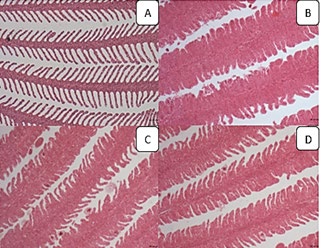
Five different diets were supplemented with humic acid (HA) at 0.00%, 0.25%, 0.50%, 0.75%, and 1.50% and fed to sea bass Dicentrarchus labrax for 15 days to investigate the effects of humic acid on some immunological and histological parameters of fish [18]. For this purpose the parasite Amyloodinium sp. was introduced to the culture water. It was reported that the hemoglobin, hematocrit levels, and NBT activity increased in the group of fish fed with 0.50% HA supplemented feed. It was also stated that the serum NBT and LA significantly decreased in the fish infested with Amyloodinium sp. while MPO activity did not change. According to histopathological results, 0.50% HA supplemented feed caused an improvement in gill filaments compared to other experimental groups against Amyloodinium sp. infestation (Figure 1) [18]. It was concluded that the HA has positive effects on some health- promoting parameters of Dicentrarchus labrax juveniles challenged with Amyloodinium sp.
In a different study, humic-rich culture water and synthetic humic supplemented feed both reduced the ratio of infected fish (Poecilia reticulata) when challenged with parasites Gyrodactylus turnbulli and Dactylogyrus sp [34]. The authors have concluded that the humic-rich water and sludge derived from a recirculating aquaculture system has the ability to protect fish from ectoparasites, whereas humic compounds do not exhibit a toxic effect on the parasites used.
The effects of dietary humic acid on growth performance, haemato-immunological, and physiological parameters of rainbow trout juveniles were investigated in another experiment [4], in which, the authors fed the experimental fish with humic acid incorporated diets at 0.0%, 0.3%, 0.6%, and 1.2% for 60 days. At the end of the experiment, it was stated that the growth performance and haematological parameters of fish were not affected by humic acid supplemented diets whereas 0.6% humic acid supplementation significantly increased the activities of pepsin, trypsin, and lipase. After 20 days of exposure to the bacteria Yersinia ruckeri, to test the resistance of fish, significantly higher survival rates were reported to be in the 0.6% humic acid group. It was concluded that the dietary humic acid might be a good alternative to antibiotic treatments of Yersinia ruckeri infected rainbow trout (Oncorhynchus mykiss).
The effects of humic substances containing products FARMARIN®XP and INFISH-AQUA® on growth performances, immune responses, digestive enzyme activities, and disease resistance of juvenile rainbow trout challenged with the bacteria Yersinia ruckeri was investigated [35]. The diets were supplemented with FARMARIN®XP at 0.0%, 0.1%, 0.2%, 0.4% while a fifth experimental group was additionally formed and treated with INFISH-AQUA® (sulphadiazine 20% + trimethoprim 4%). The diets were given to the fish for 60 days and mortalities were recorded after the challenge test. It has been stated in the study that the dietary FARMARIN®XP may exhibit positive effects on immune and serum biochemical parameters of rainbow trout juveniles, increase the survival rates against Y. ruckeri, and therefore can be used as a non-antibiotic additive to prevent Yersiniosis disease.
In the fulvic acid study on red swamp crayfish (Procambarus clarkia), body weight gain and survival rate of crayfish were found to be higher in treatment groups according to the control group [36]. While protease, lipase, and amylase activities were significantly increased in the mid-dose group, the high dose did not affect these rates. As a result of the challenge of crayfish with Aeromonas hydrophila, the survival rate in all treatment groups was found to be higher than the control.
Fulvic acid incorporated diets were fed to Pacific white shrimp (Litopenaeus vannamei) at varying levels in a different study [37]. It was reported that the final wet weights were higher in moderate levels of fulvic acid (0.9% and 1.2%) than the control, whereas no statistically significant differences were observed at lower levels. Moreover, the HSP70 value in hemolymph and hepatopancreas reported to be decreased as the level of fulvic acid increased. According to the antioxidant parameters, SOD, CAT, and GSH values in the hepatopancreas and hemolymph was reported to be significantly higher in the treatment groups compared to the control.
The effects of humic acid and Yucca schidigera extract were examined whether they promote the quality of culture water under low water-exchange [38]. It was stated that the humic acid has a considerable effect on the availability of phosphorus compounds to benefit, and both substances were reported to reduce the effect of ammonia stress.
In a study conducted to evaluate possible control strategies against Salmonella hadar in local tambaqui farms of Brazil, fish were fed with humic acid and probiotic supplemented diets [39]. It was reported at the end of the experiment that after 20 days feeding with experimental diets caused a 50% reduction in Salmonella hadar shedding in guts.
Another study was carried out on Oreochromis niloticus in which dietary sodium humate was fed to fish [40]. Increasing levels of sodium humate were reported to possess a linear relationship with the hepatosomatic index (HIS) at the end of the study. No statistically significant differences in feed intake, protein efficiency ratio, and viscerosomatic index (VSI) were noticed, and the survival rates of treatment groups were reported to be higher than the control when challenged with Aeromonas hydrophila.
Conclusion
When humic acid used in appropriate levels
- It might be a better alternative to chemical treatments
- It may improve growth performance.
• It may reduce mortality.
• It may prevent parasites from penetrating and spreading to the body.
• It may repair the damages caused by diseases and may reduce their physical effects.
• It may enhance immunity and reduce the effects of stressors.
• Its side effects might be less than chemicals.
Acknowledgement
A summary of this study was presented orally at the “4th International Turkish Conference on Humic Substances (ITCHS 2019), 25-29 October 2019, Sakarya, Turkey”.
References
-
FAO (2018) The State of World Fisheries and Aquaculture 2020. Rome.
-
Öztürk MO (2005) Eber Gölü (Afyon)’ndeki sazan (Cyprinus carpio l.)’ların metazoon parazitleri üzerine bir araştırma. Turkiye Parazitol Derg 29(3): 204-210.
-
Canli M (2010) Hurmaboğazı Dalyanı (Adana)’ndan yakalanan bazı ekonomik balık türlerinde ektoparazit araştırması. Yüksek Lisans Tezi. Çukurova Üniversitesi, Adana.
-
Yılmaz S, Ergün S. Çelik EŞ, Yiğit M (2018a). Effects of dietary humic acid on growth performance, haemato‐ immunological and physiological responses and resistance of rainbow trout, Oncorhynchus mykiss to Yersinia ruckeri. Aquac Res 49(10): 3338-3349.
-
Meinelt T, Schreckenbach K, Pietrock M, Heidrich S, Steinberg CEW (2008) Humic substances. Dissolved humic substances (HS) in aquaculture and ornamental fish breeding. Environ Sci Pollut Res 15(1): 17-22.
-
Assefa A, Abunna F (2018) Maintenance of fish health in aquaculture: review of epidemiological approaches for prevention and control of infectious disease of fish. Vet Med Int 2018: 5432497.
-
Kocabağlı N, Alp M, Acar N, Kahraman R (2002) The effects of dietary humate supplementation on broiler growth and carcass yield. Poult Sci 81: 227-230.
-
Koksal BH (2008) Kanatlı yemlerine humatın kullanımı. Veteriner Tavukçuluk Derneği, Cilt 6, Sayı 4. Sayfa pp: 6-12.
-
Lieke T, Meinelt T, Hoseinifar SH, Pan B, Straus DL, et al. (2019) Sustainable aquaculture requires environmental- friendly treatment strategies for fish diseases. Rev Aquac 12(2): 943-946.
-
Thurman EM (1985) Organic Geochemistry of Natural Waters. Nijhoff, M./Junk, W. Publishers, Dordrecht.
-
Haitzer M, Höss S, Traunspurger W, Steinberg C (1998) effects of dissolved organic matter (DOM) on the bioconcentration of organic chemicals in aquatic organisms-a review. Chemosphere 37(7): 1335-1362.
-
Steinberg C (2003) Ecology of humic substances in freshwaters: determinants from geochemistry to ecological niches. Springer Science & Business Media, Heidelberg.
-
Madende M, Hayes M (2020) Fish by-product use as biostimulants: an overview of the current state of the art, including relevant legislation and regulations within the EU and USA. Molecules 25(5): 1122.
-
McCarthy MD, Bronk DA (2008) Analytical methods for the study of nitrogen. Nitrogen in the Marine Environment pp: 1219-1275.
-
Stevenson FJ (1994) Humus chemistry: genesis, composition, reactions. Wiley, New York, pp: 512.
-
Pettit RE (2004) Organic matter, humus, humate, humic acid, fulvic acid and humin: their importance in soil fertility and plant health. CTI Research pp: 1-17.
-
Gomez de Melo BA, Motta FL, Santana MHA (2016) humic acids: structural properties and multiple functionalities for novel technological developments. Mater Sci Eng CC 62: 967-974.
-
Soytaş N (2015) effects on survival rate and some blood parameters of Amyloodinium sp. infestation at the sea bass (Dicentrarchus labrax) fed on humic acid added diet. (MsC), Graduate School of Natural and Applied Sciences, Çanakkale Onsekiz Mart University, Turkey, pp: 64.
-
Çetin N, Çetin E, Kocaoğlu Güçlü B (2006) Yumurta tavuklarında rasyona ilave edilen humat ve organik asitlerin bazı hematolojik parametreler üzerine etkisi. Ankara Üniv Vet Fak Derg, 53: 165-168.
-
Alak G, Atamanalp M, Uçar A, Arslan H, Şensurat T, et al. (2012) Kahverengi alabalıklarda (Salmo trutta fario) kadmiyum toksisitesine karşı humik asit etkisinin hematolojik parametrelerle araştırılması. Ege J Fish Aqua Sci 29(4): 181-185.
-
Anonymous (2019) Humic acids for aquaculture agriculture and aquaculture.
-
Dizman M, Tutar A, Karaman MR, Turan M, Horuz A (2012) Humik maddelerin ilaç olarak kullanımı ve insan sağlığına etkileri. SAÜ Fen Edebiyat Dergisi pp: 25-33.
-
Matvienko N, Svechkova N (2019) Investigation into the influence of humic substances on the potentially pathogenic flora of fish. Biologija 65 (3): 202-208.
-
Bollag JM, Mayers K (1992) Detoxification of aquatic and terrestrial sites through binding of pollutants to humic substances. Sci Total Environ 117-118: 357-366.
-
Özel OT (2012) Su Ürünleri Yetiştiriciliğinde Humik Maddelerin Kullanım Olanakları. SAÜ Fen Edebiyat Dergisi 4(1): 519-527.
-
Abdel Wahab AM, El Refaee AME, Ammar AA (2012) Effects of humic acid as feed additive in improvement of nonspecific immune response and disease resistance in common carp (Cyprinus carpio). EgyJAquac 2: 1.
-
Costa ST, Sutili FJ, Gressler LT, Loebens L, Colpo CV, et al. (2016) Growth of silver catfish (Rhamdia quelen) exposed to acidic ph at different humic acid levels. Ciência Rural, Santa Maria 46(6): 1094-1099.
-
Gao Y, He J, He Z, Li Z, Zhao B, et al. (2017) Effects of fulvic acid on growth performance and intestinal health of juvenile loach Paramisgurnus dabryanus (Sauvage). Fish Shellfish Immunol 62: 47-56.
-
Heidrich S (2005) Prophylaktischer und therapeutischer einsatz von braunkohle-huminstoffen in der nutz- und zierfischzucht. Inaugural-Dissertation Veterinärmedizinische Fakultät, Universität Leipzig.
-
Kodama H, Denso, Nakagawa T (2007) Protection against atypical aeromonas salmonicida infection in carp (Cyprinus carpio L.) by oral administration of humus extract. J Vet Med Sci 69(4): 405-408.
-
Nakagawa J, Iwasaki T, Kodama H (2009) Protection against Flavobacterium psychrophilum infection (cold water disease) in Ayu Fish (Plecoglossus altivelis) by oral administration of humus extract. J Vet Sci 71(11): 1487- 1491.
-
Noor El Deen AIE, Mona SZ, Razin AM, Shalaby SI (2010) Field study on the use of Artemisia cina (Sheih Baladi) and humates (Humapol-Fis) in the control of saprolegniosis in fingerlings of nile tilapias and Mugal cephalus in freshwater fish farms. Life Sci 7(3): 125-128.
-
Sharaf MM, Tag HM (2011) Growth performance, gill, liver and kidney histomorphology of common carp (Cyprinus carpio) fingerlings fed humic acid supplemented diets. Egypt J Exp Biol (Zool) 7(2): 285-294.
-
Yamin G, Zilberg D, Levy G, Van Rijn J (2017) The protective effect of humic-rich substances from monogenean parasites infecting the guppy (Poecilia reticulata). Aquaculture 479: 487-489.
-
Yılmaz S, Ergün S, Yigit M (2018b) Effects of dietary FARMARIN® XP supplement on immunological responses and disease resistance of rainbow trout (Oncorhynchus mykiss). Aquaculture 496: 211-220.
-
Zhang J (2018) Modulation of growth performance and nonspecific immunity of red swamp crayfish Procambarus clarkia upon dietary fulvic acid supplementation. Fish Shellfish Immunol 83: 158-161.
-
Gao Y, Zhu J, Bao H, Hector V, Zhao B, et al. (2018) Effect of lignite fulvic acid on growth, antioxidant ability and HSP70 of Pacific white shrimp, Litopenaeus vannamei. Aquac Int 26: 1519-1530.
-
Reham AA, Mounes HAM, Ahmed KM (2018) Use of humic acid and Yucca extract as a benefactor on water quality and their impact on some hematological and histological parameters of Oreochromis niloticus. Egypt. J Aquat Biol 22(5): 447-460.
-
Santos RR, Xavier RGC, Oliveira TF, Leite RC, Figueiredo HCP, et al. (2019) Occurrence, genetic diversity, and control of Salmonella enterica in native Brazilian farmed fish. Aquaculture 501: 304-312.
-
Deng J, Lin B, Zhang X, Guo L, Chen L, et al. (2019) Effects of dietary sodium humate on growth, antioxidant capacity, nonspecific immune response, and resistance to Aeromonas hydrophila in genetic improvement of farmed tilapia (GIFT, Oreochromis niloticus). Aquaculture 520: 734-788.
- Natural Decline to Extinction of A New Zealand Rabbit Population
- Mitochondrial Bio-Logistics: Steering Co-Enzyme Q10 and Lycopene Synergies within the Science 4.0 Bio-OS Framework
- Hymenoptera Specimens from the Caño Negro Wetland, of the National Museum Collection, Costa Rica
- Science 4.0: Comprehensive Architecture of the Biological Operating System (Bio-OS) A Framework for Systemic Resilience and Industrialized Bio-Governance
- Rabbit on, or Hare Back? Understanding Climate Change
- Clinical Validation of Science 4.0: Flow Steering and Epigenetic Drift Inversion on a 76-Year-Old Hybrid System