
Changes in the Distribution of Certain Mediterranean and Continental Bird Species on the Eastern Adriatic Coast with the Regard to Climate Change and Warming (Croatia)
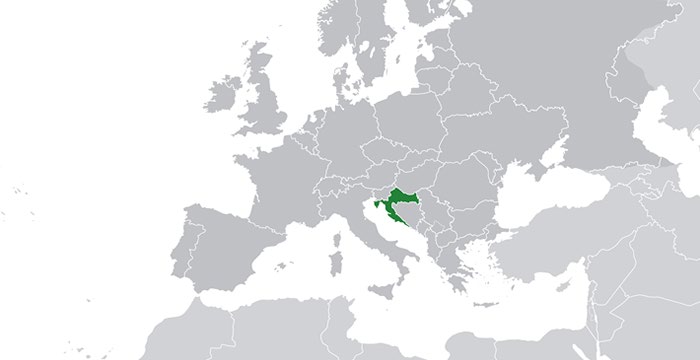
In the last few decades, there have been changes in the distribution of certain bird species in Croatia, which are spreading to the north-east from the Mediterranean due to climate change and warming, or reverse from the continental areas to the Mediterranean. Position of Croatia along the eastern Adriatic coast and National Parks in Croatia with the Velebit Nature Park (Figure 1).
Opinion
In the last few decades, there have been changes in the distribution of certain bird species in Croatia, which are spreading to the north-east from the Mediterranean due to climate change and warming, or reverse from the continental areas to the Mediterranean. Position of Croatia along the eastern Adriatic coast and National Parks in Croatia with the Velebit Nature Park (Figure 1).
It is among the first species to spread Collared Dove (Streptopelia decaocto), since 1940 [1]. The Red-rumped Swallow (Cecropis daurica) was recorded in a northwesterly direction in late 1980 from south Croatia. Today has spread this species along the coast of the Velebit Mountain all the way to Istria [2, 3]. The spread of the Spanish Sparrow (Passer hispaniolensis) was described in detail in several publications Opinion up to the end of the 1980s. Today, in the Velebit Mountain, it extended to middle slopes of Velebit Mountain and in Istria [4, 5]. The westernmost nesting finds refer to Istria from the valley of the river Mirna [6].
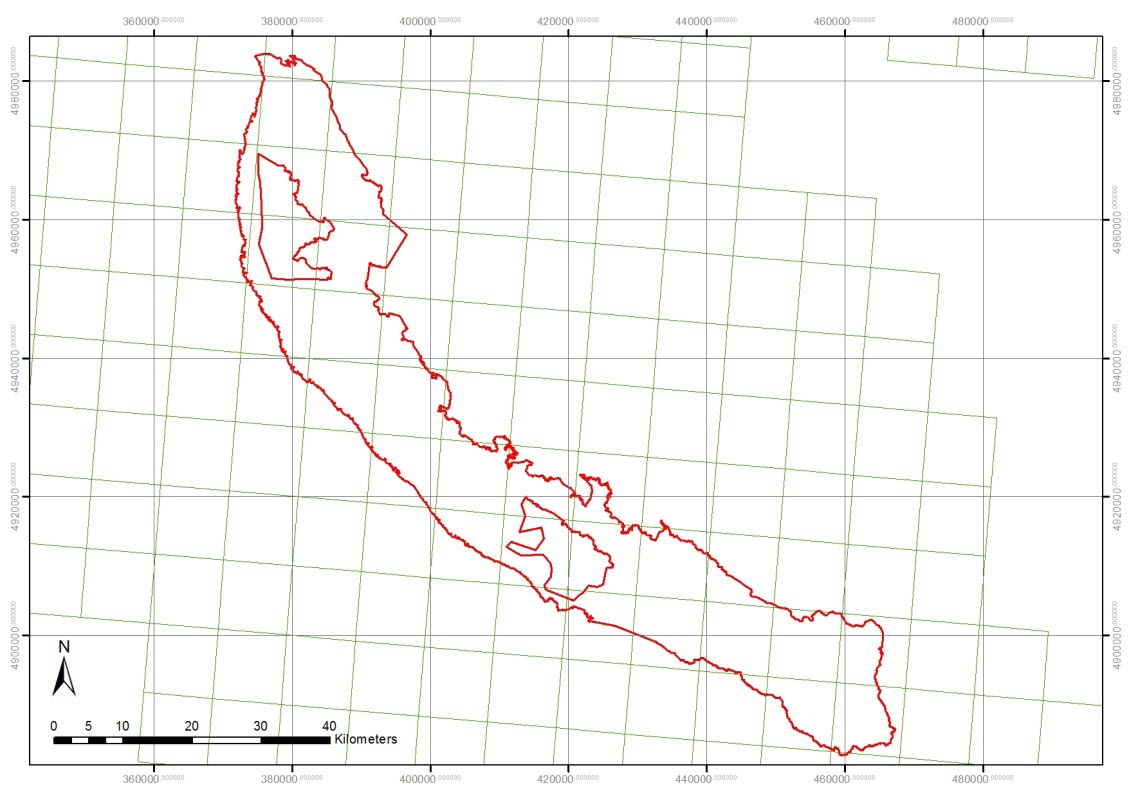
The spread of the Melodious Warbler (Hippolais polyglotta) took place from the northwestern Croatia to the southeast in coastal part of Velebit mountain (Figure 2).
Main directions of some birds species spread in Velebit mountain, since 1980 until today, from south-east to north- west direction, (Figure 2): Streptopelia decaocto, Cecropis daurica, Passer hispaniolensis, Cisticola juncidis, Hippolais olivetorum, Iduna pallida in a northwesterly direction in the coastal area of the Velebit mountain and to Croatian inland.
(III) Spread of some continental species from Croatian inland to east Adriatic coast: Columba palumbus, Sturnus vulgaris, Dendrocopos major, Sylvia atricapilla, Erithacus rubecula, Muscicapa striata, Sitta europaea, Lophphanes cristatus, Poecile palustris, Pernis apivorus. The most suitable places for spreading to the south from Croatian inland are the mountain passes, karst valleys and canyons [7, 8].
References
-
Rucner D (1998) Ptice hrvatske obale Jadrana. HPM i MRO, Zagreb.
-
Stipcevic M, Lukac G (1989) Breeding changes of Red- rumped Swallow in Yugoslavia. British Birds 85: 37-40.
-
Stipcevic M, Lukac G (1991) Survey of spreading and breeding range changes of the Red-rumped Swalow _(Hirundo daurica)_ on Yugoslav territory. Larus 43: 37-49.
-
Lukac G (1988) Neue Brutsttäten des Weidensperlings _(Passer_ _hispaniolensis)_ im nördlichen Dalmatien, Jugoslawien. Orn Mitt 40: 287-291.
-
Lukac G (2011) Atlas ptica Nacionalnog parka Paklenica. JU NP Paklenica i HPM, Zagreb pp: 1-356.
-
Lukac G, Stelko R (2016) Atlas ptica Istre. JU Natura Histrica, Pula pp: 1-167.
-
Lukac G, Milovac M, Busljeta N (2017) New breeding sites of some continental bird species in the coastal area of southern Velebit. Larus 52: 15-27.
-
Lukač G, Milovac M, Bušljeta N, Adžić I, Andačić N, et al. (2017a) Velebitske ptice. Senj Zbor 44: 47-72.
- Natural Decline to Extinction of A New Zealand Rabbit Population
- Mitochondrial Bio-Logistics: Steering Co-Enzyme Q10 and Lycopene Synergies within the Science 4.0 Bio-OS Framework
- Hymenoptera Specimens from the Caño Negro Wetland, of the National Museum Collection, Costa Rica
- Science 4.0: Comprehensive Architecture of the Biological Operating System (Bio-OS) A Framework for Systemic Resilience and Industrialized Bio-Governance
- Rabbit on, or Hare Back? Understanding Climate Change
- Clinical Validation of Science 4.0: Flow Steering and Epigenetic Drift Inversion on a 76-Year-Old Hybrid System