
A Review on the Poisonous Spiders of Australia
A review of the poisonous spiders of Australia is made depending on the published and unpublished articles, books, and other information available on internet. Total 15 species of spiders have been identified as most dangerous and poisonous species in Australia. Some of these spiders are deadly poisonous can kill a person with their small quantity of venom with in few hours. The classification, morphology, and ecological behavior are the content of this article. The images also incorporated from Wikipedia.
Introduction
The most common venomous creatures of Australia are the spiders [1]. This group of animals was about 30000 species present in varieties of ecosystems in the country [2]. They live all around us, in our homes, land in the bush, trees and forests, although bites are rare. The venom of some spiders contains a cocktail of chemicals, which is harmful to humans [3]. In fact, humans are not really the intended victims of spiders. Spider venom is designed for small prey and delivered in small quantities. But sometimes that small amount which is fatal to tiny creatures can also be fatal for large animals, like the man.
Antivenom is available primarily for two groups of dangerous spiders, Funnel-web and Red back spiders. It is used when the poisoning is really serious. This country has a number of highly venomous spiders, like Sydney Funnel-Web spiders, and Redback spiders, whose bites can be extremely painful with death records [4]. The majority of poisonous spiders in Australia are Funnel Web Spider group [5, 6]. A Field Guide to Spiders of Australia published by CSIRO Publishing in 2017 describing about 836 species illustrated with pictures of live animals, around 381 genera and 78 families.
The main concerned spider species in Australia that are commonly found in the vicinity are given below [3, 7, 8, 9, 10]. Total 15 venomous species of different groups are described here with their classification, morphology, and ecological behaviors. The images are taken from Wikipedia [11].
Materials and Methods
The published literatures on spiders are the major sources of information during the present study. Information from other sources are newspaper, popular articles and social media also considered with precautions.
Results and Observation
Total fifteen species from different groups of spiders are found dangerous and venomous among the identified spider species. Some are deadly poisonous and easily kill a person with in few hours. Antivenins also available against two species are used now cautiously.
The description of individual species are narrated with their morphology, ecology and behaviors in the following paragrapgh.
Atrax robustus (Sydney funnel-web spider, Figure 1)
| Classification | |
|---|---|
| Phylum | Arthropoda |
| Class | Arachnida |
| Order | Araneae |
| Family | Atracidae |
| Genus | Atrax |
| Species | A. robustus |
Atrax robustus (Sydney funnel-web spider) is a species of genus Atrax and class of Arachnida, phylum Arthropoda. It is one of Australian venomous funnel spiders that were first described by Pickard-Cambridge [11]. This genus contains now only three species namely A. robustus, A. sutherlandi and A. yorkmainorum. Figure 1: Atrax robustus (Sydney Funnel-Web Spider_)_.
The Sydney funnel-web spider is a large spider, black aggressive with powerful fangs. These spiders tend to live in lush ravines under rocks and windfalls [12]. They also live in damp soil under the houses or crevices in the rock garden and compost piles. Their white silk fabrics are 20 to 60 cm long and will in soil that has stable high humidity and low temperatures. The input is either Y-shaped or T-shaped and is woven into a funnel, where the name funnel- web spider [13].
They are solitary creatures, except when mating. Female tend to stay in the same place, except when forced by flooding or other reasons. Males tend to wander in search of a female partner after reaching sexual maturity. The male locate female by detecting the female pheromone [14]. They live in the colony. Generally, single colony is composed of over 100 spiders. The male of this species is one of the most dangerous spiders, and can cause death in less than 15 minutes. In general, male spiders tend to wander into houses in the summer, especially in wet weather venom seems particularly affect primates rather than mammals.
These spiders generally have large fangs with large bags venom [15]. Males are smaller, thinner and have longer legs. The females are larger and males grow up to 25 mm long while females grow to 35 mm long. the funnel web spiders have glitter, solid construction members, a row of teeth along the groove Fang and another row on their paired legs. Male reproductive organs consists of testicles and a tube connecting the testis to a small opening. Sperm is then discharged into the genital opening of the female where it is either used or stored by the female. Breeding usually occurs in late summer or early fall. Males reach sexual maturity at about four years and women take a little longer. Females lay 90 to 120 eggs yellow-green.
The food of these spiders usually consists of beetles, cockroaches, insects and insect larvae, native land snails, centipedes and sometimes frogs and other small vertebrates. All food is made at the edge of their “funnel” tablecloths. The strips are made entirely dry silk secreted from the body. Insects and other earthworm accidentally prey on the web. Once they land trapped. Trapped insects or animals are struggling to move on the slippery web. Spiders have no trouble moving and biting repeatedly trapped animals and takes again in the funnel for food.
When faced both male and female funnel web spiders generally back and show their fangs. At that time, the venom drops appearing on the ends of their fangs [16]. They are unable to jump. The venom in Atracidae family is potentially deadly to humans, and is considered the most toxic to people. A high proportion five bites of eight cases recorded from the spider result severe symptoms of poisoning occur in 15 to 20 minutes. The application of pressure bandages and immobilizing the patient can significantly delay the onset of symptoms and remains an essential part of running a spider bite. In most cases, the symptoms are very similar to those of Hadronycne formidabilis bite. Common symptoms are sweating, hypertension, sinus tachycardia, muscle spasms or twitching, nausea and vomiting, altered consciousness and local pain at the bite site. Pulmonary edema occurs frequently and is the beginning. All these make the spider web arboreal North funnel perhaps the most deadly venomous spider species in the world. The venom can be successfully treated with antivenom to the related species Sydney funnel-web spider.
There were 13 fatal accidents known that spider bites before the development of antivenom in 1980 and its use in 1981. No deaths were recorded since the use of antivenom and bite victims to the hospital was greatly reduced. Most bites were recorded in the warmer months and are primarily supported on the ends.
Hadronyche formidabilis (Figure 2)
German naturalist Ludwig Koch first described the genus Hadronyche for female spider collected south of Sydney. This genus Hadronyche also under the Arachnida class and placed in joint legged Arthropoda phylum. This is a large genus with several species of spider’s medicinal value. The common name of Hadronyche formidabilis are tree-dwelling funnel- web spider.
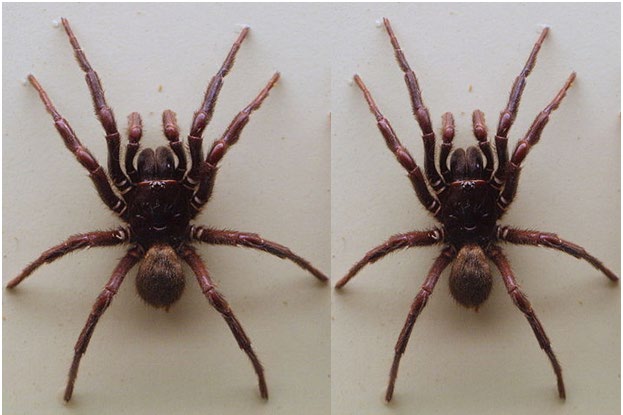
Figure 2_: _Hadronyche formidabilis.
| Classification | |
|---|---|
| Phylum | Arthropoda |
| Class | Arachnida |
| Order | Araneae |
| Family | Atracidae |
| Genus | Hadronyche |
| Species | H. formidabilis |
The funnel web spider’s (Hadronyche) body covered by a glossy black carapace, with matte black or dark brown chelicerae, legs and abdomen. Dorso-lateral surface of the abdomen has decreased dramatically or purplish tinge. Carapace of both sexes are longer and thinner than the other members of the genus Hadronyche with a body length of 40-50 millimeters. It is the largest member of the funnel- web spiders of the subfamily Atracinae. This species is very similar to the land-dwelling Darling Downs funnel-web spider Hadronyche infensa. Men from north occupants tree funnel web spider is distinguished by a prominent spur on the tibia of the second pair of legs, which are not present in the male of the Darling Downs funnel-web spider.
These spiders have been recorded in the tree 30 m (100 ft) above the ground. Roving male who was met after the rain and at night between late October and early February. They sought refuge in the day. North occupant funnel web spider tree found in eastern Australia from South East Queensland to the Hunter River in New South Wales.
When confronted female and male from the north occupant’s trees funnel web spider is generally back and show their fangs. At that time, the poison drops appear at the end of their fangs. They are not able to jump. toxins potentially lethal for humans, and is considered as the most toxic of people in the family Atracidae. Most of the bites are generally five of eight cases recorded from the northern spider web funnel tree dwellers severe envenomation symptoms occur within 15 to 20 minutes. This spider is bigger than the Sydney funnel-web spider, may be that they inject a larger amount of poison to the victim. When apply a pressure bandage and immobilising the patient can significantly delay the onset of symptoms and remains an important part of the management of the funnel- web spider bite in Australia. In most cases the symptoms are very similar to those of the Sydney funnel-web spider bites A. robustus. Common symptoms of diaphoresis, hypertension, sinus tachycardia, muscle cramps or fasciculations, nausea and vomiting, impaired consciousness and local pain at the site of the bite. Pulmonary edema is common and come in early. All this makes the tree-dwelling northern funnel-web spider may be the most deadly venomous species of spider in the world. Toxins can be successfully treated with antivenom from related species Atrax robustus.
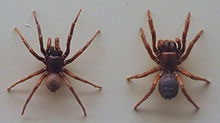
Hadronyche cerberea
The tree-dwelling funnel web spider Hadronyche cerberea found in eastern Australia and in the Hunter River in central New South Wales to the southern New South Wales (Figure 3). This species and funnel web spider Hadronyche f_ormidabilis_ are the only two species of Australian funnel web spiders that live predominantly in trees and sclerophyllous dry forest inhabits.
| Classification | |
|---|---|
| Phylum | Arthropoda |
| Class | Arachnida |
| Order | Araneae |
| Family | Atracidae |
| Genus | Hadronyche |
| Species | H. cerberea |
This species has all the characteristics of the family Atracinae. Carapace of this species is wide, it is often not much longer than wide. Cheliceral paturon typically more robust than in other Atracinae, both dorsoventral and thicker laterally. Cheliceral slot is wide to form narrow V with cheliceral teeth stations distributed along its entire length, in a staggered row or several irregular rows or, less commonly, the central teeth confined to a short, basal roof.
This spider co-occurs with funnel-web species Atrax sutherlandi, which nests exclusively on the ground, in the Tallaganda National Park and its surroundings in southeastern New South Wales [17]. It is reported that South funnel web spider tree-dwelling has recently spread out quickly through the area.
A high proportion of bites of this species of South web spider arboreal funnel (three out of four registered cases) lead to severe symptoms of poisoning. The poison can be successfully treated with antivenin for related Sydney funnel web spider Atrax robustus. Symptoms of poisoning can occur within 15 to 20 minutes. Applying pressure and a tourniquet can significantly delay the onset of symptoms and remains an essential part of managing a funnel web spider bite Australian. Although the poison lacking the atraxotoxin or atraxin A. robustus, the symptoms are very similar to those of a funnel web spider bite Sydney. Symptoms include diaphoresis common (diaphoresis), hypertension (high blood pressure), sinus tachycardia (heart rate elevated), nausea, vomiting and local pain at the bite site. Pulmonary edema (fluid accumulation in the lungs) often comes in early.
Hadronyche versuta (Figure 4)
| Classification | |
|---|---|
| Phylum | Arthropoda |
| Class | Arachnida |
| Order | Araneae |
| Family | Atracidae |
| Genus | Hadronyche |
| Species | H. versuta |
This species Hadronyche versuta is also member of the genus Hadronyche. The common name of this spider is the Blue Mountains funnel web. This spider was first described by William Joseph Rainbow as a species of Atrax. which was collected from the nearby Jenolan Caves. The species name is derived from the Latin word versutus smart or cunning means.
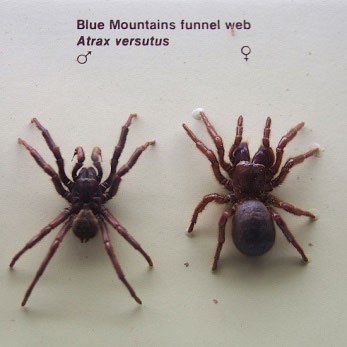
Figure 4a: Hadronyche versuta. Figure 4b: Hadronyche versuta. The Blue Mountains spider funnel web has a similar color to most other spiders of Australian funnel web, namely a black shells shiny and black with dark brown legs and chelicerae. The male abdomen has a pale dorsal spot, and that of the female is chestnut brown. The carapace in males is slightly longer than wide and is almost square in the female. The Blue Mountains funnel web spider H. versuta is located in eastern Australia the Blue Mountains in District Illawarra in New South Wales. The H. versuta are in stumps and rotting logs.
Among both sexes of H. versuta, female spider venom injected large amount of the victim. Thus, female are believed to be more venomous than male spider. Versutoxin is a neurotoxin robustoxin very similar to the Sydney funnel- web spider, induced autonomic storm to victim. One of the new cases reported being bitten by a spider Blue Mountains funnel web resulted in severe symptoms of poisoning. The bite can be successfully treated with antivenom for Sydney funnel-web spider (Atrax robustus). Symptoms of poisoning can occur within 15-20 minutes. The similar pressure bandage application snakebite treatment can significantly delay the onset of symptoms and remains an essential part of running a spider bite Australian funnel web. Despite the lack venom atraxotoxin or atraxin A. robustus, the symptoms are very similar to those of a funnel web spider bite Sydney. The poisoning include profuse, local pain at the bite site, pulmonary edema, hypertension, nausea and vomiting.
The Hadronyche infen_sa, commonly called Darling Downs funnel web spider was first described by Hickman in 1964 as _Atrax infensus and it has been placed in the genus Hadronyche in 1988. The type specimen is a male spider that was collected from Toowoomba, Queensland, in 1963. Both sexes of the spider web funnel Darling Downs have a glossy black shell and dark brown with black legs, chelicerae and abdomen. The carapace is longer than wide and abdomen of the male has a white spot below. H. infensa (Darling Downs spider web funnel) is located in eastern Australia, from South East Queensland to the northeast part of New South Wales. The toxic effect of male and female H. infensa is similar. It is observed that registered 14 cases bitten by spiders of Darling Downs funnel resulted in severe symptoms of poisoning. The venom can be successfully treated with antivenom for related Sydney funnel-web spider. The venom of H. infensa (Darling Downs spider web funnel) becomes toxic at the beginning of summer, when the spider was fasting during the winter. During this time the male funnel web spiders Darling Downs are more mobile and looking for a companion. This means that people are more likely to encounter spiders and being bitten during this period.
Hadronyche infensa (Figure 5)
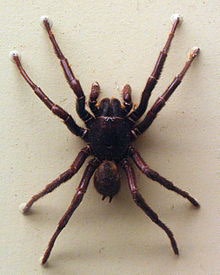
The Hadronyche infensa commonly known as Darling Downs funnel-web spider was first described by Hickman in 1964 as Atrax infensus and latter this was placed in the genus Hadronyche in 1988. The type specimen is a male spider that was collected from Toowoomba, Queensland, in 1963. Both sexes of the Darling Downs funnel-web spider have a shiny black carapace and dark brown to black legs, chelicerae and abdomen. The carapace is longer than wide and the abdomen of the male has a pale patch underneath.
The H. infensa (Darling Downs funnel-web spider) is found in the eastern Australia, ranging from southeast Queensland to the northeastern portion of New South Wales. The toxic effect of both male and female of H. infensa are similar. It is observed that two out of 14 recorded bitten cases of Darling Downs funnel-web spider have resulted in serious symptoms of envenomation. The venom can be successfully treated with the antivenom for the related Sydney funnel- web spider Atrax robustus.
The venom of the H. infensa (Darling Downs funnel- web spider) becomes more toxic in early summer, when the spider has been fasting over the winter. During this time male of Darling Downs funnel-web spiders are more mobile and searching for a mate. It means that people are more at risk of encountering the spiders and being bitten during that time.
Hadronyche macquariensis (Figure 6)
Hadronyche macquariensis is commonly called the spider web funnel Port Macquarie. It is a venomous spider mygalomorph and a member of several species of Australian funnel web spiders found in New South Wales. Hadronyche macquariensis was described by Mike Gray in 2010. The male holotype was collected from Taree, New South Wales in January 1978. Like other species of spiders Australian funnel web, the two sexes of the Port Macquarie funnel web spider has a glossy black shell and dark brown with black legs, chelicerae and abdomen. The carapace is slightly longer than the width. In male averages around 0.97 cm long and 0.91 cm wide; and female, it is about 1.1 cm long and 0.93 cm wide. male legs are about 3 cm (1.2 inches) long, and females of about 2.5 cm (0.98 in) long. The abdomen is about 1.1 cm long in the male and 1.4 cm long in the female.
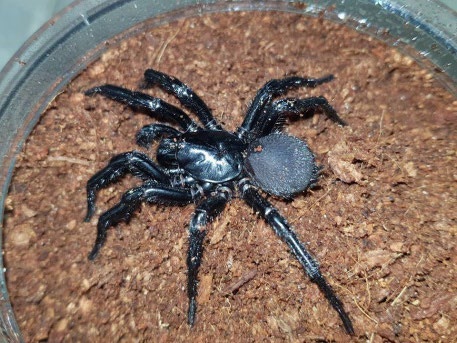
| Classification | |
|---|---|
| Phylum | Arthropoda |
| Class | Arachnida |
| Order | Araneae |
| Family | Atracidae |
| Genus | Hadronyche |
| Species | H. macquariensis |
These spiders have been found along the north coast of New South Wales in eastern Australia, where the specimens were taken in the vicinity of the north by Forster Taree, Port Macquarie to Coffs Harbor Bellingen. The spider Port Macquarie web funnel was responsible for at least one case of serious poisoning.. A boy aged six was bitten at the foot of the sand dunes near Forster, the necessary hospitalization and intubation.
Atrax sutherlandi (Figure 7)
The Atrax sutherlandi is a species of funnel web spiders are found in the forests of Australia far south coast of New South Wales and Victoria in the east. The sutherlandi named after the name of Struan Sutherland, whose work resulted in a funnel-web spider antivenom success.
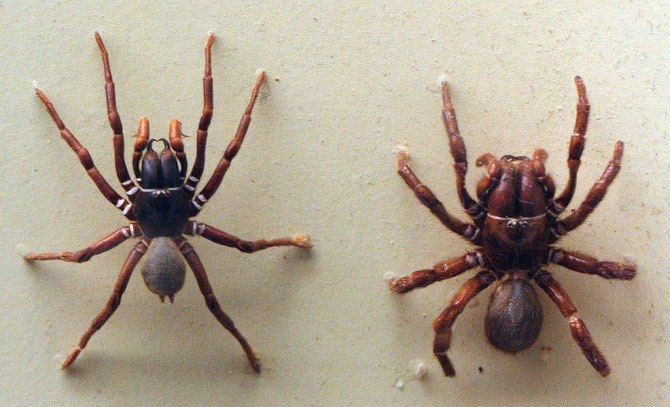
A. sutherlandi has a glossy black back and chelicerae (“canine”), as well as deep-brown or plum-colored belly. An adult grow to a length of 2 inches (5 cm). A report in 2015 described an unusual individual with a blood-red abdomen and chelicerae [18]. Unlike its close relatives Sydney funnel- web live in urban areas A. sutherlandi generally resides in remote areas, and thus pose little danger to the public. It has been reported that in Tallaganda National Park and surrounding areas in the southeast of New South Wales, south funnel web spider tree dwellers co-exist with a funnel- web species Atrax sutherlandi, which burrows exclusively on the ground, in contrast to the preference of the former species of logs. It is also known that south funnel web spider tree dwellers recently rapidly spread through the region. It is reported that a high number of bites around 25% of the inhabitants of a tree south funnel web spider envenomation result in severe symptoms. toxins can be successfully treated with antivenom for the associated Sydney funnel-web spider Atrax robustus. Most cases of envenomation symptoms can occur within 15-20 minutes. Tourniquet pressure and can significantly delay the onset of symptoms and remains an important part of the management of a bite of funnel web spider Australia. Although less toxic atraxotoxin or atraxin of A. robustus, the symptoms are very similar to that of the funnel-web spider bites Sydney. Common symptoms include diaphoresis (profuse sweating), hypertension (high blood pressure), sinus tachycardia (elevated heart rate), nausea, vomiting and local pain at the site of the sbite. Fluid build-up in the lungs (pulmonary edema) often comes in early.
| Classification | |
|---|---|
| Phylum | Arthropoda |
| Class | Arachnida |
| Order | Araneae |
| Family | Atracidae |
| Genus | Atrax |
| Species | A. sutherlandi |
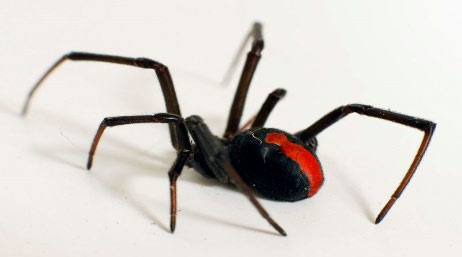
Atrax yorkmainorum (Figure 8)
Atrax yorkmainorum was first described in 2010, as a species of Australian funnel-web spider in the family Atracidae. Normally, it is found in forests at the vicinity of Canberra and southeastern New South Wales. The species is named for Dr. Barbara York Main and Professor Bert Main, in recognition of their remarkable achievements in Arachnology and Ecology.
The carapace length of the male is 8.42, width 7.48. Abdomen length 8.50, width 6.90. Colour pattern normal. Carapace Height 2.69. Frontal width 4.57. Fovea narrow, procurved. Mid-dorsal cephalic setae few, reach fovea. Anterior strial setae present. Anterolateral carapace angle with small, weak bristles. Eyes. Central eye region weakly raised. Eye group width 1.66. Median ocular quadrangle length 0.57, anterior width 0.69, posterior width 1.05. The Australian funnel-web spiders are arguably the most dangerous spiders of the World. The bites caused by funnel-web spiders are frequently minor, but in 10 % of cases systemic envenoming occurs. The chance of fatality is significant. Even modern interventions of intensive care medicine are insufficient to save a patient with a severe bite; and only antivenom therapy is lifesaving in severe cases.
The venom of this funnel-web spiders is a mixture of components, which is a class of excitatory neurotoxins, similar across species and potentially lethal for humans, but comparatively nontoxic for most other mammals. This latter property has inhibited research and development of antivenom. These neurotoxins act at voltage-gated sodium channels (Na) and are characterized as having an inhibitor cysteine-knot motif. Similar toxins have been isolated from a variety of other spider venoms and some marine venom. These toxins isolated from funnel-web spiders, and also the related mouse spiders (genus Missulena), act on neurotoxin receptor site 3 at the Na+ and appear to inhibit inactivation of the channel, resulting in neurotransmitter release from somatic and autonomic nerve endings.
| Classification | |
|---|---|
| Class | Arachnida |
| Order | Araneae |
| Infraorder | Mygalomorphae |
| Family | Atracidae |
| Genus | Atrax |
| Species | A. yorkmainorum |
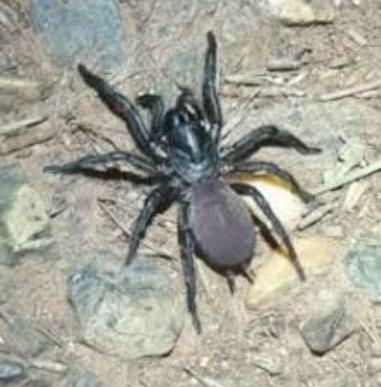
Latrodectus sasselti (Figure 9)
The Latrodectus hasselti, commonly known as Redback spiders are bilaterally symmetrical, cold-blooded animals from the family Theridiidae, under the phylum Arthropoda and Arachnida class [19, 20]. Female Redback spider is an average of 10 mm, with a large body size such as peas, and significantly larger than the male average of 3-4 mm. Females are usually black with a red stripe, sometimes broken, on the dorsal surface of the abdomen crossing parallel on the length of the body. An hourglass-shaped red spot in the ventral side of the abdomen makes it different. Young female spider has additional white markings on their bellies that they lose as adults. redbacks male usually light brown in color with a red dorsal stripe and pale hourglass shape on the ventral side of the abdomen. Both of which are similar to, but less obvious than, the sign of the female. Male also maintains a white sign on the side of the abdomen to adulthood. Each gender has a slim leg and venomous. https://youtu.be/p38-Ce-z7BI.
| Classification | |
|---|---|
| Phylum | Arthropoda |
| Class | Arachnida |
| Order | Araneae |
| Family | Atracidae |
| Genus | Latrodectus |
| Species | L. hasselti |
The Red back spider search partner anytime of the year but did so are most common during the summer months when the temperature is higher. Redback spiders polyandrous (males usually mate once while female often have several pairs). This species mating behavior includes sexual cannibalism. Male smaller sizes attempted to mate several times with a single, much larger, female. As they approached the female, the male will enter the pedipalp become one of the sperm storage organ females. During this action will be spun 180 degrees, placing the stomach directly near the canine females (a “copulatory somersault”). Early in the first sperm transfer, the female began to chew her partner; most male (69.6 to 83.3%), were able to free this first refrain. After additional courtship behavior by the male, mating behavior described is repeated, with both male pedipalp incorporated into sperm storage organs of other females. Here 65% of the second insertion, female will actually consume Red back spider male. The follow the same growth performance development like other species of spider. The first molt occurs in individual eggs after a week and half female lays her eggs in the egg sac. The first instar (stage between molts) below, where spiderlings hatch and disperse within 14 days, usually through wind currents. young spiders look like young adults. Members of this species reach maturity and adult size after the fourth instar / 5 molts in men or sixth instar / 7 molts in women.
Because the behavior of cannibalism by females, the
majority of male redbacks only mating with one female. During the mating period, some males are usually found on the web of women, which causes men to compete with each other, often fatal, for access to females [21]. Redbacks courtship has a length of about 3 hours; However, men might rush this activity if the other man was detected approaching.
Envenomation of Redback spider bites result in the syndrome known as latrodectism. A small but significant portion of people bitten develop significant pain or systemic symptoms. Diagnosis is made on clinical condition, often based on the victim aware of the bite and ideally with the identification of the spider. Laboratory tests are rarely necessary and there is no specific test for toxins or latrodectism.
Painful bites from the beginning, but over time it just feels like a mild burning sensation within an hour. Occationally, more severe local pain can develop with local sweating and sometimes piloerection (goose bumps). All three symptoms together is a classic presentation Redback spider envenomation. Pain, swelling and redness may spread proximally up the leg or away from the bite site with regional lymph nodes can be painful. Sometimes with delayed symptoms may occur with the characteristic sweating and pain in the lower limbs, generally below the knee.
One of the three cases develop systemic symptoms, after a few hours, or rarely when it was delayed for more than 24 hours. Symptoms usually include nausea, vomiting, abdominal or chest pain, agitation, headache, general sweating and hypertension. Non-specific systemic effects such as malaise and lethargy are also common. Rarely, other effects were reported as the neurological manifestations, fever and priapism. Severe pain usually lasts more than 24 hours after being bitten. Envenomation symptoms can linger for weeks or even months. Rare complications including local infections of the skin, convulsions, coma, pulmonary edema, or respiratory failure. Children, the elderly, or people with serious medical conditions are at higher risk of severe effects as a result of the bite. Babies have died a few hours of a bite, but adult fatalities have taken up to 30 days.
Children and babies may not be able to report bites, making it difficult to associate their symptoms with a spider bite. Symptoms seen in infants, including tears, refusing to feed and general erythematous rash. Muscle aches and pains, and neck spasms are often seen in children over the age of four years. Treatment is mainly based on the severity of poisoning from bites. The majority of cases do not require medical treatment. Other patients with local pain, swelling and redness usually require only local application of ice and simple oral analgesics such as paracetamol. Pressure immobilization of the wound site is not recommended. Keep the victim quiet enough and profitable.
Missulena bradleyi (Figure 10)
| Classification | |
|---|---|
| Phylum | Arthropoda |
| Class | Arachnida |
| Order | Araneae |
| Family | Atracidae |
| Genus | Missulena |
| Species | M. bradleyi |
This Missulena genus was first described by Charles Athanase Walckenaer in 1805. It is commonly known as the mouse spider. It has only one species is M. tussulen found in Chilee, and others were reported from Australia. This is a genus of spiders in the family mygalomorph Actinopodidae. Photos female Spider taken in Swifts Creek, Victoria, Australia in July 2007. The term “mouse spider” is derived from proven untrue belief that they dig deep burrows like mouse. Actually it is in a different family, not mygalomorph a much smaller, looks very different, and not considered dangerous. Spiders live in burrows covered with traps, which can extend to almost 30 cm (1 ft) in depth. Spider female generally remains in their burrows; males wander looking for a partner.
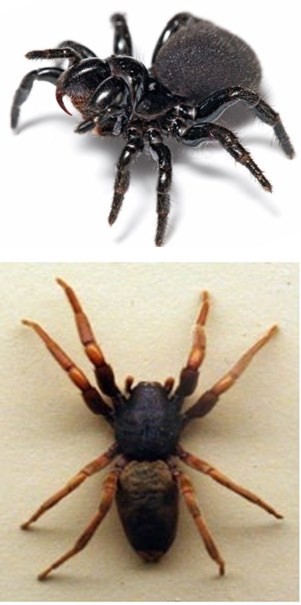
Figure 10a: Missulena bradleyi (Female).
Figure 10b: Missulena bradleyi.
Mouse spiders are generally medium to large size, length ranging from 1 cm to 3 cm. their shells shiny, and they have a high and broad head, eyes scattered across the front of the head. They have a short spinner, which is located at the rear of the abdomen. Mouse spiders show sexual dimorphism, with the female spider becomes all black. Male spiders have a species-specific staining. Eastern male mouse spiders (M. bradleyi) has a bluish patch, and red-headed male mouse spider (M. occatoria) brown or blue-black color, with bright extraordinary red-tinged jaw.
Mouse spiders prey mainly on insects, although they might consume other small animals. The main predators of spider mice including wasps, centipedes, and scorpions. Like a trap door spider, mouce spiders also live in burrows covered with traps, which can extend to almost 30 cm (1 ft) in depth. Spiders female generally remain in their burrows; males wander looking for a partner most of the time.
Similar to Australian funnel web, the bite of some species of mouse spider found to produce serious symptoms. Heavy envenomations relatively rare. In most of the mouse spider bites do not require the use of antivenom or involve serious symptoms. East mouse poison spiders (M. bradleyi) were found to have similar robustoxin toxins found in the funnel- web spider venom Australia. Of course Australian funnel-web spider antivenom has been found effective in treating spider rat bites are severe. Unlike the funnel web spider Australia, h, spiders, mice much more aggressive to humans, and may often provide a “dry” bite.
Some evidence suggests that the mouse spider bite potentially as serious as that of the spider web funnel Australia. However, note spider bites are rare, despite the abundance of some species in human dwellings. Funnel web antivenom found to be an effective treatment for a serious bite.
Lampona murina (White-tailed spiders, Figure11a,b)
This species Lampona murina was first described by Ludwig Carl Christian Koch (1873) and prior to this he also described and named another species Lampona cylindrata (1866). The genus name is derived from the Latin Lampo (“to shine”) and cylindrata species name refers to the shape of the cylinder body, while murinus means “mouse-gray” in Latin. White tail spiders are active hunters and they envenom a prey rather than spin a web to catch it. Their preferred prey is other spiders from the environment.
White-tailed spiders are common spiders of southern and eastern Australia. It was named for tips at the end of their abdomen whitish. The body size of up to 18 mm, with a leg span of 28 mm. Common species are Lampona cylindrata and Lampona murina. Both of these species (Lampona cylindrata and Lampona murina) has been introduced to New Zealand.
| Classification | |
|---|---|
| Phylum | Arthropoda |
| Class | Arachnida |
| Order | Araneae |
| Suborder | Araneomorphae |
| Family | Lamponidae |
| Genus | Lampona |
| Species | L. cylindrata |
They live in the garden and in the house, under bark and stones, in leaf litter and are often found in the folds of clothing, towels and shoes. They do not build webs [22]. The most active at night, they hunt other spiders.They reported bite humans, with effects including red marks, and local itching, swelling and pain. On rare occasions, the bite can cause nausea, vomiting, malaise or headache. Although ulcers and necrosis has been associated with a bite, a scientific study by Isbister and Gray (2003) shows they have other causes, mostly infection. A study of 130 spider bite white-tailed found no necrotic ulcers or infection is confirmed.
They are similar in appearance; L. cylindrata is slightly larger with females being up to 18 mm long while the males are up to 12 mm body length. Legs cover about 28 mm. The two species are difficult to distinguish without microscopic examination. They are thin spider with dark red to gray body, cigar-shaped, dark legs banded orange-brown. The gray abdomen has two pairs of small white spots and generally, but not always a distinct white patch on the right edge above- border.
The similarities have led people to think that there is only one species of spider with white tail. It is possible that all Virginia species were identified. Descriptor, white tail, is applied to a variety of species of spiders to which a distal white mark on their abdomen is a distinguishing characteristic; other brands disappear moved but the white tail remains in adulthood. L. cylindrata lay their eggs that are encased in a capsule silk flattened and are guarded by the female until they hatch.
The common perception about the bites of white tail spiders may be associated with long-term skin infections, and in rare cases progress to necrosis. Their favorite prey are the spider black house (badumna insignis) and the spider brown house closely related (badumna of longinqua). The two are like deer. Venom has no bacteria, and infections do not arise from spider bites. White spider bites the tail can cause a small bump red or discolored, similar to an insect bite, as burning or itching. The brown recluse bite well described directly damage the skin and tissues. There is a limited area and does not spread. There are no official studies have found evidence to associate necrosis stings white tail spiders.
The issue of necrosis in some cases bite in published studies begins with a paper presented at the International Society on Toxinology World Congress held in Brisbane in 1982. Both the spider and white-tailed spider wolf were considered as candidates to eventually cause suspected spider bite necrosis in the Australian context. In Brazil, the recluse spider was identified as being related to necrosis.
Clinical toxicologist Geoffrey Isbister studied 130 cases of spider bites cottontail, and found no necrosis or confirmed infections, concluding that these results are unlikely for a spider bite white tail. The main effects of a bite in this study were local pain, a red mark, local swelling and itching. There are rarely systemic nausea, vomiting, discomfort or headaches. All these symptoms are usually mild and determination over time.
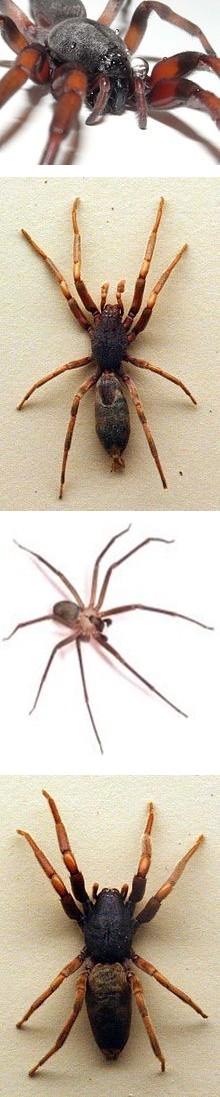
Figure 11a: L. cylindrata male.
Figure 11b: L. cylindrata female.
Figure 11c: L. cylindrata (Head detail with fangs).
Loxosceles reclusa (Figure 12)
| Classification | |
|---|---|
| Phylum | Arthropoda |
| Class | Arachnida |
| Order | Araneae |
| Family | Sicariidae |
| Genus | Loxosceles |
| Species | L. reclusa |
Gertsch described this species Loxosceles reclusa as a member of the phylum Arthropods in the class Arachnida. Adults of both sexes are similar in appearance and size. Body sizes ranging from about 7 to 12 mm in body length. Adult females average slightly larger, about 9 mm compared to about 8 mm for adult males. Carapace is pale yellow to reddish brown, with dark brown patch just in front of the median groove (covered by narrow, dark line); This patch united front to the carapace with dark brown stripes. In total, these appear in the form of a violin. In addition, three dark patches can occur along the margins on each side yellowish sternum, the ventral part of the body other than the cephalothorax darker reddish brown.
Figure 12a: Loxosceles reclusa.
Brown recluse spider, Loxosceles reclusa Gertsch & Mulaik, often reported in Florida as a cause of necrotic lesions in humans. Loxoscelism are occasionally produced by the bite condition recluse spider (Loxosceles). The area became dark and shallow open sores form as the skin around the bite dies (necrosis). It is the only type of arachnidism necrotic proven in humans. While there is no known effective therapy for loxoscelism, there have been studies on antibiotics, operative time, hyperbaric oxygen, potential antivenoms and vaccines. Because the number of diseases that may mimic Loxoscelism, often misdiagnosed by doctors.
Loxoscelism first described in the United States in 1879 in Tennessee. Although there are up to 13 different species Loxosceles in North America (11 original and two normative), Loxosceles reclusa is the species most frequently involved in serious envenomation. L. reclusa have a limited habitat that includes the southeastern United States. In South America, L. laeta, L.intermedia (found in Brazil and Argentina), and L.gaucho (Brazil) are the three species most frequently reported cause necrotic bites
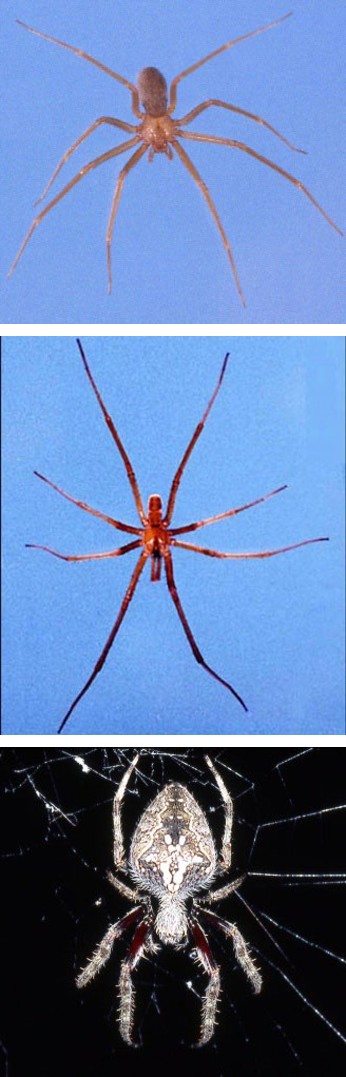
Figure12b: Female brown recluse spider, Loxosceles reclusa Gertsch & Mulaik.
Figure12c: Kukulcania hibernalis (Hentz). Male southern house spider.
Eriophora sp. (Garden Orb Weaving Spiders, Figure 13)
Eriophora is a genus of spiders (Orb-Weaver) was first described by Eugène Simon in 1895. It has been reported from America, Australia, and Africa. The name is derived from Ancient Greek roots and means “wool pads”. Eriophora transmarina commonly known as the “garden orb weaver -spider in Australia.
Parks Orb Weaver spider is a large group of spiders with more than 100 species known in Australia. Parks Orb weavers often seen is a fat spider reddish brown or gray with a pattern of their fat-shaped leaves, roughly triangular belly, which also has two hump looks. They sometimes have a dorsal stripe which may be white or brown-eyed white.
| Classification | |
|---|---|
| Phylum | Arthropoda |
| Class | Arachnida |
| Order | Araneae |
| Family | Atracidae |
| Genus | Eriophora |
| Species | E. sp. |
Orb-weaving spiders make deferred, sticky, wheel- shaped orb webs. Nets are placed in the opening between the trees and bushes where insects tend to fly. Parks Orb weavers build large, strong, vertical orb webs. Generally, spider web building at night and bring it down again at dawn. The rest of the spider’s head-down in the middle of the web, waiting for prey. Orb weaving spiders are found throughout Australia. Orb weavers Eriophora. Transmarina and Eriophora biapicata are common of eastern and southern Australia.
Parks Orb Weaving spiders make wheel-shaped webs in the opening between the trees and bushes where insects tend to fly. When an insect flying into the web, the spider senses vibration, rushed out of the center of the web and quickly wrap the victim silk, spun with the middle legs shorter. When the prey is secured manage orb-weaver bite and sat back to allow the deadly poison to do its job. After all movement has stopped, the spider took the food to the center of the web and eats or hangs it for later. When food is plentiful this spider will release large prey rather than risk a fight that could damage their web. Flying insects such as flies, beetles and bugs (including large prey like crickets), is a common prey. Butterflies and day-active moths are sometimes caught but most are protected from web trap with their scales on their wings - on this scale could be poured and this allows insects to fight free of the sticky web. By day, the rest of the spider nearby foliage with her legs drawn under the body.
The lifespan of female Orb Weaver Park is approximately twelve months. Female lay eggs in late summer to autumn. The eggs are wrapped in a cocoon of fine silk and attached to foliage. During the autumn, spiderlings hatch and disperse by a balloon (floating in the wind using a small silk strands as a “balloon”), and build their own tiny orb webs between the vegetation and wait for winter. During the spring spiderlings begin to develop more quickly and they mature in summer. The cycle then begins again, adult females, mating and laying eggs. adult females usually die in the autumn - early winter. Males and females are similar in size. Birds such as honeyeaters are common predators of this spiders.Orb weavers reluctant to bite. Symptoms usually ignored or mild local pain, numbness and swelling. Sometimes nausea and dizziness can occur after a bite.
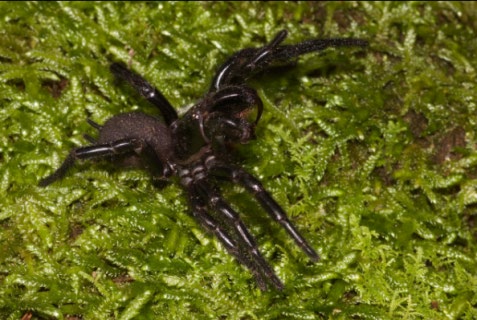
Illawarra wisharti (Figure 14)
Illawarra is a monotypic genus of Australian web- funnel spider containing a single species Illawarra wisharti. It was first described by Michael R. Gray in 2010, and only found in the Illawarra region of southern New South Wales. It is a member of the subfamily Atracinae, funnel-web spiders Australia, a number of which species produce toxins that are harmful to humans. The generic name based Illawarra region where the spider was found. The species name honors Wisharti Graeme Wishart, who collected many spiders mygalomorph in the region.
Adult males have a total body length of about 15 millimeters (0.59 in) with the carapace and abdomen become roughly the same length. Average carapace length of about 8 millimeters (0.31 in), with a range of 7 to 10 millimeters (.28 to .39 in). The fourth leg is the longest at about 23 millimeters (0.91 in) in total. Individuals basically brown, with a clear pattern of small chevrons in the abdomen. Females of the same size and overall appearance. They are said to have “ant- like” odor. He lives in burrows in the ground layer of litter or under rocks.
| Classification | |
|---|---|
| Phylum | Arthropoda |
| Class | Arachnida |
| Order | Araneae |
| Family | Atracidae |
| Genus | Illawarra |
| Species | I. wisharti |
Male are different from other members of the subfamily Atracinae by the presence of vast rows of spines in the middle of the bottom (ventral side) of the tarsi of all four legs. Females can be distinguished by the first leg, which does not have thorns, had fused with the tarsus metatarsus portion, and also has enlarged the tarsal claws.
A study of peptide in the venom of the spider atracine in 2001 found that the venom of Illawarra wisharti has a profile similar to Atrax robustus, species known to have caused harmful effects on human envenomation. Australian funnel- web spider is one of the group’s most significant medical of spiders in the world and is considered by some to be the most lethal, both in terms of clinical cases and the toxicity of the poison. Six species have caused severe injury to the human toll, including the Sydney funnel-web spider (Atrax robustus), northern tree-dwelling funnel-web spiders (H. formidabilis), south of the tree-dwelling funnel-web spiders (H. cerberea), Blue Mountains funnel-web spiders (H. versuta), Darling Downs funnel-web spiders (H. infensa), and Port Macquarie funnel-web spiders (H. macquariensis).
Spiders in the family Atracidae are medium to large in size, with a body length ranging from 1 to 5 cm (0.4 to 2.0 in). They have hairy carapace covers the front of the body. Some atracids have a relatively long spinner; This is especially true of the Sydney funnel-web spider (A. robustus). Males have large mating spur projecting from the middle of their second pair of legs. They have enough venom glands that are entirely their chelicerae their fangs big and strong, able to penetrate the nail and soft shoes.
Australian funnel-web spiders make their burrows in moist, cool, sheltered habitat - under rocks, in and under rotting wood, some rough barked trees (sometimes meters above ground). They are commonly found in rocks suburbs and shrubberies, a rarity in the grass or other open terrain. A typical burrows have irregular travel silk stripes radiating from the entrance. Unlike some related.
Heteropoda venatoria (Figure 15)
Heteropoda venatoria is a large brown spider with a flattened body structure and pattern of the back very little, adult specimen has a body length of 2.2 to 2.8 centimeters (about 1 inch), and has a leg span of 7 to 12 cm (3 to 5 inches). Adult females have a larger body size, especially the abdomen, than men. adult males have longer legs than the females, and palpi old men have an enlarged terminal segment and ventral sclerites exposed, as in most real spiders. Both sexes have a creamy yellow clypeus and broad band circling the residual marginal carapace, creamy tan in women and in men. In addition, the male has a dark, elongated lines on the abdomen and the area bordering the pale light behind the eyes. Legs of both sexes have black spots that are different from each raised an erection macroseta. Otherwise, the nondescript spider hairy.
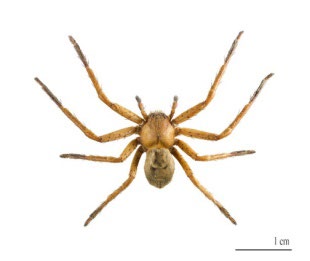
| Classification | |
|---|---|
| Phylum | Arthropoda |
| Subphylum | Chelicerata |
| Class | Arachnida |
| Order | Araneae |
| Infraorder | Araneomorphae |
| Family | Sparassidae |
| Genus | Heteropoda |
| Species | H. venatoria |
Family members of Sparassidae (Heteropodidae) are known as Huntsman spiders because of their speed and how to hunt them. It is also called giant crab spiders because of their size and appearance. Heteropoda maxima reach a leg span of 25-30 cm (9.8 to 11.8 in). On average, a leg span of the spider hunter could reach up to 15 centimeters (5.9 in), while the body they measure about 1.8 cm (0.71 in) long.
People who are not familiar with common taxonomy of spiders big confused with tarantula species, the genus Palystes southern Africa known as spiders or spider rain lizard eaters. Some species are known as spider wood, because of their preference for the place of wood (forest, mine shafts, piles of wood, wooden shacks etc). Thousands Sparassidae species occur in most warm temperate tropical regions of the world (Australia, Africa, Asia, the Mediterranean Basin, USA).
Sparassids members are eight eyed spiders. Eyes appeared in two rows facing the front of the majority of four on the anterior aspect of the prosoma. Huntsman spider can generally be identified by their legs, which, instead of vertically connected relative to the body and rotate in a manner such that in some attitude legs extend forward in a crab-like appearance.
Main colors of huntsman spider striking shades of brown or gray. Many species have more or less aposematically undersides are marked in black and white, with reddish spots on the upper part of the mouth. Their feet bear spines fairly prominent, but the rest of their bodies are well feathered. Generally, they live under a rock, bark and shelters are the same, but the general human encounter in warehouses, garages and other places rarely disturbed. Banded huntsman (Holconia) are large, gray to brown striped with bands on its legs. Badge huntsman Neosparassus larger and brown feathers. Tropical or brown huntsman Heteropoda too big and fluffy, with a mottled brown, white and black marks on the body. Some species of huntsman spider can use an unusual form of propulsion. Wheel spider Carparachne aureoflava of Namib using a swirling motion, while Cebrennus rechenbergi use handspring movement. Hunter spider is big spider. Australia has some relatively small species, such as small (non-endemic) and superbly camouflaged spider moss, Pandercetes gracilis. Most endemic is a fairly large animals, which can weigh 1-2 grams and may be of the palm of our hands. The largest species, the gold hunter, Beregama aurea, from tropical Queensland, weighing more than 5.5 grams. The front legs of adults may stretch 15cm and they lay eggs the size of a golf ball sac. They are very fast. Measure the walking speed of a species endemic hunter. Top speed demonstated both fairly large animals from tropical Queensland, Holconia hirsute and Beregama aurea.
The effects of the bite are varied, including local swelling and pain, nausea, headache, vomiting, irregular pulse rate, and heart palpitations. The toxic effects of systemic neurological sometimes, especially when a severe bite or repeatedly observed. However, formal studies spider bite fraught with complications, including infection unexpected, dry bites, shock, nocebo effect, and even biting misdiagnosis by medical professionals because of misidentification of specimens by the general public.
It is not always clear what provokes that Sparassidae to attack and bite humans and other animals, but it is known that the female members of this family will aggressively defend their egg sacs and young against a perceived threat. Bites from sparassids usually do not require hospital treatment.
Sparassidae members are native to tropical and warm temperate regions around the world. Some species are native to cold climates, such as hunter green spider (Micrommata virescens) is native to Northern and Central Europe. Some tropical species such as Heteropoda venatoria (Cane huntsman) and Delena cancerides (Social huntsman) have been accidentally introduced to many temperate parts of the world, including New Zealand (which has no native sparassid species). Huntsman spider is found in the southern part of Florida is Heteropoda venatoria species and is considered an invasive species transplanted from Asia. Because of their speed, they generally hunt and eat cockroaches and found in many homes.
As an adult, huntsman spiders do not build webs, but hunt and forage for food: their diet consists primarily of insects and other invertebrates, and occasionally small lizards and geckos. They live in the crevices of bark, but will often wander into homes and vehicles. They can travel very quickly, often using spring bounding, and walk on walls and even on the ceiling. They also tend to exhibit “cling” reflex when picked up, making them difficult to remove and are much more likely to bite. Females are fierce defenders of their egg sacs and young. They generally will make threats if provoked, and if the warning is ignored they may attack and bite. Egg sacs differ quite widely between different genera. For example, in Heteropoda spp. egg sacs carried out under the female’s body, while in other species such as Palystes and Pseudomicrommata spp., females generally attach to the egg sac vegetation.
References
-
Bücherl W (1971) Spiders. In Venomous Animals and their Venoms. Academic Press, New York 3: 197-277.
-
Mascord RE (1980) Spiders of Australia: A Field Guide. Sydney.
-
Gray MR (1978) Venoms of Dipluridae, A. Systematics and Distribution. In: Venoms A & Bettini S, (Eds.), pp: 121-126.
-
Atkinson, Ronald K (1993) A comparison of the toxicity of the venoms of twelve common Australian spider species on rodent vital organ systems. Comparative Biochemistry Physiology C 106(3): 639-642.
-
Hogg HR (1901) On Australian and New Zealand spiders of the suborder Mygalomorphae. Proceedings of the zoological Society of London 1901: 218-279.
-
Gray MR (1981) Getting to know funnel-web spiders. Australian Natural Histor 20: 265-270.
-
Hogg HR (1902) On some additions to the Australian spiders of the suborder Mygalomorphae. Proceedings of the zoological Society of London 1902(2): 121-142.
-
Gray MR (1984) The taxonomy of the Atrax adelaidensis species-group (Macrothelinae: Mygalomorphae) with notes on burrowing behaviour. Records of the South Ausralian Museum 18: 441-452.
-
Gray MR (1987) Distribution of the funnel-web spiders. In: Covacevich J, et al. (Eds.), Toxic Plants and Animals: A Guide for Australia. pp: 312-321.
-
Gray MR (2010) A revision of the Australian funnel- web spiders (Hexathelidae: Atracinae). Records of the Australian Museum 62(3): 285-392.
-
Wikipedia (2020) Spiders of Australia. Free encyclopedia of Australia.
-
Cambridge OP (1877) On some new genera and species of Araneidea. Annals of the Magazine of natural History 19(4): 26-39.
-
Beavis AS, Rowell DM (2006) Phylogeography of two Australian funnel-web spiders (Araneae: Mygalomorphae: Hexathelidae) in Tallaganda State Forest, New South Wales. In Insect Biodiversity and Dead Wood: Proceedings of a Symposium for the 22nd International Congress of Entomology.
-
Bradley RA (1993) Seasonal activity patterns in Sydney funnel web spiders, Atrax spp. (Araneae: Hexathelidae). Bull Br arachnol Soc 9(6): 189-197.
-
Hickman VV (1927) Studies in Tasmanian spiders. Part I. Papers and Proceedings of the Royal Society of Tasmania 1926: 52-86.
-
Coyle F (1986) Courtship, mating and the function of male spgecific leg structures in the mygalomorph spider genus Euagrus (Araneae, Dipluridae). Proceedings of the IX International Congress of Arachnology, Panama, pp: 33-38.
-
Wheeler WC, Coddington JA, Crowley LM, Dimitrov D, Goloboff PA (2016) The spider tree of life: phylogeny of Araneae based on target-gene analyses from an extensive taxon sampling. Cladistics 33(6): 574-616.
-
Martin R (2014) The morphology and phylogeny of dionychan spiders (Araneae, Araneomorphae). Bulletin of the American Museum of Natural History no. 390. American Museum of Natural History.
-
Hickman VV (1964) On Atrax infensus sp. n. (Araneida: Dipluridae) its habits and a method of trapping the males. Papers and Proceedings of the Royal Society of Tasmania 98: 107-112.
-
Hickman VV (1967) Some Common Spiders of Tasmania. Tasmanian Museum and Art Gallery, pp: 112.
-
Levitt V (1961) The funnel web spider in captivity. Proceedings of the Royal Zoological Society (NSW) 1958: 80-84.
-
Main BY (1985) Arachnida: Mygalomorphae. In Zoological Catalogue of Australia 3: 1-183.
- Natural Decline to Extinction of A New Zealand Rabbit Population
- Mitochondrial Bio-Logistics: Steering Co-Enzyme Q10 and Lycopene Synergies within the Science 4.0 Bio-OS Framework
- Hymenoptera Specimens from the Caño Negro Wetland, of the National Museum Collection, Costa Rica
- Science 4.0: Comprehensive Architecture of the Biological Operating System (Bio-OS) A Framework for Systemic Resilience and Industrialized Bio-Governance
- Rabbit on, or Hare Back? Understanding Climate Change
- Clinical Validation of Science 4.0: Flow Steering and Epigenetic Drift Inversion on a 76-Year-Old Hybrid System