
Ophthalmic Delivery of Synthetic-Gonadotrophic Hormone, Wova-Fh and its Stimulatory Effects on Growth and Reproduction in Barythelphusa Cunicularis
The burrowing crab Barytelphusa cunicularis is most abundant in Godavari river and its tributaries. This crab excavates and maintains large semi-permanent open burrows with funnel shaped entrances whereas the tunnel shaped burrows internally curved as a wave with short distance (2-4 Ft.). Present study was carried out during year 2016-2017 and total number of burrows recorded in river Asna and Lendi the tributaries of Godavari River in Nanded region, Maharashtra. Mean frequency of burrows of size category (5.0 to 9.0) was 9.35 ± 0.40 and 6.92 ± 0.41 respectively in the tributaries of Godavari river.
Introduction
Barytelphusa cunicularis
The freshwater crab (Barytelphusa cunicularis) is a good source of medicinal value and also as food crabs. It has a high nutritious and are excellent means of obtaining proteins, lipids and carbohydrates hence are economically important group of crustaceans and crabs play a vital role in the food chain of aquatic system [1, 2, 3, 4, 5]. These crabs are fully adopted for freshwater and has with an ability of characterization of complete the life cycle entirely in that particular habitat.
The freshwater crab, Barytelphusa cunicularis belong to the infraorder Brachyure, order Decapoda and class Malacostraca of the sub phylum. Crustacean Barytelphusa cunicularis is commonly occur in black colored crab species. These crab species is hardly to withstand without water in moist and muddy burrows and can air breathe and remain live without food for 3 to 4 days [6, 7, 8].
The freshwater crab, Barhtelphusa cunicularis is a continuous breeder and mature male and female crabs were found throughout the year with the highest number of mature females from June to August. The increase in percentage of matured male and female crab was related to reproductive season. The gonadal index values were high during the reproductive period. The testis index was observed highest in June and lowest in December [9, 10, 11, 12, 13, 14].
The testis of male Barytelphusa cunicularis are paired structures in dorso-lateral position with respect to the hepatopancreas, presenting with multiple testicular lobes. Each testis continues into a deference that present in its distal portion to a certain degree of coiling. Each duct opens out in the distal part of the sexual tube, located in the coxal body of the fifth pereiopod pair. The process of spermatogenesis is completed by formation of spermatogonia, spermatocytes, spermatids, spermatozoa and spermatophore [15, 16, 17, 18, 19, 20, 21, 22].
Taxonomic Position
Kingdom: Animalia Phylum: Arthropoda Sub Phylum: Crustacea Super Class: Multicrustacea Order: Decapod
Sub Orde: Ploeocyemata Infra order: Brachyura Super Family: Gecarcinucoidea Family: Gecarcinucidae Genus: Barytelphusa Sepecies: cunicularis
Geographical Distribution
Global estimates of crustacean species diversity vary between 35,000 and 36,000. In India 2934 species of crustaceans have so far been reported representing about 8.2% of total global crustacean species. There are about 6,700 species of crabs distributed all over the World; of these 1,306 are freshwater crabs, 600 marine waster and brackish water crabs. In India about 389 different crab species were reported [23, 24, 25, 26, 27] (Map 1).
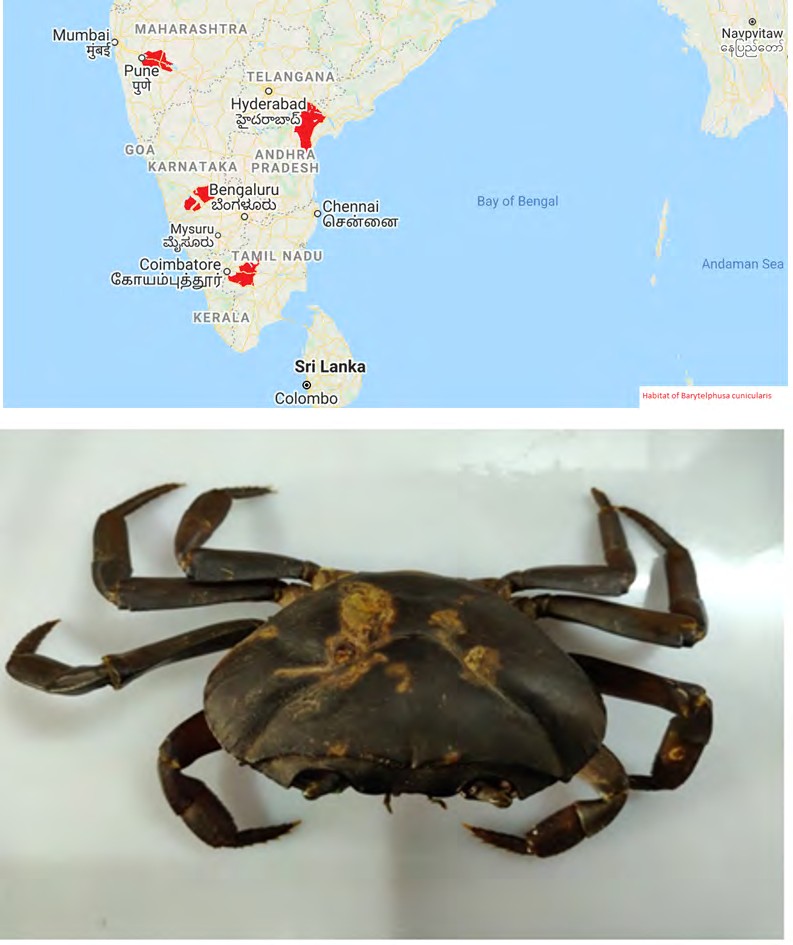
Map 1: Global estimates of crustacean species.
The crab species Barytelphusa cunicularis is commonly distributed in freshwater habitat. In India these species are found in few freshwater regions along the Western Ghats in particular to Maharashtra (Mumbai & Pune), Karnataka (Manjira) Andhra Pradesh (Godawari Region) and Tamil Nadu (Coimbatore – Siruvani River Belt). The burrowing crab Barytelphusa cunicularis is abundant in Siruvani River and its tributaries.
Objectives
The major objectives of the study are by injecting the harmone WOVA-FH for gonadal development among male crabs of Barytelphusa cunicularis.
- To collect the crab species of Barytelphusa cunicularis from Noiyal River Bridge, Karumbukadai of Combatore District
- To acclimatize the crabs for two weeks in control environment
- To develop the sexual reproduction of gonads in the male crabs by injecting the harmone WOVA-FH.
- To determine the comparative means between control and injected male of Barytelphusa cunicularis
- To determine the growth, survival, morphometric, reproductive and biochemical indices after stimulation
- To analyze the bio chemical parameters of protein, carbohydrates, lipid in muscle tissue and gonads of control and stimulated crabs
- To investigate the histological indices of gonads after stimulation
Materials and Methods
Specimen Collection and Transportations
The freshwater crabs Barytelphusa cunicularis was collected from the Bhavani Sagar Dam and ponds near Erode and Coimbatore Districts from December 2019 to January 2020 by using nets. The collection device was mainly using net or “pidi valai” with a small steel handle. Sometimes the crabs were collected through hand.
Transportation is one of the most important sides of the study. The thermacol box is used for short time transportation. On the other hand, the banana bark and jute bag is also used for long time as we can wet them.
Rearing technique was maintained by the following process: collected crabs were immediately transferred to the laboratory and were kept in aquarium made by glass tub with substrate medium of mud. These were filled with fresh water from tap which was maintained with constant aeration. The aquarium and the tub were kept both dry and wet places for crabs. The supplied crabs feed were small snail (Pilag lobosa), aquatic weeds (Hydrilla species) and sometimes flour (in a pellet form) was supplied as a food item for crab survival. Water was changed once in two days to keep the crab living environment fresh for survival. The dead crabs were picked up to keep the environment afresh (Figures 1-4).
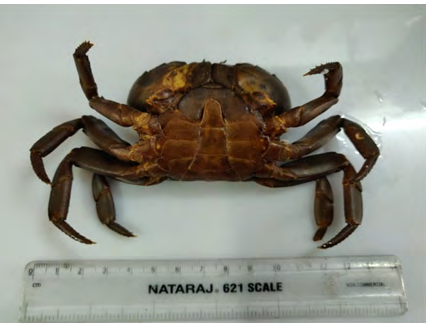
Before measuring the crabs perfectly they were placed on deep freeze for 20 minutes for anesthetizing. The carpace width, carpace length, abdomen width and abdomen length were measured by using nearest millimeter (mm) digital caliper and bodyweight was measured with electric balance. The carpace width (CW) was defined as the distance between the two anterior lateral spines and carapace length (CL) was defined as the distance between the centers of the frontal inter orbital carapace margin and the posterior margin. Crabs with missing limbs, broken carapaces or any signs of disease were not used.
Selection and Maintenance of Crabs
Mature male crabs with measured size are taken for the induced breeding. Live crabs were transported. The collected crabs were acclimatized in the laboratory. The laboratory condition are prepared habitat was not properly similar to their natural habitat. The crabs were reared in a glass tub with limited mobility and space. The crabs were kept in the aquarium for several days by providing food to adopt for the man made control environment for the study. The variation in water quality was found and the crabs were kept in the aquarium for limited study period.
Morphometric Indices
The morphometric indices such as carapace length, carapace width, length of major chelate legs, length of minor chelate legs and weight were recorded for male specimens. Male of 6.2 ± cm in length and 89 gms in weight were used for the study.
Induced Breeding Technique in B. cunicularis
WOVA-FH (A synthetic gonadotrophin hormone) The breeding hormone was purchased from BIOSTADT, Dwarka AquaTech, Sirkali, Chidambaram which was maintained in 25o C in room temperature, with which the crabs were injected with the minimal dosage as it is very effective synthetic fish hormone for induced breeding.
Induced Breeding through Opthlalmic Delivery For induced breeding, the selected male crabs were injected with Gonadotrophin hormone (WOVA-FH) in their eye with the dosage of 0.1 ml with the use of 2 mm Gauze needle measuring with its body weight. The crabs were kept undisturbed for 10 days. Food such as mussel is given to the crabs. After 10 days, the induced crabs were dissected out using sterilized knife for bio chemical parameters. Testis, hepatopancreas were dissected to note the bio chemical changes.
Behavioral Changes
Throughout the experiment period of 10 days, male crabs were monitored for notable behavior changes.
Sample Preparation
Induced crabs were kept in the laboratory condition for 10 days and the tissue muscle, hepatopancreas, heart and testis were dissected to study growth, survival, reproductive, bio chemical and histological indices.
Growth and Survival Indices
a. Feed Intake The control and the injected crabs were fed with 1 gm of fresh mussels each day and the unfed was collected and measured after every 24 hours of feeding. The feed consumption of control and induced crabs were calculated by using the following the formula.
( ) ( ) ( ) Toatlfeedoffered Feed Intake g g feed unfed g = −
b. Daily Growth Rate Before injecting, the crabs were weighed and the initial weights of the crabs were measured. After two weeks of injection the weights of the crabs was measured and it is considered as final weight which gained by the crabs during the experimental period. The growth rate was calculated by using the following formula:
( ) Final weight Initialweight Daily growthrate g Number of days − =
c. Survival Rate During the experimental period survival rate in both control and injected crabs were noted. By using the following formula, the survival rate was calculated. The survival rate was denoted in percentage.
d. Heart Index
The hearts were removed from the crabs by cutting along the dorsal surface just below the cuticle to ensure no perforation of issue occurred. The incision was then carefully opened and the hearts were removed. Heart indices were determined by the formula:
$$\text{Heart index}(\%) = \frac{\text{Wet weight of the heart}}{\text{Wet weight of the crab}} \times 100$$
e. Hepatosomatic Index
After injecting the crabs the hepatosomatic index was calculated by removing the hepatopancreas and the weight was recorded in grams. The hepatopancreatic index can be determined by using the following formula:
$$\text{Hepatosomatic Index}(\%) = \frac{\text{Wet weight of the hepatopancreas}}{\text{Wet weight of the crab}} \times 100$$
f. Reproductive Indices - Gondadosomatic Index (GSI) Testicular Index
After 10 days in the experimental period, the crab was dissected out and moisture of testis is removed with the help of blotting paper and then the weight of testis was recorded in grams. The testicular index can be determined by the use of calculation:
$$\text{Testicular Index}(\%) = \text{Wet Weight of Testis}$$
g. Biochemical Analysis Estimation of Protein
The total protein was estimated by the Lowry, 1951 method using the prepared solutions.
**Principle**
Protein reacts with Follin Cocalteu’s reagent to give a coloured complex. The colour formed was due to the reaction of alkaline copper with protein at the reduction of phosphomolybdate by tyrosine and tryptophan present in the protein. The intensity of the colour depends upon the amount of these aromatic acids present and will thus vary for different proteins.
**Reagent Required**
- 80% ethanol: 80 ml of ethyl alcohol was dissolved in 20ml of distilled water.
- NaOH (0.1): 400 mg of NaOH was dissolved in 10ml of distilled water.
- NaOH: 4g of NaOH was dissolved in 100ml of distilled water.
- Solution A: 2g of sodium carbonate was dissolved in 100ml of 0.1N NaOH.
- Solution B: solution B was prepared by dissolving 500mg of copper sulphate in 1% sodium potassium tartarate (1g of sodium potassium tartarate in 100ml of distilled water).
- Solution C: Solution C was prepared by mixing 50ml of solution A with 1ml of solution B.
- Blank: 5ml of solution C, 0.5ml of 1N NaOH and 0.5 of FolinCicalteu’s reagent served as the blank solution.
- Standard: BSA at the concentration of mg/ml and different dilutions from this stock solution served as the standard.
- Folin Cicalteu’s reagent: Folin Cicalteu’s reagent was prepared by mixing 1ml of Folin Cicalteu’s reagent with 1ml of distilled water.
- Procedure
A known amount of sample was taken and it was homogenized well with 2ml of 80% of ethanol. Then it was centrifuged at 5000 rpm for 15 min at 4°C. The precipitate was dissolved in 1N NaOH and made up to 5ml. From this, 0.5 ml was taken and then 5ml of the reagent C was added and incubated for 20 min. Finally 0.5 ml of Folin Cicalteu’s reagent was added and the intensity of colour was developed was read at 660nm in a spectrophotometer.
- Calculation
$$\text{Protein present in the sample} = \frac{\text{OD of the sample x conc. of the standard}}{\text{OD of the standard}}$$
- Estimation of Carbohydrate
The carbohydrate content of the sample was estimated by Roe et al., 1955 method using the prepared solutions.
- Principle
Sulphuric acid hydrolyze the disaccharides and Olingosaccharides into monosaccharide and converts monosaccharide and coverts monosaccharide into furfural or furfural derivates, which react with anthrone and produces a complex coloured product.
- Reagents required
- 80% Ethanol: 80% of ethanol was dissolved in 20ml distilled water.
- Anthrone reagent: 200 mg of anthrone powder was dissolved in 50 ml cold concentrated sulphuric acid. To this, 0.5 ml of thiourea was added to stabilize the color.
- Standard: 100 mg of D-glucose was in dissolved in 100 ml of standard benzoic acid and different dilutions from this stock solutions served as standard.
- Control: 4 ml of anthrone reagent.
• Procedure A known amount of sample was taken it was homogenized well with 5ml of 80% ethanol. Then it was centrifuged at 5000 rpm for 15 minutes at 4°C. 4ml of anthrone was added to the clear supernatant (0.5) and the test tubes were kept in a boiling water bath for 15 minutes. The test tubes were taken out and finally the colour developed was measured at 620 nm in a spectrometer.
- Calculation OD of the sample Carbohydrate present in the sample X cone of the standard OD of the standard =
- Estimation of Lipid The total lipid content was estimated by the Folch, et al. method using the prepared solutions.
• Principle Lipids are soluble in some organic solvent, which are utilized for extracting lipids from tissues. In biological materials, the lipids are generally bound to proteins and they are therefore extracted either with a mixture of ethanol and diethyl ether or a mixture of choloroform and methanol. Inclusions of ethanol or methanol in extraction of medicine help in breaking the bound between the lipids and proteins.
• Reagents Required Cold Chloroform methanol mixture (2:1), 2% potassium dichromate (2 ml of potassium dichromate in 98% of sulphuric acid).
• Procedure The homogenate was prepared in cold chloroform methanol mixture (2:1). The homogenate was filtered through a filter paper soaked in chloroform methanol mixture. The filtrate was collected in a test tube and evaporated in desiccation. After the complete removal of the solvent, the tubes were taken out and 8.0 ml of 2% potassium dichromate was added. The tunes were kept in a boiling water bath for 15 minutes and then cooled. 45 ml of distilled water was added and the tubes were cooled again in running tap water. The intensity of color was measure at 590 mm using a photoelectric calorimeter. The lipid level in the sample was calculated using the formula given below.
• Calculation . OD of the sample Amount of lipid present in sample X conc of the standard OD of the standard =
Results
Morphometric Indices
The morphometric indices of freshwater male crabs including weight, carapace length, carapace width, major chela were observed and given in Table 1.
Growth and Survival Indices
The growth and survival indices of the freshwater male crabs were represented in Table 2.
Feed intake: The induced crabs were fed with mussels. The feed intake of control male is (0.47±0.09) and in induced male it is found to be (0.11±0.09).
Daily Growth Rate: The growth of induced male crabs had higher body weight than the intact male group throughout the experiment period.
Survival Rate: The survival rate of the induced male (100±0.00) and control male is found to be (0.77±4.00).
Heart Index: The growth indices of the heart among the control and induced groups differ significantly. The heart indices of the induced male group were less compared to the control male.
Hepatosomatic Index: The hepatosomatic index values are higher in the induced male when compared to that of control male. The control male has (5.32±0.48) and induced male is (4.01±0.032). The values are represented in Tables 2&3.
Coagulation Time: The coagulation time of induced male (11.0±1.0) is higher than control male (8.9±0.8).
Moulting Frequency: Adult crabs of B. cunicularis was used and for the trial period of 25 days no moulting was observed in both control male and induced male crabs.
Reproductive Indices
Testicular Index
The testicular index of the control male was higher than the induced male crabs. It is found to be (0.33±0.07) in control male and (0.47±0.01) in induced male crabs. This denotes the overall growth of the testis.
Biochemical Indices
The biochemical constituents of control crabs after two weeks of experiment were displayed in Table 4 and Table 5.
- Protein The protein content in the muscle of the induced male is (87±5.01) and that of control male is (24±4.93) which is significantly lower than the induced male crab.
- Carbohydrate There is a significant effect on the body carbohydrate content B. cunicularis. The carbohydrate content in the gonads of the induced male (3.16±0.68) and testis of the control male is (1.11±0.11).
- Lipids The lipid values were also higher in induced male (0.29±0.49) and that of control male is (0.005±0.013) (Figures 5&6).
| Control Male | Induced Male | |
|---|---|---|
| Weight (g) | 79.98±0.70 | 83.40±40 |
| Carpace length (cm) | 4.83±0.40 | 5.41±0.58 |
| Carpace width (cm) | 5.93±0.41 | 6.68±0.73 |
| Major chela (cm) | 9.93±0.66 | 10.94±0.27 |
| Minor Chela (cm) | 7.73±0.17 | 8.8±0.30 |
Table 4: Morphometric Indices of _B. cunicularis_.
| Control Male | Induced Male | |
|---|---|---|
| Daily growth rate (g) | 0.01±0.002 | 0.04±0.006 |
| Feed Intake (g) | 0.47±0.09 | 0.11±0.09 |
| Survival rate (%) | 100±0.000 | 77±4.00 |
| Heart Index (%) | 0.17±0.004 | 0.12±0.015 |
| HSI (%) | 5.32±0.48 | 4.01±0.032 |
| Coagulation Time (min) | 8.9±0.8 | 11.0±1.0 |
Table 5: Growth and survival indices in _B. cunicularis_.
| Control Male | Induced Male | |
|---|---|---|
| Testicular Index (g) | 0.33±0.07 | 0.47±0.01 |
Table 1: Reproductive indices in _B. cunicularis_.
| Control Male | Induced Male | |
|---|---|---|
| Muscle protein (mg/g) | 141±4.93 | 130±4.98 |
| Muscle Carbohydrate (mg/g) | 4.37±0.94 | 6.01±1.79 |
| Pancreatic lipid (mg/g) | 0.38±0.05 | 0.16±0.01 |
Table 2: Muscle tissue and hepatopancreatic biochemical indices in _B. cunicularis_
| Indices | Control Male | Induced Male |
|---|---|---|
| Protein (mg/g) | 24±4.93 | 87±5.01 |
| Carbohydrate (mg/g) | 1.11±0.11 | 3.16±0.68 |
| Lipid (mg/g) | 0.005±0.013 | 0.29±0.049 |
Table 3: Gonodal biochemical indices in _B. cunicularis_.
Discussion
Fresh water crabs spend their entire lives in or near the freshwater environment. Crabs are ecologically important creature in an aquatic ecosystem for nutrient mixing during burrow preparation in a habitat. The crab species Barytelphusa cunicularis construct burrows along the embankments or sides of pools, creeks and shallow banks. The crab, Barytelphusa cunicularis, is found to breed during the months of June to September. The reproductive activity of the animal is appeared to be dependent on rainfall. The most significant technological breakthrough is the revolutionized freshwater aquaculture which plays an important role in the development of captive breeding and larval rearing techniques. Hence, induced breeding is one of the best methods for fish farmers and scientists to save the threatened aquatic species.
There is an urgent need to review the situation of India so that all the threatened aquatic species could be given better protection. In addition the import of foreign species is an area of concern and strict legislation is need so that harmful exotic species cannot gain entry to India.
In the present study, the feed intake of the induced male crabs (0.11±0.09) are lesser than thee control crabs (0.47±0.09) in sand fiddler crab Uca pugilator, after the injection of glucose which results in inhibition of feeding activity in crabs. Krishnamoorthy, et al. reported that feed consumption of the crabs is reduced due to low digestibility of the food and salinity stress.
The daily growth rate of the induced make crabs (0.04±0.006) found higher than control male crab (0.01±0.002). Fatihah, et al. found that moulting frequency affects the growth of mud crab Scylla tranquebarica juveniles at different shelter conditions.
The ophthalmic injection in the crabs shows 100% survival rate i.e., survival rate of induced male crabs (0.77±4.00) and the control male crabs are (100±0.00).
The hepatosomatic index of induced male crab (5.32±0.48) was comparatively lesser than control male crab (4.01±0.032).
The growth indices of the heart among the control and induced groups differ significantly. The heart indices of the induced male (0.12±0.015) group were compared to the control male crabs (0.17±0.004).
The key finding of the present study has been the rapid maturation of B. cunicularis of gonads after treating with WOVA-FH. The crabs treated in this gave the satisfactory results of reproduction effects. In some other studies these hormones helped quite lot in improving the spermatogenesis with the series of hormones demonstration as stimulator for spawning.
The correlated results were seen in the testicular index of the induced male crabs (0.47±0.01) when compared to control male crab (0.33±0.07).
In the present study, the protein content in gonads was noticed higher in the induced male crabs, compared to their control male (141±4.93) crabs. Whereas, in the induced male (130±4.98) crabs, protein level in muscle was found to be decreased compared to their control male (141±4.93) crabs. Metwally, et al. reported the total protein in male is high due to the seasonal changes in mRNA levels of glycoprotein alpha, gonadotrophin and thyrotrophin submits in the pituitary of goldfish. Other factors such as unreliable genetic background and improper nutrition have significant bearing on eggs and milt quality.
In the present study, the muscle carbohydrate content in the gonads of the induced male (6.01±1.79) crabs were significantly higher compared to their control male crabs (4.37±0.94). On the other hand, carbohydrate concentration in the muscle of the induced crabs was found to be decreased compared to the control crabs. The lipid level is found to be (4.01±0.032) for control male and (0.38±0.05) for induced male.
In the present study, the gonads the protein levels show a significant rise in the induced male crabs (87±5.01) compared to the control male crabs (24±4.93). Also the carbohydrate level of induced crab is (1.11±0.11) whereas for control the crab it is (3.16±0.68). There is significant increase of lipids of induced crab is (0.29±0.049) as that of control crab is (0.005±0.013).
Thus in the present study, muscle biochemical proportions are antagonistic to gonad biochemical proportions. The accumulation of protein, lipid and carbohydrate is due to the effective mobilization on stimulation with WOVA-FH.
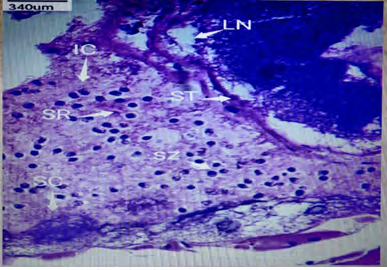
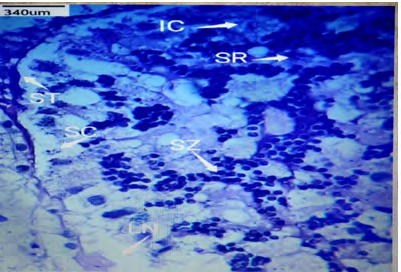
The histology of testis shows the spermatogenisis with differnentiation of sperm cells, and their maintenance. In crustaceans, the testis contains 10-15 lobules and each contains many seminiferous tubules, whose shape changes according to the stages of spermatogenisis. All these are filled with spermatocytes and spermatids, and the ovarian lobes are connected by a central bridge of ovarian tissues. Purna, et al. reported that hormonal control of spermatogenisis is not completely found. To state, it is suggested for more emphasis on development of the induced breeding techniques of aquatic species and popularize it all over the country. The
experiments so far conducted have been highly encouraging and have been great promise for future research. Concerted efforts are to be made to perfect the techniques leading to the production of more aquatic species of desired varieties on a commercial scale to meet the demand in India.
**Summary**
- To summarize the present study, Crabs were collected from Noiyal River Bridge, Karumbukadai of Combatore District.
- The crabs were subjected to morphometric, Growth, Survival, Reproductive and Biochemical indices after 10 days of experimental period.
- The weight of control male is (82.98±0.70) and induced male is (83.40±40).
- The carpace length of control male is (4.83±0.40) and induced male is (5.41±0.58).
- The carpace width of control male is (5.93±0.41) and induced male is (6.68±0.73).
- The major chela of control male is (9.93±0.66) and induced male is (10.94±0.27).
- The minor chela of control male is (7.73±0.17) and the control male is (8.8±0.30).
- The feed intake is lesser in induced male crab (0.17±0.09) compared with control male crab.
- The daily growth of male crabs is (0.04±0.006), which are significantly higher when compared to control male crabs (0.04±0.006).
- Survival rate of control crab is (77±4.00) which is higher when compared to induced crab (100±0.000).
- HSI of the induced male (5.32±0.48) crabs found to be decreased when compared to control male crabs (4.01±0.032).
- Coagulation time of induced male (11.0±1.0) is higher than control male crabs (8.9±0.8).
- The injected male crabs of B. cunicularis were in interphase stage and no moulting stage was observed between induced and non-induced crabs due to a short experimental span of two weeks.
- HSI in induced male (5.32±0.48) crabs found to be higher compared to control male crabs (4.01±0.032).
- The HI of the induced male (0.12±0.015) group was less compared to the control male crabs (0.17±0.004).
- The muscle protein content in induced male (130±4.98) crabs, is found lower compared to their control male (141±4.93). The gonadal value of protein of induced male is (87±5.01) which is much higher than the control male (24±4.93).
- The carbohydrate content in the gonads of the induced male (3.16±0.68) crabs were significantly higher compared to their control male crabs (1.11±0.11). The muscle carbohydrate value for induced male (6.01±1.79), is found decreased and control male (4.37±0.9) crabs.
The gonads lipid levels in the induced male (0.29±0.049) crabs were found higher than control male (0.005±0.013). However, the values of hepatopancreatic lipid content showed a decreased level in induced male (0.16±0.01) crabs compared to control male (0.38±0.05) crabs.
**Conclusion**
In the present study, it is evident that ophthalmic injection delivery of WOVA-FH stimulated male gonads of B. cunicularis by causing mobilization of protein, lipid and carbohydrate from muscle and hepatopancreatic tissues there by inducing gonadal development and maturation in the crab B. cunicularis. The results of daily growth rate, HIS, GSI, bio chemical changes in the reproductive indices. This method enhances the testicular maturation and increase of spermatides and spermatozoa within the seminiferous tubules which clearly indicates the maturation of male gamete and the crab is ready for spawning.
**References**
1. Gopal N, Sudha Devi AR (2018) Morphology and Histology of Mandibular Organ in Relation to Growth and Reproduction in the Freshwater Crab Barytelphusa cunicularis. International journal of oceans and oceanography 2(1): 93-109.
2. Alikunhi K, Sukumaran, Parameswaran S (1963) Induced spawning of Chinese carps (Ctenopharyngodon idellus) and Silver carp (Hypophthalmichthys molitrix), Proc (2): 181-204.
3. Aygul K, Mehmet C (2008) Amino Acid Composition of Blue Crab (Callinectes sapidus) from the North Eastern Mediterranean Sea. Journal of Applied Biological Science 2(1): 39-42.
4. Boyd C (2013) Role of aquaculture pond sediments in sequestration of annual global carbon emission. 158(8): 2537-2540.
5. Cobb BF, Conte FS, Edwards MA (1975) Journal of Agriculture Food Chemistry 23: 1172-1174.
6. Cumberlidge N (2016) New collections of freshwater crabs from northern Madagascar, with the description of a new species of Foza Reed & Cumberlidge, 2006 (Brachyura, Potamonautidae), and comments on their conservation status. European Journal of Taxonomy 182: 162-182.
7. Daniel D, Watson R (2001) Systematic distortions in World Fisheries catch trends. Nature 414 (6863): 534-536.
8. Fang LS, Tang CK, Lee DL, Chen IM (1992) Nippon Suisan Gakkaishi (58): 1095-1102.
9. Farihah SN, Julin HT, Chen CA (2017) Survival, growth and molting frequencies of mud crab Scylla tranquebarica juveniles at different shelter conditions. 10(6).
10. Krishnamurthy RV, Srikari V (1976) Salinity effects on the food preference of the fresh water crab Ozitelphusa senex senex. Proc. Indian Acad Sci 84(4): 128-136.
11. Legendre, Fagbenro (2004) Induced ovulation and spawning of pond raised African giant catfish. J aquaculture 242(1-4): 229-236.
12. Mia B, Islam B, Sarker M, Rahman R, Jalil A, et al. (2016) Morphology and Biochemical Composition of Crab (Paratelphusa lamellifrons) in Bangladesh. Journal of Biological Sciences and Medicinal Plants 1(1): 1-14.
13. Ng PKL (1988) The freshwater crabs of Peninsular Malaysia and Singapore. Fresh eater Crabs in the collection of Western Ghats. Rec Zool Surv India 114(4): 651-668.
14. Kalpana P, Meena P (2016) The freshwater crabs are good source of medicinal values and are used as food crabs. International. Journal of Recent Scientific Research pp: 9327-9330.
15. Joshi PP, Kulkarni GK (2011) Recent Research in Science and technology pp: 7-10.
16. Purna GCN (2011) Reproductive regulators in decapod crustaceans: an overview. Journal of Experimental Biology 214(pt 1): 3-16.
17. Kale RS (2018) Open Access Journal. Bioscience Discover pp: 140-145.
18. Sharma K, Yadava NK, Jindal M (2020) Effect of different doses of ovatide on the breeding performance of Clarias batrachus (Linn.) Livestock Research for Rural Development pp: 1-7.
19. Rana S (2018) International journal of pure and applied zoology pp: 1-5.
20. Padghane S, Chavan SP and Dudhmal D (2016) Fresh water crab Barytelphusa cunicularis as a food commodity: Weekly crab market study of Nanded city, Maharashtra, India. Journal of Fisheries and Aquatic Studies 4(4): 14-18.
21. Padghane S, Chavan SP (2018) Advances in Bioresearch pp: 76-80.
22. (2020) Study of Barytelphusa cunicularis.
23. Nagabhushanam R, Machale PR, Sarojini R (1989) Isolation of neurosecretory hyperglycemic hormone from the eyestalks of freshwater crab, Barytelphusa cunicularis. Indian Acad Sci (Anim Sci) pp: 379-384.
24. Rehmann MM, Miah MI, Hasan KR, Farid SM (2011) Effect of pituitary doses on artificial propogation of Cushibaim, Mastacembelus panicallus. Journal of Bangaladesh Agriculture University 9(2): 305-310.
25. Kale RS, Shejule KB, Sonawane AK (2011) The Bioscan. pp: 99-201.
26. Sastry AN (1983) Ecological aspects of reproduction. In: Vengerg FJ, Venberg WB, et al. (Eds.), The Biology of Crustacean: Environmental Adaptations 3(383): 179- 270.
27. Sakhre SS, Kamble NA (2019) International Journal Pharmaceutical Sciences and Research pp: 1-9.
References
-
Gopal N, Sudha Devi AR (2018) Morphology and Histology of Mandibular Organ in Relation to Growth and Reproduction in the Freshwater Crab Barytelphusa cunicularis. International journal of oceans and oceanography 2(1): 93-109.
-
Alikunhi K, Sukumaran, Parameswaran S (1963) Induced spawning of Chinese carps (Ctenopharyngodon idellus) and Silver carp (Hypophthalmichthys molitrix), Proc (2): 181-204.
-
Aygul K, Mehmet C (2008) Amino Acid Composition of Blue Crab (Callinectes sapidus) from the North Eastern Mediterranean Sea. Journal of Applied Biological Science 2(1): 39-42.
-
Boyd C (2013) Role of aquaculture pond sediments in sequestration of annual global carbon emission. 158(8): 2537-2540.
-
Cobb BF, Conte FS, Edwards MA (1975) Journal of Agriculture Food Chemistry 23: 1172-1174.
-
Cumberlidge N (2016) New collections of freshwater crabs from northern Madagascar, with the description of a new species of Foza Reed & Cumberlidge, 2006 (Brachyura, Potamonautidae), and comments on their conservation status. European Journal of Taxonomy 182: 162-182.
-
Daniel D, Watson R (2001) Systematic distortions in World Fisheries catch trends. Nature 414 (6863): 534-536.
-
Fang LS, Tang CK, Lee DL, Chen IM (1992) Nippon Suisan Gakkaishi (58): 1095-1102.
-
Farihah SN, Julin HT, Chen CA (2017) Survival, growth and molting frequencies of mud crab _Scylla tranquebarica_ _juveniles_ at different shelter conditions. 10(6).
-
Krishnamurthy RV, Srikari V (1976) Salinity effects on the food preference of the fresh water crab _Ozitelphusa_ _senex senex. Proc._ Indian Acad Sci 84(4): 128-136.
-
Legendre, Fagbenro (2004) Induced ovulation and spawning of pond raised African giant catfish. J aquaculture 242(1-4): 229-236.
-
Mia B, Islam B, Sarker M, Rahman R, Jalil A, et al. (2016) Morphology and Biochemical Composition of Crab (Paratelphusa lamellifrons) in Bangladesh. Journal of Biological Sciences and Medicinal Plants 1(1): 1-14.
-
Ng PKL (1988) The freshwater crabs of Peninsular Malaysia and Singapore. Fresh eater Crabs in the collection of Western Ghats. Rec Zool Surv India 114(4): 651-668.
-
Kalpana P, Meena P (2016) The freshwater crabs are good source of medicinal values and are used as food crabs. International. Journal of Recent Scientific Research pp: 9327-9330.
-
Joshi PP, Kulkarni GK (2011) Recent Research in Science and technology pp: 7-10.
-
Purna GCN (2011) Reproductive regulators in decapod crustaceans: an overview. Journal of Experimental Biology 214(pt 1): 3-16.
-
Kale RS (2018) Open Access Journal. Bioscience Discover pp: 140-145.
-
Sharma K, Yadava NK, Jindal M (2020) Effect of different doses of ovatide on the breeding performance of _Clarias batrachus_ (Linn.) Livestock Research for Rural Development pp: 1-7.
-
Rana S (2018) International journal of pure and applied zoology pp: 1-5.
-
Padghane S, Chavan SP and Dudhmal D (2016) Fresh water crab Barytelphusa cunicularis as a food commodity: Weekly crab market study of Nanded city, Maharashtra, India. Journal of Fisheries and Aquatic Studies 4(4): 14-18.
-
Padghane S, Chavan SP (2018) Advances in Bioresearch pp: 76-80.
-
(2020) Study of Barytelphusa cunicularis.
-
Nagabhushanam R, Machale PR, Sarojini R (1989) Isolation of neurosecretory hyperglycemic hormone from the eyestalks of freshwater crab, _Barytelphusa_ _cunicularis_. Indian Acad Sci (Anim Sci) pp: 379-384.
-
Rehmann MM, Miah MI, Hasan KR, Farid SM (2011) Effect of pituitary doses on artificial propogation of Cushibaim, Mastacembelus panicallus. Journal of Bangaladesh Agriculture University 9(2): 305-310.
-
Kale RS, Shejule KB, Sonawane AK (2011) The Bioscan. pp: 99-201.
-
Sastry AN (1983) Ecological aspects of reproduction. In: Vengerg FJ, Venberg WB, et al. (Eds.), The Biology of Crustacean: Environmental Adaptations 3(383): 179- 270.
-
Sakhre SS, Kamble NA (2019) International Journal Pharmaceutical Sciences and Research pp: 1-9.
- Natural Decline to Extinction of A New Zealand Rabbit Population
- Mitochondrial Bio-Logistics: Steering Co-Enzyme Q10 and Lycopene Synergies within the Science 4.0 Bio-OS Framework
- Hymenoptera Specimens from the Caño Negro Wetland, of the National Museum Collection, Costa Rica
- Science 4.0: Comprehensive Architecture of the Biological Operating System (Bio-OS) A Framework for Systemic Resilience and Industrialized Bio-Governance
- Rabbit on, or Hare Back? Understanding Climate Change
- Clinical Validation of Science 4.0: Flow Steering and Epigenetic Drift Inversion on a 76-Year-Old Hybrid System