
Phenology of Predaceous Diving Beetles (Coleoptera: Dytiscidae) in a Desert Oasis
Seasonal fluctuation in relative abundance of the diving beetles (Coleoptera: Dytiscidae) was investigated at Al-Hassa Oasis, Eastern Province of Saudi Arabia, using a 200-Watt Robinson light trap. The trap was placed 1.5 m above ground at the water pump station of the Irrigation and Drainage Project and was operated daily from sunset to sunrise during October 1977 until the end of September 1978. Ground water pumped from wells poured into open concreate irrigation channels are the aquatic basis to agriculture, mainly date palm plantations. From this permanent water source, thirteen species of Dytiscidae were trapped and counted. Only four beetles were properly identified to species (i.e., Hygrotis musicus, Rhantus suturalis, Hyphydrus pictus, Copelatus pulchellus) and their weekly numbers were determined. No significant differences between trap catch assessment of the four species during the year (P>0.05). Hygrotus musicus represented the highest catch per year (46.4%) with a mean ± SEM of 14.5 ± 8.9 beetles per month. Distributional pattern of 1928 adults caught in trap during the year represented a peak of summer upsurge and significant declines during winter-fall seasons. Overall mean beetle catch per week was 40.2 ± 8.5 beetles. This trend reflects on their favorite prey of mosquitoes that decrease during summer at Al-Hassa. Compiled records of Dytiscidae of the Arabian Peninsula including Al-Hassa species are reviewed. Result of this historical investigation can be a useful indicator of biodiversity, for monitoring water quality, and other environmental concerns of a desert oasis.
Introduction
Bright lights and shining objects are known to entice many types of nocturnal terrestrial and aquatic insects. This phenomenon is well known that light trapping has been one of the most productive collecting techniques of flying insects [1, 2]. Light trapping studies enabled the understanding of insect periodic life cycle events and the influence of seasonal variations in climate and habitat factors [3, 4].
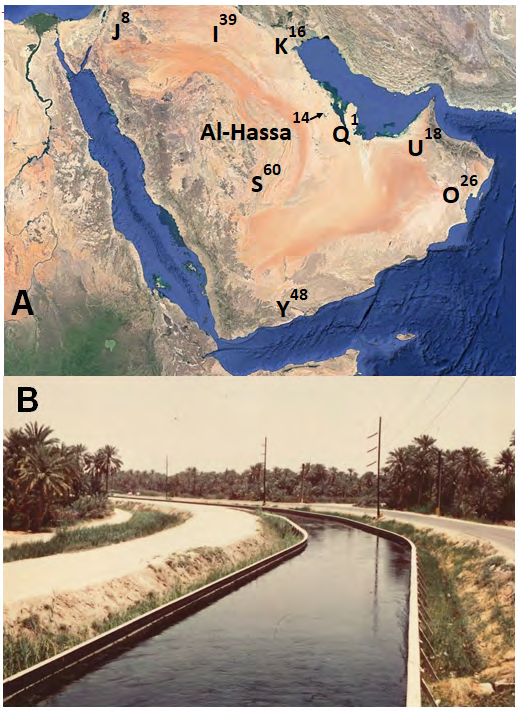
Figure 1: Study site of Al-Hassa Oasis and distribution of Dytiscidae in the Arabian Peninsula: A) Map of Arabian Peninsula showing location of Al-Hassa Oasis and distributional loci of 96 diving beetle species in descending order of species richness: (S) Kingdom of Saudi Arabia; (Y) Yemen; (I) Iraq; (O) Sultanate of Oman; (U) United Arab Emirates; (K) Kuwait; (J) Kingdom of Jordan; and (Q) Qatar. Numbers in superscript are the recoded valid species, (Google Earth accessed Jan. 2021). B) Main open concreate channel distributing water to farms at Al-Hassa Oasis, home of about three million date palm trees creating the biggest date production in the country (background), historical photo of 1977.
Al-Hassa, Eastern Province of Saudi Arabia, is the largest date palm (Phoenix dactylifera L.) oasis in the world irrigated by the flow of >280 springs. The quality of its natural springs, artesian wells, and the elaborate irrigation system, made this oasis ideal for farming. The area is in a subtropical arid zone surrounded by desert [5, 6], Figure 1A. This aridity of climate is characterized by very hot, dry summers and, cool relatively dry winters [5, 7]. A transitional subtropical-tropical climate prevails in the region [8]. Temperature fluctuations are substantial, both during the day and between the seasons. The average temperature in December is 15°C, but in August it is over 30°C. In summer it is not unusual to reach 50°C at ground level. Annual rainfall is just 70 millimetres in winter [7].
On the banks of this oasis are many agricultural projects, especially date cultivation, due to the abundance of water. Al-Hassa Irrigation and Drainage Authority (HIDA) is responsible for providing irrigation and regulating drainage utilizing water from wells and treated wastewater. HIDA project was initiated in 1967 delivers approximately 328 million m3 of spring water every year to about 23 thousand farms [9]. Open concrete canals extending to more than 500 km were constructed (Figure 1B). These distribute water for farming, benefiting over two million palm trees, rice, and various types of vegetables and crops. The irrigation and drainage canals have a length of some 1500 kilometres permanent source of water [10].
Predaceous diving beetles (Coleoptera: Dytiscidae) are highly adapted for aquatic life, and they are the most diverse water beetle family with more than 4000 species worldwide [11, 12]. Despite their diversity and abundance, little is known of their life histories particularly in desert regions. Both adults and larvae are aquatic voracious predators primarily of mosquitoes, crustaceous, and other aquatic arthropods [13]. Mature larvae of diving beetles vacate the water to pupate in moist soil and adults readily exit the water and fly considerable distances. The reasons for the adult flight periods are not determined, but many pond species seek running water during the winter months. Adults were observed producing a loud constant sound from water surface just before launching a massive mass emigration [13]. There are reports of vehicles being bombarded by the flying adult Dytiscidae [11].
Most aquatic beetles are not widespread, only very few species are distributed in more than two realms (e.g., Rhantus suturalis (MacLeay) [14]). Literatures have been published on the diversity and distribution of Dytiscidae in the Arabian Peninsula but mostly lacking information on population parameters [15, 16, 17, 18]. Factors affecting phenology of these beetles may include temperature, and seasonal variability. Recently, Van Harten, et al. [19] revealed the presence of 18
species from the United Arab Emirates that filled a gap in the knowledge of the Dytiscidae fauna of the Arabian Peninsula. Arid environments are the most diverse ecosystems of Saudi Arabia. Yet, much of their hydrobiology and its component biotic information are still lacking in published literature [20].
Light trapping is an effective method for biodiversity, ecological studies, and forecasting populations of flying beetles in all types of habitats [3]. A great number of predacious diving beetles leave water and are well attracted to artificial light at night, especially those that are near freshwater, isolated from other lights, and open to a large area [11].
It is well known that, the physical and chemical characteristics controlling life in aquatic habitats lead to the appearance of special types of biota [20, 21]. This study reports on the population fluctuation of Dytiscidae trapped at Al-Hassa oasis using a simplified light trap [22]. Data from this study can be useful indicator of biodiversity, for monitoring water quality, ecological conditions, toxins, or other environmental concerns [23]. All current Dytiscidae species of the Arabian Peninsula are reviewed, and seasonal abundance of species trapped at Al-Hassa oasis is discussed.
Research Methods
Study Area
Al-Hassa oasis covering an area of about 20 thousand hectares is one of the largest agricultural oases in the Arabian Peninsula. It lies within the tropical area to the north of the equator and elevation ranges between 130 to 160 meters [24], Figure 1A. The Al-Hassa province contains many water- wells constitute the source of irrigation of about 8 thousand hectares. Open concrete channels of a total length equal 1500 km are main and branch networks that reach farms [25], Figure 1B. The light trap was operated at the main water pump station of the Irrigation and Drainage Project at Al- Hassa (25°22′N, 49°20′E) for its reliable source of electricity and trap protection from vandalism through the year.
Sampling Method
Population fluctuation of adult Dytiscidae were determined using a simple Robinson light trap consisting of a funnel attached to an insect collecting jar baited with cyanide imbedded in 2cm plaster of Paris, and above which an unenclosed electric light bulb (200-Watt mercury vapor bulb) was suspended. Study was conducted from October 1977 until September 1978.
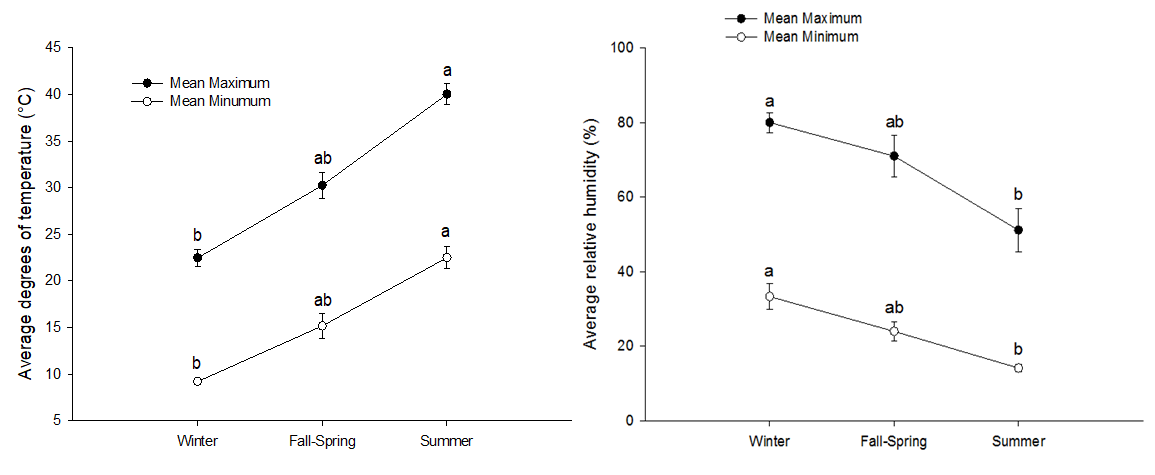
The trap was placed in a broad open area 1.5m above ground surrounded by date palms and other crops in between (Figure 1B). It was activated daily from sunset to sunrise and the insect collecting jar was emptied once a week. Trap catch was taken to the entomology laboratory, College of Agriculture and Food Sciences, King Faisal University at Al-Hassa, for sorting and documentation of insects. All the Dytiscidae beetles were sorted and counted using a dissecting microscope but only four were confirmed and tallied by species. In addition, nine unidentified Dytiscidae species were totaled and added to the overall catch per week. The monthly degrees of temperature and relative humidity of Al- Hassa were the average of previous ten years [6] (Figure 2).
Table recording compilation of the Arabian Dytiscidae and recent nomenclature was assembled mainly from Nilsson, et al. [26]; Nilsson, et al. [27] beside other various manuscripts on the family [28]. In addition, the latest classification of genera in the tribe Hygrotini is after Villastrigo, et al. [29];
Hájek, et al. [30].
Data analysis, Vouchers, and Credits
Differences across trap types in total beetle abundance and beetle species richness per trap were subjected to a one- way ANOVA and all reported values are means ± SEM. For significant interaction effects for all pairs, means separations were performed using Tukey-Kramer HSD test at α = 0.05 (JMP 11, 2013, SAS Institute Inc, Cary, NC, 1989-2019). Identification of four species is credited to Dr. Philippe Bruneau de Miré, at Centre de Recherché de Montpellier (CIRAD) where voucher specimens are deposited. Additional vouchers were placed in the entomology collection, Department of Plant Protection, College of Agriculture and Food Sciences, King Faisal University, Kingdom of Saudi Arabia at Al-Hassa. Beetle photos used in graph are credited to Dr. Jiri Hájek, Department of Entomology, National Museum, Cirkusová, Czech Republic and Dr. Zdeněk Chalupa, Kladno, Czech Republic who granted the corresponding author usage of their copy write photos.
Results
Summer in Al-Hassa extends from May to October, and fall-spring season usually during November and December with a short winter-spring period that covers January to April (Figure 2). Wettest month is December (rainfall = 21.1 mm). Driest months are June, July, and September (rainfall = 0 mm). This weather pattern remained somewhat the same until recent times [5, 7, 8, 10]. Hygrotis musicus (Klug, 1834), (Subfamily: Hydroporinae, Tribe: Hygrotini) is a rainwater, desert species known from arid regions of Africa and outside Africa [31]. Zoogeographical distribution regions include Afrotropical, Oriental, and Palearctic. Biogeographical zones in neighboring Egypt include Northern coastal strip of the Red sea, Sinai Peninsula, Nile valley and delta, and Western desert [32].
This species is the smallest of diving beetle fauna of Al- Hassa with average body length 3.3 mm. Hygrotis musicus was completely absent from the trap nine months during October 1977 to March 1978, and during July-September 1978. Population started to appear in trap during the third week of April to the third week of June and peaked during June (Figure 3A). Out of total 174 trapped beetles, a percentage of 53.4% was recorded during June, the most hot (average low and high temperature 24–42ºC), lowest humidity (average 22% RH) and most dry month of the year (average rainfall = 0 mm). Nonetheless, grouping the data by seasons did not indicate significant differences between trap catches of H. musicus during the year (F 2, 45 = 1.8369, P = 0.1710, Figure 3A).
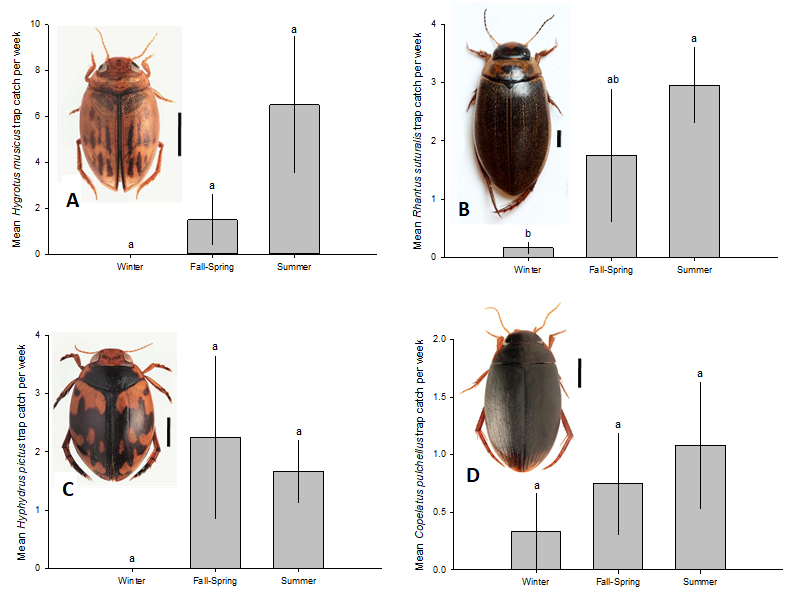
Figure 3: Seasonal abundance of four Dytiscidae beetles trapped at Al-Hassa Oasis. All photos by permission (Rhantus suturalis credited to Dr. Zdeněk Chalupa, other photos credited to Dr. Jiri Hájek, Department of Entomology, National Museum, Czech Republic). Values are mean ± SEM and bars bearing different letters are significantly different (Tukey’s HSD, P < 0.05). Bar = 1 mm.
Rhantus suturalis (MacLeay, 1825), (Subfamily: Colymbetinae, Tribe: Colymbetini) is the largest diving beetle found at Al-Hassa oasis. Medium-sized species with an average length of 11.6 mm preferred still water habitats, including newly created pools and pools that dry out in summer [14, 33]. It is known to efficiently fly to new water source when one dries out in summer, which are also the breeding places of mosquito larvae the favored food of this beetle. Adults can fly very well, which makes it so easy to escape from a drying pool and migrate to another [33]. Rhantus suturalis is present in small clay pools on coastal meadows, in brackish water, in shallow ponds, mainly with little or no vegetation and with slow-flowing waters [34]. Most life stages occur in the water, where also copulation and oviposition take place. Only the pupal stages are found outside the aquatic environment [28].
This species was very common in Al-Hassa, present in every month catch except during January 1978. The total catch per year was 95 beetles (Table 1). Trap catch data grouped by season showed the same trend of population significant increase during summer (F 2, 45 = 3.4691, P = 0.0397, Figure 3B). Rhantus suturalis was indicated as bioindicator of metal pollution [35]. The adults are excellent flyers as they leave water bodies when these dry up or for hibernation. Adults in Italy also present throughout the year, but little is known about the number of generations per year [36]. Valladares, et al. [37] reported that in Spain, the larvae can be found from September in transient ponds where they quickly complete their cycle as the adult overwinters.
| Species | Trap catch/month Mean ± SEM | Total catch/year | % catch relative to all trapped Dytiscidae | |
|---|---|---|---|---|
| Number | % | |||
| Hygrotus musicus | 14.5 ± 8.9 | 174 | 46.4 | 9 |
| Rhantus suturalis | 7.9 ± 2.1 | 95 | 25.3 | 4.9 |
| Hyphydrus pictus | 5.6 ± 2.6 | 67 | 17.9 | 3.5 |
| Copelatus pulchellus | 3.3 ± 1.4 | 39 | 10.4 | 2 |
| F | 1.0201 | - | - | - |
| DF | 3,44 | - | - | - |
| P | 0.3929 | - | - | - |
Table 1: Mean trap catch per month and total number of four common species of Dytiscidae at Al Hassa Oasis 1978.
Hyphydrus pictus (Klug, 1834), (Subfamily: Hydroporinae, Tribe: Hyphydrini) is another small diving beetle with average length 4.5 mm. Zoogeographical distribution regions include Afrotropical, and Palearctic. Biogeographical zones in Egypt include Eastern desert, Nile valley and delta, and Sinai Peninsula [32]. This beetle was not present in trap during five months of the year (Nov. 1977 – Mar. 1978). A total of 67 beetles were captured per year with peaks in April (40.3%) and May (32.8%). Population growth displayed a pattern with insignificant differences during fall and summer seasons (F_2, 45 = 1.8177, _P = 0.1741, Figure 3C).
Copelatus pulchellus (Klug 1834), (Subfamily: Copelatinae, Tribe: Copelatini) is a moderate size beetle with average body length 5.7 mm. Known from Africa, Afrotropical, Europe, and Asia. Usually found in habitats with high disturbance regimes, such as fresh shallow pools, desert rock pools, and standing waters. It tends to disperse frequently, which explain its attraction to light trap during most of the year. While it is widespread from Western to Eastern Africa (St Lucia, KwaZulu Natal records, [38], it is reported only from Al-Hassa region in the Saudi Arabian fauna. Copelatus pulchellus did not appear in trap during five months of the year (Jan – Mar, and during July and September of 1978).
Total trap catch per year was 39 beetles. The growth pattern occurred during summer and population peaked in October 1977 represented by 43.6% of total species catch. However, comparison of all pairs showed no significant differences (_F_2,
45 = 0.4871, P = 0.6176, Figure 3D). The photo in Figure 3D is darker, steriolate female which is not the typical habitus of the species coloration in Al-Hassa specimens (Dr. Jiri Hájek, Department of Entomology, National Museum, Cirkusová, CZ, personal communication).
No significant differences between the trap catch assessment of the four species. Hygrotus musicus represented the highest catch of the four species per year (46.4%) with a mean of 14.5 beetles per month. Copelatus pulchellus was the least abundant of the four species represented by (10.4%) of beetle catch per year. Nonetheless, differences in numbers between the species were not significant (F_3, 44 = 1.0201, _P = 0.3929). The four-species represented 19.4% of the thirteen species of Dytiscidae captured during this investigation (Table 1).
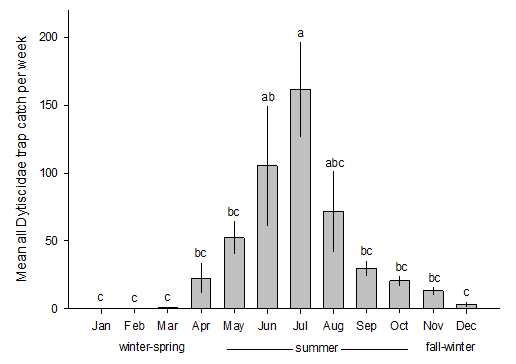
Distributional pattern of 1928 adults caught in trap during the year characterized a single peak of summer upsurge of diving beetle population shadowed by significant decreases during winter-fall seasons (Figure 4). All diving beetles mean catch per week during this investigation was 40.2 ± 8.5 beetles (n = 48, sum =1928, median 50% = 16.5 beetle/ week). Peak appearance in trap occurred during July [161.5 ± 35.5 beetle/week, (F 11, 36 = 6.7693, P <0.0001)] summer season with a rainfall range (0 – 1.2 mm). Winter rainfall had
8 – 13 mm, during the least number of beetle catches. Nine of the thirteen species were not identified to species at time of collection and are reviewed here from published reports on diving beetle assemblages from Al-Hassa region, (Dytiscidae records of Al-Hassa, Table 2):
| Subfamily | Tribe | Species | Distribution in the Arabian Peninsula | ||||
|---|---|---|---|---|---|---|---|
| Saudi Arabia | UAE & Qatar | Oman | Yemen | Iraq Kuwait & Jordan | |||
| Agabinae | Agabini | Agabus caraboides Sharp | X | ||||
| Agabinae | Agabini | Agabus conspersus (Marsham) | XKJ | ||||
| Agabinae | Agabini | Agabus biguttatus (Oliver) | X | X | XJ | ||
| Agabinae | Agabini | Agabus safei Abdul-Karim & Ali, | X | ||||
| Colymbetinae | Colymbetini | Colymbetes mesepotamicus Abdul-Karim & Ali | X | ||||
| Colymbetinae | Colymbetini | Colymbetes vicinus Dejean | X* | ||||
| Colymbetinae | Colymbetini | Colymbetes piceus Klug | X | XK | |||
| Colymbetinae | Colymbetini | Colymbetes sinaicus Dejean | X | ||||
| Colymbetinae | Colymbetini | Colymbetes substigatus Sharp | X | X | |||
| Colymbetinae | Colymbetini | Colymbetes includens (Walker) | X | ||||
| Colymbetinae | Colymbetini | Rhantus includens (Walker) | X | X | |||
| Colymbetinae | Colymbetini | Rhantus suturalis (MacLeay) | X** | XKJ | |||
| Copelatinae | Copelatini | Copelatus antoniorum Hájek & Brancucci | X | X | X | ||
| Copelatinae | Copelatini | Copelatus atrosulcatus Regimbart | X | X | |||
| Copelatinae | Copelatini | Copelatus neogestroi Balke | X | X | X | ||
| Copelatinae | Copelatini | Copelatus pulchellus (Klug) | X** | X | X | ||
| Cybistrinae | Cybistrini | Cybister cephalotes Sharp | X | X | |||
| Cybistrinae | Cybistrini | Cybister crassipes Sharp | X | ||||
| Cybistrinae | Cybistrini | Cybister lateralimarginalis (De Geer) | XK | ||||
| Cybistrinae | Cybistrini | Cybister ponticus Sharp | X | ||||
| Cybistrinae | Cybistrini | Cybister tripunctatus lateralis (Fabricius) | X | ||||
| Cybistrinae | Cybistrini | Cybister tripunctatus africanus Laporte de Castelnau | X** | X | X | X | XK |
| Cybistrinae | Cybistrini | Cybister vulneratus Klug | X | X | X | X | |
| Dytiscinae | Acilini | Rhantaticus congestus (Klug) | X | ||||
| Dytiscinae | Eretini | Eretes griseus (Fabricius) | X | X | XK | ||
| Dytiscinae | Eretini | Eretes sticticus (Linnaeus) | X** | XQ | X | X | XK |
| Dytiscinae | Hydaticini | Hydaticus africanus (Rocchi) | X | X | X | X | |
| Dytiscinae | Hydaticini | Hydaticus arabicus Guignot | X | ||||
| Dytiscinae | Hydaticini | Hydaticus decorus Klug | X | X | |||
| Dytiscinae | Hydaticini | Hydaticus dorsiger Aube | X | X | |||
| Dytiscinae | Hydaticini | Hydaticus dregei Aube | X | X | |||
| Dytiscinae | Hydaticini | Hydaticus flavolineatus Boheman | X | X | |||
| Dytiscinae | Hydaticini | Hydaticus histrio Clark | X | X | X | X | |
| Dytiscinae | Hydaticini | Hydaticus marmoratus Dejean | X* | ||||
| Dytiscinae | Hydaticini | Hydaticus pictus (Sharp) | X** | X | X | X | |
| Dytiscinae | Hydaticini | Hydaticus ponticus Sharp | X | X | |||
| Dytiscinae | Hydaticini | Hydaticus servillianus Aube | X | X | X | X | |
| Dytiscinae | Hydaticini | Hydaticus satoi dhofarensis Pederzani | X | ||||
| Dytiscinae | Hydaticini | Hydaticus satoi satoi Wewalka | X | ||||
| Hydroporinae | Bidessini | Glareadessus stocki Wewalka & Bistrom | X | X | |||
| Hydroporinae | Bidessini | Hydroglyphus angularis (Klug) | X | X | X | X | X |
| Hydroporinae | Bidessini | Hydroglyphus confusus (Klug) | X | X | X | ||
| Hydroporinae | Bidessini | Hydroglyphus flammulatus (Sharp) | X | X | |||
| Hydroporinae | Bidessini | Hydroglyphus geminus (Fabricius) | X** | X | |||
| Hydroporinae | Bidessini | Hydroglyphus gujaratensis (Vazirani) | X | ||||
| Hydroporinae | Bidessini | Hydroglyphus hormuzensis Hájek & Brancucci | X | X | X | ||
| Hydroporinae | Bidessini | Hydroglyphus infirmus (Boheman) | X | X | X | ||
| Hydroporinae | Bidessini | Hydroglyphus major (Sharp) | X** | X | X | ||
| Hydroporinae | Bidessini | Hydroglyphus signatellus (Klug) | X** | X | X | X | XKJ |
| Hydroporinae | Bidessini | Hydroglyphus sinuspersicus Hájek & Wewalka | X | X | |||
| Hydroporinae | Bidessini | Hydroglyphus socotraensis Wewalka | X | ||||
| Hydroporinae | Bidessini | Uvarus occulatus (Sharp) | X | ||||
| Hydroporinae | Bidessini | Uvarus peringueyi Regimbart) | X | ||||
| Hydroporinae | Bidessini | Yola bicristata (Sharp) | X | X | |||
| Hydroporinae | Bidessini | Yola buettikeri Brancucci | X | X | |||
| Hydroporinae | Bidessini | Yola darfurensis J.Balfour- Browne | X | ||||
| Hydroporinae | Bidessini | Yola enigmatica Omer- Cooper | X | X | |||
| Hydroporinae | Bidessini | Yola wraniki Wewalka | X | ||||
| Hydroporinae | Bidessini | Yolina insigins (Sharp) | X | ||||
| Hydroporinae | Hydroporini | Hydroporus bistraitus Regimbart | |||||
| Hydroporinae | Hydroporini | Hydroporus carli Wewalka | X | ||||
| Hydroporinae | Hydroporini | Hydroporus inscitus Sharp | X | X | XK | ||
| Hydroporinae | Hydroporini | Hydroporus ornatus Dejean | X* | ||||
| Hydroporinae | Hydroporini | Hydroporus pubescens (Gyllenhal) | J | ||||
| Hydroporinae | Hydroporini | Nebrioporus banajai (Brancucci) | X | ||||
| Hydroporinae | Hydroporini | Nebrioporus insignis (Klug) | X | X | X | ||
| Hydroporinae | Hydroporini | Nebrioporus lanceolatus (Walker) | X | XK | |||
| Hydroporinae | Hydroporini | Nebrioporus mascatensis (Regimbart) | X | X | |||
| Hydroporinae | Hydroporini | Nebrioporus millingeni (J.Balfour-Browne) | X | ||||
| Hydroporinae | Hydroporini | Nebrioporus seriatus (Sharp) | X** | X | X | ||
| Hydroporinae | Hydrovatini | Hydrovatus acuminatus Motschulsky | X | X | X | X | |
| Hydroporinae | Hydrovatini | Hydrovatus cuspidatus (Kunze) | X | ||||
| Hydroporinae | Hydrovatini | Hydrovatus irakensis Abdul-Karim & Ali | X | ||||
| Hydroporinae | Hydrovatini | Hydrovatus meridionalis Abdul-Karim & Ali | X | ||||
| Hydroporinae | Hygrotini | Herophydrus guineensis (Aube) | X | X | |||
| Hydroporinae | Hygrotini | Hygrotus enneagrammus (Ahrens) | XK | ||||
| Hydroporinae | Hygrotini | Hygrotus inscriptus (Sharp) | X** | X | X | XK | |
| Hydroporinae | Hygrotini | Hygrotus lernaeus (Schaum) | XK | ||||
| Hydroporinae | Hygrotini | Hygrotus musicus (Klug) | X** | X | X | XK | |
| Hydroporinae | Hygrotini | Hygrotus confluens (Fabricius) | X | X | X | XKJ | |
| Hydroporinae | Hygrotini | Hygrotus orthogrammus (Sharp) | X** | XK | |||
| Hydroporinae | Hygrotini | Hygrotus parallellogrammus (Ahrens) | X | ||||
| Hydroporinae | Hygrotini | Hyphoporus solieri (Aube) | XK | ||||
| Hydroporinae | Hyphydrini | Hyphydrus dioscoridis Hájek & Reiter | X | ||||
| Hydroporinae | Hyphydrini | Hyphydrus pictus Klug | X** | X | X | X | |
| Hydroporinae | Methlini | Methles rectus Sharp | X | ||||
| Laccophylinae | Laccophylini | Laccophilus continentalis Gschwendtner | X | ||||
| Laccophylinae | Laccophylini | Laccophilus flexuosus Aube | X | ||||
| Laccophylinae | Laccophylini | Laccophilus hyalinus (DeGeer) | XJ | ||||
| Laccophylinae | Laccophylini | Laccophilus maindroni maindroni Regimbart | X | X | |||
| Laccophylinae | Laccophylini | Laccophilus minutus (Linnaeus) | XJ | ||||
| Laccophylinae | Laccophylini | Laccophilus pallescens Regimbart | X | ||||
| Laccophylinae | Laccophylini | Laccophilus pictipennis Sharp | X | X | X | ||
| Laccophylinae | Laccophylini | Laccophilus poecilus Klug | X** | XK | |||
| Laccophylinae | Laccophylini | Laccophilus sharpi Regimbart | X | X | X | ||
| Laccophylinae | Laccophylini | Laccophilus sordidus Sharp | X | X | |||
| Laccophylinae | Laccophylini | Laccophilus sublineatus Sharp | X | X | ? |
Table 2: ** Checklist compilation of diving beetle fauna (Coleoptera: Dytiscidae) and geographical distribution in the Arabian Pe
A total of 96 valid species in the Arabian Peninsula. X = extant, X* = nomen nudum, X = local distribution at Eastern Province, Al-Hassa Oasis record = 14 species, ? = doubted record, K = Kuwait record, total of 16 species, J = Jordan record, total of 8 species, Q = Qatar record, 1 record, UAE = 18 species, Saudi Arabia = 60 species, Oman = 26 species, Yemen = 48 species, Iraq = 39 species. References for record compilation: Nilsson, et al. [12, 26]; Al-Houty, et al. [44]; Sujit Kr, et al. [42]. Hájek, et al. [55]. Table 2:** Checklist compilation of diving beetle fauna (Coleoptera: Dytiscidae) and geographical distribution in the Arabian Peninsula.
Cybister tripunctatus africanus Laporte de Castelnau, 1835, is an Afrotropical, subtropical species. The subspecies africanus occurs in all continental Africa and reaches the Arabian Peninsula and southern Europe, widespread in irrigation channels, flooded paddy fields, open swamps, fish- cultivation and ornamental ponds and ditches [38]. Hydroglyphus geminus (Fabricius, 1792) is a minute beetle about 1.9 – 2.2 mm, common in rice fields, canals, and rivers. It is abundant in all types of standing and slowly flowing water, most frequently puddles and shallow water bodiregions include Oriental, and Palearctic. Biogeographical zones in Egypt include Northern coastal strip, Eaes with a sandy or loamy bottom without vegetation [39, 40]. Zoogeographical distribution stern desert, and Sinai Peninsula [16, 17, 18, 32].
Hydroglyphus major (Sharp, 1882), specimens from the United Arab Emirates were collected in pools in valleys and at light [33, 34, 35, 36, 37, 38, 39, 40, 41, 42, 43, 44, 45, 46, 47, 48, 49, 50, 51, 52, 53, 54, 55]. Two specimens from Oman were collected at the bank of a large lake. So far, this species is known from several localities in the Persian Gulf, Iran, the United Arab Emirates, Oman, and Socotra. Zoogeographical distribution regions include Afrotropical, and Palearctic. Biogeographical zones in Egypt include Northern coastal strip, Eastern and Western desert, and Sinai Peninsula [16, 17, 8, 32].
Hydroglyphus signatellus (Klug, 1834), is known from Egypt, Sudan, and India. Zoogeographical distribution regions include Afrotropical, and Palearctic. Biogeographical zones in Egypt include Northern coastal strip, Eastern and Western desert, and Sinai Peninsula [32]. Distribution reported in Indian records included, Afghanistan, Pakistan, Azerbaijan, Cyprus, Iran, Iraq, Israel, Jordan, Kazakhstan, Kuwait, Kyrgyzstan, Oman, Saudi Arabia, Syria, Tajikistan, Turkey, Turkmenistan, Uzbekistan, Yemen, African region, and Europe [42].
Nebrioporus seriatus (Sharp, 1882), is a small-medium sized beetle. Most of the known species occupy the Palearctic. Occurring from sea level to high mountain ranges, living amongst gravel in stream pools and stream beds, rivers, streams, and springs [54].
Eretes sticticus (Linnaeus, 1767), is known from much of the world, Middle East, throughout Africa and New World from Peru to southwestern United States and Caribbean. E. sticticus are often associated with desert environments or areas with transient water sources where they can exploit the short-lived resources. They are exceptional dispersers and can be found in small, very isolated pools far from other aquatic habitats, black light samples in dry environments, and many remote islands [13]. This species is an important mosquito predator of Culex quinquefasciatus Say (Diptera: Culicidae) during summer season in Riyadh, Saudi Arabia [50].
Laccophilus poecilus Klug, 1834, is a small 3.4 – 4.0 mm species, lives mainly in pools, bogs, ponds with slow currents [40, 53]. It can be also found in brackish water and in sheltered bays on silty bottoms with dense vegetation [34]. This predator prefers water with a large amount of decaying organic debris such as tree leaves and sedges [40]. The species, considered univoltine in northern Europe, appears to be bivoltine in Italy, where it was one of the most numerous aquatic beetles in sphagnous bog mats surrounding the water reservoirs situated on peat bog. This species is distributed in the entire Palearctic region, but it is collected more frequently in the western part.
Hygrotus orthogrammus (Sharp, 1882) is a Palearctic member, reported in Hofuf, Quatif (Al-Hassa Province), Iran, Kuwait, and Iraq [16, 17, 18, 21].
Hygrotus inscriptus (Sharp, 1882) is known from Iran, and common in Kuwait. Zoogeographical distribution regions include Palearctic. Biogeographical zones in Egypt include Northern coastal strip, and Western desert [16, 17, 18, 32].
Hydaticus pictus (Sharp, 1882) Found in temporary and permanent standing and slowly flowing water bodies. It is a large species (14-16 mm length) recently reported from Al-Hassa but not encountered during this study. Peculiar markings on black elytra makes this species easy to recognize with six irregular bright yellow spots at the base, middle and apex, in addition to narrow oblique yellow stripes on both sides of the shoulders [41]. Known from Afghanistan, Iran, Iraq, Oman, Pakistan, Saudi Arabia, Syria, Tajikistan, Turkmenistan, and lately shown in Kazakhstan [41, 42]. Also recorded from North Africa (Egypt and Libya) [43].
This study presents an updated checklist of 96 extant valid species of Dytiscidae recoded from the Arabian Peninsula [28], (Table 2). The uppermost recorded beetles came from Saudi Arabia with a total of 60 species, 14 of which with local distribution at the Eastern Province, Al- Hassa oasis. Subsequently, Yemen scored second of recorded species with 48 species, followed by Iraq (39 species), Oman (26 species), United Arab Emirates (18 species), Kuwait (16 species), Jordan (8 species), and Qatar (1 species). References for this assemblage included: [12, 39, 44]. The subfamily Hydroporinae is the most diverse subfamily in the Dytiscidae represented by near half of recoded species (47 valid species of 11 genera). Results echoed a recent survey of Hydroporinae, Dytiscidae in neighboring Egypt [32]. This list may expand as more surveys are conducted in the region.
Discussion
The existence of this earlier account of species composition and seasonal distributions of Al-Hassa
Dytiscidae advocates its usage in monitoring and changes in biodiversity of aquatic diving beetle populations in future studies. For instance, Warren, et al. [45] used differences in the number of species between two surveys to measure the comparative loss or gain of status by different types of species. Information can also be used for evaluating changes in the distribution and abundance of Dytiscidae in response to recent worldwide climatic and habitat changes. With the global change in temperature, Saudi Arabia has increased significantly, and the increase rate is faster during the dry season compared to the wet season. Consequently, this may affect the beetle trap catch pattern [46].
Chemical factors also play a role in arthropod abundance in aquatic habitats. The problem of 40% water loss due to high evaporation in Al-Hassa’s open channels during summer may have implication on aquatic arthropod population, predator-prey density, and plant diversity by changing water salinity that affect beetle dispersal and rates of trap catch [21, 47].
Literature information on Dytiscidae of Arabia mainly cited the occurrence and collection data of the species with little remarks on seasonal abundance and species richness [28]. Seasonal variation of the Dytiscidae population at Al- Hassa could provide insights on sampling periods of the fourteen recoded species and their lifespan. Similarly, this study showed the four-species coexisted through the seasons than they occurred more often in separate seasons. Trap catch pattern of Dytiscidae in Al-Hassa displayed a notable one summer peak that suggests univoltine type species with long lived adults and one brood offspring per year.
The compiled list also signifies a substantial number of species in the Arabian Peninsula that flourished in the desert. The four species counted belongs to three subfamilies and four tribes. Nine other species were not tallied by species during the study period, but they are also known from neighboring Kuwait and other parts of the Arabian Peninsula. Mostly, they are Hydroporinae and Dytiscinae species [44].
Literature evidence on the activity of adult mosquitoes revealed extended abundance throughout the year, but at different densities depending on the prevailing climatic conditions. Culex molesus Forskal (Diptera: Culicidae) was the most widespread mosquito in many areas at Al-Hassa including Hofuf, Qatif, Dammam, and Khobar districts [48, 49]. The presence of several mosquito species in this region constitutes a serious health problem, and further studies on their ecology and biology are required, for decisions on control management [49].
A peak of diving beetle activity was attained during June, when the temperature was 36 ºC, and population started to decline reaching a minimum in January, when the temperature was 15 ºC, and then endured an increase with the increase in temperature (Figure 2). The rise of rainfall rates during January–March provided additional larval breeding sites that contributed to a top of beetle activity in June. Coincidently, the population density of mosquitoes started to decrease with the onset of dry season in July [50].
Mosquitoes in Al-Hassa are prevalent in winter-spring seasons, rarely encountered in summer, and are represented in moderation during the autumn months [50]. This pattern is an indication of predator pressure during summertime. Likewise, this circumstantial linkage suggests a biological control influence on mosquitoes during the summer season when diving beetles were mostly abundant than other seasons.
Similar studies supporting predation effect concept on mosquitoes during the period Jun 2003 Jun 2004 in Saudi Arabia indicated four aquatic beetle were involved in the predation against C. quinquefasciatus larvae, these were the water beetle Agabus sp., Eretes stictus Linne, Cybister tripunctatus Bedel (Coleoptera: Dytiscidae) and Dineutes aereus klug, (Coleoptera: Gyrinidae). The predatory efficacy of these aquatic predacious beetles was effective against C. quinquefasciatus larvae during winter and summer seasons in Riyadh, Saudi Arabia [51]. Likewise, the authors concluded that the predatory efficacy of diving beetles against mosquito larvae was higher during summer than in winter [51]. Similar evidences on the predatory efficacy of Sigara hoggarica Poisson (Hemiptera: Corixidae) against the larvae of C. quinquefasciatus was significantly higher during summer than winter [52]. Additional reports showed that the incidence of Aedes caspius (Pallas) (Diptera: Culicidae) larvae was higher in winter and spring than other seasons, providing evidence that this species is a cool weather mosquito. Winter season showed the highest incidence of larvae if compared with the other three seasons. Both studies came to an agreement with our hypothesis of potential impact of natural enemies during summer season.
Conclusion
Several studies have shown different densities of adult mosquitoes were collected throughout the year in Al-Hassa and Al-Dammam districts causing serious health problems. Further studies on their ecology and biology are required, before conducting large scale control projects. The necessity for endorsing effective biological control agents of mosquitoes in a desert oasis is critical for reducing mosquito’s nuisance and the need for much toxic chemical control. It is concluded by several researchers that the diving beetles has great potential for control of mosquito larvae. This study pointed to a wealth of such important predators in permanent and semi-permanent water habitats in Al-Hassa oasis. Apparently, the Arabian fauna of these predators has been adapted to the harsh desert habitat and can efficiently be utilized and conserved for mosquito pest control. Still, further studies on prey-predator relationship are required. New studies are needed to evaluate the Dytiscidae faunas and to understand factors affecting the predation impact in the field during different seasons. This aspect should be investigated during summer when these beetle’s population is high. The existence of former records of species composition and seasonal distributions of Al-Hassa’s Dytiscidae recommends its usage in monitoring changes for biodiversity of aquatic populations in future studies. This research may spur an interest of Dytiscidae in Al-Hassa as the list of species in Arabia continues to expand and new species being discovered with more surveys in the area.
Acknowledgment
Four species of Dytiscidae were confirmed to species by Dr. Philippe Bruneau Miré, Correspondent of the National Museum of Natural History, and Director of the National Society for the Protection of Nature Administrator of the National Society for the Protection of Nature. The authors are grateful to Mr. Saeed Shaheen, for the maintenance of the trap and Dr. Shaker Hammad for support during the period of this study (both retired, College of Agricultural and Food Sciences, King Faisal University, Saudi Arabia). Appreciations to Dr. Jiri Hájek, Department of Entomology, National Museum, Cirkusová, Czech Republic, and Dr. Zdeněk Chalupa, Kladno, Czech Republic, for approval to use their photos. The authors would greatly value the reviewer’s comments.
References
-
Keever DW, Daniel Cline L (1983) Effect of Light Trap Height and Light Source on the Capture of _Cathartus_ _quadricollis_ (Guérin-Méneville) (Coleoptera: Cucujidae) and _Callosobruchus_ _maculatus_ (F.) (Coleoptera: Bruchidae) in a Warehouse. Journal of Economic Entomology 76(5): 1080-1082.
-
Sheikh AH, Thomas M, Bhandari R, Bunkar K (2016) Light trap and insect sampling: an overview. Journal of Current Research 8(11): 40868-40873.
-
Hardwick DF (1968) A brief review of the principles of light trap design with a description of an efficient trap for collecting noctuid moths. Journal of the Lepidopterists’ Society 22: 65-75.
-
Price B, Baker E (2016) Night Life: A cheap, robust, LED based light trap for collecting aquatic insects in remote areas. Biodiversity Data Journal 4: e7648.
-
El Khatib AB (1980) Seven Green Spikes. Ministry of Agriculture and Water, Saudi Arabia: 2nd (Edn.), Dar Al Asfahani.
-
Anonymous (1984) MOAW, Ministry of Agriculture and Water. Water Atlas of Saudi Arabia.
-
Almazroui M, Nazrul Islam M, Jones PD, Athar H, Ashfaqur Rahman H (2012) Recent climate change in the Arabian Peninsula: Seasonal rainfall and temperature climatology of Saudi Arabia for 1979–2009. Atmospheric Research 111: 29-45.
-
Anonymous (2021) Weather-atlas. Monthly weather forecast and climate Al Hofuf, Saudi Arabia. Alhasa oasis diercke international atlas. Learning with maps.
-
Abderrahman W (1988) Water management plan for the Al-Hassa Irrigation and Drainage Project in Saudi Arabia. Agricultural Water Management 13(2-4): 185-194.
-
Al-Abdulkader AM (1996) Optimal temporal allocation of the multi-aquifer system in Al-Hassa oasis, Eastern Saudi Arabia. PhD Dissertation Faculty of the Graduate College of the Oklahoma State University pp: 211.
-
White S (2009) Coleoptera (Beetles) in Aquatic Ecosystems. Encyclopedia of Inland Waters. pp: 144- 156.
-
Nilsson AN (2001) Dytiscidae (Coleoptera). World Catalogue of Insects. Stenstrup Apollo Books, 3: 1-395.
-
Kingsley KJ (1985) _Ereted sticticus_ (L.) (Coleoptera: Dytiscidae): Life history observations and an account of a remarkable event of synchronous emigration from a temporary desert pond. Coleopt Bull 39(1): 7-10.
-
Balke M (1993) Taxonomische Revision der pazifischen, australischen und indonesischen Arten der Gattung _Rhantus_ Dejean, 1833 (Coleoptera: Dytiscidae). _Koleopterologische rundschau_ 63: 39-84.
-
Balfour Browne J (1951) Coleoptera Haliplidae, Dytiscidae, Gyrinidae, Hydraenidae, Hydrophilidae. British Mus. Expedition to South-West Arabia 1(16): 179-220.
-
Brancucci M (1979) Insects of Saudi Arabia. Coleoptera: Fam Haliplidae, Dytiscidae, Gyrinidae. Fauna of Saudi Arabia 1: 156-161.
-
Brancucci M (1981) Insects of Saudi Arabia. Coleoptera: Fam. Dytiscidae Part 3. Fauna of Saudi Arabia 3: 227-230.
-
Brancucci M (1985) Insects of Saudi Arabia. Coleoptera: Fam. Haliplidae, Noteridae, Dytiscidae, Gyrinidae Part 4. Fauna of Saudi Arabia 6: 229-242.
-
Van Harten A (2008) Arthropod Fauna of the UAE. Abu Dhabi, United Arab Emirates: Dar Al Ummah Printing 1: 754.
-
Fathi AA, AI Fredau MA, Youssef AM (2009) Water Quality and Phytoplankton Communities in Lake AI-Asfar, AI- Hassa, Saudi Arabia. Research Journal of Environmental Sciences 3(5): 504-513.
-
Cuppen JGM (1983) On the habitats of three species of genus _Hygrotus_ Stephens. (Coleoptera: Dytiscidae). Freshwater Biology 13(6): 579-588.
-
Hammad SM, Ramadan MM (1979) Preliminary studies on the population density of some moths at Al Hassa region, Saudi Arabia. Proc Saudi Biol Soc 3: 79-100.
-
Barman B, Gupta S (2015) Aquatic insects as bio- indicator of water quality: A study on Bakuamari stream, Chakras hila Wildlife Sanctuary, Assam, North East India. Journal of Entomology and Zoology Studies 3(3): 178- 186.
-
Al Barrak SA (1993) Al Hassa Oasis: Soils and agricultural land characteristics. Al Hassa Saudi Arabia pp: 1-395.
-
Alhameid AH, Al Naeem AA (2014) Special pattern of groundwater quality and its impact on pipes and wells equipment corrosion in Al-Hassa Oasis Kingdom of Saudi Arabia. Trends in Applied Sciences Research 9(9): 545-556.
-
Nilsson AN (2014) A World Catalogue of the Family Dytiscidae, or the Diving Beetles (Coleoptera, Adephaga). Version 1.I.2014 pp: 306.
-
Nilsson AN, Hájek J (2017) Catalogue of Palearctic Dytiscidae (Coleoptera). pp: 37-78.
-
Miller KB, Bergsten J (2016) Diving Beetles of the World: Systematics and Biology of the Dytiscidae. ISBN-13: 978- 1421420547, ISBN-10: 1421420546.
-
Villastrigo A, Ribera L, Manuel M, Millán A, Fery H (2017) A new classification of the tribe Hygrotini Portevin, 1929 (Coleoptera: Dytiscidae: Hydroporinae). Zootaxa 4317(3): 499-529.
-
Hájek J, Bezděk J (2019) Annotated catalogue of beetles (Coleoptera) of the Socotra Archipelago. Zootaxa 4715(1): 001-076.
-
Guignot F (1961) Revision des hydrocanthares d’Afrique (Coleoptera Dytiscoidea). 3. Annales du Musée Royal du Congo Belge, Série 8vo (Sciences Zoologiques) 90: 659-
-
Salah M, Régil C, Antonio J (2014) An annotated checklist of the aquatic Adephaga (Coleoptera) of Egypt. II. Dytiscidae: Hydroporinae. Boletín de la Sociedad Entomológica Aragonesa (S.E.A.), 4054(2): 293-305.
-
Balke M, Ribera I, Hendrich L, Miller M, Sagata K, et al. (2009) New Guinea highland origin of a widespread arthropod supertramp. Proc R Soc B 276: 2359-2367.
-
Nilsson AN, Holmen M (1995) The aquatic Adephaga (Coleoptera) of Fennoscandia and Denmark. II. Dytiscidae. In: Fauna entomologica scandinavica, 32. Leiden; New York; Köln: EJ Brill 2: 192.
-
Burghelea CI, Zaharescu DG, Hoodac PS, Palanca Solera A (2011) Predatory aquatic beetles, suitable trace elements bioindicators. J Environ Monit 13(5): 1308- 1315.
-
Nardi G (2004) Adephagous water beetles: faunistics, ecology and conservation (Coleoptera, Gyrinidae, Haliplidae, Noteridae, Dytiscidae) Invertebrati di unaforesta della Pianura Padana Bosco della Fontana. Secondo contributo – Conservazione habitat invertebrati 3: 65-115.
-
Valladares LF, Garrido J, Herrero B (1994) The annual cycle of the community of aquatic Coleoptera (Adephaga and Polyphaga) in a rehabilitated wetland pond: The Laguna de La Nava (Palencia, Spain). Annales de Limnologie - International Journal of Limnology 30(3): 209-220.
-
Perissinotto R, Bird MS, Bilton DT (2016) Predaceous water beetles (Coleoptera, Hydradephaga) of the Lake St Lucia system, South Africa: biodiversity, community ecology and conservation implications. ZooKeys 595: 85-135.
-
Rocchi S (1986) Contributo alla conoscenza degli Idroadefagi della Corsica (XIV Nota sui Coleotteri Idroadefagi) (Coleotteri). Atti Mus Civ Stor Nat Grosseto 9(10): 81-93.
-
Lupi D, Jucker C, Rocco A (2014) Rice fields as a hot spot of water beetles. (Coleoptera Adephaga and Polyphaga). REDIA XCVII: 95-112.
-
Temreshev II (2018) Review of the predaceous diving beetles of the genus _Hydaticus_ Leach, 1817 (Coleoptera: Dytiscidae) of Kazakhstan. Acta Biologica Sibirica 4(3): 57-65.
-
Ghosh SK, Nilsson AN (2012) Catalogue of the diving beetles of India and adjacent countries (Coleoptera: Dytiscidae). Skorvnopparn Supplement 3: 1-77.
-
Nilsson AN (2012) Catalogue of Palearctic Dytiscidae (Coleoptera). Internet version pp: 1-50.
-
Al Houty W, Angus RB (1999) A preliminary account of some families of aquatic Coleoptera of Kuwait. (Coleoptera Dytiscidae Gyrinidae Hydraenidae Helophoridae Hydrophilidae) Koleopterologische Rundschau 69: 183-186.
-
Warren MS, Hill JK, Thomas JA, Asher J, Fox R, et al. (2001) Rapid responses of British butterflies to opposing forces of climate and habitat change. Nature 414: 65-69.
-
Holomuzki JR (1985) Diel movement of adult _Agabus_ _distintegratus_ Crotch (Coleoptera: Dytiscidae). Coleopt. Bull 39: 158-160.
-
Aldakheel YY, Ibrahim F, Faisal Z, Zeineldin I (2007) Improving conveyance and distribution efficiency through conversion of an open channel lateral canal to a low pressure pipeline at Al-Hassa irrigation project, Saudi Arabia. Arabian Journal for Science and Engineering 32: 77-86.
-
Büttiker W (1981) Observations on urban mosquitoes in Saudi Arabia. Fauna of Saudi Arabia 3: 472-479.
-
Ahmed AM, Shaalan EA, Aboul Soud MAM, Tripet F, Al Khedhairy AA (2011) Mosquito vectors survey in the ALAhsaa district of eastern Saudi Arabia. Journal of Insect Science 11: 176.
-
Alahmed AM (2012) Mosquito fauna (Diptera: Culicidae) of the Eastern Region of Saudi Arabia and their seasonal abundance. Journal of King Saud University-Science 24(1): 55-62.
-
Alahmed AM, Alamr SA, Kheir SM (2007) The Predatory Efficacy of Some Aquatic Beetles Against Immature Stages of _Culex quinquefasciatus_ (Diptera: Culicidae) in Riyadh Region, Saudi Arabia. King Khalid Journal of Natural, Medical and Technical Sciences 5 (3): 1-20.
-
Alahmed AM, Alamr SA, Kheir SM (2009) Seasonal Activity and Predatory Efficacy of the Water Bug _Sigara_ _hoggarica_ Poisson (Hemiptera: Corixidae) Against the Mosquito Larvae _Culex quinquefasciatus_ (Diptera: Culicidae) in Riyadh City, Saudi Arabia. Journal of Entomology 6(2): 90-95.
-
Bordoni A, Rocchi S, Cuoco S (2006) Ricerche sulla Coleotterofauna delle zone umide della Toscana. VI. Piana di Guasticce - Livorno (Coleoptera). Quaderni della Stazione di Ecologia del civico Museo di Storia. naturale Ferrara 16: 43-179.
-
Toledo M (2009) Revision in part of the genus _Nebrioporus_ Régimbart, 1906, with emphasis on the _N. laeviventris_- group (Coleoptera: Dytiscidae). Zootaxa 2040(1).
-
Hájek J, Wewalka G (2009) New and little known species of Hydroglyphus (Coleoptera: Dytiscidae) from Arabia and adjacent areas. Acta Entomologica Musei Nationalis Pragae 49(1): 93-102.
- Natural Decline to Extinction of A New Zealand Rabbit Population
- Mitochondrial Bio-Logistics: Steering Co-Enzyme Q10 and Lycopene Synergies within the Science 4.0 Bio-OS Framework
- Hymenoptera Specimens from the Caño Negro Wetland, of the National Museum Collection, Costa Rica
- Science 4.0: Comprehensive Architecture of the Biological Operating System (Bio-OS) A Framework for Systemic Resilience and Industrialized Bio-Governance
- Rabbit on, or Hare Back? Understanding Climate Change
- Clinical Validation of Science 4.0: Flow Steering and Epigenetic Drift Inversion on a 76-Year-Old Hybrid System