
Helminths Fauna in the Gastrointestinal Tract of Some Domesticated and Non-Domesticated Birds of District Karak, Khyber Pakhtunkhwa, Pakistan
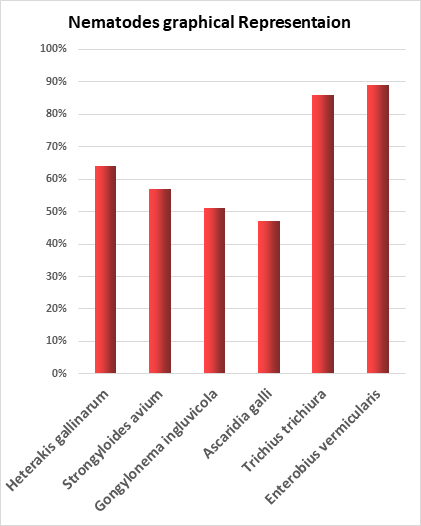
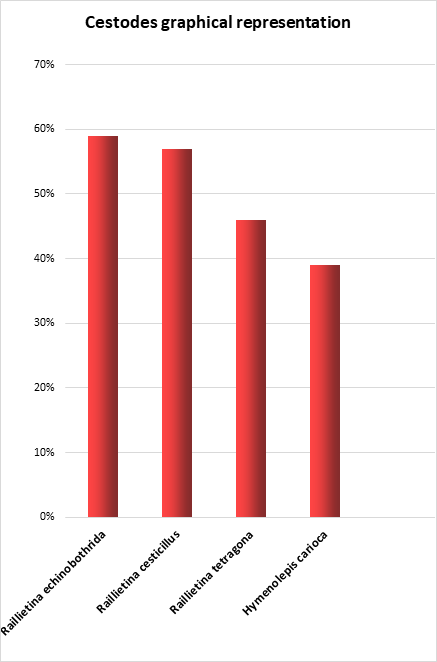
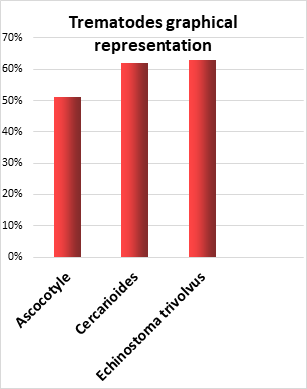
This study aimed with the spotting and evaluation of the current status of gastrointestinal tract (GIT) helminths of domesticated and non-domesticated birds of district Karak different localities. For this purpose we captured/collected 120 birds of 10 selected species. Overall helminths prevalence was recorded 68% (82/120), highest in wild crows 83% (10/12) followed by wild quails 75% (09/12) while lowest recorded in night-angle 50% (06/12). The identified species of parasites belonging to nematodes were, namely, Heterakis gallinae 64% (53/82), Strongyloides avium 57% (47/82), Gongylonema ingluvicola 51% (42/82), Ascaridia galli 47% (39/82), Trichius trichiura (whipworm) 86% (71/82), Enterobius vermicularis (pinworm) 89% (73/82), the cestodes were, namely, Raillietina echinobothrida 59% (49/82), Raillietina cesticillus 57% (47/82) , Raillietina tetragona 46% (38/82), Hymenolepis carioca 39% (32/82) and the trematodes were, namely, Ascocotyle 51% (42/82), Cercarioides 62% (51/82) Echinostoma trivolvus 63% (52/82). Present study demonstrated that feeding behaviour and gender of birds play a vital role in the prevalence and infection of avi-fauna of District Karak.
Introduction
Domestic birds such as chickens (including indigenous breeds, broilers, layers, and cockerels), turkeys, ducks, guinea fowls, peasants, pigeons, and more recently ostriches are considered avian species, as are non-domesticated birds such as Crows, Nightangles, Mynah, Doves, and so on [1]. Birds are good environmental indicators of a specific region because many birds are scavengers that clean the Earth’s surface and provide a human-friendly ecosystem [2]. Scavenging birds, such as vultures, aid in the linkage process by hastening the decomposition of potentially disease-carrying dead bodies, which pollute the ecosystem and have a negative impact on the lives of other species. By removing decay matter, they create an environment that is conducive to the survival of other organisms as well as their own [3]. A greater diversity of insectivorous birds plays an important role in biological control agents and the spread of insects, both of which cause environmental hazards and have an impact on plants and other organisms, including the human population. As a result, the economy will save money on insecticides and their negative effects, and a rich diversity of plants that were affected by insects and stunted their growth will be raised. Indeed, limited evidence from tropical ecosystems suggests that bird control of invertebrates may be complementary [4]. On a national and international scale, poultry of domestic birds is used for meat and egg production as a source of food and proteins [5]. Forests are the most important habitat for birds, supporting approximately 75% of all bird species, while only 45 percent of all bird species have adapted to human- modified habitats, as they play an important role in providing all the resources needed for survival and reproduction [7]. Birds are particularly vulnerable to gastrointestinal helminth parasites due to their preference for wet environments and scavenging habits, as they, like chickens, feed on a variety of substrates such as grains, fruits, insects, crustaceans, small amphibians, and garbage [7]. Gastrointestinal (GI) parasites are regarded as major problems for efficient avian species production, resulting in economic losses due to reduced productivity, decreased feed conversion ratio and poor weight gain, reduced egg production, catarrh, anorexia, diarrhoea, intestinal obstruction, and emaciation, anemia, weakness, paralysis, poor feathering, and even death [8]. Helminth parasites of poultry are classified as cestodes, nematodes, and trematodes, with nematodes being the most important group in terms of both the number of species and the harm they cause. Only a few cestodes and trematodes have been found to parasitize poultry [9]. Investigations in chickens, ducks, and pigeons kept in similar conditions have revealed a high prevalence of gastrointestinal helminths, which reduces productivity and health in these birds [10].
Birds are hosts to a wide range of trematodes, but the impact of these infections on wild populations is unknown with few exceptions. Mixed trematode infections are common, and the effect of any one parasite species is dependent on the presence of other parasites, diseases, or stressors. When trematodes do not kill the host directly. They may, however, have an effect on behaviour, reproduction, nutrient assimilation, and other aspects of bird health [11]. Infected birds typically grow normally and show no clinical signs, severe disease, or pathological effects [12]. The most visible pathological changes are lesions in the parasite-host locus of contact; additionally, certain helminths have been described as reducing host survival and breeding success [13].
The less obvious but widespread losses caused by helminthiasis are economically significant to the poultry industry and may take the form of poor egg production, poor weight gain, poor immune responses to disease pathogens and vaccines, and other diseases caused by helminths being carriers of other pathogenic agents [14]. Many rural farmers in Africa are aware of the high prevalence of poultry gastrointestinal nematodes, but are unaware of the negative consequences they may have in terms of causing mortality [15]. Because village poultry scavenge for food, they are more likely to pick up infective forms of helminths from the environment. Ascaridia numidae-caused ascaridiasis outbreaks have shown that helminth infections can cause severe morbidity and mortality. Helminth infections play a critical role in the production of poultry meat and eggs, causing hidden economic losses [16].
Review of Literature
Ebrahim, et al. conducted research on endo-parasitic infection in West Iranian birds in Khorramabad. They investigated the presence of bird infection caused by parasites fauna. Even if the parasitic intensity remains low, they may result in sub-clinical symptoms. They collected faecal samples from 451 birds, including hens, turkeys, sparrows, pigeons, and decorative birds, and used direct smear, formalin–ether concentration technique, and modified Ziehl– Neelsen staining to screen for intestinal parasitic infections. 157 (34.8 percent) of the 451 bird species were infected with one or more types of intestinal parasites. They discovered two nematodes, two cestoda species, and five protozoan parasites. Trematodes were not found in any of the samples examined. Raillietina spp. (4.2 percent) and Eimeria spp. (7.1 percent) were the most common helminthes and protozoa found in birds, respectively. From the total number of birds studied, 12 (2.7%) and 6 (1.3%) have two and three mixed infections, respectively. In western Iran, intestinal parasitic infections are common in birds [17].
Ogbaje CI, et al. [18] conducted their survey to determine the prevalence of gastrointestinal helminthes in local chickens, broilers and layers slaughtered in Makurdi metropolis between September 2007 and April 2008 [18]. Male and female chickens were used to collect the 440 samples. 200 (45.5 percent) of the total samples examined were from domestic chicken, 140 (31.8 percent) from broilers, and 100 (22.7 percent) from layers. 280 (63.6 percent) of the total sample examined were infected with one or more helminthes species. There were 103 (23.4 percent) single infections, 105 (23.9 percent) double infections, and 60 (13.6 percent) triple infections among those who tested positive for infections. Overall, Ascaridia galli was found in 165 (37.5 percent) of the samples, Heterakis gallinarum was found in 122 (27.7 percent), and various tapeworm species were found in 214 (48.6 percent). Out of 200 samples taken from domestic chickens, 110 (55%) were found to be infected with Ascaridia galli, 80 (40%) with Heterakis gallinarum, and 145 (72.5%) with various tapeworm species. 50 (35.7 percent) of the 140 broiler gastrointestinal tracts were infected with Ascaridia galli, 40 (28.6 percent) with Heterakis gallinarum, and 60 (42.9 percent) with various tapeworm species. Five percent (5%) of the 100 gastrointestinal tracts from layers were infected with Ascaridia galli, two percent (2%) with Heterakis gallinarum, and nine percent (9%) with various tapeworm species. Raillietina species, Choanotaenia species, and Hymenolepis species were all encountered. These three species account for 30.9 percent, 5.2 percent, and 3.6 percent of the tapeworm burdens, respectively. The most commonly reported species in commercial table egg production systems are Ascaidia galli, Heterakis gallinarum, and Capillaria annulata [19].
Otegbade AC, et al. [20], Their research study was carried out to establish the gastrointestinal parasite profile of birds kept in zoological gardens at the Universities of Ibadan, Obafemi Awolowo University, Ilorin, Lagos, and Abeokuta, all in south-west Nigeria [20]. They demonstrated that wild animals are displayed in zoological gardens for aesthetic, educational, and conservation purposes. Parasitic diseases, on the other hand, are one of the major causes of mortality in these animals while in captivity [21]. The side effects range from mild to fatal. They collected 178 faecal samples from 83 birds (14 species in eight orders) and examined them using three techniques: ethyl acetate faecal sedimentation, the McMaster Egg Counting Technique, and the petri dish Filter Paper Slant culture technique (modified Harada- Mori Technique). A total of 39 (21.9 percent) of the 178 samples tested positive for the virus. Unilag Zoo had the highest prevalence of infection (100%) and a total of five parasite species were recorded, including two protozoans (coccidian and Balantidium spp.) and three nematodes (Capillaria spp., Ascaris spp., and Strongyloides spp.), with Capillaria spp. (14.1 percent) being the most prevalent gastrointestinal parasite. In 18 (10.1 percent) of the samples, mixed infections were discovered. Strongyloides larvae were found in 6 (3.4 percent) of the samples.All Anseriformes were infected but the Struthioniformes had the highest infection rate.
Tomás A, et al. conducted extensive research on parasites of wild birds in Portugal. Tomás, et al. [22] His main goal was to determine the prevalence of helminth parasites infecting wild birds in Southern Portugal. 22 wild birds from 7 orders, 8 families, 11 genera, and 12 species were tested for helminths. Svensson, et al. classified bird species, and each bird was classified according to age, which was determined by plumage features [14].
All of the birds sampled contained 32 helminth specimens, including 6 nematodes and 3 cestodes. These three families of the phylum Nematoda were identified. Railliet and Henry discovered Contracaecum spp. for the family Anisakidae in the oesophagus of two northern gannets in 1912. Molinin 1860 discovered Porrocaecum angusticolle, a member of the Ascarididae family, in the small intestine of a Bonelli’s eagle. Rudolphi discovered Dispharynx nasuta of the family Acuariidae in the oesophagus and proventriculus of two little owls in 1819, Synhimantus laticeps in the gizzard of one black-shouldered kite, Desportesius invaginatus in the gizzard of two western cattle.
Materials and Methods
Study Area
Karak District Khyber Pakhtunkhwa, Pakistan, is located at latitude 70.40°-70.30°N and longitude 32.48°-33.23°E. It is located 340 metres above sea level. According to the 2017 census document, the district’s total population was 7,06,299 people. District Karak is located in Khyber Pakhtunkhwa (Pakistan), 150 kilometres from Peshawar on the Indus Highway N-55 (from Peshawar to Karachi). Karak district is desiccated, with an annual rainfall of 330 mm. In some areas, water scarcity and rocky land are limiting factors for commercial enterprise. Although some macro and micro livestock may be developed in towns with adequate facilities. Karak is arid and semiarid land that does not support large populations and diverse green flora but only 2.1% area has xerophytic vegetation [23].
Time Frame of Research
The present research work was conducted in district Karak from March to August 2021. All of the birds were studied and examined through microscope in the laboratory.
Fecal Collection and Examination
Fecal materials were collected soon after the slaughter of each collected bird. These all fecal samples were packed tightly in a separate polyethylene bags with proper label of the bird’s name, sex and date of collection label. All the samples were kept under the temperature of 4° in refrigerator of zoology laboratory Government Post Graduate College Karak for further process.
Fecal Qualitative Examination
Fecal qualitative study was conducted by the help of fecal flotation technique by using Zinc Sulphate (ZnSO4.7H2O) of specific gravity 1.27 a flotation solution [24].
Post Mortem Examination
All 120 birds of different species were slaughtered on scheduled dates and species in the zoological laboratory of college. Fur was made wet through water soaked cotton. Sharp pins were hit through hammer on wings and legs. Then laparotomy of the birds had done on ventral side through surgical blades and other related instruments. After removal of the gastrointestinal tract both oral and anal ends were tied up through thread to prevent leakage of parasites eggs and larvae leakage. Gizzard and crop were discarded and their samples were collected after dissection (Table 1).
Statistical Analysis
All the data was analyzed statistically correct given probability <0.05.
| S.No | Bird Name | Scientific Name | Male | Female | Total number |
|---|---|---|---|---|---|
| 1 | Domestic Fowl | Gallus gallus domesticus | 06 06 | 12 | |
| 2 | Helmeted Guinea Fowl | Numida meleagris | 06 06 | 12 | |
| 3 | Domesticated Duck | Anas platyrhynchos | 06 06 | 12 | |
| 4 | Domesticated Pigeon | Columba livia domestica | 06 06 | 12 | |
| 5 | House Sparrow | Passer domesticus | 06 06 | 12 | |
| 6 | Wild Dove | Zenaida macroura | 06 06 | 12 | |
| 7 | Wild Quail | Coturnix coturnix | 06 06 | 12 | |
| 8 | Night-angle(red whiskered | Pycnonotus jocosus | 06 06 | 12 | |
| 9 | Wild Crow | Corvus | 06 06 | 12 | |
| 10 | Mynah | Acridotheres tristis | 06 06 | 12 | |
| Grand Total | 60 60 | 10 × 12 = 120 |
Table 1: Captured Birds Locality, Sex and Number (Total N=120).
Results
During the experimental examination, five different species of helminths were collected and identified. The parasites belonging to nematodes were, namely, Heterakis gallinae 64% (53/82), Strongyloides avium 57% (47/82), Gongylonema ingluvicola 51% (42/82), Ascaridia galli 47% (39/82), Trichius trichiura (whipworm) 86% (71/82), Enterobius vermicularis (pinworm) 89% (73/82), the cestodes were, namely, Raillietina echinobothrida 59% (49/82), Raillietina cesticillus 57% (47/82) , Raillietina tetragona 46% (38/82), Hymenolepis carioca 39% (32/82) and the trematodes were, namely, Ascocotyle 51% (42/82), Cercarioides 62% (51/82) Echinostoma trivolvus 63% (52/82). Hence, Enterobius vermicularis (pinworm) demonstrated highest ratio of 89% (73/82) followed by Trichius trichiura (whipworm) 86% (71/82) while Hymenolepis carioca has minimum prevalence of 39% (32/82) (Table 2 & Figures 1-3).
| Name of the birds | Identified positive (82) | Males (+ve) | Females (+ve) | Prevalence of Parasite (% age) |
|---|---|---|---|---|
| Nematodes | ||||
| Heterakis gallinarum | 53/82 | 30 | 23 | 64.00% |
| Strongyloides avium | 47/82 | 29 | 18 | 57.00% |
| Gongylonema ingluvicola | 42/82 | 28 | 14 | 51.00% |
| Ascaridia galli | 39/82 | 21 | 18 | 47.00% |
| Trichius trichiura | 71/82 | 43 | 28 | 86.00% |
| Enterobius vermicularis | 73/82 | 51 | 23 | 89.00% |
| Cestodes | ||||
| Raillietina echinobothrida | 49/82 | 34 | 15 | 59.00% |
| Raillietina cesticillus | 47/82 | 25 | 22 | 57.00% |
| Raillietina tetragona | 38/82 | 22 | 16 | 46.00% |
| Hymenolepis carioca | 32/82 | 21 | 11 | 39.00% |
| Tremadoes | ||||
| Ascocotyle | 42/82 | 26 | 16 | 51.00% |
| Cercarioides | 51/82 | 31 | 20 | 62.00% |
| Echinostoma trivolvus | 52/82 | 37 | 15 | 63.00% |
| Total/Maximum Infection | 73/82 | 51/73 | 28/73 | 89.00% |
Table 2: Overall Prevalence of identified Birds Gastrointestinal Helminths along with names (N=120).
Discussion
In the laboratory of Government Post Graduate College Karak, 120 birds’ GIT tracts were examined for helminth larvae and eggs using faecal samples and necropsy. Our study focused on the prevalence of gastrointestinal tract helminths fauna in domesticated and non-domesticated birds in the Karak district. The overall prevalence of 68 percent (82/120) demonstrated that almost all birds were infected with one or more helminth parasite species. Domesticated fowl and wild crows had the highest prevalence (83 percent) (10/12), while night-angle had the lowest (50 percent) (06/12).
Similarly, Ebrahim, et al. conducted research on endo- parasitic infection in West Iranian birds in Khorramabad. They discovered that parasitic infection in birds caused by parasites fauna is widespread, and that even when parasitic intensity is low, it can result in subclinical symptoms. They took faecal samples from 451 birds, including hens, turkeys, sparrows, pigeons, and decorative birds, to look for endo-parasites in the avian population. 157 (34.8 percent) of the 451 bird species were infected with one or more types of intestinal parasites. Raillietina spp. (4.2 percent) and Eimeria spp. (7.1 percent) were the most common helminthes and parasites found in birds and protozoa respectively. In comparison to the prevalence of our work, the prevalence rate is relatively low. The foraging behavior of avian species in Khorramabad, the capital and largest urban centre in Lorestan state, west of Iran, is the primary cause of this variation. Due to the capital city’s lack of space and environment for birds as a result of urbanization and industrialization, their physiological activities are limited to their habitat. Second, they conducted their research in Lorestan state’s capital city, which is kept safe by the Iranian government through various aerosol sprays that act as control agents for a variety of helminthic parasites. Our research study, on the other hand, was conducted in various localities throughout the district of Karak. Pollution of the environment and unrestricted foraging behavior has become an important factor for helminth parasites in GIT of avian fauna in our district. As a result, our prevalence was 68 percent (82/120), demonstrating that nearly all birds were infected with one or more helminth parasite species, with the highest prevalence recorded in domesticated fowl and wild crows 83 percent (10/12) and the lowest recorded in night- angle 50 percent (06/12), elucidating foraging behaviour and infection co-relationship.
Patel et al. published a study in 2000 on wild bird species kept captive in zoos in Gujarat, India. They examined the faeces of 106 wild captive birds, 51 (48.11 percent) of which tested positive for parasitic infection. Our prevalence is relatively high in comparison. The study of selected birds is the reason for the high prevalence. They chose birds from Gujarat zoos that exhibit limited foraging behaviour within the cage and eat food that is less infected with parasites, larvae, and eggs. While our prevalence of 82/120 (82 percent) includes domestic and wild avi-fauna that were unaffected by physiological factors such as different habitats, environmental changes, climatic variation, and prey. These activities exposed avia-fauna more than Gujarat zoos, demonstrating that helminth prevalence is directly related to foraging behaviour. Our experimental and helminthologic studies also claim a link to the fact that males and domesticated are free-range foraging birds who are more vulnerable to helminths. Males and domesticated birds eat shrubs, faeces, and dead matter, which contain helminths, parasites, larvae, and eggs, resulting in infection. When infected birds congregate with other birds during feeding, they transmit parasites that are stuck in their feathers, feet, and also through their faeces elimination.
Conclusion
The current research study was conducted to predict the overall prevalence of GIT helminth parasites by their coprological examination of individual bird species under microscope and necropsy of the GIT in the local avi-fauna of district Karak. Gastrointestinal heliminths parasitic infection is hazardous to many macro and micro live stock due to sufficient economic loss which results in deficiency of proteins and other requirements of the human body. The decrease in breeding rate of birds can also be a threat to the environment due to its important role in the food chain and as a scavenger of the earth. This disease may loss of birds species on broad bases which lead to the financial crises of farm owners. This deadly biomass may become a factor for secondary infection of various microbial diversity and infections.
In the present study suspected birds from helminthofauna was predicted. So it is necessary to properly examine the detail of epidemiology and control of the infection to enhance the aesthetic of nature and commercial products of the birds.
References
-
Santoro M, Tripepi M (2010) Helminth infestation in birds of prey (Accipitriformes and Falconiformes) in Southern Italy. The Veterinary Journal 186(1): 119- 122.
-
Von Söhsten AL, da Silva AV (2017) Anti-Toxocara spp. IgY antibodies in poultry sold in street markets from Feira de Santana, Bahia, Northeastern Brazil. Veterinary Parasitology: Regional Studies and Reports 8: 86-89.
-
Nnadi P, George S (2010) A cross-sectional survey on parasites of chickens in selected villages in the subhumid zones of South-Eastern Nigeria. Journal of parasitology research 2010: 141824.
-
Ola Fadunsin SD (2017) Investigations on the occurrence and associated risk factors of avian coccidiosis in Osun state, Southwestern Nigeria. Journal of parasitology research 2017.
-
Mehra S (2012) The avifauna of southern Rajasthan with special emphasis on threatened species and bioacoustic applications in their identifications and monitoring, Ph. D. thesis, MDS University, Ajmer, pp: 256.
-
Philpott SM, Armbrecht I (2006) Biodiversity in tropical agroforests and the ecological role of ants and ant diversity in predatory function. Ecological entomology 31(4): 369-377.
-
Al Nasser A, Al-Khalaifa H (2007) Overview of chicken taxonomy and domestication. World’s Poultry Science Journal 63(2): 285-300.
-
Brooks T, Collar N (2008) The science of bird conservation. Bird Conservation International 18(S1): S2-S12.
-
Paul B, Lawal J (2015) Survey of helminth parasites of free range Muscovy ducks (Anas platyrynchos) slaughtered in Gombe, North Eastern Nigeria. Int J Poult Sci 14(8): 466-470.
-
Jegede O, Asadu I (2015) Gastrointestinal parasitism in local and exotic breeds of chickens reared in Gwagwalada Guinea Savannah zone of Nigeria. Sokoto Journal of Veterinary Sciences 13(3): 25-30.
-
Matur B, Dawam N (2010) Gastrointestinal helminth parasites of local and exotic chickens slaughtered in Gwagwalada, Abuja (FCT), Nigeria. New York Science Journal 3(5): 96-99.
-
Muhairwa AP, Msoffe (2007) Prevalence of gastro- intestinal helminths in free-range ducks in Morogoro Municipality, Tanzania. Prevalence 1: 5.
-
Threlfall W, Wheeler TA (1986) Ectoparasites from birds in Newfoundland. Journal of Wildlife Diseases 22(2): 273-275.
-
Tomás A, Rebelo MT (2017) Occurrence of helminth parasites in the gastrointestinal tract of wild birds from Wildlife Rehabilitation and Investigation Centre of Ria Formosa in southern Portugal. Veterinary Parasitology: Regional Studies and Reports 8: 13-20.
-
Mwale M, Masika P (2009) Ethno-veterinary control of parasites, management and role of village chickens in rural households of Centane district in the Eastern Cape, South Africa. Tropical Animal Health and Production 41(8): 1685-1693.
-
Robbins KM, Ye W (2011) Identification of Ascaridia numidae in guinea fowl (Numida meleagris) and association with elevated mortality. Avian Diseases 55(1): 151-154.
-
Borji H, EMoghaddas (2012) A survey of ecto-and endo-parasites of domestic pigeons (Columba livia) in Mashhad, Iran. Iranian Journal of Veterinary Science and Technology 4(2): 37-42.
-
Ogbaje C, Agbo E (2012) Prevalence of Ascaridia galli, Heterakis gallinarum and Tapeworm infections in birds slaughtered in Makurdi township. International Journal of Poultry Science 11(2): 103-107.
-
Fabiyi J (1972) Incidence of the helminth parasites of the domestic fowl in the Vom area of `Benue-Plateau state- Nigeria. Bulletin of epizootic diseases of Africa. Bulletin des epizooties en Afrique 20(3): 229-234.
-
Otegbade A, Morenikeji O (2014) Gastrointestinal parasites of birds in zoological gardens in south-west Nigeria. Tropical biomedicine 31(1): 54-62.
-
Varadharajan A, Kandasamy A (2000) A survey of gastro- intestinal parasites of wild animals in captivity in the VOC Park and Mini Zoo, Coimbatore. Zoos’ print journal 15(5): 257-258.
-
Tomás A, Palma RL (2016) Chewing lice (Phthiraptera) from wild birds in southern Portugal. Parasitology international 65(3): 295-301.
-
Tabassum I, Rahman F (2014) Dynamics of communal land degradation and its implications in the arid mountains of pakistan: A study of District Karak, Khyber Pakhtunkuwa. Journal of Mountain Science 11(2): 485- 495.
-
Zajac AM, Conboy GA (2006) Veterinary clinical parasitology. In: 7th (Edn.), Wiley-Blackwell.
- Mitochondrial Bio-Logistics: Steering Co-Enzyme Q10 and Lycopene Synergies within the Science 4.0 Bio-OS Framework
- Hymenoptera Specimens from the Caño Negro Wetland, of the National Museum Collection, Costa Rica
- Science 4.0: Comprehensive Architecture of the Biological Operating System (Bio-OS) A Framework for Systemic Resilience and Industrialized Bio-Governance
- Rabbit on, or Hare Back? Understanding Climate Change
- Clinical Validation of Science 4.0: Flow Steering and Epigenetic Drift Inversion on a 76-Year-Old Hybrid System
- Seeds Planted by another Mind