
Horse-Human Communication: The Roles of Language and Communication in the Context of Horse-Human Interactions
Horses have played an important role in human history and the techniques and strategies with which we interact with them is based on concepts of operant conditioning with emphasis on negative and positive reinforcement. The human-horse interactions in training are primarily based on the desires and goals of the human with the recognition that proper response to horse behaviors should be considered in order to effectively achieve the desired training goal and minimize stress. When considering the concepts of language and communication, horse owners need to consider the ethological communication strategies of horses and the role they play in traditional horse-human interactions. By including principles of interspecies communication, mutual development of language, and pro-social behaviors, it may be possible to involve horses in the decision-making processes in which they are so often involved.
Introduction
The field of horse-human interactions is often focused on the application of interactions in the fields of equestrian practices, horse training, and equine-assisted activities. Much of equitation is based on the principles of learning theory as they apply to the practices of horse training. In this model, the human participant determines which horse behaviors are desirable or undesirable and then shapes the behavior of the horse via the deliberate application of rewards or punishments [1, 2, 3]. In the practical application of learning theory with horses, the human has a concept of a desired behavior that they want from the horse and either adds rewards (positive reinforcement) or aversive interactions (positive punishment) or removes something desirable (negative punishment) or aversive (negative reinforcement) dependent upon the expressed behavior and the desire for that behavior to be expressed again or diminished in the future. This control over consequences in order to manipulate the behavior of another individual via the direct and deliberate application of consequences dates back millennia but was introduced in the mid-1900s by B.F. Skinner as a deliberate and scientific method through which one individual could dictate, shape, and predict the behavior of another through strategic application of rewards and punishments [4, 5]. Although animal trainers and horse people had been using the concept prior to the onset of Skinner’s experiments, the association of learning theory with equitation became a much more accepted concept with the advent of equitation science and the practical application of these scientific principles to horse-human interactions [6].
Although equitation science has provided a way for equine practitioners to apply scientific research to their fields and develop better practices in all areas of equitation, there is still a lack of understanding of the role of interspecies communication in the training paradigm. Animal communication (as it pertains to how animals create and develop communication strategies within their own species) is a growing field of study and researchers are discovering the ways in which animals create and develop both language and communication strategies. The communication systems animals use with each other is often only explored in intraspecific contexts and only selectively in interspecies communication with humans, with most studies focusing on dog-human communication [7, 8, 9]. The implications of interspecies communication, however, especially in domestic species, is vast and includes not only privately-owned animals, but also those animals involved in animal-assisted interventions and therapies.
The purpose of this paper is to explore the meaning of communication and language, how it does and does not play out in conventional horse training, and how scientists and practitioners might explore new ways to create more opportunities to involve mutually beneficial communication strategies that improve training, performance, and horse welfare.
Communication and Language
To better understand the role of communication and language in horse-human interactions, these terms need to be clearly defined.
For the purpose of this paper, communication can be defined as the process by which information is exchanged between individuals including inter-species via common system of symbols, signs, or behavior [10, 11] This type of exchange of information can occur through an array of media including olfactory/chemical, vocal [12, 13, 14], visual [15], tactile or a combination of these.
With regards to language, there is no standard definition. The most common definition of “language” refers to the ways in which humans (and only humans) communicate. Due to the focus on humans, this definition is almost exclusively focused on a verbal scale. On a broader scale, however, language can be defined as the means by which individuals communicate and convey information. The actual use and development of language on this broader scale is highly dependent upon cultures, individuals and even species. It is only recently that researchers have begun to deconstruct the meaning of language and that of communication in both humans and animals, emphasizing that each species has its own unique, and potentially very complex, system of creating language [16, 17]. Language can therefore seen as a complex system by which individuals deliberately communicate information to others and one that can be complex both verbally and nonverbally [18, 19].
Horses
Horses are social herbivores that have strong intraspecies networks on which they rely for both survival and social connection. Studies have shown that horses maintain strong social connections with their herds in the wild and that feral horses often remain with favorite conspecifics or even family members for years [20, 21, 22, 23]. Intricate communication strategies between horses are less well known with research suggesting that communication in these types of animals may be more complex and important than previously described [24].
If we look at horse language as a possible means of communication, especially under the lens of deliberately conveying specific information, then this may include not only behavior and vocal cues, but also olfactory and touch. Studies have shown that horses do convey information regarding ovulation cycles and stress via chemical signals in their feces and navigate their physical and social environments with the help of these same signals [25]. While research shows that their sense of smell is far more sensitive than that of humans, little is known about how they use it in a deliberate way to convey information.
In addition to chemical information which may not be a conscious form of communication, horses deliberately use space, touch, and vocal cues to convey information. In groups of free-living and feral horses who have more options for space than typical domestic settings, horses have been seen to use proximity to demonstrate preference or dislike for nearby conspecifics. Willingly sharing space and proximity and maintaining close proximity have been shown to be signs of socially bonded equine conspecifics [26, 27, 28, 29, 30, 31]. Agonistic behaviors, while sometimes interpreted as dominant, have more recently been attributed to the desire for more space rather than dominant hierarchy and are usually a sign of dislike rather than need to attain status [32].
In addition to space preference, horses also use touch to communicate intention and desires. While some of the agonistic behaviors may include touch, they are usually short in duration and aversive in nature in order to create distance between horses [33, 34]. Since these kinds of interactions are expressed for the deliberate intention of creating space, they result in horses that are farther apart and avoiding active interactions or deliberate directed communication. Touch, especially between horses sharing closer proximity, has additional communicative value. Allogrooming, one of the most recognizable types of touch in horses in which two horses engage in mutual scratching, is often seen as a sign of friendship or as a means of coping with stress [35, 36]. As a result, allogrooming may not be a means through which to deliberately convey information as much as it is a functional social strategy to convey connection or need for social interactions. Most of what we know about the role of touch in horses is therefore limited to our understanding of its role in social spaces and how it plays out between two horses who either want to share space and exchange social bonding strategies or between horses who want to communicate desire for distance. If we are to consider touch in the realm of communication, it would largely be in the context of increasing distance and space rather than sharing it. Once space is already shared then touch may be used to convey connection, but it is not currently understood how it may convey additional information beyond demonstrations of affection or connection.
Unlike touch, vocalizations are exclusively used to communicate desires or distress. Small vocal cues are often used between mares and foals [37, 38, 39] but a large number of vocalizations in horses are used to locate conspecifics from whom they have been separated [40, 41]. The range of use of vocalizations in horses is not as well understood, but researchers have found that horses are largely dependent on non-vocal cues for communication. These non-vocal cues are largely based on behavioral changes, including body position, and potentially chemical communication as well. If the horse is attempting to deliberately convey information to a human, then they need to have a shared foundation of language through which to effectively communicate. To build this foundation, we must also consider the human perspective.
Mutual Language in Horses and Humans
Research on human communication and language is long and extensive. There are thousands of publications on the development of human language, the potential evolutionary history of it, and the ways humans learn and use different languages and communication strategies. For the purpose of this section, we will look at typical communication strategies that are common among humans and ones that are often used in horse-human interactions.
Unlike horses, humans have a wide vocal range and rely heavily on speech as a means of communication. Humans often rely upon this strategy as a means of communicating with other animals, often emphasizing the importance of vocal and verbal cues associated with interspecies interactions [42, 43, 44, 45, 46]. While horses can learn the meaning of vocal cues and respond to variations in the voices of humans [47], vocal communication is limited in horses with only a few distinctive vocal strategies mostly being used to express distress or search for conspecifics [48]. This suggests that, while horses can learn associations between human vocal patterns and positive or negative experiences and potentially learn words, their primary communication techniques (in both use and receptivity) do not align with that of humans.
Furthermore, in addition to vocalization, humans use eye contact as a means of conveying information [49, 50] in addition to gestures. Much like vocal cues, there is a desire to attempt to communicate with eye contact with other species. This communication technique can work with dogs who also use the same strategy [51]. Horses, however, show no indication of recognizing eye contact from humans [52]. Gestures, on the other hand, can be learned and humans have managed to convey information to dogs [53, 54], goats [55], and even horses [56, 57] using physical gestures suggesting that behavioral cues could offer a better foundation for mutual communication and language strategies in horse- human interactions.
Developing Communication in Horse-Human Interactions
Research in animal communication has grown significantly in recent years acknowledging the vast ways in which animals choose to convey information to one another. There is still a heavy emphasis, however, on vocalization and verbal communication [58], suggesting a perpetuated emphasis on the human lens [59]. Therefore, in order to develop a mutual language, we must consider the animal perspective in order to establish mutuality in communication and language.
As we’ve already discussed, there is no standard definition of language as it applies to both human and nonhuman animals. We can therefore break down language into components that are essential for information exchange in all species and then rebuild the concept to create a meaningful definition that encompasses multiple types of animals. If we consider language as a means through which to create communication and information exchange, we can view language as a set number of consistent concepts or “conceptual primes” along with a consistent type of “universal grammar” through which concepts are conveyed along with relevant goals [60]. These “primes” can then be used as the foundation around which shared meaning is expressed. In humans, these “primes” are words or sounds with learned meaning that, when put together in different ways, convey different concepts. In animals, these “primes” may be vocal, olfactory, behavioral, or tactile or any combination therein. This more universal perspective of communication and language suggests a means of developing interspecies languages that are equal and created between two individuals, even if those individuals are from different species. In this sense, a common understanding of meaning needs to be developed that is understood and accepted by both species and is also developed by both species equally. This, in turn, creates a communication strategy that is common to both species.
Each individual therefore approaches new interactions armed with their own experiences of effective language and communication. Existing strategies may not be effective, however, and if individuals (of any species) desire to convey information (not just receive information), they may need to develop new language skills. If mutual language is to be effective, each party must rely not only on their own concepts of language and communication, but also be open to the idea of developing new ones based on the needs and goals of the other party. This might involve principles of learning that include behavior followed by feedback, but, unlike operant conditioning, the behavior and feedback is not in the purpose of defining a pre-determined desired behavior but rather a way to come to a mutual agreement as to the meaning of an action. Each interaction and meaning is then shaped by both parties in order to develop a mutual language in which both individuals play equal roles in conveying and receiving information. This can be developed over time based on previous interactions and experienced results. In this case, interactions and behaviors may come into play that may either deter interactions before they happen or express behaviors that encourage ongoing interactions (these interactions are based on the development of mutually understood communication between them). This type of communication development is often based on social behaviors (agonistic and affiliative) rather than behavioral shaping.
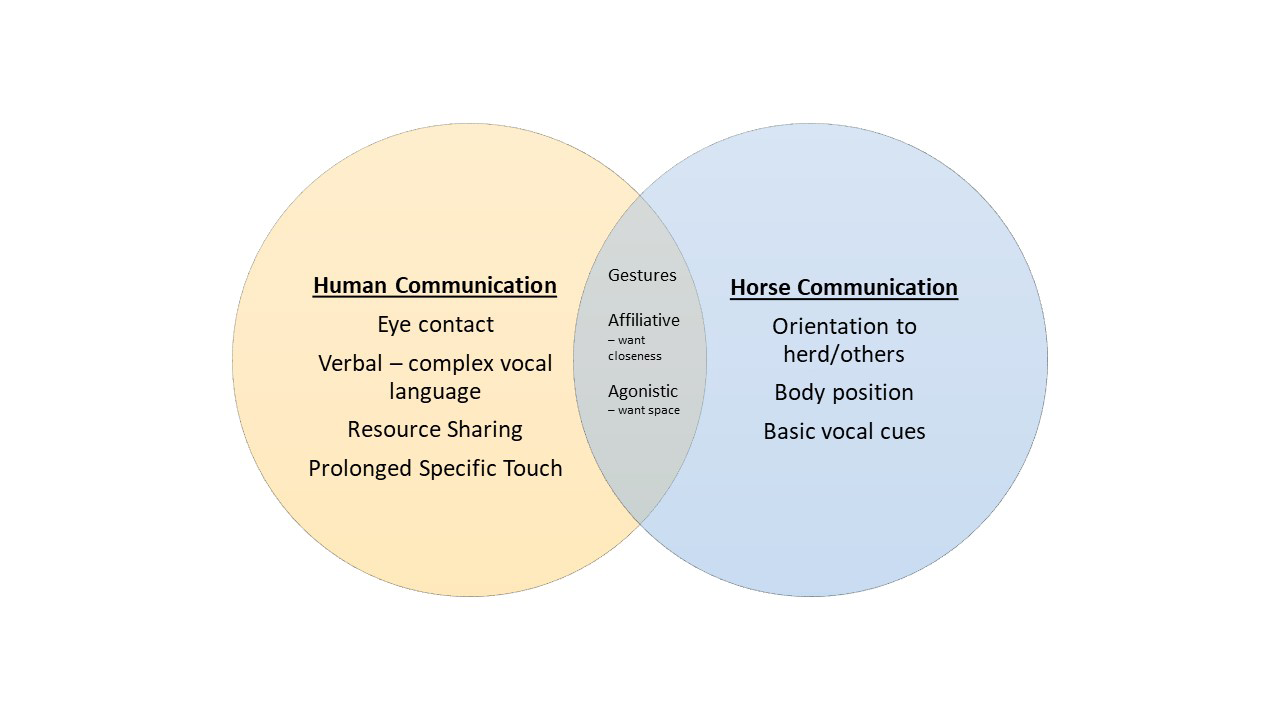
In this scenario, since both individuals are presumably invested in creating a mutual language, aversive interactions are minimized. Much like when horses use agonistic behaviors and aversive interactions to convey a desire for space [61], these interactions would be minimized between two individuals whose goal it is to develop mutual communication and therefore remain in close proximity for the purpose of continuing interactions. The motivation of parties to continue to exchange information and develop communication would therefore be based on intrinsic motivations rather than extrinsic desires for rewards. Since vocalization would not be a common factor, this interaction would be largely behaviorally based with expressions of language-building and communication being dependent heavily on space, proximity, and non-aversive touch rather than dependence on verbal cues each party have free choice over how and when to express behaviors (including proximity) in order to convey information and effectively communicate (Figure 1). Evidence of this has been seen in horse-human communication when horses are allowed to willingly express behaviors to convey desires [62] or dislikes [63]. This also allows for the development of social bonding between individuals in which space-sharing and proximity are primary factors. While there is little information around horse affiliative behavior in horse-human interactions, research in goats show that they demonstrate social and affiliative behaviors towards humans which may indicate a communication strategy of these herbivores with the goal of engaging in social interactions [64]. It is therefore possible that the intentional development of communication with horses may lead to interspecies social bonding.
The Role of Horse-Human Communication In Training
Historically, horses have been incorporated into our culture as tools for agriculture, transportation, pleasure, and war [65, 66, 67] and many of the same training and handling techniques have carried over into current horse-human interactions. Even in the fields of equine-assisted programs and therapies, these historical interactions between humans and horses carry over into areas where the horse’s role is less defined [68]. Although the role of learning theory in equine- human interactions has grown in research as well as popular understanding and application, the interactions between species in the training realm may be in conflict at times with mutual communication strategies.
In the western world horse-human interactions are frequently limited to training contexts where the human utilizes operant conditioning to shape the horse’s behavior dependent upon human goals, desires and needs. Within this dynamic, the human deliberately engages with the horse to deliver either positive reinforcement, negative reinforcement, positive punishment or negative punishment as a means of either increasing (reinforcing) the likelihood that a desired behavior is performed or decreasing (punishing) the likelihood that a behavior is performed by the horse [69, 70]. In most cases, traditional forms of horse training and horsemanship are heavily reliant upon negative reinforcement (the removal of an aversive stimulus once the desired behavior has been offered) [71, 72]. However, the use of positive reinforcement (the addition of a reward once the desired behavior has been offered) is gaining in popularity. Regardless of reinforcement type the exchange of information is solely based upon the aims and desires of the human without consideration of the horse.
Focus on the individual horse, welfare, and equine behavior have grown in importance, especially with the recognition of the role of stress responses in horses resulting from human interactions. Recent publications in welfare highlight the need to recognize emotional responses in animals during human interactions and the impacts on psychological welfare [73]. With regards to horses, much of the recent research in this field has focused on the stress responses of horses to positive and negative reinforcement [74, 75, 76]. The recognition of fear and stress responses by horse trainers and caregivers, has been found to be extremely poor and is limited to overt and obvious behavioral signs such as flight responses or rearing [77, 78, 79]. The inability to correctly interpret behavior signs may interfere with the development of effective mutual communication strategies, resulting in negative outcomes for the horse. Studies have indicated that negative reinforcement, when applied improperly, may result in increased stress responses in horses [80] and positive reinforcement with treats may also elevate stress responses to levels that lead to frustration and stress in horses [81, 82, 83].
Current studies focusing on stress often emphasize the need to acknowledge and respond to signs of discomfort in the horse, suggesting that actions should be taken to alleviate the elevated stress responses in the equine. From a communication perspective, this may suggest that the horse is communicating a desire (or goal) to adjust the interaction to relieve a sense of pain or psychological discomfort.
Positive reinforcement also takes into consideration the behavior of the animal, especially as it related to aligning with a training goal (the human goal) or as it relates to frustrated behaviors [84]. These frustration behaviors may result from elevated stress responses and arousal levels that are tied to novel food rewards. In this sense the horse could potentially be communicating levels of frustration at lack of continued novel food access, at lack of reward to continued or increased expression of a specific behavior, or as a means of communicating a desire or need. The focus of these studies remains on the elevated stress response and the increased level of arousal. Furthermore, consideration of the horse’s ethogram for food acquisition is of importance when utilizing positive reinforcement(given horses do not work for their food) could result in disinterest in the task or frustration in some individuals. This may make the task potentially more cognitively taxing due to lack of evolutionary preparedness.
New research on stress responses and appropriate interactions still maintains focus on operant conditioning and what is considered “desirable” behavior. Most research in the field of horse-human interaction is therefore focused on maintaining effective training and how effectively the horse understands human cues [85]. This means that much of the research in this area focuses on communication and language development from a strictly human perspective rather than a mutual development of understanding. From a communication perspective, training methods are focused on the desired outcome from the human perspective with considerations as to the arousal level and stress responses from the horse. While current research has shifted to emphasize a need to decrease arousal or reduce unnecessary stress, there is little research to suggest that the horse should (and could) initiate communication for the purpose of suggesting a desired goal that may differ from that of the human.
Training focuses almost exclusively on the concepts around humans developing a language of signals and consequences through which we can convey our desires for behavioral outputs. If done correctly and consistently, the gestures and consequences that are provided will result in the effective shaping of the desired behaviors without unnecessary stress [86]. The human dictates the language as well as the process by which it is used. The animal in the training context, in this case a horse, only provides behavioral feedback to the trainer as to whether they understood the language (via expressions of stress or of compliance) or if they are feeling over-aroused. Expressions of anything other than the desired behavior are then ignored, punished, or redirected in order to obtain the desired behavioral outcomes without variation (as is expected and celebrated in many equestrian activities and circles). Horses can communicate discomfort, stress, confusion, and other behaviors, but the acceptance of the horse’s communication to explore alternative activities or actions (outside of the training or riding paradigm) are not considered part of the objective of the interaction. Therefore, they are not considered part of the conversation.
If mutual communication and language building are to become part of the horse-human interaction and be incorporated into traditional context, trainers and horse owners need to recognize that mutual communication needs to include the ability, freedom, and desire for both human and horse to express goals and for there to be an equal exchange of communication and compromise. Relative to the development of communication and language strategies of both horses and humans, traditional training often falls into aversive interactions (negative reinforcement) or contingent rewards (positive reinforcement). With the concept of aversive interactions, we discussed earlier how horses use these sparingly to communicate need for space. In the context of training, we often desire to share space with our horses to continue activities so the prolonged use of aversive interactions in close proximity with horses is often in conflict with our goals. With regards to positive reinforcement, mutual communication strategies between horses (and people) are not contingent upon the desired behavior of the other but rather mutual recognition of social bonding.
Mutual Communication and Potential Future Implications
The focus on the human desire and development of language can be seen in the historical context of how we’ve incorporated horses into our societies. This echoes other realms of research in which interspecies communication is often dictated by the human with regards to what is considered “language” and what should be emphasized as the meaning to each part of the communication strategy. Language is often seen as a human construct whereas other animals seem to rely on “communication”. This, however, is an anthropocentric perspective on the concept of language which, as we’ve discussed, has no unified definition that incorporates animal communication.
We know other animals have communication and that their way of sharing information can be done through behavior, olfactory markers, and vocalizations. While this is often considered a means of sharing information, it can also be considered a form of basic communication, especially if one animal is initiating an action to deliberately share desires or needs in real-time. Both humans and horses learn language from their social environments. With this in mind, we can consider language to be acquired through iterated learning in which an animal or human learns something by either social or observational learning and research suggests that both humans and animals learn language through this process [87]. The mutual development of communication, therefore, should be malleable and shared. In this case, neither individual dictates the language used for interspecies interactions, but instead, a shared language should be developed in which both individuals can rely on the consistency of shared meaning both from the recipient side as well as the expression side. For horses and humans, shared language can be created by looking at overlaps in species language strategies and by creating meaning in gestures, avoiding prolonged aversive interactions (that have unwanted social connotations), and allowing for communication that is developed and supported by both horse and human.
Conclusion
Concepts of communication and training may overlap, but the goals and strategies vary in both intention and outcomes. If we, as humans, have a desired behavior we wish to see in a horse, this can be achieved through strategic use of learning theory in equitation and handling. We know that traditional equitation practices can result in stress in horses and best practices in welfare already include reduction of stress in human interactions as a primary component of assessing welfare. There is more to learn about assessing the positive welfare in animals, however, and a more thorough understanding of interspecies communication and language development, especially in the horse-human paradigm, has the potential to lead to even greater improvements in welfare. Furthermore, since most horse owners see their horses as companions [88, 89], it is essential that owners and trainers recognize the importance of mutual language building to create communication strategies that align with the desires and needs of the equine from the equine perspective [90, 91].
References
-
Abramson CI, Kieson E (2016) Conditioning methods for animals in agriculture: A review. Ciencia Animal Brasileira 17(3).
-
Goodwin D, McGreevy P, Waran N, McLean A (2009) How equitation science can elucidate and refine horsemanship techniques. Veterinary Journal (London, England : 1997) 181(1): 5-11.
-
McGreevy PD (2007) The advent of equitation science. The Veterinary Journal 174(3): 492-500.
-
Abramson Charles I, Curb L, Barber KR, MitchelB, Sokolowski C (2011) The Use of Invertebrates and Other Animals to Demonstrate Principles of Learning : Activities Developed by the Laboratory of Comparative Psychology and Behavioral Biology. Journal of Behavioral and Neuroscience Research 9(2): 1-6.
-
Walborn F (2014) Burris Frederic Skinner. Religion in Personality Theory pp: 183-213.
-
McLean AN, Christensen JW (2017) The application of learning theory in horse training. Applied Animal Behaviour Science 190: 18-27.
-
Bhattacharjee D, Sau S, Bhadra A (2018) Free-Ranging Dogs Understand Human Intentions and Adjust Their Behavioral Responses Accordingly pp: 1-9.
-
Catala A, Mang B, Wallis L, Huber L (2017) Dogs demonstrate perspective taking based on geometrical gaze following in a Guesser–Knower task. Animal Cognition 20(4): 581-589.
-
Persson ME, Roth LSV, Johnsson M, Wright D, Jensen P (2015) Human-directed social behaviour in dogs shows significant heritability. Genes Brain and Behavior 14(4): 337-344.
-
Amphaeris J, Shannon G, Tenbrink T (2022) Overlap not gap: Understanding the relationship between animal communication and language with Prototype Theory. Lingua 272: 103332.
-
Semin GR, Scandurra A, Baragli P, Lanatà A, D’Aniello B (2019) Inter-and intra-species communication of emotion: chemosignals as the neglected medium. Animals 9(11): 887.
-
Briefer EF, Maigrot AL, Mandel R, Freymond SB, Bachmann I, et al. (2015) Segregation of information about emotional arousal and valence in horse whinnies. Scientific Reports 5(1): 1-11.
-
Briefer EF, Mandel R, Maigrot AL, Briefer Freymond S, et al. (2017) Perception of emotional valence in horse whinnies. Frontiers in zoology 14(1): 1-12.
-
Lansade L, Trösch M, Parias C, Blanchard A, Gorosurreta E, et al. (2021) Horses are sensitive to baby talk: Pet- directed speech facilitates communication with humans in a pointing task and during grooming. Animal Cognition 24(5): 999-1006.
-
Ladewig J (2019) Body language: Its importance for communication with horses. Journal of Veterinary Behavior 29: 108-110.
-
Miklósi Á, Topál J, Csányi V (2007) Big thoughts in small brains? Dogs as a model for understanding human social cognition. NeuroReport 18(5): 467-471.
-
Prat Y, Taub M, Yovel Y (2015) Vocal learning in a social mammal : Demonstrated by isolation and playback experiments in bats. Scientific Advances 1: 1-5.
-
Dahl CD, Wyss C, Zuberbühler K, Bachmann I (2018) Social information in equine movement gestalts. Animal Cognition 21(4): 583-594.
-
Kaminski J, Nitzschner M, Wobber V, Tennie C, Bräuer J, et al. (2011) Do dogs distinguish rational from irrational acts?. Animal Behaviour 81(1): 195-203.
-
Curry MR, Eady PE, Mills DS (2007) Reflections on mare behavior: Social and sexual perspectives. Journal of Veterinary Behavior: Clinical Applications and Research 2(5): 149-157.
-
McDonnell SM (2000) Reproductive behavior of stallions and mares: Comparison of free-running and domestic in-hand breeding. Animal Reproduction Science 60-61: 211-219.
-
Shimada M, Suzuki N (2020) The contribution of mutual grooming to affiliative relationships in a feral misaki horse herd. Animals 10(9): 1-12.
-
Stanley CR, Mettke Hofmann C, Hager R, Shultz S (2018) Social stability in semiferal ponies: networks show interannual stability alongside seasonal flexibility. Animal Behaviour 136: 175-184.
-
Snijders L, Naguib M (2017) Communication in Animal Social Networks: A Missing Link? Advances in the Study of Behavior. Elsevier Ltd 49: 147-184.
-
Guarneros M, Sánchez García O, Martínez Gómez M, Arteaga L (2020) The underexplored role of chemical communication in the domestic horse, Equus caballus. Journal of Veterinary Behavior 38: 89-95.
-
Bartlett E, Cameron LJ, Freeman MS (2022) A preliminary comparison between proximity and interaction-based methods to construct equine (Equus caballus) social networks. Journal of Veterinary Behavior 50: 36-45.
-
Heitor F, do Mar Oom M, Vicente L (2006) Social relationships in a herd of Sorraia horses. Part II. Factors affecting affiliative relationships and sexual behaviours. Behavioural Processes 73(3): 231-239.
-
Kieson E, Sams J (2021) A Preliminary Investigation of Preferred Affiliative Interactions within and between Select Bonded Pairs of Horses: A First Look at Equine Love Languages . International Journal of Zoology and Animal Biology 4(4).
-
Proops L, Burden F, Osthaus B (2012) Social relations in a mixed group of mules, ponies and donkeys reflect differences in equid type. Behavioural Processes 90(3): 337-342.
-
Sigurjónsdóttir H, Van Dierendonck MC, Snorrason S, Thórhallsdóttir AG (2003) Social relationships in a group of horses without a mature stallion. Behaviour 140(6): 783-804.
-
Wolter R, Stefanski V, Krueger K (2018) Parameters for the analysis of social bonds in horses. Animals 8(11).
-
Hartmann E, Christensen JW, McGreevy PD (2017) Dominance and Leadership: Useful Concepts in Human– Horse Interactions?. Journal of Equine Veterinary Science 52: 1-9.
-
Schneider G, Krueger K (2012) Third-party interventions keep social partners from exchanging affiliative interactionswith others. Animal Behaviour 83(2): 377- 387.
-
Topczewska J (2014) An attempt to assess the welfare of horses maintained in herd systems. Archives Animal Breeding 57(1).
-
VanDierendonck MC, de Vries H, Schilder MBH, Colenbrander B, Thorhallsdóttir AG, et al. (2009) Interventions in social behaviour in a herd of mares and geldings. Applied Animal Behaviour Science 116: 67-73.
-
VanDierendonck MC, Spruijt BM (2012) Coping in groups of domestic horses - Review from a social and neurobiological perspective. Applied Animal Behaviour Science 138(3-4): 194-202.
-
Lemasson A, Boutin A, Boivin S, Blois Heulin C, Hausberger M (2009) Horse (Equus caballus) whinnies: a source of social information. Animal Cognition 12(5): 693-704.
-
Stomp M, Leroux M, Cellier M, Henry S, Hausberger M, et al. (2018) Snort acoustic structure codes for positive emotions in horses. Science of Nature 105(9-10): 1-9.
-
Stomp M, Leroux M, Cellier M, Henry S, Lemasson A, et al. (2018) An unexpected acoustic indicator of positive emotions in horses. PLoS ONE 13(7).
-
Maigrot AL, Hillmann E, Anne C, Briefer EF (2017) Vocal expression of emotional valence in Przewalski’s horses (Equus przewalskii). Scientific Reports 7(1).
-
Żelazna R, Jezierski T (2018) Behavioural reactions of horses (Equus caballus) to separation stress in conspecifics. A pilot study on emotional contagion in the horse. Animal Science Papers and Reports 36(3): 333- 338.
-
Andics A, Gácsi M, Faragó T, Kis A, Miklósi A (2014) Voice-sensitive regions in the dog and human brain are revealed by comparative fMRI. Current Biology 24(5): 574-578.
-
Bensoussan S, Tigeot R, Meunier-Salaün MC, Tallet C (2020) Broadcasting human voice to piglets (Sus scrofa domestica) modifies their behavioural reaction to human presence in the home pen and in arena tests. Applied Animal Behaviour Science 225(2019): 104965.
-
Feuerbacher EN, Wynne CDL (2015) Shut up and pet me! Domestic dogs (Canis lupus familiaris) prefer petting to vocal praise in concurrent and single-alternative choice procedures. Behavioural Processes (110): 47-59.
-
Heleski C, Wickens C, Minero M, DallaCosta E, Wu C, et al. (2015) Do soothing vocal cues enhance horses’ ability to learn a frightening task?. Journal of Veterinary Behavior: Clinical Applications and Research 10(1): 41-47.
-
Merkies K, MacGregor H, Ouimette M, Bogart E, Miraglia K (2013) Does the human voice have a calming effect on horses?. Journal of Equine Veterinary Science 33(5): 321-399.
-
Trösch M, Cuzol F, Parias C, Calandreau L, Nowak R, et al. (2019) Horses categorize human emotions cross- modally based on facial expression and non-verbal vocalizations. Animals 9(11).
-
Smith AV, Proops L, Grounds K, Wathan J, Scott SK, et al. (2018) Domestic horses (Equus caballus) discriminate between negative and positive human nonverbal vocalisations. Scientific Reports 8(1): 1-9.
-
Arndt AD, Khoshghadam L, Evans K (2020) Who do I look at ? Mutual gaze in triadic sales encounters. Journal of Business Research 111: 91-101.
-
Emery NJ (2000) The eyes have it: The neuroethology, function and evolution of social gaze. Neuroscience and Biobehavioral Reviews. Neuroscience and Biobehavioral Reviews 24: 581-604.
-
Gácsi M, Györi B, Virányi Z, Kubinyi E, Range F, et al. (2009) Explaining dog wolf differences in utilizing human pointing gestures: Selection for synergistic shifts in the development of some social skills. PLoS ONE 4(8): 4-9.
-
Verrill S, McDonnell S (2008) Equal Outcomes with and without Human-to-Horse Eye Contact When Catching Horses and Ponies in an Open Pasture. Journal of Equine Veterinary Science 28(5): 309-312.
-
Lakatos G, Soproni K, Dóka A, Miklósi Á (2009) A comparative approach to dogs’ (Canis familiaris) and human infants’ comprehension of various forms of pointing gestures. Animal Cognition 12(4): 621-631.
-
Schmidjell T, Range F, Huber L, Virányi Z (2012) Do owners have a Clever Hans effect on dogs? Results of a pointing study. Frontiers in Psychology 3: 1-15.
-
Nawroth C, Martin ZM, McElligott AG (2020) Goats Follow Human Pointing Gestures in an Object Choice Task. Frontiers in Psychology 11: 1-6.
-
Jardat P, Lansade L (2022) Cognition and the human– animal relationship: a review of the sociocognitive skills of domestic mammals toward humans. Animal Cognition 25(2): 369-384.
-
Maros K, Gácsi M, Miklósi Á (2008) Comprehension of human pointing gestures in horses ( Equus caballus ) pp: 457-466.
-
Brainard MS, Fitch WT (2014). Editorial overview: Communication and language: Animal communication and human language. Current Opinion in Neurobiology 28: 5-8.
-
Kwok S (2020) The human-animal divide in communication: anthropocentric, posthuman and integrationist answers. Language and Communication 74: 61-73.
-
Wierzbicka A (2004) Conceptual primes in human languages and their analogues in animal communication and cognition. Language Sciences 26(5): 413-441.
-
Christensen JW, Ladewig J, Søndergaard E, Malmkvist J (2002) Effects of individual versus group stabling on social behaviour in domestic stallions. Applied Animal Behaviour Science 75(3): 233-248.
-
Malavasi R, Huber L (2016) Evidence of heterospecific referential communication from domestic horses (Equus caballus) to humans. Animal Cognition 19(5): 899-909.
-
Fureix C, Pagès M, Bon R, Lassalle JM, Kuntz P, et al. (2009) A preliminary study of the effects of handling type on horses’ emotional reactivity and the human- horse relationship. Behavioural Processes 82(2): 202- 210.
-
De Malsche F, Cornips L (2021) Examining interspecies interactions in light of discourse analytic theory: A case study on the genre of human-goat communication at a petting farm. Language and Communication 79: 53-70.
-
Librado P, Fages A, Gaunitz C, Leonardi M, Wagner S, et al. (2016) The evolutionary origin and genetic makeup of domestic horses. Genetics. Genetics Society of America 204(2): 423-434.
-
Minero M, Canali E (2009) Welfare issues of horses: an overview and practical recommendations. Italian Journal of Animal Science 8(S1): 219-230.
-
Raudsepp T, Finno CJ, Bellone RR, Petersen JL (2019) Ten years of the horse reference genome: insights into equine biology, domestication and population dynamics in the post-genome era. Animal Genetics 50(6): 569-597.
-
Kieson E, Abramson CI (2016) Equines as tools vs partners: a critical look at the uses and beliefs surrounding horses in equine therapies and argument for mechanical horses. Journal of Veterinary Behavior: Clinical Applications and Research 15: 94-95.
-
Fenner K, Mclean AN, McGreevy PD (2019) Cutting to the chase: How round-pen, lunging, and high-speed liberty work may compromise horse welfare. Journal of Veterinary Behavior 29: 88-94.
-
Hawson LA, McLean AN, McGreevy PD (2010) The roles of equine ethology and applied learning theory in horse- related human injuries. Journal of Veterinary Behavior: Clinical Applications and Research 5(6): 324-338.
-
Brown SM, Connor M (2017) Understanding and Application of Learning Theory in UK-based Equestrians. Anthrozoos 30(4): 565-579.
-
Murphy J, Arkins S (2007) Equine learning behaviour. Behavioural Processes 76(1): 1-13.
-
Mellor DJ, Beausoleil NJ, Littlewood KE, Mclean AN, Mcgreevy PD, et al. (2020) The 2020 Five Domains Model : Including Human – Animal Interactions in Assessments of Animal Welfare. Animals 10: 1-24.
-
Innes L, McBride S (2008a) Negative versus positive reinforcement: An evaluation of training strategies for rehabilitated horses. Applied Animal Behaviour Science 112(3-4): 357-368.
-
Innes L, McBride S (2008b) Negative versus positive reinforcement: An evaluation of training strategies for rehabilitated horses. Applied Animal Behaviour Science 112(3-4): 357-368.
-
Olczak K, Nowicki J, Klocek C (2016) Motivation, stress and learning-Critical characteristics that influence the horses’ value and training method - A review. Annals of Animal Science 16(3): 641-652.
-
Bell C, Rogers S, Taylor J, Busby D (2019) Improving the recognition of equine affective states. Animals 9(12): 1124.
-
Pearson G, Waran N, Reardon RJ, Keen J, Dwyer C (2021) A Delphi study to determine expert consensus on the behavioural indicators of stress in horses undergoing veterinary care. Applied Animal Behaviour Science 237: 105291.
-
Rogers S, Bell C (2022) Perceptions of Fear and Anxiety in Horses as Reported in Interviews with Equine Behaviourists. Animals 12(21): 2904.
-
Egenvall A, Eisersiö M, Roepstorff L (2012) Pilot study of behavior responses in young riding horses using 2 methods of making transitions from trot to walk. Journal of Veterinary Behavior: Clinical Applications and Research 7(3): 157-168.
-
Christensen JW, Keeling LJ, Nielsen BL (2005) Responses of horses to novel visual, olfactory and auditory stimuli. Applied Animal Behaviour Science 93(1-2): 53-65.
-
Heleski C, Bauson L, Bello N (2008) Evaluating the addition of positive reinforcement for learning a frightening task: A pilot study with horses. Journal of Applied Animal Welfare Science 11(3): 213-222.
-
Emily K, Felix C, Webb S, Abramson CI (2020) The effects of a choice test between food rewards and human interaction in a herd of domestic horses of varying breeds and experiences. Applied Animal Behaviour Science pp: 231.
-
Martinez de Andino EV, McDonnell SM (2017) Evaluation of operant learning in young foals using target training. Applied Animal Behaviour Science 193: 67-72.
-
Dorey NR, Conover AM, Udell MAR (2014) Interspecific communication from people to horses (Equus ferus caballus) is influenced by different horsemanship training styles. Journal of Comparative Psychology.
-
Mclean AN, Mclean AN (2015) The positive aspects of correct negative reinforcement The positive aspects of correct negative reinforcement 18(3).
-
Kirby S, Griffiths T, Smith K (2014) Iterated learning and the evolution of language. Current Opinion in Neurobiology 28: 108-114.
-
Brubaker L, Udell MAR (2016) Cognition and learning in horses (Equus caballus): What we know and why we should ask more. Behavioural Processes 126: 121-131.
-
Keaveney SM (2008) Equines and their human companions. Journal of Business Research 61(5): 444- 454.
-
Brandt K (2001) A Language of Their Own: An Interactionist Approach to Human-Horse Communication. Wissler.
-
Briefer EF, Maigrot AL, Mandel R, Freymond SB, Bachmann I, et al. (2015) Segregation of information about emotional arousal and valence in horse whinnies. Scientific Reports 5(1): 1-11.
- California Red-Legged Frog and Non-Listed Amphibians Response to Non-Native Fish Removal
- Industrial Standardization of the Bio-OS: Algorithmic Codification of Resilience Engineering Guidelines and Version V8 Architecture
- Climate Variability and the Sustainability of Snail Farming in Nigeria: Past Trends, Present Challenges and Potential Outlook
- The Evaluation of the Surveillance System of Anthrax in Gilgit-Baltistan, Pakistan, 2018
- Natural Decline to Extinction of A New Zealand Rabbit Population
- Mitochondrial Bio-Logistics: Steering Co-Enzyme Q10 and Lycopene Synergies within the Science 4.0 Bio-OS Framework