
Diet Analysis of the African Golden Wolf Canis anthus (Cuvier, 1820) in Tizi-ouzou, Kabylia Region (Algeria)
The diet of the African golden wolf Canis anthus was studied in the region of Tizi-Ouzou (North-Central Algeria), during a period from November 2016 to May 2017 by means of scat analysis. A total of 386 samples were collected in the study area, 206 in Yakouren and 180 in Ait-Zellal. Prey items found in the dung were assigned to species or higher taxa using identification guides and our collection of plant samples from the study area.The identification of the different items allowed us to classify the prey of this carnivore into 8 food categories Mammals, Arthropods, Birds, Energy plants, Non-energy plants, Reptiles, Molluscs and Waste. Plant material, mammals and birds are the most consumed food items in both study stations, with significant differences between the diet compositions of the two habitats. These results confirm that the feeding behaviour of golden wolves is generalist and opportunistic, the existence of a significant difference between the diet compositions in the two different habitats emphasises the influence of environmental factors on the feeding ecology of Canis anthus.
Introduction
Algeria is the largest country in Africa in terms of area. A rich and diverse mammalian fauna lives there and is represented by 111 species including 26 Carnivores among which we find Canis anthus, previously named Canis aureus [1]. Some studies based on mtDNA Rueness, et al. [2]. Gaubert, et al. [3] have reported that large golden jackals from Ethiopia and Northwest Africa are more closely related to grey wolves (Canis lupus) than to other golden jackal (Canis aureus) populations.
This suggests that some populations of African golden jackals represent a cryptic subspecies of the grey wolf, referred to as the African wolf (Canis lupus lupaster) [4].
Rueness, et al. [2]; Gaubert, et al. [5] Consequently, both the golden jackal and the African wolf co-occur in Africa or they represent a single polytypic species. Koepfli, et al. [6] used genome-wide data from samples collected in different countries, including northwestern Africa, to show that African golden jackals are genetically distinct from Eurasian jackals (Canis aureus). Named The African golden wolf (Canis anthus) includes individuals that have also been referred to as the African wolf (Canis lupus lupaster) or the golden wolf.
The African golden wolf Canis anthus is anwidespreadcanid, present in the East and North of Africa, notably in Algeria Koepfli, et al. [6]. It occupies a wide variety of habitats, from desert, woodland and mountain areas Poché, et al. [7]. Yalden, et al. [8] to man-made environments [9, 10].
As a consequence of the extinction or depletion of large predators in North Africa, golden wolves are now at the top of the food chain [11] offering them a diet with a very wide range of items in relation to their availability and seasonality Clodeand MacDonald [12, 13], Giannatos, et al. [14]. In addition, habitat conditions are usually well indicated by the diet composition and feeding habits of predators. The golden wolf is a typical food generalist and opportunist Amroun, et al. [15].
Its main food source includes small mammals, livestock (young and scavengers), invertebrates, birds, plant material and even household waste Mukherjee, et al. [16], Lanszki, et al. [17], Amroun, et al. [15] Boukheroufa, et al. [18] (Figure 1). In this study, we compare the dietary composition of two African golden wolf populations occupying two distinct areas, the Yakouren forest and the Ait-Zellal olive grove, in the Kabylia region, northern Algeria.
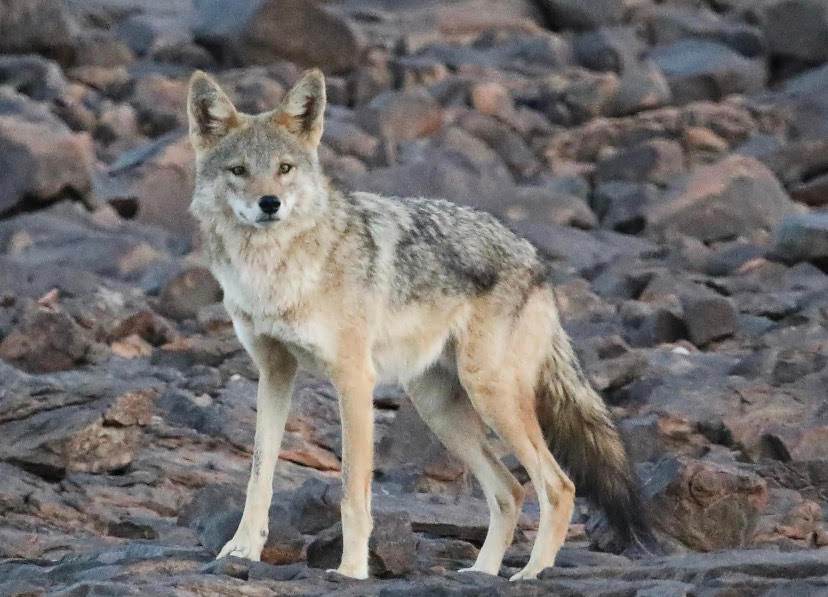
Photo: Mourad Harzellah. Figure 1: Specimen of Canis anthus from Algeria.
Material and Methods
Study Area
The diet of the African golden wolf Canis anthus was analysed in the region of Tizi-Ouzou, in two different types of habitat (Yakouren Forest and Ait-Zellal Oliverie), located in north-central Algeria (Figure 2).
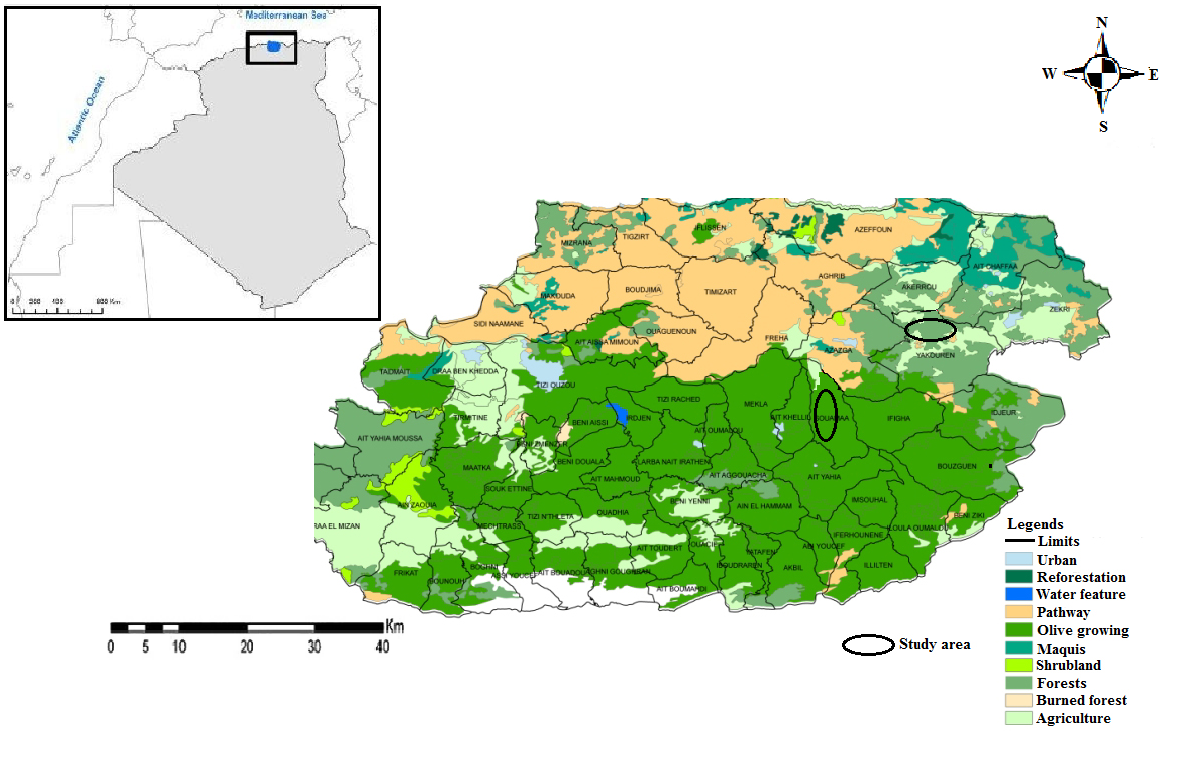
The Yakouren Forest is a mountainous region, located in the east of the wilaya of Tizi-Ouzou (36°46’02”N 4°23’12”E) and in the center of the Tellian atlas, on the northern slopes of the Djurdjura mountain range, it is an oak forest (Quescu ssuber, Q. canariensi sand Q. afares), with a dense underwood dominated by Pistacia lentiscus. The olive grove of Ait-Zellal, located in the Souamaa region in the east of Tizi-Ouzou (36°39’53”N 4°19’58”E) on the northern slopes of the Djurdjura mountain. A habitat dominated by olive trees (Oleaeuropaea) and carob trees (Ceratonia siliqua) and a diversified shrub layer, such as hedge rose (Rosa canina), hawthorn (Crataegus monogyna) and lentiscus (Pistacia lentiscus).
Sampling Methods
Faeces sampling was carried out during the period from November 2016 to May 2017, with one trip per month for each station. To differentiate African golden wolf faeces from those of other carnivores which occupy the same area such as red fox (Vulpes vulpes), Egyptian mongoose (Herpestes ichneumon), and domestic dogs (Canis familiaris), we took into account some specific characteristic such as the size, smell, shape and place of the deposits.
Diet Analysis
The diet analysis of this animal was carried out using a widely used method, which is standardised Ciucci, et al. [19, 20]. Zunna, et al. [21], Nowak, et al. [22], Amroun, et al. [15], Eddine, et al. [23] Faeces were sterilized in an oven at 118 °C for one hour to eliminate any source of parasites that are frequently contained in carnivore faeces disease. They are trumpeted in water for 24 to 48 hours, then washed under a jet of water to remove the faecal matter and retain the undigested macroscopic elements in a 0.5mm mesh sieve [24, 25]. Litvaitis, et al. [26], Eddine, et al. [23]. Prey and food remains were identified using the key of Debrot, et al. [27]. For mammals; bird feathers using the key of Day. Teeth and bones were identified using the keys of Chaline, et al. [28].
Data Analysis
To study the diet, we calculated the following parameters: relative frequency of occurrence (Fr%), representing the number of occurrences of an item divided by the total number of occurrences of all prey items multiplied by 100 Mostefai, et al. [29], Amroun, et al. [10]. To better characterize the food spectrum of the African golden wolf we calculated: Shannon’s diversity index (H’) for prey species. Prey species richness (S) being the number of species ingested by the African golden wolf. Prey evenness index (E) being the ratio of H’ to maximum diversity (Hmax = log2S) where values close to 1 indicate a generalist and those close to 0 a specialist.
Regional variation in prey species in the African golden wolf diet was tested using anX2test; differences at p < 0.05 were considered significant using R software.
Results and Discussion
Global Diet
A total of 386 African golden wolf scats were collected and analysed, 206 in Yakouren and 180 in Ait-Zellal, with 8 food categories identified, namely Mammals, Arthropods, Birds, Energy plants, Non-energy plants, Reptiles, Molluscs and Waste (Figure 3).
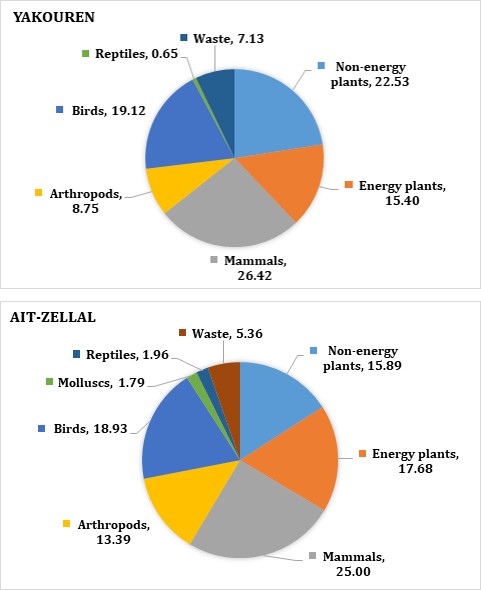
This study shows the heterogeneity of the diet of the African golden wolf in the two study sites. The diet of this carnivorous animal is mainly composed of mammals (26% in Yakouren and 25% in Ait-Zellal), followed by birds with frequencies of 22% in Yakouren and 16% in Ait-Zellal. Plants have an important share, in Yakouren 22% of the total are non-energy plants and 15% are energy plants (fruits and seeds); in Ait-Zellal, 15% are non-energy plants and 17% are energy plants. Arthropods seem to have a medium share in this large diet, 8% of the total in Yakouren and 13% in Ait-Zellal. Reptiles and mollusks are found at very low rates, the wolf does not show any preference for these prey. Waste (aluminium, plastic and paper) is a significant part of the animal’s diet, accounting for 7% of the total number of items in Yakouren and 5% in Ait-Zellal (Figure 3). This study shows that habitat type has an influence on the overall diet of golden wolffish, Chi-square homogeneity analysis shows a significant difference between the two overall diets in the two study regions (X2 = 30.989 ; df = 8; p-value = 0.0001411).
Taxonomic Identification
In the faeces, we identified mammals with S=19 species, plant families (S=11), arthropod families (S=8), 1mollusc family, two bird categories (wild and domestic birds) and one reptile (lizards). The waste found was paper, plastic and aluminum (Table 1).
| Food category | Food Item | Yakouren Forest | Olive grove Ait-Zella | ||
|---|---|---|---|---|---|
| Na | Fr | Na | Fr | ||
| Non-energy plants Energy plants | Poaceae | 139 | 19,80 | 91 | 13,70 |
| Myrtaceae | 72 | 10,26 | 8 | 1,20 | |
| Ericaceae | 11 | 1,57 | ─ | ─ | |
| Moraceae | 8 | 1,14 | 13 | 1,96 | |
| Rosaceae | 6 | 0,85 | 1 | 0,15 | |
| Vitaceae | 2 | 0,28 | ─ | ─ | |
| Cucurbitaceae | 1 | 0,14 | ─ | ─ | |
| Fabaceae | 1 | 0,14 | 74 | 11,14 | |
| Oleaceae | 1 | 0,14 | 24 | 3,61 | |
| Solamaceae | 1 | 0,14 | 1 | 0,15 | |
| Ulmaceae | 1 | 0,14 | ─ | ─ | |
| Mammals | Sus scrofa | 45 | 6,41 | 35 | 5,27 |
| Atelerix algirus | 37 | 5,27 | 22 | 3,31 | |
| Apodemus sylvaticus | 15 | 2,14 | 14 | 2,11 | |
| Herpestes ichneumon | 15 | 2,14 | 34 | 5,12 | |
| Ovissp. | 15 | 2,14 | 36 | 5,42 | |
| Genetta genetta | 13 | 1,85 | 26 | 3,92 | |
| Felissp. | 12 | 1,71 | 4 | 0,60 | |
| Macacasylvanus | 10 | 1,42 | ─ | ─ | |
| Bos torus | 9 | 1,28 | ─ | ─ | |
| Hystrix cristata | 6 | 0,85 | 7 | 1,05 | |
| Oryctolaguscuniculus | 6 | 0,85 | 6 | 0,90 | |
| Suncusetruscus | 4 | 0,57 | 3 | 0,45 | |
| Rattus norvegicus | 3 | 0,43 | ─ | ─ | |
| Rattus rattus | 3 | 0,43 | 7 | 1,05 | |
| Mus musculus | 3 | 0,43 | 3 | 0,45 | |
| Vulpes vulpes | 3 | 0,43 | 4 | 0,60 | |
| Mus spretus | 1 | 0,14 | 1 | 0,15 | |
| Lemniscomys barbarus | ─ | ─ | 2 | 0,30 | |
| Mustelanivalis | ─ | ─ | 2 | 0,30 | |
| Unidentified | 2 | 0,28 | 2 | 0,30 | |
| Arthropods | Scarabaeidae | 31 | 4,42 | 30 | 4,52 |
| Carabidae | 21 | 2,99 | 21 | 3,16 | |
| Formicidae | 15 | 2,14 | 13 | 1,96 | |
| Acrididae | 5 | 0,71 | 8 | 1,20 | |
| Geotropidae | 3 | 0,43 | 2 | 0,30 | |
| Curculionidae | 1 | 0,14 | 1 | 0,15 | |
| Pterostichidae | 1 | 0,14 | 2 | 0,30 | |
| Montidae | ─ | ─ | 1 | 0,15 | |
| Unidentified | 11 | 1,57 | 12 | 1,81 | |
| Birds | Domestic birds | 74 | 10,54 | 75 | 11,30 |
| Wild birds | 47 | 6,70 | 38 | 5,72 | |
| Reptile | Lizard | 4 | 0,57 | 11 | 1,66 |
| Molluscs | Gastropod | ─ | ─ | 10 | 1,51 |
| Waste | Aluminium, Paper and Plastic | 44 | 6,27 | 20 | 3,01 |
Table 1: Diet elements of the African golden wolf (_Canis anthus_) at both sites (─Absent). The analysis of faeces and the identi
Plants are frequently consumed, with Poacaea dominating in both regions, energetic plants (grains and fruits) are present in the diet of the African wolf with the dominance of Myrtacaea in Yakouren (Fr=10.26%) and Fabacaea in Ait-Zellal (Fr=11.14%). Mammals, with 19 species identified, have an important share. The wild boar Sus scrofa is the most consumed (Fr= 6.41%) followed by the Algerian hedgehog Atelerix algirus (Fr=5.27%) at the level of the Yakouren forest. at Ait-Zellal, the sheep Ovis sp. are the most consumed (Fr=5.42%) followed by the wild boar (Fr=5.27%) (Table 1).
Arthropods are represented by 8 different families, Scarabaeidae (Fr= 4.42% in Yakouren, Fr= 4.52% in Ait- Zellal) and Carabidae (Fr= 2.99% in Yakouren, Fr= 3.16% in Ait-Zellal) are the most common in wolf faeces and in the two study regions (Table 1).
For birds, we divided this taxon into two groups with a consumption importance of domestic birds in both regions (Fr=10.54% in Yakouren; Fr=11.3% in Ait-Zellal). Reptiles (Fr= 0.57% in Yakouren; Fr=1.66% in Ait-Zellal) and molluscs (Gastropods) (Fr= 0% in Yakouren; Fr=1.51% in Ait-Zellal) do not constitute prey appreciated by the African golden wolf (Table 1). The results show that habitat type has a highly significant influence on the choice of plant and animal species predated by the golden wolf. The Chi-square homogeneity analysis shows a significant difference between the two diets in the two study regions(X-squared = 255.4, df = 44, p-value < 2.2e-16).
The Shannon diversity index calculated at the level of the two study sites shows a great specific diversity of the items consumed, it is H’ = 2.5bit in Yakouren and H’ = 2.65bit inAit-Zellal. The Equitability index (E) remains high in both regions, with a value tending towards 1.
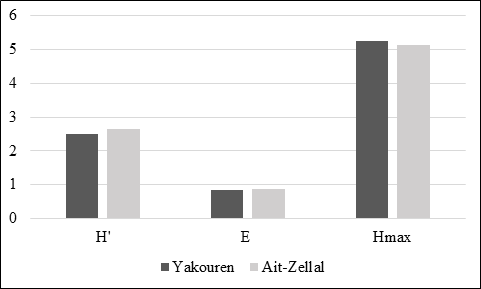
Several studies are devoted to the analysis of the diet of the African golden wolf in Algeria [30, 31]. Amroun, et al. [15]. Eddine, et al. [23] .Our results reveal diversified diets (Hʹ (Yakouren)= 2.5 / E (Yakouren) = 0.83; Hʹ (Ait-Zellal)= 5.65 / E (Ait-Zellal) = 0.88),this can be explained by the heterogeneity of Mediterranean habitats, offering a great availability and variety of prey Di Castri, [32]. Our studies show that the golden wolf has a very wide food spectrum and a high diversity of food items ingested (mammals, plant material, birds, arthropods, reptiles, molluscs and waste) [33]. This wide variety of prey is evidence of the wolf’s ability to utilize the food resources offered by its environment, and classifies this species as a generalist and opportunistic carnivore, confirming the results of several authors over its entire range, which has degraded a wide trophic range. Eddine, et al. [23], Karssene, et al. [34], Boukheroufa, et al. [18].
Our results show that mammals constitute the most important food resource of the golden wolf in both regions. According to Lozé I [35], predators invest in hunting the most profitable species. Indeed, the choice of mammals is explained by their availability during the year and their energy values [15]. Our observations suggest that the feeding behavior of wolves, where sheep dominate eaten mammals in Ait-Zellal is related to local husbandry practices. Indeed, the open disposal of livestock carcasses provides some support for wolves to feed on carcasses when live prey is not available [36]. This may also explain the abundance of domestic birds in the wolf’s diet, through uncontrolled releases from poultry houses in the study areas. These carcasses may also attract wolves to areas close to livestock and could encourage livestock depredation [37] Tourani, et al. [38]. On the other hand, synanthropy represents a major threat to wolves. Bringing wolves closer to human settlements to access food resources increases the likelihood of wolf-human encounters and leads to increased risks of direct persecution, collisions with vehicles Fritts, et al. [39] and hybridization with dogs Kopaliani, et al. [40]. This approach to human habitats can also explain the presence of household waste in the diet of this carnivore. The high representation of plants (energetic and non-energetic) in the diet of the wolf in the Yakouren forest and the olive grove of Ait-Zellal is consistent with the hypothesis that the diet of carnivores in Mediterranean-influenced regions generally includes more plant material. Non-energy plants (Poaceae) are thought to facilitate the digestion of other foods (e.g. by removing hair from the digestive tract) and to promote the elimination of toxins from the tissues Sánchez, et al. [41]. Our study confirms that the African wolf, like most opportunistic carnivores present in the Mediterranean region, consumes a relatively large proportion of arthropods Hamdine, et al. [42], Virgos, et al. [43], Amroun, et al. [15]. Arthropods, due to their availability during most of the year and their easy access, are an important source of energy for golden wolves in our study sites [44]. In addition, the chitin covering the arthropods could act as a facilitator of intestinal transit Lucherini, et al. [45].
Conclusion
This study shows the wide choice of food items of Canis anthus in different habitats, which confirms its generalist and opportunistic behavior [46, 47, 48, 49, 50, 51, 52, 53, 54]. A preference for mammalian prey in the regions is observed, with the dominance of Sus scrofa and Atelerix algirus in Yakouren; in Ait-Zellal, Ovis sp. and Sus scrofa are the most eaten. A fluctuation of the chosen food items is observed in both types of habitats, which confirms the great adaptability of Canis anthus to local environmental conditions in its trophic behavior.
References
-
Ahmim M (2019) Les mammifères sauvages d’Algérie : Répartition et Biologie de la Conservation. Edition du Net, pp: 289.
-
Rueness EK, AsmyhrMG, Sillero-Zubiri C, Macdonald DW, BekeleA, et al. (2011) The cryptic African wolf: Canis aureuslupaster is not a golden jackal and is not endemic to Egypt. PLoS One 6(1): e16385.
-
Gaubert P, Bloch C, Benyacoub S, Abdelhamid A, Pagani P, et al. (2012) Reviving the African wolf Canis lupus lupaster in North and West Africa: a mitochondrial lineage ranging more than 6,000 km wide. PLoSONE 7(8): e42740.
-
Ferguson WW (1981) The systematic position of Canis aureuslupaster (Carnivora: Canidae) and the occurrence of Canis lupus in North Africa, Egypt and Sinai. Mammalia 45: 459-465.
-
Gaubert P, Bloch C, Benyacoub S, Abdelhamid A, Pagani P, et al. (2012) Reviving the African wolf Canis lupus lupaster in North and West Africa: a mitochondrial lineage ranging more than 6,000 km wide. PLoSONE 7(8): e42740.
-
Koepfli KP, Pollinger J, Godinho R, Robinson J, Lea A, et al. (2015) Genome-wideevidencerevealsthatAfrican and Eurasian golden jackals are distinct species. Current biology 25(16): 2158-2165.
-
Poché RM, Evans SJ, Sultana P, Hague ME, Sterner R, et al. (1987) Notes on the golden jackal (Canis aureus) in Bangladesh. Mammalia 51(2): 259-270.
-
YaldenDW, Largen MJ, Kock D, Hillman JC (1996) Catalogue of the mammals of Ethiopia and Eritrea. 7. Revised checklist, zoogeography and conservation. Tropical Zoology 9(1): 73-164.
-
Khidas K (1986) Study of the Social and Territorial Organization of the Jackal (canis Aureus Algirensis Wagner, 1841) in the Djurdjura National Park.
-
Amroun M, Giraudoux P, Delattre P (2006) A comparative study of the diets of two sympatric carnivores the golden jackal (Canis aureus) and the common genet (Genetta genetta) in Kabylia, Algeria. Mammalia 70 (3-4): 247- 254.
-
Aulagnier S (1992) Zoogeography of Moroccan mammals: from specific analysis to population typology at the regional scale. Montpellier, France, pp: 235.
-
Macdonald DW (1979) The flexible social system of the golden jackal, _Canis aureus_. Behavioral Ecology and Sociobiology 5(1): 17-38.
-
Lanszki J, Heltai M(2002) Feeding habits of golden jackal and red fox in south-western Hungary during winter and spring. Mammalian Biology 67(3): 129-136.
-
Giannatos G, Karypidou A, Legakis A, Polymeni R (2010) Golden jackal (_Canis aureus_ L.) diet in Southern Greece. Mammalian Biology 75(3): 227-232.
-
Amroun M, Bensidhoum M, Delattre P, Gaubert P(2014a) Feeding habits of the common genet (Genetta genetta) in the area of Djurdjura, north of Algeria. Mammalia 78 (1): 35-43.
-
Mukherjee S, Goyal SP, Johnsingh AJT, Pitman ML (2004) The importance of rodents in the diet of jungle cat (Felischaus), caracal (Caracal caracal) and golden jackal (Canis aureus) in Sariska Tiger Reserve, Rajasthan, India. Journal of Zoology 262(4): 405-411.
-
Lanszki J, Heltai M, Szabó L (2006) Feeding habits and trophic niche overlap between sympatric golden jackal (_Canis aureus_) and red fox (_Vulpes vulpes_) in the Pannonianecoregion (Hungary). Canadian Journal of Zoology 84(11): 1647-1656.
-
Boukheroufa M, Sakraoui F, Belbel F, Sakraoui R (2020) Winter diet of the common genet, Genetta genetta (Carnivora, Viverridae), and the African golden wolf, _Canis anthus_ (Carnivora, Canidae), in altitudinal locality of the Edough Forest (northeastern Algeria). Zoodiversity 54(1): 67-74.
-
Ciucci P, Boitani L, Pelliccioni ER, Rocco M, Guy IA(1996) Comparison of scat analysis method to assess the diet of the wolf _Canis lupus_. Wildlife Biology 2: 37-48.
-
Sidorovich VE, Tikhomirova LL, Jedrzejewska B (2003) Wolf Canis lupus numbers, diet and damage to livestock in relation to hunting and ungulate abundance in northeastern Belarus during 1990-2000. Wildlife Biology 9: 103-111.
-
Žunna A, Ozoliņ J, Pupila A (2009) Food habits of the wolf Canis lupus in Latvia based on stomach analyses. Estonian Journal of Ecology 58(2): 141-152.
-
Nowak S, Mysłajek RW, Kłosińska A, Gabryś G (2011) Diet and prey selection of wolves (Canis lupus) recolonising Western and Central Poland. Mammalian Biology 76(6): 709-715.
-
Eddine A, Mostefai N, De Smet K, Klees D, Ansorge A, et al. (2017) Diet composition of a newly recognized canid species, the African golden wolf (_Canis anthus_), in northern Algeria. Annales ZoologiciFennici 54: 347-356.
-
Lockie JD (1959) The estimation of the food of foxes. Journal of Wildlife Management 23: 224-227.
-
Goszczyński J (1974) Studies on the food of foxes. Acta theriologica 19(1): 1-18.
-
Litvaitis JA, Titus K, Anderson EM (1996) Measuring Vertebrate Use of Terrestrial Habitats and Foods. In: Bookhout TA (Ed.), Research and Management Techniques for Wildlife and Habitats, Allen Press, Lawrence, pp: 254-274.
-
Debrot S, Fivaz G, Mermod C, Weber JM (1982) Atlas of mammalian hairs of Europe. Institut de Zoologie de l’Université de Neuchâtel, Neuchâtel, pp: 208.
-
Chaline J, Baudvin H, Jammot D, Saint-Girons MC (1974) Raptor prey: small mammals and their environment. Edition Doin, Paris, USA, pp: 144.
-
Mostefai N, Sellami M, Grenot C (2003) Contribution à la connaissance du régime alimentaire de la genette commune (Genetta genetta) dans la réserve cynégétique de Moutas, Tlemcen (Algérie). Bulletin de la Société Zoologique de France 128: 227-237.
-
Khidas K (1986) Étude de l’organisation sociale et territoriale du chacal Canis aureus Wagner 1841, dans le Parc National du Djurdjura. Université des Sciences et de la technologie d’Alger, Algérie.
-
Oubellil D (2010) Habitat selection and feeding ecology of the golden jackal Canis aureus algirensis in Djurdjura National Park. Thèse de magister, Université de Tizi- Ouzou, Algérie, pp: 73.
-
Di Castri F (1973) Animal biogeography and ecological niche. In: Di Casri F, Mooney HA, (Eds.), Mediterrean type ecosystems, origins and structure. Springer, Berlin, pp: 279-283.
-
Raven P (1973) The evolution of Mediterranean floras. In: Di Casri F, Mooney HA, (Eds.), Mediterranean type ecosystems. Chapman & Hall, London, UK, pp: 213-224.
-
Karssene Y, Chammem M, Li F, Eddine A, Hermann A, et al. (2019) Spatial and temporal variability in the distribution, daily activity and diet of fennec fox (_Vulpeszerda_), red fox (_Vulpesvulpes_) and African golden wolf (_Canis anthus_) in southern Tunisia. Mammalian Biology 95: 41-50.
-
Lozé I (1984) Régime alimentaire et utilisation de l’espace chez la genette (Genetta genetta). Mémoire de DEA de biologie du comportement, Université de Paris, pp: 22.
-
Blanco JC, Cortés Y (2007) Dispersal patterns, social structure and mortality of wolves living in agricultural habitats in Spain. Journal of Zoology 273(1): 114-124.
-
Morehouse AT, Boyce MS (2011) From venison to beef: seasonal changes in wolf diet composition in a livestock grazing landscape. Frontiers in Ecology and the Environment 9(8): 440-445.
-
Tourani M, Moqanaki EM, Boitani L, Ciucci P (2014) Anthropogenic effects on the feeding habits of wolves in an altered arid landscape of central Iran. Mammalia 78(1): 117-121.
-
Fritts SH, Stephenson RO, Hayes RD, Boitani L (2003) Wolves and humans. In: Mech LD, Boitani L (Eds.), Wolves: behavior, ecology, and conservation. University of Chicago Press, Chicago, USA, pp. 289-316.
-
Kopaliani N, Shakarashvili M, Gurielidze Z, Qurkhuli T, Tarkhnishvili D (2014) Gene flow between wolf and shepherd dog populations in Georgia (Caucasus). Journal of Heredity 105(3): 345-353.
-
Sánchez M, Rodrigues P, Ortuño V, Herrero J (2008) Feeding habits of the genet Genetta genetta in an Iberian continental wetland. Hystrix, the Italian Journal of Mammalogy 19(2): 133-142.
-
Hamdine W, Thévenot M, Sellami M, De Smet K(1993) Régime alimentaire de la genette (_Genetta genetta_ Linné, 1758) dans le parc national du Djurdjura, Algérie. Mammalia 57: 9-18.
-
Virgos E, Llorente M, Cortes Y (1999) Geographical variation in genet (_Genetta genetta_ L.) diet: a literature review. Mammal Review 29: 119-128.
-
Rosalino LM, Santos-Reis M(2002) Feeding habits of the common genet _Genetta genetta_ in a manmade landscape of central Portugal. Mammalia 66: 195-205.
-
Lucherini M, Lovari S, Crema G, Cavallini P (1988) Relationships between the activity of male foxes Vulpesvulpes and food availability in a Mediterranean coastal area. SupplRicBiolSelvaggina 14: 419-424.
-
Bang P, Dahlström P (1999) Guide des traces d’animaux. Les indices de présence de la faune sauvage. Delachaux et Niestlé, Paris, France, pp: 264.
-
Day MG (1966) Identification of hair and feather remains in the gut and faeces of stoats and weasels. Journal of Zoology 148(2): 201-217.
-
Erome G, Aulagnier S (1982) Contribution à l’identification des proies des rapaces. Le Bièvre 4: 129- 135.
-
Lanszki J, Giannatos G, Heltai M, Legakis A (2009) Diet composition of golden jackals during cub-rearing season in Mediterranean marshland in Greece. Mammalian Biology 74(1): 72-75.
-
Litvaitis JA, Titus K, Anderson EM (1996) Measuring Vertebrate Use of Terrestrial Habitats and Foods. In: Bookhout, T.A., Ed., Research and Management Techniques for Wildlife and Habitats, Allen Press, Lawrence, pp: 254-274.
-
Lozé I (1984) Régime alimentaire et utilisation de l’espace chez la genette (Genetta genetta). Mémoire de DEA de biologie du comportement, Université de Paris, pp: 22.
-
Macdonald DW (1980) Patterns of scent marking with urine and faeces amongst carnivore communities. Symposia of the Zoological Society of London 45: 107- 139.
-
Erome G, Aulagnier S (1982) Contribution à l’identification des proies des rapaces. Le Bièvre 4: 129- 135.
-
Lanszki J, Heltai M (2002) Feeding habits of golden jackal and red fox in south-western Hungary during winter and spring. Mammalian Biology 67(3): 129-136.
- California Red-Legged Frog and Non-Listed Amphibians Response to Non-Native Fish Removal
- Industrial Standardization of the Bio-OS: Algorithmic Codification of Resilience Engineering Guidelines and Version V8 Architecture
- Climate Variability and the Sustainability of Snail Farming in Nigeria: Past Trends, Present Challenges and Potential Outlook
- The Evaluation of the Surveillance System of Anthrax in Gilgit-Baltistan, Pakistan, 2018
- Natural Decline to Extinction of A New Zealand Rabbit Population
- Mitochondrial Bio-Logistics: Steering Co-Enzyme Q10 and Lycopene Synergies within the Science 4.0 Bio-OS Framework