
Remnant Avian Megafauna in South America: An Evaluation of the Occurrence of Breeding Greater Rheas (Rhea americana) in Non- Protected Landscapes in the Brazilian Cerrado
Concern for megafauna conservation has increased in the last decades. The Greater Rhea Rhea americana is the largest bird species inhabiting South America. It is considered Near Threatened, mainly due to habitat loss, and hunting. Although it occurs through an extensive geographic distribution, most detailed investigations have been conducted in Argentina. This study was aimed at examining breeding aspects of Greater Rheas in non-protected landscapes in the Brazilian Cerrado. Records of this species with evidence of breeding activities (nests, eggs, young) were obtained through searches for photographs in the WikiAves database. A total of 104 breeding records were obtained by citizens. These records were concentrated in central and western Cerrado. Most municipalities with breeding records have less than 30,000 habitants, and human population densities lower than 10 individuals/km2. The breeding season occurs between June and March-April. Results indicate that breeding Greater Rheas use a range of modified habitats in non-protected landscapes, and their occurrence in the Cerrado is strongly associated with municipalities with low human abundance.
Introduction
Concern for megafauna has increased in recent decades, as large-bodied animals can play important ecological roles and ecosystem services [1]. Populations of these species have been declining in contemporary landscapes on all continents, and knowledge on their biology is essential for their conservation in wild areas [2]. Among the avian megafauna is the Greater Rhea Rhea americana, the largest native bird species found in South America [3].
Greater Rheas occur in Argentina, Brazil, Bolivia, Uruguay and Paraguay [4, 5]. These terrestrial birds use habitats such as wetlands, grasslands, savannas, open woodlands, and agricultural fields [4]. Their populations have been declining in numerous regions, and its geographic distribution has collapsed in several eco-regions, mainly due to agriculture and hunting [6, 7]. Adults are hunted mainly for meat, skins and feathers, while eggs are collected for consumption and medicinal purposes [3, 4]. As a consequence, the Greater Rhea is currently considered a Near Threatened species [8].
Greater Rheas feed on a wide variety of vertebrates, invertebrates and plants [4], and usually occurs in groups or families [9, 10]. Polygamy is characteristic of the species, and nests usually have 20-30 eggs [3, 4]. Their common nest predators are pumas, dogs, armadillos and racoons [4, 9, 10]. Greater Rheas breed between July and January, considering its whole geographic distribution [4].
The use of modified landscapes by Greater Rheas has been examined by a range of studies conducted in Argentina. For example, radio-tracked rheas used alfalfa plantations for foraging during the post and non-breeding period [12]. In an agricultural landscape, they preferred pastures, showed less preference for native grasslands, and did not use crops [13]. During most of the year, Greater Rheas selected open and short vegetation, such as grassland, crops, and firebreaks; however, they selected dense grassland sites during the breeding season [14]. Also in Argentina, Greater Rheas density was substantially higher in native grasslands than in the agro-ecosystem [15].
In Brazil, it was shown that they are expanding their geographic range into degraded portions of the Amazon [16]. Further, their nests can be destroyed by machinery in agricultural fields in the Pampa eco-region [17], and they can nest in young eucalypt plantations in the Cerrado [11]. Despite these studies, the occurrence of breeding Greater Rheas has not been examined in detail in modified landscapes in the Cerrado.
The objective of this study was to investigate the spatiotemporal distribution of breeding Greater Rheas in the Cerrado, the savanna eco-region that dominates central Brazil. I supposed that it would be possible through the use of records available in WikiAves (https://www.wikiaves. com.br), the largest citizen science database regarding Brazilian birds. Besides producing a distribution map of records with evidence of breeding activities, I examined the occurrence of breeding records in relation to the density and population size of humans in different municipalities. My first hypothesis was that records with breeding evidences would be more common within municipalities with less humans, as Greater Rheas tend to do not adapt to urban areas [4, 10]. My second hypothesis was that brood sizes would be smaller in municipalities with more humans, due to increased disturbance or predation. I also investigated the breeding season, by examining the seasonal occurrence of nests, eggs, and young at different developmental stages. Results were discussed in terms of the breeding biology, ecology and conservation of Greater Rheas in the Cerrado and other regions.
Material and Methods
Study Area
The Cerrado is the savanna vegetation province that covers about 2,000,000 km2 in South America, mainly in Brazil, but also in Paraguay and Bolivia [18]. It dominates central Brazil and extends through peninsulas and isolated patches to other vegetation provinces, such as the Atlantic Forest and the Pantanal [19, 20]. The regional climate is tropical, strongly seasonal and marked by two well-defined periods. The dry season occurs between May and September, while the wet season ranges from October to April. The annual rainfall usually varies between 1200 and 2000 mm, and temperatures usually range from 10oC in the winter (June-August) to 40°C in the summer (December-February) [21]. Landscapes often are dominated by cerrado sensu lato - a gradient of xeromorphic savanna vegetation including grasslands and woodlands [22, 23]. This gradient is the major matrix type of uplands, where mesophytic forests cover less extensive areas. On the other hand, valleys are mainly occupied by riverine forests, marshes, and floodplain grasslands with scattered palm trees [19, 23, 24].
The native cover of landscapes has been dramatically reduced and fragmented by mechanized agriculture, pastures, exotic forest plantations, and urbanization [25, 26, 27]. Soybean plantations are a major threat to biodiversity, as they currently cover extensive areas, and do not allow the persistence of native vegetation in their fields [28, 29, 30]. In agricultural landscapes, grasslands and savanna woodlands are nearly or totally absent, and riverine forests are narrowed due to habitat conversion [26, 27]. At several regions, agricultural fields are adjacent to conservation units of integral protection, as occurs with Parque Nacional das Emas, in Goiás state [30, 31, 32].
During the last decades, major agricultural fields in the Cerrado have been cultivated on a rotational basis, having soybean, cotton and sugar cane as major products, while corn, wheat, beans and sunflower occur as less expressive cultivations [33]. Further modifications in landscapes are illegal fires started in farmlands in the dry season to renew pastures for cattle. Additionally, fire management by park managers is restricted to the maintenance of firebreaks (aceiros) - strips of grasslands or woodlands that are usually burned in the dry season almost every year [24]. The Cerrado´s fauna and flora are adapted to the natural fire that is usually started by lightning during rains [34, 35, 36].
Data Obtention
Records of the Greater Rhea included in this study were obtained through searches for photographs in WikiAves (https://www.wikiaves.com.br). This database of digital sound records and photographs of Brazilian birds exists since 2009, and currently receives contributions of about 44,000 citizen scientists (nonprofessional ornithologists) that have produced more than 4,400,000 records of about 1,950 species. A search was done in September 2021, based on the map of record distribution of the Greater Rhea. The record compilation was done by selecting Brazilian states that contain Cerrado’s landscapes, and then municipalities located within this eco-region.
Greater Rhea records were examined and those with evidence of breeding activities in the Brazilian Cerrado were selected. This means the inclusion of records (here called “breeding records”) showing nests with eggs, incubating males, and families formed by an adult and variable number of young. When it was possible to note that two or more photographs referred to the same nest or birds in a given municipality, during a certain year, only one of these replicates was selected. However, replicates were used to know the number and size of young found in families.
Authors of the selected photographs were contacted due to the following reasons: 1) to confirm incubation in cases of males sitting on the ground; 2) to confirm the presence of an adult when only young were shown in the photograph; 3) to know the number of young or eggs being cared by a given male, as some of them could be out of frame. Only records accompanied by confirmation of incubation or the presence of a male with young were included in this study.
Further, only records obtained in non-protected landscapes were selected, as those obtained in conservation were scarce (pers. obs.). I considered that they would not be enough for appropriate conclusions about breeding aspects of Greater Rheas in protected areas. Also, producing results by combining data from both protected and non-protected areas would not be adequate, as they would not represent what happens in these distinct situations. These few records (n = 4) were obtained by citizens at Parque Nacional das Emas (Chapadão do Céu municipality) and Parque Nacional da Chapada dos Veadeiros (Alto Paraiso de Goiás municipality), and were not included in this study. I also have not included three records obtained in Brasília, as I noted that some citizens report wrongly the record location – they mention “Brasília”, instead of the adjacent municipalities.
Classification of Birds, Records and Municipalities
Young shown in the photographs were classified into three developmental categories (Figure 1): (1) “chicks”, i.e., birds with short wings that do not cover the whole back; birds with white, black and cream strips on the back; the height of the young´s back by the midpoint of the adult´s metatarsus, or shorter; young´s head at the height of the adult´s heel, or shorter (Figures 1a,1b); (2) “medium-sized young”, i.e., birds with wings covering all the back; young´s back by the height of the adult´s heel; young´s head nearly reaching the height of the adult´s belly, when standing (Figure 1c); (3) “large young”, i.e., birds with the back near the height of the adult´s belly, or higher, but shorter than the midpoint of its body; young´s head reaching the height of the adult´s back, or shorter (Figures 1d,1e).
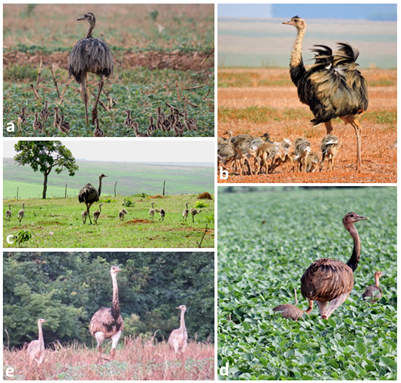
Figure 1: Families of the Greater Rhea (Rhea americana) with young and a male, and recorded by citizen scientists in modified landscapes in the Brazilian Cerrado. (a): a male with chicks in a soybean plantation at Chapada dos Guimarães (photo by Fabiano Saar); (b): a male with more developed chicks in a post-harvest area at Chapadão do Céu (photo by Antonino Medina); (c): a male with medium-sized young in a pasture at Silvânia (photo by Ivo Zecchin); (d): a male with large young in a soybean plantation at Maracaju (photo by Luiz Carlos Rocha); (e): a male with large young in a soybean plantation at Palmeiras de Goiás (photo by Ramon Cardoso). These photos were published here with permission by their authors.
Young of a given family were usually classified into only one developmental category. However, on some occasions (e.g., WA1540608, WA1582120), there were remarkable differences among young, probably due to adoption of some of them [37]. When this occurred, a given record was credited to the two developmental categories involved. These records were used for the investigation of the breeding season, but were not included in the analysis of variation in brood size. The timing of the breeding season was examined by classifying the date of each record in one of three periods of a given month - (I): days 1-10; (II): days 11-20; (III): days 21-31. Then, the seasonal distribution of records with nest/ eggs, and young, was examined. Information on human populations found in Cerrado’s municipalities was obtained in Cidades-Brasil [38]. Population sizes were classified into classes of 10,000 habitants, while human densities were classified into classes of 5 individuals per km2.
Statistical Analysis
A one-factor ANOVA, with the Bonferroni test, was used to compare the mean numbers of young per family (brood sizes) found in different developmental categories. These comparisons were done by considering a family record as a sample. Pearson linear correlations were used to examine the relation between brood size and aspects of human populations (population size and density), considering a family record as a sample. Photographs associated with no answers by authors about the family size were not included in these comparisons. All statistical analyses were performed with the program BioEstat 5.3 [39]. A level of significance of 5% was considered in this study.
Results
Geographic Distribution of Records
Breeding records of Greater Rheas (n = 104) in the Brazilian Cerrado have been obtained by citizens in 66 municipalities of five states (Appendix). Most of them were obtained in Goiás (n = 32; 31%) and Mato Grosso do Sul (n = 24; 23%), while other states had fewer records. Further, Goiás (n = 22; 33%) and Mato Grosso (n = 13; 20%) states had the highest numbers of municipalities with breeding records (Appendix).
As a result, eastern Cerrado was characterized by a scarcity of breeding records (Figure 2). This region ranged from Cerrado portions bordering the Caatinga, in northeastern Brazil, to portions adjacent to the Atlantic Forest, in the southeastern region of the country. On the other hand, the highest concentration of records occurred in central Cerrado, especially in Goiás state. This region had several municipalities with one record, and some municipalities with three or more records, including Chapadão do Céu, Chapadão do Sul, Jataí and Palmeiras de Goiás. Two portions of western Cerrado also had remarkable numbers of records (Figure 2). One of them is located south of the Pantanal wetland, in southern Mato Grosso do Sul state, where Bonito was the municipality with more records (n = 7). The other region lies between Amazonia and the Pantanal, in southern Mato Grosso state, where Chapada dos Guimarães municipality had more records (n = 3) (Appendix, Figure 2).
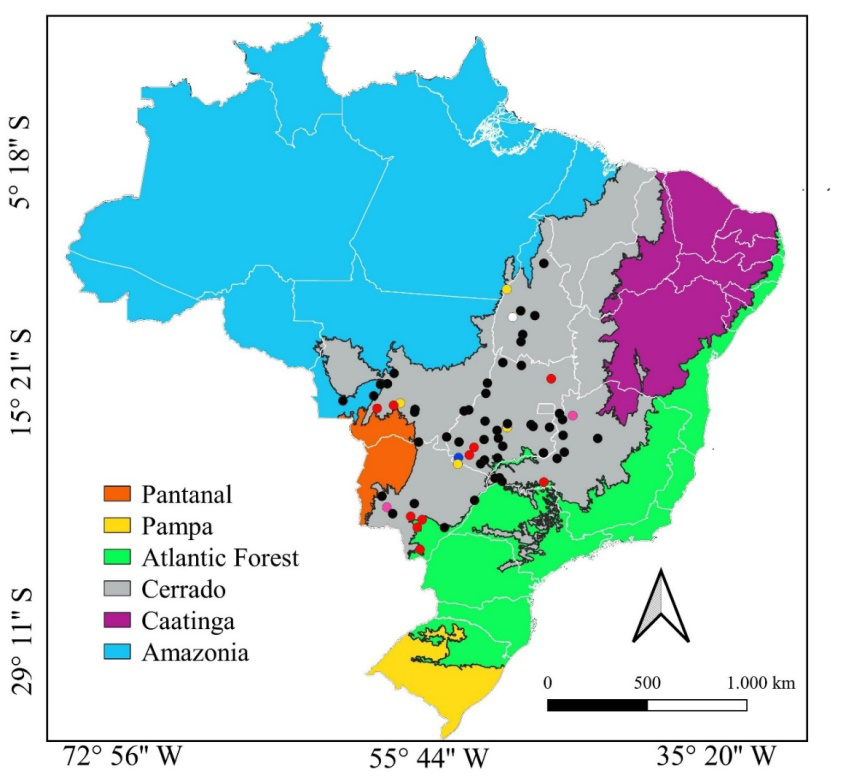
Figure 2: Geographic distribution of 104 breeding records of the Greater Rhea (Rhea americana) in 66 municipalities in the Brazilian Cerrado. Records were obtained by citizen scientists between 2009 and 2021, and gathered in the WikiAves database in September 2021. Municipalities had variable numbers of records: 1 (black circles), 2 (red circles), 3 (yellow circles), 4 (white circles), 6 (blue circles) and 7 (pink circles).
Further, other two regions had less expressive but still relevant amounts of records. One of them refers to northern Cerrado, in the contact zone with Amazonia (Tocantins state), where Lagoa da Confusão and Caseara municipalities had more records (4 and 3, respectively). The other region refers to eastern Goiás and western Minas Gerais, where Uruana de Minas was the municipality with the largest number of records (n = 7) (Figure 2, Appendix).
Relation between Breeding Records and Human Populations
Breeding Greater Rheas have been found by citizen scientists in municipalities with population sizes ranging between ~ 3,000 (Uruana de Minas) and ~ 612,000 habitants (Cuiabá) (Appendix). These birds tended to be found in municipalities with relatively small population sizes (Figure 3). This is because those with <10,000 habitants represented 33% (n = 22) of the municipalities with breeding records. These values referred to 65% (n = 43) when considering municipalities with <30,000 habitants. Among these municipalities with relatively small human populations were Chapadão do Céu, Caseara, Pium, Uruana de Minas and Bonito (Appendix).
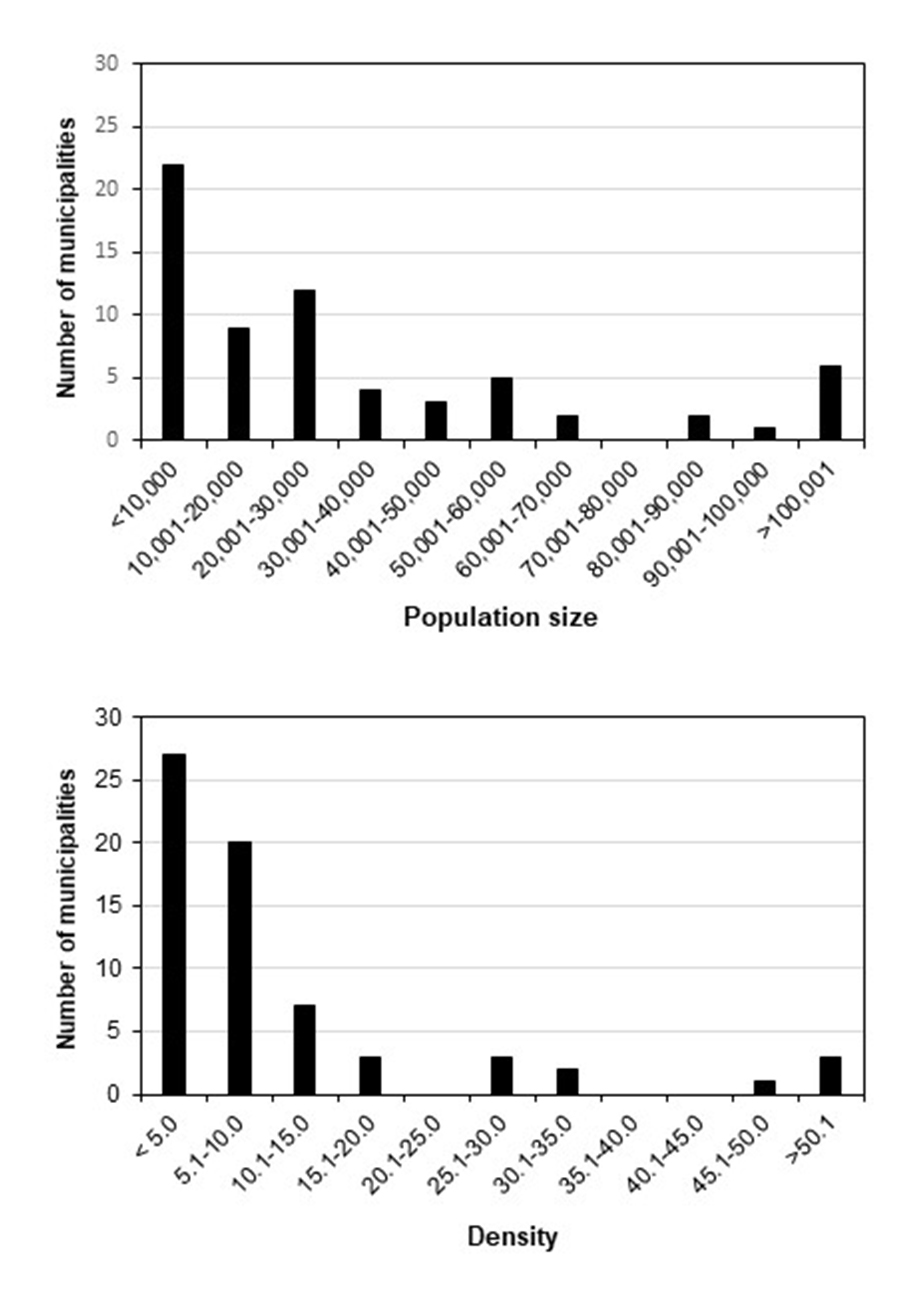
Figure 3: Number of municipalities with breeding records of the Greater Rhea (Rhea americana) in the Brazilian Cerrado. Municipalities were grouped into categories of human population size and density (ind./km2). Records were obtained by citizen scientists between 2009 and 2021, and gathered in the WikiAves database in September 2021. Only one record per municipality was considered in these results.
The evaluation of the relationship between the number of records of breeding Greater Rheas and the density of humans within Cerrado’s municipalities showed a pattern comparable to that observed for population sizes. This is because those with <5.0 ind./km2 represented 36% (n = 24) of the municipalities with breeding records. These values referred to 67% (n = 44) when considering municipalities with <10.0 ind./km2 (Figure 3). Among these municipalities with relatively low human densities were Chapadão do Céu, Bonito, Lagoa da Confusão, Chapada dos Guimarães and Chapadão do Sul (Appendix).
Habitats in which Breeding Greater Rheas were Found
Citizen scientists recorded breeding Greater Rheas in a wide range of non-forest habitats in the Cerrado (Appendix). Only two records occurred in native grasslands (campo sujo; Eiten [19]), while 98% of them showed birds using modified portions of landscapes. Numerous records (n = 35; 34%) showed families in pastures. Twenty-three (22%) records documented Greater Rheas on bare ground areas, including post-harvest fields and unpaved roads. Agricultural fields with breeding Greater Rheas were mainly soybean and corn plantations (Appendix).
Breeding Season
Nests with eggs or incubating adults were found by citizen scientists only in the dry season, from June to September (Figure 4).
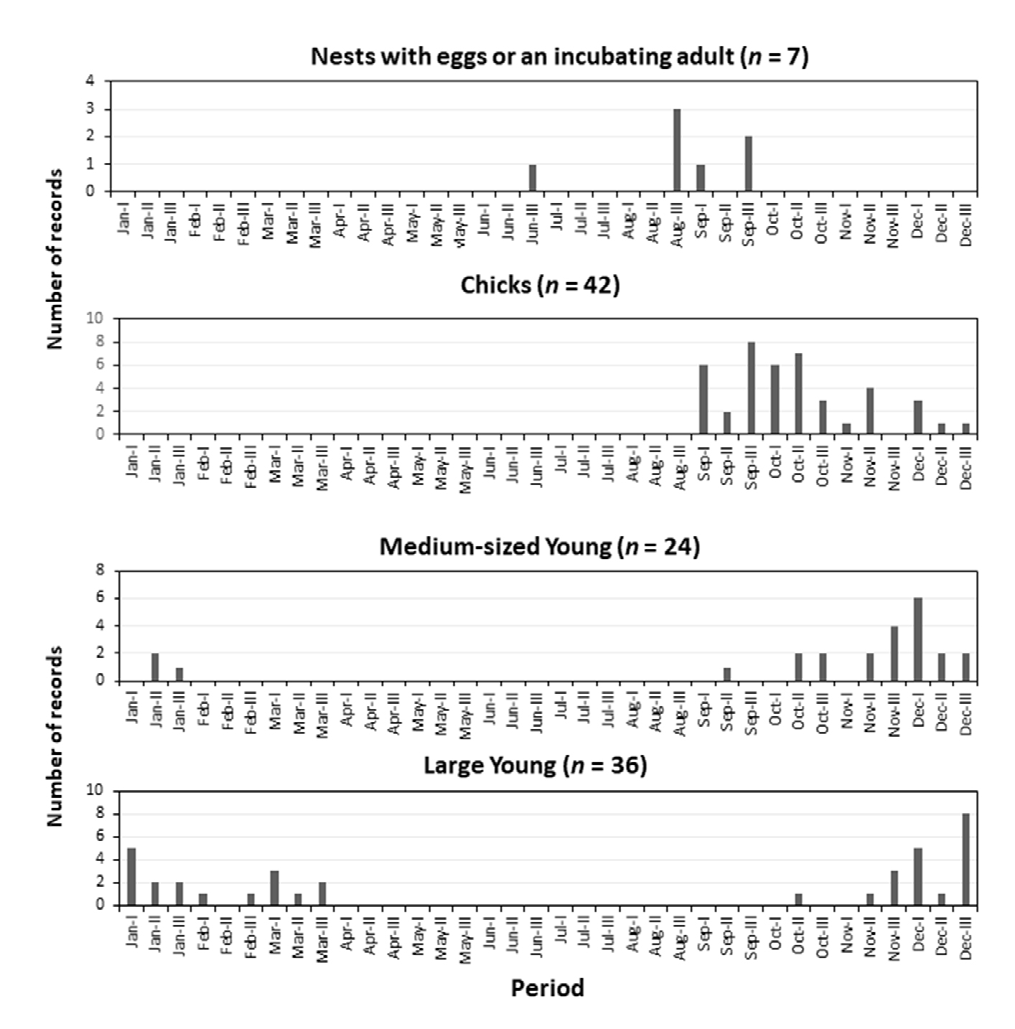
Two incubating adults were found in late August, while other two were recorded in late September. Three nests with eggs, not having an adult nearby, were found in late June, late August and early September. Families with chicks (n = 42) were found from the late dry season (September) to the mid-rainy season (December), being more often recorded in September and October. Medium-sized young also occurred in both seasons, being recorded between September and January. Their families (n = 24) were mainly detected in November and December. Families with large young (n = 36) were recorded in the rainy season, from mid-October to late March, with more records in December and January (Figure 4).
Clutch and Brood Sizes
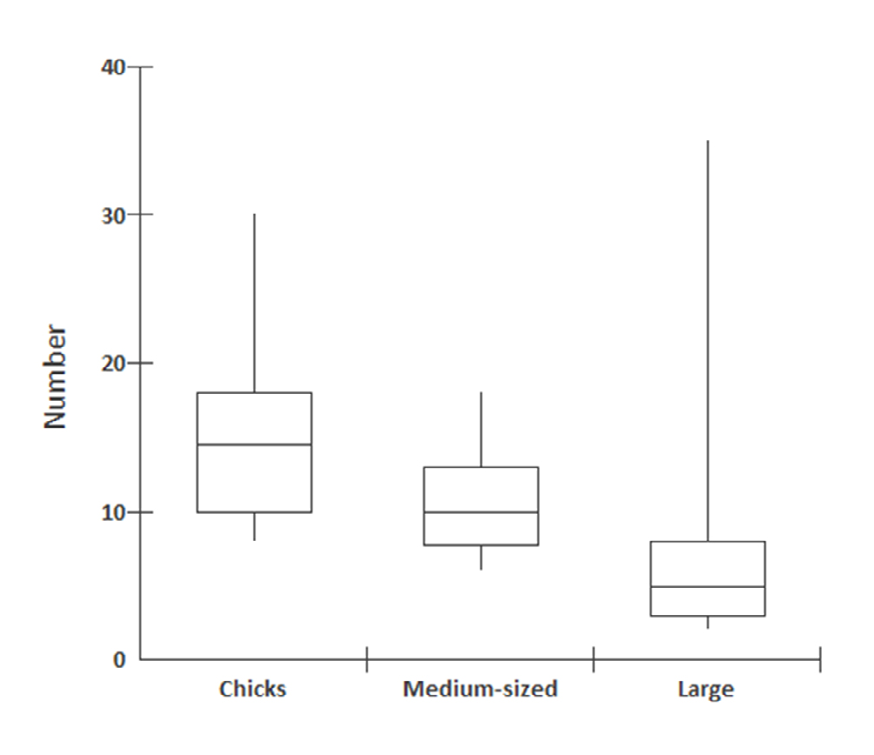
Two records obtained in Goiás allowed to know the number of eggs in nests: 17 and 37 eggs. Further, a total of 57 families had their brood sizes confirmed by the authors of photographs (Appendix). The number of young found per family ranged between 2 and 35 (Table 1). Differences between mean brood sizes of young at different stages of development were highly significant (ANOVA; F = 8.4389; P < 0.001; d.f. = 2). The mean number of chicks found per family was not significantly different from that of medium-sized young. Also, the mean number of medium-sized young found per family was not significantly different from that involving large young. However, the mean brood size of chicks was significantly higher than that of large young (P < 0.05). As a result, there was a tendency of reduction of brood size with young development (Table 1, Figure 5). Brood size of Greater Rhea families was not correlated with human population size or density. For the three developmental categories, correlations were negative, weak and non-significant (Table 2).
| Young category | Number of families | Brood size | |||
|---|---|---|---|---|---|
| Minimum | Maximum | Mean | s.d. | ||
| Chicks | 28 | 8 | 30 | 15 | 5.2 |
| Medium-sized young | 8 | 6 | 18 | 10.9 | 4.3 |
| Large young | 21 | 2 | 35 | 7.9 | 7.3 |
Table 1: Aspects of brood sizes in families of the Greater Rhea (Rhea americana) with an adult male and young of three developmen
Table 1: Aspects of brood sizes in families of the Greater Rhea (Rhea americana) with an adult male and young of three developmental stages in the Brazilian Cerrado. Brood sizes not confirmed by authors were not included in this data set. Records were obtained by citizen scientists between 2009 and 2021, and gathered in the WikiAves database in September 2021.
| Young category/variables | Degrees of freedom | r value | P value |
|---|---|---|---|
| Chicks | |||
| Brood size*Population size | 26 | -0.2623 | 0.1774 |
| Brood size*Density | 26 | -0.0698 | 0.724 |
| Medium-sized young | |||
| Brood size*Population size | 6 | -0.3177 | 0.7432 |
| Brood size*Density | 6 | -0.2212 | 0.5986 |
| Large Young | |||
| Brood size*Population size | 19 | -0.1344 | 0.5613 |
| Brood size*Density | 19 | -0.169 | 0.464 |
Table 2: Values relative to correlations between aspects of human populations and brood sizes in Greater Rhea families found by c
Discussion
Distribution of Breeding Greater Rheas within the Cerrado
Breeding records of Greater Rheas were widespread throughout most of the Cerrado extension, and tended to be more common in its central and western portions than in other regions. This result might involve some factors. First, it might reflect the adaptation of Greater Rheas to the different resources and conditions found throughout the huge Cerrado extension. Further, regional variation in the intensity of citizen activities probably led to some differences in the numbers of records in the several states. Also, Greater Rheas have been intensively hunted for decades in northeastern Brazil [3]. Thus, traditional hunting might have contributed to the scarcity of records of breeding activities in northeastern Cerrado. This region is also marked by stealing of vehicles (pers. observ.), what might discourage birdwatching, with consequent low record production.
Additionally, the high concentration of breeding records of Greater Rheas in municipalities with less than 30,000 humans, and in those with human densities lower than 10 ind./km2, is in agreement with my first hypothesis. This concentration of records in municipalities with relatively lower human abundance might reflect a combination of high birdwatching activities and high abundance of Greater Rheas in these localities. As this result of my study considered only one record per municipality, further studies are necessary to examine how record production in a given municipality is influenced by their abundance and birdwatching activity.
Probably, Greater Rheas will tend to become locally extinct in Cerrado areas with high human concentrations. On the other hand, the states of Mato Grosso, Tocantins, Mato Grosso do Sul and Goiás have human densities of 3.4, 5.0, 6.9 and 17.7 ind./km2, respectively [38, 40], and had relatively high numbers of records. Thus, numerous municipalities within these states might harbor breeding Greater Rheas, and additional effort by citizen scientists might lead to their record in municipalities not involved in this study.
Although conservation units of integral protection are essential for biodiversity conservation in the Cerrado [29, 41], the occurrence of breeding Greater Rheas in this biome could be improved with their persistence in private properties immersed in production landscapes. This is because most records produced by citizen scientists occurred in non- protected areas (see methods). It would be important that landowners keep considerable portions of remnants of native vegetation (mainly grasslands) within their properties. This has been suggested by studies of radio-tracked Greater Rheas conducted in Argentina, as they often rely on native grasslands when living in agroecosystems [14, 15].
Habitat Use
The approach adopted in this study was not adequate to examine quantitatively habitat use or selection by breeding Greater Rheas. This is because I could not know with what frequencies citizen scientists visited different habitats in Cerrado’s landscapes. However, my results indicate that Greater Rheas nest and take care of young in a range of modified land. Nesting in agricultural fields had been reported previously for the Pampa and Patagonia eco-regions [17], while two nests had been found in young eucalypt forest with sparse trees in southeastern Cerrado [11, 42].
Opposing to native grasslands and woodlands, agricultural fields, and active pastures do not have woody layers [19, 33, 43]. Thus, bare-ground, unpaved roads, short grasses and other herbaceous exotic plants might ease the movement by young Greater Rheas through open areas created by humans. This might favor the maintenance of family cohesion during walks through these modified areas. Besides this, the use of open areas might favor vigilance, and lead to food acquisition.
There is a paucity of information regarding aspects of the breeding and habitat requirements of Greater Rheas in the Cerrado. Further knowledge will be necessary for a better conservation of this species through this savanna province. Studies of Greater Rheas within conservation units, and in production landscapes, involving a range of spatial and temporal scales, are desirable. Thus, investigations involving tracking of individuals and/or systematic surveys might improve the knowledge of how Greater Rheas use landscapes during the breeding and non-breeding seasons, as has been done in Argentina [13, 14, 44].
Breeding Season
Data obtained by citizen scientists showed that nesting Greater Rheas were found from the mid- to the late dry season in the Cerrado. Considering an incubation period of about 37 days [4], this occurrence of eggs is in agreement with the detection of chicks some weeks later - between September and December. Similarly, more developed young were recorded by citizens during later periods of the dry and rainy seasons. These results indicate that the approach used in this study was adequate to examine the breeding season of Greater Rheas in the Cerrado.
Citizens have not recorded courtship or copulatory behavior, that would represent the earliest phases of the breeding season. However, the seasonal occurrence of nests with eggs, incubating males, and chicks observed in this study suggests that copulations and courtships might occur, at least, from June to August in the Cerrado. Also, large young with an adult male were recorded along most of the rainy season, indicating the later phases of the breeding season. With this, my study indicates that the breeding season of Greater Rheas in the Cerrado occurs from June to March- April, thus involving most of both the dry and the rainy seasons.
A nesting period during the dry season could be considered an adaptation to avoid egg loss due to natural fire. In the Cerrado, fires start naturally mainly due lightnings in the rainy season, from October [35]. Thus, the period of natural burnings coincides with the post-nesting period of Greater Rheas, giving opportunity for families to avoid injuries or deaths caused by fire by moving throughout landscapes.
On the other hand, fire is usually started in the dry season by farmland owners and park managers [24]. These human- induced fires should be seen as a threat to Greater Rheas, as they can destroy nests and eggs during the dry season. Other potential threat to nesting Greater Rheas in the Cerrado is machinery. This is because agriculture is mechanized and relies on soil management through extensive areas [33], including the nesting period of Greater Rheas. This type of damage to nests and clutches has already been reported for agricultural fields in the Brazilian Pampa eco-region by Codenotti [17]. It is not known if machineries deviate from nests in agricultural fields in the Cerrado.
The findings of my study indicates that the breeding season of Greater Rheas in the Cerrado is comparable to that observed in the Pantanal. This is because young were found mainly between September and November, while reproductive behavior, such as courtship and copulations were recorded in late July in this wetland [9]. In contrast, two nests with eggs were found in October in Cerrado areas located in southeastern Brazil [11, 42]. Similarly, the nesting season of Greater Rheas in grasslands of Argentina occurs mainly in October and November [12, 45]. Also, egg laying occurs even later in the Pampa’s grasslands of southern Brazil - from October to January [17]. Further studies regarding a range of aspects of bird biology and physiology, and seasonal variation in resources and conditions, are necessary to understand what factors lead to this variation in the breeding season of Greater Rheas across South America.
Clutch and Brood Sizes
It is not possible to know if eggs detected by citizens represent complete clutches, as photographs could have occurred during the laying period. However, the finding of nests with 17 and 37 eggs by citizens in the Cerrado is in agreement with previous literature. For example, Folch [37] reported that nests usually have between 13 and 30 eggs, considering the whole geographic distribution in South America. Similarly, it was found that clutches of 20-30 eggs should be considered as usual for Greater Rheas in Argentina and Brazil [3, 45]. Also, it was observed that nests have a mean of 15 eggs in the Pantanal wetland [9], while a nest found in southeastern Cerrado had 17 eggs [11]. Further, nests have 11-30 eggs in temperate grasslands of southern Brazil [17].
As citizens recorded only two nests of Greater Rheas, and eggs were not monitored, this study was not adequate to examine hatching success as extensively done in Argentina [4]. However, my study is the first to report on the number of young found with an adult in Brazil. This is because previous studies of their families conducted in the Pampas and in the Pantanal reported the total number of young involved in the sampling of a given period, but not the number of young accompanying each adult [9, 17]. Even if no families were monitored, comparisons of brood sizes involving young at distinct developmental stages indicated two major facts. As expected, due to deaths of young along time, the mean brood size of less developed young tended to be larger than that of more developed ones. Also, the detection of families having several large young indicates that some of the Greater Rheas could breed successfully.
Brood size of Greater Rhea families was not correlated with human population size or density, considering the three developmental categories of young. This result is not in agreement with my second hypothesis - that brood sizes would be smaller in municipalities with more humans. As most records occurred within municipalities with small population sizes and low densities of humans, it is likely that conditions, resources, ecological interactions, and disturbance by humans are similar within this range of landscapes. For example, most municipalities with records of breeding Greater Rheas might have landscapes with agricultural fields, pastures, remnants of native vegetation, and relatively small urban areas, as typical in Goiás state and surroundings. This might lead to similar resource availability, and predation pressure on young by native animals and domestic dogs in farms. These factors might have contributed to the similarity in brood sizes in the landscapes where Greater Rhea were recorded by citizens. The monitoring of rheas since the nesting period would be necessary to better know aspects of the breeding success of this species in the Cerrado.
Conclusion
Previous investigations of breeding Greater Rheas in the Cerrado reported a single nest [9, 42]. No studies could provide detailed information on their breeding aspects over large spatial scales. In contrast, my study dealt with >100 records obtained by citizen scientists in tens of municipalities during more than a decade. Probably, it would be impossible to obtain this sampling if considering the efforts by scientists and students in the field. This study suggests that data obtained by citizens and available in online databases can be successfully used by professional ornithologists to study Neotropical birds. Therefore, it reinforces recent studies that investigated aspects of the geographic distribution [16, 46] and breeding aspects of land and aquatic birds in Brazil through the use of citizen science data [47, 48, 49, 50].
This study suggests that breeding Greater Rheas are found throughout most of the Cerrado extension, mainly in Goiás, Mato Grosso do Sul, and in adjacent states. Their occurrence in non-protected landscapes is positively influenced by low abundance of human habitants within municipalities. This means that their survival, and breeding, might be possible outside governmental protected areas, since landowners support their persistence within their rural properties. Landowners tend to consider Greater Rheas as charismatic and friendly birds due their large size, non- aggressive behavior, and frequent feeding on animals such as snakes and spiders [3]. This could be considered as an advantage by future educational programs directed towards landowners to encourage even more their conservation and management in private land.
Conflicts of Interest
The author declares that there are no conflicts of interest.
Acknowledgment
Logistic support was provided by Universidade Federal Rural do Semi-Árido. I´m especially grateful to persons that kindly gave permissions to include photographs of their authorship in this paper: Antonino Medina, Fabiano Saar, Ivo Zecchin, Luiz Carlos Rocha and Ramon Cardoso Bezerra. I also thank all citizen scientists that made their photographs of Greater Rheas available in the WikiAves database. Dr Luís Fábio Silveira improved this manuscript with numerous suggestions. Adriano de Campos reviewed the English.
Funding
There was no funding.
References
-
Moleón M, Sánchez-Zapata, José A Donázar, Eloy Revilla, Berta Martín-López, et al. (2020) Rethinking megafauna. Proceedings of the Royal Society B 287: 20192643.
-
Smith FA, Doughty CE, Malhi Y, Svenning J, Terborgh J (2016) Megafauna in the Earth system. Ecography 39: 99-108.
-
Sick H (1997) Ornitologia brasileira. Editora Nova Fronteira Rio. de Janeiro Brazil.
-
Kirwan GM, Korthals A, Hodes CE (2021) Greater Rhea (Rhea americana). In: Keeney BK (Ed.), Birds of the World. Cornell Lab of Ornithology, Ithaca, USA.
-
WikiAves (2022) Mapa de registros da espécie ema (Rhea americana). WikiAves, Rio de Janeiro, Brasil.
-
Roldán A, Rossi VA, Fraire H, Navarro JL, Gardenal CN, et al (2009) Genetic structure of Greater Rhea (Rhea americana) populations in two regions with different land-uses in central Argentina. Emu 109: 214-221.
-
Bazzano G, Giordano PF, Navarro JL, Martella MB (2014) Linking landscape data with population viability analysis for evaluating translocation as a conservation strategy for Greater Rhea (Rhea americana) in central Argentina. Ornitologia Neotropical 25(1): 25-35.
-
BirdLife International (2022) Species fact sheet: Rhea americana. BirdLife, London, UK.
-
Hasenclever L, Reiman C, Mourão GM, Campos ZMS (2004) Densidades, tamanho de grupo e reprodução de emas no Pantanal Sul. Boletim de Pesquisa e Desenvolvimento 55. Embrapa Pantanal, Corumbá, Brazil.
-
Martella MB, Navarro JL (2006) Proyecto ñandú. Manejo de Rhea americana y R. pennata en la Argentina. In: Bolkovic ML, Ramadori D (Eds.), Manejo de Fauna Silvestre en la Argentina, Secretaría de Ambiente y Desarrollo Sustentable, Buenos Aires, Argentina, pp: 168.
-
Azevedo CS, Tinoco HP, Ferraz JB, Young RJ (2006) Unusual nest site for greater rheas (Rhea americana, Rheidae, Aves). Revista Brasileira de Ornitologia 14: 289-290.
-
Bazzano G, Martella MB, Navarro J, Bruera N, Corbella C (2002) Uso de hábitat por el Nandú (Rhea americana) en un refugio de vida Silvestre: implicancias para la conservación y manejo de la especie. Ornitologia Neotropical 13: 9-15.
-
Bellis LM, Martella MB, Navarro JL (2004) Habitat use by wild and captive-reared Greater Rheas Rhea americana in agricultural landscapes in Argentina. Oryx 38: 304- 310.
-
Erize FG, Villafañe IEG (2016) Habitats selected by the endangered Greater Rhea (Rhea americana) – implications for conservation. Emu 116: 379-386.
-
Giordano PF, Bellis LM, Navarro JNL, Martella MB (2008) Abundance and spatial distribution of Greater Rhea Rhea americana in two sites on the Pampas grasslands with different land use. Bird Conservation International 18: 63-70.
-
Miranda EBP (2021) Rhea americana distribution: range expansion and introductions of America´s largest bird. In: Mikkola H (Ed.), Birds-challenges and opportunities for business, conservation and research, p. 1-12. Intech Open, Rijeka, Croacia.
-
Codenotti TL (1997) Fenologia reprodutiva y biometria de nidos, huevos y pollos del Nandú, Rhea americana en Rio Grande do Sul, Brasil. Hornero 14: 211-223.
-
Oliveira OS, Marquis RJ (2002) The Cerrados of Brazil. Ecology and natural history of a neotropical savanna. Columbia University Press, New York, USA.
-
Eiten G (1972) The cerrado vegetation of Brazil. Botanical Review 38: 205-341.
-
Scariot A, Sousa-Silva JC, Felfili JM (2005) Cerrado: ecologia, biodiversidade e conservação. Ministério do Meio Ambiente, Brasília, Brazil.
-
Assad ED (1994) Chuva nos cerrados. Análise e espacialização. Embrapa/SPI, Brasília, Brazil.
-
Castro EA, Kauffman JB (1998) Ecosystem structure in the Brazilian Cerrado: a vegetation gradient of aboveground biomass, root mass and consumption by fire. Journal of Tropical Ecology 14: 263-283.
-
Oliveira-Filho AT, Ratter JÁ (2002) Vegetation physiognomies and woody flora of the Cerrado biome. In: Oliveira PS, Marquis RJ (Eds.), The Cerrados of Brazil. Ecology and natural history of a neotropical savanna, Columbia University Press, New York, USA, pp: 91-120.
-
França H, Ramos-Neto MB, Setzer A (2007) O fogo no Parque Nacional das Emas. Ministério do Meio Ambiente, Brasília, Brazil.
-
Ratter JA, Ribeiro JF, Bridgwater S (1997) The Brazilian cerrado vegetation and threats to its biodiversity. Annals of Botany 80: 223-270.
-
Klink CA, Moreira AG (2002) Past and current human occupation, and land use. In: Oliveira PS, Marquis RJ (Eds.), The Cerrados of Brazil. Ecology and natural history of a neotropical savanna, Columbia University Press, New York, Brazil, pp: 69-88.
-
Diniz-Filho JAF, Oliveira G, Lobo F, Ferreira LG, Bini LM, et al. (2009) Agriculture, habitat loss and spatial patterns of human occupation in a biodiversity hotspot. Scientia Agricola 66: 764-771.
-
Fearnside PM (2001) Soybean cultivation as a threat to the environment in Brazil. Environmental Conservation 28: 23-38.
-
Klink CA, Machado RB (2005) Conservation of the Brazilian Cerrado. Conservation Biology 19: 707-713.
-
Tubelis DP (2019a) Aggregations of Southern Caracaras (Caracara plancus) in soybean plantations in central Cerrado, Brazil. Revista Brasileira de Ornitologia 27: 53- 55.
-
Tubelis DP (2019) Fire management and aspects of the nesting biology of the Red-legged Seriema (Cariama cristata) in woodlands at Parque Nacional das Emas, central Cerrado. Revista Brasileira de Ornitologia 27: 230-237.
-
Tubelis DP (2022) Edge effects and nature reserves: a study of protected birds in grasslands adjacent to agricultural landscapes in a central Brazilian Cerrado. International Journal of Zoology and Animal Biology 5: 000365.
-
Embrapa (2022) Cultivares. Embrapa, Brasília, Brazil.
-
Mistry J (1998) Fire in the cerrado (savannas) of Brazil: an ecological review. Progress in Physical Geography 22: 425-448.
-
Ramos-Neto MB, Pivello VR (2000) Lightning fires in a Brazilian savanna national park: rethinking management strategies. Environmental Management 26: 675-684.
-
Miranda HS, Sato MN, Nascimento Neto W, Aires FS (2009) Fires in the Cerrado, the Brazilian savana. In: Cochrane MA (Ed.), Tropical fire ecology. Climate change, land use, and ecosystem dynamics, Springer Praxis, New York, USA, pp: 427-450.
-
Folch A (1992) Order Struthioniformes. In: Del Hoyo J, Elliott A, Sargatal J (Eds.), Handbook of the birds of the world. Ostrich to Ducks, Lynx Editions, Barcelona, Spain, pp: 76-111.
-
Cidades-Brasil (2022) Cidades do Brasil.
-
Ayres M, Ayres MM, Ayres DL, Santos AS (2007) BioEstat 5.0–Aplicações estatísticas nas áreas das ciências biomédicas. Sociedade Civil Mamirauá/MCT-CNPq/ Conservation International, Belém, Brazil.
-
IBGE (2022) Conheça cidades e estados do Brasil. IBGE, Rio de Janeiro, Brasil.
-
De Luca AC, Develey PF, Bencke GA, Goerck J (2009) Áreas importantes para a conservação das aves no Brasil - Amazônia, Cerrado e Pantanal. SAVE Brasil, São Paulo, Brazil.
-
Costa LM, Freitas GHS, Rodrigues M (2104) Ninho de ema Rhea americana em eucaliptal e comportamento de defesa do macho. Atualidades Ornitológicas 182: 4-7.
-
Tubelis DP, Cavalcanti RB (2000) A comparison of bird communities in natural and disturbed non-wetland open habitats in the Cerrado´s central region, Brazil. Bird Conservation International 10: 331-350.
-
Bellis LM, Martella MB, Navarro JL, Vignolo PE (2004) Home range of Greater and Lesser Rhea in Argentina: relevance to conservation. Biodiversity and Conservation 13: 2589-2598.
-
Fernández GJ, Reboreda JC (2000) Egg losses and nest desertion in Greater Rheas Rhea americana. Ibis 142(1): 29-34.
-
Monsalvo JAB, Silva MA, Heming NM, Marini MÂ (2021) Geographical variation and current knowledge on breeding traits of vultures in the neotropics. Ornithology Research 28: 13-37.
-
Tubelis DP (2020) Breeding biology of the Horned Screamer (Anhima corrnuta) in non-protected areas in the Brazilian Cerrado. Ornithology Research 28: 115- 124.
-
Tubelis DP (2022b) Breeding aspects of the Toco Toucan and the Chestnut-eared Aracari (Aves, Ramphastidae) in the Brazilian Cerrado. International Journal of Zoology and Animal Biology 5: 000358.
-
Tubelis DP, Mendonça LGA, Vieira IKC, Borges K (2020) Breeding and seasonal occurrence of the Orinoco Goose (Neochen jubata) in Brazil. Ornithology Research 28: 105-114.
-
Turella IZ, da Silva TL, Rumpel L, Marini MÂ (2022) Breeding biology of swallow-tailed hummingbird (Eupetomena macroura) based on citizen science data. Ornithology Research 30: 181-189.
- California Red-Legged Frog and Non-Listed Amphibians Response to Non-Native Fish Removal
- Industrial Standardization of the Bio-OS: Algorithmic Codification of Resilience Engineering Guidelines and Version V8 Architecture
- Climate Variability and the Sustainability of Snail Farming in Nigeria: Past Trends, Present Challenges and Potential Outlook
- The Evaluation of the Surveillance System of Anthrax in Gilgit-Baltistan, Pakistan, 2018
- Natural Decline to Extinction of A New Zealand Rabbit Population
- Mitochondrial Bio-Logistics: Steering Co-Enzyme Q10 and Lycopene Synergies within the Science 4.0 Bio-OS Framework