
Embryo Losses in Sheep
In sheep, one of the most efficient strategies to increase the ovulation rate, increasing the number of sheep lambing and litter size is the improvement of the nutritional plane before service. However, some factors have a direct impact on reproductive outcomes, highlighting among them, reproductive losses.
Opinion
In sheep, one of the most efficient strategies to increase the ovulation rate, increasing the number of sheep lambing and litter size is the improvement of the nutritional plane before service. However, some factors have a direct impact on reproductive outcomes, highlighting among them, reproductive losses.
The main causes of losses during pregnancy are embryo deaths (15 - 30% of released oocytes), with deaths during the foetal stage of lesser magnitude (5-7%). Losses can be classified according to the time of their occurrence: fertilization failures, embryo and foetal deaths, and perinatal losses.
Failures in fertilization can be attributed to defects in the gametes, imbalances, or hormonal deficiencies, which vary between 75 and 94%, with food being the factor that most affect it; as well as high levels of parasitic infestation (Haemonchus contortus) or infectious foot diseases (foot-rot) [1].
The assessment of embryo losses through the ratio of the number of corpora lutea and the number of embryos 20 to 30 days later is of little value, given the high percentage of fertilization failures, especially when sheep have a poor- quality diet and/or there is a low allocation of forage [2].
Embryo mortality is defined as losses of concept obtained between conception and the end of the embryo period of differentiation (35-40 days of gestation) [3, 4]. Early embryo death is considered between conception and 20 days, being called late for those that occur after implantation up to approximately 35 days. Early losses account for the largest Opinion percentage of deaths (15 - 30% of released oocytes), while late losses of embryos or foetuses are of a smaller magnitude (5 - 7%).
Morula or embryos that die until day 12 do not cause disturbances in the normal length of the cycle, but those that survive beyond that time prevent regression of the corpora lutea. This would seem to be explained by the rapid elongation of the membranes, which begins on day 12, so deaths result in a delay of oestrus because the secretion of the corpora lutea is maintained until the reabsorption of the membranes is substantially complete [5, 6]. Fertility in this oestrus is lower, associated with a deterioration in sperm transport.
The factors that affect losses: Gamete defect; hormonal imbalance or deficiency; chromosomal abnormalities; ovulation rate; biotype; internal factors (body condition (BC), age, location of the embryo); environmental factors (nutrition, temperature, photoperiod, rainfall stress) and health. The first three factors are of very low magnitude (<10% of losses).
The increase in the number of embryos increases losses due to competition between them for a suitable place in the uterus. In this sense, from ovulation rates higher than four, embryo deaths grow exponentially.
The different organic constitution between sheep breeds confers a better or worse predisposition to the initial settlement of gestation, invoking in this sense possible abnormalities of the embryos themselves and/or failures in the process of maternal recognition of gestation, recognition that implies changes in the immune and vascular systems of the mothers under control, mainly, progesterone. It seems that there would be differences between races in the response to the propellant stimuli of the production and release of progesterone, a hormone closely linked directly or indirectly to the maintenance of gestation. Also, the ovulation rate is closely related to breeding. In prolific genotypes, there is a higher embryo mortality, given by the high ovulation rate.
There is evidence about the lower survival of embryos in very low birth weight sheep. When animals have good or high body weights, there is agreement among researchers that live weight per se does not affect embryo survival. BC is more related to the nutritional status of sheep than live weight. It determines reproductive performance. BC determines changes in the ovulation rate and fertility of sheep. Fertility, a result of the rate of fertilization and embryo survival, is lower in sheep of condition 2.25. Fertility of sheep of regular body condition (2.25 to 2.75) is closely related to embryo losses.
Embryo mortality is higher in hogget than sheep due to hormonal imbalance, which also leads to lower fertilization percentages and lack of uterine development. In ewe lambs, low plasma progesterone levels could increase embryo losses in situations of severe sub-nutrition.
Usually, the embryo is fixed on the uterine horn on the ovulation side, allowing this a local relationship between the ovary and the gravid horn. The embryo in this way has a luteotropic effect, which if migrating to the opposite side of ovulation can be diluted determining luteolysis.
Sub-nutrition before and during service causes high levels of embryo mortality before implantation. Sub- nutrition is that it causes alterations in the implementation of mechanisms that ensure implantation and embryo survival. Sub-nutrition duration and not the time of application was the determinant of embryo survival. The first deaths are recorded in sheep gestating twins, which first lost an embryo and with time both. High nutritional levels, close to 200% maintenance in the first two weeks of pregnancy, reduce the concentration of progesterone in plasma, being able to reach in some breeds, levels close to the critical threshold for the survival of the embryo.
In ruminants, a deficiency of selenium, a nutrient related to vitamin E, reduces fertility. The reproductive performance of sheep can be decreased by deficiencies of It associated with embryo mortality three to four weeks after conception. Administration of Se in sheep improves fertility and prolificacy by administering three weeks before service. In lambs, the administration at the beginning of the service, embryo deaths are reduced and fertility is improved at 6-7 months of age (77.5 vs 59.0%).
High temperatures markedly affect embryo deaths altering both oocyte maturation, implantation, and embryo growth. High temperatures in interaction with high ambient humidity determine abnormalities at the sperm level that lead to increases in embryo mortality. Sperm subjected to elevated temperatures first lose the ability to spawn a viable embryo and then the power to fertilize.
In temperate climates, photoperiod affects embryo deaths through progesterone deficient levels in spring, associated with poor-quality ovulations. This effect occurs through a smaller size of the corpora lutea formed, resulting in lower levels of progesterone in the blood.
Abundant rainfall (>100 mm) blocks heat, reduces ovulation rate, and increases early embryo mortality. If they are accompanied by low temperatures (cold climates) stress increases, which increases losses. Probably the stress of the rain acted at the hypothalamic level. Stress activates the neurons producing GABA (gamma-amino-butyric acid) inhibiting the secretion of GnRH, blocking the preovulatory peak and therefore ovulation.
Gastrointestinal parasite indirectly affects the body condition of animals and inhibits feed intake. However, the parasite levels of some nematodes (Haemonchus sp) reduce ovulation rate (15 to 20%) and increase embryo deaths 3 or 4 times. This determines high losses in fertility and prolificacy.
The mixed bacterial ethology caused by Dichelobacternodosus and Fusobacterium necrophorum (Foot-rot) is a disease that determines a rapid loss of body condition of animals. In sheep with a score of 3 (1 to 5), very high embryo deaths occur (70%).
Toxoplasmosis is an infectious disease (Toxoplasma gondii) that causes embryo and foetal mortality, abortions, stillbirths, and births of weak lambs. There are others such as Enzootic sheep abortion (Chlamydia psittaci) and Campylobacter foetus var. Intestinalis. Toxoplasmosis infection in sheep determines the interruption of gestation of most sheep that were in the first month of pregnancy, with very high losses between the second and third month (> 70%) and lower incidence when the infection began in the fourth or fifth month of gestation (< 25%).
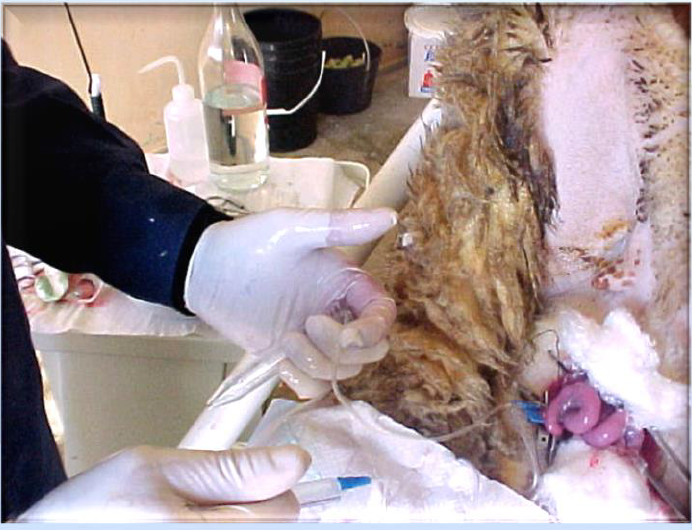
In conclusion, embryo losses are affected by several factors that interact with each other, but gastrointestinal parasitosis, by affecting all reproductive parameters, is the most relevant factor, as they reduce the percentage of fecundity even in well-fed sheep. The management of body condition, food, and health before service is key to reducing embryo and foetal losses, thus capitalizing on the genetic potential of the flock (Figure 1).
References
-
Fernandez Abella D (2006) Embryo and foetal mortality in sheep. I. Effect of different parasitic levels and their interaction with feeding on embryo losses and fertility. Producción Ovina (SUL) 18: 25-31.
-
Fernandez Abella D, Formoso D (2007) Embryo and foetal mortality in sheep II. Effect of body condition and stocking rate on embryo and foetal losses. Producción Ovina (SUL) 19: 5-13.
-
Fernandez Abella D (2007) Embryo and foetal mortality in sheep. III. Effect of forage allocation and artificial rainfall stress on ovulatory rate and reproductive losses in Corriedale sheep. Producción Ovina (SUL) 19: 15 -23.
-
Fernandez Abella D (2008) Embryo and foetal mortality in sheep. IV. Effect of artificial and natural rainfall stress on ovarian activity and reproductive losses. Producción Ovina, (SUL) 20: 21-29.
-
Fernandez Abella D (2015) Biotecnología Reproductiva en Bovinos y Ovinos. Ed. Hemisferio Sur.. Montevideo. Uruguay, pp: 2000.
-
Fernandez Abella D (2023) Effect of foot-rot on embryo mortality in Polwarth sheep. 46° Congreso Argentino de Producción Animal. RAPA. Pergamino. Buenos Aires. Argentina.
- California Red-Legged Frog and Non-Listed Amphibians Response to Non-Native Fish Removal
- Industrial Standardization of the Bio-OS: Algorithmic Codification of Resilience Engineering Guidelines and Version V8 Architecture
- Climate Variability and the Sustainability of Snail Farming in Nigeria: Past Trends, Present Challenges and Potential Outlook
- The Evaluation of the Surveillance System of Anthrax in Gilgit-Baltistan, Pakistan, 2018
- Natural Decline to Extinction of A New Zealand Rabbit Population
- Mitochondrial Bio-Logistics: Steering Co-Enzyme Q10 and Lycopene Synergies within the Science 4.0 Bio-OS Framework