
Measure To Control Of Parasitic Infections of Swine in Commercial Farm
Parasitic infections cause significant losses to swine production in the farm system. Aim of our work is to presented measures to control parasitic infections at farms breeding swine. The basic measures that were developed and applied were: 1. Use the principles of good production and hygiene practices, 2. Management of the production process, 3. Parasitological diagnostics 4. Application of antiparasitic drugs 5. Strict compliance with biosecurity measures 6. General animal hygiene measures 7. Pest control and disinfection 8. Control of stray dogs and cats on the farm and control of birds 9. Removal of corpses 10. Removal of waste 11. Educational program. The application of this integrated control concept of parasite infection required systematic monitoring of infection on farms and slaughterhouses before and after the applied measures. During the control before the application of the measures, then six months later, the results obtained showed a reduction in the prevalence of parasitic infections by over 80%. Certainly, the complexity of the problem required the involvement of all relevant entities, primarily veterinary services, from farms to slaughterhouses.
Introduction
Today’s industrial pig production is based on the implementation of biosecurity measures, as well as solving environmental problems, which significantly burden production [1, 2]. Today a large number of diseases that are present on industrial-type pig farms can be kept under control by applying prophylactic and therapeutic measures, as well as by increased control of professional services [3, 4, 5, 6, 7, 8].
In addition, parasitic infections are constant present at pig production, regardless of the method of keeping. Caused by several parasitic species, they threaten the health of animals and cause significant economic losses due to lower growth, reduction in body weight of fattening animals and loss of daily gain, poorer feed conversion, etc [9, 10, 11, 12, 13, 14, 15, 16, 17, 18, 19, 20, 21, 22, 23, 24, 25, 26, 27, 28, 29, 30, 31, 32]. Finally, large economic losses occur in the meat industry due to condemnation of damaged organs or carcasses during meat inspection [11, 17, 33, 34]. In addition to the direct harmful effect on pigs and the large economic losses, same parasites species are significant zoonoses important to human health [12, 17].
Research conducted in countries that are the largest producers of pork meat and use the most modern technology has determined a high percentage of the presence of parasites. On farms in the USA the prevalence was 23% [7]. In Europe, the presence of the parasite was found on 25–35% of farms in Denmark, 35% in Netherlands, 13% and in farms in Norway and Sweden and 5% of farms in Iceland and Finland [5, 29, 31]. Research from China, which is the largest producer of pork in Asia, indicated a prevalence of parasitic infection on 16% of farms [34]. In Brazil, the leading producer of pork in South America, it was up to 36%. Research was also done in Africa, but the problem is that there the way of keeping is semi-extensive or with minifarms, so these results are not comparable with the results obtained in industrial keeping with large agglomerations pig [6]. Based on inspections performed on a large number of farms in Serbia, we found that the prevalence of parasitic infections is in the range of 12-32% [2, 13, 14, 21, 22, 23, 27]. From these reason aims of our research was to determine optimal measure to control parasitic infections of swine in commercial farm.
In our paper presents a brief overview of the new technical solution “Pig parasitic infection control program in the production chain from the breeder to the consumer” verified by the Main Scientific Committee for Biotechnology and Agriculture of the Ministry of Education, Science and Technological Development of the Republic of Serbia on 9/23/2022 [26].
Materials and Methods
Farms
Parasitic infection control measures were applied to commercial pig farms, starting from the second half of 2016. The examined has included 4 farms with a capacity of 700 breeding sows and had a closed production cycle. Piglets raised on farms were placed in cages or boxes with a wire floor or with a floor made of perforated plastic, while fattening pigs were in boxes with a grid floor. Feeding was done with a complete feed mixture for individual production categories from automatic feeders (ad libitum). These farms are linked by ownership and mutual animal rotation are common. The production is quite extensive and cycle takes place in a cascade so that an average of five months pass from farrowing to the end of fattening. So, in that period, the restoration of the herds is done and it is the period when hygiene measures are carried out in the facility, here we introduce parasitological control of animals, and then the parasitological control is started for every new production cycle.
Parasitology Diagnostic
In order to establish the prevalence of infections and the biodiversity of parasites we collected samples of feces and skin scarification from all categories of pigs. Number of samples depends of number of pigs in examined farms and we use it 10% from each production category. During examination we processed 120 samples from suckling piglets (from 0 to 28 days of age), 124 from rearing piglets (from 28 to 75 days) 148 samples, pigs from fattening (from 75 to 150 days of age) and 98 from breeding animals (gilts, sows and boars). In total we examined 490 faces and 490 scarification samples to manage from all categories of pigs.
Coprological examinations in pigs are performed by the methods of Patakij, Stoll and McMaster, as well as the modified methods of Whitlook and Euzeby. Considering the high fecundity of females of certain species of helminths (Ascaris suum) to assess the infection, we used the subjective method of descriptive description according to McMaster, while taking the correction factor described by Kelly and Smith as well as the counting method according to Stoll with the correction factor (coefficient 2 for softened feces, 3 for diarrhea and 4 for completely liquid feces). In brief: An amount of 3 grams of fecal matter were suspended in 1,200 g/mL sodium chloride solution. For each sample, 2 grams of was weighed, crushed using single use spoon and 50 ml of flotation solution was slowly added. After stirring, the fecal sample solution was poured through one layer of sterile gauze. The solution was left on a gauze for a couple of minutes. The strained sample solution was drawn up using a Pasteur-pipettes and the two McMaster chambers were filled. In 5 minutes, parasite eggs were counted from both chambers [35]. Examination for ectoparasites (scabies) is performed by taking scarifications and examining them by boiling with KOH. The sample is placed on a slide and 5 drops of 10% potassium hydroxide or normal saline are added. The sample is covered with a cover slip and visualized under a microscope for the presence of mites, larvae, or ova. The determination of parasite eggs and parasite adults is done morphometrically according to the keys given by Euzeby [3] and Pavlovic, et al. [23]. Determination of oocysts and eggs of parasites and adult parasites was made of morphometric characteristics. Molecular identification of Cryptosporidium spp. was not performed. Examinations we performed with Carl Zeiss AxioLab A1 microscope with the Axiocam 105 Color microscope camera and Zen Lite software. Simultaneously with laboratory examinations, parasitology examinations were carried out during the necropsy of dead animals at farms and in swine on the slaughter line.
The same methodology and number of samples was used during the first parasitological control of farms as during each of the subsequent controls (six months after deworming and introduction of parasitological control measures and one year after introduction of these measures).
Parasites Control
During the investigation of the parasitological situation, the goal was to determine all parasitic species that are found on farms, and not just one target species. Adequate control can only be carried out by taking a complete look at the parasite fauna of pigs and the prevalence of infection with established parasite species.
On the basis of the obtained results, it started eradication of parasitic infections on each of the farms using the same procedures and antiparasitics. Since ivermectin and amprolium have shown the best effects in the control of parasitosis in farm practice, they are still used during our study.
For this purpose of control of helminth and ectoparasites, ivermectin was given mixed in food in a peroral daily therapeutic dose of 3 ppm/kg of body weight (1.5 g of powder-3 mg of ivermectin-per 10 kg of body weight), according to the manufacturer’s instructions [14]. For breeding animals ivermectin were given by injection (1mml/33kg). These preventive measures of application of ivermectin, along with parasitological control, entered in the regular program of preventive health control on all farms. The use of ivermectin preparations is common and established on farms to control parasitic infections.
For therapy of protozoa infection, we use amprolium at 10 kg 25% premixed per ton of feed to decrease oocyst shedding according to the manufacturer’s instructions.
In order to control infections, preparations based on ivermectin were given in food and by injection to breeding animals. Six months after the implemented of measures on farms we performed a second parasitological control using the same methods. After the second control, a third was done six months later based on the recommendation of the North American Pet Pig Association [1].
Implementation of Program to Control of Parasitic Infection
At the same time a new concept of work was applied on all farms which includes: • Adherence to the principles of good production and hygiene practices The problem of transmission of parasitic infections from older to younger categories of pigs on farms arises during the keeping of pigs in other facilities of the farm, where breeding animals become infected with ecto and endoparasites, and they bring it into the farrowing house and infect the piglets immediately after parturition [8, 14]. For these reasons, their control is approached from several aspects that are essentially connected into one whole. Breeding animals should be de- parasited before being introduced into the farrowing house. Good results were always achieved when it was possible on the farms, after weaning the piglets and transferring them to other technological stages of production, it was impossible to mix piglets from different litters in the same pens, thus preventing the potential spread of parasites from infected litters. Groups in the nursery were formed from piglets from the same litter (with the cage system), or from piglets from neighboring litters (when rearing piglets in group boxes) [8, 17, 18].
• Management of the production process Management of the production process in the farrowing house has a significant impact on the health status of the piglets [5, 6]. Given that piglets are born without protective antibodies, efforts were made to suck colostrum immediately after birth and thus acquire passive natural immunity that will protect them in the first weeks of life against various infectious agents. But this moment is also the initial point of infection of piglets with infectious forms of parasites (protozoa, helminths, worms) in case the sows were not cleaned from parasites before being introduced into the farrowing house. They are then cascaded through all production segments from rearing to fattening or breeding animals [16].
• Strict compliance with biosecurity measures In order to properly define biosecurity protocols, biosecurity measures themselves are classified into external and internal. The objective of external measures is to prevent the entry of infections into the farm and to reduce the risk of introducing infections with daily routine measures. The basis is the observance of the concept “all in, all out”, as well as by preventing contact between different production groups of pigs. As part of this program, an inter-round break, i.e. the so-called “facility rest” which had beneficial effects. In addition to these measures, biosecurity measures related to the transport of animals, proper storage of garbage and harmless disposal of carcasses are also very important.
Internal biosecurity measures are defined in all biosecurity protocols on farms, through sanitary procedure plans that are continuously implemented. A sanitary procedure plan is made individually for each facility, depending on the capacity of the facility, construction and technical characteristics and type of production [24].
• Regular parasitological diagnostics Preventive coprology examination and dermatological diagnostics should include all animals on the farm and on individual holdings with a larger number of animals and should be performed at least twice a year in all age and production categories [29]. For fattening animals and breeding cows on the farm, the same principles apply - regular and periodic controls. Also, newly acquired breeding animals must undergo parasitological control twice during their stay in quarantine [22]. It is recommended that when giving fattening material for cooperative fattening, it must be controlled for the presence of parasites, as well as fattening material purchased for service fattening [8].
• Application of antiparasitic medicines Antiparasitics are applied to all animals on farms where parasite infections have been established. Preventive antiparasitic therapy is applied cyclically on farms that have had successful control of parasitic infections [14, 30, 31]. The purpose of this application is to prevent the introduction of parasitic agents into the farm and maintain the current status of the farm [27, 32].
• General animal hygiene measures General hygiene measures primarily involve keeping production facilities in a clean state, especially farrowing and rearing areas [8, 9]. In general, the general disinfection procedure of farms is first reduced to mechanical cleaning. After the mechanical cleaning is completed, sanitary washing is used to remove the rest of the dirt. Only after that, chemical disinfection is carried out [18, 19]. After finishing the cleaning of the building, all roads inside the economic yard of the farm are cleaned.
• Pest control and disinsection This includes measures to remove rodents. In addition to the application of chemical rodenticides, it is necessary to undertake construction technical and preventive measures in order to reduce the entry of rodents into farm facilities. Disinsection of buildings should be carried out continuously, bearing in mind the presence of a large population of insects, primarily flies, in the buildings themselves and in the immediate surroundings [8, 9]. These activities are performed by professionally trained persons.
• Control of stray dogs and cats on the farm and control of birds The presence of non-owned animals, dogs and cats, is a frequent phenomenon on a large number of farms and on individual farms with a large number of animals. Access to farm facilities should be denied to these animal species [25]. The control of birds found on pig farms and on individual farms with a large number of animals (pigeons, sparrows, starlings, swallows, crows, magpies, etc.) must be rigorously implemented, considering that they can be carriers of infectious material [20].
• Removal of corpses The removal of corpses from production facilities was the duty of employed workers. On the farms, there were built cooling chambers or containers for the collection of pig carcasses from the farm, i.e. all materials belonging to category 1. Their processing was carried out in rendering plants [2, 8].
• Removal of waste The location of the manure pit within the farm and on individual farms with a larger number of animals and manure management organizations provide a lot of information about the level of biosecurity and employee awareness. The application of digestion, solarization or any other acceptable form of biological degradation is considered desirable, and they are very important for raising the level of biosecurity on the farm [10].
• Educational program The training of veterinarians who provide health care for pigs was carried out during each visit to the stations, and as part of the contractual cooperation. Special emphasis is placed on the application of good veterinary practice.
Data Analysis
Descriptive statistic data are presented as average positive percentage of samples among the same age group with graphic representation.
Results and Discussions
During the investigation of the parasitological situation, the goal was to determine all parasitic species that are found on farms, and not just one target species. Adequate control can only be carried out by taking a complete look at the parasite fauna of pigs and the prevalence of infection with established parasite species. Before application of the program to control of parasitic infection, the average prevalence of parasitic infections on the examined farms was as follows:
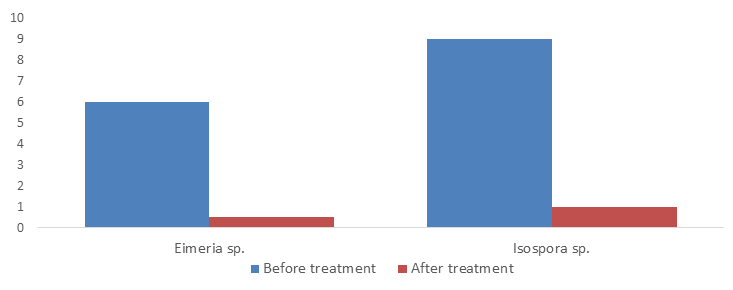
- Suckling piglets (from 0 to 28 days of age): Eimeria spp. was 6% and Isospora suis 9%.
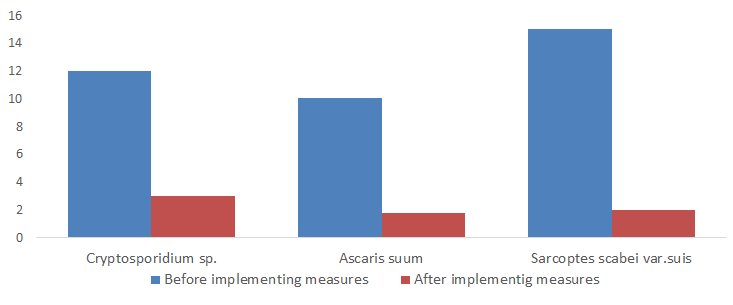
- Rearing piglets (from the 28th to the 75th day): Cryptosporidium spp. 8%, Ascaris suum 10%. Scabies caused by Sarcoptes scabiei var. suis we found in 15% of pigs of this age.
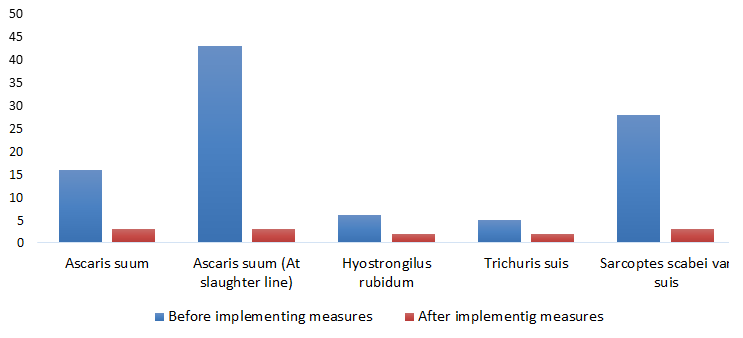
- Fattening pigs (from 75 to 150 days of age) Ascaris suum 16%, Hyostrongylus rubidus 6% and Trichuris suis 5%. On the slaughter line, ascariasis was found in 43% of pigs. Scabies caused by Sarcoptes scabiei var. suis we found in 29% of pigs of this age.
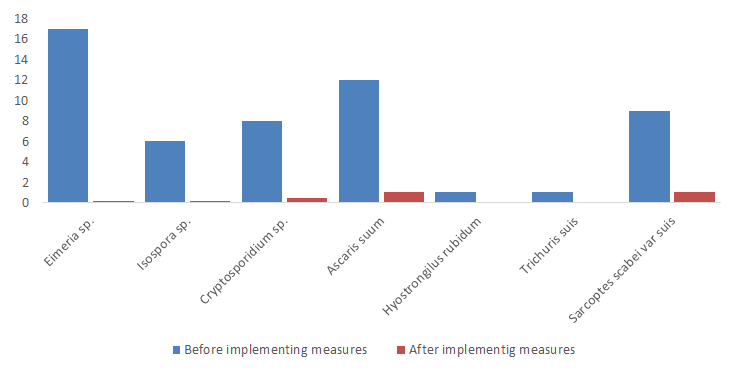
- Breeding animals (gilts, sows and boars): Eimeria spp. 17%, Isospora suis 6%, Cryptosporidum spp. 8%, Ascaris suum 12%, Hyostrongylus rubidus 3% and Trichuris suis 3%. Scabies caused by Sarcoptes scabiei var. suis we found in 9% of pigs of this age.
Six months after implementation of program to control of parasitic infection and second parasitology control on farm were obtained the following results: • suckling piglets (from 0 to 28 days of age): Eimeria spp. 0.3%, and Isospora suis 1% (Figure 1).
• Rearing piglets (from the 28th to the 75th day): Cryptosporidium spp. 3%, Ascaris suum 1.5%. Scabies caused by Sarcoptes scabiei var. suis we found in 2% of pigs of this age (Figure 2).
Fattening pigs (from 75 to 150 days of age) Ascaris suum 2% Hyostrongylus rubidus 1% and Trichuris suis 1%. On the slaughter line, ascariasis was found in 3%. Scabies caused by Sarcoptes scabiei var. suis we found in 2% of pigs of this age (Figure 3).
Breeding animals (gilts, sows and boars): Eimeria spp. 0.3%, Isospora suis 02%, Cryptosporidum sp 0.6%, Ascaris suum 1%. Scabies caused by Sarcoptes scabiei var. suis we found in 1% of pigs of this age (Figure 4).
Overall Importance of Most Prevalent Parasite Findings
Adult worms of A suum may appreciably decrease the growth rate of young pigs; in rare cases, the worms may cause mechanical obstruction of the intestine. Migration of larvae through the liver causes hemorrhage, fibrosis, and accumulation of lymphocytes seen as white spots (called milk spots) under the capsule, leading to condemnation of the liver at slaughter [5, 27, 29].
The diseases coused by parasites from genus: Eimeria, Isospora and Cryptosporidia are common and widespread in sucking piglets and occasionally in pigs up to 15 weeks of age. Diarrhoea is the main clinical sign. Isospora species are coccidians within the Apicomplexa, and are most closely related to the genus Eimeria. Both Eimeria and Isospora are highly host specific. The most significant difference between Eimeria and Isospora is that the latter may use a paratenic host in its life cycle, whereas the former does not. Isospora suis is the most important coccidian of pigs around the world. Clinical disease associated with Isospora species is known as coccidiosis. Several species of Eimeria can also infect pigs, and although they have occasionally been associated with clinical disease in older pigs, compared to I. suis they are currently believed to be relatively less important as the animals grow. The Cryptosporidia parasites are furthermore linked in multiclausal enteropathies as the key pathogen. It’s also worth mentioning that Cryptosporidia are zoonotic agents as well [22, 28, 31].
Sarcoptic mange, caused by infestation with Sarcoptes scabieisuis, is of large importance in pigs worldwide. Unless pigs originated from specific pathogen-free (SPF) colonies or after mange eradication programs, for trade purpuses all pig herds should be considered potentially infested even if acaricides are used routinely. Experimental studies of S. scabieisuis in pigs have demonstrated that infestation alters the microbial community on the skin. Lesions due to infestation with S. scabieisuis usually start on the head, especially the ears (resulting in head shaking), then spread over the body, tail, and legs. Itching can be intense and associated with an allergic hypersensitivity reaction to the mites. Hypersensitivity mange results in raised papules, erythema, and intense itching and occurs more frequently in fattening pigs. In a small number of older pigs, hyperkeratotic mange develops, which, while less pruritic, results in gray to white patches on the skin and in the ears. Infestations are negatively correlated with daily weight gains and feed conversion in pigs [3, 14, 19]. It should be pointed that every pig farm are profit oriented and that never the less any parasitic infection or infestation directly subdues income for the farmer and/or farm owner. The animals with challenged health status lead to greater indirect losses due to lower growth, reduction in body weight of fattening animals and loss of daily gain, poorer feed conversion etc. [28, 30, 32]. The other significant part of the problem are found at the abattoir where damaged organs or carcasses during meat inspection are held and destroyed [11, 17, 34, 35]. For the last, maybe the most important, factor in regards to parasites are that some of those may induce illness in humans, which are significant zoonoses important to human health [12, 17].
Conclusions
With the flexible cooperation of farm owners/individual breeders with professional services (veterinary stations, institutes), with respect and implementation of expert knowledge, and the application of a series of biotechnical measures and emphasizing the prevention of swine diseases, with the aim of promoting the good health of swine, it is possible to improve production and suppress the presence of parasitic infections. Biosecurity, welfare, good production practice and risk analysis at critical control points are very important elements for intensive swine production. The planned application of biosecurity measures is crucial in protecting and control parasitic infection of swine and the success of production.
- Conflicts of Interest The author states that there is no conflict of interest.
- Acknowledgements Funding: The study was funded by the Serbian Ministry of Science, Technological Development and Innovation (Contract No. 451-03-47/2023-01/200030).
References
-
Annonimus (2023) North American Pet Pig Association, Parasite Control.
-
Bojkovski J, Pavlović I, Savić B, Rogožarski D (2012) Contribution to knowledge biosecurity on pigs farms industrial type. Bull Univ Agric Sci Vet Med Cluj-Napoca 69 1-2: 305-308.
-
Bojkovski J, Prodanov-Radulović J, Prodanović R, Vujanac I, Nedić S, et al. (2018) Common pig disease on comercial farm, a review. Lucr Sti Med Vet Timisoara LI 3: 14-327.
-
Euzeby J (1981) Diagnostic Experimental des Helminthoses Animales, Tom 1. ITVS Paris.
-
Joachim A, Dülmer N, Daugschies A, Roepstorff A (2001) Occurrence of helminths in pig fattening units with different management systems in Northern Germany. Vet Parasitol 96 (2): 135-146.
-
Kumsa B, Kifle E (2104) internal parasites and health management of pigs in Burayu District, Oromia Regional State, Ethiopia. South Af Vet Assoc 85 (1): 1-5.
-
Li Y, Hernandez A, Carr R, Dukes S, Lou M, et al. (2020) PSVIII-21 Parasite prevalence and fecal egg counts on organic pig farms. J Anim Sci 98(3): 221.
-
Lončarević A, Markić Z, Toševski J, Pavlović I (1997) Basics of systematic health monitoring and programming of pig health care. In: Lončarević A (Ed.), Health care of pigs in intensive breeding. NIVS, Belgrade, Serbia.
-
Hudina V, Pavlović I, Rikson M, Kulišić Z, Minć S (1995) Hygienic measures used to prevent parasitic infections in the farrowing house. Abstract of XIV consultations on disinfection, disinsection and pest control in environmental protection with international participation, Subotica, SRY, pp: 329-341.
-
Jakić-Dimić D, Pavlović I, Savić B (2007) The liquid waste/slurry of swine farms, ecological problem of environmental contamination and its control. Biotech Anim Husb 23 (3-4): 109-118.
-
Knecht D, Jankowska A, Zalesny G (2012) The impact of gastrointestinal parasites infection on slaughter efficiency in pigs. Vet Parasitol 184: 291-297.
-
Kipper M, Andretta I, Monteiro SG, Lovatto PA, Lehnen CR (2011) Meta-analysis of the effects of endoparasites on pig performance. Vet Parasitol 181: 316-320.
-
Pavlović I, Lončarević A, Ivetić V, Kulišić Z, Markić Z, Tosevski J (1995) Sort and distribution of parasitary infestation in swine farms breeding. Mac Vet Rev 24 (1- 2): 69-72.
-
Pavlović I, Kulišić Z, Vujić B (1997) Parasitic Diseases. In: Lončarević A (Ed) Health care of pigs in intensive breeding. NIVS, Belgrade, Serbia, pp: 157-202.
-
Pavlović I, Lazarević M, Trifunović M, Cvetković A, Čukić M, et al. (2002) Our experiences in the oral administration of Ivermectin in the therapy of endoparasitosis in pigs. Vet Glasnik 56 (3-4): 211-219.
-
Pavlović I, Hudina V, Minić S, Rikson M, Pupavac S, et al. (2004) Preventive measures in the control of parasitic infections in farm pigs. Zbor Nauč Rad Instit PKB Agroekonomik 10(2): 87-89.
-
Pavlovic I, Ivanovic S (2005) Zoonotic parasites contaminants of meat. Scientific Institute of Veterinary Medicine of Serbia and Ministry of Agriculture, Forestry and Water Management Republic of Serbia, Belgrade.
-
Pavlović I, Ivetić V, Savić B, Kulišić Z, Hudina V, et al. (2007) Zoohygiene measures used in the control of parasitic infections in breeding pigs. XVIII Symposium of DDD and environmental protection with international participation, Grza, Serbia, pp: 57-62.
-
Pavlović I, Kulišić Z, Hudina V, Savić B, Ivetić V, et al. (2008) Zoohygiene measures used in the control of swine scabies. XIX Symposium of DDD and environmental protection with international participation, Prolom Banja, Serbia, pp: 217-219.
-
Pavlović I, Ilić Ž, Vojinović D, Jakić-Dimić D (2008) Hygiene and health aspects of free-ranging birds in the city center. Ecolog. 15:125-28.
-
Pavlović I, Ivetić V, Savić B, Žutić M, Radanović (2009) Current parasitic diseases in pig production. Seventh Symposium on Pig Health Care, Selection and Reproduction, Srebrno Jezero, Serbia, pp: 53-56.
-
Pavlović I (2010) Protozoal infections of pigs in farm breeding. Vet Inform 33: 26-27.
-
Pavlović I, Bojkovski J (2012) Monitoring of parasitic infections in pig farms. Vet Inform 48: 36-37.
-
Pavlović I, Rogožarski D (2017) Parasitic diseases of domestic animals with the basics of parasitology and diagnostics of parasitic diseases. Naučna KMD, Belgrade.
-
Pavlović I, Janković Lj, Plavša N, Todorović D (2021) Biosecurity measures in the control of dogs, cats and birds on farms in order to suppress parasitic zoonoses. 31 and 32 Symposium of DDD and environmental protection with international participation, Vrnjačka Banja, Serbia, pp: 155-159.
-
Pavlović I, Stanojević Sl, Zdravković N, Stanojević S, Radanović O, et al. (2022) Pig parasite infection control program in the production chain from breeder to consumer. A new technical solution applied at the national level, financed by the Ministry of Education, Science and Technological Development of the Republic of Serbia, Belgrade, Serbia.
-
Pavlović V (1999) Pig ascariasis. Graduation Thesis, PKB Agricultural School, Belgrade, Serbia.
-
Pettersson E, Sjolund M, Dorea FC, Lind EO, Grandi G, et al. (2021) Gastrointesinal parasites in Swedish pigs: prevalence and associated risk factors for infection in herds where animal welfare standards are improved. Vet Parasitol 295: 1-8.
-
Pettersson E, Sjölund M, Wallgren T, Osterman Lind E, Johan Höglund J, et al. (2021) Management practices related to the control of gastrointestinal parasites on Swedish pig farms. Porci Healt Manag 7: 12.
-
Roepstorff A, Jorsal SE (1990) Relationship of the prevalence of swine helminths to management practices and anthelmintic treatment in Danish sow herds. Vet Parasitol 36(3-4): 245-257.
-
Roepstorff A , Nilsson O, Oksanen A, Gjerde B, Richter SH, et al. (1998) Intestinal parasites in swine in the Nordic countries: prevalence and geographical distribution. Vet Parasitol 76(4): 305-319.
-
Vandekerckhove E, Vlaminck J, Sacristan R, del P, Geldhof P (2018) Effect of strategic deworming on Ascaris suum exposure and technical performance parameters in fattening pigs. Vet Parasitol 268: 67-72.
-
Weng YB, Hu Y J, Li Y, Li BS, Lin RQ, et al. (2005) Survey of intestinal parasites in pigs from intensive farms in Guangdong Province, People’s Republic of China. Vet Parasitol 27(3): 333-336.
-
Zimmerman JJ, Karriker AL, Ramirez A, Schwartz JK, Stevenson WG, et al. (2019) Diseases of Swine, Eleventh Edition. John Wiley & Sons, Inc., Hoboken.
-
Lyons MA, Malhotra R, Thompson CW (2022) Investigating the free-roaming dog population and gastrointestinal parasite diversity in Tulúm, México. PLoS ONE 17(10): e0276880.
- California Red-Legged Frog and Non-Listed Amphibians Response to Non-Native Fish Removal
- Industrial Standardization of the Bio-OS: Algorithmic Codification of Resilience Engineering Guidelines and Version V8 Architecture
- Climate Variability and the Sustainability of Snail Farming in Nigeria: Past Trends, Present Challenges and Potential Outlook
- The Evaluation of the Surveillance System of Anthrax in Gilgit-Baltistan, Pakistan, 2018
- Natural Decline to Extinction of A New Zealand Rabbit Population
- Mitochondrial Bio-Logistics: Steering Co-Enzyme Q10 and Lycopene Synergies within the Science 4.0 Bio-OS Framework