
The Dynamics of Crop-Raiding Activity of African Elephant (Loxodonta cyclotis) at the Periphery of Mount Cameroon National Park, Southwest Region, Cameroon
Human-elephant conflict is common on cropland due to human encroachment into wildlife habitat, a serious conservation challenge in many countries in sub Saharan Africa. Though, a variety of conflict management strategies have been taken for mitigation, the impact is not much, crop-raiding is still increasingly alarming especially in mount Cameroon national park periphery due to increase in human settlement. The main objective of this study was to assess the crop-raiding activity of elephants in the national park. Data collection method was focused on sampling the affected village communities by monitoring the feeding and foraging activities of elephants on cropland. The research data collection was done for a period of four months, during this period, elephants were monitored and their feeding and foraging activities were recorded from 8:00 am – 6:00 pm on different cropland. However, the study revealed crop-raiding behavior of the elephants significant, X2 = 18.55 df=8 P=0.017, X2 = 17.64 df=8 P=0.024, X2 = 10.04 df=8 P<0.05, X2 = 9.10 df=8 P<0.05 on photo-period, landscape, elephant trails, and affected villages respectively. Maize (Zea mays) 30%, cassava (Manihot escaulenta) 24%, and banana (Musa acuminata) 21% were the most raided crops by the elephants, while oil palm (Elaeis guineensis) 15% and plantains (Musa sapientum) 10% were the least. More so, cropland destruction distance from human residence recorded a significance, X2 = 29.75 df=20 P<0.05, and X2 =46.34 df=10 P=0.000 on farm-size estimate, and the day-period respectively. The destruction of cropland by the elephants was done during the morning, afternoon, and evening periods respectively and the most frequent distance of destruction from human homes, above 100 meters recorded 28%, and 81-100 meters recorded 15% respectively. Though, the scale of destruction was rated low 51%, and high 34% respectively, it was still very high (15%) in some farms. Humanelephant conflict at the periphery of mount Cameroon national park can be mitigated with elephant translocation to other national parks within the country.
Introduction
As elephant populations reach unsustainable densities [1] and their range decreases due to greater human activity, there is an increase in crop raiding which suggests a relationship between problem elephant behavior and land transformation that excludes elephants [2, 3]. For instance, in Uganda’s Kabarole District, where Kibale National Park is located, wildlife habitat is comprised of islands and corridors surrounded by cultivated fields. Where agricultural settlements were once isolated within wildlife habitat, beyond the park’s boundaries, wildlife habitat is now disappearing rapidly. Even though wildlife habitats are severely limited, farmers within 1 km of the park complain vehemently about crop loss. Near the park, the greatest predictor of crop damage was proximity to the forest edge [4].
In Laikipia District in northern Kenya, the spatial occurrence of crop raiding was based on distance from permanent water sources and protected areas. Raiding was most intense in sites with minimal medium levels of crop cover and less intense in areas with maximum crop cover. Thus, small-scale farmers with patchy cultivation, which is usually due to inhospitable climate conditions, are more vulnerable to crop depredation than those who have fields with some sort of barrier [5]. Though there is not a great deal of research concerning crop raiding in forest and savanna zones in West Africa, crop raiding is particularly intense in this region because most elephant protected areas are encircled by dense human populations [6].
Crop-raiding is the most prevalent example of human elephant conflict. Problem elephants are identified as those that extend their range into areas inhabited by humans, usually to feed on cultivated crops, but they may also damage water installations, food stores, village structures, and may, on occasion, injure or kill people [7]. Several studies examining problem elephants and their crop-raiding behavior have drawn similar conclusions, namely that elephants consume cultivated crops because of spatial constraints and because they seek the nutrients provided by those crops. Elephant damage is not evenly distributed within a given area, and there is broad inter year variation on an area that sustains a large amount of damage one year may not experience a similar level of damage the next [8]. Though elephants may cause significant damage at the local level [9], their regional impact on agriculture is insignificant compared to other vertebrate and invertebrate pests.
Communities and/or farms near a forest or protected area boundary, a migration route, or a water source suffer a disproportionate amount of damage [4, 10]. In fact, elephants have shown they have a strong sense of spatial awareness and are able to distinguish between safe forest and dangerous farmland. Elephants are more likely to raid along boundaries rather than going deep into farming areas because the risk of detection is lowest in areas that serve as a buffer between protected areas and areas cleared for cultivation [8]. Mosojane S [10] found the percentage of the field damage decreased as the area of cultivation increased. He attributes this to an edge effect elephants penetrate the entire field because these smaller agricultural patches are surrounded by and may blend in with the natural vegetation. In larger patches elephants generally raid only those crops closest to the edge, and the crops in the middle are less vulnerable.
The Banyang Mbo Wildlife Sanctuary in Cameroon is a prime example of an isolated protected area, with 44 villages in close proximity to the sanctuary [4]. Nchanji AC, et al. [11] studied crop raiding in three of these villages. They found elephants preferred to raid specific fields and villages because the fields were close to the sanctuary or because they preferred the vegetation surrounding the location: 67% of the fields were over 3 km from the village, and 70% were at the edge of the secondary forest or were actually enclave within the forest. Overall, the damage was highly localized at the village and field levels. Thus, it seems fields closest to a protected area, especially those with preferred vegetation, are most likely to be raided [4].
In some areas, there are seasonal fluctuations in crop raiding that coincide with food availability and crop maturity, the greatest amount of crop damage is sustained when crops approach maturity [8]. Foods consumed by wild elephants have been determined to be lower in minerals and protein than cultivated crops [12, 13]. As optimal foraging theory predicts, animals will maximize the quality of their nutrient intake whenever possible [14]; therefore, it is plausible that elephants raid crops to supplement diets deficient in required nutrients [15]. Elephants may also be prompted to raid crops because secondary chemical compounds influence elephant food preferences [16, 17, 18] and crops are more highly digestible than wild forage [15]. Osborne [19] found a seasonal pattern to crop raiding in the Sebungwe region of Zimbabwe when elephants appeared to select food based on nutritional quality rather than availability. Crop raiding coincided with the period when elephants were transitioning from grass to browse at the end of the late wet season. During this transitional period, the moisture content of wild grasses decreases, and they become more coarse and fibrous, when these desiccated grasses were ingested, they wear down the teeth more quickly and lower digestive efficiency. Similarly, in Botswana in the Okavango Panhandle and the southern part of the delta, there is a general trend of raiding when the cultivated crops approached maturity at the end of the rainy season [10, 20]. When elephants damaged fields early in the wet season, it was due to trampling as they sought watermelon intercropped with millet (Pennisetum glaucum), beans (Tylosema esculentum), and maize (Zea mays) [10]. These studies indicate crop raiding may begin around this time because cultivated crops maintain their nutritional quality and are less fibrous while the quality of the grasses is declining. Chiyo PI, et al. [21] studied elephants’ responses to bananas (Musa paradisiaca) and maize to determine temporal raiding patterns. Banana plantations yield fruit throughout the year, but the maize is only available when it ripens at the beginning of the dry season. Though there was no fluctuation in the level of banana raiding, maize and other annual crops were raided after they matured in the dry season, which is, incidentally, a period when food availability is lower and the quality of natural forage declines and may even fall below levels necessary for maintaining body weight.
Human-wildlife relationship is known to generate conflict mainly due to human population increase with poor family planning strategies that give way to encroachment into the wildlife habitat, especially in sub-Saharan Africa. Human conflict with elephants on cropland in some parts of Cameroon has placed the conservation stakeholders into many mitigation challenges. However, all the mitigation efforts made by the government on the situation yielded very little results due to huge financial budgets needed to handle some expensive strategies such as translocation of the elephants to distance national parks with low or no crop- raiding conflict. Mount Cameroon national park is reportedly rich in elephant population, however, a new elephant population management plan is necessary to contain the conflict.
Materials and Methods
Description of the Study Area
Mount Cameroon national park lies at the coast of Gulf of Guinea, between latitude 3°57’ - 4°27’ N and longitude 8°58’-9°24’E (Figure 1). Climatically, the area is dominated by equatorial climate of high rainfall and moderate tropical temperature. Average monthly temperatures are like any other part of the region, with the hottest month recording a monthly temperature of 33ºC (February-March) and the coldest months recording as low as 23ºC (June–October) [22]. Two major seasons exist in the area, the rainy and the dry seasons. In the past, the rainy season occurred from March, extending to October and dry season from November to February each year. But due to the present climatic change problem, the rainy season extends up to October and December. Biodiversity richness of mount Cameroon national park area has been threatened over the years mainly due to the rich volcanic soils which attract the development of agro- businesses [23].
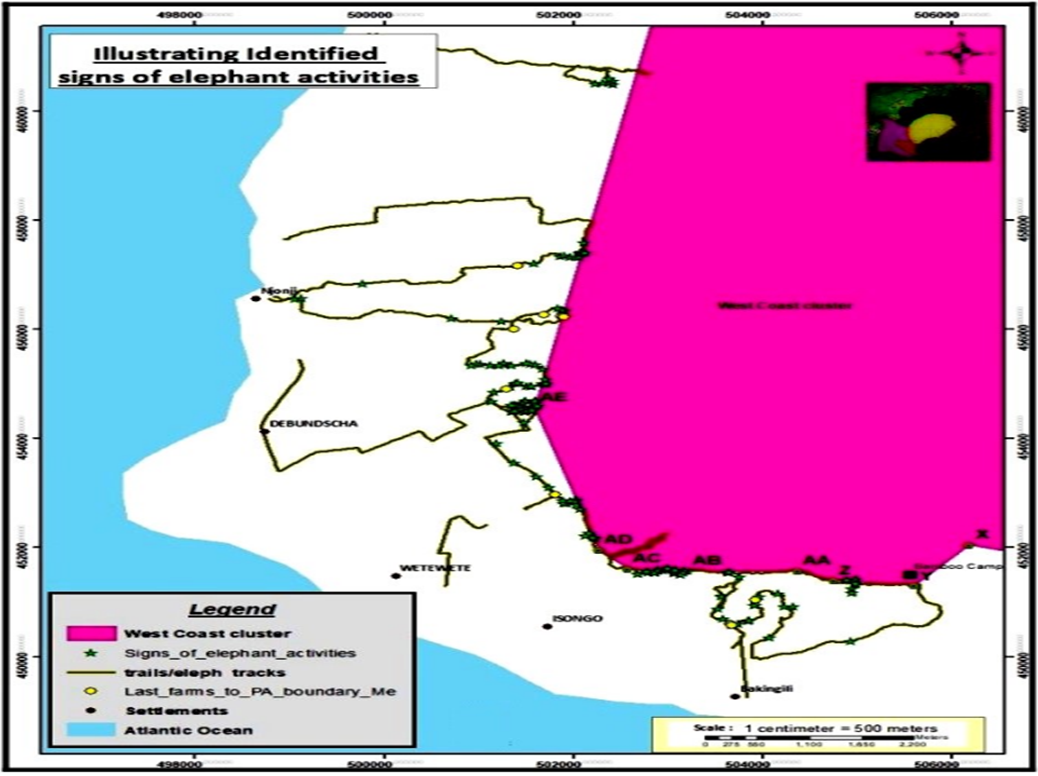
Mount Cameroon national park is a home to a wide range of wildlife species such as drill (Papio leucophaeus), chimpanzee (Pan troglodytes), putty-nosed monkey (Cercopithecus nictitans), mona monkey (Cercopithecus mona), red-eared monkey (Cercopithecus erythrotis), red- cap mangabey (Cercocebos torquatus), Preuss‟ guenon (Cercopithecus preussii) and crowned guenon monkey (Cercopithecus pogonias). However, the population of drills and chimps is fast dwindling due to hunting pressure and habitat loss. The forest elephant (Loxodonta africana) is one of the keystone species of the area. A survey carried out in 2003 indicates a population of 176 elephants in the national park [24].
Methods of Data Collection
The field research started with a pilot study to test the methods to be used for the research. The exercise witnessed adjustment of some variables on the check-sheet not possible for data collection [25]. Hence, the data collection program started in the month of February and ended in May. Three villages severely crop-raided by the elephants were chosen for research data collection and the crop-farms which were raided were maize, cassava, banana, oil palm, and plantain. The elephants were monitored at a distance of about 100m during their crop-feeding periods and data was recorded. Data recording was also carried out on elephant trails, photo- period, habitat, landscape, crop destruction distance from human homes, human-elephant conflict villages, and the cropland destruction rate. The four months data collection period witnessed a two-week-data-collection program, each month from 8:00-6:00pm each day.
Data Analysis
The research data was analyzed using SPSS version 25, and all the variables and sub variables tested against others by using exploratory and inferential statistics models such as chi-square (X2) and correlation. Ecological parameters such as photo-period, elephant trails, landscape, distance of crop destruction by the elephants from human residential houses, and the rate of cropland destruction were tested on crop- raided activity of the elephants in the sample area.
Results
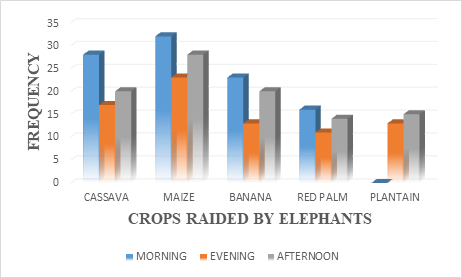
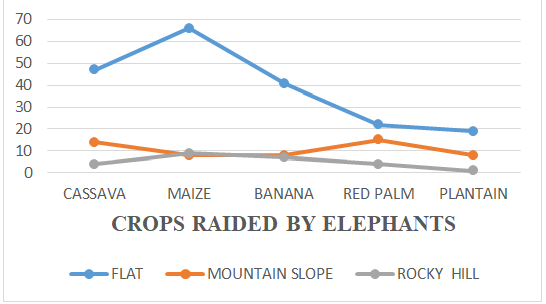
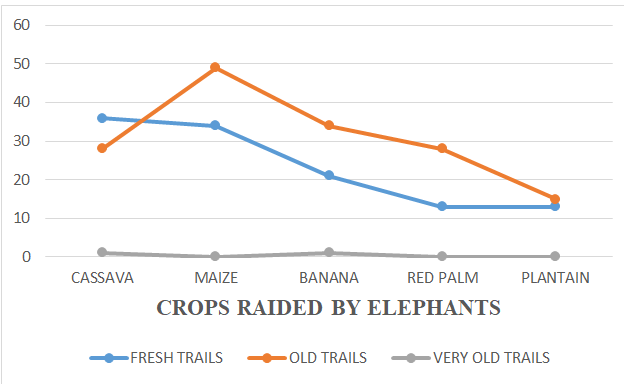
The study revealed a significance of crop-raiding behavior of elephants, X2 = 18.55 df=8 P=0.017, X2 = 17.64 df=8 P=0.024, X2 = 10.04 df=8 P<0.05, and X2 = 9.10 df=8 P<0.05 on photo-period (Figure 2), landscape (Figure 3), elephant trails (Figure 4), and affected villages (Figure 5) respectively. Food consumption in all living organisms is the major source of energy to sustain body metabolism and survival, hence a body without enough food would record a shutdown of body activities and consequently dies. In wildlife species, such as elephants with huge body mass, more time is spent during their daily activity on feeding in order to continuously activate the body metabolism. Elephants are herbivorous animals and can consume more than 100kg of food per day, making elephants the greatest feeding terrestrial animals on earth. Elephant populations are known to travel from one country to another covering thousands of kilometers in search of food especially during prolonged dry seasons that sometimes dry up vegetation, causing shortages of elephant food and also reduces atmospheric moisture, exposing the elephants to extreme body temperature challenges. In some protected areas with huge elephant populations, artificial water-craters are constructed by the management authorities and are regularly filled up with water to facilitate elephant-body mudding in reducing body temperature.
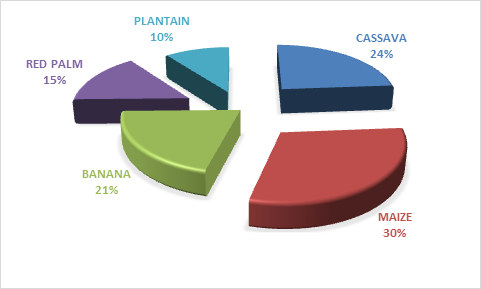
Maize (Zea mays) 30%, cassava (Manihot escaulenta) 24%, and banana (Musa acuminata) 21% were the most raided crops by the elephants, while oil palm (Elaeis guineensis) 15% and plantains (Musa sapientum) 10%
were the least (Figure 5). The taste and digestion of crops like maize and cassava might be easier for the elephants compared to oil palms and plantains. More so, some of the crops are seasonal and more elephant activities were recorded during this period. However, elephant crop-raiding in this area of mount Cameroon national park is not seasonal, though elephant feeding activities were more during the presence of seasonal crops like maize.
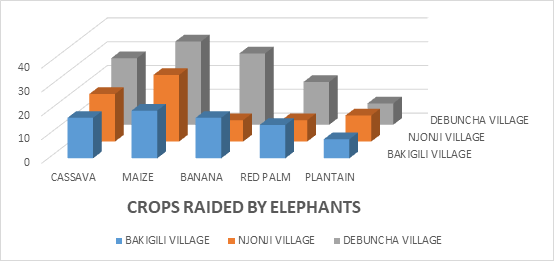
The most affected villages by elephant activity during crop-raiding are Debundscha and Njonji known to be more distance from the city of limbe compared to Bakigili. Limbe is one of the cities in the southwest region of Cameroon that witnessed a huge increase in human population caused by an unprecedented socio-political Anglophone crisis. Hence, most of the villages, administratively under this municipality have been equally overstretched by an exponential human population rise creating enormous challenges to the management of the rainforest of mount Cameroon national park.
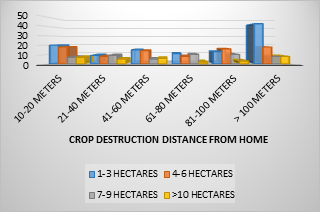
More so, the crop-destruction distance from human residence recorded a significance, X2 = 29.75 df=20 P<0.05, and X2 =46.34 df=10 P=0.000 on farm-size estimate (Figure 7), and the day-period (Figure 8) respectively. The farming activity in the periphery of mount Cameroon national park is done in large monoculture industrial scale and small subsistence individual farming. However, it’s very clear that the human population increase in the area matches with the increase in farming activities. Recently, much building land was ceded to the inhabitants of the municipality by the large-scale-crop-cultivation company (CDC). Nonetheless, some crop-farms have witnessed elephant crop-raid with very close proximity to human residential homes. The unprecedented feeding behavior of elephants has triggered emotional devastation and psychological problems to the inhabitants.
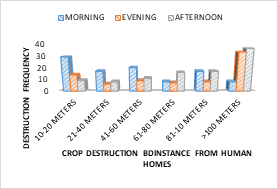
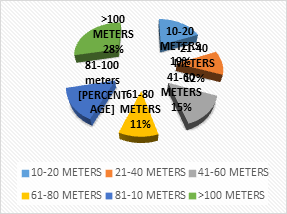
The destruction of crops was done during the morning, afternoon, and evening periods respectively and the most frequent distance of destruction from human homes, above 100 meters recorded 28%, and 81-100 meters recorded 15% respectively (Figure 9). Crop-raiding by radicalized hostile wild elephants at close proximity to human residence must be avoided with a resettlement conservation strategy in the affected areas. Otherwise, casualties would drastically increase with devastating consequences that might attract international conservation implication.
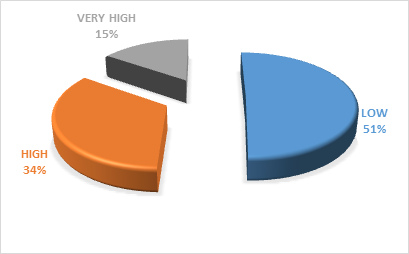
Though, the scale of destruction was rated low 51%, and high 34% respectively, it was observed very high (15%) in some farms (Figure 10). Nonetheless, the destruction of crops on farmlands by wild elephants must be treated with exigency by the conservation stakeholders.
Discussion
In general, many people living in rural communities suffer the costs of living with wildlife, but do not realize the benefits from it [26]. People’s perceptions of wildlife are significant because in areas where human-elephant conflict occurs, a reduction in elephant range often follows [1, 27]. Conservationists and wildlife managers must recognize there are opportunity costs that go beyond crop damage, including competition for water sources, restricted human activity, and the need to guard agricultural fields, which may impact the amount of sleep a farmer gets, school attendance, opportunities for employment, and exposure to malaria [27]. If people are asked to tolerate too much, they will seek solutions that could jeopardize the long-term security of elephant populations even if these elephants inhabit protected areas.
Elephants have increased contact with humans due to changes in land-use (fragmentation of habitats because land is converted for crop cultivation, settlement, and livestock grazing) [28]. The human landscape has expanded into areas that were previously occupied by wildlife for several reasons. In some areas, state-sponsored and voluntary settlement programs were enacted to encourage pastoralists to take permanent residence in areas that were not being used by human populations. Since these areas are often environmentally marginal, agriculture has been rather unproductive. Farms have become more isolated in these areas as localized soil degradation has compelled farmers to plant in scattered mosaics farther from villages [28]. As a result, the human-elephant interface expands and creates a land-use pattern conducive to elephant foraging [1, 29].
There has also been human migration as rural residents move to more urban areas in search of employment. When they abandon their fields, they leave a configuration of farmland scattered with early successional forests that attract elephants [30]. Other rural areas have had greater interaction with elephants because they have altered the environment, artificially maintained water sources attract elephants during times of drought and logging brings elephants in closer proximity to humans because elephants forage on the secondary vegetation that moves in after the disturbance [31, 32, 33, 34]. Additionally, canals and cattle fences have blocked traditional migration routes [35], and humans have settled along the boundaries of protected areas. Though the area of interface is expanding, modern socioeconomic conditions have reduced human tolerance to elephant presence [4].
Since natural wildlife habitat has been lost, measures have been taken to create protected areas, but local people have not always met this decision favorably. National parks created under colonial governments were established to exclude local people and protect the areas as wildlife sanctuaries. As a result, these landscapes became frozen in time. This exclusion led to local people resenting wildlife, especially dominant wild species like elephants, because native people thought animals enjoyed economic, land- use, and political advantages that were unavailable to them [6]. This has contributed to determinedly hostile attitudes towards elephants [5]. Though only 20% of elephants’ range is legally protected [36], to reduce tensions regarding protected areas, local people sometimes are given farmland in areas that had previously been elephant habitat. The habitat is disturbed as the people cut forest trees to establish farmland, which may actually be within the boundaries of a park.
Elephants, already in confined habitats, come under increasing pressure as the human population makes use of scarce resources for firewood and construction materials [37]. For example, in Kenya, the Maasai people graze their cattle within the boundaries of national parks, especially Amboseli National Park. There are disputes over access to the park’s vegetation, timber, and water. As water has become increasingly available via boreholes, livestock herds have grown, and tensions have mounted as herders, farmers, and wildlife depend on the same resources [38]. This also holds true for the East Caprivi region of Namibia where as many as 5000 elephants can be found in the dry season, reaching a maximum density of 3 elephants/km [39]. The elephants range beyond the parks, competing with local communities for food, space, and water resources that are at a premium [26].
As conflicts over land-use persist, it is clear that land- use decisions affect elephant density. Though Parker ISC [40, 41] argue that elephant abundance depends on human abundance, and elephant densities decline linearly as human density increases [29] assert elephant and human density does not have a linear relationship; rather, the condition of the natural habitat is the more significant factor in determining elephant density. When human density reaches a threshold of about 15.6 persons/km it upsets the critical balance between agricultural land cover and natural habitat, it is at this point that about 40-50% of the land is used for human activity. At this threshold, elephant density declines sharply, not because elephants are dying in situ, but because they must leave in search of less disturbed habitats. The threshold hypothesis is significant because it implies that converting land for human use could lead to a more precipitous and less reversible local decline in elephant density than previously predicted when relying on the linear model. Hoare and du Toit caution, however, that though the threshold hypothesis can be applied to savanna elephants, it cannot necessarily be extrapolated to forest elephants because ecological requirements and human land-use differs in forested regions [29].
If a farmer suffers crop damage due to elephant raiding, it can be devastating for an individual household. With the disintegration of collective farming, subsistence farmers are especially vulnerable because their landholdings are usually small; they have no land to buffer them from contact with wildlife; and they cannot afford to hire guards for their fields [4, 42]. Farmers who own relatively large farms of greater than 5 ha are best able to cope with incidents of crop raiding because their entire field will not be damaged during a crop- raiding incident [10] the size of their plots enables them to plant less palatable crops near the forest, which serves as a buffer zone; or they can lease the most vulnerable land closest to the forest. Those who have small fields (<1 ha) and grow crops along the border of the forest on land are the most vulnerable and experience crop losses more often [43]. Therefore, calculating the percentage of crops lost does not provide a good framework for determining the impact of depredation because some farmers can absorb greater losses than their neighbors [4].
Conclusion
Human-wildlife conflict is a longstanding relationship that had advantaged and disadvantaged both human and wildlife. Protected area management in Cameroon and other countries in sub Saharan Africa witnesses a lot of conflicts generated by human encroachment into wildlife habitat and increase in human population, with poor family planning strategy, subsistence crop-farming has grown. Crop-raiding activity generated by wildlife population has been among the areas that humans and wildlife have faced enormous conflict. Some countries have re-settled village communities far from wildlife population to reduce regular contact rates with humans, and compensation is often given to human victims involved in crop-damage to reduce conflict tension. However, this conservation strategy is not used by some countries, though, their wildlife population is often on a head-on-collision relationship with humans. The periphery of mount Cameroon national park is fertile, with a rich vegetation cover and a huge wildlife population, the elephant conflict identity is alarmingly significant. Crop- raiding behavior of elephants has recently taken the center stage of human-wildlife conflict in this area. Villagers have taken the fore front of the battle, struggling to push elephants back to the wild, using all kinds of affordable deterrents measures to stop the elephant feeding and foraging activities on their cropland. Consequently, casualties on both side of the conflict often occur, justifying a mitigation conservation strategy such as compensation of the affected villages on a possible re-settlement plan, and translocation of some of the elephants to distant protection areas.
References
-
Lahm SA (1996) A nationwide survey of crop-raiding by elephants and other species in Gabon. Pachyderm 21: 69-77.
-
Sukumar R (1991) The management of large mammals in relation to male strategies and conflict with people. Biological Conservation 55(1): 93-102.
-
Barnes RFW, Asika S, Asamoah-Boateng B (1995) Timber, cocoa and crop-raiding elephants: a preliminary study from southern Ghana. Pachyderm 19: 33-38.
-
Naughton L, Rose R, Treves A (1999) The social dimensions of human-elephant conflict in Africa: a literature review and case studies from Uganda and Cameroon. A Report to the African Elephant Specialist, Human-Elephant Task Conflict Task Force, of IUCN, Glands, Switzerland.
-
Lee PC, Graham MD (2006) African elephants (Loxodonta africana) and human-elephant interactions: implications for conservation. International Zoo Yearbook 40(1): 9-19.
-
Anderson D, Grove R (1987) Conservation in Africa: people policies and practice. Cambridge: Cambridge University Press. Barnes, R.F.W. 1999. Is there a future for elephants in West Africa?. Mammal Society 29: 175- 199.
-
Hoare RE (1999b) Determinants of human-elephant conflict in a land-use mosaic. Journal of Applied Ecology 36: 689-700.
-
Natural Resources and People (NRP) (2007) Okavango Delta Management Plan, Component 5: Wildlife Management-Human Elephant Conflict. Final Report for the Department of Wildlife and Natural Parks, Gaborone, Botswana.
-
Dudley JP, Mensah Ntiamoah AY, Kpelle DG (1992) Forest elephants in a rainforest fragment: preliminary findings from a wildlife conservation project in southern Ghana. African Journal of Ecology 30: 116-126.
-
Mosojane S (2004) Human-elephant conflict along the Okavango Panhandle in northern Botswana. MSc Thesis. Department of Zoology and Entomology. Pretoria, University of Pretoria.
-
Nchanji AC, Lawson DP (1998) A survey of elephant crop damage around the Banyang Mbo wildlife sanctuary 1993-1996. Cameroon Biodiversity Project and Wildlife Conservation Society, Yaounde, Cameroon.
-
Sukumar R (1989) The Asian elephant: ecology and management. Cambridge University Press: Cambridge.
-
Osborn FV (1998) Ecology of crop raiding elephants in Zimbabwe. Ph.D. dissertation. University of Cambridge.
-
Begon M, Harper JR, Townsend CR (1986) Ecology: individuals, populations and communities. Blackwell Scientific Publications: Oxford.
-
Rode KD, Chiyo PI , Chapman CA, McDowell LR (2006) Nutritional ecology of elephants in Kibale National Park, Uganda, and its relationship with crop-raiding behaviour. Journal of Tropical Ecology 2: 441-449.
-
Omondi, POM (1995) Chemical composition of preferred and non-preferred elephant food plants in Mt. Kenya Forest Reserve, Kenya. M.Sc. thesis. University of Reading, UK.
-
Seydack AH, Vermeulen C, Huisamen J (2000) Habitat quality and the decline of an African elephant population implications for conservation. South African Journal of Wildlife Research 30: 34-42.
-
Milewski AV (2002) Elephant diet at the edge of the Fynbos Biome, South Africa. Pachyderm 32: 29-38.
-
Osborn FV (2004) Seasonal variation of feeding patterns and food selection by crop-raiding elephants in Zimbabwe. African Journal of Ecology 42: 322-327.
-
Marchais J (2005) Research report on human elephant conflict in the Okavango Kopano Mokoro Community Trust villages (NG 32), Ngamiland, Botswana. Living with Elephants Foundation, Maun, Botswana.
-
Chiyo PI, Cochrane EP, Naughton L, Basuta GI (2005) Temporal patterns of crop raiding by elephants: a response to changes in forage quality or crop availability. African Journal of Ecology 43: 48-55.
-
Limbe City Council (2014) The Limbe City Council Report.
-
Cheek M, Cable S, Hepper FN, Ndam N, Watts J (1994) Mapping plant biodiversity on Mount Cameroon. In. Van der Maasen LJG, Vander Burgt XM et al. (Eds.), The biodiversity of African plants. Proceedings XIVth AETFAT Congress, Wageningen, The Netherlands. Kluwer Academic Press, Dordrecht, pp: 110-210.
-
Ekobo A (2003b) Elephant monitoring in the Mount Cameroon region, Report to WWF.
-
Maurice ME, Blessing NT, Veronique M, Ebong EL, Moumine NA, et al. (2022) Organic Waste-Dumps: A Food Subsidy to the Wild-City Birds in Limbe, Southwest Region, Cameroon. Environ Pollut Climate Change 6: 283.
-
Connell Rodwell O, CE Rodwell, Rice TM, Hart LA (2000) Living with the modern conservation paradigm: can agricultural communities co -exist with elephants?. A fiveyear case study in East Caprivi, Namibia. Biological Conservation 93: 381-391.
-
Hoare RE (2000) African elephants and humans in conflict: the outlook for co-existence. Oryx 34 (1): 34-38.
-
Nelson A, Bidwell P, Sillero-Zubiri C (2003) A review of human-elephant conflict management strategies. People and Wildlife Initiative. Wildlife Conservation Research Unit, Oxford University. Elephant Conflict PandW Manual.
-
Hoare RE, du Toit JT (1999) Coexistence between people and elephants in African savannas. Conservation Biology 13 (3): 633-639.
-
Houghton RA (1994) The worldwide extent of land-use change. Bioscience 44: 305-313.
-
Sukumar R (1990) Ecology of the Asian elephant in southern India. Feeding habits and crop raiding patterns. Journal of Tropical Ecology 6: 33-53.
-
Thouless CR (1994) Conflict between humans and elephants on private land in northern Kenya. Oryx 28: 119-127.
-
Sutton WR (1998) The costs of living with elephants in Namibia. Cooperative Regional Wildlife Management in Southern Africa.
-
Barnes RK, Jensen, A Blom (1991) Man determines the distribution of elephants in the rain forests of northeastern Gabon. African Journal of Ecology 29: 54 -63.
-
Kangwana K (1995) Human-elephant conflict the challenge ahead. Pachyderm 19: 11-14.
-
Said MY, Chunge R, Craig GC, Thouless, Dublin HT, et al. (1995) The African elephant database. IUCN: SSC Occasional Paper No. 11, IUCN, Rue Mauverney 28, CH- 1196 Gland, Switzerland.
-
Yeager R, Miller NN (1986) Wildlife, wild death: land use and survival in Eastern Africa. State University of New York Press: Albany.
-
Hart LA, Connell CE (1998) Human conflict with African and Asian Elephants and associated conservation dilemmas. Center for Animals in Society in the School of Veterinary Medicine and Ecology Graduate Group. University of California, Davis.
-
Rodwell TC, Grobler M, Tagg J (1995) Wildlife resources in the Caprivi, Namibia: the results of an aerial census in 1994 in comparison with past surveys. Directorate of Environmental Affairs, Ministry of Environment and Tourism. Windhoek ,Namibia.
-
Parker ISC, Graham AD (1989a) Elephant decline: downward trends in African elephant distribution and numbers Parts I and II. International Journal of Environmental Studies 34(13-26): 287-305.
-
Parker ISC, Graham AD (1989b) Men elephants and competition. Symposia of the Zoological Society of London 61: 241-252.
-
Bell RHV (1984) The man-animal interface an assessment of crop damage and wildlife control. In: RHV Bell, E McShane-Caluzi (Eds.), Conservation and Wildlife Management in Africa. U.S. Peace Corps Office of Training and Program Support, Malawi, pp: 387-416.
-
Naughton Treves L (1998) Predicting patterns of crop damage by wildlife around Kibale National Park, Uganda. Conservation Biology 12(1): 156-168.
- California Red-Legged Frog and Non-Listed Amphibians Response to Non-Native Fish Removal
- Industrial Standardization of the Bio-OS: Algorithmic Codification of Resilience Engineering Guidelines and Version V8 Architecture
- Climate Variability and the Sustainability of Snail Farming in Nigeria: Past Trends, Present Challenges and Potential Outlook
- The Evaluation of the Surveillance System of Anthrax in Gilgit-Baltistan, Pakistan, 2018
- Natural Decline to Extinction of A New Zealand Rabbit Population
- Mitochondrial Bio-Logistics: Steering Co-Enzyme Q10 and Lycopene Synergies within the Science 4.0 Bio-OS Framework