
Prevalence of Helminths in Backyard Poultry in the Community of Valles Blanco, Cuba
Creole hen production is essential for the rural peasant population as a source of income and a way to guarantee food security in these communities. The objective of this study was to determine the prevalence of helminths in backyard poultry in the community of Valles Blanco, Villa Clara, Cuba. Poultry keepers in an extensive production system were visited and a semistructured interview was applied in the study setting. Twenty-six birds were analyzed out of a total population of 350, distributed in three yards, to which a dissection of the gastrointestinal tract was performed, making a cut at the esophagus level and another at the cloaca level, and the content was observed in a dark bottom container. The presence of parasitic agents in the backyard poultry population in the area studied is associated with sanitary gaps, such as scarce specialized technical assistance, lack of knowledge on the part of farmers about parasitic forms, their vectors, prevention and control. Backyard poultry showed high extensiveness and intensity of parasitic invasion by nematodes and cestodes. The main parasites found were Oxyspirura mansoni, Heterakis gallinarum, Ascaridia galli, Cestodes and Acuaria hamulosa. The results showed a prevalence of 88.46% in the backyard poultry population. It is concluded that the backyard poultry in the community under study showed high extensiveness and intensity of parasitic invasion, both by nematodes and cestodes.
Introduction
The exploitation of the Creole hen is an important economic activity for the rural peasant population as a source of income and as a way of guaranteeing food security in these communities [1, 2]. However, this type of exploitation is done in a traditional manner with minimal management techniques and without adequate deworming plans, which leads to low production and death of the animals and limits productivity [2, 3].
Another cause of low profitability for the farmer is found in the lack of training around sustainable production practices [4]. Meat and egg production from this type of farm is affected by the absence of adequate technical and sanitary standards, which makes it a type of production with high sanitary risk for industrial poultry farming [5].
Backyard poultry farming, also known as backyard poultry, also known as solar, criolla, non-specialized domestic, constitutes a traditional livestock production system carried out by peasant families in or around the backyard of their homes, and consists of raising a small group of non-specialized birds that are fed with inputs produced by the peasants themselves or what they eat by themselves in the field, and from food leftovers from the family unit [6, 7]. Historically, poultry farming has been an economic and food alternative for peasant, indigenous and Afro-descendant families [8].
Although the productivity of backyard poultry is lower than that of intensively raised poultry [9], this type of system has contributed to improve the supply of nutritious food and provide food security in rural families, with important contributions to each of its dimensions in Latin America and the world. The study of backyard poultry farming and the recognition and identification of its contributions, as well as its difficulties, allow fostering its cultural, economic and social value, for its promotion as a sustainable production alternative [2].
Currently, multiple efforts are being made for the identification and recognition of local breeds such as the Mapuche hen in Chile [10], and the Canela-Preta hen in Brazil [11]. Likewise, for the conservation and improvement of recognized breeds, such as the Utrerana hen in Spain [12], Assel in India [13], and Padovana in Italy [14], among many others. In Colombia, Mexico and Ecuador, studies are conducted to know the functioning of the systems, the structure of the populations and the characteristics of the backyard poultry products present [15, 16, 17, 18, 19, 20].
Gastrointestinal parasitism is one of the main drawbacks affecting the performance of these birds, since these infections lead to loss of body condition due to anorexia, loss of blood and plasma proteins through the gastrointestinal tract, alterations in protein metabolism, depression in the activity of intestinal enzymes and diarrhea [21, 22, 23].
In addition, blood loss, increased urate levels, thymus retraction and increased mortality, mainly caused by the appearance of secondary infections, which take advantage of this parasitization [16, 23]. In the USA, in 1932, between 20% and 25% of the birds sent to the laboratory presented this type of parasites in their digestive tract. Thus, the fact of returning to production systems with access to parks caused by a consumer demand for differentiated poultry products, has brought with it the irruption of pathologies already almost forgotten [24].
There have been several studies that have addressed endoparasitosis in backyard poultry in different parts of the world. In this regard, Chirinos, et al. [25] analyzed 215 fighting cocks investigated in the municipality of Maracaibo, Venezuela. In addition, Aguilar [26] studied 96 samples of chickens in Guatemala. In Cuba, studies have been carried out in the province of Cienfuegos in 61 backyard breeding birds in a rearing system with promiscuity of species, where high extensiveness of parasitic invasion was obtained [27]. However, there are very few studies that show the health status of birds in these productive scenarios under outdoor rearing and free of disease control and control programs.
The objective of the study was to determine the prevalence of helminths in backyard poultry in the community of Valles Blanco, Manicaragua municipality, Villa Clara province, Cuba.
Materials and Methods
Geographical Location and Characteristics of the Environment
The present work was carried out in the community of Valles Blanco belonging to the municipality of Manicaragua, Villa Clara province, Cuba, during the period from May to August 2022. This community is located northwest of Loma de los Negros and north of Boquerones stream. It has an altitude of 464 meters above sea level, a latitude of 22° 4’ 29” north and a longitude of 79° 59’ 29” west. The wind comes mainly from the east at an average annual speed of 8 km/h. The average ambient temperature during these months ranged from 25.1°C to 26.3°C, a rainfall of 181.1 to 242 mm and an average relative humidity of 80% (La Piedra Meteorological Station, Manicaragua, Villa Clara, Cuba, 2022).
Universe and Sampling
For the study, a total population of 350 birds distributed in three yards with chickens, turkeys, geese, guineas and pigeons was analyzed. The sample size was obtained using the statistical formula related to finite populations [28], where a confidence level of 90%, a margin of error of 10% and an expected prevalence of 82% was used. The formula is as follows:
n= N ∗ Zα ∗ (p ∗ q) 𝑑2 (𝑁−1) + 𝑍𝛼2 ∗ (𝑝 ∗ 𝑞)
Sanitary Characterization of the Production Scenario
A data collection analysis was carried out based on the semi-structured interview applied to farmers who promoted backyard poultry rearing in the open air, which addressed essential aspects related to the poultry population, category, management system, feeding, ecological and environmental characteristics and whether parasitic disease prevention programs were applied (Annex 1).
Annex 1: Semi-structured interview applied to peasants
- Owner
- Number of birds
- Species
- Categories
- Feeding system
- Hygienic conditions of: drinkers, feeders, nests.
- Sanitation Vaccination application Yes _ No _ Internal deworming Yes _ No _.
Medication, dose, frequency, route of administration. External deworming Yes _ No _. Product, dose, frequency. Disinsections Yes _ No _. Product, level of use, frequency. Deratization Yes _ No _. Product and identification of health gaps.
Diagnostic Methodology Used
A clinical examination of the sampled animals was carried out prior to their sacrifice, using the euthanasia method (decapitation) [29, 30]. During the helminthological necropsy, samples were taken from the gastrointestinal tract by dissection, making a cut at the level of the esophagus and another at the level of the cloaca and the contents were observed in a dark-bottomed container. The parasites found were sent to the Parasitology laboratory of the Faculty of Agricultural Sciences of the Central University “Marta Abreu” of Las Villas (UCLV) to corroborate their identification by observation with a Stereoscope.
After identifying the parasites by morphological characteristics and location, the extent and intensity of parasite invasion was determined by the following calculation:
- Extent of Parasitic Invasion (EIP): Number of positive birds / total birds investigated * 100.
- Intensity of Parasitic Invasion (IIP): Number of parasites / total number of parasitized birds.
Statistical Processing of Results
The sample size was estimated and the intensity and extent of parasitic invasion were calculated according to the formulas mentioned above. A multiple proportion comparison test was performed to compare the percentage of parasite occurrence according to age group using the STATGRAPHICS Plus version 5.0 statistical package.
Results and Discussion
The density of the bird population and the existing species in each of the production scenarios (open-air breeding yards) that were studied (Table 1).
| Courtyards | Number of birds | Existing species |
|---|---|---|
| A | 80 | Gallus gallus domesticus L., Meleagris gallopavo L., Anser anser L., Columba livia L.. |
| B | 70 | Gallus gallus domesticus L., Meleagris gallopavo L.. |
| C | 200 | Gallus gallus domesticus L., Meleagris gallopavo L., Anser anser L., Numida meleagris L., Columba livia L. |
Table 1: ** Bird population density in production scenarios.
Legend: n: sample size, N: population size, Zα: value corresponding to the Gaussian distribution (1.96), p: expected prevalence of the parameter to be evaluated, q: 1 - p, p: proportion of the population expected to be affected, d= 0.10 allowable error, d2 absolute precision on both sides of the proportion. n = 350 ∗ 1.96 ∗ 0.82 ∗ (1-0.82) / 0.01 (350 -1) + 3.842 ∗ 0.82 ∗ (1-0.82) = 2. Table 1: Bird population density in production scenarios.
There was promiscuity of species in 100% of the yards analyzed (Figure 1). This situation constitutes a risk factor that increases the occurrence of infectious and parasitic diseases in birds, especially those that coexist in backyard, outdoor and extensive production systems, exposed to multiple ecological and environmental factors that favor the biological cycles of endoparasites. In this sense, we agree with Houriet [31], who states that if all these bird species are raised together or successively in the same place, different parasitic diseases can be transmitted among them, highlighting that the nematode Heterakis gallinae parasitizes chickens, turkeys and birds of all ages by direct contact with fecal matter, being the vector of Histomonas meleagridis, the agent that produces histomoniosis, recommending keeping chickens and turkeys separate to prevent dissemination, since hens are a reservoir of eggs and outbreaks are more frequent in turkeys.
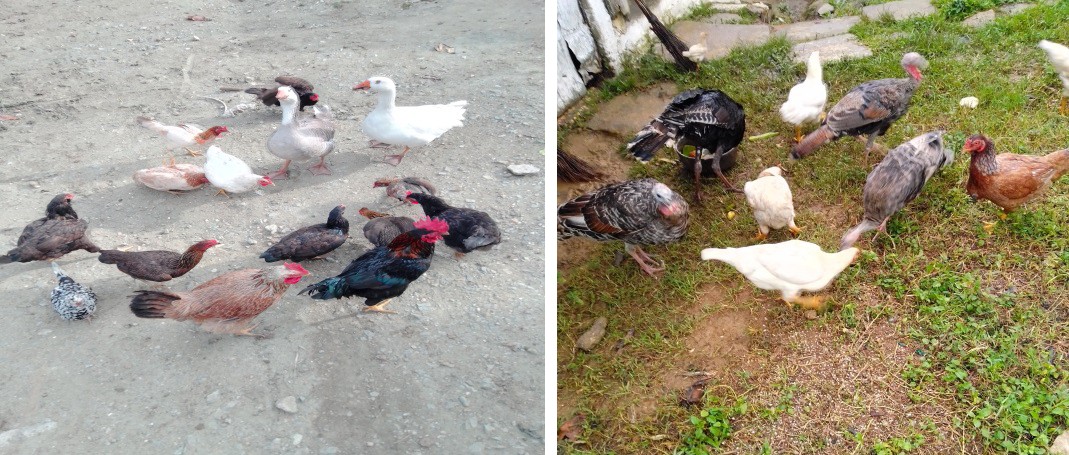
Table 2 shows the main sanitary gaps identified in the production scenario, which included three extensive outdoor breeding yards.
| Aspects evaluated | Sanitary gaps |
|---|---|
| Management | Inadequate hygienic and sanitary conditions, promiscuity of species. |
| Alimentation | Absence of a balanced feed system. |
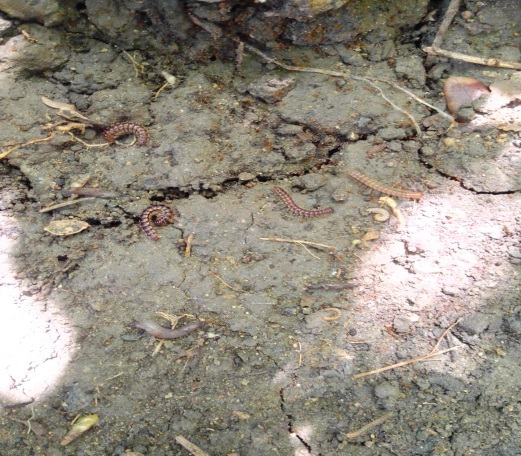
| Environment conditions | Presence of arthropods, annelids, mollusks as potential paratenic and intermediate hosts. |
| Healthcare | Absence of deworming, disinsecting and disinfection programs. |
Table 2: Main sanitary gaps identified in the production scenario.
One of the fundamental aspects that favor the establishment of infectious and parasitic processes in backyard poultry raising is poor hygiene, inadequate feeding or scarce use of balanced feed, the presence of paratenic hosts and intermediaries in the surrounding ecosystem, as well as the absence of deworming programs. This scenario is common in the conditions of Cuba and other countries of the Latin American region in this type of extensive breeding.
These characteristics of the productive scenario in this type of rearing have been observed by other researchers, such as Cuca-García, et al. [15] who state that, in Mexico, in this type of backyard poultry farming systems, technical management is minimal, facilities are rustic, feeding is based on grazing and sanitary management is scarce or nonexistent. In Peru and Costa Rica, small backyard poultry producers face multiple challenges, including the poor economic balance of this activity and its low productive performance. There is interest in promoting this type of activity as a method of conserving adapted or local natural resources [32].
In Venezuela, women are predominantly engaged in poultry raising and egg collection. The birds are the product of the crossbreeding of Creole hen breeds and commercial strains, flocks do not exceed forty birds [33]. In Chile, backyard poultry systems are an important source of income for rural family economies, birds are free-ranging most of the day and biosecurity measures are limited or absent [34].
In Ecuador, backyard poultry systems are characterized by low investment in infrastructure and poor bird health and feed management. They are mostly managed by women, as a complement to the work they do at home [20].
On the other hand, there is agreement with Hortúa- López, et al. [2] who consider that, in Colombia, backyard poultry farming contributes to the balanced development of the territory and rural communities, through the preservation of species, culture and tradition; its products have the potential for integration into specialized markets, as a result of sustainable family farming systems. However, their permanence in these markets depends on overcoming productive, hygienic and sanitary problems related to traditional poultry management. Table 3 shows the extent and intensity of parasitic invasion in the poultry population investigated; the 88.46% extent denotes a high morbidity to endoparasites in the backyard poultry population. In the helminthological necropsies performed, seven hens, two roosters and 14 chickens were positive for endoparasites, and three hens (11.53%) were negative for the presence of internal parasites.
| n | Parasites found | Parasitized birds | EIP (%) | IIP |
|---|---|---|---|---|
| 26 | 642 | 23 | 88.46 | 27.91 |
Table 3: Extent and intensity of parasitic invasion in the birds investigated.
Legend: EIP extent of parasitic invasion. IIP intensity of parasitic invasion. Table 3: Extent and intensity of parasitic invasion in the birds investigated.
The high level of parasitic infection in this type of breeding is attributed to the fact that the birds are roaming freely in a scenario where they are exposed to embryonated eggs and/ or free larvae, ingesting the intermediate host or paratenic parasites, in an ecosystem lacking adequate environmental conditions in terms of hygiene, humidity, temperature, etc., to which is added the absence of deworming programs and environmental sanitation measures in possible ecological niches.
These observations agree with those of Romero, et al. [35] who state that Cuba, due to its characteristics of high relative humidity and temperature, is a favorable environment for the development of the life cycle of helminths, especially cestodes.
These results agree with those found by Espinosa, et al. [36] in a study conducted in the state of Totoracocha, Ecuador, where they found 83.76% of parasitized birds.
Table 4 reflects the prevalence of parasites according to the different age groups, the highest occurrence of parasites with respect to the total number of birds investigated was in the age range of 0 - 1 year, 18 of 26 (78.26%) followed by the 2-4 years group, 7 of 26 (26.92%) and to a lesser extent the over four years, 1 of 26 (3.84%). When comparing the prevalence of each parasitic species in the age groups 0-1 and 2-4 years, the percentage of occurrence of Acuaria hamulosa differed statistically from the overall mean proportion for p ≤ 0.05 at 95% significance level.
| Age /years | n | Parasites | No. of cases | Percentage |
|---|---|---|---|---|
| 0 – 1 | 18 | Oxyspirura mansoni | 9 | 50.0a |
| Ascaridia galli | 6 | 33.33a | ||
| Acuaria hamulosa | 1 | 5.55b | ||
| Cestodos | 8 | 44.44a | ||
| Heterakis gallinarum | 11 | 61.11a | ||
| O. mansoni | 6 | 85.71a | ||
| A. galli | 4 | 57.14a | ||
| 2-4 | 7 | A. hamulosa | 1 | 14.28a |
| Cestodos | 4 | 57.14a | ||
| H. gallinarum | 3 | 42.85a | ||
| ≤ 4 | 1 | O. mansoni, A. galli, Cestodos, H. gallinarum | 1 | 100 |
Table 4: Prevalence of endoparasites in the analyzed birds according to age group.
Unequal letters in the same column indicate statistically significant differences for the first two age groups, according to the multiple proportion comparison test.
Multiple infection or co-infection with four interactions was observed in one bird older than four years. These results are attributed to the fact that young birds are exposed to multiple etiological agents that overcome the defense mechanisms of an immature immune system. These results agree with those reported by Espaine, et al. [37] who state that adult birds are much more resistant to parasitic invasions by A. galli due to the increase in the number of goblet cells of the epithelial cover of the duodenum which are part of the natural resistance and that ascaridatosis constitutes the most frequent parasitosis in the domestic fowl and occurs in young birds, and rarely parasitizing adult birds. Also agrees with Houriet [31] who states that ascaridiosis affects young birds. On the other hand, Barriga [38] and Luka [39] emphasize that these parasites attack especially young birds, poorly fed and subjected to stress, causing growth retardation, increased feed conversion and increased mortality in field chicks from three to six weeks of age.
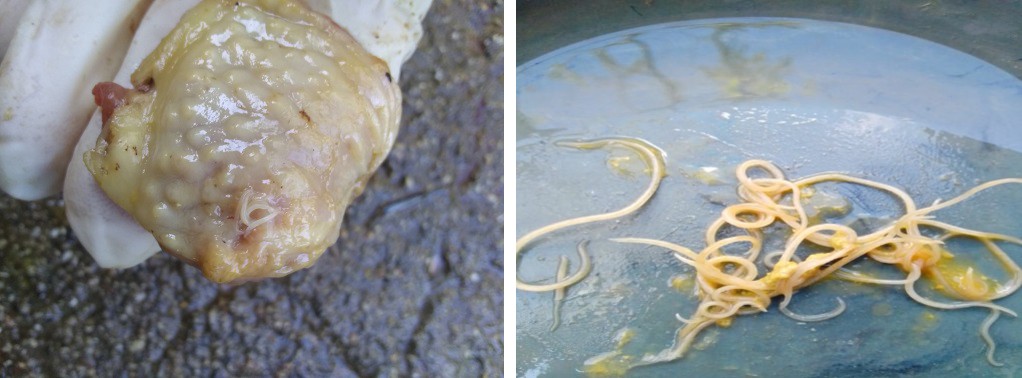
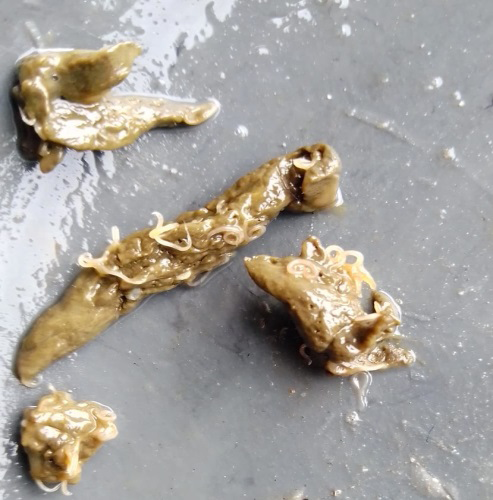
A B Figura 2: A Acuaria hamulosa (Diesing, 1551). B Ascaridia galli (Schrank,1788).
Table 5 shows the occurrence of parasites in the 26 birds that underwent helminthological necropsy. The highest prevalence was of O. mansoni, H. gallinarum, Cestodes and A. galli, results that are attributed to the fact that the backyard poultry were kept in extensive production systems (outdoors) exposed to poor sanitary hygienic conditions, in the absence of deworming and disinsectation programs.
| Parasites | No. of cases | Percentage | IC:95% |
|---|---|---|---|
| O. mansoni | 16 | 61.53 | 37.69-85.37 |
| A. galli | 11 | 42.3 | 13.10-71.50 |
| Cestodos | 13 | 50 | 22.82-77.18 |
| H. gallinarum | 15 | 57.69 | 32.69-82.69 |
| A. hamulosa | 2 | 7.69 | -73.86 |
Table 5: Occurrence of parasites in the investigated birds (n = 26).
In these ecosystems there are abundant arthropods and many other species of intermediate hosts that are necessary to these parasites for the culmination of development up to the infective stage [37]. In this sense, these authors refer that O. mansoni, present in Cuba, is located under the nictitating membrane and in our conditions, the cockroach Pycnoscellus surinamensis acts as an intermediate host. In addition, they point out that H. gallinarum constitutes a widely spread parasitosis among domestic hens in our conditions independently of the breeding system, although it usually prevails in birds exploited in grazing and semi- confinement.
Cestodes are much more frequent in birds exposed outdoors than in intensive rearing facilities [40]. In Cuba, the Coleoptera Dermester ater, Alphitobius diaperinus and Dactylosterhum spp., are very important as intermediate hosts, as well as the house fly. For Raillietina cesticillus and Choanotaenia infundibulum intermediate hosts include flies, beetles, caterpillars, ants and ants, and the earthworm, mainly in open-air farms. For Davainea proglotina and Amoebotaenia sphencides mollusks almost exclusively from pastures [35].
On these farms where birds have access to the outdoors, the risk is greater if they have access to humid habitats where the vector snails or slugs proliferate. It is very rare for there to be outbreaks in industrial poultry farms [40]. Earthworms and mountain hoppers act as paratenic host of A. galli [37]. These results are largely due to the lack of a control program and deworming scheme in this type of traditional breeding system carried out by these rural families, where sanitary gaps and conditioning factors that increase the risk for the presence of parasitism prevail.
On the other hand, most of these birds are raised on dirt floors, which favors the usual or ethological behavior of these poultry that tends to dig the soil in search of invertebrates, including arthropods (insects), mollusks (slugs, snails) and annelids (earthworms) that can act as intermediate or paratenic hosts of several kinds of helminths and protozoa, coinciding with Alvarez, et al. [22] and Ogbaje, et al. [23] who state that birds in these rearing systems can be infected through feed, water and soil.
In this research, the highest prevalence of parasitic infection was of O. mansoni 16 out of 26 (61.53%), a result that is attributed to the outdoor rearing system, in extensive conditions and in a suigeneris ecosystem (mountainous area with predominance of coffee plantations), where the presence of intermediate hosts of the blattid group (cockroaches) is
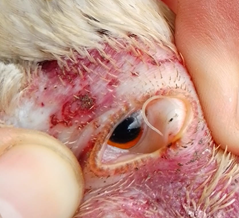
A B Figure 3: A O. mansoni (Gobbold, 1879) B Cestodos.
Cockroaches are known to adapt easily to all environments, as well as their proven resistance to adverse conditions of temperature, humidity and food [25].
These results do not coincide with those obtained by Aguilar [26] in a study conducted in Guatemala, where he analyzed 96 samples of chickens, and all were negative for the presence of this parasite, nor did they find the presence of its intermediate host in that ecosystem, which is a cockroach of the species P. surinamensis. However, the prevalence of O. mansoni in this study is close to that obtained by Chirinos, et very common, as well as other possible hosts prevalent in the area, guarantee the infection of susceptible birds and the completion of the biological cycle.
al. [25] of 50.77% in 215 fighting cocks investigated in the municipality of Maracaibo, Venezuela.
The presence of H. gallinarum in this research was considerable, it showed an occurrence of 57.69%, which was higher than the values found by different authors such as 21.2% reported by Menéndez [41] in Mexico, 33% obtained by Abdelgader, et al. [42] in Jordan, 21.87% found by Ensuncho, et al. [43] in Colombia. These results are lower than those found by Olivares, et al. [44] of 86.7%.
The 43.30% prevalence of A. galli obtained in this study exceeds the 35.58% obtained by Abdelgader, et al. in Jordan [42] and the 31.25% found by Ensuncho, et al. in Colombia [43].
The prevalence of A. hamulosa obtained was 7.69% being higher than the 2% obtained by Menéndez [41] in Veracruz, Mexico. In general, these results are similar to those found by Mushi, et al. [44] and Lazo, et al. [27] in a study conducted in the Republic of Botswana located in southern Africa and Cienfuegos, Cuba, respectively, where they reported the presence of A. galli, H. gallinarum and also the presence of Cestodes, mainly Railletina ssp. in poultry raised in extensive production systems.
The studies carried out by most of these authors with reports of lower occurrence of parasites are due to the conditioning factors that influence the epizootiological behavior of biohelminthosis and geohelminthosis, such as the production system (intensive or extensive), the feeding system and nutritional status of the exposed birds, the environmental conditions, with emphasis on humidity, temperature and the presence of intermediate hosts. The existence of environmental sanitation programs, prevention and control of parasitism and the diagnostic method used. Table 6 shows the location of the parasites found in the different organs and the possible intermediate hosts identified (Figure 5), findings that do not differ from the reports of other authors in terms of location.
| Parasites | Location | Intermediate Hosts |
|---|---|---|
| O. mansoni | Eyeball | Pycnoscellus surinamensis |
| A. galli | Small intestine | Lumbricus terrestris*, Acrida cinerea*. |
| Cestodos | Small intestine | Coleopterous (Dermester ater, Alphitobius diaperinus, Dactylosterhum sp, scarabaeoid), Musca domestica, Pogonomyrmex mayri (Hymenoptera), Oiketicus platensis, Acrida cinerea, L. terrestris, Dactylopius coccus |
| H. gallinarum | Cecums | Lumbricus terrestris |
| A. hamulosa | Proventriculus and gizzard | Acrida cinerea, escarabajos, crustáceos terrestres (Armadillidium vulgare, Porcellio scaber), Scutigera coleoptra |
Table 6: Location of parasites in different organs and possible intermediate hosts identified.
Legend: * act as paratenic hosts. Table 6: Location of parasites in different organs and possible intermediate hosts identified.
The authors of this work consider that the locations of the parasites in helminthological necropsies in birds constitute an important element for the presumptive field diagnosis, due to the predilection or organotropism of the adult stages of the parasites.
This assertion is supported by the findings of numerous studies and agrees with Paredes, et al. [35] who state that O. mansoni is the only nematode that attacks the eye of chickens, turkeys, peacocks and ducks. It has been found under the nictitating membrane, conjunctival sac and nasolacrimal duct. A. galli, its habitat is in the duodenum, although in case of large infestations it can be found in the stomach, oviducts and in some cases, it has appeared in eggs. Cestodes only inhabit the small intestine and H. gallinarum is a parasite of the cecae of chickens, turkey, pheasant, duck and wild birds.
A. hamulosa is located in nodules beneath the horny cuticle (membrane) of the gizzard in the vicinity of the opening of the proventriculus of domestic fowl, turkey and pheasant [37].
Future research is needed to diagnose the presence of eggs and larvae in known intermediate hosts and in potential invertebrate species present in the ecological niches of the prevailing ecosystem in the study area.
Conclusion
The presence of parasitic agents in the backyard poultry population in the studied area is associated with sanitary gaps, where the farmers’ lack of knowledge of the parasitic forms, their vectors, prevention and control play a preponderant role. Backyard poultry in the community studied showed high extensiveness and intensity of parasitic invasion of nematodes and cestodes.
Acknowledgments
To the owners of the three houses who kindly collaborated to carry out this investigation.
Conflict of Interest
The authors declare no conflict of interest.
Statement of Ethical Approval
The procedures used in the helminthological necropsies were under the standards established by good animal welfare practices.
Statement of Informed Consent
Authors Declaration
The authors hereby declare that the work presented in this article is original and that they will bear any liability for claims relating to the content of this article.
References
-
Andrade YS, Jorge RE, Bravo L, Ortiz NP, Vargas BJC, et al. (2019) Effect of the application of _Tithonia diversifolia_ extract on gastrointestinal parasites of Creole hens (_Gallus gallus domesticus_) in the Ecuadorian Amazon. Iberoamerican Proceedings of Animal Conservation 13: 10-15.
-
Hortúa LLC, Ceró MMF, Zaragoza MML, Angulo AJ (2021) Backyard poultry farming: contributions and opportunities for the farm family. Mesoamerican Agronomy 32(3): 1019-1033.
-
Marín GS, Benavides MJ (2007) Parasites in domestic fowl (_Gallus domesticus_) in northwestern Colombia. Vet Zootec 1(2): 43-51.
-
Hernández PF (2018) Creole hens, a welfare opportunity for rural Colombia. UNAL Newspaper/ Environment.
-
Tovar PJL, Narváez SW, Agudelo Gl (2014) Typification of the creole hen in the peasant agroecosystems of production in the zone of influence of the forest of Florence (Caldas). Luna Azul Magazine 41: 57-72.
-
Barrantes HRA (2009) Characterization of the creole hen of the Cajamarca region. San Marcos veterinary research review system (SIRIVI) [Degree thesis]. Cajamarca: Publication and Scientific Exchange Services, Faculty of Veterinary Medicine, University of Cajamarca, Peru.
-
Andrade YVC, Isuiza SL, Vargas BJC, Andino IMW, Andrade YS, et al. (2017) Phenotypic characterization of the Creole hen (_Gallus domesticus_) of the Kichwa Indigenous People of Sarayaku. Pastaza, Ecuador. pp: 463-469.
-
Angarita LA (2017) Creole hens: Contribution of peasant, indigenous and Afro-Colombian communities to the conservation of agrobiodiversity. Seeds magazine 67/68.
-
Alders RG, Dumas S, Rukambile E, Magoke G, Maulaga W, et al. (2018) Family poultry: Multiple roles, systems, challenges, and options for sustainable contributions to household nutrition security through a planetary health lens. Maternal and Child Nutrition 14(3): 1-14.
-
Mujica F, Iriarte A (2020) Challenges for the conservation of Chilean fauna: Towards a correct use of animal genetic resources. Ediciones Universidad Austral de Chile 2.
-
Carvalho DA, Bonafé CM, Rodriguez RMDP, Almeida MJO, Sarmento JLR, et al.(2016) Caracterização genética e estrutura populacional de galinhas crioulas Canela- Preta. Pesquisa Agropecuaria Brasil era 51(11): 1899- 1906.
-
Macri M, Martinez A, Land V, Canales A (2019) Genetic diversity of utrerana chicken breed. Iberoamerican Animal Conservation Proceedings 13: 52-59.
-
Rajkumar U, Haunshi S, Paswan C, Raju MVL, Rama RSV, et al. (2017) Poultry Science 96 (7): 2120–2126.
-
Tasoniero G, Cullere M, Baldan G, Dalle ZA (2017) Productive performances and carcase quality of male and female Italian Padovana and Polverara slow-growing chicken breeds. Italian Journal of Animal Science 17(2): 530-539.
-
Cuca-García JM, Gutiérrez-Arena DA, López-Pérez E (2015) Backyard poultry farming in Mexico: History and characterization. Agroproductivity 8(4): 30-36.
-
Palacios E, Álvarez L, Muñoz J (2016) Genetic diversity of Creole hens of the Colombian southwest. Zootechnics Archives 65(249): 73-78.
-
Revelo H, Valenzuela M, Álvarez L (2017) Morphological characterization of the Colombian Pacific Creole hen in afroindigenous and peasant communities. Iberoamerican Proceedings of Animal Conservation 10: 216-221.
-
Revelo H, Valenzuela M, Álvarez L (2019) The social, cultural and productive environment of the Colombian pacific creole hen in afroindigenous and peasant communities. Iberoamerican Proceedings of Animal Conservation. 14: 107-116.
-
Taolambo PA, Navas GFJ, Andrade YVC, Trujillo JV, Martinez J (2019) Productive and organoleptic characterization of eggs from free-range hens of the highland region of Ecuador. Zootechnical Archives 68(263): 412-415.
-
Taopanta M, Avilés EDF, Montero RM, Pomboza P (2019) Characterization of the backyard poultry production system in Cevallos, Ecuador. Iberoamerican Proceedings of Animal Conservation. 13: 1-5.
-
Luka A, Ndams IS (2007) Gastrointestinal parasites of domestic chicken _Gallus gallus_ _domesticus_ Linnaeus 1758 in Samary, Zaria Nigeria. Science World Journal. 2(1): 27-30.
-
Álvarez C, Rodríguez PY, Carvajal E (2011) Effect of paico (_Chenopodium ambrosioides_) extract on gastrointestinal parasites of fighting cocks (_Gallus domesticus_). Scientific Culture 9: 76-80.
-
Ogbaje C, Agbo E, Ajanusi O (2012) Prevalence of _Ascaridia galli_, _Heterakis gallinarum_ and _Tapeworm_ _infections_ in birds slaughtered in Makurdi township. Nigeria. Int J Poult Sci 11(2): 103-107.
-
Lizaso D (2018) Emerging parasitic processes in alternative poultry systems. AviNews LATAM/ Alternative poultry farming magazine.
-
Chirinos N, Chirinos A, Briceño J, Molina M (2009) New focus of infection of _Oxyspirura mansoni_ in fighting cocks in municipalities of Zulia State, Venezuela. Scientific Journal 19(3).
-
Aguilar GS (2013) Prevalence of _Oxyspirura mansoni_ in backyard chickens in Canton San Sebastián, municipality of Chalchuapa, Department of Santa Ana, El Salvador [Thesis]. Santa Ana: Repository of the University of San Carlos de Guatemala.
-
Lazo PL, Dueñas EE, Fimia DR, Alfonso ID, Cepero RO (2018) Prevalence of endoparasites in the animal population of an integrated production system with species promiscuity. REDVET 19(5): 1-9.
-
Thrusfield M and Christley R (2018) Veterinary Epidemiology. Editorial Blackwell, In: 4th (Edn.), pp: 62- 67.
-
Valladares CJC (2014) Necropsies in poultry. Argentinean Site of Animal Production.
-
Houriet JL (2007) Practical guide to the most common diseases in poultry (layers and chickens). pp: 58.
-
Sánchez I, Brañas M (2015) Breeding of criollo chickens with local inputs in Peruvian Amazonian communities. Amazon Science 5(2): 110-114.
-
Pineda M, Florio L, Florio S, Florio E, Pineda Y, et al. (2017) Family poultry farming as a food security strategy in a semi-arid community of Lara State - Venezuela. Iberoamerican Proceedings of Animal Conservation 10: 209-215.
-
Baumberger C, Lazo A, Jiménez BP, Di Pillo F, Bravo VN, et al. (2018) Detection of Newcastle disease virus in backyard poultry in Chile. MVZ Córdoba Magazine 23 (S): 6942-6950.
-
Paredes TM, Romero SE (1986) Avian Pathology. Part Two. Ministry of Education. Editorial People and Education, pp: 120.
-
Espinosa PCS, Salas SMX (2019) Prevalence of gastrointestinal parasites in fighting fowl (_Gallus_ _gallus domesticus_) [Pre-degree thesis for the degree of Veterinary Zootechnician]. Cuenca: Repository of the Salesian Polytechnic University of Cuenca, Ecuador.
-
Espaine ACL, Lines R (1983) Handbook of Parasitology and Parasitic Diseases. (II). ISCAH. pp: 562.
-
Barriga O (2002) Parasitic diseases of domestic animals in Latin America. Santiago de Chile: Editorial Germinal, pp: 234.
-
Luka SA, Ndams IS (2007) Gastrointestinal parasites of domestic chicken _Gallus gallus domesticus_ Linnaeus 1758 in Samary, Zaria Nigeria. Science world Journal 2(1): 27-30.
-
Junquera P (2022) _Davainea proglottina_, intestinal parasitic cestode tape worms of birds (poultry, turkeys, pheasants, etc.). Biology, prevention and control. Parasitipedia.
-
Menéndez T (2007) Prevalence of nematodes and cestodes in poultry (backyard) in the city of Acayucan [Thesis]. Veracruz: Repository of the Universidad Veracruzana, Veracruz, Mexico.
-
Abdelqader A, Gauly M, Wollny CB, M N Abo-Shehada (2008) Prevalence and burden of gastrointestinal helminthes among local chickens, in northern Jordan. Prev Vet Med 85(1-2): 17-22.
-
Ensucho C, Herrera Y, Montalvo A, Almanza M, Vergara J, et al. (2015) Frequency of gastrointestinal parasites in Creole hens (_Gallus domesticus_). In the Department of Córdoba, Colombia. REDVET 16(6): 1-10.
-
Olivares LL, Kyvsgaard N, Rimbaud E, Pineda N (2006) Prevalence and parasitic load of gastrointestinal helminths in backyard chickens (_Gallus_ _gallus_ _domesticus_), in the municipality of El Sauce, department of León, Nicaragua. REDVET 7(11): 1-4.
-
Mushi EZ, Binta MG, Chabo MG, Itebeng K (2006) Diseases of indigenous chickens in Bokaa village, Kgatleng district, Botswana. J S Afr Vet Assoc 77(3): 131- 133.
- Mitochondrial Bio-Logistics: Steering Co-Enzyme Q10 and Lycopene Synergies within the Science 4.0 Bio-OS Framework
- Hymenoptera Specimens from the Caño Negro Wetland, of the National Museum Collection, Costa Rica
- Science 4.0: Comprehensive Architecture of the Biological Operating System (Bio-OS) A Framework for Systemic Resilience and Industrialized Bio-Governance
- Rabbit on, or Hare Back? Understanding Climate Change
- Clinical Validation of Science 4.0: Flow Steering and Epigenetic Drift Inversion on a 76-Year-Old Hybrid System
- Seeds Planted by another Mind