
First Breeding Record of the European Robin Erithacus rubecula in Lebanon 2020
European Robin Erithacus rubecula has an extremely large range, and hence does not approach the thresholds for Vulnerable under the range size criterion. The population trend appears to be increasing and the size is extremely large. For these reasons the species is evaluated as Least Concern. In Europe, the breeding population is estimated to number 58,700,000-90,500,000 pairs, which equates to 117,000,000-181,000,000 mature individuals. This species is found in forest undergrowth and edge, preferring conifer tracts in some parts of its range and deciduous woodland in others. It uses copses and adjacent open land, farmland woodlots, thickets along watercourses, hedgerows with some tall trees, orchards, gardens and parks and is also found in urban areas in parts of Europe. It requires cool shade, medium-height cover with perches, and patches of bare ground. Breeding occurs from early April to mid-June in the U.K., from the end of April to late July in central Europe and from mid-May in northern Russia and mid-April in southern Russia. On the 28th of April 2020, I was birdwatching in Horsh Ehden Nature Reserve Zgharta-Ehden District, north Lebanon when I encountered a couple of European Robins carrying insects to a nest in a hole in a big rock near the river. Following the birds, they entered the whole and went outside immediately watching me cautiously. I went to see what’s inside that rock and I saw the nest of the European Robin with 3 nestling inside of it. Later after 3 weeks I went again to see the nest I found the juveniles wandering around it. Reporting it to Dr Ghassan Ramadan Jaradi, it was accepted as a first breeding record of this species to Lebanon. Later on, I was able to identify many juvenile individuals near the same location.
Mini Review
European Robin Erithacus rubecula has an extremely large range, and hence does not approach the thresholds for Vulnerable under the range size criterion (Extent of Occurrence <20,000 km2 combined with a declining or fluctuating range size, habitat extent/quality, or population size and a small number of locations or severe fragmentation).
The population trend appears to be increasing and the size is extremely large. For these reasons the species is evaluated as Least Concern. In Europe, the breeding population is estimated to number 58,700,000-90,500,000 pairs, which equates to 117,000,000-181,000,000 mature individuals [1]. This species is found in forest undergrowth and edge, preferring conifer tracts in some parts of its range and deciduous woodland in others. It uses copses and adjacent open land, farmland woodlots, thickets along watercourses, hedgerows with some tall trees, orchards, gardens and parks and is also found in urban areas in parts of Europe. It requires cool shade, medium-height cover with perches, and patches of bare ground. Breeding occurs from early April to mid- June in the U.K., from the end of April to late July in central Europe and from mid-May in northern Russia and mid-April in southern Russia [2].
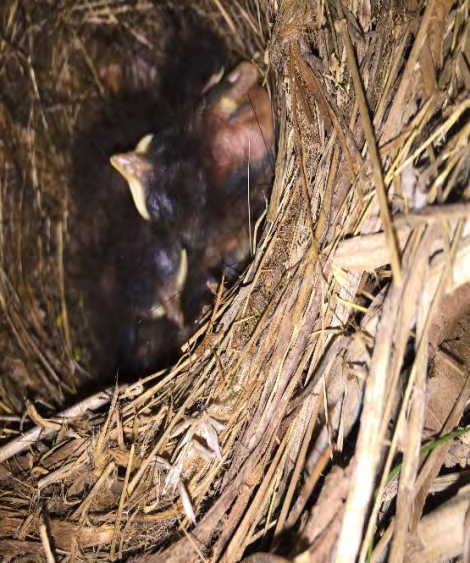
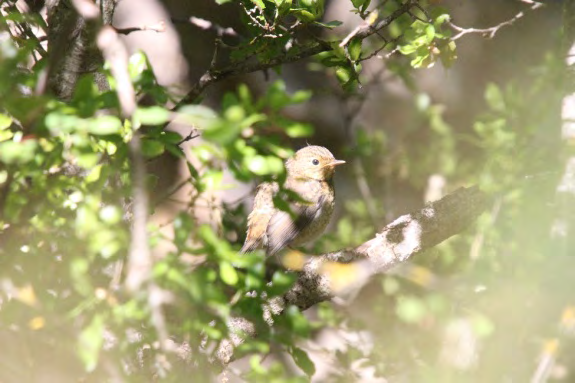
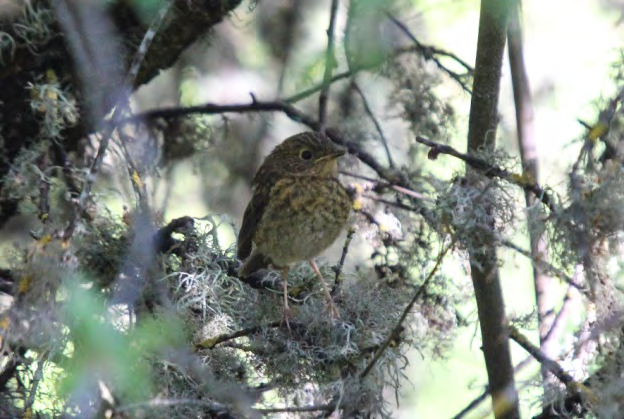
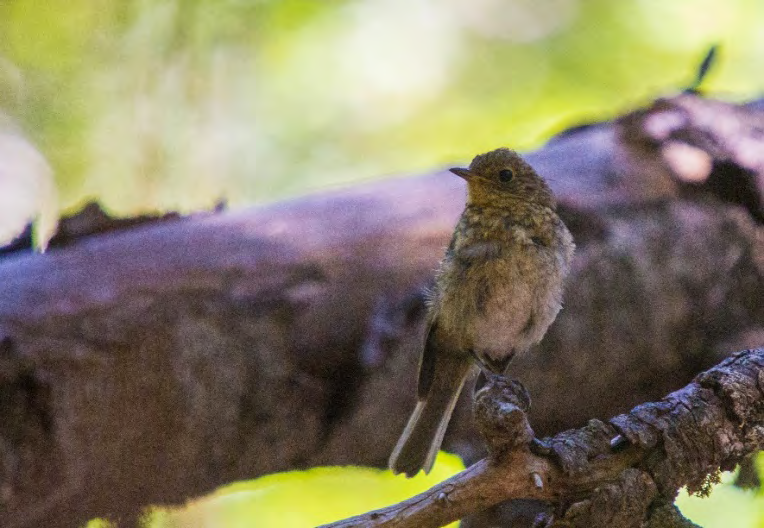
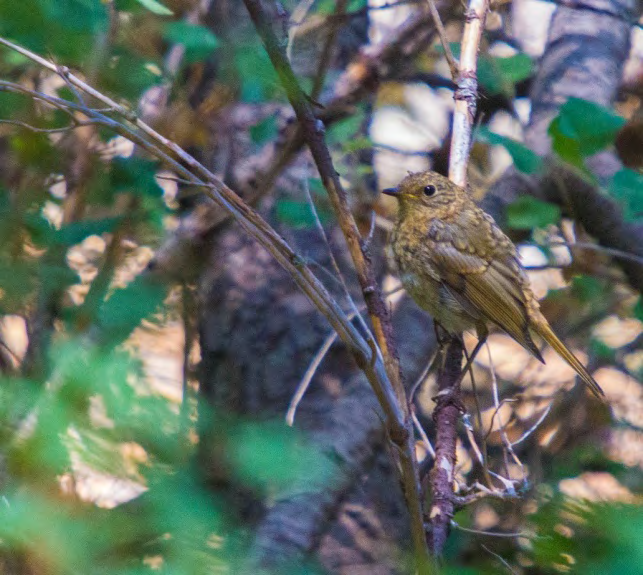
On the 28th of April 2020, I was birdwatching in Horsh Ehden Nature Reserve, Zgharta-Ehden District, north Lebanon when I encountered a couple of European Robins carrying insects to a nest in a hole in a big rock near the river. Following the birds, they entered the whole and went outside immediately watching me cautiously. I went to see what’s inside that rock and I saw the nest of the European Robin with 3 nestling inside of it (Figure 1). Later after 3 weeks I went again to see the nest I found the juveniles wandering around it (Figure 2). Reporting it to Dr Ghassan Ramadan Jaradi, it was accepted as a first breeding record of this species to Lebanon. Later on, I was able to identify many juvenile individuals near the same location (Figures 3&4).
Back on the 5th of June 2021, I was also able to spot 5 juveniles in 2 different areas of the same nature reserve, and one juvenile 7km away from that place in Bchenneta, Dannieh District in north Lebanon (Figure 5).
References
-
BirdLife International (2015) European Red List of Birds. Office for Official Publications of the European Communities, Luxembourg.
-
Collar N (2015) European Robin (Erithacus rubecula). In: Del Hoyo J, Elliott A, et al. (Eds.), Handbook of the Birds of the World Alive, Lynx Edicions, Barcelona.
- California Red-Legged Frog and Non-Listed Amphibians Response to Non-Native Fish Removal
- Industrial Standardization of the Bio-OS: Algorithmic Codification of Resilience Engineering Guidelines and Version V8 Architecture
- Climate Variability and the Sustainability of Snail Farming in Nigeria: Past Trends, Present Challenges and Potential Outlook
- The Evaluation of the Surveillance System of Anthrax in Gilgit-Baltistan, Pakistan, 2018
- Natural Decline to Extinction of A New Zealand Rabbit Population
- Mitochondrial Bio-Logistics: Steering Co-Enzyme Q10 and Lycopene Synergies within the Science 4.0 Bio-OS Framework