
The Birds of Cameroon: The Dynamism of the Cameroonian Avifauna Revealed by Several Bird Surveys in the Centre Region of Cameroon in the Heart of the Congo Basin Forest, Case of Migratory Birds
In this review of several new birds identified in the Centre region of Cameroon, one of the six countries that make up the Congo Basin Forest, we focus on migratory birds. Bird migration appears to be one of the most fascinating biological phenomena relying on various major determinants which may explain that the migration is not always a round trip. Based on these major determinants that structure the bird migration, it results that mainly four possible hypotheses may be retained which could explain the discovery of these new migratory birds in this region: an energy failure, the insufficient learning of migratory routes, the beginning of adaptation of certain male individuals to their wintering range and the adaptation of some migratory birds to high temperatures.
Introduction
The Congo Basin Forest is the second largest tropical rainforest on Earth after the Amazonian Forest [1]. Based on current knowledge, this forest has approximately 10,000 species of tropical plants, 30% of which are endemic, and zoologically already identified at least 1000 species of birds and 700 species of fish, and many species of endangered wild mammals, including forest elephants, chimpanzees, bonobos, lowland and mountain gorillas and at least 400 other species of mammals [2]. This vast tropical forest covers six countries including Cameroon.
Cameroon is a country in West Africa and it covers an area approximately 475440 sq.km with a latitudinal widespread of the Equatorial forest in the South to Sahelian areas of Lake Chad in the Extreme North [3]. With this latitudinal extension which offers a great diversity of biotopes for biological diversity, Cameroon is one of the richest countries in Africa in terms of biodiversity, among others things with a very diversified avifauna numbering nearly 1 000 species [4, 5]. Administratively, Cameroon is subdivided into ten administrative regions among them the Centre region.
The Centre region shows the specificity of having a mixture of vegetation between that of the Equatorial forest and that of several mountains at very low altitude, which shelters many animals and therefore birds [4, 6]. On the basis of the richest biodiversity in this region, first surveys had started during the colonization periods followed by several ornithologist who have permitted to describe new species [4, 6, 7, 8, 9, 10]. Following these surveys, others have been achieved in 1952-1953 [11, 12], Germain M, et al. [13] and Louette M, et al. [14]. Only since these surveys, the last of which dated from 1981, no survey has been carried out in this Centre region of Cameroon before our studies [3, 4, 6, 15].
Method Used for these Surveys
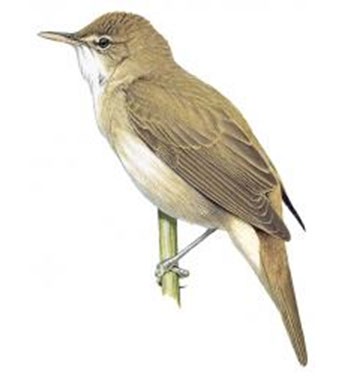
In the various studies carried out with the aim of obtaining the avifauna of the different study sites, we mainly used an appropriate method: the method of Japanese nets with vertical pockets [3, 4, 6, 15]. Review of New Bird Species Identified by our Various Surveys in the Centre Region of Cameroon New taxa in mountains a. New species in the Abobo-Etetak hill based on our ornithological survey Compared to the old surveys carried out and already published in this study site by several authors [11, 12, 13, 14] before our survey, we have thus highlighted the following species: Anthus brachyurus (Motacillidae), Cinnyris reichenowi (Nectariniidae), Euplectes gierowii (Ploceidae), Hirundo fuligala (Hirundinidae), Nicator vireo (Nicatoridae), Pogonilius atroflavus and Pogonilius subsulphureus (Lybiidae) and Terpsiphone rufocinerea (Monarchidae) [3]. b. New bird species identified in the Eloumden mountain according to our survey On the basis of the previous surveys carried out and already published in the Eloumden mountain [11, 12, 13, 14], our survey in this study site recently allowed us to observe the presence of the following species: Trachyphonus purpuratus (Lybiidae), Psalidoprocne fuliginosa and Ptyonoprogne fuligula (Hirundinidae), Bradornis fuliginosus (Muscicapidae), Cinnyris batesi and Chalcomitra adelberti (Nectariniidae) and Acrocephalus baeticatus (Acrocephalidae) [4]. A migratory bird was thus newly highlighted in this area during this investigation, it is Acrocephalus baeticatus which is an African migratory (Figure 1) [4].
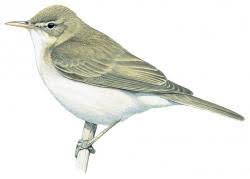
c. New species in the Febe mountain according to our ornithological survey Comparing the ancient surveys realized in the Febe mountain and already published [11, 12, 13, 14] with that which we carried out in this study site, the following species have newly been identified: Iduna pallida (Acrocephalidae), Macrosphenus concolor (Macrosphenidae) and Ploceus pelzelni (Ploceidae) [6]. A migratory bird was newly identified in this study site during this survey, it is Iduna pallida which is a Palearctic migratory (Figure 2) [6].
New Taxa in Lowlands
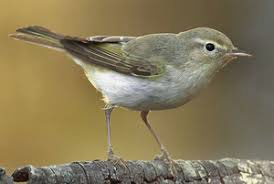
New bird species highlighted in the Ekoko II village based on our survey: Based on old surveys carried out and already published in this study site [11, 12, 13, 14], our survey recently made it possible to observe the presence of the following species: Phylloscopus bonelli (Phylloscopidae) and Criniger ndussumensis (Pycnonotidae) [15]. A migratory bird was thus newly identified in this range during this survey, it is Phylloscopus bonelli which is a Palearctic migratory (Figure 3) [15].
Discussion
Migration as the Main Phenomenon to Explain Cases of New Species of Migratory Birds Identified by our Various Surveys in the Centre Region of Cameroon
Global definition of this phenomenon in animals: In animals, migration is a phenomenon present in many species, which is a displacement or even a journey, often over long distances, of a periodic nature, and which requires a regular return to the region of departure while movements without return, which lead to an extension of the habitat of the species, correspond to colonization. Thus according to Berthold P, et al. [16], migration is an adaptive response to seasonal environments, which allows animals to take advantage of spatial variation in seasonal fluctuation of resources and revealed that conditions during the migration as well as those on the wintering ranges may be major determinants of the migration [17]. Some Determinants of the Bird Migration on Which our Hypotheses are Based Thus, certain characteristics noted by Dingle H, et al. [18] to identify migratory birds, such as the full energy reserve in the preparation of the migration before the departure of the latter, may make that the migration is not a round trip if the energy reserve is not sufficient or if the migratory bird, not having refueled of energy, has not recovered from its long journey to its wintering range. For this, in cases of newly identified migratory birds in the Centre region of Cameroon, some individuals could be those which had not recovered from their long journey and which have finally adapted to this new habitat; this may therefore explain the presence of these new migratory birds in this wintering range. On the other hand, in some species of birds, the learning of the migratory routes by the young is a major element for their autonomy in connection with the migratory phenomenon; so if this learning has not been assimilated by the young, it is possible that at the time of the return, a random phenomenon, impossible to foresee when the group leaves, could prevent the return of one or more young which end up settle and adapt in this geographical area; thus, some new migratory birds identified in this wintering range could be those which have not mastered their return itinerary.
Otherwise, Berthold P, et al. & Berthold P, et al. [16, 19] found that in certain species, females, which are smaller than males, often tend to be more migratory than males. Thus in cases where males migrate with females, it is possible that after an adaptation of certain male individuals for multiple reasons such as the assistance of the females in the nesting of the young or the provision of food resources, they may settle in their wintering range and no longer return to their original breeding range; this could explain the new presence of some migratory birds in this area. Only in order to confirm this hypothesis, it is judicious to carry out a more in-depth and meticulous study with particular a follow-up of the individuals. In addition, several studies [20, 21] revealed that there is a correlation between temperature and migration; therefore, it has been documented that low temperatures favor long migration distances and a high propensity to migrate while high temperatures favor a decrease in the propensity to migrate [20, 21]. Thus, some individuals of certain species which have adapted to high temperatures in their wintering range may thus lose the reflex to return to their original breeding range and this could also possibly explain these newly identified cases in the Centre region of Cameroon.
Conclusion
This present review emphasizes the dynamism of the Cameroonian avifauna with these new taxa identified in the Centre region of Cameroon and this therefore requires setting up a vast overall research strategy in order to gain a real overview of the taxa currently present in Cameroon. Particularly for the new migratory birds identified in this region of the Congo Basin Forest, the insufficient learning of migratory routes, the adaptation of some migratory birds to high temperatures, an energy failure and the adaptation of certain male individuals of some species to their wintering range are appeared as four possible strong hypotheses to explain their current presence in this geographical area.
Acknowledgements
We thank the team of the Ornithological Unit of Zoology Laboratory of the University of Yaounde I for the proofreading of manuscript as well as two anonymous researchers in particular for their valuable comments.
Conflict of Interest
Author declares that there is no conflict of interest.
References
-
WWF (2010) Certification and Roudtables: Do they work? WWF review of multi-stakeholder sustainability initiatives. WWF review, Gland, Switzerland.
-
WWF (2020) Congo Rainforest and Basin. Places/WWF– World Wildlife.
-
Nguembock B, Mahamat S, Kemtchouan W, Azang EDO, Guehoada Y, et al. (2017) Bird survey of Abobo- Etetak Hill (Yaounde, Cameroon) and a glance of the avifaunistic diversity of this hill (Abobo-Etetak). The Open Ornithology Journal 10: 31-41.
-
Nguembock B, Azang EDO, Mahamat S (2019a) Bird survey in a forest mountain of Congo Basin (Eloumden, Cameroon) and diversity analysis confirm high diversity of world second reserve and correlation between species diversity and vegetation. International Journal of Avian and Wildlife Biology 4(4): 118-127.
-
Gill F, Donsker D (2020) IOC World Bird List. In: Gill F, Donsker D, et al. (Eds.), 10.1.
-
Nguembock B, Guehoada Y, Mahamat S, Azang EDO (2020) The birds of Cameroon: a bird survey from the Febe mountain (Centre region, Cameroon) coupled with a diversity analysis confirm a higher bird diversity in mountains compared to lowlands in this region of the Congo Basin Forest. Biodiversity International Journal 4(3): 140-149.
-
Sharpe RB (1904) VII-On further Collections of Birds from the Efulen District of Cameroon, West Africa. Ibis 46(1): 88-106.
-
Sharpe RB (1908) On further Collections of Birds from the Efulen District of Cameroon, West Africa. Part V & VI. Ibis 46: 119.
-
Bates GL (1926) Anthreptes seimundi minor. Sanaga River, North of Yaounde, Cameroon. Bulletin of the British Ornithologists Club 46: 107.
-
DeLancey MD, Mbuh RN (2010) Historical Dictionary of the Republic of Camerooon. 4th (Edn.), Lanham, Maryland: Scarecrow Press.
-
Good AI (1952) The birds of French Cameroon. Memoires de l’IFAN, Centre du Cameroun, Sciences Naturelles 2: 1-203.
-
Good AI (1953) The birds of French Cameroon. Memoires de l’IFAN, Centre du Cameroun, Sciences Naturelles 3 : 1-269.
-
Germain M, Dragesco J, Roux F, Garcin H (1973) Contribution to the ornithology of South Cameroon: 2. Passeriformes. L’Oiseau 43(3): 59-212.
-
Louette M (1981) The birds of Cameroon. An annoted check-list. Verhandeling Wetenschappen, Jaargang 43: 1-163.
-
Nguembock B, Nkingop Djopmou H, Mahamat S, Azang EDO (2019b) A Study on Bird Diversity and Abundance in a Lowland of the Centre Region of Cameroon (Ekoko II village) confirm High Diversity in the Congo Basin Forest and a Greater Dominance in the Distribution of Species in the Lowlands. International Journal of Animal Research 4: 31.
-
Berthold P (1996) Control of Bird Migration. London: Chapman and Hall.
-
Studds CE, Marra PP (2005) Nonbreeding habitat occupancy and population processes: An upgrade experiment with a migratory bird. Ecology 86: 2380- 2385.
-
Dingle H, Drake VA (2007) What is migration?. BioScience 57: 113-121.
-
Berthold P (2001) Bird Migration. 2nd (Edn.), Oxford (United Kingdom): Oxford University Press.
-
Pulido F, Berthold P (2004) Microevolutionary response to climate change. Advances in Ecological Research 35: 151-183.
-
Pulido F (2007) The Genetics and Evolution Avian Migration. Bioscience 57(2): 165-174.
- Natural Decline to Extinction of A New Zealand Rabbit Population
- Mitochondrial Bio-Logistics: Steering Co-Enzyme Q10 and Lycopene Synergies within the Science 4.0 Bio-OS Framework
- Hymenoptera Specimens from the Caño Negro Wetland, of the National Museum Collection, Costa Rica
- Science 4.0: Comprehensive Architecture of the Biological Operating System (Bio-OS) A Framework for Systemic Resilience and Industrialized Bio-Governance
- Rabbit on, or Hare Back? Understanding Climate Change
- Clinical Validation of Science 4.0: Flow Steering and Epigenetic Drift Inversion on a 76-Year-Old Hybrid System